Mickael Causse, Jean-paul Imbert, Alexandre Duchevet, Alexandre Veyrie, Christophe Hurter (2025). Digital assistant in Aviation: Monitoring, Understanding, and Supporting Operators. In: Human Factors in Design, Engineering, and Computing. AHFE Open Access, vol. 199, pp. 2187–2197. https://doi.org/10.54941/ahfe1007030
In aviation, actions and decisions must often be made rapidly, without ever compromising safety. With the growing advancement of artificial intelligence and human–machine teaming, digital assistants are increasingly being developed to support flight crews and air traffic controllers, potentially enabling operations with reduced crew sizes. In this paper, we reviewed a range of such systems designed for pilots and air traffic controllers, described their core functionalities, modes of interaction, and potential impact on human performance and safety. Their primary capabilities include supporting situation awareness, enhancing decision-making, managing cognitive load, regulating stress, and maintaining operator authority. Some systems also incorporate physiological monitoring to assess cognitive or emotional states and dynamically adjust automation levels to optimize performance and engagement.
The generalization of artificial intelligence, along with the recent trend toward further reducing aircraft crew sizes, has stimulated numerous research efforts aimed at developing digital assistants (Ceken, 2024), also referred to as virtual assistants (Gilles et al., 2025), adaptive assistants, cognitive assistants (Flemisch & Onken, 1998; Simon et al., 2020) or intelligent assistants. These systems are often designed to support operators working in highly critical environments, such as pilots or air traffic control officers (ATCOs). While automation has traditionally focused on replacing or simplifying discrete tasks, digital assistants represent a conceptual shift toward collaborative autonomy (Jameson et al., 2005). Conventional automation executes predefined functions (e.g., autopilot, flight management systems) according to fixed logic and limited contextual awareness. In contrast, a digital assistant seeks to understand, anticipate, and adapt to the operator’s cognitive and operational state. It interacts through natural modalities: speech, gesture, or adaptive displays, and operates as a teammate rather than a tool. Digital assistants can integrate cognitive monitoring,
context inference, and adaptive communication to maintain an optimal human–machine balance of authority and workload. Instead of always automating entire tasks, the assistant can provide guidance, just-in-time reminders, or dynamic reallocation of subtasks depending on the operator’s mental state. This approach aligns with principles of augmented cognition and flexible autonomy, emphasizing transparency, explainability, and human agency. Ultimately, while automation aims to substitute human control, a digital assistant aims to amplify it, preserving operator engagement and situation awareness even under high workload. In this paper, we review various digital assistants that have been developed for pilots and ATCOs, including several assistants in which the authors of this review paper were involved.
EXAMPLES OF DIGITAL ASSISTANTS FOR THE COCKPIT CASSY/CAMA. The idea of developing digital assistants for pilots or ATCOs is not new. The Cognitive Assistant System (CASSY) was developed in the 1990s (Flemisch & Onken, 1998) as an experimental framework to explore adaptive cooperation between humans and automation in complex domains such as aviation. Based on the principle of cooperation in control, CASSY aims to support the operator without replacing human authority by dynamically adjusting its level of autonomy to the current situation. It continuously monitors task progress and environmental context and infers pilot intentions to maintain shared situation awareness. The system detects inconsistencies between pilot actions and contextual demands, and may issue context-dependent alerts, propose corrective actions, or engage in cooperative dialogue with the pilot while maintaining transparency and low cognitive load. CASSY later evolved into CAMA (Crew Assistant for Military Aircraft) (Flemisch & Onken, 1998), a real-time, mission- oriented system designed for high-stress military environments. CAMA integrates multiple cognitive agents (for navigation, communication, and threat management) coordinated through a centralized situation model. It is triggered during mission deviations, tactical threats, or workload peaks, and can also act proactively to prevent hazardous maneuvers. Simulation studies demonstrated that CAMA enhances mission effectiveness, situational awareness, and safety while preserving the pilot’s central role in decision- making. Together, CASSY and CAMA exemplify the shift from rigid automation to adaptive, context-sensitive cognitive cooperation between humans and machines.
COGPIT. Within the COGPIT project, Taylor et al. (2003) proposed a cognitive assistant for the cockpit, capable of dynamically adjusting its level of autonomy to support pilots experiencing spatial disorientation or loss of situation awareness. The architecture integrated three main components: COGMON (Cognition Monitor), for real-time monitoring of the pilot’s cognitive state; SASS (Situation Assessment Support System), for assessing mission context and recommending actions; and TIM (Tasking Interface Manager), for managing task and interface allocation. Depending on the pilot’s impairment level, the system can issue alerts, suggest corrective
Digital Assistant in Aviation: Monitoring, Understanding, and Supporting Operators 2189
actions, or temporarily assume control. This work is significant as an early conceptualization of a cockpit cognitive assistant, moving beyond reactive safety nets toward proactive, adaptive cognitive support in flight operations.
AdaptiveCoPilot. Wen et al. (2025) developed the AdaptiveCoPilot, a neuroadaptive cockpit guidance system that dynamically adjusts visual, auditory, and textual feedback according to the pilot’s cognitive workload, as measured by functional near-infrared spectroscopy (fNIRS). A preliminary study involving three expert pilots informed rules for switching modalities and calibrating information load during preflight procedures. These rules guided the integration of cognitive state monitoring, behavioral data, and adaptive strategies within a context-sensitive large language model (LLM). The system was subsequently tested in a virtual reality (VR) cockpit simulator with eight licensed pilots, comparing its effectiveness to baseline and randomized feedback conditions. Findings revealed that AdaptiveCoPilot improved the proportion of time pilots spent in optimal cognitive states for working memory and perception, while also reducing task completion times.
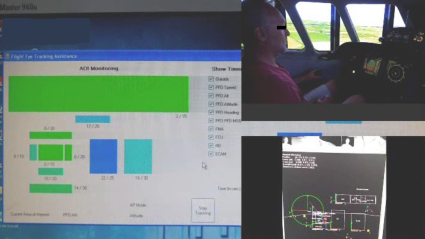
Flight Eye Tracking Assistant (FETA). FETA (Lounis et al., 2020) represents an attempt to integrate eye-tracking technology as an active flight-deck assistant. The system aims to enhance pilots’ visual monitoring of cockpit instruments, a key factor in preventing human-factor related incidents during critical phases such as approach and landing. FETA continuously compares the pilot’s current gaze behavior with a reference database of “standard” visual scanning patterns established from previous recordings of sixteen experienced airline pilots who performed approach and landing tasks in a flight simulator (see Figure 1). When the pilot’s visual scan deviates too much from these expert models, for example, if the airspeed indicator has not been fixated for an abnormally long period, the system emits an auditory alert (e.g., “check speed”) to redirect attention toward the relevant display. A proof-of-concept evaluation was conducted with five professional pilots performing landing scenarios of varying monitoring difficulty in an Airbus A320 simulator. Results indicated that FETA effectively increased visual attention toward the monitored instruments (speed, vertical speed, and heading), confirming its ability to redirect gaze toward critical flight parameters. However, effects on flight performance and subjective workload were mixed: in simpler scenarios, FETA slightly increased workload and speed deviations, whereas in more demanding conditions, it tended to improve heading accuracy and situational awareness. Overall, this first version of FETA demonstrates the feasibility of using real-time gaze analysis as an adaptive cockpit aid. Yet, several limitations were identified, including the potential interference of voice alerts with ATC communications and the need to combine gaze data with flight parameters to reduce false alarms. The authors suggest that future iterations could incorporate multimodal feedback (visual or haptic) and intelligent context adaptation, enabling the system to adjust its monitoring strategy across different flight phases. Schwerd and Schulte (2024) addressed one of the main limitations of FETA, the generation of false or untimely alerts, by incorporating flight parameters data into the alert triggering logic to determine whether an apparent lapse in visual attention is really operationally
relevant. They demonstrated that this hybrid approach substantially reduced unnecessary alerts while maintaining the assistant’s ability to detect genuinely inadequate monitoring.
Figure 1: Left: the FETA interface. The cockpit is modeled, and the areas that turn blue correspond to “cooling” zones, regions that have not been looked at for a certain time. This time is based on a database of standard gaze patterns previously recorded from commercial airline pilots. The zones turn green again when the pilot looks at them again. Top right: the pilot inside the flight simulator, the eye-tracking system is embedded into the instrument panel. Bottom right: eye-tracking recording software.
The Cognitive Shadow. The Cognitive Shadow is a proof-of-concept system designed to support pilot decision-making in cognitively demanding contexts, particularly in Single-Pilot Operations (SPO). It models individual pilots’ judgment patterns using policy capturing, a data-driven method that infers implicit decision rules from observed choices. The system monitors decisions in real time and notifies the pilot when a discrepancy arises between their choice and the model’s prediction. Rather than taking control, it acts as a cognitive safety net, providing feedback while preserving pilot authority and situational awareness. Three experienced pilots participated in simulated unstable approach scenarios, deciding whether to continue descent or go around based on 15 contextual variables. Using seven supervised machine- learning algorithms (e.g., logistic regression, decision trees, SVMs), the Cognitive Shadow learned each pilot’s decision strategy online and provided adaptive feedback. Results showed strong predictive accuracy of the pilot decision, with about 89% for individual models and 100% for the group model. The study demonstrates the feasibility of using policy capturing to develop adaptive, non-intrusive decision-support systems that replicate expert reasoning and help prevent cognitive errors, acting as a cognitive safeguard for pilots exhibiting abnormal behaviors and decisions under challenging situations.
HARVIS. The primary objective of HARVIS (Duchevet et al., 2022) is to enhance decision-making reliability, situation awareness, and operational safety when approach parameters deviate from stabilization criteria. HARVIS incorporates expert pilot knowledge to predict situations in which a go- around is necessary, in a manner quite analogous to the cognitive shadow. The system continuously monitors critical flight variables such as airspeed, glide slope, and aircraft configuration, comparing observed values with expected
Digital Assistant in Aviation: Monitoring, Understanding, and Supporting Operators 2191
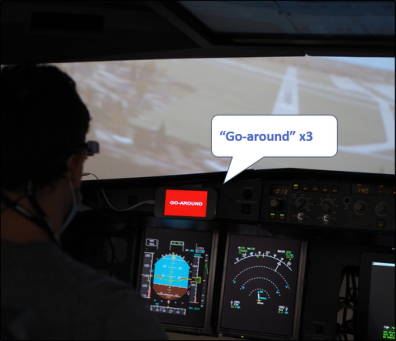
ones. When deviations exceed tolerance thresholds (derived from expert pilot knowledge) a go-around suggestion is issued, see Figure 2.
Figure 2: HARVIS assistant requesting a go-around due to abnormal flight parameters.
HARVIS also integrates eye-tracking measurements to detect abnormal visual monitoring of the cockpit based on pilots’ eye-fixation patterns. If an abnormal flight parameter is detected simultaneously, the system provides a notification prompting the pilot to direct their gaze toward the neglected parameter. The assistant employs adaptive automation, modulating its level of intervention based on flight conditions and pilot workload. In order to test HARVIS, a human-in-the-loop experiment was conducted with seven professional pilots using an A320 simulator. Participants performed multiple approach scenarios both with and without HARVIS assistance to assess behavioral and subjective outcomes. Results indicated that HARVIS significantly improved the accuracy and timeliness of go- around decisions. Pilots reported high trust and acceptability, particularly when the system’s reasoning was explicitly communicated. However, no significant reduction in overall mental workload was observed. Instead, HARVIS appeared to redistribute cognitive resources, allowing pilots to maintain a broader situational overview. The study identified potential risks related to automation complacency and emphasized the necessity of maintaining pilot engagement through system transparency.
During another study (Bejarano et al., 2022), HARVIS acted as a dynamic rerouting assistant, also for SPO. The system this time employs deep learning models trained on previous flight trajectories and meteorological data to predict and generate alternative routes in real time. Its primary objective is to support pilots during unexpected events, such as adverse weather or system failures, by proposing safe and efficient rerouting options. HARVIS integrates various sources of information, including aircraft data (such as position, heading, speed, engine status, and fuel consumption), characteristics of nearby airports (location, category, approach types, runway specifications, and maintenance facilities), as well as meteorological information such
as METAR and TAF reports for the destination. It also considers the availability of medical services for passenger care if needed. By automating route computation, it aims to reduce cognitive workload and enhance situational awareness during high-stress situations. However, challenges remain regarding system validation, explainability, and integration into existing cockpit workflows. For example, pilots reported that HARVIS sometimes displayed excessive data, which increased their workload. Overall, the two studies highlight HARVIS as a promising framework for adaptive, data-driven flight assistance, supporting decision-making in critical flight phases, while also emphasizing the significant challenges that must be addressed before such an assistant can be widely adopted by pilots.
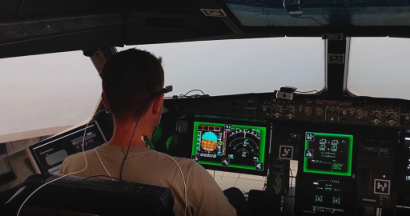
FOCUS. This assistant (Duchevet et al., 2024) helps reduce acute stress responses and supports cognitive functioning under pressure by modulating breathing rate and attention simultaneously. FOCUS triggers subtle changes in cockpit lighting (see Figure 3), which serve as visual cues to help the pilot to adopt a breathing cycle of 10 seconds, known to increases cardiac coherence (McCraty & Zayas, 2014) and reduce stress, a method already applied in aviation (Landman et al., 2020). With FOCUS, the pilot can also monitor their heart, which helps increase self-awareness of their own physiological state and creates opportunities to engage stress-regulation support if needed. FOCUS also simulates a 60 bpm heartbeat through a haptic wristband to regulate stress as it can lower the perceived anxiety and heart rate (Choi & Ishii, 2020). This physiological feedback not only enhances pilot engagement but also improves the transparency of the assistant’s functioning, as it explains when and why certain supportive features are activated. In addition, FOCUS guides the pilot’s attention toward critical information, using visual and auditory cues to highlight key parameters or alerts that might otherwise be overlooked. A global situation awareness score, displayed on screen, indicates whether flight parameter monitoring is required. A widget mimicking the Primary Flight Display (PFD) further suggests which areas of interest should be checked to improve this score, thereby enhancing both situational awareness and trust in the system. This multimodal approach, combining physiological monitoring, attentional guidance, and adaptive feedback, aims to maintain optimal situational awareness and reduce the risk of partial or total cognitive incapacitation. FOCUS’s effectiveness was evaluated in an A320 simulator with five qualified pilots. The feedback was positive, with pilots perceiving the assistant as a valuable and transparent addition to the cockpit. These evaluations will inform future iterations of FOCUS and deepen understanding of human-AI interaction in flight situations. In the future, the assistant should have an automatic startle effect detection module.
CPAI. CPAI (Liu et al., 2016) is a conceptual framework designed to assist SPO by actively managing cognitive workload and enhancing situational awareness. The CPAI’s core functionality lies in its knowledge- based adaptive mechanisms, which continuously assess both the pilot’s cognitive state, including attention, workload, and stress, and the aircraft’s operational parameters. Based on this assessment, the system provides real- time decision support, issue context-sensitive alerts, and suggest optimal
Digital Assistant in Aviation: Monitoring, Understanding, and Supporting Operators 2193
control actions, effectively prioritizing tasks and reducing pilot overload. The interface integrates proactive assistance, anticipating pilot needs before critical situations arise, alongside reactive support that responds to emergent events or deviations from expected flight conditions. It dynamically adjusts its level of automation, offering task delegation, alert management, and flight plan optimization depending on the phase of flight and pilot state. The CPAI also emphasizes transparent interactions, ensuring that all recommendations and automated actions are interpretable and predictable to maintain pilot trust. Through its combination of monitoring, adaptive guidance, and intelligent decision support, the system aims to minimize human error while enhancing operational efficiency. Overall, the CPAI demonstrates a comprehensive approach to enabling cognitively cooperative flight decks, supporting safe and efficient single-pilot or reduced-crew operations.
Figure 3: Illustration of FOCUS. The brightness of the screen borders (green rectangles) as well as the ambient colour of the cockpit is pulsating at the breathing frequency required for cardiac coherence, guiding the pilot to breathe at this optimal rhythm.
EXAMPLES OF DIGITAL ASSISTANTS FOR AIR TRAFFIC CONTROL CODA. The Controller Adaptive Digital Assistant (CODA) (Hurter et al., 2025) represents an advanced adaptive automation concept designed to support ATCOs in managing cognitive workload and maintaining situational awareness during complex en-route operations. Building on the neuroergonomic principles of human-AI teaming, CODA continuously monitors ATCOs’ cognitive states, such as workload, stress, vigilance, and fatigue, through multimodal neurophysiological signals (Electroen- cephalography - EEG, Electrodermal Activity - EDA, Photoplethysmography - PPG). These inputs, combined with real-time traffic and task-load indicators, feed an Adaptive Automation Strategy (AAS) that dynamically determines the optimal level of automation support. The AAS relies on a decision-tree logic that integrates both current and predicted measures of traffic complexity, task demand, and mental states, selecting between three adaptive modes: no automation, automation light (partial task delegation), and automation strong (full task delegation). This mechanism ensures that automation is engaged only when necessary, preserving operator agency while reducing overload risks. In practice, the system can autonomously manage non-critical aircraft and provide proactive,
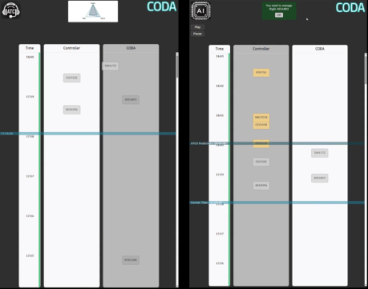
context-sensitive recommendations, allowing controllers to focus on higher- priority decisions (Figure 4). CODA’s design explicitly addresses well- known challenges of static automation, such as out-of-the-loop performance (Endsley & Kiris, 1995), trust erosion, and loss of skills, by maintaining transparency through explainable decision rules displayed on its human- machine interface. The system’s performance was evaluated using the Human-Machine Performance Envelope (HMPE), a composite metric integrating neurophysiological, behavioral, and subjective indicators to quantify the joint efficiency of the human-AI team. Through human-in-the- loop simulations on the ecologically-relevant EUROCONTROL ESCAPE platform, CODA demonstrated that adaptive, explainable automation can effectively balance workload, preserve situational awareness, and sustain trust, offering a concrete path toward resilient, cognitively aligned digital assistance in future air traffic management operations.
Figure 4: Digital assistant developed in the CODA project for en-route air traffic controllers. Two interfaces are shown: one for the controller (left panel) and one for the AI system (right panel). For each interface, three columns are displayed, showing the time scheduler (left column) and the allocation of flights/tasks to the controller or the machine (middle and right columns). Task complexity is indicated by color coding, and a diagram (upper right) is used to indicate the combination of neurometrics, tasks, and traffic complexity.
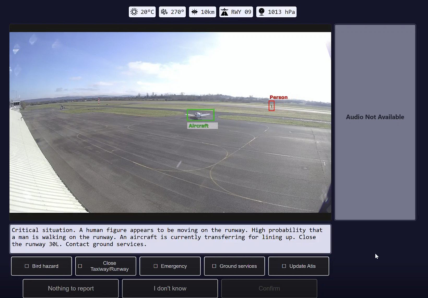
TRUSTY. The TRUSTY (Trustworthy intelligent system for remote digital tower) SESAR project developed a digital assistant called APSARA (AI-Powered Situational Awareness for Remote Airfields) within the frame of Remote Digital Towers (RDT) to explore how explainable and trustworthy AI can enhance human-AI collaboration in air traffic services delivered remotely (Ahmed et al., 2025). Unlike conventional automation, APSARA operates as a decision support system that supports ATCOs by generating context-sensitive predictions and explanations of air traffic dynamics (Hurter et al., 2022). Its architecture integrates perception, prediction, and explainability modules: the perception layer fuses multimodal sensory inputs (e.g., video data streams, audio pilot-pilot frequency communications) to establish an operational air picture; the prediction layer anticipates dangerous events/situation or anomalies; and the explainability
Digital Assistant in Aviation: Monitoring, Understanding, and Supporting Operators 2195
layer communicates these insights through intuitive human-centered visual explanations directly integrated into the controller’s monitoring interface. This data is processed through multimodal machine learning algorithms, to detect and notify the ATCO of situations with increased risk, such as wind shear or a runway incursion (Figure 5). These visual overlays highlight areas of higher operational relevance or uncertainty, enabling controllers to understand not only what the system recommends but why. APSARA is grounded in principles of trust calibration and human-AI teaming, seeking to understand how to preserve the build-up and maintain of optimal trust dynamics over time rather than maximize blind reliance. The system was validated through experimental studies in remote tower simulators involving professional ATCOs, combining behavioral, subjective, and neurophysiological measures. Although results from the initial evaluations are still preliminary, they underline the relevance of APSARA’s transparent and adaptive feedback mechanisms as a foundational step toward the development of next-generation digital assistants ready for full operational integration in remote tower environments.
Figure 5: Digital assistant developed in the TRUSTY project for remote tower air traffic controllers. Video data streams coming from a remote airfield and audio pilot-pilot communications are analyzed through multimodal algorithms to provide a trustworthy context-sensitive evaluation and recommendation for the controller. Here, transparent and adaptive feedback mechanisms are intended to be delivered through continuous monitoring of the controller’s neurophysiological states.
CONCLUSION
The digital assistants described in this paper monitor, support, and enhance operator performance through adaptive, context-sensitive interventions. Their function encompasses supporting situation awareness (e.g., FETA, FOCUS), helping operators to cope with stress (e.g., FOCUS), or providing decision-making support (e.g., Cognitive Shadow, HARVIS), while preserving operator authority. CAMA, AdaptiveCoPilot, or CPAI bring an emphasis on cognitive load, for example with CAMA reducing information overload, or CPAI taking into account cognitive load for adjusting the automation level to lower mental fatigue and keep the pilot mentally engaged. CPAI or FOCUS
takes into account pilot cognitive state with physiological measures. Among the assistants taking into account physiological measures, FOCUS uniquely targets stress regulation and resilience, combining physiological monitoring, guidance for relaxation, and cues to orient attention to mitigate startle effects. In the ATC domain, CODA provides predictive traffic management, task prioritization, and situational awareness support, paralleling cockpit assistants in its adaptive AI-driven monitoring, highlighting the convergent goal of enhancing safety, reducing cognitive load, and fostering effective human-AI collaboration.
More recent works generally propose assistants based on artificial intelligence, such as the AdaptiveCoPilot. However, despite AI advances and the multiplication of such digital assistants (Würfel et al., 2023), a long path is needed for those systems to be fully accepted and trusted by operators. Current systems are often tested with a very low number of pilots, for example only three pilots with the AdaptiveCoPilot or the Cognitive Shadow. Beyond digital assistant systems, there is an intensive discourse on the ways humans can interact with AI-based technologies, how to measure the quality of the interaction, and how the performance of a certain task should be divided between these two entities. Concepts such a fluency, measuring the quality of the human-AI interaction, offer promising avenues (Pinto et al., 2025).
REFERENCES
Ahmed, M. U., Barua, S., Begum, S., Jmoona, W., Cruze, R. S. D., Veyrie, A., Kebir, S., & Hurter, C. (2025). Role of Multi-modal Machine Learning, Explainable AI and Human-AI Teaming in Trusted Intelligent Systems for Remote Digital Towers. Proceedings of the 2024 7th Artificial Intelligence and Cloud Computing Conference, 26–35. https://doi.org/10.1145/3719384.3719389. Bejarano, C., Vázquez, A. R., Colomer, A., Cantero, J., Ferreira, A., Moens, L.,
Duchevet, A., Imbert, J.-P., & De La Hogue, T. (2022). HARVIS: Dynamic rerouting assistant using deep learning techniques for Single Pilot Operations (SPO). Transportation Research Procedia, 66, 262–269. Ceken, S. (2024). Cleared for Takeoff: Exploring Digital Assistants in Aviation.
In Harnessing Digital Innovation for Air Transportation (pp. 1–27). IGI Global Scientific Publishing. Choi, K. Y., & Ishii, H. (2020). ambienBeat: Wrist-worn mobile tactile biofeedback for heart rate rhythmic regulation. 17–30. Duchevet, A., Dong-Bach, V., Peyruqueou, V., Garcia, J., Causse, M., &
Imbert, J.-P. (2024). FOCUS: An Intelligent Startle Management Assistant for Maximizing Pilot Resilience. Proceedings of the 2nd International Conference on Cognitive Aircraft Systems (ICCAS 2024), 5–12. https://doi.org/10.5220/ 0012915600004562. Duchevet, A., Imbert, J.-P., Hogue, T. D. L., Ferreira, A., Moens, L., Colomer, A., Cantero, J., Bejarano, C., & Vázquez, A. L. R. (2022). HARVIS: A digital assistant based on cognitive computing for non-stabilized approaches in Single Pilot Operations. Transportation Research Procedia, 66, 253–261. https://doi.org/ 10.1016/j.trpro.2022.12.025.
Digital Assistant in Aviation: Monitoring, Understanding, and Supporting Operators 2197
Endsley, M. R., & Kiris, E. O. (1995). The out-of-the-loop performance problem and level of control in automation. Human Factors, 37(2), 381–394. https://doi.org/ 10.1518/001872095779064555. Flemisch, F. O., & Onken, R. (1998). The cognitive assistant system and its contribution to effective man/machine interaction. The Application of Information Technology (Computer Science) in Mission Systems. Gilles, M., Bach, C., Quentel, M., Pallamin, N., Jégou, G., Querrec, R., &
Bevacqua, E. (2025). Pilot study on virtual assistant design for new generation aircraft cockpit. Behaviour & Information Technology, 1–12. Hurter, C., Degas, A., Guibert, A., Durand, N., Ferreira, A., Cavagnetto, N., Islam, M. R., Barua, S., Ahmed, M. U., & Begum, S. (2022). Usage of more transparent and explainable conflict resolution algorithm: Air traffic controller feedback. Transportation Research Procedia, 66, 270–278. Hurter, C., Veyrié, A., Kebir, S., Truong, G., Borghini, G., Aricò, P., Babiloni,
F., Baumgartner, M., Bergesio, L., Bernardos, A., Besada, J., Calatrava, A., Cañas, J., Garcia, L., Lasheras, R., Gawinowski, G., Jadronova, M., Obbink, B., & Zon, R. (2025). Toward a Neurophysiological Approach to Assess Optimal Human-Machine Teaming in the Critical Environment of Air Traffic Control. Jameson, S., Franke, J., Szczerba, R., & Stockdale, S. (2005). Collaborative autonomy for manned/unmanned teams. 61(2), 1673. Landman, A., van Middelaar, S. H., Groen, E. L., van Paassen, M., Bronkhorst, A. W.,
& Mulder, M. (2020). The effectiveness of a mnemonic-type startle and surprise management procedure for pilots. The International Journal of Aerospace Psychology, 30(3–4), 104–118. Liu, J., Gardi, A., Ramasamy, S., Lim, Y., & Sabatini, R. (2016). Cognitive pilotaircraft interface for single-pilot operations. Knowledge-Based Systems, 112, 37–53. Lounis, C., Peysakhovich, V., & Causse, M. (2020). Flight eye tracking assistant
(feta): Proof of concept. 739–751. McCraty, R., & Zayas, M. A. (2014). Cardiac coherence, self-regulation, autonomic stability, and psychosocial well-being. Frontiers in Psychology, 5. https://doi.org/ 10.3389/fpsyg.2014.01090. Pinto, A. H. M., Lounis, C., Causse, M., & Chanel, C. P. C. (2025). Online Metrics to
Enhance Human-Artificial Agent Collaboration Efficiency: A Narrative Literature Review. International Journal of Human–Computer Interaction, 1–24. https:// doi.org/10.1080/10447318.2025.2575895. Schwerd, S., & Schulte, A. (2024). Triggering cockpit alerts using an eye-trackingbased measure of monitoring performance. Aviation Psychology and Applied Human Factors. Simon, F., Brock, A., & Causse, M. (2020). Designing a virtual cognitive assistant for
pilots: A user-centered approach. ICCAS-International Conference on Cognitive Aircraft Systems. Taylor, R. M., Brown, L., & Dickson, B. (2003). From safety net to augmented cognition: Using flexible autonomy levels for on-line cognitive assistance and automation. Würfel, J., Djartov, B., Papenfuß, A., & Wies, M. (2023). Intelligent Pilot Advisory
System: The journey from ideation to an early system design of an AI-based decision support system for airline flight decks. AHFE 2023. Wen, S., Middleton, M., Ping, S., Chawla, N. N., Wu, G., Feest, B. S., Nadri, C., Liu, Y., Kaber, D., & Zahabi, M. (2025). AdaptiveCoPilot: Design and Testing of a NeuroAdaptive LLM Cockpit Guidance System in both Novice and Expert Pilots. 656–666.
LISTED IN THE AHFE DIGITAL BOOKSTORE CATALOGUE
Explore the complete digital volume
Human Factors in Design, Engineering, and Computing
Read this individual research paper free through the original publisher, or explore the full digital proceedings book.
ISBN 978-1-964867-75-5
Explore this ISBN in the AHFE Bookstore ↗Listed in the July 2026 bookstore catalogue; search by ISBN to confirm current availability · Digital book purchase optional