Suvipra Singh (2025). Cognitive Workload and Interface Performance: A Neuroergonomic Comparison of VR, AR, and Traditional Drone Control Systems. In: Human Factors in Design, Engineering, and Computing. AHFE Open Access, vol. 199, pp. 891–903. https://doi.org/10.54941/ahfe1006902
As small Unmanned Aerial Systems (sUAS) become vital tools in sectors such as disaster response, inspection, and precision operations, understanding how interface modality shapes pilot cognition is critical. This study compares Virtual Reality (VR), Augmented Reality (AR), and Traditional (physical controller) interfaces under simulated conditions to isolate neurocognitive differences among novice, intermediate, and expert drone pilots. Real-time electroencephalography (EEG) recorded theta, alpha, and beta wave activity as participants completed standardized flight tasks including spatial navigation, obstacle avoidance, altitude stabilization, and precision landing. EEG metrics captured continuous variations in cognitive workload, attentional engagement, and sensorimotor regulation across skill levels. Results indicate that VR induced elevated beta activity linked to sensory integration demands, AR maintained balanced alpha–theta dynamics reflecting optimal engagement, and Traditional control minimized workload through procedural fluency. These findings contribute neuroergonomic insights for developing skill-adaptive, cognitively optimized sUAS interfaces that enhance performance, learning, and operator well-being.
The rapid integration of small Unmanned Aerial Systems (sUAS), more commonly known as drones, has transformed industries ranging from disaster response and precision agriculture to infrastructure inspection and logistics. Once limited to defense and research contexts, drones have become indispensable tools in high-stakes operations that demand precision, endurance, and situational awareness. Yet as mission complexity increases, so does the cognitive demand placed upon human operators. Interface modality, the way humans perceive, process, and control these systems, emerges as a critical determinant of performance, safety, and efficiency.
In industrial and commercial operations, the design of control systems must extend beyond technical capability to account for the neurocognitive
processes that underpin skilled performance. Virtual Reality (VR) and Augmented Reality (AR) technologies promise immersive situational awareness and adaptive feedback, but they also introduce new cognitive and perceptual challenges. Understanding how these modalities influence workload, attentional control, and skill acquisition across varying expertise levels is essential for creating equitable and resilient human–machine ecosystems.
This study adopts a neuroergonomic lens, integrating real-time electroen- cephalography (EEG) with behavioral metrics to reveal how cognitive workload and sensorimotor coordination evolve under VR, AR, and traditional physical control conditions. By examining novice, intermediate, and expert pilots performing standardized flight maneuvers, the research identifies distinct neural signatures that reflect differing levels of mental effort, situational awareness, and automation fluency. Beyond academic inquiry, these insights contribute to the design of skill-adaptive, cognitively optimized interfaces capable of enhancing operator performance, reducing fatigue, and informing next-generation industrial drone systems that align human cognition with machine precision.
BACKGROUND
Introduction to sUAS and Their Applications Small Unmanned Aerial Systems (sUAS) are increasingly deployed in industries such as infrastructure inspection, logistics, precision agriculture, disaster response, and environmental monitoring (Gregorio et al., 2021). Their operational versatility has revolutionized field efficiency yet optimizing human–machine interaction (HMI) remains a defining challenge in ensuring reliability and safety. Understanding how interface modality influences cognitive workload and operator decision-making is essential to designing control systems that support performance under demanding industrial conditions. Traditional physical controllers provide tactile precision and procedural familiarity, while Virtual Reality (VR) and Augmented Reality (AR) interfaces promise immersive situational awareness and contextual feedback. However, these emerging modalities may impose varying cognitive demands depending on environmental stressors, information density, and operator expertise. Prior research by Zhang, Liu, and Kaber (2024) emphasized that complex interfaces heighten cognitive load, adversely affecting reaction time and mission accuracy.
Cognitive Workload in Human–Machine Interface of sUAS Recent investigations have explored multimodal and immersive control systems, noting their potential to improve engagement and spatial orientation but also their risk of inducing cognitive overload in high-demand environments (Abioye et al., 2022). Managing workload effectively is central to sustaining operator focus, safety, and performance. Cognitive workload governs how information is processed, filtered, and translated into precise motor control. Physiological approaches, especially electroencephalography
Cognitive Workload and Interface Performance 893
(EEG), offer reliable, real-time metrics of cognitive effort. Fluctuations in theta and alpha bands have been linked to mental workload and attentional regulation, while beta activity reflects heightened sensorimotor engagement (Li et al., 2016; Hebbar et al., 2021). Integrating these measures allows for adaptive systems that modulate feedback and sensitivity according to operator stress or fatigue.
Neuroergonomics in Modern sUAS Operations Neuroergonomics, the convergence of neuroscience, human factors, and advanced sensing technologies, provides real-time insights into how brain activity influences complex operational behavior. In modern sUAS contexts, where operators interact with semi-autonomous and AI-assisted flight systems, neuroergonomic principles are increasingly vital for designing interfaces that maintain human oversight while preventing cognitive overload (Lim et al., 2017; Lercel & Andrews, 2021). Emerging tools such as eye- tracking, pupillometry, and adaptive EEG feedback allow researchers to visualize cognitive states and adjust task demands dynamically. In aviation, neuroadaptive systems have already demonstrated their ability to optimize attentional allocation and situational awareness through context-aware feedback (Liu et al., 2012; O’Hare, 2006). These advancements directly translate to drone operations, where Virtual Reality (VR), Augmented Reality (AR), and Traditional control systems represent distinct stages of interface evolution. VR enables fully immersive mission rehearsal and complex spatial orientation but elevates neural workload under prolonged immersion. AR offers real-time environmental augmentation and data overlays that support decision-making in visually complex environments, whereas Traditional interfaces provide stable, procedural control grounded in operator experience. Together, these modalities highlight the neuroergonomic frontier of aligning cognitive adaptability with machine autonomy, shaping how next-generation drone operations will balance automation and human agency.
Limitations in Previous Cognitive Workload Studies Despite notable progress, the accurate measurement and interpretation of cognitive workload in dynamic sUAS operations remain complex. Traditional subjective assessments such as NASA-TLX provide valuable self- reported data but lack temporal resolution, failing to capture fluctuations during high-frequency decision cycles (Hebbar et al., 2021). Physiological measures, particularly EEG, offer real-time precision yet require robust signal processing and contextual interpretation to distinguish between cognitive load, fatigue, and environmental distraction (Li et al., 2016). Moreover, most studies have focused on single-interface paradigms or uniform operator profiles, overlooking the influence of pilot experience, adaptive learning, and environmental stressors such as wind turbulence or system latency. Zhang and colleagues (2016) highlighted the need for standardized, multimodal protocols that account for interface variability and operational context. As drone technologies evolve toward hybrid autonomy and cooperative swarm
894 Singh
systems, the ability to quantify human cognitive adaptability across multiple interface environments becomes an essential research imperative.
Research Gaps and Rationale for Study Although significant strides have been made in UAV human–machine interface (HMI) research, comparative studies integrating VR, AR, and Traditional interfaces using real-time EEG remain scarce. There is limited understanding of how operator skill level, from novice to expert, interacts with interface complexity and adaptive autonomy to shape cognitive workload and neural efficiency. Furthermore, few studies examine how immersive technologies affect sustained attention, multisensory integration, and error detection in industrially relevant operations. This research bridges these gaps by evaluating how different interface modalities modulate neural workload dynamics, attentional control, and task fluency across experience levels. By embedding EEG-based neuroergonomic measures into controlled simulated missions, the study advances the design of skill-adaptive, cognitively attuned, and resilience-focused sUAS systems that support human performance in complex, data-rich operational environments. These findings aim to inform the next generation of neuroadaptive drone interfaces capable of learning from user states and optimizing real-time cognitive alignment between humans and intelligent machines.
METHODS
This study investigates the comparative effects of Virtual Reality (VR), Augmented Reality (AR), and Real-World (traditional physical controller) interfaces on cognitive workload and task performance across three pilot skill levels, novice, intermediate, and expert, during small Unmanned Aerial System (sUAS) operations. Nine participants were recruited through voluntary response sampling from drone clubs and professional UAV pilot networks. All participants were between 18 and 35 years old with normal or corrected vision. Skill classification was determined by self-reported flight hours and verified through a pre-assessment flight task: novices (<10 hours), intermediates (10–100 hours), and experts (>100 hours). All participants provided informed consent prior to participation. This stratified sampling was designed to capture how cognitive workload and performance vary across proficiency levels when interacting with different interface modalities in applied industrial contexts.
The experiment employed the VelociDrone Simulator, chosen for its industry-grade physics modeling and realistic environmental replication used in commercial and research training environments. Three standardized interface setups were developed. In the VR condition, participants used the DJI Goggles N3 for full first-person immersion with head-tracked navigation. The AR condition employed the same system with frontal cameras enabled, overlaying digital flight data onto a live third-person view. The Real-World condition simulated traditional drone operations using a monitor-based first- person display and the DJI Remote Controller 2, reflecting conventional industrial control setups.
Cognitive Workload and Interface Performance 895
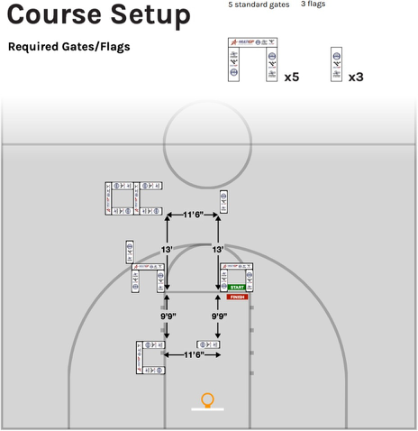
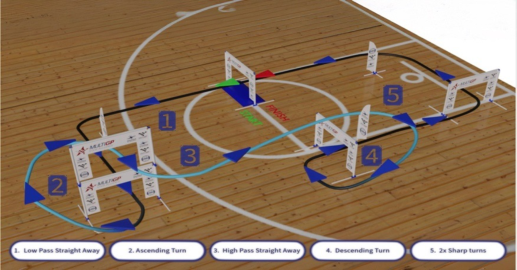
Flight tasks were adapted from the Multi-GP 2024 Virtual Race National Championships, selected for their ecological validity and technical rigor. Each mission comprised five sequential maneuvers, Low Pass Straightaway, Ascending Turn, High Pass Straightaway, Descending Turn, and Dual Sharp Turns, targeting precision, spatial awareness, and sensorimotor coordination under controlled workload escalation. Participants performed identical flight missions under each interface condition to enable cross-modality comparison of cognitive and operational performance.
Real-time electroencephalography (EEG) data were collected using the Emotiv Insight 5 headset, focusing on theta (4–7 Hz), alpha (8–13 Hz), and beta (13–30 Hz) activity corresponding to working-memory load, attentional focus, and sensorimotor engagement, respectively. EEG data were analyzed through Emotiv Pro software to extract metrics of attention, engagement, and cognitive strain during flight tasks.
A within-subjects design was implemented, ensuring each participant completed all three interface conditions. Condition order was counterbalanced to control for learning effects and fatigue. Each participant completed two full missions per interface type, following a two-minute acclimation period prior to each trial. Missions lasted approximately five minutes each, with one-minute rest intervals between conditions. Figures 1 and 2 illustrate the experimental configuration, participant interface views, and EEG setup used for continuous monitoring of neural activity during simulated industrial flight tasks.
Figure 1: Drone race track setup (adapted from MultiGP drone racing league, 2024).
896 Singh
Figure 2: Drone flight path (adapted from MultiGP drone racing league, 2024).
RESULTS
Table 1: Novice group–mean percent change across interfaces and track segments.
AR +22 +18 +27 +16 +5 −12 Real- World Novice pilots exhibited the widest range of cognitive and emotional variability across interface conditions, reflecting their developing coordination, limited attentional endurance, and strong reliance on visual immersion for spatial stability and task control.
Virtual Reality (VR) VR produced the most dramatic surges in attentional and engagement levels among all modalities, with attention increasing by (+22% to +43%) and engagement by (+18% to +36%) across flight segments. The highest peaks occurred during Dual Sharp Turns (+43%) and Descending
Cognitive Workload and Interface Performance 897
Turns (+34%), where the immersive feedback and 3D motion depth intensified focus and situational awareness. Excitement rose sharply (+31% to +50%), particularly in high-speed transitions, though this came at a cost—stress spiked (+24% to +45%), and relaxation declined (−9% to −17%). EEG readings revealed pronounced beta and theta-band activation, characteristic of high arousal and cognitive strain typical in early skill acquisition. Participants described the experience as “thrilling but exhausting,” emphasizing that VR helped them focus but led to mental fatigue during extended sessions. These findings indicate that while VR immersion accelerates early learning through heightened engagement, it demands structured recovery periods or adaptive modulation to avoid cognitive saturation.
Augmented Reality (AR) AR provided a balanced and supportive interface environment, maintaining attentional gains without the overstimulation observed in VR. Attention improved (+14% to +22%), and engagement increased steadily (+12% to +18%) across segments, with notable improvements during Ascending and High Pass Straightaways. Stress decreased (−7% to −12%) while relaxation improved (+5% to +9%), suggesting AR’s semi-immersive overlays provided cognitive anchors that stabilized focus and reduced performance anxiety. EEG data showed increased alpha synchronization during steady flight phases, indicating attentional composure and efficient mental resource allocation. Participants described AR as “comfortable, clear, and responsive,” reporting smoother control and reduced effort in trajectory correction. Overall, AR supported sustained learning and situational awareness by introducing moderate novelty and consistent visual guidance—an ideal balance for novice training and cognitive acclimation in simulator or entry- level sUAS programs.
Real-World (Traditional Controller) The Real-World interface served as a calm baseline, yielding predictably low engagement but steady procedural accuracy. Stress remained lowest overall, and relaxation stayed near baseline, but attentional gains were limited, and excitement plateaued. Novice pilots often described this mode as “too plain” or “less engaging,” citing reduced motivation during repetitive or linear segments. EEG data showed minimal beta activation and flat engagement profiles, reflecting comfort but low stimulation. While this simplicity minimized overload, it lacked the dynamic feedback necessary to reinforce focus or responsiveness over time. Consequently, while Real-World control aids foundational coordination and motor learning, integrating subtle multimodal feedback, such as auditory or tactile cues, could enhance engagement without compromising cognitive stability for early-stage pilots.
898 Singh
Table 2: Intermediate group–mean percent change across interfaces and track segments.
Intermediate pilots demonstrated refined cognitive control and greater emotional stability across interface conditions, reflecting their growing familiarity with sUAS dynamics and improved ability to anticipate environmental demands.
Virtual Reality (VR) VR produced strong yet regulated increases in attentional and engagement metrics, with attention improving by (+14% to +27%) and engagement by (+11% to +21%) across all flight segments, peaking during Dual Sharp Turns (+27%) and Descending Turns (+22%). Excitement rose markedly (+17% to +33%), indicating heightened alertness and spatial coordination as pilots integrated visual feedback with motor precision. However, this came with moderate stress elevations (+19% to +32%) and corresponding drops in relaxation (−7% to −12%), particularly during rapid altitude or directional changes. EEG data revealed increased beta-band activation with mild theta suppression, suggesting sustained concentration without overload. Participants described VR as “demanding but rewarding,” noting that the immersive feedback enhanced precision yet required mental pacing to avoid fatigue. These results highlight VR’s value as a skill-consolidation platform when paired with adaptive difficulty or scheduled recovery intervals.
Cognitive Workload and Interface Performance 899
Augmented Reality (AR) AR yielded the most balanced performance and emotional regulation. Attention improved steadily (+12% to +18%), and engagement rose (+10% to +15%) while stress declined (−5% to −9%) and relaxation improved (+5% to +8%). The semi-immersive overlays provided structured spatial references that reduced reaction-time variability and improved flight accuracy. EEG recordings showed increased alpha synchronization during steady-state maneuvers, reflecting calm attentional focus and efficient resource allocation. Participants described AR as “smooth and intuitive,” highlighting its clarity and reduced cognitive tension compared to VR. Performance consistency peaked under AR, suggesting that this modality best supports procedural fluency, executive control, and decision-making for intermediate pilots transitioning toward expert proficiency.
Real-World (Traditional Controller) The Real-World condition offered a stable, predictable baseline with minimal stress and moderate engagement. Attention and excitement remained close to baseline levels, producing steady yet unremarkable performance. Participants often described this mode as “comfortable but less engaging,” citing reduced sensory stimulation during repetitive maneuvers. EEG patterns indicated low beta activity and minimal fluctuation, consistent with cognitive efficiency but limited adaptability. While this configuration promotes consistent accuracy and minimal strain, the lack of dynamic visual feedback may slow higher-order learning and situational adaptability. For intermediate pilots, integrating subtle auditory or haptic cues into traditional controllers could enhance immersion without increasing cognitive load, bridging the gap between foundational mastery and expert-level responsiveness.
Table 3: Expert group–mean percent change across interfaces and track segments.
Expert pilots demonstrated minimal cognitive variability and strong emotional regulation across all interface conditions, reflecting their advanced procedural automation, efficient workload management, and adaptive attentional control in complex flight environments.
Virtual Reality (VR) VR produced moderate but meaningful increases in attentional and engagement indices, with attention rising between (+9% and +22%) and engagement between (+11% and +26%) across flight segments. The highest gains occurred during Dual Sharp Turns (+22%) and Descending Turns (+18%), where experts leveraged immersion for precise control and spatial anticipation. Excitement rose notably (+13% to +30%), yet stress also increased (+16% to +28%) during high-speed transitions and rapid altitude shifts, accompanied by corresponding drops in relaxation (−6% to −11%). EEG data revealed stable alpha–beta coupling and low theta amplitude, suggesting sustained alertness under moderate mental load rather than fatigue. Participants described VR as “immersive yet methodical,” emphasizing that while the realism sharpened situational focus, the novelty plateaued quickly. For experts, VR thus serves best as a tool for precision reinforcement, mental resilience, and performance maintenance under variable sensory intensity.
Augmented Reality (AR) AR yielded the most stable balance between cognitive performance and physiological ease. Attention improved moderately (+11% to +17%), engagement rose steadily (+13% to +20%), and stress declined (−4% to −6%), while relaxation increased (+5% to +7%). The contextual overlays enabled fine-grained spatial prediction and smoother feedforward control, aligning well with expert reliance on anticipatory decision-making. EEG recordings displayed elevated alpha synchronization and reduced beta variability, reflecting efficient cognitive filtering and sustained composure. Participants frequently described AR as “seamless and adaptive,” noting its ability to maintain clarity and flow without overstimulation. Overall task accuracy and reaction-time stability peaked in this condition, supporting AR’s role as the optimal interface for continuous operations that demand precision with minimal cognitive interference.
Cognitive Workload and Interface Performance 901
Real-World (Traditional Controller) Traditional control delivered the most consistent physiological profile, showing negligible deviations in attention, engagement, or emotional indices. Stress remained minimal, and relaxation stayed near baseline across all maneuvers. Experts characterized this mode as “predictable and steady,” requiring little conscious effort but offering limited engagement. EEG data showed persistent alpha dominance and minimal beta bursts, consistent with procedural automaticity and low error-correction demand. While Real-World control maximizes efficiency, it provides fewer cognitive stimuli for sustained vigilance. Integrating light adaptive feedback or mild sensory enrichment could help maintain engagement over prolonged sessions, ensuring that expert pilots continue refining performance even in familiar operational settings.
DISCUSSION
This study advances the field of drone human–machine interaction by revealing how interface modality, Virtual Reality (VR), Augmented Reality (AR), and Real-World control, intersects with operator expertise to shape the balance between cognitive load and performance efficiency. Beyond identifying differences in workload, the findings illustrate how experience level moderates the relationship between immersion and neural regulation. Novices rely heavily on external visual cues to anchor attention, intermediates demonstrate emerging self-regulation through adaptive cue integration, and experts exhibit automation that minimizes cognitive variance across modalities. This progression underscores a neuroergonomic principle of skill-dependent cognitive elasticity, the brain’s ability to dynamically allocate resources according to interface complexity and prior learning. Rather than viewing workload as a static cost, this perspective reframes it as a fluid, trainable capacity that evolves with experience, offering a pathway toward personalized interface adaptation grounded in neurophysiological data.
The implications extend beyond performance optimization to the design of experience-contingent adaptive systems. In practical terms, a training simulator might gradually transition users from AR-guided semi-immersion to VR-based complexity as neural efficiency increases, using EEG feedback to modulate challenge in real time. Such systems could accelerate learning curves, reduce attrition, and enhance retention in high-stakes fields such as aviation, defense, and emergency response. For expert operators, neuroadaptive augmentation could sustain peak focus in long-duration or monotonous tasks, countering cognitive drift through subtle adaptive feedback rather than overt intervention. By demonstrating that the optimal interface shifts with skill maturity, this research reframes drone interface design from a “one-size-fits-all” model to a cognitively developmental continuum, where immersion, feedback, and automation co-evolve with pilot proficiency. This represents a critical step toward human–machine ecosystems that learn with their users, not merely respond to them.
902 Singh
CONCLUSION
These findings establish foundational principles for developing next- generation neuroadaptive drone interfaces that integrate real-time neurophysiological feedback with dynamic sensory modulation. Continuous monitoring of theta (workload), alpha (relaxation), and beta (attention) rhythms can enable systems to intelligently adjust immersion level, visual complexity, and feedback sensitivity, maintaining pilots within their optimal cognitive activation range. For novice operators, adaptive feedback regulation can sustain engagement and learning momentum without inducing overload; for intermediate pilots, calibrated visual and sensory cues can reinforce precision and situational awareness; and for expert pilots, selective augmentation can enhance performance consistency while preserving low- effort control. A neuroergonomic calibration framework should map each pilot’s EEG-derived cognitive state to personalized interface parameters, tuning VR, AR, or Real-World modes to their individual “performance resonance zone.” Implementing such adaptive architectures transforms drone control systems into cognitively responsive environments that optimize efficiency, minimize stress, and enhance long-term learning and retention. Future research should examine closed-loop neuroadaptive algorithms, expanded participant samples across expertise spectra, and longitudinal training validation, advancing drones as intelligent, human-centered platforms for skill development and performance sustainability.
REFERENCES
Abioye, A. O., Prior, S. D., Saddington, P. and Ramchurn, S. D. (2022). The Performance and Cognitive Workload Analysis of a Multimodal Speech and Visual Gesture (mSVG) UAV Control Interface. Robotics and Autonomous Systems, 147, p. 103915. doi: https://doi.org/10.1016/j.robot.2021.103915. Gregorio, M. D., Romano, M., Sebillo, M., Vitiello, G. and Vozella, A. (2021).
Improving Human Ground Control Performance in Unmanned Aerial Systems. Future Internet, 13(8), p. 188. doi: https://doi.org/10.3390/fi13080188. Hebbar, P. A., Bhattacharya, K., Prabhakar, G., Pashilkar, A. A. and Biswas, P.
(2021). Correlation between Physiological and Performance-Based Metrics to Estimate Pilots’ Cognitive Workload. Frontiers in Psychology, 12. doi: https:// doi.org/10.3389/fpsyg.2021.555446. Lercel, D. and Andrews, D. H. (2021). Cognitive Task Analysis of Unmanned Aircraft System Pilots. The International Journal of Aerospace Psychology, pp. 1–24. doi: https://doi.org/10.1080/24721840.2021.1895797. Li, X., Jiang, Y., Hong, J., Dong, Y. and Yao, L. (2016). Estimation of
Cognitive Workload by Approximate Entropy of EEG. Journal of Mechanics in Medicine and Biology, 16(06), p. 1650077. doi: https://doi.org/10.1142/ s0219519416500779. Lim, Y., Ramasamy, S., Gardi, A., Kistan, T. and Sabatini, R. (2017). Cognitive Human-Machine Interfaces and Interactions for Unmanned Aircraft. Journal of Intelligent & Robotic Systems, 91(3–4), pp. 755–774. doi: https://doi.org/ 10.1007/s10846–017-0648–9. Liu, D., Guarino, S., Roth, E. M., Harper, K. A. and Vincenzi, D. A. (2012). Effect of
Novel Adaptive Displays on Pilot Performance and Workload. The International Journal of Aviation Psychology, 22(3), pp. 242–265. doi: https://doi.org/10.1080/ 10508414.2012.691040.
Cognitive Workload and Interface Performance 903
O’Hare, D. (2006). Cognitive Functions and Performance Shaping Factors in Aviation Accidents and Incidents. The International Journal of Aviation Psychology, 16(2), pp. 145–156. doi: https://doi.org/10.1207/ s15327108ijap1602_2. Zhang, W., Feltner, D., Shirley, J., Manida Swangnetr and Kaber, D. (2016).
Unmanned Aerial Vehicle Control Interface Design and Cognitive workload: a Constrained Review and Research Framework. doi: https://doi.org/10.1109/ smc.2016.7844502. Zhang, W., Liu, Y. and Kaber, D. B. (2024). Effect of Interface Design on Cognitive Workload in Unmanned Aerial Vehicle Control. International Journal of Human-Computer Studies, 189, pp. 103287–103287. doi: https://doi.org/ 10.1016/j.ijhcs.2024.103287.
LISTED IN THE AHFE DIGITAL BOOKSTORE CATALOGUE
Explore the complete digital volume
Human Factors in Design, Engineering, and Computing
Read this individual research paper free through the original publisher, or explore the full digital proceedings book.
ISBN 978-1-964867-75-5
Explore this ISBN in the AHFE Bookstore ↗Listed in the July 2026 bookstore catalogue; search by ISBN to confirm current availability · Digital book purchase optional