Marim Alenezi, Yousif Abdelrahim (2022). The Influence of Globalization on a Country’s Cultural Values: Has Globalization Influenced Power Distance among Countries?. In: Human Interaction & Emerging Technologies (IHIET-AI 2022): Artificial Intelligence & Future Applications. AHFE Open Access, vol. 23. https://doi.org/10.54941/ahfe100909
AbstractThe scope of this research is to examine the impact of globalization on people socially and culturally in many countries regarding power distance. Hence, this research study empirically investigates the relationship between globalization and Hofstede’s cultural value of power distance in fifty countries and regions worldwide. The authors borrowed secondary data from two different sources, the Manikov and Hofstede’s Research in 2012 study and the KOF Globalization Index in 2019, to test the relationship between globalization and power distance using single regression analysis. The study results show a negative and significant relationship between globalization and power distance among countries and nations (β= -1.174; P-value=0.000). The study results could benefit policymakers to consider accommodating globalization, top-level managers in multi-global corporations as power distance impacts consumer buying behavior. The authors also discuss the theoretical implications and future studies in the discussion section.Keywords: Globalization, National Culture, Rates of Innovation
Globalization is the interrelation, interconnection, and interdependence of economies, politics, societies, and cultures of countries (Talyor, 2005). Researchers and economists have agreed that innovation drives countries' wealth and prosperity, and globalization is one factor that boots a country’s wealth. Globalization through technology nowadays has created the chance and indeed the plausibility of global culture. Several researchers have argued that globalization relates to national culture and globalization is linked to cultural reforms in many countries. For example, Abdulraheem (2008) argued that globalization had caused some concerns among Nigeria youths, including the spread of western materialism values and the clash of local cultures through the easy accessibility of the Hollywood library via the internet. According to Abdulraheem, globalization significantly impacts Nigerian youths' behavior, act, or think. The internet, satellite, and cable televisions have mopped away many social, cultural boundaries (Abdulraheem, 2008). Duru-Ford (2002) suggests that globalization has made it easier for global television corporations to shape the mentality and thoughts of mediocre citizens whosesoever they exist. The local culture in many societies is inevitably slipping victim to different global cultures. For example, as Tukus-Dubrow (2002) recognized, the English Language is constantly but steadily abolishing the local language while customer values are overwhelming people's sense of community and social solidarity (Duru-Ford, 2002). Hence, researchers have long understood and recognized the influence of globalization on society. Globalization is linked to cultural change theoretically by several researchers. However, the literature shows no empirical studies that link globalization to cultural changes among countries. Therefore, in this study, the author fills the above gap by empirically examining the relationship between globalization and one selected Hofstede's cultural value. It is noteworthy to study globalization and empirically examine it is relationship with Hofstede’s cultural value of power distance that influences rates of innovation in countries, and therefore, the country’s competitive advantage, and wealth as well as consumer behavior (de Mooij, 2004). This study focuses on the cultural value of individualism power distance due to the evidence the author found in the literature that supports the study hypothesis. For practitioners, educators, and policymakers, this study's results could help them rethink their investment in education that helps society integrate into the process of globalization that promotes wealth and prosperity while keeping their local cultural values and identity. Policymakers should find a balance between globalization and society culture because no one can doubt that globalization has made it easier for technologies and novel ideas to spread worldwide quickly (Wani, 2011). Globalization helps good ideas and technologies spread far away than ever before. Globalization produces opportunities and constraints for domestic business
Human Interaction & Emerging Technologies (IHIET-AI 2022) Artificial Intelligence & Future Applications https://openaccess.cms-conferences.org/#/publications/book/978-1-7923-8989-4 organizations in emerging businesses to innovate and develop their competitive situation. The impacts of globalization through the force of increased foreign direct investment (FDI) and competition on domestic businesses' efforts to innovate, which means local firms need to increase their capability to come up with novel products or services. The influence of globalization has forced Local firms to innovate by developing the quality of their services or products, earning certification, or updating their technology.
LITERATURE REVIEW AND HYPOTHESIS DEVELOPMENT Globalization
The notion of globalization (Glob) has grown exponentially among researchers. To some extent, globalization generates a global market in which frequently all countries are urged to participate (Orunmoluyi, 2002). Culturally, globalization through the global market leads to cultural uniformity, whereby interactions lessen differences, ideas, global norms, customs, and local mores, many cultural flows (Hemelink, 1994). Globalization has left people in some countries such as Tanzania culturally disoriented (Otokhine, 2000). David (2002) declares that globalization is the method of harmonizing diverse beliefs and cultures. Accordingly, one could say that globalization is the means that disintegrate variations in culture and creates seamless global conformity of cultural values. Obiola (2002) believes that harmonization of culture has been achieved due to improvement in communication, and countries are obligated to partake. Perhaps, this is likely due to modern technology based on satellite communication, the internet, and computers, which has revolutionized our conventional conception of the media.
Hofstede’s Cultural Values Hofstede (2003) explained that national culture is the magnitude programming of the minds that distinguish members of one society or category of people from another.” Minkov and Hofstede (2012) recognized six cultural dimensions that differentiate between nations. These cultures include masculinity (i.e., to what extent masculine values govern a culture towards competition and achievement), Long-term orientation (i.e., the extent to which individuals focus on the future and are willing to delay immediate gratification to be ready for the future), Uncertainty avoidance (i.e., how comfortable people or members of a society feel endangered by ambiguous situations). Collectivism (the social strengths that keep individuals together as a group). Power distance (i.e., how much power and hierarchy are essential in society). Moreover, indulgence i.e., (the degree to which society does or reacts to basic human needs). The literature review reveals that globalization is theoretically linked to Hofstede’s cultural values of individualism, collectivism, and power distance.
Globalization versus Power Distance Power distance is the extent to which individuals allow, accept, and praise an unequal
Human Interaction & Emerging Technologies (IHIET-AI 2022) Artificial Intelligence & Future Applications https://openaccess.cms-conferences.org/#/publications/book/978-1-7923-8989-4 allocation of authority and social status privileges. Power distance is a perception of lines painted between social strata. In large power distance cultures, a well-defined line divides superior and inferior. Individuals are treated more as equals in low power distance societies (Bansal and Zahedi, 2006). Possibly, less authoritative members of corporations and institutions and inside a country expect and admit that power is allocated unequally (Hofstede, 2005). In societies with high power distance, there is admiration for titles and age, individuals are expected to follow the commands, and there is more extra patience for concentrated power (Hofstede, 2003). In nations with little power distance, such as Germany, the United States, the Netherlands, and Great Britain, status lines separate social hierarchies. For instance, the status relationship between a manager and employees, a professor and students, a father and a child is significantly shaded or nonexistent in nations with low power distance. While understanding a detachment of power and status exists, the worker, student, or youth are (in most cases) deemed equal. In addition, workers, students, and youths exhibit little dependency on a higher power and feel happy addressing problems or issues with their superiors. On the other hand, large power distance nations such as China, Mexico, and Russia are opposite. Disconnection in power between status levels is significant, where students, workers, and children are more dependent on higher authority. Subordinates often exclusively rely on being told what to do. Children indeed continue to be dependent on their parents' entire life until their parents are dead and will seldom directly question or address problematical circumstances with their superiors (Hofstede, 2005).
Moreover, research confirms the global trend of decreasing power distance given that Bosnia, Slovenia, and Croatia's positions on power distance showed relatively smaller power distance. Smaller power distances describe the non-acceptance of social differences and the more prominent demand for individual social sovereignty and independence (Podrug, Pavicic, and Brartic, 2006).
Generally speaking, in collectivistic cultures, the focus is on the harmonious society; and high power distance symbolism conveys harmony and social unity (Scherer, 2010). For example, Bangladesh had a long legend to display respect to the elites, masters, and seniors of the society in many ways, such as “touching their feet in greeting or before leaving,” “remaining silent in their presence,” etc. Nowadays, globalization has eroded these traditions in Bangladesh that appeared to be eradicated a long time ago (Mridha, 2021).
Finally, as the above-mentioned high power distance suggests conformity to bureaucracy and authority, while low power distance relates to the idea that power should be shared evenly, in China, this tradition has been implanted into the mind of the more older and traditional generation. However, the more recent generation's culture is continuously moving toward a westernized culture under the impact of globalization. In Chinese society, a people-centered system is highly considered among the members of the community. Following the current era of globalization, the Chinese government has committed to leading people to realize a well-off community. Every member of Chinese society is equal. No one has been overlooked.
This new reality in China fully shows the meaning of justice in new China, different from previous years. The current Chinese language does not have various sets of trends to use depending on the social status of the spokesperson and receiver Korean and Japanese do. This new way of language communication indicates that globalization has abolished some of the Chinese seniority, social status, and conformity (Yang, 2019). Hence, the new generation has lost the essence of power distance that is built on age, respect, and mastery. Following the above line of discussion, the authors posit hypothesis 3 (H3): H1: Countries with a high level of globalization are less power distance than countries with a low level of globalization as globalization erodes society values of respect, age, seniority, and admiration of titles.
METHODS
The Study Model and Data Collection The researchers in this study used the next general research model to gather secondary data from two different resources and examined the research hypothesis:
LOC=β0+β1*Glob+ ε….…………………………………….……............…...…..(1) Where LOC, Glob, and ε refer to power distance, globalization, and error, respectively. After examining the research hypothesis, the subject of the specific model is revealed below:
Power distance is the study dependent variable that measures the extent to which individuals allow, accept, and praise an unequal allocation of authority and social status privileges. Power distance among 50 countries worldwide is measured at the country level. The measures for power distance were borrowed from Manikov and Hofstede’s (2012) research. Hofstede presented his data on cultural values free to researchers at his website at https://www.hofstede insights.Com/country comparison/. Hofstede surveyed the cultural values utilizing a study of IBM workers in several nations where the International Business Machines Corporation (IBM) subsidiaries are positioned.
Independent Variable Globalization (i.e., Globalization is the interrelation, interconnection, and interdependence of economies, politics, societies, and cultures of countries) is this study independent variable measured at the country-level. The authors borrowed the secondary dataset from the KOF Globalization Index developed by Gygli, Savina,
Haelg, Potrafke, and Sturm (2019). The KOF Globalization Index estimates the economic, political, and social dimensions of globalization. The KOF Globalization Index is assessed every year from 1970 to 2016, and it covers 203 countries and regions worldwide. Globalization in the social, political, and economic fields has been rising since the 1970s, taking a particular boost following the death of the Cold War. Data for globalization is made available free for researchers at https://ko fethz.ch/en/forecasts-and-indicators/indicators/kof-globalisation-index.html.
Hypotheses Test and Results In this study, the authors examined the impact of Globalization (i.e., Globalization is the interrelation, interconnection, and interdependence of economies, politics, societies, and cultures of countries) on power distance in fifty countries using the single regression analysis on SPSS27.
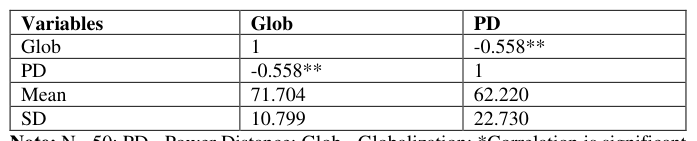
Table 2: Shows descriptive statistics and inter-correlations.
Variables Glob PD Glob 1 -0.558** PD -0.558** 1 Mean 71.704 62.220 SD 10.799 22.730 Note: N= 50; PD= Power Distance; Glob= Globalization; *Correlation is significant at the 0.05 level (1-tailed). **Correlation is at 0.01 level. Globalization also appears to have a significant relationship (B= -1.174, p-value <0.000) with the country’s level of power distance. Table 2 shows the summary of the single linear regression analysis for the variable (globalization) predicting power distance (PD) (i.e., the tendency of a country to be a low power distance country versus globalization). Table2: Summary of the single regression analysis for the variable predicting power distance.
Human Interaction & Emerging Technologies (IHIET-AI 2022) Artificial Intelligence & Future Applications https://openaccess.cms-conferences.org/#/publications/book/978-1-7923-8989-4 relationship with power distance among fifty countries. The linear regression analysis results of analyzing fifty developed and developing nations suggest several conclusions about power distance among countries: 1. All countries' globalization level matters when it comes to the level of power distance at the country level. Power distance is a critical component of cultural behavior because it determines several of a country's economic decisions, such as asset allocations, insurance purchases, and strategic decisions made by corporations, such as consumers' behavior (de Mooij, 2004). In general, based on the study results, highly globalized countries with strong hierarchies are expected to have less power distance than low globalized countries. 2. The authors of this study found a negative and significant relationship between globalization and power distance which is consistent with the findings of Mridha (2021) in Bangladesh; Podrug, Pavicic, and Brartic (2006) in Eastern Europe, and Yang (2019) in China. 3. This study used the KOF Globalisation Index covers the social, political, and economic barometers of globalization developed by Gygli, Savina, Haelg, Potrafke, and Sturm (2019). The KOF globalization index is a more robust overall measure with data available in several countries. Nevertheless, future research should use other proxies for globalization, such as primary data from individuals, to know whether other globalization measures can produce comparable results. 4. Finally, the author fills the above gap by empirically examining the relationship between globalization and power distance. It is noteworthy to study globalization and empirically examine its ties with Hofstede's cultural value of power distance that influences rates of innovation in countries, and therefore, its competitive advantage, wealth, and consumer behavior (de Mooij, 2004). This study focuses on the cultural value of individualism power distance due to the author's evidence that supports the study hypothesis. For practitioners, educators, and policymakers, this study's results could help them rethink their investment in education that helps society integrate into the process of globalization that promotes wealth and prosperity while keeping their local cultural values and identity. Policymakers should find a balance between globalization and society culture because no one can doubt that globalization has made it easier for technologies and novel ideas to spread worldwide quickly (Wani, 2011). Since consumer buying behavior is influenced by power distance (de Mooij, 2004), global and international corporations could also benefit from the results of this study since understanding power distance in a foreign country means knowing how the prepare a strategy that fits consumer buying behavior.
REFERENCES
Bansal, G., Zahedi, F. M., and Gefen, D. 2016. “Do Context and Personality Matter? Trust and Privacy Concern in Disclosing Sensitive Information Online,” Information & Management, Vol. 53, No. 1, pp. 1-21.
David, F., 2002. Why national pride still has a home in the global village. In Global Policy Forum. New York. The Scotsman May (Vol. 18). De Mooij, M., 2019. Consumer behavior and culture: Consequences for global
marketing and advertising. Sage. Dreher, A., 2006. Does globalization affect growth? Evidence from a new index of globalization. AppliedEconomicss, 38(10), pp.1091-1110. Duru Ford, L., 2002. Themicronizationn of Hongkong global policy forum.
RadioNetherlandsd. Getahun, Z., 2019. Negative Impact of Globalization on Indigenous Cultures: The Case of Salale Oromo, Oromia Regional State, Ethiopia. Journal of Cultural and Social Anthropology, 1(2), pp.28-36. Getahun, Z., 2019. Negative Impact of Globalization on Indigenous Cultures: The
Case of Salale Oromo, Oromia Regional State, Ethiopia. Journal of Cultural and Social Anthropology, 1(2), pp.28-36. Hofstede, G., 2003. Cultural dimensions. www. geert-hofstede. com. Hofstede, G., Hofstede, G.J. and Minkov, M., 2005. Cultures and organizations: Software of the mind (Vol. 2). New York: Mcgraw-hill. Minkov, M. and Hofstede, G., 2012. Hofstede’s fifth dimension: New evidence
from the World Values Survey. Journal of cross-cultural psychology, 43(1), pp.3-14. Mridha, M.A.H., 2021. Global Culture: Its Existence and Consequences on Our Lifestyle in Bangladesh. Open Journal of Social Sciences, 9(01), p.167. Rwegelera, M.K., 2012. The effect of globalization on Tanzanian culture: A review.
Huria: Journal of the Open University of Tanzania, 12(1), pp.152-172. Orunmoluyi, T. P. (.2002) Globalization: A millennium challenge for Nigerian Banks: The Economist 4 pp 31-32. Otokhine, E., 2000. Internet strengthens cultural imperialism. The Comet, August, 23, p.21. Olasunkanmi, A., 2011. Economic globalization and its effect on the community in
Africa. Journal of Sociology and Social Anthropology, 2(1), pp.61-64.Parker, B. (2005). Introduction to Globalization and Business. New Delhi: Response Book. Podrug, N., Pavičić, J. and Bratić, V., 2006. Cross-cultural comparison of Hofstede's dimensions and decision-making style within CEE context. From transition to sustainable development: The path to European integration, pp.339-343. Scherer, B.N., 2010. Globalization, culture, and communication: Proposal for
cultural studies integration within higher education graphic design curriculum. Iowa State University. Shah, G., 2009. The impact of economic globalization on work and family collectivism in India. Journal of Indian Business Research. Tuhus-Dubrow, R., 200The world’s languages are fast disappearing. Wani, H.A., 2011. Impact of Globalization on World Culture. Research Journal of Humanities and Social Sciences, 2(2), pp.1-4. Yeh, K.H., 2019. Asian indigenous psychologies in the global context. Springer
International Publishing: Yusuf, A., 2008. Impact of Globalization on culture. Unpublished Text.
Read this individual research paper free through the original publisher, or explore the full digital proceedings book.
ISBN 978-1-7923-8989-4
Explore this ISBN in the AHFE Bookstore ↗Listed in the July 2026 bookstore catalogue; search by ISBN to confirm current availability · Digital book purchase optional