Dimitrios Ziakkas, Anastasios Plioutsias, Konstantinos Pechlivanis (2022). Artificial Intelligence in aviation decision making process.The transition from extended Minimum Crew Operations to Single Pilot Operations (SiPO). In: Artificial Intelligence and Social Computing. AHFE Open Access, vol. 28, pp. 101–107. https://doi.org/10.54941/ahfe1001452
Innovation, management of change, and human factors implementation in-flight operations portray the aviation industry. The International Air Transportation Authority (IATA) Technology Roadmap (IATA, 2019) and European Aviation Safety Agency (EASA) Artificial Intelligence (A.I.) roadmap propose an outline and assessment of ongoing technology prospects, which change the aviation environment with the implementation of A.I. and introduction of extended Minimum Crew Operations (eMCO) and Single Pilot Operations (SiPO). Changes in the workload will affect human performance and the decision-making process. The research accepted the universally established definition in the A.I. approach of “any technology that appears to emulate the performance of a human” (EASA, 2020). A review of the existing literature on Direct Voice Inputs (DVI) applications structured A.I. aviation decision-making research themes in cockpit design and users’ perception - experience. Interviews with Subject Matter Experts (Human Factors analysts, A.I. analysts, airline managers, examiners, instructors, qualified pilots, pilots under training) and questionnaires (disseminated to a group of professional pilots and pilots under training) examined A.I. implementation in cockpit design and operations. Results were analyzed and evaluated the suitability and significant differences of e-MCO and SiPO under the decision-making aspect.Keywords: Artificial Intelligence (A.I.), Extended Minimum Crew Operations (e-MCO), Single Pilot Operations (SiPO), cockpit design, ergonomics, decision making.
The new challenges risen by the increase in air traffic volumes (besides the Covid-19 distraction) and the growing complexity of systems and the ope- rational environment dictate a greater focus on competitiveness and green policy commitment; thus, implementing new technology (A.I.) could provide
opportunities and solutions. New systems’ design and human-machine inte- ractions are anticipated by the implementation of new technology (EASA, 2020), affecting the decision-making process in terms of:
Alleviating human resources and mental capacity from tasks a machine can do, allows reallocation on high added-value tasks, particularly the decision-making process, which critically affects the safety of the flight.
Creating a human-centered complex decision process aided by the intro- duced technology; and
Defining and respecting the human performance framework.
Almost four decades ago, researchers focused on the use of direct voice inputs (DVI) as an alternative means of human-machine interaction (HMI) in military jets to mediate the increasingly pilot’s cognitive workload (W.L.) induced by more sophisticated and complex systems, avionics, and missions (Ruth et al., 1982). A decade later, the DVI referred to as a decision-making aid (Weinstein, 1991).
Continued technological developments and the implementation of A.I. have the potential for safety and efficiency gains. The consequent manpower aviation industry needs are the reasons to explore the technical and regulatory feasibility of further reducing the number of pilots aboard commercial air transport (CAT) aircraft. A.I. applications can be divided into model-driven A.I. and data-driven A.I.
According to the industrial roadmaps, pilots’ first certification of assista- nce is expected in 2025. The next step with an implementation period of ten years is leading gradually to “full autonomy” by 2035. The industrial roa- dmap timeline could be summarized in three steps. The first step focuses on the crew assistance and augmentation area, with announced implementation period (2022–2025). After the assistance period, the second step implements the human/machine collaboration phase from 2025 to 2030. Finally, the third step introduces and implements the autonomous commercial air transport era, starting from 2035.
The first and second step of the presented roadmap proposes the two following concepts of operations:
Extended Minimum-Crew Operations (eMCOs) — formerly ‘Reduced Crew Operations’— where single-pilot operations are allowed during the cruise phase of the flight, with a level of safety equivalent to today’s two-pilot operations, to be implemented as from 2025).
Single-Pilot Operations (SiPOs), where, at a later stage, end-to-end single-pilot operations might be allowed, also based on a level of safety equivalent to today’s two-pilot operations, to be implemented as from 2030.
REVIEWING DIRECT VOICE INPUTS TECHNOLOGY TO SUPPORT DECISION MAKING This study aims to present, identify and propose implementation of DVI tech- nology in aviation decision-making and examine how DVI can affect the
Artificial Intelligence in Aviation Decision-Making Process 103
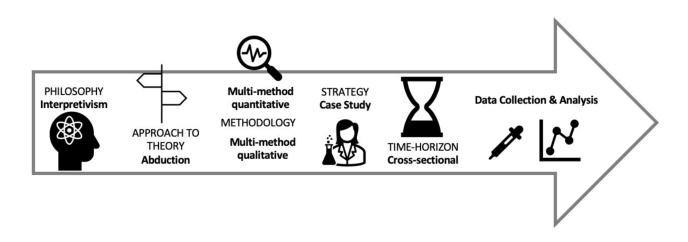
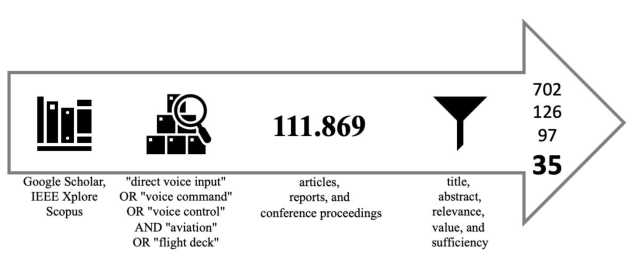
Figure 1: Presentation of research framework.Figure 2: Schematic literature review – research overview.
transition from multi-crew to eMCO and SiPO on the rationale that the single-pilot human operator having accessible data in a timely and naturally interactive fashion enhancing Network Design and Management (NDM), (Klein, 2008; Orasanu & Fischer, 1997).
Based on the Purdue and Coventry Universities case study, the followed interpretivism philosophy examines the identified DVI technology - areas of interest chosen by thematic analysis related to the systematic literature review, questionnaires, and current DVI technologies. Figure 1 presents the followed research techniques and procedures framework (Saunders et al., 2019).
Initially, a broad systematic literature review was based upon the three- pillar context of operational viability, operational reliability, and functional utility. The followed context offered a comprehensive analysis in aviation industry case studies (General Dynamics, USAF) focusing on direct voice inputs implementation in the cockpit design (Ruth et al., 1982). Additio- nally, the research examined the relationship of DVI applications with pilots’ perception (Level 1, S.A.) and comprehension (Level 2 SA, Endsley, 1995) under the Human Machine Interface framework (Deutsch & Pew, 2005). A schematic overview of the conducted systematic literature search is depicted in Figure 2.
The research followed the single case study strategy. The first step focu- sed on evaluating the SME’s (Human Factors Analysts, A.I. analysts, airline managers, examiners, instructors, qualified pilots, pilots under training)
perception through questionnaires (disseminated to a group of professional pilots and pilots under training), interviews (Yin, 2014) and literature review under the research questions framework:
How do SME’s understand DVI’s?
How could the proposed DVI’s introduction affect the existing decision- making practices?
Through an applied and controlled analysis, the interview and questi- onnaire results linked the application of DVI for system management and information retrieval, which could benefit pilots’ perception (Level 1 S.A.) and comprehension (Level 2 S.A.) (Endsley, 1995) and acknowledged the relevance and experiences relating to the research questions and literature review findings for the potential DVI use in D.M. (Coolican, 2019).
Following a thematic coding technique, the research team applied an analytical approach representing the field of flight operations related to the research question framework. The interpretive stage followed the triangula- tion method (Merriam, 2015). The results of each question are linked with central themes and categorized (Coolican, 2019). Then, a frequency analysis was performed for the derived themes to assess repetition in the entirety of the group feedback and to formulate a model of the major themes and the asso- ciated responses (King and Horrocks, 2010; Merriam, 2015). This thematic code method oriented the analytical process. The yielded thematic outputs represented the consensus of the grouped responses, whereas any deviations were critically discussed and interpreted (Merriam, 2015).
DVI UTILIZATION IN DECISION MAKING TOWARDS EMCO/ SIPO Following the systematic literature review thematic analysis and the results from interviews and questionnaires, the research team examined the imple- mentation of DVI technology in the aviation decision-making process through operational viability, operational reliability, and functional utility.
The criteria of literature review references’ frequency and context rele- vance, revealed the DVI’s viability link to the operator’s approval and users’ motivation – satisfaction (enhancement through multimodal inte- raction, minimizing head downtime (HDT), workload and performance improvement, economic benefits, and training (Ruth et al., 1982).
Likewise, the DVI’s reliability was related to the accuracy, classification of errors, semantics, operations environment, feedback, reporting culture - transparency, adaptability, and real - transaction – decision time relationship.
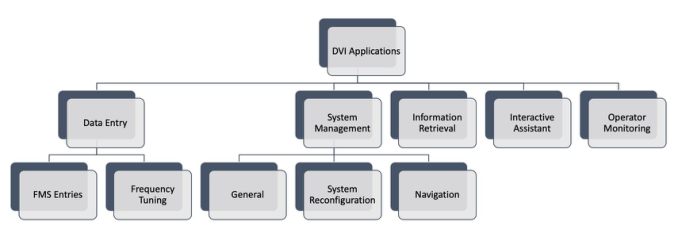
Finally, DVI’s applied functionality is related with operational viability and reliability (Ruth et al., 1982). An extensive analysis of 21 reviewed articles shows relevance in five general categories, and five sub-categories of present or proposed DVI’s uses in cockpit design, (Figure 3).
As a result, it could be argued that applications for system management and information retrieval could benefit pilots’ perception (Level 1 S.A.) and comprehension (Level 2 S.A.) (Endsley, 1995) and benefit decision making (Klein, 2008; Orasanu & Fischer, 1997).
Artificial Intelligence in Aviation Decision-Making Process 105
Figure 3: Schematic representation of DVI applications in the reviewed literature.
The opinion surveys’ quantitative analysis and interviews’ thematic analy- sis validated the results from the systematic literature review, showing a decreasing trend of resistance of the users when Artificial Intelligence imple- mentation in operations is presented under a Threat Error Management (TEM) model, (Table 1).
CONCLUSION
A review of the existing literature regarding Direct Voice Inputs (DVI) stru- ctured the proposed A.I. aviation decision-making research in cockpit design and users’ experience. Results indicate the A.I. challenges – limitations and resistance of users in the transition from Multi-Crew Operations to e-MCO/ SiPO. Potential improvements to A.I. - cockpit design/user interactions should be designed to address this resistance to change. However, the proposed com- mercially available DVI technology application in-flight operations should follow a simple to complex approach - implementing low impact/non-time- critical applications (airport – airspace related information, ATIS) in this transient period to eMCOs/ SiPOs, (Stanton & Harris, 2015). The applica- tion of DVI for system management and information retrieval could benefit pilots’ perception (Level 1 S.A.) and comprehension (Level 2 S.A.) (Endsley, 1995). Therefore, the single-pilot human operator having accessible data in a timely and naturally interactive fashion would be able to make time criti- cal decisions closer to optimums in the NDM cockpit environment (Klein, 2008; Orasanu & Fischer, 1997). The following are outlined from this study considering the integration of DVI in the modern cockpit design as decision-making supporting tool:
1. The viability aspects depend on the inclusive framework and the decided technology change. 2. Technology roadmap and related researches focus on SiPOs and the concept of the artificial (or cognitive) implementation in cockpit design concerning operational reliability. Moreover, a conclusive accuracy thre- shold analysis for DVI implementation in aviation operations is lacking (White et al., 1984).
Table 1. Reviewed literature in chronological order and validation criteria.
Table available in the original PDF paper.
3. DVI application functional utility research presents limited analysis literature. 4. A Systems Theoretic Early Concept Analysis (STECA) is recommended as a follow-up, focusing on a safety-guided design- hazard identification approach.
ACKNOWLEDGMENT
The authors thank faculty members of Purdue and Coventry Universities for their invaluable feedback contributing to this work.
REFERENCES
Deutsch, S., & Pew, R. W. (2005). Single Pilot Commercial Aircraft Operation.
Artificial Intelligence in Aviation Decision-Making Process 107
EASA. (2020). Artificial Intelligence Roadmap: A human-centric approach to A.I. in aviation. Endsley, M. R. (1995). Toward a theory of situation awareness in dynamic systems.
Human Factors, 37(1), 32–64. https://doi.org/10.1518/001872095779049543 IATA. (2019). Aircraft Technology Roadmap to 2050. Klein, G. (2008). Naturalistic decision making. Human Factors, 50(3), 456–460. Orasanu, J., & Fischer, U. (1997). Finding Decisions in Natural Environments: The View From the Cockpit. Ruth, J. C., Godwin, A. M., & Werkowitz, E. B. (1982). Voice Interactive System
Development Program. Advanced Avionics and the Military Aircraft Man/Mach- ine Interface. Saunders, M., Lewis, P., & Thornhill, A. (2019). Research Methods for Business Students Eighth Edition. In Research Methods for Business Students. Pearson Education Limited. Stanton, N. A., & Harris, D. (2015). The future flight deck: Modelling dual, single
and distributed crewing options. Applied Ergonomics, 53(B), 331–342. https://do i.org/10.1016/j.apergo.2015.06.019 Weinstein, C. J. (1991). Opportunities for advanced speech processing in military computer-based systems. IEEE, 79(11), 1626–1641. https://doi.org/10.1109/5. 118986 White, R. W., Parks, D. L., & Smith, W. D. (1984). Potential flight applications for
voice recognition and synthesis systems. 6th AIAA/IEEE Digital Avionics System Conf., 84–2661-CP.
LISTED IN THE AHFE DIGITAL BOOKSTORE CATALOGUE
Explore the complete digital volume
Artificial Intelligence and Social Computing
Read this individual research paper free through the original publisher, or explore the full digital proceedings book.
ISBN 978-1-958651-04-9
Explore this ISBN in the AHFE Bookstore ↗Listed in the July 2026 bookstore catalogue; search by ISBN to confirm current availability · Digital book purchase optional