Leonard Brown, Ngan Pham, Jefferey Burgess (2022). Toward a Systems Framework Coupling Safety Culture, Risk Perception, and Hazard Recognition for the Mining Industry. In: Human Factors and Simulation. AHFE Open Access, vol. 30, pp. 68–75. https://doi.org/10.54941/ahfe1001493
The United States mining industry has made steady progress to improve worker safety and reduce injuries. Despite these gains, the industry remains largely reactive in its approach to health and safety. There remains a primary focus on lagging indicators, such as the numbers of injuries, hours lost, and hazards found at the worksite. To facilitate a more proactive approach, new methods are needed to evaluate hazardous conditions and unsafe behaviors. This work explores the relationships among mine workers’ hazard recognition abilities, the individual’s perception of risk, and the safety culture of the mining workplace. We have conducted a literature review to identify key factors and analytical models in industries where health and safety are a major consideration, including construction, manufacturing, mining, and transportation. Our analysis considered both process-oriented frameworks, such as Systems Thinking approaches, and statistical methods, including Structural Equation Modeling (SEM). A meta-model was then developed to aggregate and examine key factors and potential causal relationships. We discuss the creation of this meta-model, identifying notable structural characteristics and hypotheses for future confirmatory analysis. Use cases are then outlined, including descriptive, evaluative, and generative applications.
Although the mining industry has made significant improvements in wor- ker health and safety, operators still struggle to identify occupational health risks and avoid conditions giving rise to safety hazards, both of which are essential for reducing injuries, chronic health conditions, and deaths. The mining industry is largely oriented toward reactive models of health and safety (H&S) management, both in terms of the metrics used, such as reporta- ble incidents, and methods to improve performance – for instance, the Mine Safety and Health Administration’s (MSHA) patterns of violations. Furth- ermore, the design of H&S software systems and technologies is equally oriented toward reaction, with dashboards and performance graphs promi- nently displaying “lagging indicators” such as the numbers of injuries, hours lost, and hazards found at each worksite. New statistical models are needed
Toward a Systems Framework Coupling Safety Culture, Risk Perception 69
to better understand and proactively address hazardous conditions and beh- aviors, so that improved training and controls hierarchies may be deployed to reduce these risks and address related human factors.
Recent studies have examined the impacts of risk attitude, risk perception, and worker experience on hazard recognition in the mining industry (Eiter et al. 2020; Haas et al. 2019; Orr et al. 2018). However, the holistic relati- onships among these factors – as well as the impacts of other internal and external factors on hazard recognition performance – have not been well- explored for mining. Notable advancements have been made over the last ten years in systems-level approaches, using modeling methodologies such as Systems Thinking Approaches and Structural Equation Modeling (SEM) to better characterize the complex, multi-factor nature of occupational H&S events, environments, and scenarios. A large body of empirical evidence has also been amassed to validate these models in other industries. In this work, we conducted a literature review and developed a meta-model to aggregate findings as an initial step toward exploring the factors and correlations of safety culture, risk perception, and hazards recognition in a mining indu- stry context. The goal of this article is to outline our literature review and modeling methods. We discuss directions for future improvement of the meta-model and its use to analyze health and safety incidents in the mining industry.
LITERATURE REVIEW
We conducted a literature review to identify (1) the primary modeling metho- dologies and (2) factors studied in prior works that were determined to affect risk perception and hazard recognition. Forty-four scholarly articles were identified, over 80% of which were published within the last ten years. Inclu- sion criteria included publication in a peer-reviewed journals focused on the topic areas of incident analysis, applied psychology, human factors, occupati- onal health, risk analysis, and safety, with preference given to articles having at least 40 citations. Exclusion criteria included filtering articles that were less than two years old. Key search terms included the three main topics of this article (e.g., “safety culture”, “risk perception”, and “hazard recognition”) as well as the keywords “analysis”, “assessment”, “factors”, “perception”, “risk”, “root cause analysis”, and “safety”. Our literature review aggregated data and operations from ten heavy industries, such as construction, manufa- cturing, mining, nuclear, oil and gas, and transportation; the names of these industries were also included in our search.
From the articles in our literature review, 12 notable models were selected for further analysis (Table 1). Models were selected using the following crite- ria: (1) the model was well-defined in terms of factors and correlations, to a degree that it could be graphed unambiguously; (2) the model was validated by hypothesis testing and empirical data (e.g., via confirmatory factor analy- sis), as opposed to being a purely conceptual framework; and (3) the model provides a detailed explanation of the potential causal relationships among factors relating to at least two of risk perception, hazard recognition, and/or
Table 1. Selected analytical methodologies used to model risk perception and hazard recognition in numerous industries.
Table available in the original PDF paper.
Article Industry Methodology Select Factor Labels Personality traits Transport Measurement Model Fyhri and Backer- Grøndahl 2012
Goh et al. 2010 Waste Disposal
Systems Thinking Risk management capacity; Revenue stream Leiter et al. 2009 Printing SEM Perception of severity; Worry; Perceived control
Lin et al. 2013 Oil & Gas Bayesian Belief Network
Commitment; Fitness for work; Task complexity
Ma et al. 2021 Construction Systems Thinking + SEM
Group norms; Alertness; Supervision Maiti et al. 2004 Mining SEM Personality; Worker injuries; Job involvement
Man et al. 2019 Construction Measurement Model
Perceived probability; Perceived severity; Stress Shin et al. 2014 Construction Systems Thinking Risk perception; Attitude; Intention
Wang et al. 2016 Construction SEM Work characteristics; Safety management; Risk tolerance Xia et al. 2017 Construction SEM Perceived probability; Perceived severity; Perceived negative utility
Xia et al. 2020 Construction SEM Supervisor climate; Coworker climate; Safety motivation You et al. 2013 Transport SEM Job risk; Everyday risk; Locus of control
safety culture. Note that Table 1 outlines only a subset of the factors identi- fied in each work. In total, over 70 factor labels were identified during our review, illustrating the diversity and complexity of the design space for these models.
The models considered a wide range of factors, including those that were internal to the worker (i.e., internal factors), influences on workers’ com- munities of practice via culture or environment (i.e., external factors), and processes or actions occurring within the workplace itself (i.e., process-based factors). Furthermore, many labels referenced the same or similar factors via different terminology. For example, the concept of workers exhibiting safe behavior was variously described as “rate of safe behaviors” (Shin et al. 2014), “safety performance” versus “unsafe behaviors” (Wang et al. 2016),
Toward a Systems Framework Coupling Safety Culture, Risk Perception 71
“safety participation”(Xia et al 2017), “safety compliance”(Xia et al. 2020), and “safety operation behavior”(You et al. 2013). A goal of this work was to review and aggregate these factor labels using a Model Consolidation process (discussed below), as a foundation for future empirical validation studies.
Our literature review identified two prevalent analytical methodologies: Systems Thinking Approaches. Systems Thinking approaches explore the dynamics of an activity from a socio-economic viewpoint, characteri- zing feedback loops and delays between socio-economic factors to identify, explain, and ultimately eliminate problems within the system. A strength of the approach rests in its ability to formalize and characterize behaviors, com- munications, and economic processes within complex systems, as are often found in industrial workplaces. A detailed treatment of Systems Thinking may be found in Marias et al. (2006).
Structural Equation Modeling. SEM is a statistical methodology which examines the potential causal relationships between factors impacting both the individual and the community. SEM can characterize life experience, cognitive processes, and social and/or environmental pressures more effecti- vely than Systems Thinking Approaches (Maiti et al. 2004). Notably, SEM also provides mechanisms to explore hidden variables that may impact the system and is robust to measurement error. A discussion of SEM may be found in DeVellis and Thorpe (2021).
Although each approach provides distinct advantages, both Systems Thin- king and SEM are descriptively powerful methods for characterizing multi- factor systems; furthermore, the relationships between factors within these models can be validated through empirical studies.
MODEL CONSOLIDATION We observed a substantial degree of similarity in the models considered during our review, suggesting that there are core factors which apply to most industries. To better characterize these common features, an inductive process called Model Consolidation was applied to create an exploratory Meta-model coupling safety culture, risk perception, and hazards recognition (C-P-R Meta-model). Model Consolidation is a form of Grounded Theory that originates from the field of human computer interaction (Beyer and Holtzblatt, 2017). During the Model Consolidation process, similar featu- res are identified across a group of data samples (i.e. study models). Each set of similar features is then given a representative label. Features that meet the consensus threshold – in other words, features that occur in the minimum desired percentage of samples – are selected for inclusion into a meta-model describing the dataset. The advantage of the consolidation process is that it amplifies structural features and relationships that have high consistency across models in the sample group, while de-emphasizing features that are unique to specific worksites or occupational domains. The consolidation pro- cess has great potential to help us coalesce influencing factors and aggregate the numerous models of safety and risk that have been developed within the occupational H&S community. Consolidation thus increases the robustness of our meta-model and focuses attention on the underlying human factors
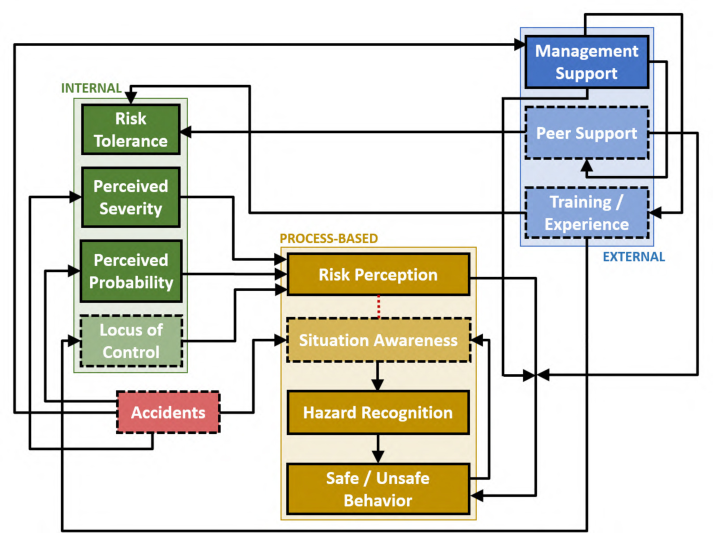
Figure 1: The C-P-R Meta-model: A holistic model coupling safety culture, risk perce- ption, and hazards recognition.
which manifest in many or most sample domains. A detailed discussion of Model Consolidation may be found in Beyer and Holtzblatt (2017).
To apply the consolidation process, 12 study models were chosen that represented multiple industries (Table 1). The selection process was outlined in the prior section. We then performed a manual n-way crosswalk of the factors in each model with the factors in all other models, associating com- mon factor labels and identifying the factors which occurred in a majority of the samples, as per the Model Consolidation process outlined above. The aggregated C-P-R Meta-model is given in Figure 1. Boxes identify the con- solidated factors, which were based on two consensus thresholds. Solid-line boxes indicate factors with a threshold of 75% consensus; in other words, these factors describe constituent factors that were present in at least 75% of the study models from our literature review. The 75% consensus threshold was chosen as it falls within the minimum desirable levels of consistency for factor loading (DeVellis and Thorpe, 2021). Furthermore, dotted boxes were used to indicate other notable factors that had a threshold of 50% consen- sus. The likely causal pathways are identified by links (arrows) between the factors; note that the links pointing to the centers of other links suggest a direct mediating relationship.
Links in our meta-model were consolidated using a similar process. For each pair of consolidated factors, a crosswalk was performed to identify com- mon links between the underlying factors in each of the constituent models.
Toward a Systems Framework Coupling Safety Culture, Risk Perception 73
Links were then propagated to the meta-model if the consensus threshold was achieved. As a greater level of variability was observed among the links betw- een factors, we chose a consensus threshold of 50%. The higher variability among these causal relationships may be due to differences of focus among the studies selected during our literature review (e.g., study authors approa- ched the problem from differing fields of expertise and with differing areas of focus, such as by emphasizing cognitive factors, process controls, economic pressures, or other factors), greater sensitivity to individual industries and workplaces, and/or the presence of other hidden factors.
DISCUSSION
The purpose of this article was to develop a consensus meta-model that can be used to explore the underlying factors and correlations among safety culture, risk perception, and hazards recognition in a mining industry context. From our literature review, we developed the C-P-R Meta-model, which serves as a foundation for three types of analysis: Descriptive, evaluative, and genera- tive. The purpose of these analyses is to (1) understand the overall structure of this system (descriptive analysis); (2) identify key factors and interesting correlations for further derivation and validation (evaluative analysis); and (3) establish a future computational framework to identify the likelihood of potential incidents using data collected through operators’ H&S management systems, such as worker safety interactions, job task analyses, training outco- mes, and other types of data (generative analysis). In this section, we explore next steps and future directions for each type of analysis.
Descriptive Analysis. Our meta-model (Figure 1) suggests that 12 high- level factors embody the relationships among safety culture, risk perception, and hazard recognition. This system includes internal factors, such as risk tolerance and locus of control, external factors, such as management support and training, and process-related factors that exist downstream, including situational awareness and realized behavior. Seven of these factors exhibi- ted 75% agreement across the constituent models in our review. Through the literature review, it is presumed that causal relationships exist between the internal factors of risk probability, severity, and individual risk tolera- nce and realized risk perception; these factors are mediated by a variety of external factors, such as management support for safety and peer support for safety, as well as prior occurrences of incidents. Although training was iden- tified as a key influence on realized risk perception, this factor was present in only a minority of the models reviewed. Furthermore, a causal link between risk perception and hazard recognition (represented by a red dotted line in Figure 1) was curiously absent from most of the models in our sample.
Evaluative Analysis. The causal pathways described in our meta-model provide a basis for two types of hypothesis testing. First, confirmatory factor analysis (CFA) will be used to validate and enhance the meta-model, by adding or removing links based on empirical evidence from the mining indu- stry. Two medium-sized operators, with a total of nine active worksites in North America, are participating in our validation study; the CFA process will use survey instruments and data mining methods as outlined in Leiter
et al. (2009) and Wang et al. (2016). Second, the meta-model presented in this article is an initial model that will likely be refined through CFA analysis, so that it can be used to explore new types of interventions and their impacts on the system. The mediating relationships identified in our model provide excellent targets due to their hypothesized impact on health and safety per- formance. For instance, new training programs or controls hierarchies may be implemented that improve worker risk perception or peer support for safety, with outcomes measured by both survey instruments (e.g., attitudi- nal change) and site incident reports (e.g., lagging indicators), respectively. Specific interventions will be identified in future work.
Generative Analysis. The meta-model also provides a framework for future resiliency testing, as it allows us to create generative models and explore hypothetical outcomes for a given set of assumptions. For example, consider a scenario where a short survey instrument is used to regularly query wor- ker competencies and attitudes toward key H&S hazards; these data may be used to precondition the generative model and explore possible outco- mes, such as an increased probability for unsafe behaviors based on workers’ survey responses, as well as potential interventions, such as additional trai- ning or changes to operating procedures. A robust generative model may be developed by using our validated SEM to create a Systems Thinking model, as per the approach of Ma et al. (2021). Furthermore, data from mine opera- tors participating in our evaluative studies may be used to seed the generative model. A detailed discussion of Systems Thinking for generative analysis may be found in Shin et al. (2014).
CONCLUSION
We have created a meta-model using an inductive process called Model Consolidation to explore fundamental relationships among safety culture, risk perception, and hazards recognition. Our proposed C-P-R Meta-model considers how these factors may be impacted by other influences and medi- ators within a complex industrial environment. We are now working with mine operators to confirm our model and refine it for use by the mining industry. Future work will focus on using the meta-model to evaluate new training protocols and controls hierarchies. In particular, a process-oriented Systems Thinking model will be developed to examine how changes in inter- nal and external factors may potentially impact operators’ health and safety trajectories.
ACKNOWLEDGMENT
This work was supported in part by NIOSH award 2U60 OH010014-11-00 and a University of Arizona School of Mining & Mineral Resources (SMMR) Seed Grant.
REFERENCES
Beyer, H., & Holtzblatt, K. (2017) Contextual Design: Defining Customer-Centered Systems, 2nd Ed. San Francisco: Morgan Kaufmann.
Toward a Systems Framework Coupling Safety Culture, Risk Perception 75
DeVellis, R. F. & Thorpe, C.T. (2021) Scale Development: Theory and Applications, 5th Ed. Los Angeles: Sage. Eiter, B.M., & Bellanca, J.L.(2020, August 31). Identify the influence of risk attitude,
work experience, and safety training on hazard recognition in mining. Mining, Metallurgy & Exploration, 37(6), 1931-1939. Fyhri, A., & Backer-Grøndahl, A. (2012, November). Personality and risk perception in transport. Accident Analysis & Prevention, 49, 470–475. Goh, Y., Brown, H., & Spickett, J. (2010). Applying systems thinking concepts in the
analysis of major incidents and Safety Culture. Safety Science, 48(3), 302–309. Haas, E. J., Eiter, B., Hoebbel, C., & Ryan, M. E. (2019, March 14). The impact of job, site, and industry experience on worker health and safety. Safety, 5(1), 16. Hunter, D.R., 2002. Development of an aviation safety locus of control scale.
Aviation, Space, and Environmental Medicine 73 (12), 1184–1188. Leiter, M. P., Zanaletti, W., & Argentero, P. (2009, January). Occupational Risk Perception, safety training, and injury prevention: Testing a model in the Italian printing industry. Journal of Occupational Health Psychology, 14(1), 1–10. Lin, P.-H., Hanea, D., & Ale, B. (2013). Modeling contractor and company employee
behavior in high hazard operation. Safety, Reliability and Risk Analysis: Beyond the Horizon, 335–340. Ma, H., Wu, Z., & Chang, P. (2021, June). Social impacts on hazard perception of construction workers: A System Dynamics Model Analysis. Safety Science, 138, 105240. Maiti, J., Chatterjee, S. & Bangdiwala, S. I. (2004). Determinants of work injuries
in mines - An application of structural equation modeling. Injury Control and Safety Promotion, 11, 29–37. Leveson, N. (2004, April). A new accident model for Engineering Safer Systems. Safety Science, 42(4), 237–270. Man, S. S., Chan, A. H., & Alabdulkarim, S. (2019, December). Quantification of risk perception: Development and validation of the construction worker risk perception (COWORP) scale. Journal of Safety Research, 71, 25–39. Marais, K., Saleh, J. H. & Leveson, N. G. (2006). Archetypes for organizational
safety. Safety Science, 44(7), 565–582. Orr, T. J., Bellanca, J. L., Eiter, B. M., Helfrich, W., & Rubinstein, E. N. (2018, July).
The effect of hazard clustering and risk perception on hazard recognition. Intl. Conf. on Applied Human Factors and Ergonomics (pp. 349–360). Springer. Shin, M., Lee, H., Park, M., Moon, M., & Han, S. (2014, July). A system dynamics approach for modeling construction workers’ safety attitudes and behaviors. Accident Analysis & Prevention, 68, 95–105. Wang, J., Zou, P. X., & Li, P. P. (2016, August). Critical factors and paths influencing
construction workers’ safety risk tolerances. Accident Analysis & Prevention, 93, 267–279. Xia, N., Wang, X., Griffin, M. A., Wu, C., & Liu, B. (2017, September). Do we see how they perceive risk? an integrated analysis of risk perception and its effect on workplace safety behavior. Accident Analysis & Prevention, 106, 234–242. Xia, N., Xie, Q., Hu, X., Wang, X., & Meng, H. (2020, January). A dual perspective
on risk perception and its effect on safety behavior: A moderated mediation model of safety motivation, and supervisor’s and coworkers’ safety climate. Accident Analysis & Prevention, 134, 105350. You, X., Ji, M., & Han, H. (2013, August). The effects of risk perception and flight experience on airline pilots’ locus of control with regard to safety operation behaviors. Accident Analysis & Prevention, 57, 131–139.
LISTED IN THE AHFE DIGITAL BOOKSTORE CATALOGUE
Explore the complete digital volume
Human Factors and Simulation
Read this individual research paper free through the original publisher, or explore the full digital proceedings book.
ISBN 978-1-958651-06-3
Explore this ISBN in the AHFE Bookstore ↗Listed in the July 2026 bookstore catalogue; search by ISBN to confirm current availability · Digital book purchase optional