Luis Carlos Betancourt Sanchez, Vladimir Cuenca Cuellar (2022). Occupational health care services for informal workers. From public policy to real practice. In: Social and Occupational Ergonomics. AHFE Open Access, vol. 65, pp. 152–155. https://doi.org/10.54941/ahfe1002670
Informal workers make up the majority of active workers in the world; However, actual access to occupational health services is limited, precarious, and of minimal relevance for health promotion in the workplace. Occupational health programs have a strong emphasis on accidents and to a lesser extent on disease prevention. However, this approach is based on a deterministic vision that does not correspond to the real needs of workers with respect to their health.Some countries establish in their regulatory frameworks that occupational health and safety services are the responsibility of the employer; in other cases, the services are administered by a public regulatory framework that allows access to a greater number of workers without considering the characteristics of insertion into employment. In the case of informal workers, although they have access to some primary health care services that constitute the first contact with the health system, there is little recognition of the health problems derived from work at this level.In some sectors, such as agriculture and mining, public policies have been implemented to promote health care for informal workers. However, multiple problems hinder the continuity of the programs and the quality of care for workers. The training of health professionals to integrate actions on occupational health in primary health care is scarce. The development of competencies for health professionals and community agents is timely and necessary, not only for the identification and analysis of work-related problems but also for the promotion of health in the workplace. On the other hand, financing of health care programs is scarce, sometimes it depends on political agreements that do not materialize in public programs that are sustained over time.It is necessary to emphasize that a combined action is required between the state and institutions, which allows establishing conditions for comprehensive care from the promotion of health in the workplace. All of the above are under a vision that goes beyond the notion of accidents and occupational diseases as central axes of workers' health.
The health of workers is a central element in the recognition of the well- being of human beings. Work and employment conditions are a fundamental part of the determinants of health. In addition, work stands as a relevant indicator of how societies distribute wealth and power (Benach et al., 2013). However, only a small part of the world’s working population has access to occupational health services, which include not only the prevention of acci- dents and illnesses, but also health promotion, among other aspects relevant to the working population.
Informal workers (representing more than half of the world’s emplo- yed population) lack access to occupational health care programs that can account for their work and health conditions. Despite the great importance of the health-work relationship, the general characteristics of informal wor- kers are neglected, their working conditions are scarcely analyzed, and their health is poorly documented in relation to the occupational exposures to which they are subjected.
Occupational Health Care Services for Informal Workers 153
TOWARDS AN OCCUPATIONAL HEALTH CARE POLICY FOR ALL Despite the magnitude of informal work, the impact it has on the economy of millions of families around the world and the consequences in terms of quality of life that work causes in individuals, there have been limited programs that aim to real coverage in terms of analysis of work and health conditions in the informal population, as well as health promotion actions that go beyond services with a curative approach (Barten, Fustukian and Haan, 1996).
Under this scenario, access to health services stands as one of the four dimensions that positively or negatively impact the health of workers. Since the declaration of Alma Ata in 1978, access to health services has been propo- sed under an equity approach, with support in social, economic, and political actions that enable the provision of promotion, prevention, treatment, and rehabilitation services to all peoples of the world with an ideal of universal coverage (OMS, 1978). However, informal workers, when they have access to basic care services, are served by health systems that treat their clinical pro- blems without delving into the axis of the health-work relationship, and do not implement health promotion strategies, since his approach is eminently curative (Solar and Gonzalez, 2019).
In relation to this problem, the Declaration of Colombo (Sri Lanka), ari- sing from the first conference on occupational health in developing countries (1981), proposes some fundamental elements to promote the development of technical capacities that allow the provision of health services for informal workers. Three aspects are fundamental for the declarants: first, the provision of health for agricultural populations and workers in small-scale industries; second, the health situation of migrant workers; and, finally, the need to provide training in occupational health for developing countries. A relevant strategy mentioned by the Colombo declaration and because of developments after Alma Ata indicated the importance of integrating occupational health services with primary health care, as a strategy, not only to improve the health of workers, but living conditions of populations in industrial areas (Barten, Fustukian and Haan, 1996). This change in focus should not only ensure the provision of health services of a curative nature, but also, particularly, gene- rate strategies that would imply overcoming the paradigm of risks derived from specific work conditions and develop the concept of healthy workpla- ces that goes beyond the determinism of exposures and health effects, to focus on wellness and health (not just disease) as a goal.
Subsequently, the 60th assembly of the World Health Organization contri- buted to increasing efforts around the development of strategies that promote occupational health coverage for all (OMS, 2007). In the final declaration, the assembly mentions the health of workers as a fundamental requirement for productivity, economic development and launches its global action plan that emphasizes not only the assessment of the dangers of the work environ- ment but also, the social, individual and access to health dimensions that are promoted from Alma Ata.
Within objective number three of the action plan aimed at improving occu- pational health services and access, it is stated that it is necessary to expand the coverage and quality of services, indicating textually “It is necessary to
154 Betancourt-Sánchez and Cuenca
provide basic health services occupational health to all workers, including those in the informal sector, those in small businesses and agricultural wor- kers”(OMS, 2007). As can be seen, an approach that emphasizes populations mentioned by the Colombo declaration in 1981.
Later, in 2011, the Hague declaration was promulgated, which was deve- loped to contribute to the improvement of coverage and access to health services at work. Its intention, like the declarations that preceded it, is to establish principles that contribute to the search for an integrated appro- ach to health in relation to work (OMS, 2012). Likewise, emphasizing the importance that primary health care can play in the care of informal wor- kers. Thus, declarations such as that of The Hague in 2011, the workers’ health action plan and Colombo have continued to focus on the need to gua- rantee inclusive occupational health service coverage that covers the entire working population, and especially to the most vulnerable workers.
Finally, the global plan of action on workers’ health for the period 2015- 2025 proposes as one of its strategic lines of action to increase access and coverage of health services for workers, also proposing integration between services basic occupational health and primary health care services (OPS and OMS, 2015). This goal, for the region of the Americas, is based on three basic elements: increase the number of countries with basic occupational health services linked to primary care; second, primary health care workers with training regarding occupational health aspects; and third, referral and counter-referral systems to enable access to specialized occupational medicine services for all workers.
As can be seen, from a theoretical point of view there is an interest in occu- pational health being universally accessible to workers, however, due to the heterogeneity of care models in the countries and the difficulties of covering millions of workers, these ideas continue to be recurrent in the guidelines of organizations such as the WHO, which frequently advocates for greater access and expanded coverage in the provision of such services.
BASIC OCCUPATIONAL HEALTH SERVICES With the aim of developing a guideline for the provision of occupational health services, the World Health Organization, the International Labor Organization, and the International Commission on Occupational Health have joined forces to develop a model that defines the principles, content and resources necessary to develop such services and that include all workers regardless of their economic sector, their form of employment or geographical location.
The model is based on the construction of a system of different levels whose focus of action is the elimination, prevention and control of health hazards found in the workplace (Rantanen, 2005). From this perspective, the monocausal model of occupational health is overcome, and a multicausal or multifactorial model is approached that seeks to put the complexity of work- places and the synergy of multiple exposures at the same time at the center (Rantanen, 2005).
Occupational Health Care Services for Informal Workers 155
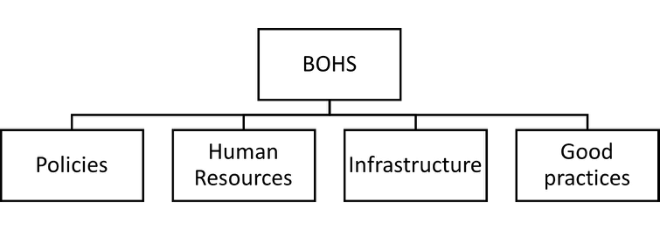
Figure 1: Basic occupational health services. Four elements for your development. (Adapted from Rantanen, 2005).
The way of approaching occupational health in this primary care model is based on 4 elements: developed policies that set out mission, objective and strategies; second, human resources with skills, abilities and ethics; third, infrastructure; and finally, good practices (Rantanen, 2005) (see Figure 1). In conclusion, due to the complexity of the problem, it is necessary for there to be government leadership for the development of policies that promote the construction of priorities on the health of workers that allow the gradual expansion of coverage and access to health care. health, mainly for the most vulnerable workers.
REFERENCES
Barten, F., Fustukian, S. and Haan, S. de (1996) ‘The Occupational Health Needs Of Workers: The Need for a New International Apprach’, Social Justice, 23(4), pp. 152–152. Benach, J. et al. (2013) Employment, work and health inequialities: a global
perspective. Primera. Barcelona: Icaria. OMS (1978) ‘Conferencia Internacional Sobre Atención Primaria en Salud: Declaración de Alma Ata’. Alma Ata: OMS, pp. 1–3. OMS (2007) ‘60a Asamblea mundial de la salud, OMS’, WHA60.13 Control de la
leishmaniasis, pp. 14–23. OMS (2012) ‘Conectando Salud y Trabajo Conectar la salud ocupacional y la atención primaria para’. La Haya, pp. 1–7. OPS and OMS (2015) ‘Plan De Acción Sobre’, Plan De Acción Sobre La Salud De Los
Trabajadores, p. 26. Available at: http://iris.paho.org/xmlui/handle/123456789/ 33983. Rantanen, J. (2005) ‘Basic occupational health services - Their structure, content and objectives’, Scandinavian Journal of Work, Environment and Health, Supplement, (1), pp. 5–15. Solar, O. and Gonzalez, M. J. (2019) Acceso a la salud de los trabajadores que laboran
en la economia informal y sus familias: origenes, lecciones y aprendizajes de la región de las américas. Primera. Edited by O. Solar and M. J. Gonzalez. Santiago de Chile: FLACSO.
LISTED IN THE AHFE DIGITAL BOOKSTORE CATALOGUE
Explore the complete digital volume
Social and Occupational Ergonomics
Read this individual research paper free through the original publisher, or explore the full digital proceedings book.
ISBN 978-1-958651-41-4
Explore this ISBN in the AHFE Bookstore ↗Listed in the July 2026 bookstore catalogue; search by ISBN to confirm current availability · Digital book purchase optional