Abner Flores, Alexander Paselk, Ian Mcandrew (2024). Advancing Perspectives: A Scoping Review of Artificial Intelligence Applications in Aviation Human Factors for Flight Crews. In: Human Factors in Design, Engineering, and Computing. AHFE Open Access, vol. 159, pp. 2149–2163. https://doi.org/10.54941/ahfe1005783
The Federal Aviation Administration (FAA) under FAA Order 9550.8A defines Human Factors (HF) as a "multidisciplinary effort to generate and compile information about human capabilities and limitations and apply that information to equipment, systems, facilities, procedures, jobs, environments, training, staffing, and personnel management for safe, comfortable, and effective human performance" (USA Banner, 2024). The rapid evolution of Artificial Intelligence (AI) across various industries including aviation, has dramatically impacted the overall safety, performance status and future sustainability of the aviation industry and its operational ecosystem. Specifically, AI applications in aviation HF have the potential to transform flight operations by enhancing the safety, performance, and well-being of flight crews. AI tools can assist in monitoring physiological and psychological states, improving decision-making processes, and optimizing workload management. This scoping review aims to explore the breadth of AI applications in aviation HF, focusing on their effectiveness, implementation challenges, and areas requiring further research. The main objective of this scope review is to add perspective in terms of the wide variety of tools available through within the domain of AI related to HF for flight crews in aviation. All this, while keeping focused on three major constants in aviation, that of safety, performance and overall efficiency of the existing and future human-environment interaction.
The aviation industry has always been at the forefront of technological advancements, with a continuous quest for improving safety, efficiency, and performance. Kabashkin et al. (2023) writes that major aviation organizations continue to highlight the ever growing need for adopting artificial intelligence (AI) for transforming operations and for efficiency and safety improvement (Kabashkin et al., 2023). One of the most promising and transformative technologies in recent years is that of Artificial Intelligence
(AI) (Gruetzemacher & Whittlestone, 2022). In the words of Pichai and Schwab (2020), we are working with a domain that is capable of having a greater impact than that of electricity or any other thing we have worked in the past (Pichai & Schwab, 2020). Salas et al. (2010) explains that at any point in the history of HF in aviation, one could characterize its current state at that time by the progress that had been made and by the opportunities that presented themselves for the future. Artificial intelligence in Augmented Reality (AR) offers real-time, augmented information overlays that can assist with flight formation, navigation, system monitoring, and decision-making processes during actual flights (Arjoni, 2023). AI enhanced biomedical sensors present an exciting opportunity to measure human physiologic parameters in a continuous, real-time, and nonintrusive manner by leveraging semiconductor and flexible electronics packaging technology (Li et al., 2017). Artificial intelligence and machine learning algorithms are revolutionizing data analysis in aviation HF (Davila-Gonzalez & Martin 2024). Furthermore, Davila-Gonzalez and Martin (2024) express that it is also possible to create a “Human Digital Twin Profile” through the utilization of “AI models for data aggregation with the purpose of assessing workers’ health and safety, not only in the short term but also in the long term, as well as preventing stress-related issues like anxiety or depression” (Davila-Gonzalez & Martin, 2024). Advanced data analytics tools are essential for interpreting the large datasets generated by these technologies. This review also highlights several challenges associated with the implementation of these innovative technologies. High costs and the need for significant investments in infrastructure and training can be barriers to widespread adoption. Privacy concerns related to the continuous monitoring of flight crews must be addressed to ensure compliance with regulations and to protect individual rights. Despite these challenges, the integration of artificial intelligence applications in aviation HF for flight crews offers substantial benefits.
Scope of the Review This scoping review seeks to provide a comprehensive overview of AI applications in aviation HF for flight crews through a brief summary of each of the 43 peer-reviewed articles contained herein. This scoping review covers a range of topics explored through these articles and organized as follows:
1. The Human and Human Computer Interaction (HCI) (12 Articles) 2. Artificial Intelligence (4 Articles) 3. Aircraft Systems/Automation/Simulation/VR/AR (7 Articles) 4. AAM/UAS/UAV/eVTOL/Unmanned/Drones (5 Articles) 5. Single Pilot Operations (SPO) (3 Articles) 6. Training and Learning (3 Articles) 7. Aviation Safety (4 Articles) 8. Vision and Wearables (3 Articles) 9. Digital Twins (2 Articles)
Advancing Perspectives: A Scoping Review of Artificial Intelligence Applications 2151
Primary Objectives
1. To summarize and present a scoping review sample of some of the relevant work published in the literature over the last five years on artificial intelligence applications around HF pertaining to flight crews. 2. To identify common factors associated to HF in aviation for flight crews. 3. To gauge from the selected sample, the scope of the current published literature to better understand gaps and limitations.
Secondary Objectives
1. To summarize what is known about flight crews’ relationship and experience with novel AI technological applications in aviation.
Methodology
The scoping review employed a systematic approach to identify, evaluate, and synthesize relevant literature and studies on AI applications in aviation HF relevant to flight crews. This involved:
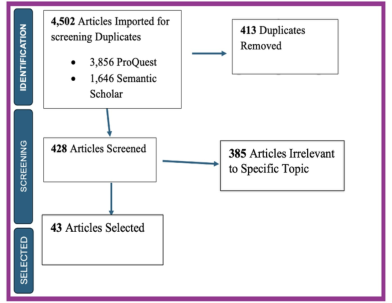
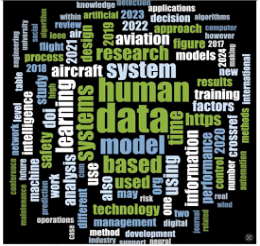
1. Literature Search: A comprehensive search of 64 academic databases through ProQuest and Semantic Scholar were used to gather relevant scholarly publications and studies. 2. Inclusion and Exclusion Criteria: Defining clear criteria for including studies in the review based on their relevance, quality, and focus on AI applications in aviation HF for flight crews. See Table 1. 3. Data Extraction and Analysis: A total of 43 articles that met the criteria for the purpose of this scope review were selected, out of an initial 157,246 total of populated articles. The process was then to analyze a reduced number of imported articles based on an analysis of relevant keywords for the scope review, performed through NVivo software. A new total number of 4,502 articles were then filtered for screening. See Figure 1. The selected articles were then further screened to avoid having double entries. An Excel spreadsheet was then created out of the databases were the documents resided, to start analyzing the selected articles and further separate those that were irrelevant for the purpose of this scope review, according to the inclusion and exclusion criteria. See Table 1. A word cloud of the final 43 articles was then created through NVivo software to provide a visual of relevant associated keywords throughout this scoping review. See Figure 2. 4. Synthesis and Reporting: This scoping review synthesizes the findings into what can be considered a coherent narrative which highlights the present status, potential benefits, challenges, and future directions for AI applications in aviation HF for flight crews.
Figure 1: PRISM SrC flowchart.
Eligibility Criteria and Scope This scoping review followed the framework of PRISMA-ScR published by Tricco et al. (2019) to be used as a guide, and also made use of the team method to develop the core concepts on extracting data for the review published by Tricco et al. (2016). This scoping review was not pre-registered with its protocol. This scoping review has considered the impact of artificial intelligence across several domains while focusing strictly on HF in aviation for flight crews.
Table 1. Inclusion and exclusion criteria of this scope review.
Table available in the original PDF paper.
Criteria for Inclusion Criteria for Exclusion Exposure of Interest Artificial intelligence in aviation human factors for flight Crews/manned-unmanned.
Personnel and criteria that is not relevant/outside of the aviation industry.
Any other outside of the aviation industry unless relevant to human factors. Participants Human factors in aviation mainly for flight crews and personnel within the context of artificial intelligence applications in aviation human factors who may be relevant to flight crew operations No outcome measures outside of the context prescribed within those of AI in the aviation industry related to human factors for flight crews.
Outcomes report Flight those pertinent to AI applications in aviation human factors associated to flight crews’ operational and training capabilities that measure flight crews’ overall performance and safety.
Setting/ Environment
Those associated to training and operational environment ecologies.
Peer-reviewed articles in scientific journals.
Cevference Abstracts, book chapters, repows, white papers, technical
Those conducted only in laboratories without correlation and/or causal associations or other industries. Language English Non-English. Type of Publication Researched Wherever a full text is not available.
Other Recent publications/Not older than 5 years.
Advancing Perspectives: A Scoping Review of Artificial Intelligence Applications 2153
Figure 2: Word cloud of the current scoping review depicting summary keywords.
SCOPING REVIEW ARTICLE SUMMARIES The Human and HCI
Research on Influencing Factor Selection of Pilot’s Intention This article provides results from statistical analysis conducted on pilots’ physiological characteristics, as well as test content and test method for determining some physiological, psychological, and physical factors in pilots. The judgment of the pilot’s intention is the premise of the dynamic feature extraction and identification in the follow-up Study (Wang et al., 2020).
Integrating the HFACS Framework and Fuzzy Cognitive Mapping for In-Flight Startle Causality Analysis In this article, Yusuf et al. (2022) prompts a discussion around the challenge of modeling in-flight startle causality as a precursor to enabling the development of suitable mitigating flight training paradigms is at the front-center of this article (Yusuf et al., 2022).
Short-Term HRV Detection and Human Fatigue State Analysis Based on Optical Fiber Sensing Technology This article describes that mental fatigue is a key cause of chronic diseases and traffic accidents, which is difficult to be quantitatively evaluated (Hu et al., 2022).
Assessment of Pilots’ Cognitive Competency Using Situation Awareness Recognition Model Based on Visual Characteristics Jiang et al. (2024) explains in this article that visual characteristics have the potential to assess the navigational proficiency of ship pilots (Jiang et al., 2024). A precise assessment of ship piloting competence is imperative to mitigate human errors in piloting is suggested here (Jiang et al., 2024).
A Human Factors’ Approach for Multimodal Collaboration with Cognitive Computing to Create a Human Intelligent Machine Team: A Review Dormoy et al. (2021) declare that built on top of the state-of-the art of HF, a careful examination of the factors and parameters to be taken into
account to form a Human intelligent Machine Team (HiMT) was carried out (Dormoy et al., 2021).
Human Performance Envelop Model Study Using Pilot’s Measured Parameters This article authored by Chira et al. (2020) provides insight based on conducted experiments and empirical research, into specific physiological measurements such as Workload, Stress and Situational Awareness, without taking into consideration any of the psychological factors like communication, teamwork and trust (Chira et al., 2020).
The Comprehensive Evaluation Method of the Human Factors in the Flight Deck Based on the Physical and Behaviour Measurements This is an article published by Zhang et al. (2020) where the authors argue that exists an increasing concern about the design and evaluation of the HF in the flight deck (Zhang et al., 2020).
Ontology Modelling of Intelligent HCI in Aircraft Cockpit Zhang et al. (2021) open up in this article by stating that semantic modelling is an essential prerequisite for designing the intelligent human–computer interaction in future aircraft cockpit (Zhang et al., 2021).
Automated System for Monitoring and Diagnostics Pilot’s Emotional State in Flight In this article, Schmelova et al. (2021) is concerned with the system for monitoring of the emotional state changes of the air navigation system’s human operator in extreme situations (Schmelova et al., 2021).
Stress and Workload Assessment in Aviation—A Narrative Review In this review published by Masi et al. (2023) puts together literature on the study of stress and workload for pilots of both civil and military aircraft (Masi et al., 2023).
Multimodal Approach for Pilot Mental State Detection Based on EEG In this paper, Alreshidi et al. (2023) states that The safety of flight operations depends on the cognitive abilities of pilots (Alreshidi et al., 2023). The authors argue that in recent years, there has been growing concern about potential accidents caused by a declining mental states of pilots (Alreshidi et al., 2023).
Recognition of the Mental Workloads of Pilots in the Cockpit Using EEG Signals The creators of this work argue that there is not enough evidence in the literature to validate how well models generalize in cases of new subjects performing tasks with workloads similar to the ones included during the model’s training (Hernández-Sabaté et al., 2022).
Advancing Perspectives: A Scoping Review of Artificial Intelligence Applications 2155
Artificial Intelligence Machine Learning Opportunities in Flight Test: Preflight Checks
Walker and Claudio (2024) explain that in their paper, they summarize the historical developments of flight modelling and proposes coupling machine learning methodologies with airworthiness model validation to reduce the uncertainties of current approaches while providing dynamic and real-time model development with little programmatic overhead (Walker & Claudio, 2024).
Applications of Artificial Intelligence and Cognitive Science in Design Han et al. (2024) propose further research into what they call three promising future research directions: 1) human-in-the-loop AI for design, 2) multimodal measures for design, and 3) AI for design cognitive data analysis and interpretation (Han et al., 2024).
Study on Aircraft Cockpit Function Based on Neural Network The purpose of this paper published by Xu and Sun (2022) was to propose a novel Neural Network-based Balanced Optimization Algorithm (NN-EOA) for cockpit emotion recognition (Xu & Sun, 2022).
Human Factors as Predictor of Fatalities in Aviation Accidents: A Neural Network Analysis In this paper Lázaro et al. (2024) makes an assessment of the importance of HF in predicting fatalities during aviation mishaps (Lázaro et al., 2024).
Aircraft Systems/Automation/Simulation/VR/AR Enabling Human-Autonomy Teaming in Aviation: A Framework to Address in Digital Assistants Design This paper published by Bjurling et al. (2024) describes the development of a design framework for supporting HF novices in considering HF, improving human-autonomy collaboration, and maintaining safety when developing AI tools for aviation settings (Bjurling et al., 2024).
The Requirements for Automation Systems Based on Boeing 737 MAX Crashes The author of this paper argue that the purpose of their paper aims to show the current situation and additional requirements for the aircraft automation systems based on the lessons learned from the two 737 MAX crashes (Demirci, 2021).
Virtual Reality and Neuropsychological Assessment: An Analysis of Human Factors Influencing Performance and Perceived Mental Effort Maneuvrier et al. (2022) explain that their aim was to compare a neuropsychological test tapping into executive control function, the Wisconsin Card Sorting Test (WCST), performed in either traditional paper- and-pencil (PP) or virtual reality (VR) modality, and to determine the role of HF (i.e., sense of presence, cybersickness, field (in)dependence and video
game experience) as contributors to performance and perceived mental effort (Maneuvrier et al., 2022).
More Haptic Aircraft In this paper, Zikmund et al. (2024) present a comprehensive review of haptic feedback in light aircraft control (Zikmund et al., 2024).
An Ethical Inquiry of the Effect of Cockpit Automation on the Responsibilities of Airline Pilots: Dissonance or Meaningful Control? Holford (2022) explains that airline pilots are attributed ultimate responsibility and final authority over their aircraft to ensure the safety and well-being of all its occupants (Holford, 2022). Yet, with the advent of automation technologies, a dissonance has emerged in that pilots have lost their actual decision-making authority as well as their ability to act in an adequate fashion towards meeting their responsibilities when unexpected circumstances or emergencies occur (Holford, 2022).
Future Aircraft Concepts and Design Methods In this paper, McDonald et al. (2022) discusses the International Civil Aviation Organisation (ICAO) issued emission reduction targets and how several technologies from an aircraft design perspective can readily contribute to achieving those targets (McDonald et al., 2022).
Cyber-Security Challenges in Aviation Industry: A Review of Current and Future Trends This paper is a review of cyber-security attacks and attack surfaces within the aviation sector over the last 20 years which provides a mapping of the trends and insights that are of value in informing on future frameworks to protect the evolution of a key industry (Ukwandu et al., 2022).
AAM/UAS/UAV/eVTOL/Unmanned/Drones A Review of Counter-UAS Technologies for Cooperative Defensive Teams of Drones Castrillo et al. (2022) explain that this paper evaluates the concept of a multiplatform counter-UAS system (CUS), based mainly on a team of mini drones acting as a cooperative defensive system (Castrillo et al., 2022).
Towards the Unmanned Aerial Vehicles (UAVs): A Comprehensive Review This study highlights the importance of drones, goals and functionality problems. In this review, a comprehensive study on UAVs, swarms, types, classification, charging, and standardization is presented (Mohsan et al., 2022).
Mental Workload Estimation Based on Physiological Features for Pilot-UAV Teaming Applications This paper begins by defining the term Manned-Unmanned Teaming (MUM-T) as one that can be defined as the teaming of aerial robots (artificial agents) along with a human pilot (natural agent), in which the human agent
Advancing Perspectives: A Scoping Review of Artificial Intelligence Applications 2157
is not an authoritative controller but rather a cooperative team player (Singh et al., 2021).
Decomposition and Modelling of the Situational Awareness of Unmanned Aerial Vehicles for Advanced Air Mobility Sorelle et al. (2023) are the creators of this work where a review of technologies and procedures is performed in order to decompose the SA of the UAV in the AAM (Sorelle et al., 2023).
Operational Considerations Regarding On-Demand Air Mobility: A Literature Review and Research Challenges As the title states it, this is a literature review work. The authors Sun et al. (2021) express that this is a study which synthesizes the recently published literature on operational aspects of ODAM (Sun et al., 2021).
Single Pilot Operations Single-Pilot Airline Operations: Designing The Aircraft May Be The Easy Part Here, Harris (2023) explains that two technological approaches for the development of single-pilot airliners are being developed either based upon extant technology and operating concepts derived from uninhabited aviation systems and military aircraft, or alternatively based upon high levels of onboard autonomy/automation (Harris, 2023).
Single-Pilot Incapacitation in Commercial Aviation - Evaluation of an Operational Concept Vizoli et al. (2023) argue that to implement Single Pilot Operations (SPO) in commercial aviation, safety levels must be maintained compared to current operations (Vizoli et al., 2023).
Analysis of Single-Pilot Intention Modelling in Commercial Aviation Dong et al. (2023) argue that in this study they investigated the intention modeling of commercial aviation single pilot based on the bidirectional long short-term memory (BiLSTM), mining the intention tendency of pilots’ behavior through artificial intelligence technology (Dong et al., 2023).
Training and Learning Occupational Risk Assessment for Flight Schools: A 3,4-Quasirung Fuzzy Multi-Criteria Decision Making-Based Approach Gul and Ak (2022) present in their paper, the 3,4-quasirung fuzzy set (3,4- QFS) (Gul and Ak, 2022). The authors argue that this is a new type of fuzzy set theory that has emerged as an extension of the Pythagorean fuzzy sets and Fermatean fuzzy sets (Gul and Ak, 2022).
Design and Evaluation of an Adaptive Virtual Reality Training System Aguilar Reyes et al. (2023) argue that the current training capabilities of the United States Air Force might not be sufficient to meet the demand for new pilots (Aguilar Reyes et al., 2023).
Implementing Artificial Intelligence and Machine Learning into Advanced Qualification Programs In this work, Herr (2021) explains that since the development of the Advanced Qualification Program (AQP) in 1991, many airlines have implemented AQP training programs (Herr, 2021). The author argues that new technologies, like AI and machine learning, could be infused into this process to replace some of the manual data analysis and help to make decisions in the curriculum development process (Herr, 2021).
Aviation Safety Learning Methods and Predictive Modelling to Identify Failure by Human Factors in the Aviation Industry This paper proposes a model capable of predicting fatal occurrences in aviation events such as accidents and incidents, using as inputs the HF that contributed to each incident, together with information about the flight (Nogueira et al., 2023).
The Impact of Artificial Intelligence on Future Aviation Safety Culture In this paper Kirwan (2024) into how three experts in safety culture and human-AI teaming used a validated safety culture tool to explore the potential impacts of introducing IAs into aviation (Kirwan, 2024).
Identifying Incident Causal Factors to Improve Aviation Transportation Safety: Proposing a Deep Learning Approach Dong et al. (2021) argue that since the number of incident reports is increasing rapidly due to the acceleration of advances in information technologies and the growth of the commercial and private aviation transportation industries, therefore advanced text mining algorithms should be applied to help aviation safety experts facilitate the process of incident data extraction (Dong et al., 2021).
Fight for Flight: The Narratives of Human Versus Machine Following Two Aviation Tragedies Here, Prahl et al. (2022) provide an insight into the relationship between human and machine in the professional aviation community following the 737 MAX accidents (Prahl et al., 2022).
Advancing Perspectives: A Scoping Review of Artificial Intelligence Applications 2159
Vision and Wearables Articles A Flexible Wearable Sensor Based on Laser-Induced Graphene for High-Precision Fine Motion Capture for Pilots Xing et al. (2024) explain that in recent years there has been a significant shift in research focus toward laser-induced graphene (LIG), which is a high- performance material with immense potential for use in energy storage, ultra- hydrophobic water applications, and electronic devices (Xing et al., 2024).
Using Eye-Tracking for Adaptive Human-Machine Interfaces for Pilots: A Literature Review and Sample Cases In this literature review paper, Xenos et al. (2024) explore the potential of eye-tracking technology in adaptive human-machine interfaces for pilots in aviation (Xenos et al., 2024).
Intelligent Vision Based Decision Making System for Aviation Accidents and Incidents Lamba et al. (2023) argue that safety has become the primary concern for the air transportation system nowadays primarily due to increasing air traffic throughout the world (Lamba et al., 2023).
Digital Twins Articles Development of a Digital Twin (DT) for Aviation Research Singh et al. (2022) explains that one of the most promising technologies that is driving digitalization in several industries is Digital Twin (DT).
A Digital Twin-Based Platform towards Intelligent Automation with Virtual Counterparts of Flight and Air Traffic Control Operations Yiu et al., (2021) explains in this paper that automation technologies have been deployed widely to boost the efficiency of production and operations, to trim the complicated process, and to reduce the human error involved (Yiu et al., 2021).
Significance of the Review The findings of this scoping review will provide valuable insights for researchers, practitioners, and policymakers in the aviation industry. By mapping the current landscape of AI applications in aviation HF, this review can identify areas where AI can make the most significant impact on flight crew performance and safety.
CONCLUSION
As the aviation industry continues to evolve, the integration of AI into HF research and practice presents a unique opportunity to enhance the safety, efficiency, and performance of flight crews. This scoping review aims to advance our understanding of how AI can be effectively applied to address the complex and dynamic challenges faced by flight crews.
ACKNOWLEDGMENT
The authors thank the Purdue University Libraries for allowing us the access to conduct research on associated topics for this scope review. Also, to the faculty members of Capitol Technology University, Department of Aeronautics, for their invaluable support in publishing this work.
REFERENCES
Aguilar Reyes, C. I., Wozniak, D., Ham, A. (2023). Design and evaluation of an adaptive virtual reality training system. Virtual Reality 27, 2509–2528. https: //doi.org/10.1007/s10055-023-00827-7 Alreshidi, I., Moulitsas, I., & Jenkins, K. W. (2023). Multimodal Approach for
Pilot Mental State Detection Based on EEG. Sensors, 23(17), 7350. https://do i.org/10.3390/s23177350 Arjoni, D. H., de Souza Rehder, I., Pereira Figueira, J. M., & Villani, E. (2023).
Augmented reality for Training Formation Flights: An analysis of human factors. Heliyon, 9(3). https://doi.org/10.1016/j.heliyon.2023.e14181 Bjurling, O., Müller, H., Burgén, J., Bouvet, C. J., & Berberian, B. (2024b). Enabling human-autonomy teaming in Aviation: A Framework to address human factors in digital assistants design. Journal of Physics: Conference Series, 2716(1), 012076. https://doi.org/10.1088/1742-6596/2716/1/012076 Castrillo, V. U., Manco, A., Pascarella, D., & Gigante, G. (2022). A Review of Counter-UAS Technologies for Cooperative Defensive Teams of Drones. Drones, 6(3), 65. https://doi.org/10.3390/drones6030065 Chira, A.-I., Dumitrescu, A., Moisoiu, C. S., & Tanase, C.-A. (2020). Human
performance envelope model study using pilot’s measured parameters. INCAS BULLETIN, 12(4), 49–61. https://doi.org/10.13111/2066-8201.2020.12.4.5 Davila-Gonzalez, S., & Martin, S. (2024). Human digital twin in industry 5.0: A holistic approach to worker safety and well-being through advanced AI and emotional analytics. Sensors, 24(2), 655. https://doi.org/10.3390/s24020655 Demirci, S. (2021). The requirements for automation systems based on Boeing 737
max crashes. Aircraft Engineering and Aerospace Technology, 94(2), 140–153. https://doi.org/10.1108/aeat-03-2021-0069 Dong, L., Chen, H., Zhao, C., & Wang, P. (2023). Analysis of Single-Pilot Intention Modeling in Commercial Aviation. International Journal of Aerospace Engineering, 2023(1), 9713312. Dong, T., Yang, Q., Ebadi, N., Luo, X. R., & Rad, P. (2021). Identifying incident
causal factors to improve aviation transportation safety: Proposing a deep learning approach. Journal of Advanced Transportation, 2021, 1–15. https://doi.org/10. 1155/2021/5540046 Dormoy, C., André, J.-M., & Pagani, A. (2021). A human factors’ approach for multimodal collaboration with Cognitive Computing to create a human intelligent machine team: A Review. IOP Conference Series: Materials Science and Engineering, 1024(1), 012105. https://doi.org/10.1088/1757-899x/1024/1/ 012105 Gruetzemacher, R., & Whittlestone, J. (2022). The transformative potential of
artificial intelligence. Futures, 135, 102884. https://doi.org/10.1016/j.futures. 2021.102884 Gul, M., & Ak, M. F. (2022). Occupational Risk Assessment for flight schools: A 3, 4-quasirung fuzzy multi-criteria decision making-based approach. Sustainability, 14(15), 9373. https://doi.org/10.3390/su14159373
Advancing Perspectives: A Scoping Review of Artificial Intelligence Applications 2161
Han, J., Childs, P. R. N., & Luo, J. (2024). Applications of artificial intelligence and cognitive science in Design. Artificial Intelligence for Engineering Design, Analysis and Manufacturing, 38. https://doi.org/10.1017/s0890060424000052 Han, J., Childs, P. R. N., & Luo, J. (2024a). Applications of artificial intelligence and
cognitive science in Design. Artificial Intelligence for Engineering Design, Analysis and Manufacturing, 38. https://doi.org/10.1017/s0890060424000052 Harris, D. (2023). Single-pilot airline operations: Designing the aircraft may be the easy part. The Aeronautical Journal, 127(1313), 1171–1191. https://doi.org/10. 1017/aer.2022.110 Hernández-Sabaté, A., Yauri, J., Folch, P., Piera, M. À., & Gil, D. (2022). Recognition
of the Mental Workloads of Pilots in the Cockpit Using EEG Signals. Applied Sciences, 12(5), 2298. https://doi.org/10.3390/app12052298 Herr, J. R. (2021). Implementing Artificial Intelligence and Machine Learning into Advanced Qualification Programs. Journal of Aviation/Aerospace Education & Research, 30(1), 123–140. https://doi.org/10.15394/jaaer.2021.1890 Holford, W. D. (2020). An ethical inquiry of the effect of cockpit automation on
the responsibilities of airline pilots: Dissonance or meaningful control? Journal of Business Ethics, 176(1), 141–157. https://doi.org/10.1007/s10551-020-04640-z Hu, S., Lin, H., Zhang, Q., Wang, S., Zeng, Q., & He, S. (2022). Short-Term HRV Detection and Human Fatigue State Analysis Based on Optical Fiber Sensing Technology. Sensors, 22(18), 6940. https://doi.org/10.3390/s22186940 Jiang, S., Su, R., Ren, Z., Chen, W., & Kang, Y. (2024). Assessment of pilots’
cognitive competency using Situation Awareness Recognition Model based on visual characteristics. International Journal of Intelligent Systems, 2024, 1–14. https://doi.org/10.1155/2024/5582660 Kabashkin, I., Misnevs, B., & Zervina, O. (2023b). Artificial Intelligence in aviation: New professionals for new technologies. Applied Sciences, 13(21), 11660. https: //doi.org/10.3390/app132111660 Kirwan, B. (2024). The Impact of Artificial Intelligence on Future Aviation Safety
Culture. Future Transportation, 4(2), 349. https://doi.org/10.3390/futuretransp 4020018 Lamba M, Verma S, Kumar P (2023) Intelligent Vision Based Decision Making System for Aviation Accidents and Incidents. JUCS - Journal of Universal Computer Science 29(7): 718-737. https://doi.org/10.3897/jucs.96013 Lázaro, F., L., Nogueira, R. P. R., Melicio, R., Duarte Valério, & Luís, F. F. M.
S. (2024). Human Factors as Predictor of Fatalities in Aviation Accidents: A Neural Network Analysis. Applied Sciences, 14(2), 640. https://doi.org/10.3390/ app14020640 Maneuvrier, A., Ceyte, H., Renaud, P., Morello, R., Fleury, P., & Decker, L. M.
(2022). Virtual reality and neuropsychological assessment: An analysis of human factors influencing performance and perceived mental effort. Virtual Reality, 27(2), 849–861. https://doi.org/10.1007/s10055-022-00698-4 Masi, G., Amprimo, G., Ferraris, C., & Priano, L. (2023). Stress and Workloadment in Aviation—A Narrative Review. Sensors, 23(7), 3556. https://doi.org/10.3390/ s23073556 McDonald, R. A., German, B. J., Takahashi, T., Bil, C., Anemaat, W., Chaput,
A., … Harrison, N. (2022). Future aircraft concepts and design methods. The Aeronautical Journal, 126(1295), 92–124. doi:10.1017/aer.2021.110 Mohsan, S. A., Khan, M. A., Noor, F., Ullah, I., & Alsharif, M. H. (2022). Towards the Unmanned Aerial Vehicles (uavs): A comprehensive review. Drones, 6(6), 147. https://doi.org/10.3390/drones6060147
Nogueira, R. P. R., Melicio, R., Duarte Valério, & Luís, F. F. M. S. (2023). Learning Methods and Predictive Modeling to Identify Failure by Human Factors in the Aviation Industry. Applied Sciences, 13(6), 4069. https://doi.org/10.3390/ap p13064069 Pichai, S., & Schwab, K. (2020, January). DAVOS 2020| An Insight, An Idea with
Sundar Pichai. In World Economic Forum. Davos, Switzerland. https://www. youtube. com/watch (Vol. 7). Prahl, A., Rio Kin, H. L., & Alicia Ning, S. C. (2022). Fight for Flight: The Narratives of Human Versus Machine Following Two Aviation Tragedies. Human-Machine Communication, 4, 27–44. https://doi.org/10.30658/hmc.4.2 Salas, E., Maurino, D., & Curtis, M. (2010). Human factors in aviation. Human
Factors in Aviation, 3–19. https://doi.org/10.1016/b978-0-12-374518-7.00001-8 Singh, G., Chanel, C. P. C., & Roy, R. N. (2021). Mental Workload Estimation Based on Physiological Features for Pilot-UAV Teaming Applications. Frontiers in Human Neuroscience, https://doi.org/10.3389/fnhum.2021.692878 Singh, M., Srivastava, R., Fuenmayor, E., Kuts, V., Qiao, Y., Murray, N., & Devine,
D. (2022). Applications of Digital Twin Across Industries: A Review. Applied Sciences, 12(11), 5727. https://doi.org/10.3390/app12115727 Sorelle, A. K., Magalhaes, F., Zrelli, R., Henrique, A. M., Maroua, B. A., & Nicolescu, G. (2023). Decomposition and Modeling of the Situational Awareness of Unmanned Aerial Vehicles for Advanced Air Mobility. Drones, 7(8), 501. https://doi.org/10.3390/drones7080501 Sun, X., Wandelt, S., Husemann, M., & Stumpf, E. (2021). Operational Considerations regarding On-Demand Air Mobility: A Literature Review and Research Challenges. Journal of Advanced Transportation, 2021https://doi.org/10.1155/2021/3591034 Tricco, A. C., Lillie, E., Zarin, W., O’Brien, K. K., Colquhoun, H., Levac, D., Moher,
D., Peters, M. D. J., Horsley, T., Weeks, L., Hempel, S., Akl, E. A., Chang, C., McGowan, J., Stewart, L., Hartling, L., Aldcroft, A., Wilson, M. G., Garritty, C., … Straus, S. E. (2018). Prisma extension for scoping reviews (PRISMA-SCR): Checklist and explanation. Annals of Internal Medicine, 169(7), 467–473. https: //doi.org/10.7326/m18-0850 Tricco, A. C., Lillie, E., Zarin, W., O’Brien, K., Colquhoun, H., Kastner, M., Levac, D., Ng, C., Sharpe, J. P., Wilson, K., Kenny, M., Warren, R., Wilson, C., Stelfox, H. T., & Straus, S. E. (2016). A scoping review on the conduct and reporting of scoping reviews. BMC Medical Research Methodology, 16(1). https://doi.org/10. 1186/s12874-016-0116-4 Ukwandu, E., Ben-Farah, M. A., Hindy, H., Bures, M., Atkinson, R., Tachtatzis,
C., Andonovic, I., & Bellekens, X. (2022). Cyber-security challenges in aviation industry: A review of current and future trends. Information, 13(3), 146. https: //doi.org/10.3390/info13030146 USA Banner. FAA Order 9550.8 - Human Factors Policy. (2024, March 25).
https://www.faa.gov/regulations_policies/orders_notices/index.cfm/go/document. information/documentid/12081 Vizioli, A. D. B., Bonelli, S., Mallozzi, G., Teemu, J. L., Martins, A. P. G., Friedrich, M., Pasquale, J. C., Senatore, C., Godano, F., Contissa, G., Sartor, G., & Reis, R. J. d. (2023/06//). Single-Pilot Incapacitation in commercial aviation - Evaluation of an Operational Concept. Journal of Physics: Conference Series, 2526(1), 012077. https://doi.org/10.1088/1742-6596/2526/1/012077 Walker, J. R., & Claudio, D. (2024). Machine Learning Opportunities in Flight
Test: Preflight Checks. SN Computer Science, 5(5), 569. https://doi.org/10.1007/ s42979-024-02874-6
Advancing Perspectives: A Scoping Review of Artificial Intelligence Applications 2163
Wang, H., Pan, T., Si, H., Li, Y., & Jiang, N. (2020). Research on influencing factor selection of pilot’s intention. International Journal of Aerospace Engineering, 2020, 1–13. https://doi.org/10.1155/2020/4294538 Wang, L., Zhang, Z., Tan, W., & Yang, Z. (2024). A real-time measurement model of
attention-allocation level and its application in simulated SPO Task. International Journal of Aerospace Engineering, 2024, 1–12. https://doi.org/10.1155/2024/ 3901699 Xenos, M., Mallas, A., & Minas, D. (2024). Using eye-tracking for adaptive humanmachine interfaces for pilots: A literature review and sample cases. Journal of Physics: Conference Series, 2716(1), 012072. https://doi.org/10.1088/1742-6596/ 2716/1/012072 Xing, X., Zou, Y., Zhong, M., Li, S., Fan, H., Lei, X., Yin, J., Shen, J., Liu, X., Xu,
M., Jiang, Y., Tang, T., Qian, Y., & Zhou, C. (2024). A flexible wearable sensor based on laser-induced graphene for high-precision fine motion capture for pilots. Sensors, 24(4), 1349. https://doi.org/10.3390/s24041349 Xu, Z., & Sun, Y. (2022). Study on Aircraft Cockpit Function Based on Neural Network. Wireless Communications & Mobile Computing (Online), 2022https://doi.org/10.1155/2022/7794982 Yiu, C. Y., Ng, K. K., Lee, C.-H., Chow, C. T., Chan, T. C., Li, K. C., & Wong, K. Y.
(2021). A digital twin-based platform towards intelligent automation with virtual counterparts of flight and Air Traffic Control Operations. Applied Sciences, 11(22), 10923. https://doi.org/10.3390/app112210923 Yusuf, A. B., Ah-Lian Kor, & Tawfik, H. (2022). Integrating the HFACS Framework and Fuzzy Cognitive Mapping for In-Flight Startle Causality Analysis. Sensors, 22(3), 1068. https://doi.org/10.3390/s22031068 Zhang, J., Wang, Z., & Lu, Y. (2020). The Comprehensive Evaluation Method of the human factors in the flight deck based on the physical and behaviour measurements. Journal of Physics: Conference Series, 1549(3), 032005. https: //doi.org/10.1088/1742-6596/1549/3/032005 Zhang, X., Sun, Y., & Zhang, Y. (2021). Ontology modelling of intelligent HCI in
aircraft cockpit. Aircraft Engineering and Aerospace Technology, 93(5), 794–808. https://doi.org/10.1108/AEAT-11-2020-0255 Zikmund, P., Horpatzká, M., Procházková, H., & Macík, M. (2024). More haptic aircraft. Journal of Physics: Conference Series, 2716(1), 012074. https://doi.org/ 10.1088/1742-6596/2716/1/012074
LISTED IN THE AHFE DIGITAL BOOKSTORE CATALOGUE
Explore the complete digital volume
Human Factors in Design, Engineering, and Computing
Read this individual research paper free through the original publisher, or explore the full digital proceedings book.
ISBN 978-1-964867-35-9
Explore this ISBN in the AHFE Bookstore ↗Listed in the July 2026 bookstore catalogue; search by ISBN to confirm current availability · Digital book purchase optional