Ma Xin, Liang Wengan, He Peipei (2025). Sustainable Innovation and Practice of Kitchen Electrical Products under the Green Concept. In: Interdisciplinary Practice in Industrial Design. AHFE Open Access, vol. 183, pp. 217–229. https://doi.org/10.54941/ahfe1006443
This paper explores the practical application of green concepts in the sustainable innovation of kitchen electrical products, focusing on energy efficiency, environmentally friendly materials, and health safety as core design strategies. By integrating cutting-edge technologies such as intelligent control, the Internet of Things (IoT), big data, and artificial intelligence, the paper aims to achieve the intelligent upgrade of kitchen electrical products, optimizing performance and user experience. At the same time, advanced design concepts such as modularization and integration are adopted to enhance the maintainability and upgradability of the products. The study reveals that green design strategies not only significantly enhance the market competitiveness of kitchen electrical products but also promote the development of the home appliance industry towards a more environmentally friendly, intelligent, and sustainable direction.
Kitchen appliances have significantly enhanced the convenience and comfort of family life, but global environmental issues make integrating green concepts into sustainable innovation an urgent industrial design task. The green concept emphasizes minimizing environmental impacts and maximizing resource efficiency throughout a product’s lifecycle, from design to disposal. This requires kitchen appliances to meet functional needs while achieving environmental protection and sustainability in material selection, energy consumption, and waste treatment.
This study explores sustainable innovation in kitchen appliances under the green concept by integrating cutting-edge technologies and advanced design concepts to achieve intelligent upgrades and environmental performance improvements. It focuses on core design strategies such as energy efficiency, environmentally friendly materials, and health safety, analyzing the application of green design, sustainability theory, and innovation theory in kitchen appliance design. Through practical cases, it demonstrates the entire process from design concept to production preparation, sales, and market feedback, providing a sustainable innovation model for enterprises.
Although there is extensive research on green design and sustainability theory in product design, research in the kitchen appliance field is still limited. This study fills this gap, offering new perspectives and ideas for sustainable innovation in kitchen appliances and contributing to the industry’s green transformation and sustainable development.
THEORETICAL FRAMEWORK Green Design Concept
The green design concept aims to reduce a product’s negative environmental impacts throughout its lifecycle and enhance resource efficiency. In kitchen appliances, this involves using eco-friendly materials, lowering energy consumption, and improving recyclability. For example, selecting renewable or recyclable materials decreases natural resource depletion, while optimized product structures reduce manufacturing energy use and waste. Designing products with structures that are easy to disassemble and recycle can promote the circular use of resources and further reduce environmental burdens.
Sustainability Theory Sustainability theory emphasizes meeting current needs without harming future generations’ ability to meet theirs. In kitchen appliance design, this means considering a product’s long-term environmental, social, and economic impacts beyond its functionality. Designers should use sustainable materials and production methods, reduce energy use and emissions during product operation, and ensure quality and durability to extend lifespan. Additionally, optimizing designs for maintainability and upgradability enhances product sustainability.
Innovation Theory Innovation theory plays a key role in the sustainable innovation of kitchen appliances. It highlights the creation of new value and the fulfillment of new demands through technological, design, and business model innovation. In kitchen appliance design, technological innovation can improve product performance and reduce costs, such as by incorporating intelligent control and Internet of Things (IoT) technologies to achieve smart and interconnected products. Design innovation can enhance user experience and aesthetics, such as through modular and integrated design to increase product flexibility and space efficiency. Business model innovation can explore new market opportunities and profit models, such as offering product leasing services or engaging in a sharing economy to reduce resource waste in production and consumption.
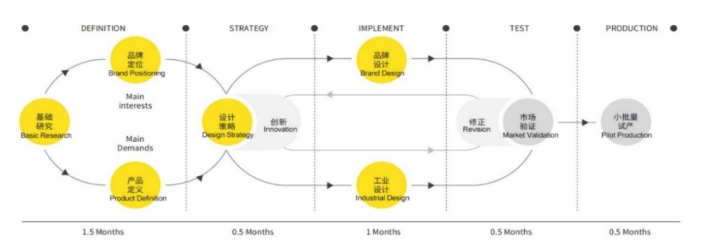
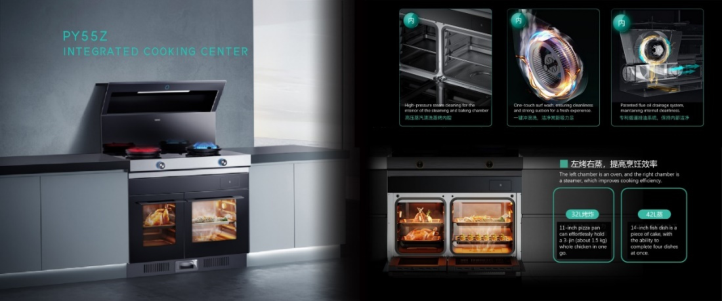
PRACTICAL DESIGN CASE This study employs a case study methodology (as shown in Figure 1), focusing on the PY55Z Integrated Cooking Center and Integrated Preparation and Cleaning Center, among other intelligent integrated kitchen
Sustainable Innovation and Practice of Kitchen Electrical Products 219
appliances from VATTI Group, to conduct a detailed analysis of the entire process from design to mass production and sales.
Figure 1: Vatti industrial design process diagram.
Design Phase During the design phase, the design team at VITTA Group employed design thinking and user research methodologies to identify the core functions and innovative features of the product, while integrating sustainable green design concepts such as integrated design thinking, optimization of workflow and user experience, modular design, and replaceable component design.
Design Methods The design approach includes several key steps: first, using design thinking methods to optimize product design through user research, idea generation, prototyping, and user testing, ensuring the design meets user needs and usage habits. Second, conducting user research through surveys, interviews, and user testing to collect user experiences and needs with existing kitchen appliances, identifying product innovation points. Next, based on the results of user research, multiple concept proposals are developed, each targeting specific user needs and market trends. Then, the selected concept proposals are expressed through sketches, models, and digital renderings to make the design intentions and functional features more intuitive and clear. Finally, multiple product prototypes are created, and user testing and iterative optimization are carried out to ensure the feasibility and user experience of the product design.
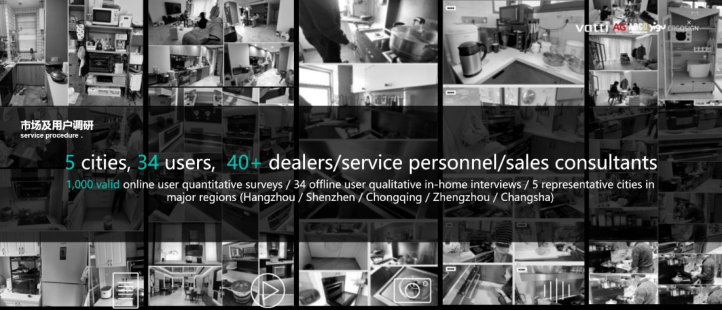
User Research User research was conducted via surveys, interviews, tests, and focus groups to deeply understand users’ experiences and needs with kitchen appliances. Surveys targeting diverse age groups and regions gathered 1,000 valid responses, highlighting users’ emphasis on efficiency, energy-saving, and smart features. Interviews with various user types revealed demands for smart cooking and easy-to-clean designs. Focus group discussions further emphasized users’ expectations for smart connectivity, modular design, and
eco-friendly materials. These insights provided crucial input for product design (as shown in Figure 2).
Figure 2: Video documentation of issues observed by Vatti designers during home visits for the integrated cooking project.
Results Analysis Through user research, the design team collected a large amount of data, and the analysis results are as follows:
1. Users have high demands for energy efficiency, smart connectivity, automatic cleaning, and modular design. 2. Users expect the product interface to be simple and clear, especially the elderly, who have high requirements for ease of use. 3. Users hope that the product is easy to maintain and clean, and the automatic cleaning function and easy-to-detach design are highly appreciated. 4. Users pay great attention to eco-friendly materials and energy-saving functions, and are willing to pay extra for environmentally friendly products.
Core Functions and Innovation Points Based on the conclusions of user research, combined with trend insights and previous design experience, the following sections have been deeply designed.
1. Energy Efficiency: The integrated cooking center is equipped with an intelligent energy - saving system that automatically adjusts power according to the cooking progress, enhancing energy utilization efficiency. For instance, the PY55Z integrated cooking center’s system, via built - in sensors and smart algorithms, automatically adjusts power based on users’ cooking progress and habits, and a low - power standby mode further reduces energy consumption.
Sustainable Innovation and Practice of Kitchen Electrical Products 221
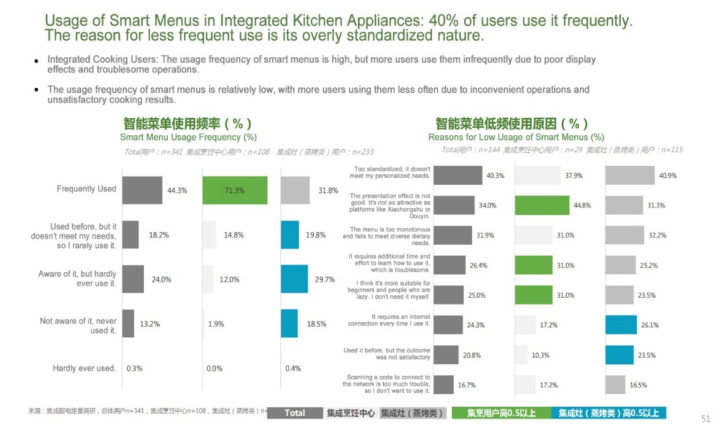
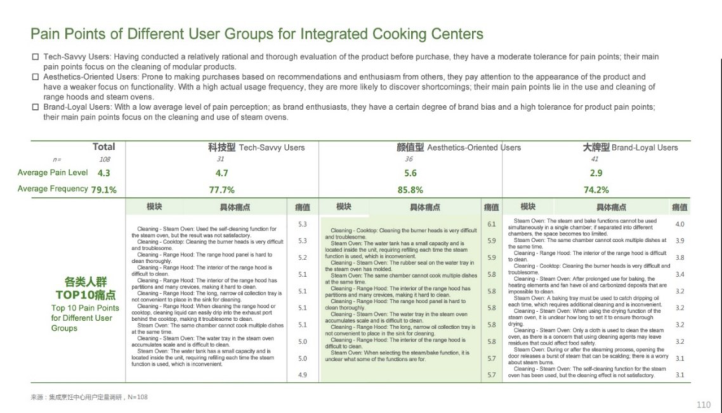
Figure 3: Statistics on user willingness to use product intelligence and smart menus.Figure 4: Attention to product inconvenience by different types of users.
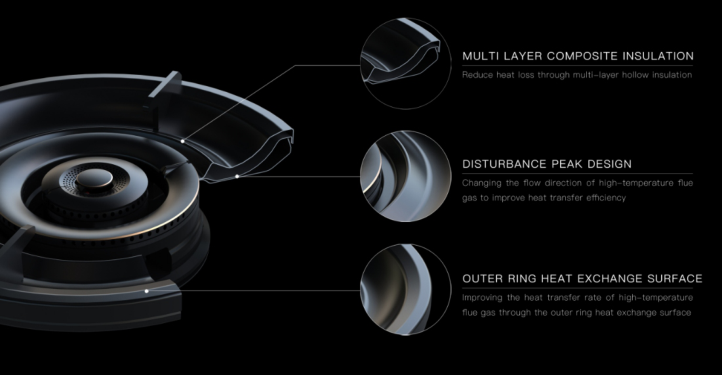
Efficient heat exchange technology optimizes burner and heat exchanger design, ensuring efficient heat transfer to cooking utensils. For example, the burner’s multi - layer combustion technology evenly distributes heat, improving thermal efficiency; the optimized heat exchanger design reduces heat loss, enhancing overall thermal efficiency. Upgraded to 5.2kW power, thermal efficiency increases by 10.7%, with ten - thousand - hole combustion, a 8165mm flame surface for more even heating, and excellent wind - resistant performance from infrared + micro - flame heating.
Figure 5: Design presentation of the PY55Z integrated cooking center.Figure 6: Explanation of the efficient and energy-saving design of the burner.
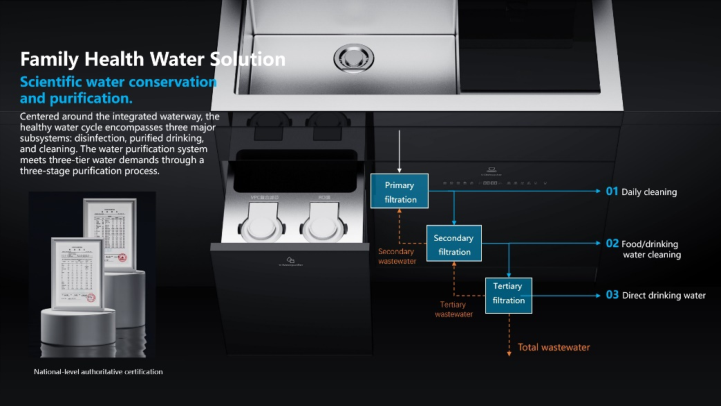
Water-saving and Purification System Design: Conventional water purification systems generate more than 50% of wastewater, leading to significant water resource wastage over time. In the integrated preparation and cleaning center project (as shown in Figure 7), a three-stage water purification system has been designed. The first stage provides preliminary purified water for washing food ingredients and tableware, with a purification rate (purified water volume/total water volume) exceeding 90%. The second stage further purifies water for cooking purposes, achieving a purification rate of over 72%. The third stage produces pure water suitable for direct drinking, with a purification rate of around 50%. Since the combined usage of first and second stage purified water accounts for over 90% in daily life, this system offers better purification effects and water-saving performance compared to conventional purification systems.
Through the above design and technological innovations, the PY55Z Integrated Cooking Center and Integrated Preparation and Cleaning Center
Sustainable Innovation and Practice of Kitchen Electrical Products 223
from VITTA Group have demonstrated significant energy-saving effects in actual use. Compared to traditional kitchen appliances, the PY55Z series products have achieved a 28% reduction in energy consumption and a 35% decrease in carbon emissions. These figures not only validate the practical effectiveness of the high-efficiency energy-saving design but have also been highly recognized by users.
Figure 7: Purification schematic of the three-stage water purification system.
2. Environmentally Friendly Materials: In material selection, the design extensively employs recyclable materials such as eco-friendly metals, glass, and composite stone. These materials can be recycled and reused at the end of the product’s life cycle, thereby reducing waste generation.
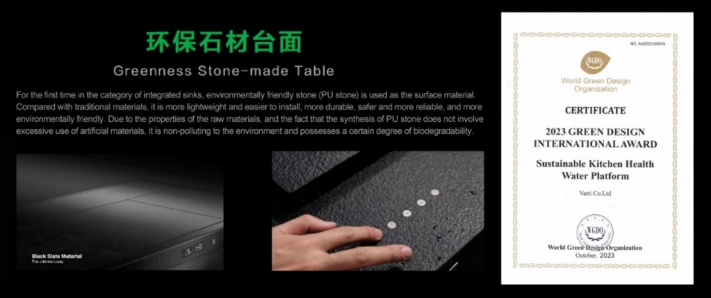
For example, the integrated cooking center’s machine frame, burners, and supports are made of aluminum alloy. This not only reduces the weight of the product but also enhances its durability and environmental friendliness. The countertop of the integrated preparation and cleaning center is made of eco- friendly composite stone. This material is not only aesthetically pleasing and durable but also reduces reliance on natural stone (as shown in Figure 8). It also has excellent heat resistance and corrosion resistance, making it suitable for kitchen environments.
3. Smart Interconnection: Smart interconnection is a key innovation point in enhancing user experience and the level of product intelligence. In the design of products like the PY55Z Integrated Cooking Center and Integrated Preparation and Cleaning Center, VATTI Group has integrated advanced IoT and intelligent control systems, achieving smart interconnection and enhancing usability and intelligence. The products are equipped with an advanced intelligent control system that uses built-in sensors and algorithms for automated operation and control, such as automatically adjusting power based on cooking progress to ensure efficiency and energy - saving, and
Figure 8: Design presentation of the cleaning center countertop.
monitoring equipment status in real - time to detect and handle faults promptly, enhancing reliability and safety. With IoT technology, range hoods, stoves, and ovens are interconnected, allowing users to remotely control and monitor equipment via a mobile app, managing kitchen appliances easily from anywhere, and collaborative operation among devices improves overall kitchen efficiency. To enhance user experience, the products also integrate voice control and a smart assistant, enabling users to control equipment operation through voice commands, and the smart assistant provides personalized suggestions and tips based on user habits, helping users utilize the equipment better.
4. Workflow and User Experience Optimization: By analyzing user habits and operational procedures, the design of the product’s workflow has been optimized to reduce unnecessary steps and enhance time efficiency. For example, the design includes rational operating heights and sequences that make the user experience more fluid, minimizing the need for bending and turning.
5. Integrated Design: In the design of kitchen electrical products under the green concept, integrated design thinking is an important innovation point for achieving space optimization, functional integration, and enhanced user experience. In the design of products such as the PY55Z Integrated Cooking Center and Integrated Preparation and Cleaning Center, VITTA Group has employed integrated design thinking to combine multiple functional modules into a compact space. This not only improves the utilization efficiency of kitchen space but also enhances the aesthetics and functionality of the products.
Integrated Cooking Center: Multiple functional modules, including burners, ovens, steamers, and range hoods, are integrated into a compact unit. This not only saves space but also enhances the convenience of operation. For example, by optimizing the internal structure and layout, unnecessary space is minimized, improving the compactness of the product.
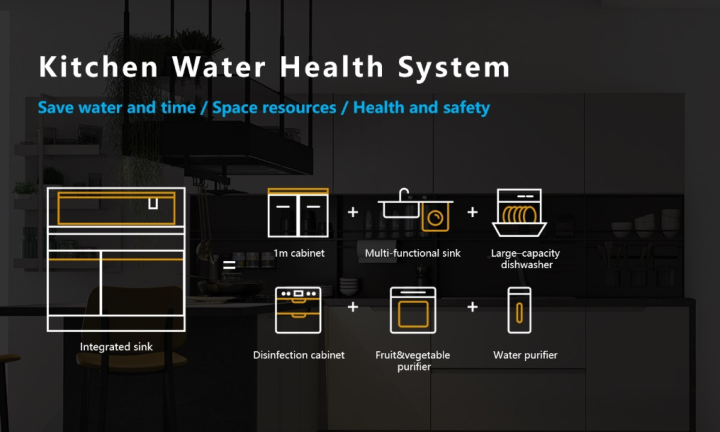
Integrated Preparation and Cleaning Center (as shown in Figure 9): Functional modules such as dishwashers, sinks, and waste disposers are integrated into a single unit, further optimizing kitchen space. For example, through an embedded design approach, the equipment is seamlessly
Sustainable Innovation and Practice of Kitchen Electrical Products 225
integrated into the cabinetry, reducing space occupation and enhancing overall aesthetics.
Figure 9: Schematic of the integrated functions of the cleaning center.
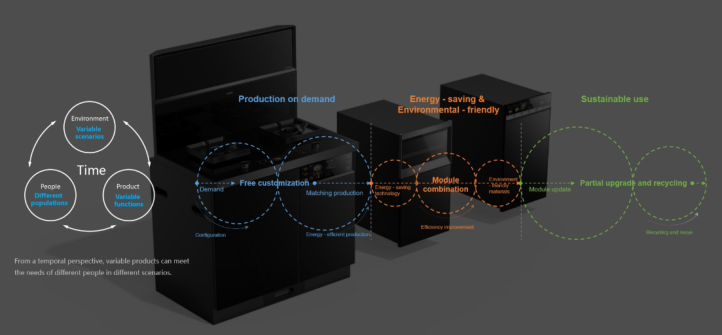
6. Modular Design: The product is divided into several independent modules, each of which can be designed, manufactured, and maintained separately. The advantages of modular design include: Enhanced Maintainability: Modular design makes product maintenance more convenient. Users can easily replace damaged modules, thereby extending the product’s lifespan.
Figure 10: Schematic of modular design in the cooking center.
Increased Upgradability: Modular design allows for more flexible product upgrades. Users can replace or add new modules according to their needs, enhancing the product’s performance and functionality.
Reduced Waste: Modular design reduces the frequency of overall product replacement, minimizing resource waste.
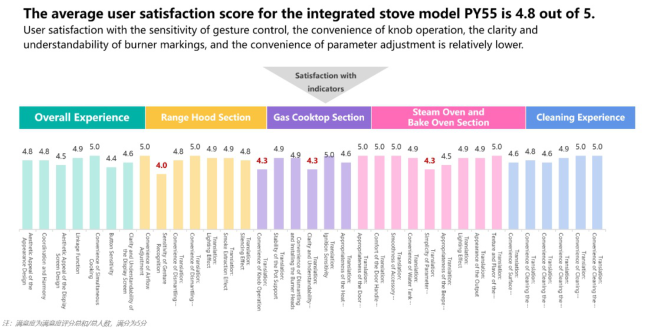
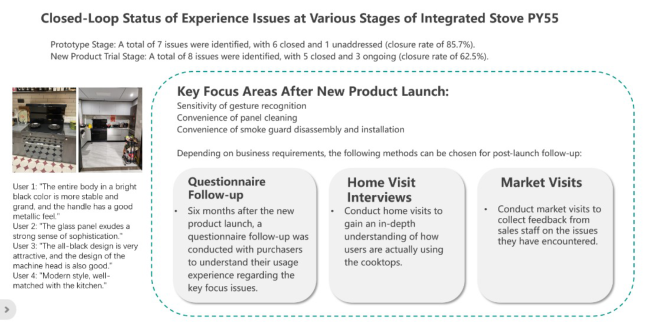
User Testing The design team created multiple product prototypes and invited users to conduct actual operation tests, including functionality testing, interface testing, performance testing, and maintenance testing. During the testing process, the team recorded users’ operational behaviors, feedback, and encountered issues. Through multiple iterations of optimization, the product design was ensured to meet users’ actual needs and usage habits.
Figure 11: User rating statistics for PY55 product across key design metrics.Figure 12: Closed-loop status of experience lssues at various stages of integrated stove PY55.
Sustainable Innovation and Practice of Kitchen Electrical Products 227
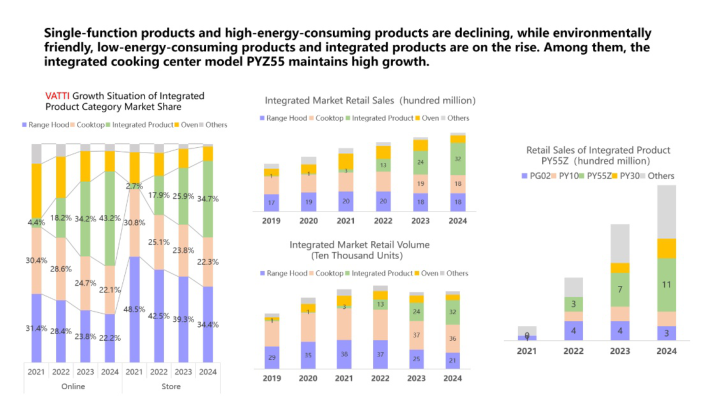
Sales and Market Feedback By tracking and observing market data of the integrated products, including the PY55Z Integrated Cooking Center, this study evaluates the market performance of green and sustainable integrated products. Several key findings have been identified:
1. The market share of low-energy-consuming and integrated products is continuously growing. 2. The market for traditional single-function products is nearing saturation and shows weak growth. In contrast, integrated products have been experiencing steady growth in recent years and hold a promising market outlook. 3. Since its launch in 2022, the VATTI integrated product PY55Z has received positive market feedback. Ranking among the top in sales among similar products, the PY55Z has seen a steady increase in market share through continuous market promotion and improvements based on user feedback, becoming the No. 1 product in VATTI’s integrated product category.
Figure 13: Market data statistics for PY55 cooking center.
Discussion
The discussion section of this study will delve into the following aspects Innovation in the Design Phase This section will analyze how innovations during the design phase translate into actual market advantages, particularly focusing on innovations in energy efficiency and smart interconnectivity. The discussion will explore how these design innovations contribute to the product’s competitive edge in the market and how they align with consumer demands for sustainable and intelligent kitchen appliances.
Implementation of Sustainable Green Design The study will discuss how integrated design thinking, optimized workflow, modular design, and replaceable component design enhance the spatial and temporal efficiency of the products. It will also examine the impact of these design strategies on user satisfaction, highlighting how sustainable green design can lead to improved user experiences and increased market acceptance.
Challenges in Mass Production Preparation This part will explore the challenges encountered in establishing a green supply chain and optimizing production processes. It will also present solutions that have been implemented to address these challenges and discuss their effects on production efficiency and product quality. The discussion will emphasize the importance of sustainable practices in manufacturing and how they contribute to the overall sustainability goals of the product.
Improvements Based on Market Feedback The study will analyze how user feedback has guided continuous improvements in the product. It will highlight the positive impact of these improvements on market performance, demonstrating how responsiveness to user needs and preferences can lead to enhanced market share and customer loyalty. The discussion will also touch on the role of iterative design processes in refining product features and functionalities based on real-world usage data.
CONCLUSION
This study, through case analysis, demonstrates the entire process of sustainable innovation and practice of kitchen electrical products under the green concept by VITTA Group. The results indicate that through design thinking, modular design, green supply chain management, and user feedback, the environmental performance and market competitiveness of the products can be significantly enhanced. This study not only provides new perspectives and ideas for the design of kitchen electrical products but also offers a sustainable innovation model for enterprises. Through the implementation of green design concepts, kitchen electrical products not only meet user needs in terms of functionality but also achieve environmental protection and sustainability in material selection, energy consumption, and waste disposal. Moving forward, VATTI Group will continue to promote the application of green design concepts in more products, contributing to the achievement of sustainable development goals.
ACKNOWLEDGMENT
The author would like to express sincere gratitude to the entire research team at VATTI Group, particularly those in the design and R&D departments, for their invaluable contributions and unwavering support throughout this study. Special thanks are extended to all the participants in the user testing phase, whose feedback was instrumental in refining the product design and enhancing its user-friendliness. The author is also deeply appreciative of the
Sustainable Innovation and Practice of Kitchen Electrical Products 229
academic guidance provided by Professor Wang Huabin and the colleagues who offered their insights and suggestions during the preparation of this manuscript. Their expertise and support have been crucial in shaping the direction and quality of this research.
REFERENCES
Chen, Y. (2022). Furniture Design Strategy under the Concept of Green. Packaging Engineering, 43(2), pp. 286–289. Fu, X., Huang, Z., Lv, Q., and Wang, Y. (2024). Sustainable Design Strategies for
Educational Furniture Based on LCA Method. Packaging Engineering, 45(20), pp. 183–191. Geng, D., Feng, Y., & Zhu, Q. (2020). Sustainable design for users: A literature review and bibliometric analysis. Environmental Science and Pollution Research, 27, 29824–29836. Luo, X., Zhou, C., and Zhan, X. (2021). Principles and Strategies of User Experience
Design for Smart Cabinet Interactive Interface. Furniture, 42(2), pp. 22–27. Miao, X., Magnier, L., & Mugge, R. (2024). How Many Times Should I Use My Reusable Packaging? Exploring the Role of an Environmental Break-Even Point in Shaping Consumers’ Intention to Reuse. Circular Economy and Sustainability, 5(1), pp. 625–652. Shahmohammad, M., Hosseinzadeh, M., Dvorak, B., Bordbar, F., Shahmohammadmirab, H., & Aghamohammadi, N. (2022). Sustainable green roofs: A comprehensive review of influential factors. Environ Sci Pollut Res Int, 29(52), 78228–78254. Shahmohammad, M., Hosseinzadeh, M., Dvorak, B., Bordbar, F., Shahmohammadmirab, H., and Aghamohammadi, N. (2022). Sustainable green roofs: A comprehensive review of influential factors. Environmental Science and Pollution Research, 29(3), 78228–78254. Strenge, B., & Schack, T. (2023). Human-Centered Design and User Experience,
AHFE. Vol. 114, 2023, pp. 338–348 Zhao, C., Ma, Y., and Yu, M. (2024). Design and Application Practice of Tea Residue Regeneration Products from the Perspective of Green Design. Packaging Engineering, 45(2), pp. 331–338. Zhong, D., and Lv, J. (2024). Innovative Design Research on the Reuse of Waste
Ceramics Based on Green Design. Packaging Engineering, 45(18), pp. 409–419.
LISTED IN THE AHFE DIGITAL BOOKSTORE CATALOGUE
Explore the complete digital volume
Interdisciplinary Practice in Industrial Design
Read this individual research paper free through the original publisher, or explore the full digital proceedings book.
ISBN 978-1-964867-59-5
Explore this ISBN in the AHFE Bookstore ↗Listed in the July 2026 bookstore catalogue; search by ISBN to confirm current availability · Digital book purchase optional