Pirita Ihamäki, Päivikki Kuoppakangas, Jari Kaivo-oja (2025). Dilemma-Based Decision-Making in EDIH Ecosystem’s: Insights Into Innovation Leadership. In: Human Factors in Design, Engineering, and Computing. AHFE Open Access, vol. 199, pp. 167–177. https://doi.org/10.54941/ahfe1006829
Decision-making in complex innovation ecosystems, such as European Digital Innovation Hubs (EDIHs), involves navigating strategic and ethical dilemmas that challenge conventional leadership models. Despite EDIHs’ growing role in Europe’s digital transformation, limited research explores how leaders manage conflicting priorities in these multi-stakeholder environments. This study examines how dilemma-based decision-making shapes innovation leadership and dynamic capabilities in EDIHs.Grounded in Hampden-Turner’s (1990) dilemma theory and Teece’s (1997, 2007) dynamic capabilities framework, the study employed a qualitative survey with 20 responses. The survey assessed leadership models, adaptability, resilience, and strategic decision-making. Findings reveal that leaders frequently face tensions—such as balancing financial sustainability with ethical neutrality, or short-term KPIs with long-term ecosystem impact. Their ability to reconcile these dilemmas is vital for fostering innovation, trust, and resilience. Leadership in digital innovation ecosystems demands agility, foresight, and integrity (Gorelova et al., 2024; Tigre et al., 2025). Leaders must possess creativity, innovation, and an entrepreneurial mindset to guide dynamic ecosystems effectively (Taylor et al., 2025; Ercantan et al., 2024). Ethical dilemmas, as defined by Fernando (2009), involve choices between alternatives that affect both stakeholders and organizational competitiveness. In EDIHs, these dilemmas are amplified by the need to balance public trust, technological neutrality, and commercial viability. Leaders’ decisions are shaped by values, cultural context, and their ability to interpret dynamic environments, aligning with ethical leadership and moral sensitivity in complex systems (Arar & Saiti, 2022).The European Digital Innovation Hubs network, launched in 2023, supports SMEs and public sector organizations in adopting advanced digital technologies. Covering nearly 90% of European regions (168 EDIHs), the network offers services in AI, cybersecurity, and high-performance computing. By September 2024, over 200,000 participants had engaged in more than 5,000 events, through which over 18,000 services were delivered. The Digital Maturity Assessment Tool (DMAT) shows that companies follow a structured path toward digitalization, with strategy and human-centric approaches becoming increasingly important at higher maturity levels. After receiving support from EDIHs, 90% of companies improved their digital maturity scores (Carpentier et al., 2025).This study contributes to bridging leadership theory, innovation management, digital ecosystems, and entrepreneurship research. It addresses a critical gap in understanding how leaders in digital ecosystems navigate dilemmas and leverage dynamic capabilities to foster innovation, trust, and transformation. Hampden-Turner’s (1990) dilemma reconciliation model emphasizes integrating opposing perspectives rather than seeking compromises. This approach enables leaders to transform conflicting values into creative solutions that support both value creation and long-term sustainability. The findings suggest that dilemma-based decision-making is not a barrier but a catalyst for innovation leadership. Leaders who can reconcile tensions—between innovation and regulation, neutrality and commercial interest, or short-term metrics and long-term vision—are better equipped to build resilient ecosystems. These insights are particularly relevant for policymakers, ecosystem designers, and innovation leaders aiming to strengthen the role of EDIHs in Europe’s digital future.ReferencesArar, K., & Saiti, A. (2022). Ethical leadership in complex systems. Journal of Educational Administration, 60(3), 345–360.Carpentier, A., et al. (2025). Digital Maturity Assessment Tool: Impact of EDIHs on SME transformation. European Commission Report.Ercantan, A., et al. (2024). Entrepreneurial mindset in digital ecosystems. Technology Innovation Journal, 18(2), 112–129.Fernando, M. (2009). Ethical decision-making in organizations. Journal of Business Ethics, 90(3), 371–383.Gorelova, L., et al. (2024). Leadership agility in digital transformation. European Management Review, 21(1), 55–72.Hampden-Turner, C. (1990). Charting the Corporate Mind: From Dilemma to Strategy. Blackwell.Msila, V. (2024). Janusian thinking in leadership. Leadership and Change Quarterly, 12(1), 88–101.Taylor, R., et al. (2025). Innovation leadership in European ecosystems. Innovation & Strategy Review, 33(4), 205–223.Teece, D. J. (1997). Dynamic capabilities and strategic management. Strategic Management Journal, 18(7), 509–533.Teece, D. J. (2007). Explicating dynamic capabilities. Strategic Management Journal, 28(13), 1319– 1350.Tigre, P., et al. (2025). Multi-stakeholder collaboration in digital hubs. Digital Policy Studies, 9(2), 144–160.
Leadership in digital innovation ecosystems, such as those managed by case European Digital Innovation Hubs (EDIHs), requires decision-making in situations where leaders face strategic, ethical, and innovation-related dilemmas. These ecosystems are characterized by rapid technological change, complex stakeholder networks, and continuous adaptation (Tigre et al., 2025). Leaders must act with agility, foresight, and integrity while fostering creativity, innovation, and an entrepreneurial mindset to guide evolving ecosystems effectively (Taylor et al., 2025).
Ethical dilemmas, as defined by Fernando (2010), emerge when decision- makers must choose between alternatives that affect both stakeholders and organizational competitiveness. Within EDIHs, these dilemmas are amplified by the need to balance public trust, technological neutrality, and commercial
viability. Leaders’ decisions are shaped by their values, cultural contexts, and ability to interpret dynamic environments, aligning with the concept of ethical leadership in complex systems (Arar & Saiti, 2022).
This study investigates dilemma-based decision-making in EDIH ecosystems by applying Hampden-Turner’s (1990) dilemma reconciliation model alongside Teece’s (1997, 2007) dynamic capabilities framework. These lenses provide insight into how leaders integrate conflicting values— such as short-term efficiency versus long-term innovation—into coherent strategies that sustain ecosystem resilience. The research is based on a survey of 20 EDIH experts conducted in 2023, which assessed leadership models, adaptability, and strategic decision-making.
The European Digital Innovation Hubs network, launched in 2023, supports SMEs and public organizations in adopting advanced digital technologies. Covering nearly 90% of European regions through 168 hubs, the network has reached over 200,000 participants and delivered more than 18,000 services by September 2024 (Carpentier et al., 2025). Evidence from the Digital Maturity Assessment Tool (DMAT) shows that EDIH support significantly improves digital maturity, underscoring the strategic importance of effective leadership in these ecosystems. Despite their growing role, limited research addresses how EDIH leaders reconcile dilemmas and leverage dynamic capabilities to drive innovation. Existing studies tend to focus on general business ecosystems, overlooking the specific leadership challenges of EDIHs. This study addresses that gap by examining:
What kinds of dilemmas do EDIH leaders encounter in their decision- making processes?
How do EDIH leaders apply dilemma reconciliation strategies in practice?
In what ways do dynamic capabilities (sensing, seizing, and transforming) enable leaders to foster innovation and resilience in EDIHs?
This study contributes to bridging leadership theory, innovation management, digital innovation ecosystems, and entrepreneurship research. It addresses a critical gap in understanding how European leaders in digital ecosystems navigate dilemmas and leverage dynamic capabilities to foster innovation, trust, and transformation. The study explores dilemma-based decision-making in EDIH ecosystems, applying Hampden-Turner’s (1990) dilemma reconciliation model, which integrates opposing perspectives in both-and vein, rather than seeking compromises nor either-or solutions. This approach helps leaders turn conflicting values into creative solutions that support both value creation and the long-term sustainability of innovation ecosystems. However, there is still limited research on how dynamic capabilities—such as adaptability and strategic renewal—function in ecosystem leadership and influence innovation performance. Most existing studies focus on general business ecosystems and overlook the specific decision-making challenges faced by EDIHs. This study addresses that research gap by examining how EDIH leaders manage dilemmas, apply dynamic capabilities, and drive digital transformation for SMEs.
Dilemma-Based Decision-Making in EDIH Ecosystem’s 169
DILEMMA-BASED DESCICION-MAKING AND INNOVATION LEADERSHIP IN EDIHS Hampden-Turner and Trompenaars (2006) describe dilemma-based decision- making as a strategic approach where leaders resolve conflicting values by integrating opposing perspectives in both-and vein rather than compromising or choosing either-or value. This method empowers leaders to create innovative solutions that support both value creation and long-term sustainability within innovation ecosystems.
In the European Digital Innovation Hubs (EDIHs), leaders frequently encounter dilemmas—such as balancing diverse stakeholder interests, emerging technological opportunities, and evolving market demands. For instance, digital HUB Aachen faced challenges in aligning SMEs’ rapid digitalization needs with limited regional resources, while the Cybersecurity Innovation HUB in León had to reconcile cybersecurity development with SME skill gaps (Esparza et al., 2024). In such cases, dilemma-based decision- making has proven essential for maintaining stakeholder trust while fostering innovation.
Recent research reinforces the relevance of this approach in digital transformation. Al-Moaid and Almarhdi (2024) highlight change management as a key mediator between dynamic capabilities and successful transformation, while Mele et al. (2024) emphasize the importance of knowledge-based dynamic capabilities in enabling organizational adaptability. Integrating dilemma-based decision-making with David Teece’s dynamic capabilities framework—sensing, seizing, and transforming—offers a robust lens for understanding leadership in EDIHs. Leaders must not only manage technological transitions but also reconcile conflicting values across the ecosystem (Teece et al., 1997, Reiman et al., 2024). Heaton et al. (2020) identify three essential dimensions for navigating this complexity: structured leadership, emotional intelligence, and core competencies such as strategic direction, team empowerment, and network engagement.
Key management skills—like strategic planning, complexity handling, and resource allocation—further reinforce dynamic capabilities. Leaders who master these skills are better equipped to identify opportunities and resolve dilemmas, creating environments that support continuous innovation (Al- Moaid & Almarhdi, 2024). Dedehayir et al. (2017) outline four roles in innovation ecosystems: leadership, direct value creation, support functions, and entrepreneurial roles. When integrated, these roles shape compelling value propositions. Lusch and Nambisan (2015) define value co-creation as a process of resource integration among diverse actors, supported by systemic structures and mechanisms (Storbacka et al., 2016). Each actor contributes by leveraging expertise and shaping the usability of the ecosystem (Akaka & Vargo, 2014). As Kumar and Reinartz (2016) note, digital ecosystems enable multidimensional value creation, especially in innovation and capacity development. Ecosystem leadership—one of the key dynamic capabilities— refers to the ability to build and sustain innovation ecosystems around a central systemic innovation. It involves creating a shared vision, aligning stakeholder actions, and overcoming collaboration challenges. Foss, Schmidt,
and Teece (2023) emphasize that effective ecosystem leadership is essential for the emergence, resilience, and long-term success of EDIHs.
Extensive research in business and innovation management also highlights the role of leadership style and innovation champions in building organizational confidence (Soles, 2020). Leaders who embrace risk, encourage diverse participation, and allocate resources strategically enhance employees’ willingness to innovate (Wang et al., 2018). Such leaders tolerate ambiguity and support experimentation, fostering cultures of exploration and learning (Shane et al., 2003). This aligns with transformational leadership, which is consistently linked to improved innovation outcomes (Abbas et al., 2012). Effective innovation leaders also emphasize intrinsic motivation and collaborative purpose, mitigating the downsides of extrinsic rewards (Chen, Li, & Leung, 2016). As Amabile (1997) notes, they “nurture the spark” of innovation by building confidence and reducing emotional risks. Champions who can modulate enthusiasm and resilience are especially effective in high-stakes environments (Pihlajamaa, 2017).
Innovation-supportive leaders tend to adopt a promotion focus—seeking gains and opportunities—rather than a prevention focus centered on avoiding losses (Poskela & Martinsuo, 2009). This proactive stance encourages calculated risk-taking and empowers teams (Bowles & Hattie, 2013; Maria Stock et al., 2017). While the role of champions is widely acknowledged, their influence may be more qualitative than quantitative. Chen, Li, and Leung (2016) found modest effects on innovation volume, but Naidoo and Sutherland (2016) argue that champions significantly enhance innovation quality. Trust factor cannot be neglected in innovation management. Trust empowers innovators to create. Trust improves information flow. Trust supports adoption. Thus, Ideator-Connector-Influencer networks are promoting innovation processes and the speed of innovation cycles (Deloitte, 2023). Impacts of trust on the formation of social network ties for the idea generation and idea realisation stages of innovation are seen relevant also in academic research (Shazi et al., 2015).
In summary, trusted leaders who foster innovation confidence do so by modelling innovative behavior, offering structural and emotional support, and actively engaging in innovation processes. Rather than delegating innovation, they lead by example—creating environments where dilemma- based decision-making and dynamic capabilities can thrive.
DYNAMIC CAPABILITY IN INNOVATION LEADERSHIP This study applies Teece’s (1986, 2007, Reiman et al., 2024) dynamic capability framework—comprising sensing, seizing, and transforming—in conjunction with Hampden-Turner’s dilemma theory to explore leadership decision-making in complex innovation ecosystems. Dynamic capabilities refer to an organization’s ability to integrate, build, and reconfigure internal and external competencies in response to rapidly changing environments. Unlike operational capabilities, which focus on efficiency and routine execution, dynamic capabilities enable organizations to adapt, innovate, and sustain competitive advantage in turbulent markets. Reaching the excellent
Dilemma-Based Decision-Making in EDIH Ecosystem’s 171
level of leadership requires dynamic capabilities, not only ordinary basic capabilities.
In the context of European Digital Innovation Hubs (EDIHs)1 dynamic capabilities are particularly critical. These hubs, established under EU initiatives such as Horizon Europe and the Digital Europe Programme, aim to accelerate digital transformation among SMEs by providing access to advanced technologies, funding, and collaborative networks. As EDIHs operate within rapidly evolving digital ecosystems, their success depends heavily on leadership that can navigate uncertainty, balance competing demands, and foster innovation.
Recent research reinforces the strategic importance of dynamic capabilities in digital transformation. Amin and Khan (2024) emphasize that organizations that prioritize innovation, agility, and knowledge sharing— underpinned by transformational leadership—are better equipped to respond to disruptive market forces. Their study highlights the synergistic role of leadership, innovation, and dynamic capabilities in driving sustainable competitive advantage (Ul amin et al., 2024) Similarly, João (2023) explores the intersection of digital transformation and dynamic capabilities, noting that organizations must continuously reconfigure their resources and strategies to remain relevant in the face of technological disruption. His findings underscore the importance of strategic renewal, digitization, and leadership adaptability in fostering innovation ecosystems (João, 2023) Moreover, Liu et al. (2024) demonstrate that digital capabilities alone are insufficient without the dynamic capacity to adapt and evolve. The authors argue that the integration of digital and dynamic capabilities is essential for effective business model innovation, particularly in environments characterized by high uncertainty and complexity.
In this study, dilemma-based decision-making is conceptualized as a sophisticated leadership strategy that complements dynamic capabilities. Leaders in EDIHs must often reconcile conflicting priorities—such as short- term efficiency versus long-term innovation, or centralized control versus decentralized experimentation. Hampden-Turner’s dilemma theory provides a valuable lens for understanding how leaders can integrate opposing values to generate innovative, context-sensitive solutions. By combining dynamic capabilities with dilemma-based leadership, EDIHs can better support SMEs in navigating digital transformation. This integrated approach enables leaders to sense emerging opportunities, seize them through strategic action, and transform organizational structures and cultures to sustain technological and business innovations over time.
METHODOLOGICAL APROACH This study explores how dilemma-based decision-making influences innovation leadership and dynamic capabilities in the European Digital Innovation Hubs (EDIHs). The methodology is based on Teece’s (2007,
1European Commission, European Digital Innovation Hubs: https://digital-strategy.ec.europa.eu/en/activities/edihs
Reiman et al., 2024) dynamic capabilities framework and Hampden-Turner’s (1990) dilemma reconciliation theory, both emphasizing adaptability, value integration, and strategic transformation.
Primary data was collected through a semi-structured survey sent to 20 EDIH leaders across Europe. The 30-question survey combined Likert- scale items and open-ended prompts to capture experiences with dilemmas, innovation strategies, and organizational adaptability. Digital tools were used for distribution and analysis, reflecting current qualitative research practices (Bruda & Costa, 2023).
To contextualize findings, a case study approach was adopted, treating EDIHs as special innovation ecosystems. This enabled a deeper understanding of leadership in complex stakeholder environments and digital transformation (Tigre et al., 2025).
Open-ended responses were analyzed using qualitative content analysis, combining deductive and inductive coding. Themes were mapped against Teece’s dimensions—sensing, seizing, transforming—and dilemma reconciliation principles to show how leaders integrate conflicting values into coherent strategies.
Credibility was strengthened through expert validation and triangulation with secondary sources, including EDIH network reports and recent newest literature on innovation ecosystems and leadership.
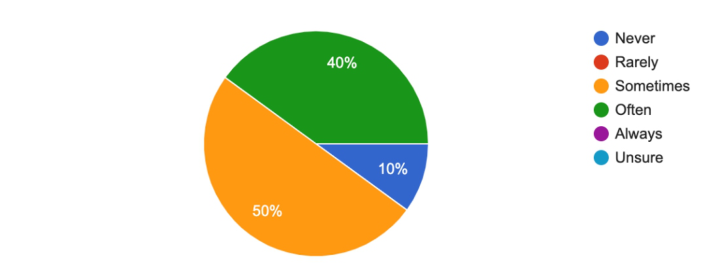
FINDINGS Based on the survey “Innovation Leadership in EDIH: Dilemma-Based Decision-Making” (20 respondents) and the European Digital Innovation Hubs Network’s 2025 report, 50% of leaders face dilemmas “sometimes,” 40% “often,” and 10% “never.” This observed variation highlights the need for structured frameworks to support value-conflicting decisions (Bruda & Costa, 2023).
Figure 1: Dilemma-based decision-making in EDIHs.
A common dilemma involves commercial tech providers offering financial incentives, challenging EDIHs’ neutrality. Choosing long-term trust over short-term gain reflects Hampden-Turner’s integration model. Leaders also
Dilemma-Based Decision-Making in EDIH Ecosystem’s 173
emphasize aligning KPIs with broader goals like SME digital maturity, consistent with Teece’s dynamic capabilities—especially “seizing” and “transforming.” Distributed governance, such as strategic committees, enhances legitimacy (Tigre et al., 2025).
Overwhelming SME demand is another dilemma. EDIH Poland used transparent communication and medium-term planning to balance ethics, strategy, and stakeholder expectations—again aligning with Hampden- Turner’s theory.
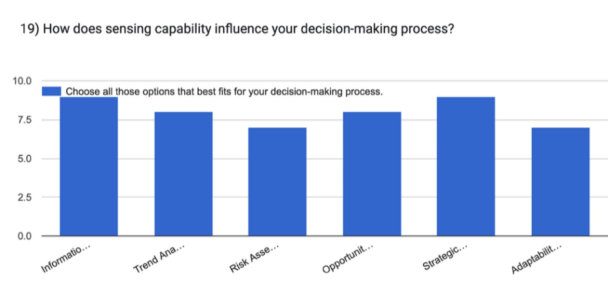
Figure 2: Strategic role of sensing capacity in EDIH decision-making.
Sensing, the first pillar of Teece’s framework (1997), enables EDIHs to detect and respond to change (Luo, 2022). It supports, strategic planning, aligning short-term actions with long-term goals. Information gathering by using diverse sources to understand the landscape (Fielder et al., 2023). Opportunity identification designing proactive services. Adaptability adjusting strategies to disruptions. One EDIH used sensing to identify capacity constraints early, enabling trust-preserving planning.
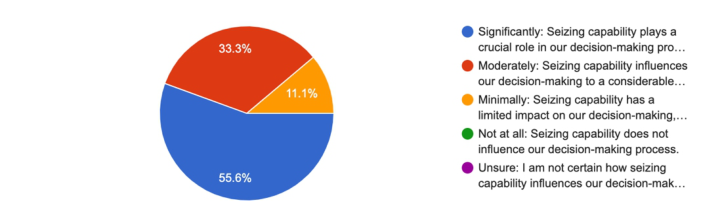
Survey results show that 55,5% of leaders see seizing as highly influential, 33.3% moderately, and 11.1% minimally. Seizing involves mobilizing resources to capture value (Teece, 2007). One hub prioritized key clients during peak demand. Moderate influence was linked to resource challenges;
minimal impacts to early-stage hubs. Strengthening seizing may require agile governance and resource pooling.
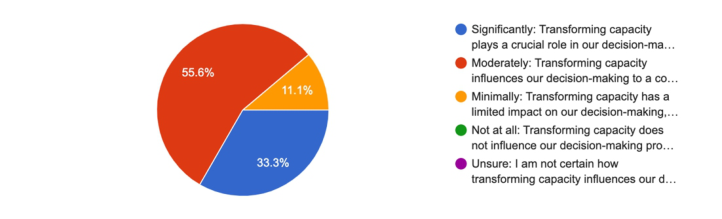
Figure 4: Transforming capacity in EDIH decision-making, enabling strategic adaption.
Expert survey results show that 66.7% of EDIH leaders rated transforming capacity as moderately influential, 33.3% as highly significant. Transformation means reconfiguring structures to adapt (Teece, 2007). Most hubs adjust reactively, while some show strategic agility—restructuring leadership and embedding learning (Teece, 2018; Dejardin et al., 2023). Continuous transformation can be supported by leadership training and shared learning platforms. A smaller group of hubs demonstrates strategic agility—proactively restructuring leadership, integrating new technologies, and institutionalizing improvement (Teece, 2018). To institutionalize transformation as a continuous process, the EDIHs may benefit from leadership development initiatives, collaborative learning infrastructures, and the systematic application of performance evaluation frameworks.
CONCLUSION
This study examined how dilemma-based decision-making influences innovation leadership and dynamic capabilities within European Digital Innovation Hubs (EDIHs). By integrating Hampden-Turner’s (1990) dilemma reconciliation model with Teece’s (1997, 2007) dynamic capabilities framework, the research provides a novel lens for understanding leadership in complex digital ecosystems. The findings show that EDIH leaders frequently face tensions between short-term operational efficiency and long- term strategic vision, financial sustainability and ethical neutrality, as well as centralized governance and inclusive collaboration. Leaders who adopt integrative approaches—rather than choosing between competing values— are better equipped to build trust, sustain resilience, and foster innovation.
The study contributes theoretically by bridging dilemma theory and dynamic capabilities, highlighting how sensing, seizing, and transforming enable EDIHs to adapt and evolve. Sensing supports strategic foresight and opportunity identification (Luo, 2022; Fiedler et al., 2023), seizing facilitates resource mobilization and value capture (Teece, 2007), and transforming— though still developing in many hubs—is essential for strategic renewal and long-term competitiveness (Dejardin et al., 2023; Foss et al., 2023).
Dilemma-Based Decision-Making in EDIH Ecosystem’s 175
Newest Industry 4.0 research sees Teece’s business model approach a fruitful approach (see Reiman et al., 2024).
Practically, the research provides actionable insights for EDIH leaders on managing ethical and strategic dilemmas in multi-stakeholder environments. It emphasizes the importance of leadership agility, inclusive governance, and continuous learning in navigating uncertainty. From a policy perspective, the findings inform EU-level digital transformation strategies by identifying leadership challenges and opportunities within the EDIH framework, suggesting that targeted support—such as leadership training and shared learning platforms—can enhance ecosystem resilience.
At the same time, the research is limited by its qualitative design and relatively small expert sample. Future work should expand through longitudinal studies, cross-regional comparisons, and quantitative validation of dilemma-handling strategies. Such approaches could deepen understanding of how leadership practices shape digital transformation outcomes in diverse contexts.
Importantly, the research reveals that innovation leadership in EDIHs is not merely about promoting new technologies but about cultivating a culture of confidence, collaboration, and continuous learning. Leaders who model innovative behavior, engage stakeholders inclusively, and manage ambiguity effectively are more likely to succeed in complex, multi-actor ecosystems (Abbas et al., 2012; Sergeeva & Zanello, 2018).
In conclusion, this study contributes to the growing body of knowledge on ecosystem leadership by offering a nuanced understanding of how dilemma- based decision-making and dynamic capabilities intersect to shape innovation outcomes in EDIHs. We can expect that leaders who identify dilemmas create deeper trust compared to those leaders who do not identify any dilemmas, but this hypothesis requires more quantitative and qualitative evidence. As digital transformation accelerates across Europe, the ability of EDIH leaders to reconcile competing demands and lead with agility will be critical to sustaining innovation, resilience, and regional impact.
REFERENCES
Abbas, G., Iqbal, J., Waheed, A., & Riaz, M. N. (2012). Relationship between transformational leadership style and innovative work behavior in educational institutions. Journal of Behavioural Sciences, 22(3), 19–32. Akaka, M. A. and Vargo, S. L. (2014) Technology as an operant resource in service
(eco) systems. Information Systems and e-Business Management, 12(3), 367–384. Al-Moaid, N. A. A., & Almarhdi, S. G. (2024). Developing dynamic capabilities for successful digital transformation projects. Journal of Innovation and Entrepreneurship. Arar, K., & Saiti, A. (2022). Ethical leadership, ethical dilemmas and decision making
among school administrators. Equity in Education & Society, 1 (1), 126–141. Bowles, T., & Hattie, J. (2013). Towards positive adaptive change: the association of three typologies of agency with motivational factors. Australian Psychologist, 48(6), 437–444. https://doi.org/10.1111/ap.12024.
Carpentier, E., D’Adda, D., Nepelski, D. and Stake, J., (2025). European Digital Innovation Hubs Network’s activities and customers – State of play report 2024, Publications Office of the European Union. Chen, T., Li, F., & Leung, K. (2016). When does supervisor support encourage
innovative behavior? Opposite moderating effects of general self-efficacy and internal locus of control. Personnel Psychology, 69(1), 123–158. Dedehayir, O., Ortt, J. R., & Seppänen, M. (2017). Disruptive change and the reconfiguration of innovation ecosystems. Journal of Technology Management & Innovation, 12(3), 9–21. Dejardin, M., Raposo, M. L., Ferreira, J. J. et al. (2023). The impact of
dynamic capabilities on SME performance during COVID-19. Rev Manag Sci 17, 1703–1729. Deloitte (2023). Three truths about innovation and trust. TRENDS | Jul 6, 2023.
https://action.deloitte.com/insight/3413/three-truths-about-innovation-and-trust. Fernando, A. C. (2010). Business ethics and corporate governance. Pearson Education India. Fiedler, M., Hutzschenreuter, T., Klarmann, M. et al. (2023) Transformation:
Challenges, Impact, and Consequences. Schmalenbach J Bus Res 75, 271–279. Foss, N. J., Schmidt, J., & Teece, D. J. (2023). Ecosystem leadership as a dynamic capability. Long range planning, 56(1), 102270. Hampden-Turner, C. (1990). Charting the corporate mind: From dilemma to
strategy. Hampden-Turner, C., & Trompenaars, F. (2006). Cultural intelligence: Is such a capacity credible? Group & Organization Management, 31(1), 56–63. Heaton, S., Lewin, D., & Teece, D. J. (2020). Managing campus entrepreneurship:
Dynamic capabilities and university leadership. Managerial and Decision Economics, 41(6), 1126–1140. João, B, N. (2023) At the Intersection of Digital Transformation and Dynamic Capabilities, In IOSR Journal of Business and Management 25(8), pp. 21–32. Kumar, V., & Reinartz, W. (2016). Creating enduring customer value. Journal of
Marketing, 80(6), 36–68. Liu, L. Cui, L., Han, Q., Zhang C. (2024). The impact of digital capabilities and dynamic capabilities on business model innovation: The moderating effect of organizational inertia. Humanit Soc Sci Commun 11, 420 (2024). Luo, Y. (2022). New connectivity in the fragmented world. J Int Bus Stud 53,
962–980. Lusch, R. F., & Nambisan, S. (2015). Service innovation: A service-dominant logic perspective. MIS Quarterly, 39(1), 155–175. Maria Stock, R., Zacharias, N. A., & Schnellbaecher, A. (2017). How do strategy
and leadership styles jointly affect co-development and its innovation outcomes? Journal of Product Innovation Management, 34(2), 201–222. Mele, G., Capaldo, G., Secundo, G., & Corvello, V. (2024). Knowledgebased dynamic capabilities for digital transformation. Journal of Knowledge Management. Msila, V. (2024). Janusian Thinking as Leadership and Self-Reflection: Why Our
Schools Need Strategic Thinkers in Contexts of Ambiguity, Africa Education Review, 20:4, 1–17. Naidoo, S., & Sutherland, M. (2016). A management dilemma: Positioning employees for internal competition versus internal collaboration. Is competition possible? South African Journal of Business Management, 47(1), 75–87.
Dilemma-Based Decision-Making in EDIH Ecosystem’s 177
Pihlajamaa, M. (2017). Going the extra mile: Managing individual motivation in radical innovation development. Journal of Engineering and Technology Management, 43, 48–66. Poskela, J., & Martinsuo, M. (2009). Management control and strategic renewal in
the front end of innovation. Journal of Product Innovation Management, 26(6), 671–684. Reiman, A., Takala, E-P., Parviainen, E. & Kaivo-oja, J. (2024). Human work in strategic technology transitions in manufacturing. International Journal of Human Factors and Ergonomics. 11(3), 266–288. Sergeeva, N., & Zanello, C. (2018). Championing and promoting innovation in UK
megaprojects. International Journal of Project Management, 36(8), 1068–1081. Shane, S., Locke, E. A., & Collins, C. J. (2003). Entrepreneurial motivation. Human Resource Management Review, 13(2), 257–279. Shazi, R., Gillespie, N. & Steen, J. (2015). Trust as a predictor of innovation network
ties in project teams. International Journal of Project Management, 33(1), 81–91. Storbacka, K., Brodie, R. J., Böhmann, T., Maglio, P. P. and Nenonen, S. (2016).
Actor engagement as a microfoundation for value co-creation. Journal of Business Research, 69(8), 3008–3017. Taylor KW, Eftim SE, Sibrizzi CA, et al. (2025). Fluoride Exposure and Children’s IQ Scores: A Systematic Review and Meta-Analysis. JAMA Pediatr. 179(3):282–292. Teece, D. J., Pisano, G., & Shuen, A. (1997). Dynamic capabilities and strategic
management. Strategic Management Journal, 18(7), 509–533. Teece, D. J. (2007). Explicating dynamic capabilities: The nature and microfoundations of (sustainable) enterprise performance. Strategic Management Journal, 28(13), 1319–1350. Tigre, F. B., Henriques, P. L. & Curado, C. (2025). The digital leadership emerging construct: A multi-method approach. Manag Rev Q 75, 789–836. Ul Amin, N., & Khan, M. A. (2024). Driving Competitive Advantage in the Digital
Era: The Role of Dynamic Capabilities, Innovation, and Leadership. Dinasti International Journal of Economics, Finance & Accounting (DIJEFA), 5(5). Wang, Y., Liu, J., Zhu, Y., & Bastian, B. (2018). Humble leadership, psychologicals safety, knowledge sharing, and follower creativity: A cross-level investigation. Frontiers in Psychology, 9(Article 1727), 1–9.
LISTED IN THE AHFE DIGITAL BOOKSTORE CATALOGUE
Explore the complete digital volume
Human Factors in Design, Engineering, and Computing
Read this individual research paper free through the original publisher, or explore the full digital proceedings book.
ISBN 978-1-964867-75-5
Explore this ISBN in the AHFE Bookstore ↗Listed in the July 2026 bookstore catalogue; search by ISBN to confirm current availability · Digital book purchase optional