Nika Perevalova, Cedric Oette, Stefanie Findeisen (2025). AI-Assisted Integrative Workforce and Capacity Management: A Use Case Report on Agile Decentralized Production Scheduling. In: Human Factors in Design, Engineering, and Computing. AHFE Open Access, vol. 199, pp. 1953–1961. https://doi.org/10.54941/ahfe1007006
Manufacturing companies must deal with a high level of volatility and uncertainty. Consequently, the demand for agile and decentralized decision-making in the context of production scheduling becomes apparent, since traditional rigid planning methods are failing to adapt to real-time disruptions. This paper presents a concept and architecture of a Digital Scheduling Dashboard, which is based on an autonomous scheduling process enhanced by an AI-assisted optimizer. The DSD retains Enterprise Resource Planning (ERP) systems as the authoritative baseline but delegates day-level assignment authority to assembly workers. A non-prescriptive AI-based optimization engine runs in the background, serving as a fact-checker by pre-computing complex eligibility constraints and micro-conditions (such as machine readiness, material status, qualification validity, and HSE incompatibilities) that are absent in the ERP's low granularity. The system presents workers with a pre-selected set of feasible options while reserving the final order selection as the worker’s autonomous choice. By combining employee autonomy with AI-assisted optimization, the use case aims to improve responsiveness, reduce planning overhead, and optimize resource utilization in fluctuating production scenarios.
The competitive global manufacturing landscape urges companies to deliver high-quality products with superior speed, cost-efficiency, and reliability in order to maintain market relevance (Bauernhansl et al., 2014). However, production volumes are subject to considerable fluctuations driven by volatile markets, extensive custom orders, and specific customer requirements, making it challenging to accurately estimate workloads (Tolio, 2009). To thrive in this environment, companies must adopt flexible and agile methods in both their manufacturing and work design (Oechsler, 2011).
A critical task in this context is workforce scheduling, where supervisors must assign employees to workstations and orders to achieve high delivery
performance and resource utilization. Yet, this process is highly vulnerable to disruptions. Supervisors are forced to react to short-term events such as machine breakdowns, employee absences, and missing material by time-consuming re-planning instead of focusing on core leadership duties (Stevenson et al., 2005).
Addressing this challenge, this paper presents a concept for agile and decentralized production scheduling of flexible workforce utilization (see also Bosse and Zink, 2019; Dregger et al., 2018; Dombrowski et al., 2017). The scheduling is based on a short-term allocation of employees to workstations and orders by the workers themselves at the beginning of the shift. The planning department provides a pool of manufacturing orders. On a digital scheduling dashboard workers can assign a suitable order considering real-time data on capacity, priorities, and material availability. Supported by an AI-based optimization algorithm, the decentralized decisions of the workers are aligned with medium-term strategic targets. This approach aims to significantly enhance responsiveness, reduce planning overhead, and optimize resource utilization.
TRADITIONAL AND AGILE WORKFORCE SCHEDULING AND CAPACITY PLANNING IN PRODUCTION Effective workforce management is a core pillar of efficient production systems. Traditional approaches are characterized by centralized, top-down processes where supervisors or planners create detailed schedules to balance often competing objectives: high delivery reliability, resource utilization, low inventory, and short lead times (Tolio, 2009). This critical task, as highlighted in the introduction, requires managers to assign employees to workstations and orders to achieve optimal performance, yet it is highly vulnerable to disruptions (Stevenson et al., 2005).
The process typically involves medium-term capacity planning that translates the Master Production Schedule into aggregate resource requirements to identify potential bottlenecks. Following this, a detailed short-term schedule is generated, where specific employees are manually assigned to tasks and machines based on their skills and qualifications. This complex procedure is executed using static, non-adaptive tools such as Gantt charts within ERP systems or traditional spreadsheets, which represent a static snapshot in time (Vollmann et al., 2005).
In addition, production planning and scheduling typically require a defined “frozen zone” of days or even weeks, to allow connected processes such as manufacturing logistics to derive corresponding schedules for all raw materials, components, and sub-systems (Graves, 2011).
However, these frozen zones inherently conflict with today’s short-term priority changes.
The fundamental weakness of this paradigm is its rigid and static nature. Manufacturing environments are inherently dynamic, subject to fluctuations in volume, customer demands, and inevitable disruptions such as machine breakdowns, material shortages, and employee absences (Bauernhansl et al., 2014). Each of these events can instantly invalidate
AI-Assisted Integrative Workforce and Capacity Management: A Use Case Report 1955
the pre-defined schedule. This forces supervisors or managers into time- consuming manual re-planning, pulling them away from core leadership duties and into reactive fire-fighting – a significant planning overhead that creates a well-documented bottleneck (Stevenson et al., 2005). For companies dealing with a high level of uncertainty, “policies, rules, and procedures, even sensible ones, become barriers to strategic speed” (Kotter, 2014).
Agile organizations, on the contrary, focus on changing “hierarchy into knowledge sharing, trust-based relationships, and collaborative skills, and the role of management shifts from command and control to facilitation and support” (Magalhães, 2020; Gunasekaran, 2001). While agile organizational approaches primarily evolved in white-collar environments, similar transformations are emerging in manufacturing. Traditional, hierarchical decision-making structures are replaced by self- organized teams, minimizing or even eliminating the role of middle management where possible. Such approaches emphasize a high degree of team and employee autonomy as well as multidisciplinary competencies. As a result, decision-making processes are increasingly delegated to the shop floor level, enabling teams and individuals to make faster, more informed and context-sensitive planning decisions that enhance overall flexibility (Pokorni et al., 2022).
The biggest challenge when it comes to flexible re-scheduling in both traditional and agile planning approaches lies in the delayed availability and fragmentation of relevant shop floor information. Often, the data accessible to supervisors is incomplete or outdated, leading to re-planning decisions based on obsolete information. This not only reduces responsiveness but also increases the risk of misaligned prioritization of production orders. The model also treats workers as passive resources, failing to leverage their knowledge and potential for autonomous decision-making. As a result, short- term reactive adjustments frequently become decoupled from medium-term strategic targets, such as flextime balances or the use of flexible workforce pools.
The substantial manual effort required to maintain plan feasibility undermines efficiency and adaptability, clearly highlighting the relevance for an agile, AI-supported approach as proposed in this paper.
METHODOLOGY
Following the qualitative single-case study design (Yin, 2018), this paper explores the potential of an AI-assisted digital dashboard for production scheduling. The case study focuses on enhancing the company’s existing decentralized scheduling approach through a digital and AI-assisted dashboard. The design process of the digital dashboard and the underlying optimization logic is based on the methodological framework proposed by Bauer et al. (2018), specifically focusing on the Ideate and Prototyping phases. These phases are based on a series of multidisciplinary workshops, aiming at generating an Industry 4.0 solution space and further refining it into a specific use case and multiple user stories.
USE CASE DESCRIPTION Initial Situation and Problem Description
In the initial stage, the agile planning concepts consisted of a self- organized workplace and task allocation. Production controllers break down orders into standardized two-hour partial order tasks. Assembly workers independently assign themselves to these tasks and select a respective workstation. This scheduling process is managed through an analog planning board utilizing visual management principles.
However, the reliance on the analog board presented limitations compromising the quality and robustness of the scheduling mechanism process:
Spatial constraints: The board has limited capacity and space (e.g., number of depicted orders, order details).
Missing cross-validation: There is no automated cross-referencing with other data sources (e.g., qualifications or safety clearances).
Lack of real-time transparency: An analog board will always show outdated information at some point.
Limited decision horizon: Workers’ short-term scheduling perspectives are limited to certain information to be manageable. There is no alignment with medium-to-long-term goals or conflicting interests.
Intensive manual intervention: Order modifications lead to extensive digital and analog adjustments and manual handling of information.
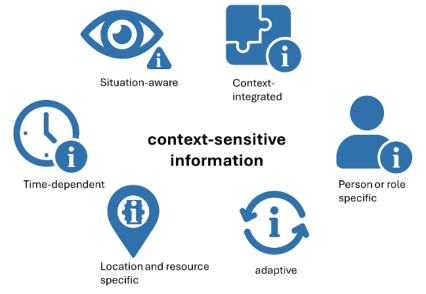
The overall objective is to establish a single source of truth for all stakeholders involved. Furthermore, the alignment with the company’s planning principles and goals is indispensable. The system must deliver information in pre-selected, lean, and contextualized form. This implies only context-sensitive information should be displayed to eliminate information overload. Figure 1 defines key aspects of context-sensitive information.
Figure 1: Key characteristics of context-sensitive information.
The overall goal is to enable autonomous scheduling with maximized scheduling quality and alignment with organizational objectives.
AI-Assisted Integrative Workforce and Capacity Management: A Use Case Report 1957
AI-ASSISTED INTEGRATIVE WORKFORCE AND CAPACITY MANAGEMENT The Digital Scheduling Dashboard (DSD) is built on a flexible and scalable SaaS platform. This application architecture supports 1-N dedicated instances (“spaces”), each with 1-N sub-pages. A Space can be implemented as highly focused, single-purpose application (e.g. in case of the DSD) or as a more complex, multi-page micro-app. The platform provides access from industrial and shared devices such as hall monitors, machine HMIs, assembly workstations, and shared tablets and phones.1
The ERP system serves as the authoritative planning baseline by supplying all core data relevant for scheduling, including Master Production Schedules/Plan, Material Requirements Planning, production orders, routings, due dates. The scheduling is based on a weekly prospective: manufacturing orders2 are divided into shift-long partial orders (in this case: early, late and night shift). The DSD’s primary function is not to dictate workers the next order, but to enable the autonomous scheduling process with intelligent background information. It translates the ERP baseline into a feasible pool of orders, ensuring that assembly workers retain full decision authority. Concretely, the system precomputes complex constraints and eligibility criteria that the ERP-System does not model at this granularity, including:
Machine readiness, status and potential defects,
Temporarily unavailable workstation,
Current material and tool change status,
Validity and expiration of employee qualifications (e.g. mandatory safety briefings),
Health, safety, and environment (HSE) considerations, including individual incompatibility (e.g. adhesive intolerance),
Availability of personal protective equipment (PPE) and related shop- floor restrictions.
The outcome is a selected set of options: workers are presented only with orders they are fully eligible to execute. The ultimate task selection remains at the worker’s choice; with the system acting solely as an intelligent assistant with transparent explanations.
AI-Assisted Scheduling Process From the perspective of worker-board interaction, the scheduling process remains consistent with the analog process. The AI-based optimization in the background serves as a fact-checker.
The digital workflow follows these steps:
Sign-In and Authentication: Workers authenticate on the shop-floor at hall monitors, machine terminals/HMIs, or assembly workstations via QR-code or Badge-ID, 1Note: The current implementation excludes the use of personal devices (BYOD). 2Orders can have a total manufacturing processing time of up to 1 week.
Review Pre-Selected, Ranked Orders: Depicted information is based on identity and context for real-time, role-aware notifications (e.g., “Material for Order #4711 is kitted; you are eligible to start”),
Order Selection: The worker selects a suitable order, either for immediate execution or for up to one week in advance,
AI-Optimization and Validation: A background optimizer immediately validates global feasibility of the selection against a defined set of constraints (e.g. workers qualifications, legal/tariff rules, material availability, machine capacity/readiness, potential impact on due dates)
Approved scheduling: The DSD commits the schedule if the selection is feasible. If there is a conflict, the workers receive transparent guidance/ and “what-if” scenarios. A team lead escalation process is also in place.
Data Integration and Real-Time Information To ensure real-time data availability, the integrated data sources operate with individual refresh cadences, allowing each source to update independently rather than being constrained by the slowest update cycle. Table 1 summarizes the respective refresh cadences.
Table 1: Data sources, information and update cadences of the DPS.
Table available in the original PDF paper.
Data Source Information Update Cadence hourly ERP production orders, routings, due dates, bills of materials
multiple updates per day
HR/Time and Attendance workforce roster, organizational units, shift plans, clock-ins/outs, absences Daily Qualification Management qualifications/certifications, including validity/expiry and mandatory briefings (safety, general onboarding, lean)
multiple updates per day
Identity QR-code ID and Badge-ID resolve to a single workforce identity across Spaces and touchpoints hourly Operational context (optional) Material status, kitting status; machine readiness/defects; temporary area closures
All dataflows are versioned and auditable.
AI-based Optimization (non-prescriptive, background). The AI-based optimizer runs strictly in the background and is non- prescriptive. It provides feasibility checks, signals priority, and transparent explanations to enable workers autonomy.
The engine addresses the complex decision context of worker-to-order assignment. Table 2 shows exemplary In- and Outputs.
AI-Assisted Integrative Workforce and Capacity Management: A Use Case Report 1959
Table 2: Exemplary key inputs and outputs of the AI-based optimizer.
Table available in the original PDF paper.
Key Inputs Key Outputs
Definitive feasibility confirmation (e.g. “Order can start at 10:15”,
Order due dates and processing times (including potential sequence-dependent setup effects),
Worker-relevant information
Eligibility status and blocking reasons (e.g. “Worker A is eligible for Order B; Order C is blocked due to HSE incompatibility”),
attendance by time window,
worker qualifications/ certifications and required qualifications per order,
“What-If”-Scenarios (e.g. “Alternative X reduces due-date risk but increases setup effort”).
Feasibility mask per order/time window summarizing material availability, precedence constraints, HSE incompatibility, and temporary area/machine blocks,
Machine capacity/readiness (zero if defect/closed),
Legal, tariff, and company rules (hour limits, minimum rest, etc.).
The optimizer minimizes is designed to minimize the weighted combination of operational goals (e.g. maximizing throughput, minimizing plan deviations) while including stability terms so plans do not oscillate during updates.
In the event of disturbances (such as changes in availability or resource status), the DSD triggers an incremental re-optimization, adjusting only the affected parameters to ensure stability.
Governance, Privacy and Data Protection The governance is designed to preserve worker autonomy while ensuring compliance with privacy, labor, and safety obligations. User identity is unified and authenticated solely at shared shop-floor touchpoints (via QR or Badge- ID), and access follows role-based access control with site and role scoping. All configuration changes and worker selection events are logged to human- readable audit trails to ensure accountability and transparency. The data collection is strictly limited for the purpose of safety, auditability, and process improvement. Retention and deletion procedures adhere to documented schedules approved at site level.
In EU contexts, the approach aligns with General Data Protection Regulation GDPR (lawful basis, purpose limitation, rights management) and anticipates EU AI Act obligations for potentially high-risk functions through documentation, risk management, human oversight, and traceability.
OUTLOOK AND FUTURE WORK As a next step of the DSD, an optional GenAI-based transparency layer using retrieval-augmented generation (RAG) will be piloted. This feature
will use plain language (and worker’s preferred native language) to explain why a given order is eligible or is not. The explanation will cover various dynamic factors such as qualifications mismatch (including validity and expiry dates), configured incompatibilities (e.g., adhesive intolerance), and real-time material and machine readiness states. Additionally, the DPS will display workers:
Next-best eligible alternatives available to the worker,
“What-if” scenarios (e.g., “if Machine M-23 is back at 10:15, Order #4711 becomes feasible”),
This enhanced transparency is expected to increase the traceability and acceptance of proposed options from the worker’s perspective. The rollout of this feature depends on the successful outcome of the piloting phase and final approval by the workers’ council.
From an organizational standpoint, the role of the planner shifts from time-consuming micro-coordination to exception leadership and policy stewardship. Day-level coordination is effectively decentralized to the shop floor. With the information flow fully digitized and visible to every worker, planners can focus on higher-leverage tasks: ensuring robust data quality across sources, setting and tuning priorities and guardrails (e.g., due-date risk thresholds, fairness/rotation), and driving continuous improvement.
CONCLUSION
This paper outlined a concept for agile, AI-assisted planning that keeps enterprise systems such as ERP systems, HR/Time, and Qualification Management as the authoritative baseline while shifting day-level coordination to the shop floor. The concept is operationalized through the Digital Scheduling Dashboard, which presents workers with a pre- selected set of feasible options filtered by parameters such as qualifications, attendance, material and machine readiness, and HSE incompatibilities. An AI-based optimizer supports in the background to prepare feasibility checks, priority signals, and concise explanations. The streamlined process significantly reduces coordination loops and planner bottlenecks while simultaneously ensuring adherence to worker autonomy during scheduling. As an outlook, optional RAG explanations will be piloted to offer plain- language reasons, next-best alternatives, and short what-ifs with source citations.
ACKNOWLEDGMENT
The “agileASSEMBLY” research and development project is funded by the German Federal Ministry of Research, Technology and Space (BMFTR) and managed by the Project Management Agency Karlsruhe (PTKA) as part of the “Industry 4.0 – Adaptability of companies in tomorrow’s value creation” (InWandel) project under the “Future of value creation – Research on production, services and work” program. Further information on the ongoing research project can be found at www.agileassembly.de.
AI-Assisted Integrative Workforce and Capacity Management: A Use Case Report 1961
REFERENCES
Bauer, W., Pokorni, B., Findeisen, S. (2019). Production Assessment 4.0 – Methods for the Development and Evaluation of Industry 4.0 Use Cases. In: Karwowski, W., Trzcielinski, S., Mrugalska, B., Di Nicolantonio, M., Rossi, E. (eds) Advances in Manufacturing, Production Management and Process Control. AHFE 2018. Advances in Intelligent Systems and Computing, vol. 793. Springer, Cham. https://doi.org/10.1007/978–3-319–94196-7_46. Bauernhansl, Thomas; Hompel, Michael ten; Vogel-Heuser, Birgit (2014). Industrie
4.0 in Produktion, Automatisierung und Logistik. Anwendung, Technologien, Migration. Wiesbaden: Springer Vieweg. Bosse, Christian K.; Zink, Klaus J. (Hg.) (2019). Arbeit 4.0 im Mittelstand. Chancen und Herausforderungen des digitalen Wandels für KMU. Springer-Verlag GmbH. [1. Auflage]. Berlin, Germany: Springer Gabler. Dombrowski, Uwe; Richter, Thomas; Krenkel, Philipp (2017). Interdependencies of
Industrie 4.0 & Lean Production Systems: A Use Cases Analysis. In: 2351–9789 11, S. 1061–1068. doi: 10.1016/j.promfg.2017.07.217. Dregger, Johannes; Niehaus, Jonathan; Ittermann, Peter; Hirsch-Kreinsen, Hartmut; Hompel, Michael ten (2018). Challenges for the future of industrial labor in manufacturing and logistics using the example of order picking systems. In: 2212–8271 67, S. 140–143. doi: 10.1016/j.procir.2017.12.190. Graves, Stephen C. (2011). Uncertainty and Production Planning. International
Series in Operations Research & Management Science. In: Kempf, Karl G.; Keskinocak, Pınar; Uzsoy, Reha (ed.), Planning Production and Inventories in the Extended Enterprise, chapter 0, pages 83–101, Springer. http://doi.org/10.54941/ ahfe1002687. Oechsler, Walter A. (2011). Personal und Arbeit. Grundlagen des Human Resource Management und der Arbeitgeber-Arbeitnehmer-Beziehungen. 9., aktualis. u. überarb. Aufl. München: Oldenbourg (Oldenbourgs Lehr- und Handbücher der Wirtschafts- u. Sozialwissenschaften). Pokorni, Bastian, Gelec, Erdem, Verhasselt, Stephan, Findeisen, Stefanie (2022). Self-
directed Shop Floor Teams for Industry 4.0. In: Waldemar Karwowski and Stefan Trzcielinski (eds) Human Aspects of Advanced Manufacturing. AHFE (2022) International Conference. AHFE Open Access, vol. 66. AHFE International, USA. Stevenson, Mark; Hendry, Linda C.; Kingsman, Brian G (2005). A review of production planning and control: The applicability of key concepts to the make- to-order industry. International Journal of Production Research, 2005, 43. Jg., Nr. 5, S. 869–898. Tolio, Tullio (Hg.) (2009): Design of flexible production systems. Methodologies
and tools. Politecnico di Milano. Berlin, Heidelberg: Springer. Vollmann, Thomas. E.; Berry, William. L.; Whybark, D. Clay; Jacobs, F. Robert (2005). Manufacturing Planning and Control for Supply Chain Management, 5th edn. McGraw-Hill/Irwin, New York. Wang, Baicun; Tao, Fei; Fang, Xudong; Liu, Chao; Liu, Yufei; & Freiheit, Theodor
(2021). Smart manufacturing and intelligent manufacturing: A comparative review. Engineering, 7(6), 738–757. Yin, Robert K. (2018). Case study research and applications: Design and methods.
Sixth edition. SAGE.
LISTED IN THE AHFE DIGITAL BOOKSTORE CATALOGUE
Explore the complete digital volume
Human Factors in Design, Engineering, and Computing
Read this individual research paper free through the original publisher, or explore the full digital proceedings book.
ISBN 978-1-964867-75-5
Explore this ISBN in the AHFE Bookstore ↗Listed in the July 2026 bookstore catalogue; search by ISBN to confirm current availability · Digital book purchase optional