Olarinde Farayola, Dastyni Loksa (2025). Enhancing the Accessibility and Comprehension of Online Informational Text: An ASL Sentence Structure Approach. In: Human Factors in Design, Engineering, and Computing. AHFE Open Access, vol. 199, pp. 300–310. https://doi.org/10.54941/ahfe1006842
Deaf individuals with limited English proficiency often face barriers accessing online text due to linguistic differences between English and American Sign Language (ASL). This study investigates whether presenting health information using ASL sentence structure can enhance comprehension, usability, and user experience. In a controlled between-subjects experiment, ten deaf adults were randomly assigned to view university health information either in traditional English or in ASL-structured text. Quantitative and qualitative analyses revealed that participants in the ASL group achieved substantially higher comprehension (M = 81%) than those in the English group (M = 29%), completed tasks faster (9.4 min vs. 29.2 min), and made fewer errors (0.2 vs. 1.8). User satisfaction was also higher in the ASL group (80% vs. 0%). Thematic analysis identified four recurring benefits, visualization, support, comprehension, and accessibility. These demonstrate that aligning written content with ASL grammar improves both understanding and engagement. These findings extend Text Simplification (TS) research by showing that linguistic adaptation grounded in ASL structure can bridge comprehension gaps, supporting more inclusive and equitable digital communication for the Deaf community.
Online information in the U.S. is predominantly presented in traditional English, creating barriers for millions who experience differences in language processing or reading proficiency. Deaf individuals who were born deaf or became deaf in early childhood often encounter additional challenges when engaging with English text due to limitations in language exposure and structure. These barriers can restrict access to essential knowledge, informed decision-making, and inclusion, particularly in areas such as medical information (Wilson-Menzfeld et al., 2025; Jacob et al., 2021; McKee et al., 2019).
Prior research has identified distinct linguistic patterns among deaf individuals with limited English proficiency, including simplified syntax, restricted vocabulary, variations in verb tense, reliance on visual language,
Enhancing the Accessibility and Comprehension of Online Informational Text 301
and unique narrative organization (Vizzi et al., 2022; Mayer & Trezek, 2019). Text Simplification (TS) is presented as one method that offers a promising approach to improve accessibility (Rets, 2021) through concise phrasing, active voice, visual supports, and reduced syntactic complexity.
In this study, we adapted university health information from traditional English into American Sign Language (ASL) sentence structure to test whether these adaptations enhance comprehension and engagement. Our findings aim to guide inclusive, linguistically responsive online information presentation and promote equitable access to online health information. Guided by the following research questions, we used a mixed-methods approach to investigate how using an ASL sentence structure model influenced comprehension, usability, and user experience compared to traditional English presentations: R1: To what extent does textual information presented in ASL sentence structure accurately improving reading comprehension among deaf individuals?
R2: To what extent does presenting health information in ASL sentence structure impact usability for deaf individuals with limited English proficiency?
R3: How does presenting health information in ASL sentence structure impact user experience and satisfaction among deaf individuals with limited English proficiency?
LITERATURE REVIEW
Deafness and Literacy Literacy refers to the ability to read, write, speak, listen, and think critically within a given language. Although literacy is not language specific, it revolves around language (usually first language, tagged L1), which is often the foundation for learning other languages (L2, L3, etc.). However, when it comes to deaf individuals, several barriers arise from the fact that oral skills are the foundation of literacy (Scott et al., 2019; Lederberg et al., 2014), and deaf individuals face challenges in acquiring this foundation naturally. Studies have shown that deaf individuals struggle to comprehend written texts (Paul & Alqraini, 2019; Mayer & Trezek, 2019). Fewer than 2% of deaf children receive accessible education, contributing to persistently high illiteracy rates (Murray et al., 2020).
Text Simplification (TS) The goal of TS is to reduce the complexity of the text to improve its readability and comprehensibility, while retaining its original content (Al- Thanyyan & Azmi, 2021). Researchers Rello et al. emphasized TS’s role in enhancing the accessibility of textual information for individuals with reading difficulties by providing simplified language structure that is easier to comprehend (Rello, 2013). As noted by researchers Kushalnagar et al., TS plays an important role in bridging the gap between standard English and ASL sentence structure (Kushalnagar et al, 2016). TS helps people with
302 Farayola and Loksa
low literacy comprehension, such as children and non-native speakers (Al- Thanyyan & Azmi, 2021). Additionally, individuals with different kinds of reading problems, e.g., autism, aphasia, dyslexia, and deaf people, are known to benefit from TS (Javourey-Drevet et al., 2022).
American Sign Language (ASL) Sentence Structure American Sign Language (ASL) is a natural language with its own grammar and syntax, relying on visual-spatial features rather than linear word order. Unlike traditional English, which depends on fixed Subject-Verb-Object (SVO) patterns and auxiliary words, ASL structure uses flexible orders such as Topic-Comment, Object-Subject-Verb (OSV), and Time-Topic-Comment. These structures are reinforced through spatial referencing and non-manual signals such as eye gaze and facial expressions, which function as grammatical markers (ASL Grammar Guide, 2023; Huenerfauth, 2005; Stokoe, 2005). ASL sentence structure also employs distinctive grammatical devices such as topicalization, directional verbs, and non-manual markers. For instance, topicalization highlights the subject of discourse: the English sentence “The boy is eating an apple” may be expressed in ASL as “APPLE, BOY EAT” with raised eyebrows signaling the topic. Time-Topic- Comment ordering is also common; for example, “Yesterday I went to the doctor” becomes “YESTERDAY, DOCTOR I GO” (Boudreault & Mayberry, 2006).
METHODOLOGY
Experimental Design This controlled experiment used a between-subjects design to investigate the effectiveness of ASL sentence structure in facilitating reading comprehension, usability, and user experience in deaf individuals with limited English proficiency. This study measured reading comprehension, usability, and user satisfaction through comprehension exercises, information-seeking tasks, and user feedback. We conducted a regression analysis to determine the impact of ASL sentence structure on comprehension of textual information.
Participants Participants included ten (10) adults who were born deaf or had significant hearing loss from birth. All participants were fluent in ASL, identified as members of the Deaf community, and resided in Baltimore. Participants had limited proficiency in written English and primarily relied on ASL for communication.
Table 1: Participant demographics by ID (4 males and 6 females, ages 21–65).
Table available in the original PDF paper.
Participant ID Gender Age Onset of Deafness Edu. Level 1 Male 65 Early HS 2 Female 29 Early HS 3 Male 36 Birth HS 4 Male 51 Birth HS 5 Female 21 Early Ele
Continued
Enhancing the Accessibility and Comprehension of Online Informational Text 303
Table 1: Continued Participant ID Gender Age Onset of Deafness Edu. Level
Table available in the original PDF paper.
6 Male 26 Birth HS 7 Female 58 Birth HS 8 Male 60 Birth HS 9 Female 43 Early Ele 10 Female 32 Birth HS Recruitment was conducted in collaboration with the National Association of the Deaf, the Baltimore Association of the Deaf, and the Maryland School for the Deaf. The sample size reflected the qualitative aspect of the study, prioritizing in-depth, one-on-one sessions to capture detailed insights into participants’ experiences. Participants were randomly assigned to either the experimental group (ASL-structure) or the control group (English-structure).
Corpus Selection and Translation We selected existing health information pages from Towson University’s website (accessed September 10, 2025, from https://www.towson.edu/healt hcenter/), covering common illnesses, minor injuries, HIV and STI testing, physical exams, and immunizations. These pages were chosen because they present essential health topics relevant to deaf individuals with limited English proficiency. Each page was translated into an ASL-structured version that retained the original content but employed a different linguistic structure to reflect ASL grammar and syntax. This approach allowed for direct comparison of accessibility and comprehension between the English and ASL-structured versions.
PROCEDURES Text Presentation
In a one-on-one session, we directed participants to read about a variety of health- related topics including common illnesses and minor injuries, STI/HIV testing, Physical exams, and immunization. The experimental group received the pages in ASL sentence structure while the control group received them in traditional English structure.
Comprehension Assessment After reading the presented health information, participants completed a comprehension test consisting of 20 multiple-choice questions related to the health information they read. We collected metrics, such as comprehension, completion time, and accuracy.
Information Seeking Tasks Following the comprehension assessment, we instructed participants to complete two tasks which required navigation and interaction with the website: 1. locate the link to book an STI/HIV appointment and 2. make an STI/HIV appointment by submitting a form online. We observed them
304 Farayola and Loksa
interacting with the website through live observation, noting participants’ task completion time, error rate, success, and satisfaction.
User Feedback We then collected qualitative data by interviewing participants regarding their satisfaction, comprehension, experiences, navigation, and ease of use of the presented health information website. This enabled us to elicit detailed and thoughtful responses from participants that provided richer insights into their thoughts, feelings, experiences, and challenges regarding the effectiveness of the ASL intervention versus English health information.
DATA ANALYSIS In this study, we employed a mixed-methods approach for data analysis. We used quantitative analysis (descriptive statistics) to calculate means, medians, and standard deviations to describe participant characteristics such as age, gender, onset of deafness, and ASL use; we utilized inferential statistics, involving t-tests to compare mean scores of the experimental and control groups in comprehension tasks, usability, and user feedback. In addition, we used regression analysis to examine the relationship between ASL-structured health information (iv) and comprehension, usability, and user satisfaction (dv). For qualitative analysis, we used thematic analysis to analyze open-ended participant responses, leading to identifying recurring themes: visualization, support, comprehension, and accessibility of the ASL- structured health information versus traditional English-structured health information.
FINDINGS Reading Comprehension Assessment
Participants in the experimental group (IDs 1-5) demonstrated strong comprehension performance, with most scoring above 70%. Scores ranged from 65% to 100% (M = 81, Mdn = 75, Min = 65, Max = 100). These results suggest that participants generally performed well when health information was presented in ASL sentence structure, although individual comprehension varied across the group. Participants in the control group, however, showed considerably lower comprehension performance, with most scoring below 35% on the English- language website as it is currently offered to the public. Scores ranged from 15% to 50% (M = 29, Mdn = 25, Min = 15, Max = 50). These results indicate that participants in the control group experienced substantial difficulty understanding health information presented in traditional English, suggesting that the linguistic structure of the text posed a barrier to comprehension.
Enhancing the Accessibility and Comprehension of Online Informational Text 305
Table 2: Percentage of correct answers on comprehension assessment for participants in the experimental (IDs 1–5) and control (IDs 6–10) groups.
Table available in the original PDF paper.
Participant ID Scores Group 1 70% Experimental 2 95% 3 65% 4 100% 5 75% 6 35% Control 7 25% 8 50% 9 20% 10 15%
Information Seeking Task Performance Analysis
Table 3 (below) shows that participants P1–P5 (in the experimental, ASL group) generally succeeded in completing the assigned task. Four participants (P1–P4) achieved full task success, while one participant (P5) partially succeeded. Task completion times ranged from 3 to 15 minutes (M = 8.4, Mdn = 9), and four participants made no errors. One participant (P5) made a single error when attempting to schedule an appointment. User satisfaction was high across participants who completed the task successfully, with all reporting being satisfied.
Table 3: Task performance by participant ID.
Table available in the original PDF paper.
Participant ID Success Completion Time
Errors User Satisfaction
Frustrated
1 Yes 7 minutes 0 Satisfied 2 Yes 3 minutes 0 Satisfied 3 Yes 12 minutes 0 Satisfied 4 Yes 15 minutes 0 Satisfied 5 Fair 10 minutes 1 (make appt) Unsatisfied 6 No 23 minutes 2 (find link & make appt) Frustrated 7 No 28 minutes 2 (find link & make appt)
Frustrated
8 No 20 minutes 1 (make appt) Unsatisfied 9 No 37 minutes 2 (find link & make appt) Frustrated 10 No 38 minutes 2 (find link & make appt)
In contrast, none of the control group participants (P6–P10) successfully completed the task. Their task completion times ranged from 20 to 38 minutes (M = 29.6, Mdn = 30), with all participants making one or more errors. Most control participants (P6, P7, P9, P10) reported frustration,
306 Farayola and Loksa
while one participant (P8) indicated dissatisfaction due to errors encountered during the process.
User Feedback We conducted open-ended interviews to explore how language structure influenced participants’ ability to comprehend health information and complete usability tasks on the website. Responses were analyzed using thematic analysis to identify key patterns in participants’ perspectives, experiences, and satisfaction. Four salient themes emerged from both groups’ responses: visualization, support, comprehension, and accessibility. These reflected how participants interacted with the materials and perceived the effectiveness of each language format. Overall, the findings indicate that the ASL-structured interface enhanced visualization, comprehension, and accessibility of health information for the experimental group compared to the traditional English text used by the control group.
Table 4: Results of thematic analysis.
Table available in the original PDF paper.
Control Group (Traditional English)
Themes Experimental Group (ASL Intervention) Visualization This group emphasized the importance of visualization through ASL sentence structure This group agreed health information lacked visualization (except participant 10 agreeing that information was somehow visual. Support This group agreed that ASL sentence structure supported comprehension and accessibility.
This group believed text presented in traditional English hindered understanding. Comprehension This group comprehended health information in ASL sentence structure with ease
This group believed the health website was inaccessible.
This group did not understand health information presented in traditional English well. Accessibility This group agreed that the ASL-based website was accessible and easy to use.
Mixed-Methods Analysis We combined quantitative (t-tests, regression), task-based feedback, and qualitative (thematic analysis) findings, validating results across the three data types and providing a holistic picture as shown below:
9.4 min 29.2 min t = −4.75 0.00273 Cohen’s d = −3.00 Errors 0.2 1.8 t = −5.66 0.00048 Cohen’s d = −3.58 Satisfaction 80% 0% OR = ∞ 0.0476 Odds Ratio = ∞
Enhancing the Accessibility and Comprehension of Online Informational Text 307
Table 5 (above) shows evidence that the ASL intervention group significantly outperformed the control group across comprehension, speed, accuracy, and satisfaction. The satisfaction results reinforce the quantitative findings: nearly all in ASL group reported satisfaction, compared to English group.
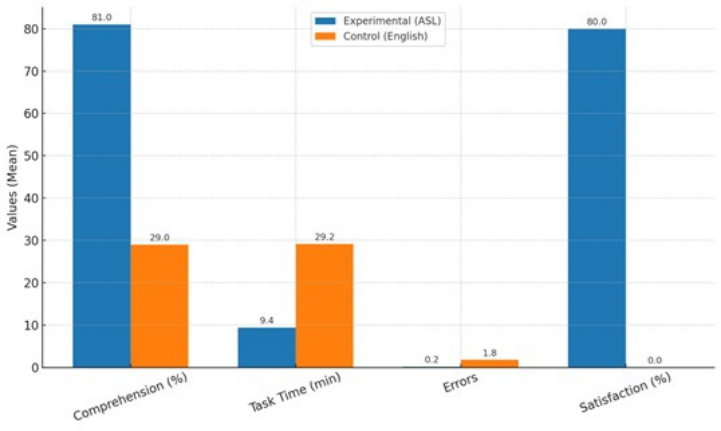
Figure 1: Group comparison across measures.
Figure 1 illustrates that participants in the ASL intervention group achieved substantially higher comprehension scores (M = 81%) compared to the control group (M = 29%). Presenting information using ASL sentence structure significantly improved participants’ understanding of health content. Task completion time further reflected this advantage, with the ASL group completing tasks in an average of approximately 9 minutes, compared to 29 minutes in the control group. The ASL group also demonstrated greater accuracy, averaging only 0.2 errors per participant, while the control group averaged nearly 2 errors. Finally, user satisfaction was markedly higher among participants in the ASL group (80% satisfied) compared to those in the control group (0%), indicating that the ASL- structured design enhanced both efficiency and overall user experience.
DISCUSSION
This study examined how using American Sign Language (ASL) sentence structure influences comprehension, usability, and user experience among deaf individuals with limited English proficiency. Findings support all three research questions and align with prior work on literacy, visualization, and TS.
Consistent with studies highlighting the literacy gap between ASL users and written English (Mayer & Trezek, 2019; Paul & Alqraini, 2019), participants who read ASL-structured text achieved substantially higher
308 Farayola and Loksa
comprehension scores (M = 81%) than those reading traditional English (M = 29%). This confirms that adapting written information to ASL grammar can reduce syntactic barriers and improve understanding.
Task performance results mirror earlier research showing that visual- spatial communication supports cognition and navigation (Marschark & Hauser, 2008). The ASL group completed tasks faster (9.4 min vs. 29.2 min) and with fewer errors (0.2 vs. 1.8), indicating that ASL structure enhances both clarity and usability.
User experience findings echo prior work emphasizing the importance of visualization and multimodal support (Marschark et al., 2013; Stokoe, 2005). The four themes of visualization, support, comprehension, and accessibility, captured how ASL-based design promoted satisfaction (80% satisfied vs. 0% in control).
These results extend TS research (Kushalnagar et al., 2016; Rello et al., 2013) by showing that aligning text with ASL linguistic patterns can improve accessibility beyond basic simplification. While the small sample (n = 10) and limited text scope constrain generalization, the outcomes clearly demonstrate the potential of ASL-based structures to enhance comprehension and usability.
IMPLICATIONS This study highlights a critical need for inclusive digital design that reflects the linguistic and accessibility needs of the Deaf community. Incorporating ASL sentence structure into Text Simplification can improve comprehension, usability, and engagement for deaf individuals with limited English proficiency. Designers and developers should view linguistic accessibility as a core design principle rather than an afterthought, while policymakers should support initiatives that advance equitable, accessible technology for all users.
CONCLUSION
Presenting health information in ASL sentence structure significantly improved comprehension, efficiency, and satisfaction among deaf users with limited English proficiency. These findings reinforce prior evidence on the role of visual and linguistic accessibility and demonstrate that ASL-aligned Text Simplification (TS) offers a practical model for inclusive digital design.
Future work should test this approach with larger, younger, more diverse samples and broader text types, extending its application to legal, financial, and educational domains. Integrating ASL sentence structure into web design can advance true digital equity, ensuring deaf individuals can access and understand vital information with autonomy and confidence.
REFERENCES
Al-Thanyyan, S. S., & Azmi, A. M. (2021). Automated Text Simplification. ACM Computing Surveys, 54(2), 1–36. Boudreault, P., & Mayberry, R. I. (2006). Grammatical processing in American
Sign Language: Age of first-language acquisition effects in relation to syntactic structure. Language and Cognitive Processes, 21(5), 608–635.
Enhancing the Accessibility and Comprehension of Online Informational Text 309
Towson University. (2025). Health Center. Retrieved September 10, 2025, from https://www.towson.edu/healthcenter/ Huenerfauth, M. (2005). American Sign Language natural language generation and
machine translation. ACM SIGACCESS Accessibility and Computing, 81, 12–15. Jacob, S. A., Palanisamy, U. D., Napier, J., Verstegen, D., Dhanoa, A., & Chong, E. Y.-C. (2021). Health Care Needs Deaf Signers. Academic Medicine, 97(3), 335–340. Javourey-Drevet, L., Dufau, S., François, T., Gala, N., Ginestié, J., & Ziegler, J. C.
(2022). Simplification of literary and scientific texts to improve reading fluency and comprehension in beginning readers of French. Applied Psycholinguistics, 43(2), 485–512. Kushalnagar, P., Smith, S., Hopper, M., Ryan, C., Rinkevich, M., & Kushalnagar, R.
(2016). Making Cancer Health Text on the Internet Easier to Read for Deaf People Who Use American Sign Language. Journal of Cancer Education, 33(1), 134–140. Lederberg, A. R., Miller, E. M., Easterbrooks, S. R., & Connor, C. M. (2014).
Foundations for Literacy: An Early Literacy Intervention for Deaf and Hard-of- Hearing Children. Journal of Deaf Studies and Deaf Education, 19(4), 438–455. Luck, S. J., & Vogel, E. K. (2013). Visual working memory capacity: From psychophysics and neurobiology to individual differences. Trends in Cognitive Sciences, 17(8), 391–400. Marschark, M., & Hauser, P. C., (2008). Deaf cognition : Foundations and outcomes.
Oxford University Press. Marschark, M., Morrison, C., Lukomski, J., Borgna, G., & Convertino, C. (2013).
Are deaf students visual learners? Learning and Individual Differences, 25, 156–162. Mayer, C., & Trezek, B. (2019). Writing and Deafness: State of the Evidence and Implications for Research and Practice. Education Sciences, 9(3), 185. McKee, M. M., Hauser, P. C., Champlin, S., Paasche-Orlow, M., Wyse, K.,
Cuculick, J., Buis, L. R., Plegue, M., Sen, A., & Fetters, M. D. (2019). Deaf Adults’ Health Literacy and Access to Health Information: Protocol for a Multicenter Mixed Methods Study. JMIR Research Protocols, 8(10), e14889. Murray, J. J., Hall, W. C., & Snoddon, K. (2020). The Importance of Signed Languages for Deaf Children and Their Families. The Hearing Journal, 73(3), 30– 32. Paul, P. V., & Alqraini, F. (2019). Conclusion: Perspectives on Language, Literacy,
and Deafness. Education Sciences, 9(4), 286. Rello, L., Baeza-Yates, R., Bott, S., & Saggion, H. (2013). Simplify or help?
Proceedings of the 10th International Cross-Disciplinary Conference on Web Accessibility (W4A ’13) (pp. 15:1⣓-15:10). ACM.. Rets, I. (2021). The Open University. Open.ac.uk. https://oro.open.ac.uk/75140/1/Rets_thesis_ORO.pdf. Scott, J. A., Goldberg, H., Connor, C. M., & Lederberg, A. R. (2019). Schooling Effects on Early Literacy Skills of Young Deaf and Hard of Hearing Children. American Annals of the Deaf, 163(5), 596–618. Stokoe, W. C. (2005). Sign Language Structure: An Outline of the Visual Communication Systems of the American Deaf. Journal of Deaf Studies and Deaf. Vizzi, F., Angelelli, P., Iaia, M., Risser, A., & Chiara Valeria Marinelli. (2022). Writing
composition ability and spelling competence in deaf subjects: A psycholinguistic analysis of source of difficulties. Reading and Writing, 36(5), 1201–1226.
310 Farayola and Loksa
Williams, K., Martinez, L., & Torres, J. (2019). Visual accessibility and user comprehension for deaf individuals in web environments. Universal Access in the Information Society, 18(2), 321–334. Wilson-Menzfeld, G., Gates, J. R., Jackson-Corbett, C., & Erfani, G. (2025). Communication Experiences of Deaf/Hard-of-Hearing Patients During Healthcare Access and Consultation: A Systematic Narrative Review. Health & Social Care in the Community, 2025(1), Article ID 8867224.
LISTED IN THE AHFE DIGITAL BOOKSTORE CATALOGUE
Explore the complete digital volume
Human Factors in Design, Engineering, and Computing
Read this individual research paper free through the original publisher, or explore the full digital proceedings book.
ISBN 978-1-964867-75-5
Explore this ISBN in the AHFE Bookstore ↗Listed in the July 2026 bookstore catalogue; search by ISBN to confirm current availability · Digital book purchase optional