Rodrigo Cavalcanti, Vinicius Mello, Marcos Silbermann, Alan Turatti, Gilberto Oliveira Neto, Bernardo Bulcão (2025). A heuristic-guided method proposal for early ideation phases: designing for Extended Reality Experiences. In: Human Factors in Design, Engineering, and Computing. AHFE Open Access, vol. 199, pp. 542–554. https://doi.org/10.54941/ahfe1006866
Over the past decade, the fast rise and adoption of emerging technologies has shown to be fruitful ground for user-centered experiences. However, despite the technological advancements, the design processes applied to such experiences are marked by challenges, especially in the initial development phases, where they are not widely adopted and whose usage scenarios are not yet consolidated, creating a need for metrics and values for design decisions. This work discloses a design process for creation and early evaluation of features and applications adapted for emerging technologies, as the context of the initiative stood for the use of Agentic AI and wearable devices. The process, entitled Heuristics Evaluation Method for Conceptual Scenarios (HEMCS), ought to be run by a design team and consists of 4 stages: 1) Immersion 2) Diverging 3) Converging and 4) Evaluation. Prior to the application of HEMCS, a series of semi-structured interviews was realized with 12 participants who considered themselves to have productivity issues in their work and/or study environment. Once the main insights from the interview were mapped by the design team, HEMCS could then be applied. The method also required the participation of a multidisciplinary and diverse group of people for the Diverging stage, and a group of UX specialists for the Evaluation stage, applying the Turatti Scale. Both groups composed by people who were not part of the design team, and integrated to the process early, in the Immersion stage, facilitating the sessions. The final report suggested not only potential improvement opportunities, but also more assertive insights about the solutions proposed. The results demonstrate that HEMCS may be used as an efficient evaluator of both technological potential and good user experience in early ideation phases, while adapted for emerging technologies, with significant im-plications for the advancement of user- centered design.
In the last decade, the intersection between Extended Reality (XR) platforms and Artificial Intelligence (AI) tools has opened new possibilities for the design of interactive experiences. However, design processes aimed at these platforms still face significant challenges, especially in the early stages
A Heuristic-Guided Method Proposal for Early Ideation Phases 543
of conception and solution definition. These stages are crucial to ensure consistency between technological resources and user needs. Relying solely on traditional heuristics within this spectrum of emerging technologies proves insufficient, given the lack of consolidated standards, the need for more personalized approaches, and the difficulty of validating solutions in early cycles.
This article does not aim to offer a closed and definitive model, but rather to report a methodological experimentation. The central value lies in the conception of a new approach to support designers in creating use cases for XR platforms with the support of AI, exploring how these solutions can be evaluated and refined through specific heuristics. Thus, this work seeks to contribute to the academic and practical discussion in design by proposing an alternative adapted to conditions of uncertainty and rapid technological transformation.
Several methodologies have been used to guide innovation in design, with some of the most well-known being Design Thinking, the Double Diamond, and classical usability heuristics. Design Thinking (BROWN, 2009) favors broad creative processes but tends to be more generic when dealing with the technical particularities of XR platforms, such as user–space relationships, maintenance of the user’s field of view, possible occlusions, and simulated diegetic interactions. The Double Diamond (DESIGN COUNCIL, 2005), in turn, proposes clear cycles of divergence and convergence, but it proves more limited in contexts of rapid development with a short data foundation, where validating this structure becomes more complex and costly. Nielsen’s heuristics (NIELSEN, 1994), although widely accepted for the evaluation of graphical interfaces, do not cover emerging aspects of immersion, embodiment, and multimodal interaction present in XR experiences (ROGERS; SHARP; PREECE, 2011). In light of these gaps, the experimentation of new methods becomes necessary, better adjusted to the specificities of these technologies.
In this context, the article presents a methodology developed as a way to structure the initial design conceptions for these platforms. In addition, it proposes the Turatti Scale, an evaluation tool that aims to provide more assertive data by correlating design and research processes with a specific case: people with focus and attention challenges who seek habits, rituals, or time-management tools in XR environments mediated by AI. The proposal seeks to contribute to practices applicable to User-Centered Design (UCD), fostering a more effective environment between design, technology, and user experience in emerging stages.
State of Art Design Thinking is a methodology structured into five main stages: empathy, definition, ideation, prototyping, and testing (BROWN, 2009). However, this structure presents challenges in XR and AI contexts. The prototyping stage assumes rapid and low-cost iterations, but in the development of immersive experiences, prototypes generally demand high technical investment and time, making validation in short cycles difficult (ROGERS; SHARP; PREECE,
2011). Furthermore, Design Thinking often needs to be modified for emerging contexts due to its generality: “although useful as a creative process, it lacks depth when applied to highly technical contexts”(KELLEY; KELLEY, 2013, p. 56). The Double Diamond, developed by the Design Council (2005), facilitates the visualization of creative cycles, helping teams navigate between moments of expanding possibilities and refining solutions. However, in the field of XR and AI, the linearity implicit in the model can become a hindrance. According to Dorst (2011), design problems in complex contexts “cannot be solved solely through processes of divergence and convergence, as they involve multiple domains of knowledge in constant interaction.”
Nielsen’s heuristics (1994) are one of the most established methods for evaluation. However, their applicability in XR and AI contexts is limited. Nielsen and Molich (1990) had already recognized that heuristics should be adapted to different contexts, but in immersive environments, the gaps become evident. The absence of specific guidelines for multimodal interactions (voice, gestures, body movement) and for immersive experiences makes the method insufficient. As Rogers, Sharp, and Preece (2011) point out, “classical heuristics are fragile in the face of the diversity of emerging devices.”
In this sense, it is natural for methodological experimentations to emerge in order to fill these gaps. The development of immersive experiences, as it involves more extensive and complex processes, impacts not only delivery quality and timing but also the precision of the proposal. In long and unclear processes, it becomes easy to lose focus and compromise the results.
Linear models, common in web and mobile development, stand out for their efficiency and speed, but they prove to be strongly limiting in the context of XR and AI. In these domains, exploratory phases prevail, with emerging technologies whose steps cannot be pre-defined in the same way as in design thinking.
Theoretical foundations of a universal nature are still not consolidated, making it difficult to apply conventional methods. We see this reflected in the different guidelines set by each company when designing devices and applications in these technologies. This difficulty is further amplified by the absence of universal guidelines for areas such as spatial interaction, communication interfaces, and accessibility in three-dimensional environments, which implies the need to create specific guidelines or adapt existing ones, in addition to mandatorily incorporating an exploratory research phase.
With this in mind, the contribution of this article lies precisely in proposing a new approach, conceived not to replace previous methods, but to expand them toward the specific demands of the convergence between XR and AI.
Background
To develop and build this methodology, we conducted a series of interviews with 12 people who reported facing difficulties with focus in productivity contexts. The participants were recruited and asked about their routines,
A Heuristic-Guided Method Proposal for Early Ideation Phases 545
main responsibilities, and strategies for dealing with their productivity challenges, as well as how they develop mental tools or rituals to overcome difficulties in maintaining focus or attention in study and work environments.
All this data was used to create the initial case in which design would act in the conception of the first use cases, while also providing the necessary data for theoretical foundation alongside other materials related to the technology under study. The insights served as input for translating these challenges into AI solutions adaptable to XR environments.
We also explored traditional heuristic validation methods and how they can be used to better measure the proposed use cases with the given technology in early stages, reducing the need for design refactoring in later phases. Based on this, it was important to establish some key roles in this solution design process for emerging technologies.
The Role of Design in the Early Conception Phases During the early phases of a solution project, according to Albert (2013), having values or metrics to validate and prioritize the collected data is crucial to the success of projects involving emerging technologies. In this type of project, understanding how users interact is fundamental for an effective design. In a scenario of even greater uncertainty, validated ideas and data, based on and aligned with heuristics, are essential. According to Nilsen, J. (1994), these are broad principles that serve as shortcuts to guide design, providing more relevant direction in the modeling of technological solutions.
At this point, design processes such as the Double Diamond model or Design Thinking reinforce the importance of the discovery and definition phases, enabling a broader understanding of the context. Brown, T. (2008) emphasizes how these methodologies are an essential process for the discovery phase, aiming at greater immersion in the problem and in user needs. However, when working with XR platforms, these stages become more complex, requiring the identification of opportunities, requirements gathering, and the exploration of possibilities.
All of this is part of the development of a mindset that, according to Dorst, K. (2011), is crucial in the discovery phase for formulating new hypotheses about the challenge. Therefore, design is essential to align technological capabilities with user needs, anticipate problems, and propose user-centered solutions. In this way, design opens space for methodological experimentations based on models that expand and adapt to new fields, such as the specific UX gaps that emerge in the convergence of XR and AI.
XR Platforms and User Experience Challenges The advancement of Extended Reality (XR) technologies has imposed a series of unique challenges for user experience design. Unlike traditional 2D interfaces, immersive environments require consideration of physical, cognitive, social, and ethical factors that directly impact usability, comfort, and the acceptance of solutions. This is still a relatively limited field regarding the consolidation of data, heuristics, and UX parameters focused on user needs. For early-stage design processes, an exploratory approach to developing user experiences, especially in the context of emerging
technological platforms such as XR, becomes both relevant and necessary (Silberman, M., 2025).
There is also an additional layer of challenges in the early stages of design construction methodologies. Issues such as accessibility, privacy, and the very extension of the experience across multiple devices to overcome the limitations of the main device—as well as the addition of new possibilities— are examples of barriers that still lack consolidated guidelines. As systematic reviews in the field point out (Chang, Kim & Yoo, 2020; Dey et al., 2018), the evaluation and design of immersive experiences face methodological and technical gaps that cannot be solved merely by transposing known design practices from desktop or mobile contexts.
Based on this context, the challenges include:
The lack of consolidated standards for experience and Interaction Design (IxD) in immersive technologies.
The need for more adaptive user feedback.
The difficulty of rapid validation and assertive guidance.
The importance of considering cognitive and physical aspects in experience construction.
Some of these challenges become even more evident at these stages, and understanding them is fundamental to generating methodological experimentations that address such issues. XR, for instance, expands barriers (visual, auditory, motor, cognitive) and creates new ones (e.g., legibility in depth, spatial disorientation). When it comes to privacy in this technology, we must consider non-consensual capture of images/audio, sensitive inferences, facial recognition, and environmental surveillance. And, of course, all of this must be tied to keeping technologies current while extending experiences— factors that represent further challenges that cannot be overlooked if we aim to make the adoption of the technology smoother.
Modelling Experiences That Utilize AI New perspective in the last five years. Tools for productivity, design, healthcare, and others are adopting AI within them, bringing greater convenience and efficiency to the users. However, certain challenges remain, such as dealing with errors even in an AI context (Norman, D. A., 2013) or maintaining AI autonomy while preserving user control (Shneiderman, B., 2020). In the early stages of solution design, where data such as technical limitations or which model to use are unclear, design faces the following obstacles:
Alignment between expectations and realities.
Analysis and interpretation of AI data correlating with user data.
Exploration of creative alternatives on a larger scale where there is no 100% control over the use of the experience.
Modeling experiences that learn, grow, and evolve over time in contact with the user.
A Heuristic-Guided Method Proposal for Early Ideation Phases 547
All of this, coupled with solutions in tools or devices (especially wearables), expands the possibilities for exploration without replacing the user’s sensitivity, particularly in areas involving emotion, aesthetics, and cultural context.
Heuristic Evaluations and Validation in User Centered Design Heuristic evaluation, according to Nilsen (1993), is a widely used and important technique in Design for identifying usability problems based on predefined principles of psychological aspects and the design context itself. In XR platforms, and especially when using AI, interpreting, extending, and/or adapting traditional heuristics like Nielsen’s to consider specific aspects of XR is a promising path. Stucliffe and Gault (2004) explore this approach very well, considering the applicability of this integration.
Elements such as Feedback/Localization, Control, and the reduction or lack of friction gain ground, especially if the evaluation artifact is a use case, as these interpretations, based on the design heuristics of Nielsen, J., & Molich, R. (1990), can be evaluated without a prototype, but rather with User Journeys or a preliminary UX, which are more open and adaptable.
Feedback and localization: Clarity of information about what is expected to happen during use, as well as feedback and localization for the user regarding their respective actions in the XR space. (Adaptation of Nilsen’s heuristic – System visibility)
Control: Degree of autonomy and ability to reverse actions by the user in the proposed use case. (Adaptation of Nilsen’s heuristic – User control and freedom)
Friction reduction: Reduction of friction in the interaction between stages of the flow. (Adaptation of Nilsen’s heuristic – Flexibility and efficiency of use) This article proposes two complementary approaches to developing heuristics for AI-mediated XR contexts. These approaches aim to offer a validation instrument more adapted to these technologies, in the most arduous and uncertain moments of the design process, promoting a qualitative analysis that goes beyond personal aspects by incorporating technical design perceptions. This results in a heuristic basis for evaluations of XR concept scenarios (HEMCS).
HEURISTIC EVALUATION METHOD IN CONCEP SCENARIOS (HEMCS) The Heuristic Evaluation Method in Concept Scenarios (HEMCS) was developed to evaluate scenarios and use cases in the early stages of design. By reshaping known heuristics for more emerging approaches, the method aims to measure user experience (UX) and provide insights for data-driven strategic decisions.
The Process To address this gap, we chose to conduct a methodological experimentation consisting of adapting traditional heuristic evaluation into a format more
aligned with the challenges imposed by emerging technologies. This experimentation did not aim to replace established methods but rather to explore a practical alternative capable of enriching the design conception process in complex scenarios such as XR and AI. As Schön (1983) points out, design itself is a “reflective process in action,” in which experimentation plays a central role in generating learning.
We took as an initial reference two classical models:
Nielsen’s 10 Usability Heuristics: principles recognized for their effectiveness in the rapid identification of interface problems (Nielsen, 1994).
Shneiderman’s Eight Golden Rules: guidelines that help structure intuitive and consistent interfaces (Shneiderman, 2017).
Based on these references, the experiment proposed the use of three heuristics during the ideation and validation process: Control, State, and Seamless Flow. These heuristics were applied transversally, always in conjunction with traditional design tools (brainstorming, CSD, dot-voting), in order to test how they could guide the development of solutions from the early stages.
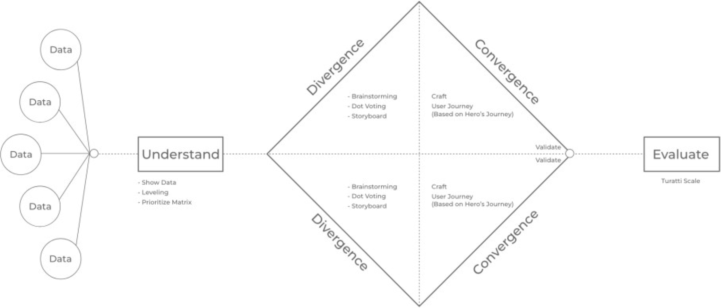
Figure 1: Hemcs.
Another key point was the formation of a unique group of specialists who did not participate in the design phase. This choice had an experimental and strategic character: to ensure an external and critical perspective, free from the bias of those who created the solution, but grounded in consistent data (interviews, technical materials, and research). As a result, we obtained more diverse, coherent, and informed analyses.
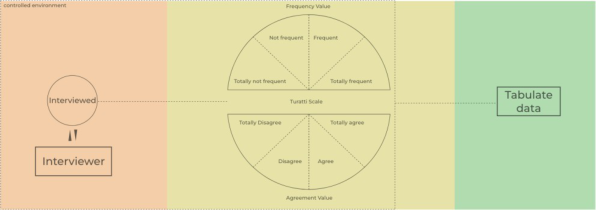
To quantify the evaluation, the Turatti Scale was created, inspired by the Likert Scale but adapted to avoid response symmetry. This scale presented levels of agreement and frequency (four points), ensuring a balanced progression of judgment.
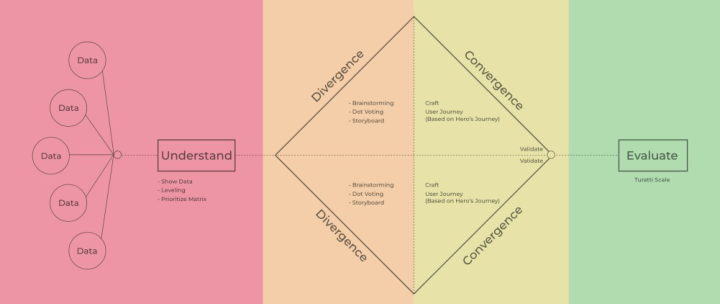
The process lasted four days, each dedicated to a different phase:
A Heuristic-Guided Method Proposal for Early Ideation Phases 549
Figure 2: Process steps.
Leveling Critical discussion with controlled time, consolidating research observations into a matrix aligning objectives and findings. This resource served as an experimental guide for the following stages.
Figure 3: Leveling.
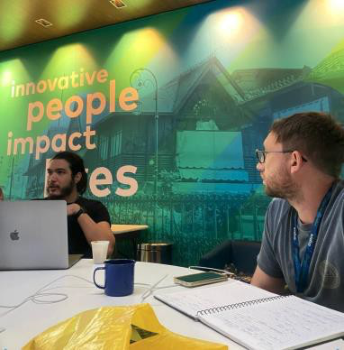
Divergence Practical ideation session using the Crazy Eight method, which, according to Situmorang (2024), “generates the largest possible number of ideas in a short period of time, encouraging creative exploration without initial judgments.” This resource was fundamental to verify how heuristics could integrate into the creative process. Subsequently, we developed storyboards as a tool for visualizing flows and emotions, a resource already highlighted by Buxton (2007) as essential for designing experiences.
Figure 4: Divergence.
Convergence Consolidation of ideas into a single critical user journey, built from an adaptation of the Hero’s Journey. This choice, although experimental, proved to be valuable: according to Campbell (1949), the journey provides a narrative structure that connects challenges and solutions in a clear way, generating engagement. In the design context, it enabled the creation of a structured narrative with eight stages and 14 functionalities, connected to the persona defined in the initial phase.
Figure 5: Evaluate.
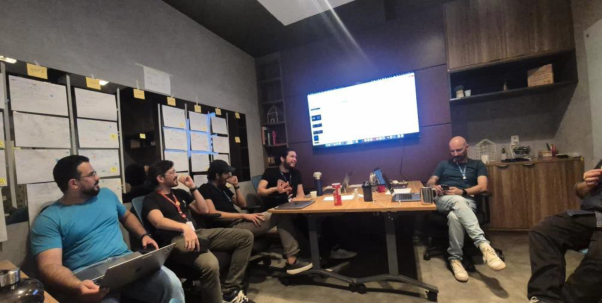
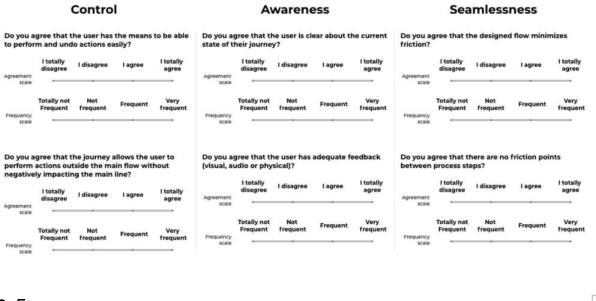
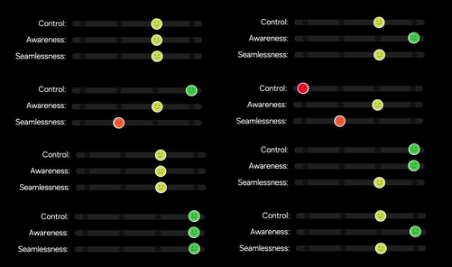
Evaluation Three rounds of evaluation sessions with specialists (1h30 each) were conducted. At each stage of the journey, the problem, the approach, and the solution were verbalized, always followed by the analysis of a heuristic. Measurement using frequency and agreement scales provided useful data to assess the consistency of the journey.
A questionnaire was applied in a controlled environment with one stage for each heuristic. Each heuristic included two questions, and each question could be evaluated on two scales: one of agreement, to verify how consistently it was being applied at a given stage, and one of frequency, to assess whether good usability was constant at that stage.
A Heuristic-Guided Method Proposal for Early Ideation Phases 551
Figure 6: Form.Figure 7: Results.
DISCUSSION OF RESULTS The practical application of this proposed approach highlighted the potential of design as a structuring agent in the early stages of solution projects for XR platforms, especially when modeled with parallel Artificial Intelligence solutions.
The method encompasses the life cycle of a product and incorporates the stages it involves, such as understanding the problem to be addressed in phase 1, exploring approaches to work within these environments in phase 2, and consolidating a solution into a UX Journey in phase 3. The greatest contribution of the method is to anticipate the first evaluation of the solution during phase 4, which otherwise would typically take place only with prototyping. This benefits the project not only by providing designers with a concrete visualization of the experience and its values—without the need to develop it, which in XR platforms and AI contexts can be costly and time-consuming—but also by serving as a reference for future evaluations and sentiment analyses of the experience.
This methodological experimentation proved valuable in three main aspects:
Assertive direction: the combination of heuristics with structured narratives (Crazy Eight and the Hero’s Journey) provided practical inputs to guide conception.
Reduction of rework: by involving external specialists early, it was possible to identify weaknesses still in the conceptual phase, reducing the need for later refactoring.
Comparative basis: the data generated by the Turatti Scale created initial parameters for assessing comfort and usability, serving as a future reference for usability tests after prototyping.
Thus, we conclude that the experimentation not only filled a methodological gap but also provided valuable insights for the design field in XR and AI scenarios. The use of HEMCS proved positive, as it enabled the systematic structuring of user experience analysis in immersive environments through a process that considers both the theoretical foundation of the challenge and non-linear stages of divergence and convergence, grounded in data. This allowed for the consideration of aspects such as spatiality, sensory engagement, and the fluidity of interactions in these contexts, by adapting clear and existing heuristics to the challenges of XR and AI technologies.
When combined with the Turatti Scale, the method expanded the capacity for evaluation, also addressing subtle elements such as the diverse interactions enabled by technology during the initial stages of use-case conception, as well as the gradual adaptation of the user to the hybrid environment. In this way, HEMCS not only helped organize the experimentation but also provided clear criteria to face the specific challenges of XR and AI, reinforcing design as an exploratory, iterative, and critical field, capable of responding to the emerging particularities of these technologies.
ETHICAL CONSIDERATIONS The study was realized based on participants’ information gathered in two separate moments: a form in digital format, which was used for shortlisting the candidates who considered to have problems with focus and concentration at work. Those respondents were interviewed individually and in person for the study. Regarding the collection and processing of personal data of those who participated in the experiment, the ethical and privacy recommendations that comply with the General Data Protection Regulation (GDPR) were followed. Highlights among these recommendations within SIDIA Institute:
All those human subjects involved are employees of the Institute.
There were not collected biometric or other user data, that would allow future identifications. The data collected was deleted after the consolidation of all study results.
Raise user awareness about data collection, storage, and processing processes.
Only necessary data will be collected and saved while necessary.
Provide users with clear and transparent consent forms explaining data collection, usage, and retention policies.
Provide the user with the possibility of revoking consent to data capture and informing them of the moment in which they are collected.
Give the user control over which applications will use their data.
A Heuristic-Guided Method Proposal for Early Ideation Phases 553
Provide explicit and detailed user agreements explaining what data will be collected and what the research is about.
Acknowledgments. This paper was presented as part of the results of the Project “SIDIA- M_VST_PLATFORM_AND_APPLICATIONS”, carried out by the Institute of Science and Technology – SIDIA, in partnership with Samsung Electrônica da Amazônia LTDA, in accordance with the Information Technology Law n.8387/91 and article at the. 39 of Decree 10,521/2020.
REFERENCES
Brown, T., 2008. Design thinking. Brown, T., 2009. Change by design: How design thinking creates new alternatives for business and society. HarperBusiness, New York. Buxton, W., 2007. Sketching user experiences: Getting the design right and the right
design. Elsevier, Amsterdam. Campbell, J., 2008. The hero with a thousand faces. New World Library, Novato, Calif. Chang, E. et al., 2020. Virtual reality sickness: A review of causes and measurements.
International Journal of Human–Computer Interaction, 36(17), pp. 1658–1682. Design Council, n.d. The double diamond [online]. Available at: https:// www.designcouncil.org.uk/our-resources/the-double-diamond/ [Accessed 4 September 2025]. Dorst, K., 2011. The core of ‘design thinking’ and its application. Design Studies, 32(6), pp. 521–532. DOI: https://doi.org/10.1016/j.destud.2011.07.006. Kelley, T. and Kelley, D., 2013. Creative confidence: Unleashing the creative potential
within us all. Crown Business, New York. Nielsen, J., 1993. Usability engineering. Morgan Kaufmann, Amsterdam. Nielsen, J., 1994. Enhancing the explanatory power of usability heuristics. In: Proceedings of the SIGCHI Conference on Human Factors in Computing Systems Celebrating Interdependence - CHI ’94, pp. 152–158. DOI: https://doi.org/ 10.1145/191666.191729. Nielsen, J. and Molich, R., 1990. Heuristic evaluation of user interfaces. In:
Proceedings of the SIGCHI Conference on Human Factors in Computing Systems Empowering People - CHI ’90, pp. 249–256. DOI: https://doi.org/10.1145/ 97243.97281. Norman, D. A., 2013. The design of everyday things. Basic Books, New York, New York. Schön, D. A., 1983. The reflective practitioner: How professionals think in action.
Basic Books, New York. Sharp, H., Rogers, Y. and Preece, J., 2007. Interaction design: Beyond humancomputer interaction. John Wiley & Sons Inc. Shneiderman, B., Plaisant, C., Jacobs, S. C. and Rose, C., 2017. Designing the user
interface: Strategies for effective human-computer interaction. Pearson, Boston. Silberman, M., Correa, H. and Inhamuns, Y., 2025. UX design for XR experiences: Creating interactions into three dimensions. Situmorang, P. N., n.d. Exploring creative solutions: The power of crazy 8 method in design ideation [online]. Available at: https:// medium.com/design-bootcamp/exploring-creative-solutionsthe-power-of- crazy-8-method-in-design-ideation-e9b8e17a395b [Accessed 4 September 2025].
Sutcliffe, A. G. and Gault, B., 2004. Heuristic evaluation of virtual reality applications. Interacting with Computers, 16(4), pp. 831–849. DOI: https:// doi.org/10.1016/j.intcom.2004.05.001. Tullis, T. S. and Albert, W. L., 2013. Measuring the user experience: Collecting,
analyzing, and presenting usability metrics. Morgan Kaufmann, Amsterdam.
LISTED IN THE AHFE DIGITAL BOOKSTORE CATALOGUE
Explore the complete digital volume
Human Factors in Design, Engineering, and Computing
Read this individual research paper free through the original publisher, or explore the full digital proceedings book.
ISBN 978-1-964867-75-5
Explore this ISBN in the AHFE Bookstore ↗Listed in the July 2026 bookstore catalogue; search by ISBN to confirm current availability · Digital book purchase optional