Marek Szczuka (2020). Macroergonomic Improvement the Development of Agri – Food Sector Company. In: Advances in Social and Organizational Factors. AHFE Open Access, vol. 9. https://doi.org/10.54941/ahfe100338
Article aims to develop a methodology for obtaining logistical improvements contained within the discussed scientific discipline. An attempt to establish macro ergonomics logistics improvements micro-enterprises ,should therefore be supported by strict social approach . Strategy is to focus on these aspects in an environment of both internal and external . This can be achieved by proper selection of methods for answers , which is the most important component and is of utmost importance for the development of the company. Developed methodological selection can be operational and strategic . The results of the analysis may include lifting factor , such as correction recipe for the final product as well as the change in the technology park , which will translate into the quality of the final product. Raised the issue of concern is the micro company engaged in farming and breeding pigs, to its processing and trade. The company is local. The owners are considering a number of innovations, including expansion of the business in the other region, the development of a technology park and the creation of logistics and management.
Positive aspect of ergonomics is its holistic relations between man and technique, what gives opportunities to identify all their components and relations taken place in man-machine unit. Information gathered during macroergonomic improvement habituation translate on adequate working stations, machines and technology designing. (Pacholski, Mateja, 2010) Primary, ergonomics was engaged in information perception, anthropometry, work physiology and man-machine unit analysis. Contemporary ergonomics developed creating macroergonomics (third generation ergonomics). Key assumption is multi agential analysis of designing, exploration and. Every system taken into researches should consist of several units (man-machine units) related with each other and staying in relation with the surroundings. Important is to identify complication level. (Jasiak and Misztal, 2004) Presented solutions affect micro company from agri-food sector, which deals in manufacturing and services. The elaborate company is a small family business for last 30 years, which deals with pig breeding, its processing and trading. Company from its beginning play main role on local market containing medium city counting about 50 000 people. Founders conduct agriculture processes are taking place. Because of good shape of market sharing potential is specified as promising. What is more, there is no full automated process, which makes human the fundamental base reaching purpose of the company and making its financial dreams come true.
Methodology & case study The collection of macroergonomic information includes all data, which are applied to working community and organizational-technological components. Unlike to macroergonomics, these information describes human work in reference to purpose and function of the company. Very important is the holistic rendering of man work in the company. For this purpose, occur processes, their characteristic and threat identification are needed. It is necessary to preserve objectivism during optimization planning. It expects appropriate strategy of action, financial situation description and capital information. (Pacholski and Jasiak, 1998)
As a part of researches action proceeding schedule was designed (Figure 1) The base of algorithm is macroergonomic processes identification, so it is indicated to use method including human factor. This requirement will gain relations project between components of different processes. Analysis perform on that data will allow to reveal dependence between every process and the priority of basic factors past each. Idea is to design information, which have influence on human factor and work environment introducing the direction of macroergonomic improvements.
Figure 1 Algorithm proceedings. Own elaboration.
Information received from the algorithm concern areas of the company, where the most important factor is human and also that show direct danger in high risk of occurrence. This schedule was created with a view of describing all processes in the company, reorganization would be required and agriculture actions should be included.
Fundamental action is identification and description off all processes of business activity in agri-food sector. Depending on kind of activity a group of key processes may be identified, as also subgroups of simple processes Article dimension relates to both types of business activity. Proper juxtaposition and analysis will restrict macroergonomic optimization.
Production activity have been divided into three stages: material preparation, technologic actions and transport. Ergonomic danger is assign to proper sub process. Production activity have been divided into three stages: material preparation, technologic actions and transport. Each of these components will be transcribe on sub processes and ergonomic danger.
Figure 2 General processes diagram. Own elaboration.
Figure 3 Material preparation processes. Own elaboration.
Figure 4 Technologic processes diagram. Own elaboration.
Figure 5 Transport processes diagram. Own elaboration.
Elaboration diagrams (figures 2,3,4) above allow to identify work safety danger intertwined with particular area of the company. Additionally relations between distinct dangers are visible and they rank. Likely is to receive answer about the risk intensity associated with singular process and also what is the cause of each work safety danger. Analysis performed on grounds of all diagrams explain the occurrence of each danger. Results are placed in chart 1.
Table 1 Risks occurrence including all business actions.
Own elaboration Next step of macroergonomic analysis is to do relationships researches between components of all six working safety danger during process identification. Literature interchanges techniques, that can be used to achieve production processes designation. If these procedures fulfill requirements to define business activity, relevant is to use them during danger recognition. This assumption can be explain by strong affiliation risk factors with process stages, which are the reason of threaten danger. In order balancing all endangered zones of the company, theoretical foundations of Ishikawa diagram was used. This technique is based on process transcription with aspects such as: machines, management, men, technology, materials and environment.
Table 2 Relations between danger components. Own elaboration.
Table 3 Summary of table 2. Own elaboration.
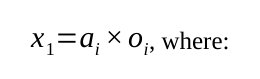
Table 3 includes balance of factors particular treatments. Matrix values have been received in regard to mathematical pattern:
Equation reproduced from the original PDF.
x1 – relations value, ai – number of processes related with at least one risk (chart 1),
bi – relation rating between components in scale 1 -3 (0 – no affiliation, 3 – strong affiliation).
Values summary for work safety danger relationships and their collation in similar matrix will give data, which associations are the most powerful against the background of all of them. Table 3 contains information, which can be source of conclusions, that men is the most important factor, because it has big advantage over the rest of components. This data have shift on proposals, what part of the company is expose on the most possible activity risk. The conclusion also shows significance of domination of human factor over the rest of organizational- technological aspects Further phase of macroergonomic proceeding algorithm is to classify possible working safety danger in relation to chance of it appearance. The result of this action will be danger hierarchy compared by percentage value.
Table 4 Comparison of components describing most occurring dangers. Own elaboration.
Chart above suggests body fatigue as the most important risk for the company. unergonomic work conditions are placed second.
Direction of the chart 5 is to point these processes, which are the most important in order to human factor value. Figures are calculated because of human meaning in particular action multiplied by priority of each component. (Pacholski, Trzcielinski and Wyrwicka, 2011)
Table 5 Production processes rated in terms components. Own elaboration.
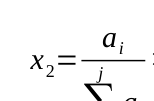
Table 5 identifies which processes play the main role including criteria mentioned earlier, which are initial phase meat preparation for gastronomical operations, meat roasting observation and final customer service. Percentage participation was calculated in regard on mathematical pattern;
×100%
Equation reproduced from the original PDF.
x2 – value percentage, ai – sum of values for particular process,
j ai – sum of values of all processes.
∑ i=1 This stage of researches points processes, which should be improved. Continuation will depend on describing selected areas and comparison their value for meaning of final product. An addition could be collation actions characterized by percentage leverage and creating optimization for them including their meaning, costs and profitability.
CONCLUSION
Designed methodology macroergonomic improvements receiving allows strategic planning and habituation multi criterial. Procedure data receiving embraces process identification taken place in the company, their parameterization and determinants redound to possible dangers. Big asset of created procedure is its versatile and universalism, also rotation of information in a mathematic conceptualization, what can bring to wide range of interpretation of input data. Significant stages algorithm executing are based on common-sense approach to the problem, what is the most serious restriction of current situation interpretation.Techniques applied in the article belong to group of common ways of converting and receiving data. Specificity of action order rely on unconventional method of using them. (Pacholski, 2012) Macroergonomic improvement methodology was designed in order of work safety danger occurrence. The most important comparing factor is based on Ishikawa diagram. It allowed comparison of risks including their relations in work safety danger and their size. That direction of company improvement has it purpose during optimization reducing the most occurring work safety danger. Sampled development affects machinery correction, work station improvement or human factor rotating.
REFERENCES
Jasiak A., A. Misztal, (2004), “Macroergonomics and macroergonomic designing”(in Polish), Wydawnictwo Politechniki Poznańskiej, Poznań. pp. 29-43 Pacholski L.,M., Jasiak A.,E. (1998), “Macroergonomic Effects of Rapid Economic Renewal”, in: Scott P.,A., Bridger R.,S.,
Charteris J., (eds), Global Ergonomics, , ELSEVIER, Amsterdam - Oxford – New York. pp. 855 – 858 Pacholski L., Mateja B. (2010), “Macroergonomic Development of Industrial Production Processes”; in: Advances in Occupational, Social and Organizational Ergonomics, , Advances in Human Factor and Ergonomics Series, Edited by Salvendy G.,, CRC Press/ Taylor and Francis Group, Boca Raton, London, New York. pp. 802-812 Pacholski L., Trzcieliński S., Wyrwicka M. (2011), “Clustered Macroergonomic Structures, Human Factors and Ergonomics in
Manufacturing & Service Industries”, Vol.21 (2), , Wiley-Blackwell, Malden MA, USA. pp. 147-155 Pacholski L., (2012), “Human Factors and Well-balanced Improvement of Engineering”; in: Vink P. [ed.], Advances in Social and Organizational Factors, Chapter 31, , Human Factors and Ergonomics Series, Edited by Salvendy G., CRC Press/ Taylor and Francis Group, Boca Raton, London, New York. pp. 288-297
LISTED IN THE AHFE DIGITAL BOOKSTORE CATALOGUE
Explore the complete digital volume
Advances in Social and Organizational Factors
Read this individual research paper free through the original publisher, or explore the full digital proceedings book.
ISBN 978-1-4951-2102-9
Explore this ISBN in the AHFE Bookstore ↗Listed in the July 2026 bookstore catalogue; search by ISBN to confirm current availability · Digital book purchase optional