Ma Yu Ting Christina Wang, Jie Li, Peter Vink (2020). The Future Aircraft Interior Design inspired by Crowd Well-Being. In: Advances in Social and Organizational Factors. AHFE Open Access, vol. 9. https://doi.org/10.54941/ahfe100306
The role of the airplane in cross-continental travel is becoming more common today, asking for more attention for in-flight comfort and experience. Now the focus is on technology. However, humans have social needs and they gather and form various social groups in society. In this paper, the airplane is partly assimilated to a microcosm of society with groups of passengers that form a crowd. Through studying the knowledge of crowd well-being in combination with shaping the future context based on research related to technology and its environment an interior design configuration is proposed using a Blended Wing Body (BWB) aircraft. Passengers are suggested to fly with a group of people with similar connections on social media or other future group forming social and technology systems to sustain their physical and psychological well-being, e.g. staying active or having a quiet rest. Based on this vision a design is made including a new seating arrangement with concepts of in-flight entertainment and flight attendant service. This interior design is expected to improve passenger’s comfort and experience in long flights by supporting their social and personal needs with advanced technology.
In society, individuals who share a culture and other common values gather and form into social groups. Human society is characterized by patterns of social relations between individuals and various social groups (Lenski, 1974). People have physiological needs such as food and breath, safety needs and other higher level needs like friendship, love and respect. People will feel content and positive when their needs are fulfilled (Maslow, 1954). In an airplane, a crowd of passengers travel together, which can be seen as an analogy with society. People expect the same need fulfilment. However, the current airplane interior is arranged in a way that passengers are forced to sit together in rows. They usually feel trapped in limited private space with strangers surrounded. The inflight entertainment is limited and passengers hardly interact with each other, which draw all their attention to the discomfort from seats and the limited legroom especially in a long flight.
To sustain passengers’ well-being in the future long haul flights, research related to crowd well-being as well as the future context with regard to technology, transportation and travel patterns were studied with two research questions: 1) what are the requirements for crowd well-being in a future air travel? And 2) What will be the future context in 2050?
In order to answer these questions, a literature study was carried out and eight passengers were interviewed, followed by an interior concept design of a Blended Wing Body (BWB) aircraft inspired by the results of these two studies.
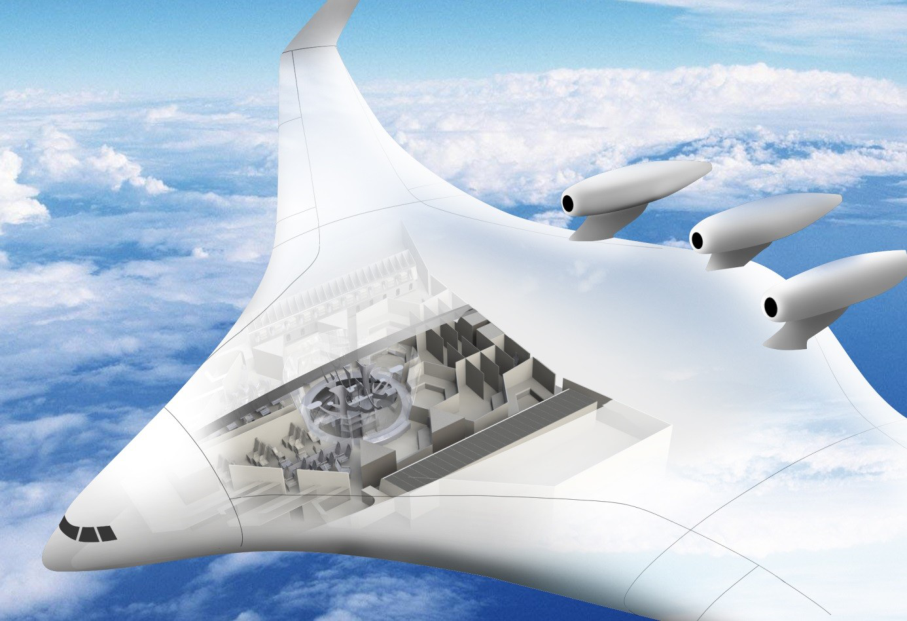
The final design, a Crowd Well-being Blended Wing Body (CW-BWB), is a concept aircraft interior inspired by the ‘compact city’ metaphor. The city is a nice metaphor as it is an epitome of the society, which consists of different groups of individuals exhibiting versatile lifestyles. The CW-BWB interior follows this city life. For example, the centre of the airplane is an active zone imitating the city centre while the periphery is an inactive zone similar to the suburb, where it is quiet. Passengers are able to select their preferred areas, so that they can interact with people who share similar social connections and interests or stay in quiet peripheral areas. In addition, it provides passengers with various city-like activities on board, e.g. taking a walk, shopping or chatting in the central buffet canteen, and it surrounds them with a simulated green nature. The CW-BWB is expected to improve the flight experience and passenger well-being by stimulating more physical activities and interpersonal interactions..
LITERATURE RESEARCH The literature research section starts with studying other interior BWB concepts, explaining the relevance of subjective well-being (SWB) and crowd well-being (CWB) for aircraft interior design. Subsequently, studies related to the trends and predictions in social media, communication system, future travel pattern and future transportation (BWB) are explicated for designing the context in 2050.
There are other BWB interiors. For instance, Voet et al. (2012) made an interior and identified that the multibubble cabin was needed to create a pressurized cabin. However, solving the structural problem of BWB is not the focus in this paper. Instead, we give priority to the flight experience of the passenger crowds in a long duration air travel in analogy with the experience in ‘a compact city’ and the pressurization is solved by linking ceiling and floor with monuments.
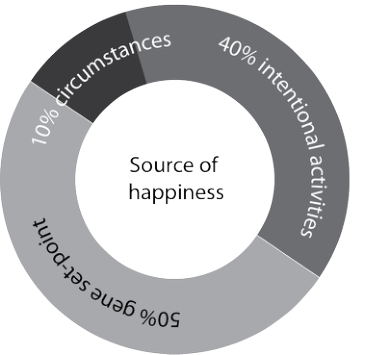
Figure 1. Source of happiness Well-being in society.
Subjective well-being (SWB) refers to a person’s evaluation on the quality of life, including directly emotional reactions to events and cognitive judgement of life satisfaction or need fulfilment (Diener et al., 2009). SWB is influenced by the combination of gene, external circumstances and intentional activities (Lyubomirsky, 2008, see Fig. 1). People with high SWB experience happiness, high life satisfaction and high levels of positive affection (Diener et al., 1999). Li et al. (2013) used the term ‘crowd well-being’ to define the well-being of individuals influenced by a special social context: a crowd. Figure 2 shows how the society is formed (left figure) and the current arrangement of flight passengers (right figure). In society, individuals are connected and become a network. A network encompasses various social groups which are formulated based on culture, languages, professions and so on. Influences will spread around via the connections in the network (Christakis and Fowler, 2009). However, in the current aircraft interior, passengers are restricted to their own seat, facing the personal seatback screen for hours. The interior is not designed to interact with other passengers. It is even impossible to share a screen and watch a movie together. Since people with different habits and interests are forced to sit together, the interference becomes inevitable with this interior configuration (Fig. 2, right). In the interviews, several participants mentioned that talkative people, crying babies and noisy kids were quite annoying during the sleeping time.
Figure 2. The composition of the society (left figure) and the passengers in the plane (right figure) Passengers in an airplane can be seen as a crowd, where people tend to influence each other in terms of emotion, attitude and behaviour (Le Bon, 1895; Li et al, 2013). In other words, people are socially connected. The SWB in crowds does not only build upon the fulfilment of the need of a single person, but also on the needs of others around that person. Sheldon et al. (2001) identified the four most important needs for maintaining SWB in events, which are relatedness, autonomy, competency and self-esteem (see Fig. 3). Safety needs are the premise. Once people feel safe, they will search for the higher level needs. This indicates that an aircraft interior should satisfy the higher level needs of the passengers rather than merely guarantee the safety. Passengers should be able to feel independent (autonomy), respected (self-esteem), capable and effective (competence), and a sense of belongingness in the group that they connect with (relatedness).
Figure available in the original PDF paper.
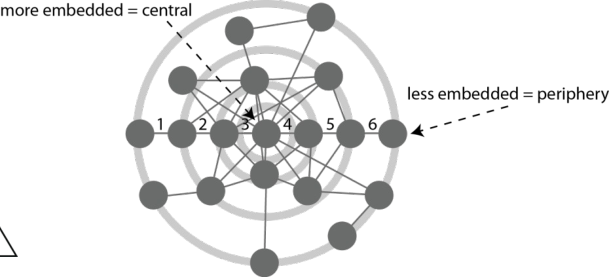
Figure 3. Sheldon’s hierarchy of needs for satisfying Figure 4. Influences rippling through social network of needs in events
Figure 4 shows the relations and the connections between individuals when zooming into the structure of the society. Individuals are connected with each other: some situated in the centre of the network, having many connections while others are in the periphery having fewer connections. Both positive and negative influences that start from the centre of the network pass through the connections and fade away gradually. Milgram (1967) indicated that, even in physical world, every two individuals are connected by an average of six degrees but the influences of one person rarely reach another person who is more than three degrees away. In other words, one person is able to influence his friend’s friend’s friend (Christakis and Fowler, 2009), but the intensity of the influence will decrease after each connection. Thus, in order to spread the positive influence in a social network, the centre of a network is the most ideal position. Information and service can effectively and efficiently reach more passengers.
Social media and communication tools.
In the physical social network, every individual has different amount of connections. However, in the virtual world, Milgram’s (1967) six-degree separation no longer works. Today, everyone can be easily connected via social media, and therefore, the influences can rapidly spread over and affect the whole network. Online social behaviours like creating digital profile, posting comments and sharing state have become prevalent over the past several years (Purcell et al., 2010). Personal information and social networking communities are exposed online. People increase the frequency and duration of staying in the virtual world and the perception of privacy and risk on the Internet has also changed (Rogers, 1997). As the result, the online unencrypted data, such as the personal profiles and comments, will become reliable resources and references for the use of business. In 2050, when the Internet is truly ubiquitous and people are born with the virtual world surrounded, social media or future forms of connectedness will definitely a realistic necessity in daily life, and influence the society dramatically.
On the other hand, the evolution of the communication tools has kept accelerating in the past years. Recently, the debut of wearable-tech products, such as Google Glass and Samsung Galaxy Gear smartwatch, have raised intensive discussions and predictions about their future application in terms of communication. When social media shift from ‘portable’ (mobile technology) to ‘wearable,’ the connections between individuals and the influences will become more ubiquitous, which will also change human behaviour as well as the concept of the social network. For instance, Kortuem et al. (2003) investigated the social potential of wearable technology with the concept “wearable community” (Kortuem et al., 2003), which facilitates the “face-to-face encounters” instead of human-screen interaction. By synchronizing with social media, wearable-tech product is able to bring the interaction from the virtual world to the physical world. With the assistance of the social media, flight passengers can be categorized into various groups. For instance, active passenger groups sit in the centre of the airplane while inactive passenger groups have a quiet rest in the sleeping cabin located in the periphery. Conflicts and interference can be prevented when people in the same group share similar intention or expectation. Besides, wearable-tech products can be the most effective tools for passengers to receive personal guidance and helpful information during the flight.
Travel pattern in 2050.
People will be connected extensively in the virtual world in 2050. However, the connections and interactions in the physical world are still encouraged. Today, people travel between megacities, seeking for business opportunities, international experiences and versatile lifestyles. Global cooperation and interaction are motivated because of improved communication technology and ubiquitous accessing to the Internet. The increasing income and the population also lead to the global passenger mobility (Schäfer, 2007). As various transportations facilitate efficient mobility within and between the urban areas, people from megacities desire to travel further without increasing the travel time (Schäfer, 2007). As the result, in 2050, transporting a great amount of people and cargos will become an important issue. Demands for high-efficiency vehicles will increase in the future (Schäfer, 2007).
To improve the efficiency of vehicles, requirements related to seating capacity, fuel efficiency and the potentials of manufacturing were taken into considerations in many studies. Blended Wing body was the most applicable among other future aircraft concepts (Schilperoord, 2006). The research by Liebeck (1998) regarding to Blended Wing Body provided 800 seating capacity. Voet (2012) provided 300 seating capacity with a smaller type of aircraft. However, both of them still use the traditional configuration as shown in Fig. 2, which leads to unsatisfied experience with in-seat service
DESIGN METAPHORE The insights and findings obtained from literature research were concluded with a ‘compact city’ metaphor. A city provides versatile functions with people from various backgrounds and having different lifestyles. The five primitive elements of a city are (1) public space situated in the city centre, (2) buildings located in periphery for dwelling, (3) streets for connecting between centre and periphery, (4) transportations make the mobility efficient, and (5) landscape for fulfilling the needs in touching green nature (UrbanDesign.org, 2013).
A city also satisfied people with different needs. First, the city centre is an energetic and busy area where people socialize and do various activities. It is a place for young adults or business people. Dwelling buildings in city centre offer people personal space and enable them to have a rest. Second, people in different ages choose their preferable activities and space. Young people tend to stay in the city centre for diverse activities and spend most expense on events. The Elders mostly possess of more property than the young so they are able to afford spacious living environment in the rural area. The city metaphor inspired the final design: the CW-BWB interior is divided into active and inactive zones like city centre and suburb, which is consistent with the result from literature research (see subsection ‘Well-being in society’). The translation from the metaphor to the final design will be described in the next section.
THE DESIGN OF THE CW-BWB Crowd Well Being Blended Wing Body (CW-BWB) is an interior design concept based on social interaction in 2050 (Fig. 5), supporting various groups of passengers’ well-being in flight. The virtual connections in 2050 allow passengers to be seated among persons closely connected to them on the social media. Before the flight, the passengers form into twelve groups based on similar connections, professional fields, interests or language etc., which is suggested by the booking system synchronized with the social media. Groups can travel together, but it is also possible to fly alone. Several parties will achieve benefits with this design concept.
Figure 5. The Crowd Well Being Blended Wing Body (CW-BWB)
Passenger benefits.
Efficient boarding. Groups are formed before boarding suggested by booking system with optional connecting to social media. Efficient boarding is achieved through multiple entry points (boarding gates) and cross aisles. The cross aisles also contribute to the safety by connecting with the emergency exits at the rear of the aircraft, which enable passengers to evacuate in a short time (Fig. 6).
Figure 6. Cross aisles and group formation before boarding Figure 7. Divided sections for various functions
Figure available in the original PDF paper.
Freedom of personalization. People can choose to book a single seat, a sleeping cabin or a group seat. Buffet in the centre of the airplane provides freedom of the timing and portion of the meals.
Fly quietly or actively. Noise insulation is achieved by providing section divisions. The peripheral seating sections are for passengers who want a quiet travel. The centre seating sections are for people who seek companies and networking. The ripple pattern effectively centralizes the active passengers, allowing the noise to fade away before reaching the periphery area.
Figure 8. Various activities are provided with the configuration of CW-BWB
Figure available in the original PDF paper.
Various activities for sustaining passenger well-being. Activities for increasing the physical and psychological well-being are available in the spacious cabin. For example, the passenger could enjoy the scenery (watching OLED), exercising, shopping, enjoying buffet, networking and walking around in the plane surrounded by simulated nature scene, green tree-hub, blue sky (see Fig. 8).
Cost-effectiveness. Passengers acquire better rest and achieve more goals by taking the flight. A flight ticket means more than transportation. he manifestation of driver fatigue is a process influenced by several factors.
The distinction of different factors contributing to driver fatigue is important in order to evaluate measures for fatigue detection and countering (May and Baldwin, 2009). Thus, this knowledge is important for car manufacturers as the starting point of the development of fatigue countermeasures.
Operator & economic benefits.
Efficient boarding leads to low turn around time. CW-BWB needs fewer flight attendants because of all the personalized services, such as the central buffet. The divided sections and various in-flight activities will attract different passengers. The passenger groups are no longer divided by first, business and economy class. More people can afford this comfort in-flight experience with reasonable price, so the range of target group is expected to expand. Besides, profits obtained from in-flight activities, shopping and food services are possible. Flexibility in passenger and cargo ratio can also be adjusted according to airlines’ decision. For instance, airlines can replace some sleeping cabins by cargo storages if those cabins are not fully booked.
DISCUSSION AND CONCLUSIONS The CW-BWB interior design conveys a new possibility for civil aviation in 2050. Wearable technology, ubiquitous computing and the Internet provide a proper context for Blended Wing Body to transport multiple passengers and cargo without decreasing positive experience. Additionally, CW-BWB does not sacrifice its passenger capacity for these diverse in-flight entertainments, which meet the intensive traveling needs among megacities.
The eight participants from interview session were asked to evaluate the final design according to the visualizations. Seating with people who have similar personal profiles was highly appreciated since it fulfils the need for relatedness. Activities including moving around in the airplane, networking and having buffet were highly graded as well because it respects passengers’ autonomy. Noise insulation and the efficiency in boarding were mentioned frequently as the advantages of this design concept. Nevertheless, they pointed out some negative aspects. The various choices of seats might cause confusion on booking. They also doubted about the capacity of the active central bar if many passengers swarm into it. The seats, compartments, lavatories and galley still need more detailed design. Besides, form aesthetics, ergonomics, colour scheme and materials need to be taken into consideration in the future design as well.
Although CW-BWB still has a lot of space for improvement, it gives a direction and an inspiration for aircraft interior design in 2050. CW-BWB uses social media and new communication systems like wearable products that enable group travelers to easily access to the information about seating, buffet etc. The in-flight activity is not limited to having meals and drinks provided by attendants and taking the all-in-one entertainment provided on the seatback screens. CW-BWB sustains passengers’ well-being by offering diverse personalized activities and supporting the interpersonal relatedness in a cost-effective way. CW-BWB proposes a promising future for air travel. It changes the meaning of taking a flight: it is not only a way to transport passengers from one place to another, but also a place for enjoying diverse activities, networking and refreshing. We are interested in further investigations on examining the interactions in the CW-BWB interior.
REFERENCES
Christakis, N. A. and Fowler, J. H., 2009. Connected: the amazing power of social networks and how they shape our lives. Little, Brown and Company, US. Diener, E., Suh, E. M., Lucas, R. E., & Smith, H. L., 1999. Subjective well-being: Three decades of progress. Psychological
bulletin, 125(2), 276. Diener, E., Oishi, S., & Lucas, R. E., 2009. Subjective Well-Being: The Science of Happiness and Life Satisfaction. Oxford handbook of positive psychology, 187. Peterson, S., 2010. Airlines 2020: Substitution and commoditization. Two developments the global airline industry can no longer
afford to ignore. IBM Global Business Services, Executive Report. Retrived from http://www-935.ibm.com/services/multimedia/uk_en_airlines_2020.pdf (Nov. 12, 2013) Kortuem, G., & Segall, Z., 2003. Wearable communities: Augmenting social networks with wearable computers. Pervasive Computing, IEEE, 2(1), 71-78. Le Bon, G. (1895). The Crowd Study of the Popular Mind. Batoche Books, Kitchener, Canada, 2001. Lenski, G., 1974. Human societies: An introduction to macrosociology. New York: MacGraw-Hill, Inc. Li, J., de Ridder, H., Vermeeren. A. P. O. S., Conrado, C. and Martella, C., 2013. Design for crowd well-being: Needs and design
suggestions. In proceedings of International Conference on Planning and Design, 2013, NCKU, Tainan, 373-382.
Liebeck, R. H., Page, M. A., & Rawdon, B. K., 1998. Blended-wing-body subsonic commercial transport. AIAA paper, 438. Lyubomirsky, S., 2008. The how of happiness: A scientific approach to getting the life you want. Penguin. com. Lyubomirsky, S., 2001. Why are some people happier than others? The role of cognitive and motivational processes in wellbeing. American Psychologist, 56(3), 239. Maslow, A. H., 1954. Motivation and Personality (2nd Edition). Haper & Row Publishers, New York, Evanston and London. O’Connell, R., & Kirwan, G., 2013. Protection motivation theory and online activities. Cyberpsychology and New Media: A
Thematic Reader, 139. Purcell, K., Smith, A., & Zickuhr, K., 2010. Social media & mobile internet use among teens and young adults (pp. 155-79).
Washington, DC: Pew internet & american life project. Rogers, R. W., Prentice-Dunn, S. (Ed), 1997. Protection motivation theory. Handbook of health behavior research 1: Personal and social determinants, 113-132. New York, NY, US: Plenum Press. Sheldon, K. M., Elliot, A. J., Kim, Y., & Kasser, T., 2001. What is satisfying about satisfying events? Testing 10 candidate
psychological needs. Journal of personality and social psychology, 80(2), 325. Schäfer, A., 2007. Long-term trends in global passenger mobility. In Frontiers of Engineering: Reports on Leading-Edge Engineering from the 2006 Symposium (p. 85). National Academies Press. Schilperoord, P., 2006. Future Tech: Innovations In transportation. Black Dog Publishing, London. UrbanDesign.org, 2013. Elements of urban design. UrbanDesign.org, Alexandria, US. Retrived from:
http://www.urbandesign.org/elements.html (Nov. 12, 2013) Voet, Z. van der, Geuskens, F. J. J. M. M., Ahmed, T. J., Van Eyben, B. N. and Beukers, A., 2012. Configuration of the Multibubble Pressure Cabin in Blended Wing Body Aircraft. Journal of Aircraft, 49(4), 991-1007.Backs, R.W., Lenneman, J.K., Wetzel, J.M., Green, P. (2003), “Cardiac measures of driver workload during simulated driving with and without visual occlusion.” Human factors. Volume 45.
LISTED IN THE AHFE DIGITAL BOOKSTORE CATALOGUE
Explore the complete digital volume
Advances in Social and Organizational Factors
Read this individual research paper free through the original publisher, or explore the full digital proceedings book.
ISBN 978-1-4951-2102-9
Explore this ISBN in the AHFE Bookstore ↗Listed in the July 2026 bookstore catalogue; search by ISBN to confirm current availability · Digital book purchase optional