Amjad Hussaina, Keith Caseb, Kamran Ali Chathac (2020). Organizational Design: Need for a Socio-technical Inclusive System Design Approach to meet 21st Century Workforce Challenges. In: Advances in Social and Organizational Factors. AHFE Open Access, vol. 9. https://doi.org/10.54941/ahfe100356
1 Department of Industrial and Manufacturing Engineering, University of Engineering and Technology, Lahore, 54890, Pakistan b Mechanical and Manufacturing Engineering, Loughborough University, Leicestershire, LE11 3TU, UK ↗
2 Suleman Dawood School of Business, Lahore University of Management Sciences, Lahore, Pakistan ↗
Changes occurring in the business and socio-economic global environments increase the complexity of working systems. The global workforce is becoming more diverse where people from different social, cultural, geographical and technical backgrounds work together in spite of their existing differences. Existence of varying human responses caused due to variations in individual’s physical, physiological, psychological, social and cognitive responses to the organizational design becomes a real challenge for designers. Moreover, increase in the number of older workers, also requires the attention of designers, as they are different in many ways. These issues increase the complexity of organizational systems and have serious implications for human factors and ergonomics as this complexity challenges the way conventional organizational systems are designed and implemented. There is a great need to develop new strategies where human variations are rightly understood and then emphasized during organizational design process. A proposed Sociotechnical Inclusive System Design approach has been discussed for addressing social and technical issues of organizational design by integrating socio-technical principles with inclusive thinking so that these challenges might be addressed at the organizational and individual levels. This article briefly describes global workforce challenges like increase in diversity, ageing, and impact of individual level variations on workplace safety and task performance. Finally, it highlights the need to design organizational systems based on diversity and differences where social and technical inclusivity should be an integral part of any design decision so that organizations can effectively utilize their human capital. The suggested design approach can draw multiple benefits including employee satisfaction, workplace safety and well-being, high productivity and quality and retention of a skilled workforce for a longer time. All these benefits ultimately support the attainment of long term organizational sustainability.
Workforce diversity management is becoming a key area of focus due to the changes occurring in business and socio-economic global environments. Organizations wish to retain skilful and experienced workers for a longer time so that they can draw optimal benefit from them. However, efficient use of human capital is possible only if a healthy, safe and productive working environment is provided where workers feel themselves valued and empowered. This article demonstrates the need to reframe socio-technical design methodology by integrating inclusive design thinking as a necessary part of the organizational design so that differences in working attitudes, behaviors, and capabilities can be addressed properly. To meet the challenges caused by variations in human attitudes, behaviors and capabilities, there is a need to adopt a ‘socio-technical-inclusive’ system design approach, which aims to consider technical, social and inclusive concepts of organizational design simultaneously. This approach aims to substantially increase the accommodation level of organizational design factors, whilst providing a working environment that is acceptable for all in spite of existing differences. The socio-technical-inclusive design approach is more sophisticated in its nature as it aims to highlight and address work organization issues at the individual level. It also provides an opportunity to take a realistic view of the organizations design issues in a detailed way and how organizations can adopt a change.
FUTURE WORKFORCE CHALLENGES Workforce demographics are changing and organizations are witnessing an increase in workforce diversity. Workforce diversity management is becoming a business case as 21st century organizations want to retain the very best available employees. Workforce diversity covers a wide range of dimensions such as age, gender, race, skill, cultural background, marital status etc. (Williams and O'Reilly, 1998). Because of this, workers share different attitudes, working behaviors, desires, needs and values; along with variations in physical, physiological and cognitive capabilities, that directly or indirectly affect work performance at individual and organizational levels. It comes with a number of potential benefits but also brings challenges as it increases variations in work performance caused due to human variability. Effective diversity management can provide an opportunity of better work performance by utilizing more diverse ideas in decision-making, increasing creativity, competitiveness and innovation along with a greater variety of perspectives and a broad range of task-related knowledge and skills (Roberge and Van Dick, 2010; Childs, 2005; Bassett-Jones, 2005; Richard, 2000; De Dreu). On the other side, failure to manage a diverse workforce may lead to an environment of conflicts, frustration and a sense of insecurity that can promote absenteeism, high turnover, job dissatisfaction and lower work commitment (Shore et al., 2009; Richard, 2000). In the light of this, it becomes important to understand human differences and promote strategies that can minimize effects of these.
A challenging fact is the ageing population. Over the last few decades, the proportion of older people is increasing in almost all parts of the world. According to United Nations Organization statistics (U.N.O., 2009), the average age of the population is increasing, so that approximately, one in ten persons are now 60 years or above and by 2050, one in five will be 60 years or older. The UK population is also ageing and there has been an increase of 1.7 million people aged 65 and over in last 25 years, but the UK is ageing less rapidly than other European countries like Germany and Italy (O.N.S., 2010). The United States Bureau of Labor Statistics (B.L.S) identified that the proportion of the workforce over 55 years of age is rapidly increasing whereas that of younger workers aged 16-19 years old is decreasing (B.L.S, 2010). The higher the number of older people available for work means higher the number of older people at work; however, accommodation and retention of older workers at work demands several critical factors to be addressed as older workers are different in many ways because of changes that occur with age. These changes, like decrease in muscular strength, flexibility, joint mobility, aerobic capacity and vision, directly Social and Organizational Factors (2020) affect task performing capabilities of workers and are linked with the level of risk of exposure to injuries, illnesses and mistakes (Sturnieks et al., 2008; Wanger et al., 1994; Chung and Wang, 2009; Chiacchiero et al., 2010; Falkenstein et al., 2006; Hultsch et al., 2002; Der and Deary, 2006; Sue, 2008; Boyce, 2008). Contrary to the above, older workers have many advantages that include sagacity, prudence, strategy, wisdom, decision making, logical reasoning and critical thinking, experience, loyalty and more quality consciousness (Posthuma and Campion, 2009; Dychtwald et al., 2004; Tillsely and Taylor, 2001). Strategies for coping with or benefitting from an older workforce should therefore concentrate on utilizing and enhancing these positive characteristics whilst providing support and assistance (for example through workplace design) to ameliorate the physical aspects of ageing.
As mentioned earlier, individual level variations increase as diversity increases. As far as human factors or ergonomics is concerned, individual factors like demographics, age, work, anthropometry, psychological, life style, comorbidity, past history and social factors are thought to affect the individual’s response to workplace risk exposure (Cole and Rivilis, 2004; Kerr, 2000; Wahlström, 2005). In relation to workplace safety and ergonomic interventions, the following sections explain the effect of individual differences on work safety.
In many studies it has been concluded that women are more likely to be exposed to work related musculoskeletal disorders as they are more exposed to physical and psychological work conditions at work (Punnett and Herbert, 2000, Treaster and Burr, 2004, Wahlström, 2005, Karlqvist et al., 2002, Aittomäki et al., 2005). However, a few studies such as Hooftman et al. (2009) found no gender differences regarding the prevalence of WMSDs and concluded that men and women are equally vulnerable to risk factors at work. Like gender, again age has an association with injuries at work, as older workers often suffer from more serious but less frequent workplace illnesses and injuries than younger workers. Moreover, promotion of age-friendly workplaces and environments may lead to higher productivity, competitiveness and sustainable business practices (Ilmarinen, 2002, Welch at al., 2008, Silverstein, 2008). Different people like to perform their work in different ways, especially when they have an option. Moreover, variations in working strategies are also linked with the risk at work (Keyserling et al., 2010; Dahlberg et al., 2004; Palmeud et al., 2012; Lindegård et al. 2003; Guo et al., 2004) In recent years, more attention has been paid on exploring the relationship between psychological factors and work related musculoskeletal disorders. It has been found that factors like high job stress, job dissatisfaction, lack of job control, inadequate work support, high job demands and perception of insufficient safety climate are contributing factors (Smith et al., 2004, Sobeih et al., 2006, Hofmann and Mark, 2006, Hollman et al., 2001, Stone et al., 2007, Simon et al., 2008, Lacey et al., 2007).
In conclusion to the above discussion, organizations are facing a challenge of diversity management where human variability issues will be more prominent in future. Furthermore, individual differences caused by variations in physical, physiological, psychological, cognitive and social interactions have great relevance for ergonomics and human factors, as principles of ergonomics are used in assuring workplace safety, human well-being, empowerment, optimal work performance along with sustained productivity and quality. There is a need to deal with these issues by developing and promoting new design approaches that have the ability to address the needs of individuals in any organizational system.
HUMAN FACTORS AND SOCIO-TECHNICAL SYSTEM DESIGN Socio-technical system design thinking firstly emerged at the UK Tavistock Institute, where relationships between social and technical aspects of workplace design were explored and identified (Trist and Bamforth 1951; Trist et al., 1963). Socio-technical system theory is based on the concept that performance of a system can be improved if social and technical aspects of a system are treated together during the design process (Clegg, 2000; Cherns, 1976). Organizations comprise of a number of interrelated functions and multiple stakeholders, and this increases the complexity of organizational systems. This increase is because of changes occurring in the business and socio- economic environment (Hendrick, 1997). Vicente (1999) listed a number of dimensions of the complexity of working systems, like many people working together but having different organizational, cultural, educational and geographical backgrounds and different age groups etc. In this respect, increase in work system complexity creates some challenges, as designing a change in the system without considering the effects of this change on multiple stakeholders might influence overall work performance badly and limits system effectiveness.
As mentioned previously, workforce diversity is increasing where the effective utilization of a diverse workforce is simply related to how organizations can address working needs of different people in the same system. In relation to workforce diversity management, design, implementation and maintenance of socio-technical systems becomes a challenge for human factors and ergonomics researchers and professionals. The main focus of socio-technical design thinking has been on the design and implementation of new technologies. However, it was broadened from advanced manufacturing technologies to office work and service design (Clegg, 2000; White et al., 2010; Rice, 1958; Trist and Bamforth, 1951; Mumford, 1983). Moreover, a clear focus on socio-technical system design can be visualized in addressing the challenges of information and communication technologies. In this respect, socio- technical practitioners and researchers have provided a critical insight and useful advice on some of the large scale IT projects like the National Programme for Information Technology (NPfIT) in the National Health Service (NHS) and later on providing a new IT system for delivering social care to the people in an appropriate, effective and useful way (Clegg, 2000; Clegg and Shepherd, 2007; Eason, 2007; White 2010).
Additionally, socio-technical systems thinking has significant impact on addressing social aspects of organizational design. For example, organization of work and job design are the key areas where effective contribution of socio- technical design approach has been recognized (Grant et al., 2011; Wall et al., 1980). More precisely, designing organizational working systems on the basis of fundamental principles highlighted by socio-technical theory, helped in achieving a system where employees were motivated, satisfied and more productive in terms of work output. All these factors influence organizational work performance positively (Grant et al., 2011; Birdi et al., 2008).
In the light of above discussion, we may say that socio-technical systems thinking has been applied to a number of key areas, notably focusing on the design of new technologies and workplaces by improving job design and work organization related issues and its effectiveness has been noted. It has been further noted that socio-technical thinking has a potential to address work related issues by addressing job needs of workers in more logical and systematic ways. However, the theory still needs to be shifted from theoretical frameworks to practices, so that real benefits can be achieved. Furthermore, socio-technical system theory has been debated in a way where social and technical issues have been discussed, however, little has been highlighted about individual factors and their implications for socio-technical system design approach. No doubt, socio-technical thinking in itself is an approach that focuses on considering social and technical aspects of design at the same time but still there is a need to further deepen our consideration of this so that the issues like individual differences based on ageing, culture, educational background and gender might be addressed.
INCLUSIVE DESIGN METHOD "Design is the process of converting an idea or market need into the detailed information from which a product or system can be made" (Royal Academy of Engineering, 2012). The British Standards Institute (2005) defines inclusive design as "The design of mainstream products and/or services that are accessible to, and usable by, as many people as reasonably possible ... without the need for special adaptation or specialized design”. Later on, the inclusive design term has also been related to providing quality of life and independent living for the ageing population (Waller and Clarkson, 2009). Other terms like Universal Design, Design for All, Barrier-free Design and Accessible Design have been used in different parts of the world. For example, the term Universal Design was first used in the United States by Ronald L. Mace in 1985. Universal Design was referred to as a design approach that can be used to design products, services and environments that could be used by a wide range of users. The Universal Design term has also been used in Japan; whereas Inclusive Design and Design for All are popular terms in the United Kingdom and most parts of northern and central Europe (Ostroff, 2011).
Previously, the United Kingdom has been an innovative place for providing new design solutions for the ageing population, as in for example the Design Age Programme at the Royal College of Art in London (Coleman, 2011). It has been concluded that Inclusive Design is a successful business strategy by Clarkson et al. (2003). Much legislation like the Disability Discrimination Act in the UK (1995) and the Americans with Disability Act (1990) at US have played a significant role in promoting the level of awareness and importance of inclusive design requirements. So, these days, Inclusive Design practice brings financial as well as legislative incentives for individuals and organizations.
As discussed in the previous section, variations in human capabilities influence task performing capabilities and are directly linked with workplace safety, as it is known that work organization is the way work is structured, distributed, processed and supervised. At The National Institute of Occupational Safety and Health, work organization deals with job design, scheduling, interpersonal issues, career concerns, management style and organizational characteristics (Carayon and Smith, 2000). In the light of this, we can see the importance and relationship between individual’s characteristics and work performance. For example, the job design process considers a variety of aspects such as task complexity, level of skill and effort required and degree of control. Furthermore, human variability has a direct link with all these aspects because variations in the level of skill, task complexity etc. cause changes in the working strategies adopted by different workers. Or, conversely, an imposed change in working strategy raises human variability issues. In a similar fashion, all other domains of work organization are directly linked with human variability and create many challenges for designers, engineers and ergonomists. As mentioned, the Inclusive Design method aims to address the design needs of a broad range of the population where the design process is carried out by understanding and examining the differences in human capabilities and then providing such design solutions where the gap between capabilities and task requirements are at a minimum. Although 100 percent design inclusion is not possible, the inclusive design methodology successfully tries to improve the level of acceptability of a single design solution among the variety of users. Moreover, availability of human capabilities data and design assessment tools has been a great challenge for practitioners. A digital human modelling based tool HADRIAN has been developed at Loughborough University which is integrated with a task analysis system that provides an opportunity to use individual’s capabilities data to get an assessment of the inclusivity of any design scenario as it has capabilities data of a broad range of the population, including older people and people with disabilities (Marshall et al., 2010; Case et al., 2001). Similarly, for encouraging the design community, the Inclusive Design research group at the Cambridge Engineering Design Centre, has developed some inclusive design tools, materials and methods; these include an Inclusive Design Toolkit; Impairment Simulation; Exclusion Audit and a Database for User Methods (Cardoso and Clarkson, 2006; Waller and Clarkson., 2009; Waller et al., 2008; Goodman et al., 2008; and Clarkson et al., 2007) From the above discussion, it can be concluded that the inclusive design approach aims to address the design needs of a wide range of the population by focusing on understanding the differences in task performing capabilities and task requirements at the individual level, and then minimizing the gap between requirements and capabilities. So, in order to address the issue of workforce diversity management, that is to realistically understand human differences caused by many factors, and then to promote such work practices that are equally acceptable for the majority of the working population, the inclusive design approach should be the part of organizational design process.
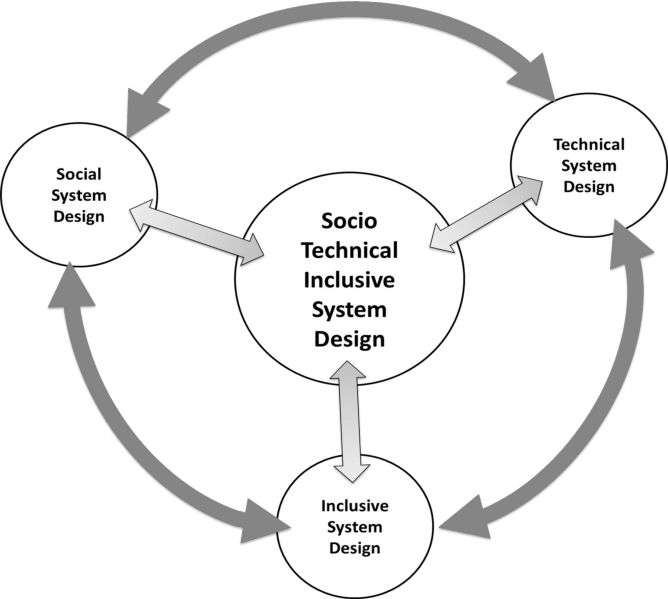
SOCIO-TECHNICAL INCLUSIVE DESIGN APPROACH - A WAY FORWARD As described previously, socio-technical theory was developed to address organizational work related social and technical issues simultaneously. However, less emphasis has been given on exploring relationships of different organizational design factors at the individual level. Currently, organizations are becoming more diverse where individual variations and differences have implications for individuals and organizational work performance. Figure 1 shows a proposed a socio-technical-inclusive design approach for organizational design. As workforce diversity brings many opportunities as well as challenges, excellence in effective diversity management is not possible until individual differences caused due to diversity are properly understood and valued. The concept shows that there should be three key considerations for an organizational design; these are:
Technical System Design
Social System Design
Inclusive System Design
Figure 1: Organizational Design: Components of Socio-Technical-Inclusive System Design Approach
Technical system design considerations focus on the optimized use of equipment, machinery, processes, procedures, physical work settings and arrangements, types of production technology and flexibility etc. On the other side, social design consideration includes worker’s attitudes, behavioral styles, organizational culture, degree of communication openness, organizational power structure, reward system, and values etc. The third important area to focus on is to achieve organizational design inclusivity by understanding, highlighting and promoting such design practices that can minimize the effects of individual differences and variations, caused due to varying levels of physical, physiological, and cognitive capabilities; differences in the level of skill, experience, cultural background and attitude towards work. Unlike previous studies, in this approach a special consideration has been given to achieve organizational design optimization by valuing individual level differences and proactively integrating these within the system design process so that the adverse effects of diversity could be reduced to a minimum. Organizational design inclusivity can be promoted by considering the acceptability of any design at the individual level by engaging individuals in the design process. So a socio-technical-inclusive system design approach may achieve optimization of organizational design by putting a parallel focus on technical, social and inclusive deigns thinking in a design process.
CONCLUSIONS
This article reveals the need to design organizational systems in the context of accommodating the needs and desires at individual level as workforce demographics are changing globally. These days, organizations have to manage a diverse workforce where their differences must be valued to attain higher level of organizational productivity. To meet these upcoming challenges, a socio-technical-inclusive system design approach has been proposed. It has three components which are interrelated with each other. Parallel focus on technical, social and inclusive aspects of organizational design can potentially promote a working culture where individuals with their existing differences can perform in a productive way. Moreover, older workers can be utilized in more efficient ways by addressing their concerns related to organizational design. Future research will focus on validation of the proposed concept by conducting case studies and exploring the impact of human factors and ergonomics interventions in relation to socio-technical-inclusive design approach.
REFERENCES
Aittomäki, A., Lahelma, E., Roos, E., Leino-Arjas, P., Martikainen, P., 2005. Gender differences in the association of age with physical workload and functioning. Occupational and Environmental Medicine 62, 95–100. Americans with Disability Act 1990. B.L.S., 2010. News Release: Workplace injury and illness summary. United States Department of Labor. Bassett-Jones, N., 2005. The Paradox of Diversity Management, Creativity and Innovation. Diversity Management, Creativity
and Innovation 14, pp 169–175. Boyce, R.W., 2008. An Ergonomic Approach to the Aging Workforce Utilizing This Valuable Resource to Best Advantage by Integrating Ergonomics, Health Promotion and Employee Assistance Programs. Journal of Workplace Behavioral Health 23, pp 179–199. Carayon, P., Smith, M.J., 2000. Work organization and ergonomics. Applied ergonomics 31, pp 649–62 Cardoso, C., and Clarkson, P.J., 2006. Impairing designers: using calibrated physical restraints to empathise with users, in: 2nd
International Conference for Universal Design in Kyoto. Kyoto, Japan. Case, K., Porter, M., Gyi, D., Marshall, R., and Oliver, R., 2001. Virtual fitting trials in design for all. Journal of Material’s Processing Technology 117, pp 255-261. Cherns, A.B., 1976. The principles of sociotechnical design. Human Relations 29, pp 783–792. Cherns, A.B., 1987. Principles of sociotechnical design revisited. Human Relations 40, pp 153–162. Chiacchiero, M., Dresely, B., Silva, U., Delosreyes, R., Vorik, B., 2010. The Relationship Between Range of Movement,
Flexibility, and Balance in the Elderly. Topics in Geriatric Rehabilitation 26, pp 147–154. Childs Jr., J.T., 2005. Managing workforce diversity at IBM: A global HR topic that has arrived. Human Resource Management 44, pp 73–77. Chung, M.J., Wang, M.J., 2009. The effect of age and gender on joint range of motion of worker population in Taiwan.
International Journal of Industrial Ergonomics 39, pp 596–600. Clarkson, P.J., Coleman, R., Keates, S., Cherie, L., 2003. Inclusive Design: Design for the whole population, 1st ed. Springer. Clarkson, P.J., Coleman, R., Hosking, I. and Waller, S., 2007. Inclusive Design Toolkit. Engineering Design Centre, Cambridge, UK. http://www.inclusivedesigntoolkit.com. Clegg, C.W., 2000. Sociotechnical principles for system design. Applied Ergonomics 31, pp 463–477. Clegg, C.W., Shepherd, C., 2007. The biggest computer programme in the world ever!: time for a change in mindset? Journal of
Information Technology 22, pp 212–221. Cole, D.C., Rivilis, I., 2004. Individual factors and musculoskeletal disorders: a framework for their consideration. Journal of electromyography and kinesiology 14, 121–127. Coleman, R., 2011. Designing inclusive experiences, in: Preiser, W.F.E., Smith, K.H. (Eds.), Universal Design Handbook.
McGraw-Hill, pp 21.1–21.8. Dahlberg, R., Karlqvist, L., Bildt, C., Nykvist, K., 2004. Do work technique and musculoskeletal symptoms differ between men and women performing the same type of work tasks? Applied Ergonomics 35, 521–529. De Dreu, C.K., West, M.A., 2001. Minority dissent and team innovation: the importance of participation in decision making. The
Journal of Applied Psychology 86, pp 191–201. Der, G., Deary, I.J., 2006. Age and sex differences in reaction time in adulthood: results from the United Kingdom Health and Lifestyle Survey. Psychology and Aging 21, pp 62–73. Disability Discrimination Act 1995. Dychtwald, K., Erickson, T., Morison, B., 2004. It’s time to retire retirement. Harward Business Review 82, pp 48–57. Eason, K., 2007. Local sociotechnical system development in the NHS national programme for information technology. Journal
of Information Technology 22, pp 257–264. Falkenstein, M., Yordanova, J., Kolev, V., 2006. Effects of ageing on slowing of motor-response generation. International Journal of Psychophysiology 59, pp 22–29. Goodman, J., Clarkson, J., Langdon, P., and Waller, S., 2008. Tools for Supporting Inclusive Design. Engineering Design Centre,
Department of Engineering, University of Cambridge, UK. http://www.edc.eng.cam.ac.uk. Guo, H.-R., Chang, Y.-C., Yeh, W.-Y., Chen, C.-W., Guo, Y.L., 2004. Prevalence of musculoskeletal disorder among workers in Taiwan: a nationwide study. Journal of Occupational Health 46, 26–36. Hendrick, H.W., 1997. Organizational design and macroergonomics, in: Salvendy, G. (Ed.), Handbook of Human Factors and
Ergonomics. John Wiley and Sons, New York, pp 594–637. Hofmann, D.A., Mark, B., 2006. An Investigation of the Relationship between Safety Climate and Medication Errors as well as Other Nurse and Patient Outcomes. Personnel Psychology 59, 847–869. Hollmann, S., Heuer, H., Schmidt, K.-H., 2001. Work & Stress : An International Journal of Work , Health & Control at work : A
generalized resource factor for the prevention of musculoskeletal symptoms ? Work and Stress 15, 29–39.
Hooftman, W.E., Van der Beek, A.J., Bongers, P.M., Van Mechelen, W., 2009. Is there a gender difference in the effect of workrelated physical and psychosocial risk factors on musculoskeletal symptoms and related sickness absence? Scandinavian Journal of Work, Environment & Health 35, 85–95. Hultsch, D.F., MacDonald, S.W.S., Dixon, R.A., 2002. Variability in reaction time performance of younger and older adults. The
Journals of Gerontology. Series B, Psychological Sciences and Social Sciences 57, pp 101–115. Ilmarinen, J., 2002. Physical Requirements Associated With the Work of Aging Workers in the European Union. Experimental Aging Research 28, 7–23. Karlqvist, L., Tornqvist, E.W., Hagberg, M., Hagman, M., Toomingas, A., 2002. Self-reported working conditions of VDU
operators and associations with musculoskeletal symptoms: a cross-sectional study focussing on gender differences. International Journal of Industrial Ergonomics 30, 277–294. Kerr, M., 2000. The importance of psychosocial risk factors in injury, in: Sullivan, T. (Ed.), Injury and the New World of Work.
pp. 93–114. Keyserling, W.M., Wiggermann, N., Werner, R.A., Gell, N., 2010. Inter-worker variability in lower body postures during assembly line work: implications for exposure assessment. Journal of Occupational and Environmental Hygiene 7, 261– 271. Lacey, R.J., Lewis, M., Sim, J., 2007. Piecework, musculoskeletal pain and the impact of workplace psychosocial factors.
Occupational Medicine 57, 430–437. Lindegård, a, Wahlström, J., Hagberg, M., Hansson, G., Jonsson, P., Wigaeus Tornqvist, E., 2003. The impact of working technique on physical loads - an exposure profile among newspaper editors. Ergonomics 46, 598–615. Marshall, R., Case, K., Porter, M., Summerskill, S., Gyi, D., Davis, P., and Sims, R., 2010. HADRIAN: a virtual approach to
design for all. Journal of Engineering Design 21, pp 253-273. O.N.S. (http://www.statistics.gov.uk/cci/nugget.asp) Ostroff, E., 2011. Universal design: an evolving paradigm, in: Preiser, W.F.E., Smith, K.H. (Eds.), Universal Design Handbook.
McGraw-Hill, pp 1.3–1.6. Palmerud, G., Forsman, M., Neumann, W.P., Winkel, J., 2012. Mechanical exposure implications of rationalization: a comparison of two flow strategies in a Swedish manufacturing plant. Applied Ergonomics 43, 1110–1121. Posthuma, R.A., Campion, M.A., 2009. Age Stereotypes in the Workplace: Common Stereotypes, Moderators, and Future
Research Directions. Journal of Management 35, pp 158–188. Punnett, L., Herbert, R., 2000. Work-related musculoskeletal disorders: Is there a gender differential, and if so, what does it mean?, in: Goldman, M., Hatch, M. (Eds.), Women and Health. San Diego: Academic Press. Rice, A.K., 1958. Productivity and Social Organization: the Amedabad Experiment. Tavistock, London. Richard, O.C., 2000. Racial diversity, business strategy and firm performance: A resource based view. Academy of Management
Journal 43, pp 164–177. Roberge, M.-É., Van Dick, R., 2010. Recognizing the benefits of diversity: When and how does diversity increase group performance? Human Resource Management Review 20, pp 295–308. Royal Academy of Engineering (2005) Educating engineers in design (wwww.raeng.org.uk) Shore, L.M., Chung-Herrera, B.G., Dean, M. A., Ehrhart, K.H., Jung, D.I., Randel, A.E., Singh, G., 2009. Diversity in
organizations: Where are we now and where are we going? Human Resource Management Review 19, 117–133. Silverstein, M., 2008. Meeting the Challenges of an Aging Workforce. American Journal of Industrial Medicine 51, 269–280. Simon, M., Tackenberg, P., Nienhaus, A., Estryn-Behar, M., Conway, P.M., Hasselhorn, H.-M., 2008. Back or neck-pain-related disability of nursing staff in hospitals, nursing homes and home care in seven countries--results from the European NEXT- Study. International Journal of Nursing Studies 45, 24–34. Smith, D.R., Wei, N., Zhao, L., Wang, R.-S., 2004. Musculoskeletal complaints and psychosocial risk factors among Chinese
hospital nurses. Occupational Medicine 54, 579–582. Stone, P.W., Du, Y., Gershon, R.R., 2007. Organizational climate and occupational health outcomes in hospital nurses.
Occupational and Environmental Medicine 49, 50–58. Sturnieks, D.L., St George, R., Lord, S.R., 2008. Balance disorders in the elderly. Neurophysiologie Clinique /Clinical Neurophysiology 38, pp 467–78. Sobeih, T.M., Salem, O., Daraiseh, N., Genaidy, A., Shell, R., 2006. Psychosocial factors and musculoskeletal disorders in the
construction industry : a systematic review. Theoretical Issues in Ergonomics Science 7, 329–344. Sue, B., 2008. The association between low vision and function. Journal of Aging and Health 20, pp 504–525. Tillsely, C., Taylor, P., 2001. Managing the third age workforce: A review and agenda for research, in: Glover, I., Branine, M.
(Eds.), Ageism in Work and Employment. Burlington, VT: Ashgate Publishing, pp 311–326. Treaster, D.E., Burr, D., 2004. Gender differences in prevalence of upper extremity musculoskeletal disorders. Ergonomics 47, 495–526. Trist, E.L., Bamforth, K.W., 1951. Some social and psychological consequences of the longwall method of coal-getting: an
examination of the psychological situation and defences of a work group in relation to the social structure and technological content of the work system. Human Relations 4, pp 3–38. Trist, E.L., Higgin, G.W., Murray, H., Pollock, A.B., 1963. Organizational Choice. Tavistock, London. U.N.O., 2009. Aging ( http://social.un.org/index/Ageing.aspx) Vicente, K.J., 1999. Cognitive Work Analysis. Lawrence Erlbaum Associates, Publishers. Wahlström, J., 2005. Ergonomics, musculoskeletal disorders and computer work. Occupational medicine (Oxford, England) 55,
168–176.
Waller, S., Clarkson, P.J., 2009. Tools for inclusive design, in: Stephanidis, C. (Ed.), The Universal Access Handbook. Taylor & Francis, Boca Raton, FL. Waller, S., Langdon, P., and Clarskon, P.J., 2008. Converting Disability Data into a Format Suitable for Estimating Design
Exclusion, in: Designing Inclusive Futures. Springer-Verlag, London, pp 3-13. Wanger, S.G., Pfeifer, A., Cranfield, T.L., Craik, R.L., 1994. The effects of ageing on muscle strength and function: A review of the literature. Physiotherapy Theory and Practice 10, pp 9–16. Welch, L.S., Haile, E., Boden, L.I., Hunting, K.L., 2008. Age, work limitations and physical functioning among construction
roofers. Work 31, 377–385. Williams, K.Y., O’Reilly, C.A., 1998. Demography and diversity in organizations: A review of 40 years of research. Research in Organizational Behavior 20, 77–140. White, S., Wastell, D., Broadhurst, K., Hall, C., 2010. When policy o’erleaps itself: the “tragic tale” of the integrated children’s
system. Critical Social Policy 30, pp 405–429. Williams, K.Y., O’reilly, C.A., 1998. Demography and diversity in organizations: A review of 40 years of research. Research in Organizational Behavior 20, pp 77–140.
LISTED IN THE AHFE DIGITAL BOOKSTORE CATALOGUE
Explore the complete digital volume
Advances in Social and Organizational Factors
Read this individual research paper free through the original publisher, or explore the full digital proceedings book.
ISBN 978-1-4951-2102-9
Explore this ISBN in the AHFE Bookstore ↗Listed in the July 2026 bookstore catalogue; search by ISBN to confirm current availability · Digital book purchase optional