Eleonora Trivellin (2022). Communication and digitalization for The Sustainability event. In: Human Interaction & Emerging Technologies (IHIET-AI 2022): Artificial Intelligence & Future Applications. AHFE Open Access, vol. 23. https://doi.org/10.54941/ahfe100919
The project was born in the joint University-Businnes Communication design for Sustainability CDSlab laboratory.The trade fair and temporary events sector was one of the hardest hit by the pandemic. Many demonstrations were canceled in the presence with significant economic losses.Furthermore, in the last ten years the organization of fairs and events has transformed its nature and impact, becoming a field open to transformations and innovations.The first results of the implementation of a systemic project are presented which led to the creation of an app capable of interfacing with augmented reality and with beacons allowing to expand the physical, real world, with contents in digital format accessible on mobile devices and which wants to develop with the elaboration of a model and guidelines for the sustainable event.The project has the following aims: a) Digitization of contents (visitors): inside the app there are editorial contents useful for the visitor such as list of exhibitors, calendar of events, news, map, service information, contacts, etc. A geo-referenced push notification system allows you to communicate directly with the user based on your preferences. The proximity marketing activities are defined and developed on the basis of the specific analysis of the needs of the event. Creation of a heterogeneous database with data relating to the production of any type of waste, recyclable or not, and its own traceability.b) Control and security (exhibitor operators): The combination of profiling, electronic ticketing and proximity technologies makes it possible to monitor in a relatively precise manner the flows of inbound and outbound visitors, to trace the movements of users and measure residence times within specific areas (POI). In this way it is possible to manage flows and reorganize paths and spaces in order to guarantee social distancing and avoid the formation of crowds.c) Goods and data management (operators): reduce the length of mechanized routes of goods in and out of the event area, track the consumption of goods and waste production, dematerialization of media, analysis of incoming and outgoing data output for the creation of a model and guidelines applicable in different contexts.
The application of augmented reality has the aim of making certain contents more easily accessible to visitors, increasing their safety especially in the health sector, but also monitoring the flow of goods and data in order to optimize and favor the application of the principles of the circular economy. It is therefore clear that the project takes place on two distinct levels: one concerns digital communication and the application of augmented reality; one concerns the definition of a management system applied to sustainable events. This starting from the 20121 standard in order to translate them into operational tools applicable to the different types of event.
THE CONTEST The geographical context of reference is Tuscany. If we calculate the number of people who participate in temporary events in various capacities every year in this region is very high. Just think of the 270,000 visitors to Lucca Comics 2019, the 100,000 of the International Handicraft Exhibition, the 450,000 visitors to the Scandicci Fair, or the 172,000 spectators of Firenze Rock. Precisely for this last event it was calculated that the induced amount of the 2019 edition was equal to 36.5 million euros (Prisco, 2020). Very high numbers that are able to indicate, in addition to the turnout of the public at the events, also the movement of goods that will be exhibited and sold, the movement of operators and, above all, the movement and use of material to set up and create the event. The typology of temporary events is vast: from trade fair-type events to artistic and musical events (Buffone 2008).
THE STATE OF ART The main regulatory reference for this type of context is the ISO 20121 standard of 2013. It establishes, develops and directs the sustainable event management system towards continuous improvement. It is essential to try to identify the specific issues to deepen them avoiding the generic approach. Among the many topics that this great theme allows us to develop, we have identified six: design, set-up, communication, digital support, logistics and transport, solid waste (Di Palma 2011). Event planning Given the importance of events and the concomitant awareness of the strong impacts they have on the territory, dedicated organizations and platforms are emerging that
Human Interaction & Emerging Technologies (IHIET-AI 2022) Artificial Intelligence & Future Applications https://openaccess.cms-conferences.org/#/publications/book/978-1-7923-8989-4 have developed guidelines for the sustainable design of events and offer consulting, training and certification services. Some examples at national level are: - Punto 3, a versatile reality capable of operating on behalf of large organizations but also of small ones: from the UNESCO network to the Municipality of San Leo, from the Dolomites to the Biosphere Reserve in Sardinia, from the Ferrovie dello Stato Group to the Il Germoglio Social Cooperative . - Rete Clima, a non-profit ETS (Third Sector Entity) that promotes Corporate Social Responsibility (CSR) and sustainability actions in the private sector and public procurement. It promotes circular economy, CSR, sustainability, communication and environmental and social reporting, GPP and green procurement, fight against climate change (through carbon footprint, reduction and national forest CO2 compensation). Established in spring 2011, Rete Clima is today structured as a technical network which, also in connection with the academic and research world, promotes sustainability in Organizations and in the local area, with a particular sensitivity towards climate change already defined as "the first enemy of humanity and the first and most important challenge that environmentalism must undertake ”. Other international examples are: - A Greener Festival AGF, whose goal is to help the festival become more sustainable. In addition to the annual conference, they offer certified training, education and advice for employees and the event team. - Powerful thinking, which supports smarter innovation practices in energy management for outdoor events and the music industry. It also offers guides, tools, news and advice and helps create synergies between people and companies. Preparations The central aspect is that relating to the actual fittings, that is to the temporary constructions that are built and installed, with all the problems relating to the materials used, the construction phase, assembly and disassembly, and the post-use phase.The strategies that are followed relate to the use of low-impact and recyclable materials, especially if disposable, or materials that have a longer life and that can be used several times. In some cases it is possible to provide for a dedicated supply chain up to the end of the product's life. There is no very up-to-date literature on this topic. Digital media for the event There are numerous examples of technological supports (web and mobile) for the management of an event or for the information and communication activities related to it. EventBase is a platform that allows you to create mobile applications dedicated to events, with functions aimed at the visitor (calendar of events, list of exhibitors, news) and the organizer (for example the possibility of implementing a chatbot to respond to user requests) . Through the web back-end it is possible to access statistics and analytics (number of unique users, number of logged in users, number of bookings ...) useful for checking the progress of activities. Among the companies
Human Interaction & Emerging Technologies (IHIET-AI 2022) Artificial Intelligence & Future Applications https://openaccess.cms-conferences.org/#/publications/book/978-1-7923-8989-4 with which EventBase works we find many large ICT players such as Cisco, IBM, Adobe, AT&T and Nvidia. Aloompa is another tool for creating mobile apps for music, sports, food and conference events. Among other features, it provides the possibility of booking and the implementation of gamification and proximity marketing systems to stimulate visitor involvement. Like EventBase, Aloompa also has a back-end area for accessing data and statistics. The service is used by big players such as The New York Times, Live Nation, TedX, Coachella, Lollapalooza, Rock in Rio and Comic Con. Communication The topic acquires increasing importance also in terms of investments by the organizers, so much so that in some cases we can say that the communication of the event coincides with the event itself. Limiting ourselves to the analysis of material common to many events, we can analyze how it is possible to evaluate the impact of those information supports and gadgets that have a very short life cycle and which greatly increase the amount of waste produced. Communication is essentially expressed through visual language and there are many examples that convey communication on digital media, also enhancing the transmission of some information in real time to one type of participants rather than another (example: exhibitors instead of participants or vice versa). The topic acquires greater impact if it occurs in real time: in this sense, digital communication has the advantage of being able to act before, during and after the event, carrying out the dissemination, promotional, information task (Canu Greener 2011; Bonvicini 2010). Logistics and transport In the various phases of the event processing, the system linked to logistics and transport during all its phases - from set-up to dismantling, is of no less importance, in relation to both the staff and the users. Even in the legislation it is recommended to choose the place of the event in a position that is easily accessible both by public transport and by means of low environmental impact. It has become a widespread habit to offer discounts to categories of customers and also to those who travel by public transport, in particular by train and urban transport. There are many examples starting from the Genoa Boat Show or the ZEROEMISSION initiative, put into practice on the occasion of the Trento Universiade where the CO2 emissions associated with the event were offset by numerous efficiency and energy saving measures adopted throughout. the provincial territory, with a resulting effect equal to zero. Furthermore, vehicle sharing solutions such as carpooling and carpooling should not be underestimated. It is possible to integrate the event ticketing system with that of transport, and it is therefore a determining factor that the event is in an easily accessible location.
To make the actual CO2 savings visible to all participants, it is possible to refer to platforms such as Eco-passanger, which calculate and compare atmospheric emissions (CO2, NO2, PM 10, etc.) and the energy consumption of aircraft, cars and passenger trains in Europe. For the calculation, simply enter the type of route, the date and time you intend to travel. As far as the organizers are concerned, it is essential to favor the short supply chain. In this sense, partnerships are common with rental companies of low environmental impact vehicles to allow the movement of the organizers and fitters of the events. Solid waste The system considered most visible is that which concerns the production of solid waste produced and their collection strategies. The Italian experiences to which we refer are those of the Zen Project and Terra Madre (Petrini, 2019). The reference event is Terra Madre, precisely with regard to the outfitting systems. The case is also heavily studied from an academic point of view as an application of systemic design to the theme of the event and focuses heavily on waste collection. For the 2016 edition, 70.42% of separate waste collection was achieved, with 90% pure waste, 90% of the crops, with cost savings of 6780 euros for their disposal. Factors such as the way visitors move, the economic impact on the territory, etc. were identified in the report (Bistagnino 2009). Finally, remaining in the regional territory, we can refer to the practices implemented by Firenze Fiera to implement a lower impact of the fairs organized within the spaces they manage and in particular separate waste collection, greer catering, Food for good for the distribution of food surpluses and finally the increase in green transport. Terraforma is a music festival focused on sustainability that takes place on the outskirts of Milan and which received in 2019 the Greener Festival Awards as a sustainable event. The same NGO that promotes ecological culture and zero impact in festivals around the world has also awarded the most famous DGTL festival organized by the Apenkooi Events agency as the most sustainable event of 2019. In both events, the use of compostable or highly recyclable material such as aluminum for the production of glasses and water bottles within the event. Another significant aspect concerns the issue of product and food packaging. In this case, the choice goes towards the increasing use of compostable or highly recyclable material, such as aluminum, for the production of glasses and water bottles for events (Bonetto 2011).
RESULRT OF PROJECT The project is being validated through temporary events and the actions that are carried out are the following: From a physical point of view:
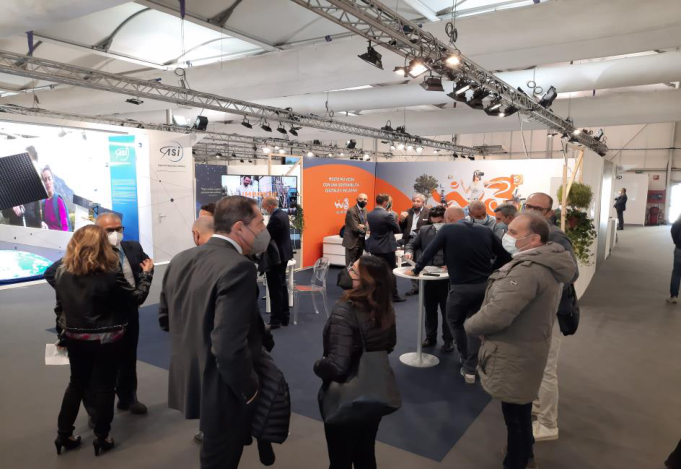
- implement strategies that are able to reduce the environmental impact by mainly acting on: - certified materials for the construction of the structures; lighten the movement of things and people by encouraging public or low environmental impact transport for visitors and for materials to identify suppliers that allow them to impact the factor and release of CO2 as little as possible. From the point of view of the use of digital tools: - Enrich the usability of events in the presence of security systems that affect the safety of people also from a health point of view; Introduce new ways of using events in mixed or remote mode. Earth Technology Expo ETE is one of the fairs to which the principles illustrated above have been applied, in particular the management through digital media. The event, which had among its main themes the management of emergencies and the prevention of environmental disasters, took place in Florence at the Fortezza da Basso exhibition center from 13 to 16 October 2021. There were 16,000 visitors over 1500 visits. students, 128 companies were involved with 79 events held and the presence of 388 speakers. The event can be defined as a management success because thanks to the application we are developing and testing, it is possible to say that we are changing the way we manage events with large numbers of audiences and operators. Visitor access was quick and easy: with registration, which involved entering data in less than one minute, the digital ticket was automatically issued. Each person was then able to personalize their visit within the exhibition and be directed to the initiatives of their interest with interactive beacon technology. By registering for events, the organizers were able to manage the flows and avoid overcrowding. Visitors received only the information requested and related to their interests. Furthermore, with the videowall function, one's smartphone acquired the remote control function: through the monitors it was possible to choose who to meet and contact the exhibitors directly. The app also allowed the assignment of special codes to reserve some initiatives for special customers or exhibitors. A virtual area was then provided for staff accessible only by code. The control of health security and general access control is reserved for the staff. It was possible to monitor the residence times, the spaces that were considered of greatest interest, the contacts that were generated through the app, the vehicles that were used by the operators, the set-up and dismantling times and much more that must be be fine-tuned. As an editable output of the app, the creation of a database containing numbers and statistics of the event, the type of participants, exhibitors, origins, quantity and type of waste, traceability of goods, partner companies and sponsors should not be forgotten. Specifically, actions were carried out aimed at: - manage and monitor the overall environmental and social impact of the event: - reduce the environmental impact of the fittings, currently too often disposable, with low use of reusable and recyclable materials by strengthening or creating a dedicated supply chain;
- stimulate sustainable behaviors in the various actors involved in the realization and use of the event; - incentivize the use of more sustainable means of transport (public transport, carpooling, carpooling ...) and also traffic problems; - create safe and healthy events also from the point of view of post-covid scenarios, with particular attention to the management of visitor flows; - strengthen a virtual model of event capable of guaranteeing differentiated usability. All this also in view of the competitive growth of the companies involved.
CONCLUSIONS
The fair will be increasingly digital. Without renouncing the co-presence, interventions aimed at favoring the remote use of events, workshops and conferences will also be adopted as a response to the new rules on public health and safety. At the same time, real virtual showcases will be encouraged, in order to allow the meeting between companies / producers and potential customers even at a distance. At the same time, the stands will be able to extend at least in part to digital with augmented reality and beacons, enriching themselves with additional contents and possibilities compared to those present and “visible” on site. In this way, digital technology will make it possible to extend the duration of the fair over time, so as to keep it alive even beyond the limited time frame. The change of pace for this type of demonstration is proving challenging above all because we are changing the meaning of terms such as crowd, gathering, meeting. We are working to not lose the habit of socializing with as few inconveniences as possible and perhaps with some advantages. All this is not simple but it is possible that such a model can be applicable and replicable in different contexts, becoming one of the references for sustainable social initiatives.
Figure 2. An image of the installation of the Earth tecnology Expo ETE exhibition.
REFERENCES
Bistagnino, L. (2009). Design sostemico, Bra: Slow Food. Bonetto, V. (2011). Grandi eventi e territorio. Il caso Terra Madre. Università degli Studi di Torino [Facoltà di Scienze Politiche] (Thesis). Bonvicini, A. (2010). Comunicare l'ambiente: il green nella comunicazione. Come
organizzare eventi sostenibili. Il caso di Ecomondo. Bologna: Università degli Studi di Bologna [Facoltà di Lettere e Filosofia] (Thesis). Buffone, C. (2008). Sistemi di gestione ambientale per eventi di cultura e spettacolo: applicazione al festival musicale RototomSunsplash di Osoppo (UD). Università degli Studi di Bologna [Facoltà di Scienze Matematiche, Fisiche e Naturali] (Thesis). Canu, S. (2011). Teorie e pratiche degli eventi sostenibili in Italia. Università degli
Studi di Torino [Facoltà di Scienze Politiche] (Thesis). Di Palma, F. (2011). L'ecosostenibilità possibile. Teorie e modelli di applicazione nell'ambito dell'organizzazione di eventi. Torino: Università degli Studi di Torino [Facoltà di Lettere e Filosofia] (Thesis). Petrini, C, (2019). Buono, pulito e giusto, Bra: Slow Food. Prisco, F. (January 28, 2020) “Firenze Rock, indotto da 36,5 milioni nel 2019”, Il
Read this individual research paper free through the original publisher, or explore the full digital proceedings book.
ISBN 978-1-7923-8989-4
Explore this ISBN in the AHFE Bookstore ↗Listed in the July 2026 bookstore catalogue; search by ISBN to confirm current availability · Digital book purchase optional