Marita Canina, Carmen Bruno, Eva Monestier (2022). An operational framework of methods for designing ethical and sustainable future digital scenarios. In: Creativity, Innovation and Entrepreneurship. AHFE Open Access, vol. 31, pp. 56–63. https://doi.org/10.54941/ahfe1001507
The rapid pace of technological innovations is changing almost every aspect of people’s lives. Indeed, digital technologies are reshaping behaviors and human interactions as well as having great impacts on the environmental, political and economic level (Schwab, 2016). In this scenario, it becomes paramount for people to be able to adapt to this increasingly digital environment to reach the so-called Digital Maturity (MIT Sloan Management Review, 2017) and to recognize and unlock the huge potentialities of emerging technologies to foster sustainable development (WEF & PwC, 2020).Such topics are being addressed and tackled by the Digital Creativity for developing Digital Maturity Future Skills (DC4DM) European Project [1], a three-year project funded by the Erasmus + Program and whose outcome will be the spread of an educational model to train students to become Digital Maturity Enablers, new professional figures up-skilled to drive the change and to creatively envision future possibilities. Digital Maturity Enablers, indeed, have to possess a set of Digital Creative Abilities (DCAs) which encompass all those competencies, attitudes and mindsets that allow them to unleash their full creative potential. The empowerment and practice of such DCAs are enabled by the DC4DM educational model, a creativity-driven design model to free learners’ creativity and ease the achievement of a Digital Maturity (Bruno & Canina, 2021).Some DCAs can be trained simultaneously and are thus grouped in the so-called Drivers, clusters of DCAs that allow learners to gain awareness on paramount topics applied to digital technologies, namely digital ethics and sustainability, collaboration, technology foresight, data collection and complexity. Within this context, the aim of the paper is to introduce an operational framework built as part of the methodology used to identify the most important methods and tools to enhance the DCAs related to ethics, sustainability and futures thinking. Indeed, an ad hoc methodology was implemented in order to provide a systematic overview of the existing resources that could be useful to develop the competencies to design responsibly and sustainably with digital technologies and to envision futures possibilities. The effort has been channeled into mapping and clustering methods, tools, techniques and formats i.e. every type of resource that could help students acquire the creative abilities included in the cross model area called “Digital Responsibility and Sustainability”. As a matter of fact, the initial draft of the DC4DM model, the starting point to conceive the methodology, consisted of three phases, namely Pre-Process, Process and Post-Process, and a cross model area which included all the ethics, sustainability and futures thinking-related abilities essential when dealing with digital technologies. In order to filter and systematize the selected resources, these three dimensions have been considered as macro-categories and some criteria identified to steer the classification process. Based on their objectives, all the resources have been mapped on the DC4DM model, sorted between the Pre-Process and Process phase and finally collected in a digital booklet. So far the booklet has been used internally by the DC4DM consortium which is actually willing to make it an open online repository accessible to anyone interested in improving specific abilities. [1] https://www.dc4dm.eu/
The 21st Century is being characterized by the rise and wide spread of disru- ptive digital technologies that are modifying the way in which people act and interact with each other as well as transforming the way in which they acquire and process information (Bruno and Canina, 2019). It is undeniable that society is currently experiencing a technology revolution which is impacting almost every aspect of people’s life entailing a much broader “transformation of humankind” (Schwab, 2016). Human creativity is widely acknowledged to be one of the essential abilities to ease a smooth and profitable collabora- tion between people and technologies (Canina and Bruno, 2021). Because of new digital challenges and since emerging technologies are being extremely impactful on the creative processes, the development of suitable and inno- vative educational models to train the future generation of digital creators turns out to be essential. In order to thrive in such increasingly complex and digitally enabled world, indeed, people need to gain and train a whole new set of skills to enhance creativity. Therefore, such new educational models must be aimed at enhancing students’ creative skillset enabling them to reco- gnize the viable opportunities brought by technological advancements and to conveniently exploit them (Bruno and Canina, 2019).
An Operational Framework of Methods for Designing Ethical 57
This is the goal of the ongoing Digital Creativity for Developing Digi- tal Maturity Future Skills (DC4DM) European Project, a three-year project funded by the Erasmus+ Programme and coordinated by Politecnico di Milano, whose outcome is the implementation of a human-centered educati- onal model aimed at providing students with the creative abilities to design responsibly with digital technologies and strategically apply them in any field.
In the framework of the DC4DM project, the above-mentioned creative skills are defined as Digital Creative Abilities (DCAs) and considered as key abilities to achieve the so-called Digital Maturity (DM) (Kane, 2017; Kane et al., 2017). In the unpredictable current scenario, the development of these DCAs is essential to empower the human capital to express their uni- que creative potential and succeed in an ever-transforming digital world (EC, 2020). In this regard, the aim of the paper is to present an operational framework specifically created to collect and systematize useful resources to train the Digital Creative Abilities to deal responsibly with emerging technologies and to envision future possibilities.
THE DC4DM EDUCATIONAL MODEL A first version of the DC4DM model encompasses three main phases cal- led Pre-Process, Process and Post-Process and a cross-model area named Digital Responsibility and Sustainability which included the abilities rela- ted to Ethical, Sustainable and Futures Thinking that are considered essential when dealing with emerging digital technologies. The DCAs needed by cross- functional teams to face the core design process are grouped in the Pre-Process area which comprises both the individual digital creativity skills and the collective ones related to team trust and knowledge sharing (Canina and Bruno, 2021). The Process phase is based on a creative and design thin- king process characterized by subsequent divergent and convergent stages, steps, activities and thinking styles. Specific DCAs intervene in each step of the process, ensuring original outputs. Such configuration is grounded on the Digital Creativity Framework (DC Framework) (De Vreede et al. 2017), which is useful to (1) outline the interconnections between the cre- ativity factors and the design process; therefore, it is helpful also to (2) identify all the steps, activities and rationales that characterize the design process; as well as to (3) determine which actions and tools are needed to enhance the digital creativity factors that intervene in specific moments of the design process (Canina and Bruno, 2021). The Post-Process phase, lear- ners should have acquired a shared mental model that leads them through any future project. This final phase includes the skills that allow to cre- ate continuous learning cycles to further develop and nurture the skills they acquire. Such configuration has been further revised and modified by the consortium starting from the consideration that the cross dimension named Digital Responsibility and Sustainability cannot be considered as a plus but rather as an integral part of the three model phases. As a matter of fact, when dealing or designing with digital technologies, it is essential to gain
awareness on ethical matters, pay attention to sustainability issues as well as to embrace a forward-looking attitude. Therefore, these three features - namely Ethical Thinking, Sustainable Thinking and Futures Thinking - pre- viously mapped as part of the cross-model area, were later integrated into each phase of the model leading to the final visualization of the DC4DM educational model.
ETHICAL, SUSTAINABLE & FUTURES THINKING AS DRIVERS OF CHANGE In order to tackle the contemporary ever-emerging digital challenges, it is necessary to envision new future scenarios (Dondi et al., 2021) reflecting on the possible applications of digital technologies as well as anticipating the potential implications they might have on the societal, environmental, economic and political level (Prosser and Basra, 2019). It appears therefore clear that a traditional Design Thinking process can no longer be conside- red suitable for such forward-looking and innovative approach and that, in fact, it must be revised and adapted to meet the need of managing the future of digital technologies (Canina et al. 2021). In this perspective, the DC4DM educational model integrates the cross dimension encompassing the ethical, sustainable, and future thinking related DCAs. Such creative abilities are indeed essential when working and designing with digital tech- nologies. Emerging technologies open multiple possibilities to improve the quality of human life, but at the same time, they generate new ethical issues that need to be carefully addressed (Green, 2017). If, on the one hand, tech- nological power makes humanity evolve, on the other hand it also carries with it brand-new concerns related to sustainability in its broader sense. Sustainability, indeed, does not only pertain to environmentalism, but it also embeds the concepts of social equity and economic development. Designing, working and managing digital technologies means balancing and pondering environmental, societal and economic essential factors in the perspective of medium- or long-term futures (McGill Report, 2019). That is why, in the contemporary context, the creative abilities related to ethical, sustainable and futures thinking turn out to be essential to steer the ongoing digital transfor- mation. Thus, Digital Maturity Enablers should not only be aware of the importance of such abilities but should also consider them as actual “dri- vers” of change. From this consideration, the DC4DM model groups such DCAs into the so-called Drivers, defined as clusters of creative abilities that enable learners to gain awareness on paramount topics such as Digital Eth- ics, Sustainability and Tech Foresight. Training the DCAs included in these Drivers would enable learners to use efficiently and responsibly emerging technologies and make them fully aware professionals (WEF, 2020). It is in this context that arises the need for an operational framework to syste- matize the existing resources that might be useful to provide people with the essential DCAs included in the Drivers as well as to train and enhance such skillset and make people thrive in the contemporary ongoing digital transformation.
An Operational Framework of Methods for Designing Ethical 59
SYSTEMATIZING EXISTING RESOURCES TO TRAIN ESSENTIAL DCAS Training and acquiring digital creative abilities require time and resources specifically designed for the purpose. Indeed, the learning process is iterative and needs to be supported by a set of tools and methods to ease the acqui- sition and practice of the afore-mentioned DCAs. In this sense, valuable educational resources have already been designed and are available for lear- ners and professionals online. However, being multiple and various, such resources are often quite hard to spot in the infinite online realm. Hence it becomes necessary to find a way to research and sort them according to speci- fic criteria - i.e., their features and objectives - in order to navigate and choose them easily. Therefore, the effort has been channeled into outlining an ope- rational framework to collect and systematize existing materials to teach the abilities related to ethics, sustainability and futures thinking applied to digital technologies. The aim is to provide teachers and professionals with a flexible and adaptable instrument to dive into the multitude of already-in-use tools and methods, identifying the most appropriate for a specific context with- out being overwhelmed by their abundance. The framework is built through a methodology divided into four main phases defined as (1) exploration, (2) collection, (3) sorting and (4) framing. The first step is about exploring the several options available and deepening the knowledge on the general topic. Starting with the definition of a goal, namely the collection and mapping of meaningful resources to train responsible Digital Maturity Enablers, this initial activity has no boundaries, nor does it require specific guidelines to follow. Since the aim is to gather as much information as possible, the explo- ration phase is open and can be performed freely. All the resources found during the research phase have been collected and made available to all team members. The second step, collection, allows gathering all the information by using an online collaborative platform whether the work is performed remo- tely or, in the case of in-presence collaboration, sharing ideas and reflections through brainstorming sessions. IDEActivity research team opted to share information using Figma as a collaborative online tool. To better organize the collected knowledge, some boards have been created and used within the team to take note of interesting articles, papers, websites and other helpful bibliographic references. Being for the exclusive use of team members, the boards do not require a particular structure. However, it is useful for resea- rchers to define and agree on a set of codes and symbols to highlight specific features of the tools collected in the boards. Indeed, for the sake of clarity, in the DC4DM, each board is associated with a specific topic and marked by a color: Ethics – teal, Sustainability – light blue and Futures Thinking – red. Infographics are also very useful tools to draw attention to specific features such as, for instance, whether a resource is designed to be used by a group of people or individuals. The definition of such shared “alphabet” lays the groundwork for the following step: sorting. Pointing out the characteristics of each tool and/or method collected makes it easier for researchers to navi- gate through the boards and start a collective brainstorming session on the actual usefulness of the available material. Indeed, the sorting process aims
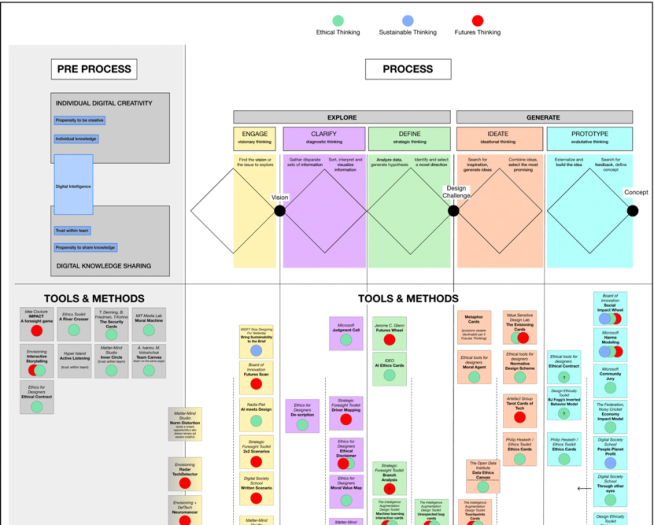
Figure 1: Mapping the resources on the DC4DM model (2021) - Note: for readability, only a portion of the model and the related resources is shown.
at determining which are the most appropriate and successful resources to train specific DCAs. To do so, it is essential to define some criteria that help carefully analyze all the material collected previously. Such criteria can be determined according to contexts, processes or necessities. In the framework for the DC4DM project, they include, but are not limited to:
driver addressed: is the resource useful to train the DCAs encompassed in the Ethics/Sustainability/Tech Foresight driver?
general purpose: is the resource aimed at energizing a team? Or does it facilitate brainstorming? Etc.
type of resource: is it a tool/serious game/methodology/MOOC…?.
time: how long does it take to make use of a resource?
target: is the resource designed for groups or individuals?
process phase: in which part of the model is applicable Analyzing the material through such “lenses”, eases the process of discar- ding or saving assets. As a matter of fact, after a careful look, some resources have turned out to be overlapping, repetitive or irrelevant. If, on the one hand, the exploration phase corresponds to a divergent moment focused on quantitative research, on the other hand, the collection and sorting phases entail a qualitative approach aimed at identifying and selecting only the most applicable materials. Once the resources have been analyzed and filtered, it comes the moment of framing all the collected knowledge and translating it into a clear and shareable outcome. Considering the general purpose of each
An Operational Framework of Methods for Designing Ethical 61
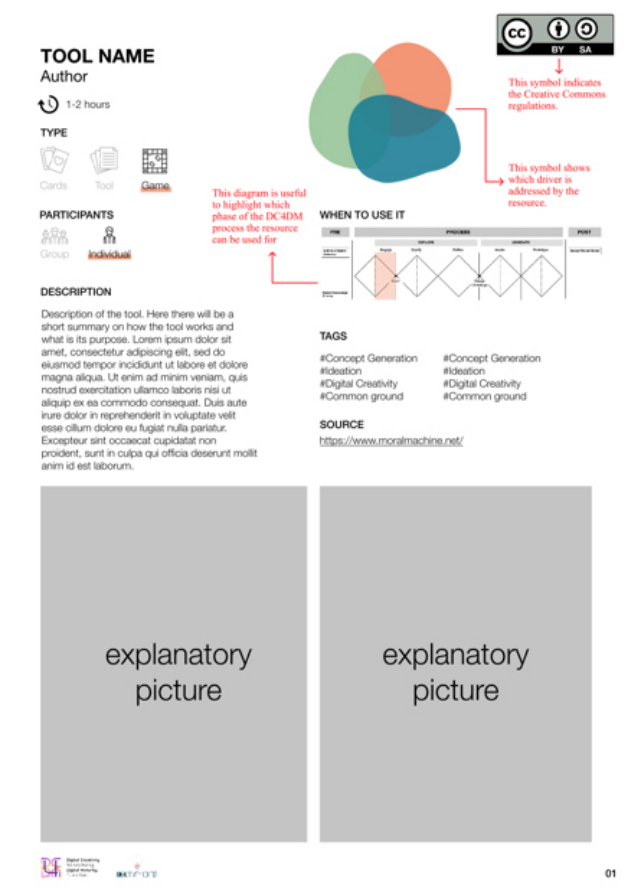
Figure 2: Summary sheet template (2021).
resource, it is now possible to map them on the DC4DM educational model to highlight in which part of it they might be used and implemented. Doing this makes it possible to gain a deeper understanding of whether the collected material is enough to support all the phases of the educational process or if it is necessary to integrate the research and look for other meaningful material. It is easier to perform this operation having the model at hand: it allows to physically place the resources below each phase of the process and have a clear overview (fig. 1).
Once that the extensive investigation is framed, the very final step is to systematize the findings using an ad hoc template (Fig. 2) to summarize the
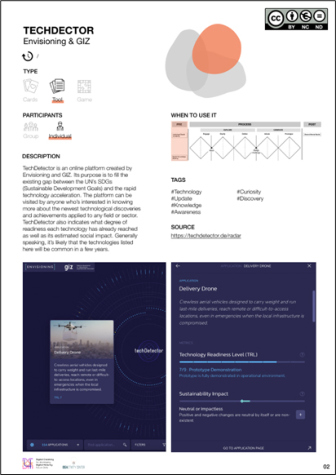
Figure 3: Summary sheets. Some of the summary sheets collecting tools to design responsibly with digital technologies (2021).
resources. As clearly shown, the template features the name of the resou- rce, its author(s) and typology, number of participants involved, a brief description of the activity, a symbol indicating which driver is addressed as well as a simplified model scheme to highlight the addressed process phase. Moreover, each resource is classified by some keywords, called tags, which provide a rapid overview on its features and objectives. A couple of explana- tory pictures are provided with the source and references and the Creative Common symbol to show if the resources are open. Summary sheets are used to frame each selected resource and as a last step, they are collected into either digital or physical booklets, shared within a network of learners and professionals and used as teaching materials to train the future Digital Maturity Enablers. The image (Fig. 3) shows a portion of the more than a hundred tools and methods selected in the operational framework for the DC4DM model.
CONCLUSION
The reasons that led to the definition and spread of an operational framework to systematically collect useful resources to learn how to deal responsibly with digital technologies arose from the necessity to up-skill new talents to drive the ongoing digital transformation. As mentioned previously in this paper, changes are happening fast requiring people to quickly and nimbly adapt. To face the current transition, people need to rely on a set of creative abili- ties that ensure a responsible control and use of technology’s potential. The acquisition of such abilities is a long process and requires support material.
An Operational Framework of Methods for Designing Ethical 63
Hence the need to share a simple yet functional methodology to research, col- lect and organize existing resources that might help training specific DCAs. Hopefully this framework will be implemented and adjusted by a growing community of people willing to become aware creators able to design ethical and sustainable future digital scenarios.
REFERENCES
Bruno, C., Canina, M. (2019). “Creativity 4.0. Empowering creativity in the digital era”, in: DS 95: Proceedings of the 21st International Conference on Engineering and Product Design Education (E&PDE 2019), 1–6 Canina, M., Anselmi, L., Bruno, C., Parise, C., Minighin, D. (2021) Blending Design
Thinking and Design Futures: facing the complexity of uncertain futures. Canina M., Bruno C. (2021) Digital Creativity Tools Framework. Design Culture(s) Cumulus Conference Proceedings Roma 2021,Vol. 2, pp. 290–304, Cumulus the Global Association of Art and Design Education and Research, Aalto. Canina, M., Bruno, C. (2021). “Digital Creative Abilities for Achieving Digital
Maturity”, in: Advances in Human Factors in Training, Education, and Learning Sciences. pp. 27–35 De Vreede, T., Boughzala, I., De Vreede, G. J., & Reiter-Palmon, R. (2017). The team creativity model: an exploratory case study. Journal of the Midwest Association for Information Systems. 1, 19. Dondi, M., Klier, J., Panier, F., & Schubert, J. (2021). Defining the skills citizens will
need in the future world of work. Mckinsey & Company, Public & Social Sector Practice. Retrieved from https: //www.mckinsey.com/industries/public-and-social-sector/our-insights/defini ng-the-skills-citizens-will-need-in-the-future-world-of-work European Commission (2020). Shaping Europe’s digital future, https: //ec.europa.eu/info/sites/default/files/communication-shaping-europes-digita l-future-feb2020_en_4.pdf. Last access: 25/02/2022 Green, B. P. (2017) What is Technology Ethics? Markkula Center for Applied Ethics, Santa Clara University. Last access: 25/02/2022 Available at: https://www.scu.edu/ethics/focus-areas/technology-ethics/ Kane, C. (2017) Digital Maturity, Not Digital Transformation, MIT Sloan Manage-
ment Review. Last access: 25/02/2022. Retrieved from https://sloanreview.mit.ed u/article/digital-maturity-not-digital-transformation/. Kane, G., Palmer, D., Phillips, A., Kiron, D., & Buckley, N. (2017). Achieving Digital Maturity. MIT Sloan Management Review and Deloitte University Press. Retrieved from https://sloanreview.mit.edu/projects/achieving-%20digital- %20maturity/ McGill University Report, What is sustainability? Available at: https://www.mcgill.c
a/sustainability/files/sustainability/what-is-sustainability.pdf Prosser, Z. & Basra, S. (2019). Futures Thinking: A Mind-set, not a Method.
Embedding futures thinking within design practices. Touchpoint. The journal of service design. Medium. https://medium.com/touchpoint/futures-thinking-a- mind-set-not-a-method-64c9b5f9da37 Schwab, K. (2016) “The Fourth Industrial Revolution”, Portfolio Penguin. pp. 7–10 World Economic Forum: The Future of Jobs Report 2020. Geneva, Switzerland, October 2020 (2020) Retrieved from https://www.weforum.org/reports/the-futu re-of-jobs-report-2020. Last access: 25/02/2022
LISTED IN THE AHFE DIGITAL BOOKSTORE CATALOGUE
Explore the complete digital volume
Creativity, Innovation and Entrepreneurship
Read this individual research paper free through the original publisher, or explore the full digital proceedings book.
ISBN 978-1-958651-07-0
Explore this ISBN in the AHFE Bookstore ↗Listed in the July 2026 bookstore catalogue; search by ISBN to confirm current availability · Digital book purchase optional