Marcelo Zhao Li Yan, Bing Xiao (2022). About the Emotionalized Design of Intangible Cultural Heritage – Taking Zhuanqiao Paper-Cut for Example. In: Affective and Pleasurable Design. AHFE Open Access, vol. 41, pp. 81–90. https://doi.org/10.54941/ahfe1001784
The intangible cultural heritage, as the cultural treasure, inherits the Chinese unique spiritual and cultural connotation and has a wide mass base and an affinity that suits the needs of the Chinese people. The folk paper-cut art is one of the Chinese traditional folk arts. Some kinds of the paper-cut arts have been incorporated in the list of intangible cultural heritage and imply wisdom and sincere emotions deposited by the Chinese nation for thousands of years. The Zhuanqiao paper-cut is analyzed in the paper. The Zhuanqiao folk paper-cut art originated from the beginning of Ming dynasty runs a long history with focus on theme expansion and pursuit of the spirit of the times, forming a series of works such as Jiangnan Watertown, Town Feature and Natural Ecology. The art is the featured brands of Zhuanqiao paper-cut full of local flavor and modernity and has become one of the representatives of Shanghai paper-cut. Currently, people are facing a world of extreme abundance in substance and information. Lots of designs have transitioned from pure Configuration Discussion to Emotion Discussion, while the emotionalized design has become one of the relatively common design philosophies in modern design. The emotionalized design is interpreted as the design featured by emotion and is a kind of concept originated from design psychology. In the current society, people are no longer content with functions and values brought by design itself, but start to pay attention to emotions endowed in design works. People’s demands can become the start point for design, while their emotions can also do. At present, China is increasingly focusing on intangible cultural heritage, and is constantly intensifying the protection and spreading thereof. The design of derivatives of intangible cultural heritage is one of the vital means to develop and inherit the intangible cultural heritage. The design of the derivatives enriches the pattern of manifestation of paper-cut, and makes it possible not to be limited to original manifestation state but to have more spreading forms. The strong emotions revealed in rich forms and various uses of paper-cut art have to be learned in the present emotionalized design of derivatives of intangible cultural heritage. Research methods such as bibliographic retrieval and field interview are used in the paper. On one hand, such methods are used to collect data relating the Zhuanqiao paper-cut so as to understand the developing history, artistic features and cultural connotations, and on the other hand, to collect and analyze the design of derivatives of current Zhuanqiao paper-cut with the aim to understand the application state in design of derivatives of intangible cultural heritage. In this paper, the sustainable developing trend is needed to be explored to provide the development and inheritance of the Zhuanqiao paper-cut with a kind of emotional expression way endowed with fickleness of human nature.
As one of the earliest skills among many folk arts, Chinese paper-cutting art has undergone the historical baptism and test during its development and shown the characteristics of different styles and diverse shapes. It origina- ted from people’s daily life, and most of the early folk paper-cutting works came from the folk and are attached to traditional folklore. In addition to having the decorative functions, it is also one of the cultural carriers loved by the general public, which reflects a certain humanistic spirit. From the characteristics of paper-cutting in different regions can be seen their differe- nces in customs, people’s living conditions and environment, and reflected the differences of folkways in different regions. Paper-cutting art is not only an expression of the people’s wisdom, but also a living embodiment of customs, emotions and spiritual beliefs of each region, which reveals the endless vita- lity of paper-cutting art. It is not just a special product that exists only in a certain period of time, but exists in people’s daily life, interconnecting with people and reflecting the folklore of different regions. Chinese paper-cutting art, one of the most representative and universal intangible cultural heritages (ICH) in China, is widely distributed in China, and different regions have their characteristic paper-cutting art different from those in other areas due to the impact of different folk customs and culture. This paper takes Zhuan- qiao paper-cutting as the object of study. As an important branch of Chinese paper-cutting art, Zhuanqiao paper-cutting is one of the representative tra- ditional folk cultures of Minhang Zhuanqiao area in Shanghai, China. It is of important practical significance and value to study and inherit Zhuanqiao paper-cutting.
Zhuanqiao folk paper-cut art, which began in the early Ming Dynasty, has a long history. Based on the inheritance of traditional paper-cutting tech- niques and unique folk customs, Zhuanqiao paper-cutting has become a cultural brand with Zhuanqiao artistic characteristics through ceaseless inno- vation. Not only is Zhuanqiao paper-cutting art limited to the paper-cutting shape itself, but also is gradually integrated into the design of paper-cutting derivatives such as colored lights, songs and dances, paintings and calligraph- ies, home and even urban environment decorations. Paper-cutting inheritance is of long standing in Minhang Zhuanqiao area of Shanghai, and is commonly known as engraved paper and shaping, which has won people’s hearts along with their folk life. Of recent 100 years, traditional paper-cutting has been mainly used in ceremonial decorations, paper-cut for window decoration, embroidery patterns, silk figure and decorative lighting. Zhuanqiao is famous for paper engraved by artists for weddings and funerals. Nowadays, Wang Liqun and other artists here are popular for their simple and fresh works. In order to inherit the excellent folk culture, Zhuanqiao Town Cultural Cen- ter in Minhang District, Shanghai held the paper-cutting training program in November 2001, enabling Zhuanqiao paper-cutting to be spread and inheri- ted, and releasing its unique charm. Several years of efforts saw the dramatic increase in the number of Zhuanqiao paper-cutting enthusiasts. Paper-cutting art enriches the people’s spiritual world. On the basis of inheriting tradi- tional features, modern Zhuanqiao paper-cutting will, while exploring the
About the Emotionalized Design of Intangible Cultural Heritage 83
integration of art of composition of Chinese painting, the lasting appeal of printmaking and the perspective of Western painting into it, pay attention to expanding the subject matter, pursuing the atmosphere of the times, and forming serial works such as “waterside style”, “town landscape”, “auspi- cious patterns”, and “natural states”, giving people a fresh and comfortable visual experience and spiritual connotation. Meanwhile, the freehand paper- cutting technique of “Eight Sages of Paper-Cutting” in Zhuanqiao is rapidly developing. Freehand paper-cutting refers to the works directly created by the paper-cutters with the paper cutter’s careful thinking and skill without drawing shapes on paper in advance. It is extremely low in error-tolerant rate, and one mistake may turn a paper-cutting work into a waste paper, but this technique, which can highlight the paper-cutters’ superb level, is what makes Zhuanqiao paper-cutting so unique. Zhuanqiao paper-cutters often show their special skills at the exhibition venues, which not only attracts attention, but also gives prominence to the unique charm of folk art and shows its unlimited potential and possibilities. Through years of practice, Zhuanqiao paper-cutting team has, in the inheritance of traditional paper- cutting techniques and folk customs, formed its artistic characteristics with local flavor and modernity on the basis of being brave in bold innovation, absorbing fashion elements, expanding the subject matter of life, strength- ening hand-cutting techniques and exploring the paper and color. With the rapid development of today’s society, it has become a top priority in building a culture with Chinese characteristics to strengthen the inheritance and innova- tion of national culture, which is both a crisis and an opportunity for the local culture of the nation. In the general environment of protecting and developing ICH, traditional folk crafts are receiving more and more attention. There- fore the development, inheritance and preservation of ICH become extremely important Yu (2021).
Influenced by the rapid development of technology, mechanical production has gradually replaced human production as the main force of production. Many excellent traditional culture works are mainly from the manual cre- ation of craftsmen, while in the era of mechanical production gradually popular, the ICH gradually dissipates in people’s vision. Nowadays people’s attention to the art of paper-cutting can be said to be minimal. Many excel- lent handicrafts have been given up or their output reduced due to changes in the external environment. Technology is constantly progressing and living standards are improving, making hand-made paper-cutting gradually fade out of people’s daily lives. Chinese paper-cutting art is facing the difficulty in inheritance. In order to better protect, inherit and innovate paper-cutting ICH, and change its predicament in the current environment, paper-cutting art should be integrated into other product designs on the basis of guarante- eing the inheritance of its excellent cultural connotation to form the design of paper-cutting derivatives, so that such an art can be better protected and inherited. The design of paper-cutting derivatives may be called the design of paper-cut cultural creative products. Such a design is a redesign of paper- cutting art by the designers on the basis of the interpretation of traditional Chinese culture and paper-cutting art. In addition to maintaining the cultural connotation and artistic characteristics of paper-cutting art, it should make
84 Yan and Xiao
the paper-cutting art meet the development requirements of the present era, and accord with the modern aesthetic concepts (Zhuofen, 2021).
Concept and Development Status of Emotionalized Design Regarding the understanding of emotion, Jacobson proposed in Psychology of Emotion that “emotion is a unique subjective attitude of human toward the objective world, as well as a true reaction and expression of reality” (Jacob- son, 1988). The rapid development of modernization in today’s world has greatly advanced the people’s material life, but behind such rapid develo- pment are the indifference of technology and the seriousness of rationality, which also increases people’s emotional loneliness and physical exhaustion. In the abundant material life, people’s spiritual world begins to become depri- ved and forms a big difference with the conditions of material life. People’s spiritual world is gradually becoming strange and empty while they pursue wealth. In such a case they begin to yearn for more inner emotional enri- chment and support. After people experience the “modernist design” with rationality and function as the design principle, the design industry begins to gradually attach importance to people’s inner needs and respectively puts forward such design concepts as man-machine engineering and humanization design, which are based on human physiological and psychological experi- ence and feeling. According to Soviet psychologist Petrovsky, emotion is an attitude of the subject towards the choice of the object, as well as an attitude experience that tends to the needs of the individual (Petrovsky, 1981). It fol- lows that emotion is a subjective attitude of people towards objective things. The things that have a stake in people can cause people’s emotional response.
Based on the cognition and understanding of human emotion and in the American cognitive psychologist Donald A. Norman’s “Emotionalized Design”, design into three levels, namely, instinct-level design, behavioral- level design and reflective-level design (Norman, 2005). Instinctive-level design refers to the attention to the product appearance, as well as the phy- siological feelings on people generated by the shape, color and texture of the products, such as visual and tactile feelings; behavioral-level design refers to the attention to the experience of product use, namely, whether the products meet the functional requirements so as to enable people to understand and use them easily and experience comfort and convenience from them; reflective- level design refers to the attention to the special effect from product experie- nce, that is, the products can reflect the users’ value demand and bring a good emotional memory or spiritual resonance and other aspects of inner feeling. Therefore, emotionalized design is to take human emotional needs and spi- ritual needs as the design concept, and integrate people’s emotional factors into the design of the products in shape, color, material and function, ena- bling users to feel the spiritual pleasure and emotional satisfaction brought by the products in the process of use and experience (Yini, 2017).
With the rapid development of the living standard in the society, people’s spiritual life is relatively empty, resulting in more and more people wan- ting to seek emotional needs, so emotionalized design will become one of the indispensable design concepts in modern design, and can promote the development of design.
About the Emotionalized Design of Intangible Cultural Heritage 85
State-of-the art of paper-cutting ICH derivative design In today’s society, paper-cutting art is, however, facing a dilemma in pro- tection and inheritance and challenges in development. First of all, there is the lack of targeted research on the protection and development of paper- cutting art. In the existing literature on paper-cutting art, the investigation and research in the protection and development of ICH are mainly conducted in the terms of news and current-event reports such as community activity and school heritage. There is the relative shortage of targeted information on paper-cutting art; secondly, comparative study is lacked in connection with the expression and style characteristics of paper-cutting art. Diffe- rent artistic styles and expression techniques of paper-cutting arise out of different representative inheritors. In the existing research no comparison is made between the artistic styles of different representative inheritors. Zhuanqiao paper-cutting discussed in this paper is one of the representa- tives of “Shanghai-style Paper-cutting Art”, and the diversified style is its inherited characteristic. The existing research is short of the composition of different artistic expression styles of different representative inheritors and behind this phenomenon reflects the unique Shanghai-style cultural chara- cteristics of Shanghai. Ignoring the research of this part is tantamount to ignoring the inevitable influence of Shanghai-style culture on the inheritance and development of Shanghai’s urban ICH, which will lead to the shortage of depth in the understanding of the items in the ICH list, as well as the lack of core spirit in the exploration (Fang, 2016). Finally, there is a lack of attention to the creative value of paper-cutting art in the modern city. Long before the inclusion of “Shanghai-style paper-cutting art” in the list of the intangible cultural heritage, the folk paper-cutting art in Shanghai appeared in the light industry as well as in the industry of arts and crafts with its diversified forms of expression and commercial qualities of wide application. Much due to its location in Shanghai’s urban cultural and commercial environment, there is a broader space for development of the “Shanghai-style Paper-cutting Art” and more opportunities for cooperation than in other representative areas of paper-cutting, in the development of ICH projects. The inclusiveness of Shanghai-style culture allows Shanghai-style paper-cutting art to take on rich and diverse patterns of manifestation in such opportunities. It is the advan- tage and challenge for development of Shanghai-style paper-cutting art to intersect with modern design and fashion industries.
As one of the representatives of Shanghai-style paper-cutting art, Zhuan- qiao paper-cutting has inherited the advantages of Shanghai-style culture. However, in today’s rapidly developing society, the paper-cutting art in the traditional industry is difficult to advance further. If you want to bring forth something new from the traditional skills, it is a must to develop new develo- pment channels, and the ICH derivative design of paper-cutting art becomes one of the new development directions. Derivatives are a vehicle for the dis- semination of folk art. Generally speaking, a derivative is a new thing derived from a product or technique, which retains the essence of the original thing and gradually evolves into a new one (Shuang, 2016). The ICH derivatives are an emerging cultural industry, and each product has its unique artistic
86 Yan and Xiao
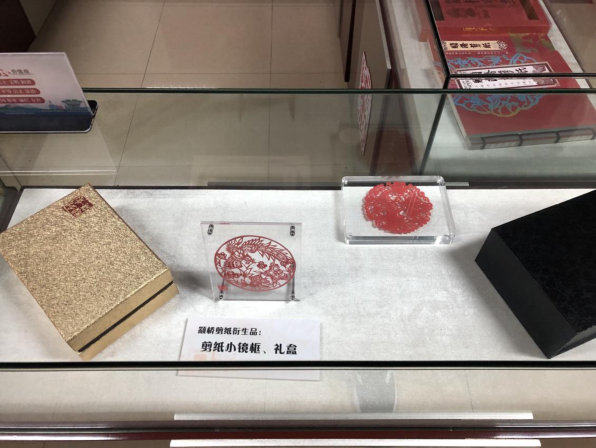
Figure 1: Design of Small Picture Frames and Gift Boxes.
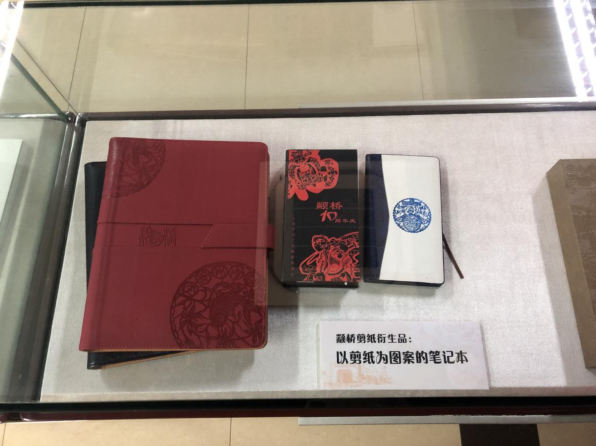
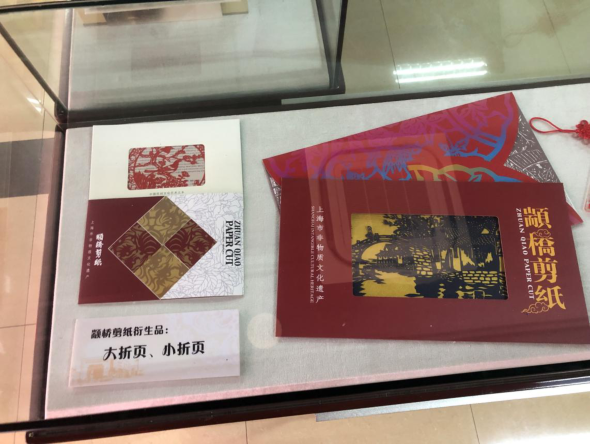
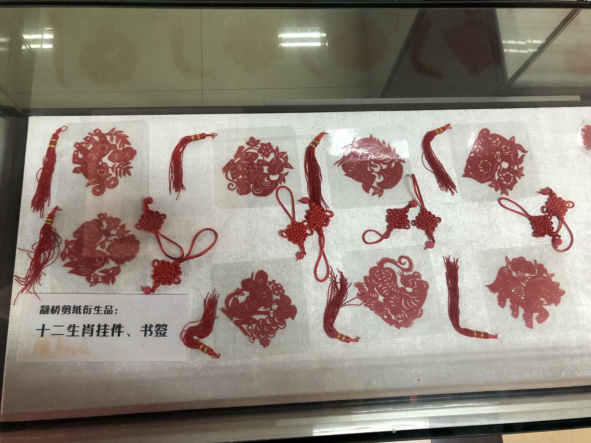
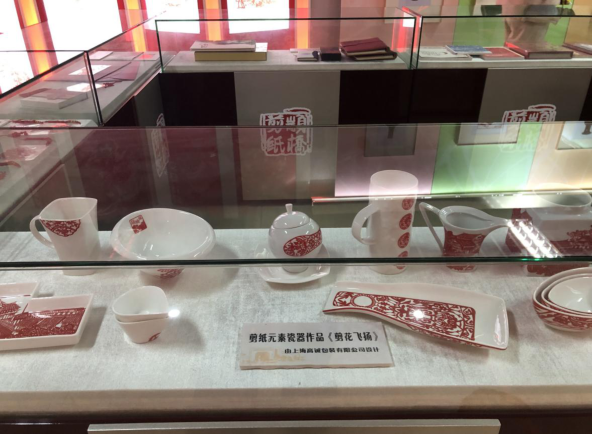
value and embodiment. The ICH derivatives are based on the efforts of the ICH inheritors and set in the historical background and living environment of that age, which are designed on the premise of preserving their skills, works and cultural ideas. They are not only the extension in the form of spirit, but also the extension of the scope of ICH dissemination. The paper-cutting art modeling is one of its characteristics, whose uniqueness is the main cha- racteristic of modeling study as well as one of the major thinking origins for derivative design. The design of Zhuanqiao paper-cutting derivatives is mainly reflected on gifts, school supplies, tableware, clothing and other pro- ducts, such as small paper-cutting picture frames, gift boxes (see Figure 1), notebooks (see Figure 2), folders (see Figure 3), pendants, title labels (see Figure 4), porcelain (see Figure 5), scarf boxes , and other derivatives.
In the design of Zhuanqiao paper-cutting derivatives are retained the uni- que artistic characteristics and cultural deposits of Zhuanqiao paper-cutting. In the context that it is difficult to make traditional propagation paths, Zhu- anqiao paper-cutting forms a new propagation path by combining derivative design, and creates new products and methods for the development of paper- cutting art. In fact, with the rapid development of material life, people’s living standard is improving, and people’s spiritual life and demands are also incre- asing. People would like to pursue new products or techniques that can bring new spiritual experience, and China is paying more and more attention to the ICH protection and inheritance. In this historical background, it is both an opportunity and a challenge for the development of Zhuanqiao paper- cutting. The opportunity is the consistency of the direction of the national development strategy with the ICH protection, more attention paid to the ICH protection by people and the pursuit of new spiritual needs and expe- riences by people; the difficulty is that although there are already cases and
About the Emotionalized Design of Intangible Cultural Heritage 87
Figure 2: Design of Notebooks .Figure 3: Design of Folders.
products of paper-cutting derivative design, its quantity and variety are rela- tively limited. People’s requirements for design are getting higher and higher today and general design works can no longer meet people’s needs. The only way to better protect and pass on the ICH spiritual connotation is to con- tinue breakthrough and innovation and seek design works that better meet people’s needs and imagination.
88 Yan and Xiao
Figure 4: Design of Pendants and Title Labels.Figure 5: Design of Porcelain.
Suggestions and Prospects for the Application of Emotionalized Design in the Paper-Cutting ICH Derivative Design The abovementioned emotionalized design can be divided into three levels: instinct level, behavioral level and reflective level. It can be seen from the perspective of emotionalized design that ICH combines the design elements of the above three levels. When a product represents a typical cultural pattern, a strong emotional bond is produced between the user and the product. By creating a new product or a new usage mode, the user will have a positive
About the Emotionalized Design of Intangible Cultural Heritage 89
cultural experience. The author will provide suggestions and outlooks on the emotionalized design approach for paper-cutting ICH from these three levels.
The instinct-level design emphasizes more on the visual experience brou- ght to people by the design, and most of the paper-cutting art belongs to the instinct-level design. The principles behind the instinct level design are inter- linked, that is, its physical characteristics - sight, smell, touch and hearing - are dominant (Liying, 2021). Zhuanqiao paper-cutting has its own chara- cteristics in visual aspects. The visual elements it uses, such as paper-cutting materials, textures and colors, are suitable for the instinct-level design. It is also possible to combine these elements of instinct-level design with traditio- nal literature, techniques, fine arts, dance, theater, folklore, and other related categories in ICH to innovatively design derivatives and develop new ways for the development of paper-cutting art.
Behavioral-level design is related to the use and experience of the product. The first step of good behavioral-level design is to understand how people use the products, and study the mode of the activities implemented by users and the tasks they need to achieve. Zhuanqiao paper-cutting design at the behavioral level relies more on the derivative design. In most cases Paper- cutting is the visual function per se, without obvious effect of actual use. The folklore in ICH such as traditional dance, dramas, quyi and acrobatics is full of rich dynamic procedures and provides a good medium for behavioral- level design. If Zhuanqiao paper-cutting can be combined with such dynamic folklore for innovative design of derivatives, it can offer the possibilities for the preservation and inheritance of paper-cutting art at the behavioral level.
Time is the significant difference between the reflective level and the first two levels. This level and the behavioral level are “present”. Human’s senses and experiences are really obtained in the products being seen or used (Xiao, 2017 ). However, the reflective level lasts for a longer period of time. Peo- ple are able to recall the past or foresee the future through reflection. With the development of the times, traditional paper-cutting art is slowly fading out of the stage of history, but the ICH inheritors can still depend on the wisdom and inventions of the ancients and conduct derivative redesign by combining various cutting-edge technologies or products in other fields, so as to stimulate people’s interest in traditional paper-cutting art, drive peo- ple to understand traditional paper-cutting art, and establish a long-lasting relationship of protection and inheritance. Emotionalized design is one of the main concepts of design nowadays. If the opportunity can be grasped in the paper-cutting ICH inheritance to integrate the concepts of emotionalized design into paper-cutting art and think about the development ideas and cre- ation techniques of related derivative design, new vitality can be provided to the inheritance of paper-cutting art.
REFERENCES
Donna A. Norman. Emotionalized Design [M]. translated by Fu Qiufang and Cheng Jinsan. Beijing: Electronic Industry Press. 2005, 5–1 Dou Zhuofen. Research on the Application of Intangible Cultural Heritage Elements
in the Design of Cultural and Creative Products [D] Beijing University of Posts and Telecommunications, 2021
90 Yan and Xiao
Lu Yu. Research on Inheritance and Innovation in the Perspective of Intangible Cultural Heritage [D]. Wuhan Textile University, 2021. DOI:10.27698/d.cnki.gwhxj.2021.000247. Petrovsky. General Psychology [M]. translated by Zhu Zhixian et al. Beijing: People’s Education Press, 1981, 1–5 Tang Xiao. Research on Social Innovation from the Perspective of Participatory
Design [D] Hunan University, 2017 Wu Fang. Research on the Inheritance and Development of “Shanghai-style Papercutting Art [D] Shanghai University, 2016 Yang Liying. Emotionalized Design Based on Intangible Cultural Heritage in Yang-
zhou -- on the Teaching and Research Mode of Cultural and Creative Design Workshop + Competition [J] Design, 2021,34 (05): 82–84 Zhang Yini. On the Enlightenment of Folk Paper-cutting to the Emotionalized Design of Modern Lamps [D] Hubei Institute of Fine Arts, 2017 Zhao Shuang. Research on Derivative Design of Yuxian Paper-cutting [D] North
China University of Science and Technology, 2016 [Russia] Jacobson JM. Psychology of Emotion [M]. translated by Meng Zhaolan Harbin: Heilongjiang People’s Publishing House, 1988, 24
LISTED IN THE AHFE DIGITAL BOOKSTORE CATALOGUE
Explore the complete digital volume
Affective and Pleasurable Design
Read this individual research paper free through the original publisher, or explore the full digital proceedings book.
ISBN 978-1-958651-17-9
Explore this ISBN in the AHFE Bookstore ↗Listed in the July 2026 bookstore catalogue; search by ISBN to confirm current availability · Digital book purchase optional