Xiong Yi, Bing Xiao (2022). Emotional Design Study for Blind Box Toys. In: Affective and Pleasurable Design. AHFE Open Access, vol. 41, pp. 58–65. https://doi.org/10.54941/ahfe1001781
With the rise of experience economy and constant pursuit of spiritual needs, blind box toys have explored a new path in the global toy market. The toys meet consumers’ needs as well as create emotional user experience for them. Blind box toys break down limitations of art and take advantage of emotional design to arouse the interaction between human and products. Taking blind box toys as main research object, combined with the theory of emotional design and emotional experience, this paper expounds the important direction of emotional design and summarizes the design experience of blind box toys. The attempt will guide and implement in the design of subsequent blind box toys.
With the development of consumer economy, people are not satisfied with products, but are more inclined to choose products with both material and emotional experience. As innovative spiritual products, blind box toys are showing a vigorous momentum in the toy industry because they bring excel- lent emotional experience to consumers. A blind box toy is a figurine hidden inside the same but invisible packaging. The figurine typically comes from pop culture. Because of the randomness and stimulation of its toys, it satisfies people’s emotional needs.
The History of Blind Box Toys The blind box toy industry originated from the emergence of vending mach- ines capsule models and the development of the animation industry. In the early 20th century, Japan’s Corporation Bandai combined plastic toy models with vending machines and manufactured an offline machine dedicated to self-service sales of model products – Gacha (Ma Yue, 2018). The ran- domness and uncertainty of the gacha bring a stimulating experience to consumers, which plays a guiding role for blind box toys. In the 1990s, card toys caught on in China among youngsters. Enthusiasm of collection are inspired because the card toys appeared in a series. The social and colle- ctible attributes of the cards attract young consumers. Gacha and card toys are the early forms of blind box toys.
In 2005, Japanese company Sonny Angel launched the Sonny Angel toy, which gradually changed into the current upright mini figurines. Sonny Angel was launched in a series with the form of blind box. In 2015, Chinese com- panies such as Pop Mart and IP Small Stations emerged to cooperate with popular intellectual properties. Blind box toys combine the characteristics of gacha and card toys to meet the needs of consumers for curiosity, perfe- ction, differentiation and quality. At present, the category of blind box toys has gradually expanded from the initial trend to educational toys, food toys, souvenirs and so on. In addition, hidden and limited editions are constantly launched to meet consumer needs and emotional experience. With emotional design, blind box toys create communication between users and products, which plays a dominant role in rapid development of the industry.
Emotional Design Emotional design is a design method that pays attention to the mood of users when using products and improves the design of products for better user experience. It makes the design overwhelmed with humanistic care and emotional resonance with consumers.
Emotional design first appeared in the field of industrial design. Many peo- ple think that people make decisions with rational brains, but this is not the case, and our actions are mainly driven by emotions (Javier Sanchez Lame- las, 2007). The emotional experience during the use of the product should be paid much attention. Emotional experience has unique cognitive benefits. Through analyzing the value of emotional experience with the concept of evaluation, the impact of attention, the reason for perception, it proved that emotional experience makes people familiar with values and the complexity of emotional experience makes people valuable (Scott B, Audi R, Bealer G, 2021). Users are closely related to emotional experience in the whole pro- cess of purchase and use. During the process, user experience can be divided into five types: senses, emotions, thinking, actions, and connections (Pine B, Gilmore J, 1998).
In terms of cognitive psychology, Donald Arthur Norman (pp. 52, 2006) claimed that ‘emotions should be integrated into product design’. The emo- tional component of design is more important than the practical component for products. He also proposed a ‘emotional design hierarchy model’. The model divides the goals of emotional design into three distinct levels: the visceral layer (inner feeling level), the behavioral layer (behavioral experie- nce level), and the reflective layer (thinking response level) (Donald Arthur Norman, 2006).
The visceral layer is human’s first sensory intuition of things. It is the sen- sory stimulation brought by model and color. The first impression of the product is the starting point of consumer emotional processing, so it is neces- sary to highlight the sensory experience of material attributes through the design of the material level, such as shape, volume, material, size and color to stimulate emotional instinct of consumers. The behavioral layer is the emotional reflection and experience generated by the user in the process of using the product. Under the premise of satisfying user cognition, functional
60 Xiong and Xiao
tasks can be effectively completed and at the same time, it has an intere- sting operation experience. As an advanced thinking activity, the reflective layer is a deeper thinking and evaluation after user use the product under the joint action of the visceral layer and the behavioral layer. There is a gradual interaction between the three levels of emotional experience, which creates excellent experience.
THE SIGNIFICANT VALUE OF EMOTION DESIGN ON BLIND BOX TOYS Satisfaction of Consumers’ Needs
The American psychologist Maslow (1970) divided human needs into seve- ral levels: physiological needs, safety needs, love and belonging needs, esteem needs and need for self-actualization. These levels presented a progressive relationship, indicating the development of human needs. Aarron Walter (2011) links emotional design to Maslow’s hierarchy of human needs. Pro- duct traits can also be divided into functionality, dependability, usability, and pleasure. The emotional design focuses on the pleasurable function of the product and meet high-level needs.
Young people have negative emotions of loneliness, stress and anxiety in the hustle and bustle of life and work. Emotional toy design provides a sense of companionship. Players immersed in the stimulation of blind box and the happiness brought by different figurines. What’s more, players not only display the toys they have, share their experiences, but also exchange disliked or duplicate styles with other players in the community of blind box toys. The recent survey of CBN Data (https://www.cbndata.com/information/150879) shows Pa QU, a prevailing toy community, builds an online platform of col- lecting dolls, changing dolls, and sharing so that players can find collective resonance and emotional belonging.
Hidden and limited editions are set to attract players’ constant purchases to gather all the collection. Those who assemble the series earn respect and admiration from other players.
On social platforms, players of blind box toy often carry out activities that use trendy toys for secondary creation and tell their own stories. Many players use the figurine in the blind box to create a new toy with clay or other decorations. The toys created for the second time not only reshape the atmosphere and scene of intellectual property toys, but also show their thinking through the process of recreating toys.
Creation for Excellent Experience In the visceral layer, blind box products generally adopt a witty and intere- sting emotional design in terms of shape and bring users a sense of closeness by using decorative language. Simple and full shape with personal featu- res can rapidly catch consumers’ eye, which is important for selection and purchase section.
In the behavioral layer, players feel curious and look forward to the blind box toy they buy. When they choose a blind box toy, it has a certain
Emotional Design Study on Blind Box Toys 61
randomness because of the invisible packaging. Due to the unique blind gues- sing, strong randomness is brought to players. And this random experience is also a way of experiencing in emotional design— bringing an uncertain sense of excitement. There are also some small parts put in the blind box, allowing consumers to assemble or decorate to complete the final appearance of the figurine. In addition, players are willing to share experience and collections online. Players are willing to share their experience of choosing specific blind box toys in the online community. For example, players discuss how to pick accurately the one they want. The style is judged according to the sound and weight of the blind box.
In the reflective layer, players gradually empathize with the figurine and gain a sense of companionship. They are motivated to recreate the blind box toys through split and combination, which creates a positive communica- tion between brands and consumers. Blind box toys become players’ spiritual sustenance as well as a social media to establish topics and break the restricti- ons of the region. People with same interests come together to make friends and share trendy information. Some players modify the toys, change colors, and assemble them together to create unique and exclusive dolls, and display on social platforms. Sharing design cases and production tutorials can gain social, respectful, and self-actualized needs in the process of communication and interaction.
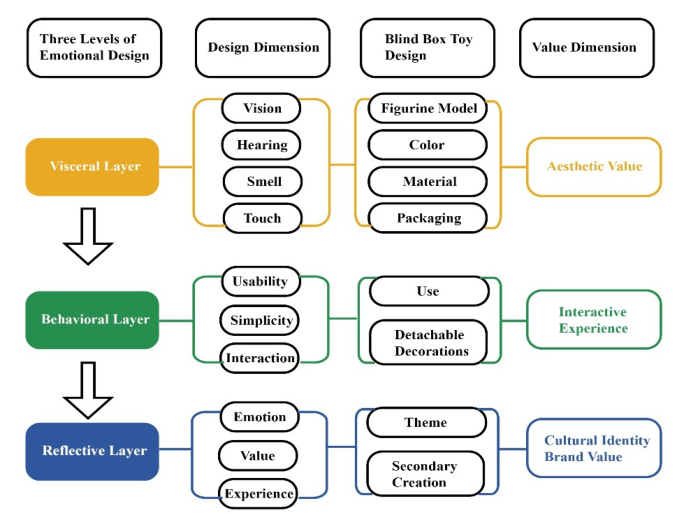
EMOTIONAL DESIGN STRATEGY FOR BLIND BOX TOYS Through the analysis of blind box toys, emotional design strategy of blind box toys needs to combine with the three-level theory of emotional design (see Figure 1). It not only enhances the artistry, entertainment and creativity of blind box toys, but also builds the link between people and products through emotional experience.
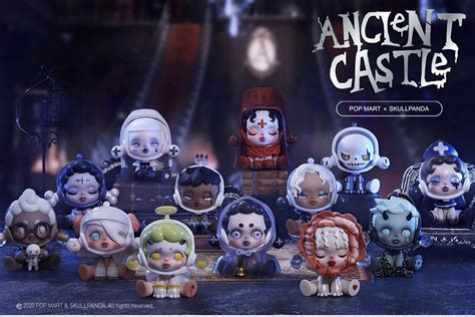
Visceral Layer Design The visceral layer design mainly refers to the appearance of the product. It emphasizes the first impression of product, mainly based on its appea- rance and touch. The design of the exterior shape, color collocation and use of materials should attract consumers and stimulate their desire to buy. The outer packaging of blind box toys and the toy inside need to be desi- gned as highly recognizable super symbols, which are easy for consumers to identify and remember. On the one hand, the interior figurine of the blind box is mostly designed as an idealized subject image with a flat color in pop art style. The toy image with fashion, art, humor that reflect creators’ modeling style and cartoon aesthetics can break down language and cultu- ral differences. Skullpanda, one of the best-selling blind box toys of Pop Mart, has a cold look with ball-shaped braid, and slightly open lips (see Figure 2). This dark style with its various appearance shapes the image of an adventurer who explores the unknown, which attracts young players. On the other hand, the diversified colors of toy packaging and the display of all the models on it also attract consumers and stimulate their desire to buy.
62 Xiong and Xiao
Figure 1: Emotion design strategy.Figure 2: Skullpanda of Pop Mart (2020).
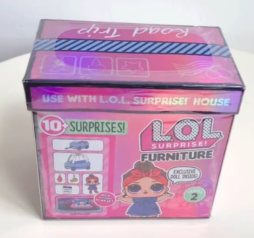
Behavioral Layer Design Behavior design should not only meet the needs of users, but also be easy to understand and easy to use. As an entertainment product, blind box toys should have simple interaction with players. For model design, the hidden toy adds excitement and emotional experience when player first open the box. In addition, some small objects will be put in the blind box toy to pro- vide consumers with decorative interaction. For example, the series of Pucky (popular blind box toy of Pop Mart) set up some items that figurine can hold for players to decorate. For LOL surprise dolls (see Figure 3), consumers need
Emotional Design Study on Blind Box Toys 63
Figure 3: LOL surprise doll (2019).
to assemble the given clothing, accessories and furniture to build a complete doll image and scene. In the process of interactive experience, consumers not only integrate their own emotions and preferences when they decorate, but also projects their emotions on blind box toys.
Reflective Layer Design The reflective level is related to users’ long-term feelings. By triggering the common memories of users, their positive emotions about memories can be awakened by products’ story and scene. Products gradually become a carrier for users’ memories and emotional expression. As a result, users’ cognition and recognition of the product and brand have further improvements. First, all the series of blind box toys should be designed with specific theme, such as Molly’s Day for daily routine, Cat in forbidden city for Chinese traditio- nal culture and Skullpanda’s night of the city for exotic world. Stories behind each toy create a scene that arouse the subconscious feelings and needs of users. Second, users are encouraged to put their creative design into practice by refitting, changing color and assembling to make unique and exclusive toys. During the process, a communication bridge with consumers and pro- ducts can be built to improve users’ emotional experience. Users gradually cultural identification so that the double satisfaction of experience and spirit in the process of using.
DISCUSSION
In this work, I analyze the value of emotion design and summarize emotional design methodology for blind box in three levels. The findings is consistent with that of Scott B, Audi R, Bealer G (2021) who believe that multilevel emotional experience makes people impressive. The interesting finding is that emotional design of blind box toys creates aesthetic value, interactive experience and cultural identity brand value in three level of visceral layer, behavioral layer and reflective layer. Taken emotional design into account, blind box toys not only are creations of toy designers to express themes, but also are carriers for users to acquire emotion experience and express themse- lves. However, the limitations of the research are simply qualitative research
64 Xiong and Xiao
from the perspective of emotional design. Future work should focus on the application of emotional design strategy for blind box toys.
CONCLUSION
Blind box toy is a well-designed commercial product and there is no doubt that the emotional experience it brings to players is great. All these bene- fits from exploring the emotional design behind the products. Blind box toys create emotional user experience for consumers from the aspects of selection, purchase, use, sharing and reproduction. It makes full use of the three levels of emotional experience and designs for users’ needs from different cognitive levels. Due to emotional design, users feel satisfied and pleasurable in visce- ral, behavioral and emotional experience. The design meets the personalized, diversified and multi-level emotional needs of people. Emotional resonance can be aroused through the emotional relationship between products and users established by emotional experience. Three levels of emotional design not only innovate the design method, but also drive the creative development of blind box toys.
ACKNOWLEDGMENT
The first author is the fanatic of blind box toys. Due to happiness and excel- lent experience of the whole process, I am highly addicted to various blind box toys. That’s the reason why I conduct emotional design study on blind box toys.
The first author would like to acknowledge the first author’s supervisor, Bing Xiao, whose expertise was invaluable in formulating the research que- stions and methodology. He provided with the method that the first author needed to choose the right direction and successfully complete the disserta- tion. The first author would also like to thank classmates and friends for sharing their user experience and opinions on blind box toys.
REFERENCES
Aarron Walter. (2011). Designing for Emotion. Happy Cog Choi, J., & Kim, S. (2016). “Is the smartwatch an IT product or a fashion product?
A study on factors affecting the intention to use smartwatches”. Computers in Human Behavior. Volume 63. pp. 777–786. Donald Arthur Norman. (2006). Emotional Design. Beijing: China CITIC Press.
pp. 52–70 Ine B, Gilmore J. (2006). Welcome to the Experience Economy. Harvard Business Review, Volume76 No.4. pp. 95–97 Javier Sanchez Lamelas. (2007). Martketing: The Heart and the Brain of Brandin.
Beijing: China CITIC Press. pp. 102–115 Kerry S, Dan H. (2017) “Experiential Marketing”, in: The People’s Posts and Telecommunications Press. MA Yue. (2018). Embrace the Internet New Opportunities for the Gashapons
Market. in: Toy Industry. pp. 58–59 Maslow Abraham Harold Maslow. (1970). Motivation and personality: New York: Harper & Row.
Emotional Design Study on Blind Box Toys 65
Scott B, Audi R, Bealer G, et al. (2021). The Epistemic Significance of Emotional Experience. in: Emotion Re-view, pp: 1–12 Xingchen Zhao, Qinjun Chen. (2021) “Research on the reference significance
of blind box design concept to cultural and creative products”. in: Packa- ging Engineering. https://knscnkinet.webvpn.ncut.edu.cn/kcms/detail/50.1094. TB.20200922.1055.004.html Zhenzhong Zhang. (2021) “Research on Packaging Design of Blind Box Products under the “Blind Box Economy” Model, in: Packaging Engineering. Volume 42 No. 08. pp. 227–233.
LISTED IN THE AHFE DIGITAL BOOKSTORE CATALOGUE
Explore the complete digital volume
Affective and Pleasurable Design
Read this individual research paper free through the original publisher, or explore the full digital proceedings book.
ISBN 978-1-958651-17-9
Explore this ISBN in the AHFE Bookstore ↗Listed in the July 2026 bookstore catalogue; search by ISBN to confirm current availability · Digital book purchase optional