Giuseppe Mincolelli, Gian Andrea Giacobone, Michele Marchi (2022). PLEINAIR project: participatory methodologies to validate and integrate product concepts with young users. In: Design for Inclusion. AHFE Open Access, vol. 45, pp. 45–53. https://doi.org/10.54941/ahfe1001868
This contribution describes the final part of the development process of PLEINAIR (Free and Inclusive Parks in Networks for Recreational and Physical Intergenerational Activity), a two-years multidisciplinary research project financed by the POR FESR 2014-2020 program regulated by Emilia Romagna Region in Italy.The PLEINAIR project aims to develop a smart outdoor park, specifically designed for encouraging positive socio-recreational interactions among different generations and for promoting the adoption of active lifestyles for all and at any stage of their life.This is because, according to WHO, sedentary lifestyle is increasing worldwide and it risks to produce more cardiovascular diseases compared to the past, but also because most of the urban parks nowadays are composed of arbitrary and selective areas that do not stimulate interaction between different generations.The purpose of PLEINAIR is to provide real solutions through operational products called OSOs (Outdoor Smart Objects). Monitoring a series of parameters – through an IoMT (Internet of Medical Things) infrastructure – related to people’s motor or ludic activities, the OSOs aim to find the most suitable and customizable motivational strategies to stimulate a positive health lifestyle for any user at any age.PLEINAIR is based on a Human-Centered Design approach and it utilizes participative Co-Design techniques to discover and satisfy the real needs of people.Due to the COVID-19, the first part of the needs analysis was conducted remotely. Despite there were no chances to interact with users in person, the on-line activities collected many insights to develop the early concepts of the OSOs.When the Italians lockdown restrictions in public education were temporally less severe, two Co-Design workshops were organized involving two schools in Province of Bologna, Italy, to collaboratively validate and refine the concept ideas with young users.Considering this, the paper describes two Co-Design activities performed in both schools.The first workshop collaborated with an elementary school and it was divided in two parts: the first stage collected the children’s and expectations about the OSOs’ early concepts through a visual questionnaire; the second stage used free drawing to collect children’s ideas, dreams and expectations about their personal concepts of PLEINAIR outdoor park.The second workshop involved an high school and it was divided in three main round tables, each one focused on a specific aspect of the PLAINAIR IoTM system: the first table co-designed the graphical interface and the navigation system of PLAINAIR application; the second table co-designed and co-validated the motivational strategies that the app uses to encourage people to improve their health conditions; the third table co-designed digital and analogic interactions for dialoguing with the OSOs. The activities were based on an open debate and free drawing session because they let young users free to express themselves around the three themes of the workshop. The final results produced qualitative data that were difficult to collect during the remote activities and they were used, as guidelines, to improve many aspects of the User Experience of the PLEINAIR IoTM system.
This paper describes the last research activities related to PLEINAIR (Free and Inclusive Parks in Networks for Recreational and Physical Intergenera- tional Activity), a two-years multidisciplinary research project financed by the POR FESR 2014-2020 program regulated by Emilia Romagna Region in Italy. The PLEINAIR project aims to develop a smart outdoor park to promote the adoption of active lifestyles for all and at any stage of their life. This is because, according to World Health Organization (WHO, 2020), sedentary lifestyle is increasing worldwide and it risks of producing more cardiovascular diseases compared to the past, which are creating impor- tant consequences on the social and healthcare system of many countries (ISCA, 2015; Dorato, 2020). Again, PLEINAIR aims to encourage positive socio-recreational interactions among different generations because nowa- days most of the urban parks are composed of arbitrary and selective areas that do not stimulate interactions between different generations. The pur- pose of PLEINAIR is to provide real solutions through smart, interactive, and connected products, which are called OSOs (Outdoor Smart Objects). Due
to their interoperability and high computational speed these smart objects are able to act, react, and interact in the real world in a new manner inde- pendent of the human agent (Celaschi et al., 2017; Rozendaal et al., 2019). By monitoring a series of parameters – through an IoMT (Internet of Medi- cal Things) infrastructure – related to people’s motor or ludic activities, the OSOs can provide the most suitable and customizable motivational strategies to stimulate a positive health lifestyle for any user at any age. One of the pecu- liarities of these smart objects is the intent to adapt their characteristics and functions to the users’ requirements, to increase their physical and cognitive abilities (Mincolelli, 2017; Zannoni, 2018). PLEINAIR is based on a Human- Centered Design approach, and it utilizes participative Co-Design techniques to discover and satisfy the real needs of people. Due to the COVID-19, the first part of the needs analysis was conducted remotely. Despite there were no chances to interact with users in person, the on-line activities collected many insights to develop the early concepts of the OSOs (Mincolelli et al., 2021). However, when the Italian lockdown restrictions in public education were temporally less severe, this research had the chance to organize two Co-Design workshops involving two schools in Province of Bologna, Italy, to collaboratively validate and refine the concept ideas with young users.
DESIGN APPROACH AND ACTIVITIES We approached the development and implementation of the entire project through the methodology of Human Centered Design (Mincolelli et al., 2020). It is a strategic approach that places people’s needs at the center of the analytical and creative design process. In the PLEINAIR project, users were highly diversified as the equipment to be placed in an open space had to increase the level of sociality and encourage the adoption of healthy and active lifestyles by: children, adolescents, adults and elderly people (DiSalvo, Lukens, 2011). Within each macro-area of users there were also different groups on the basis of the different skills, characteristics, cultural and social contexts of each person involved in the project. In a moment of standstill and relative calm due to the COVID-19 pandemic, we were able to organize parti- cipatory work days with different users; specifically, primary school children and secondary school teenagers. The different workshops had various obje- ctives and expected results, as well as the application methodologies and the consequent design tools were different. The participatory days carried out will be explained in more detail below.
First Workshop: Involving Primary School Children The first Co-design workshop was organized in collaboration with one of the classes presented at the Bruno Munari primary school, located in Bari- cella (BO), Italy. The workshop involved 21 children and it lasted 4 hours. Due to the anti-covid regulations, the class was divided into 2 working groups (2 hours each). The activities expected to validate a series of OSOs’ early concepts that had been conceived during the first research activities (Mincolelli et al., 2021). In addition, the first workshop aimed to acquire several needs and expectations associated with the outdoor park experience
PLEINAIR Project: Participatory Methodologies to Validate and Integrate Product Concepts 47
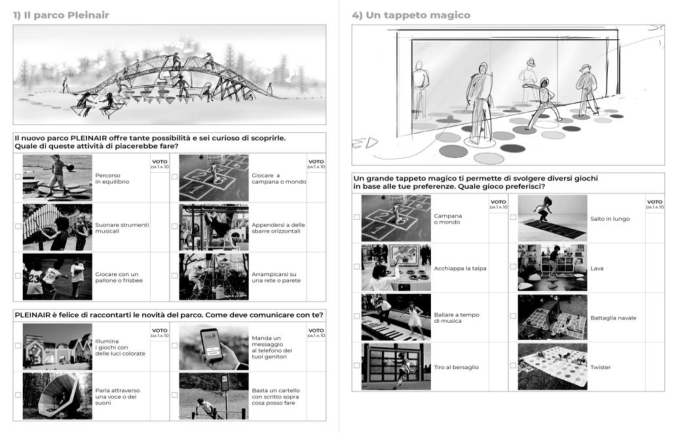
Figure 1: The first and the fourth queries of the questionnaire used in the first workshop.
from the perspective of the younger users, as their generation was less invo- lved during the early research activities, which were concerned in an online, survey because of the pandemic situation (Mincolelli et al., 2021). According to the research objectives, the workshop activities were divided into two main parts for each workgroup.
The first stage collected the children’s considerations and expectations about the OSOs’ early concepts through a visual questionnaire. The second stage used a free-drawing session to acquire new insights for implementing the functionalities of the OSOs by interpreting the children’s personal conce- pts of PLEINAIR outdoor park. The questionnaire was structured only in 5 main questions, each of them formulated for acquire data on specific cha- racteristics and functions of the park and the OSOs (Figure 1). For facilitating the children’s decision-making process, each question was composed by 4, 6 or 8 multiple choices, in which every textual option was accompanied by an evocative image. For each question, the child had the chance to select, at least one or two options, to which assign a vote from 1 to 10. This approach was utilized as a quantitative parameter to hierarchize all the choices of the entire class. The first question was composed of two queries that asked children what types of activity the PLEINAIR park should offer (balancing structu- res, climbing walls, monkey bars, musical instruments, hopscotch, or classic ball games) and what multimedia aspects should be utilized to communi- cate and interact with them (analogic informative posts, mobile app, sound, or speech synthesizer). The second question asked children what activities they would act if PLAINAIR explored the opportunity of having a multi- floor playground (for example climbing, sliding, running over it, jumping on interactive stairs, observing nature from the top, or relaxing in a private spot). The other remaining questions focused on the characteristics of the
PLEINAIR’s structure and its OSOs. Specifically, the third query explored the functionalities of a tubular structure as a compositive and interactive ele- ment of PLEINAIR’s playground. In that case, the question asked children for what kind of playful or interactive functions the tube should act (for example as a sitting, a hanging or a climbing system, or as a light, binocular, mega- phone, speaker or basket). The fourth questions focused on a key element of the project, which is an interactive carpet, composed of modular smart and interconnected tiles. Considering this, the query asked children what game they would play with that OSO (for example, “catch the mole”, “the floor is lava”, battleship, target shooting, twister, tap piano, hopscotch or long jump). In addition, the question asked children for what functions the games should offer (for example, changing the difficulty level, create challenges, inviting fri- ends to play, or evaluating my performance statistics), and for what person they would invite to share the activities (for example, the parents, grandpa- rents, friends or other children to make new friendships). At the end, the last question investigated new interactive functions of an outdoor smart chair. Regarding this, the query asked children what types of activity they would perform by interacting with that smart chair (for example, playing music, swinging, balancing, listening to a story, jumping on it or simply sitting and relaxing on it). Instead, the second part of the workshop consisted of a free- drawing session, in which the children were free to design and interpreter the idea of their personal playground based both on their personal experiences at the park and on the information acquired from the questionnaire. The chil- dren did not been affected by any design constraints in order to offer them more freedom on expressing themselves. At the end of the workshop, the rese- arch team analyzed all the children’s questionnaires and drawings, and the insights coming from their expectations were used to refine and implement the OSOs’ early prototypes.
Second Workshop: Involving Secondary School Teenagers In order to validate the design phase, two further co-design workshops were held with four fourth grade classes of the Belluzzi-Fioravanti secondary sch- ool in Bologna. The participatory days were held on April 20th and 22nd 2021 and involved about a hundred students. Design research methodolo- gies were used such as card sorting, focus groups, storyboards (Mincolelli et al. 2017). This activity was important to gather the latest useful infor- mation (OSO-User interfaces and interactions) to develop the shared project brief with detailed description of all OSOs and their instructions for use. The final goal of these meetings was to refine the concepts and ideas so far ach- ieved within the project and to have first feedback from the possible final users. Each single workshop was structured in three thematic tables. Around 7–10 people took part in each thematic table. Each table had approximately 30 minutes to develop the specific theme. Once the pre-established time was over, each group of students started examining in depth the theme of the next thematic table. The methodology applied throughout the days of participa- tory work, was the co-design; therefore experimental, playful, highly manual and graphic days in which students had the opportunity to interact with the prepared material.
PLEINAIR Project: Participatory Methodologies to Validate and Integrate Product Concepts 49
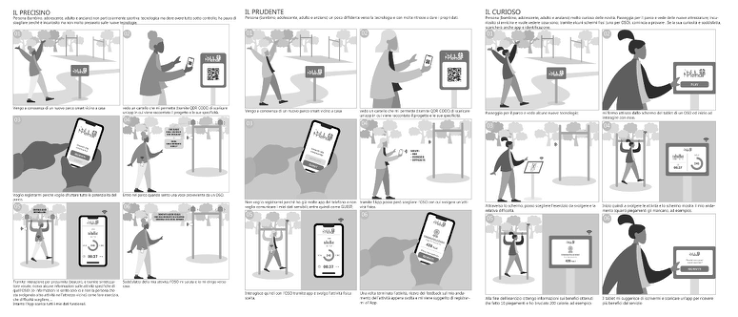
Figure 2: Example of storyboard used for the first thematic table.
The first thematic table was focused on the possible interactions between the smart outdoor equipment and the users. The operational and design tool used in this thematic table was the graphic one of the storytelling (Franklin, 2021) and storyboard (Figure 2). Graphic tables of possible users with different systems of interaction betw- een man and OSO were previously created. The hypothesized users (the sportsman, the competitive, the curious, the suspicious, the prudent and the precise) and the proposed technologies (QR code in play tools, fixed tablets next to each OSO, dedicated App with different customization options and integrated headphones, RFDI system) were specifically very contrasting and different from each other. The objective of the table was to investigate which technological tools would produce the most inclusive and performing expe- rience of fitness or socialization within an outdoor park. The final outputs of this table expressed the teenagers’ need to have a fast, immediate and above all customizable interaction. Unlike elderly users, teenagers are very familiar with apps and smartphones and therefore it is not a problem for them to have this type of human-machine interaction.
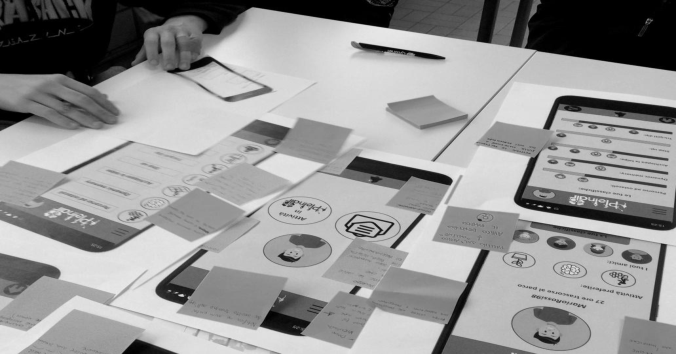
The focus of the second thematic table was dedicated to the study and research of the graphic interface and the content of a hypothetical App for the management, even remotely, of the data and results performed on the OSOs of the PLEINAIR project. For this table we worked and created the graphical interface of the App together with the students. Various smartphone mock- ups were created and adhesive icons, post-it or graphic diagrams could be added as well as the related content or observations. Given the specific target of the table, we explored the diverse App on the market in order to suppose the design effects of an App that would inform people about their fitness performance, any improvements made in a specific activity, tutorials that best explain how to perform a certain physical exercise safely. The goal was therefore to customize the graphical interface, creating home screens to set up the personal account (initial configuration of the service), on the basis of the physical characteristics (age, height, weight, etc.) and the preferences on the activities proposed by the system.
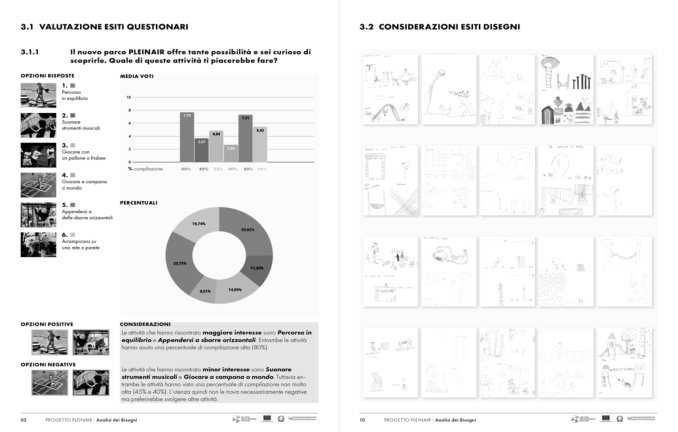
Figure 3: Some outputs of the questionnaire and the drawing collected from the first workshop.
The third thematic table was instead focused on possible motivational strategies to encourage people to do physical activities at the park or just have the opportunity to interact with other users in order to improve their psychophysical state. The research activities carried out within this table were divided into two parts: in the first part the students were asked to carry out a short questionnaire with open and closed questions. The questionnaire focu- sed on expressing appreciation feedback to twelve messages of hypothetical motivational strategies; these messages differed in content, graphic or sound representation. In the second part of the specific activity of this table, students were asked to express an opinion and possibly to integrate each strategic motivation hypothesized previously. An in-depth work was carried out on what the term motivational strategy means and how to make it effectively performative for the specific user adolescents
RESULTS
The evaluations coming from the first workshop allowed the research to understand what ludic activities and functionalities should be adopted by the OSOs to satisfy the expectations of the younger users. In particular, the more appreciated ludic activities were the balancing structures, monkey bars and climbing walls (Figure 3). The same activities were confirmed by interpre- ting the children’s drawings because most of them expressed the willingness of performing those games on a multi-floor playground. The drawings also outlined the willingness of having a strong bounding with nature. The chil- dren appreciated the use of colorful lighting systems for interacting with the OSOs, instead of reading an analogic informative post, using a mobile application or a speech synthesizer.
PLEINAIR Project: Participatory Methodologies to Validate and Integrate Product Concepts 51
Figure 4: App GUI mockup with directions from teenagers.
Regarding the interactive carpet, the most preferred activities were “the floor is lava” and tap dancing. The children also appreciated the option of changing the difficulty of the game based on their skills and the opportunity to invite friends to play together in multiplayer activities. Moreover, compa- red to the questionary, the drawings showed new and alternative games to interact with the smart tiles, such as walking through a labyrinth, composing words or playing math games.
Referring to the participatory research days carried out with the secondary school students, we can share the results hereinafter. In the first thematic table (human-OSO interaction), the choice of the types and characteristics of users and the mode of representation were crucial aspects for the success of the project. The portray of each possible user in a detailed and specific manner allowed the establishment of an emotional and confidential relation- ship between students and the hypothesized users. The design tools helped students to identify with users or to find character and empathic correspon- dences with people they know. This process launched a rich and stimulating debate that allowed to examine every single significant data of the user expe- rience. In the second table (App interfaces) various aspects related to the App content evaluated: the possibility of having performance results rankings for each OSO; the management of notifications; the personalization of the home- page; the management of specific activities related to OSOs (Figure 4). These results were important for designing an inclusive App that took into account the needs of the specific user who could most benefit from the App and an outdoor park for playful, socializing and fitness activities.
In the third table, eight motivational strategies were examined: award or reward, competition, sharing and sociality, organized activities, progressive difficulty of the physical exercise, resulting benefits, customization of con- tent and interfaces, performance monitoring. The strategies with the greatest interest were those concerning competition, challenge and monitoring (even remotely) of one’s performance. The activity produced a large number of
considerations, useful for developing an inclusive experience at the park, in the best possible way.
CONCLUSION
We can state and confirm that applying approaches, tools and methodologies typical of the Human Centered Design, the analysis and related concepts are of good quality. The planning and project of participatory meetings, aimed at developing a needs analysis or confirmations/integrations of hypothesized concepts (co-design), can also be carried out in periods when contact between people is reduced due to hindrance of force majeure. Definitely, it is necessary to develop and innovate the design tools to be proposed to users, trying to develop shared work strategies even remotely or in the absence of close con- tact without affecting the emotional, creative and innovative participation of students and moderators.
REFERENCES
Celaschi, F., Di Lucchio, L., & Imbesi, L. (2017) “Design e Phigital Production: Progettare nell’Era dell’Industria 4.0”. MD Journal, vol. 4, pp. 6–11. DiSalvo, C., Lukens, L. (2011) “Non-anthropocentrism and the non-human in design: Possibilities for designing new forms of engagement with and through technology”, in: From social butterfly to engaged citizen: urban informatics, social media, ubiquitous computing, and mobile technology to support citizen engage- ment, Foth, M., Forlano, L., Satchell, C., Gibbs, M. (Eds.) Cambridge, MA, USA: MIT Press. Dorato E. (2020) “Preventive Urbanism: The Role of Health in Designing Active
Cities”, Macerata: Quodlibet Studio. Franklin I., et all (2021) “From Fairy Tales to smart concepts: Storytelling for VR” Smart Cities and Regional Development (SCRD) Journal, vol. 5, n. 3, ISSN 2537- 3803 International Sport and Culture Association. (2015) “The economic cost of physical
inactivity in Europe”. London: Centre for Economics and Business Research. Mincolelli, G. (2017) “Fabbrica Digitale e Innovazione: il Progetto di un Corso di Laurea in Industrial Design come Occasione di Riflessione sul Futuro del Progetto”, MD Journal, vol. 4, pp. 86–99. Mincolelli, G., Giacobone, G.A., Marchi, M. (2021) “Project PLEINAIR: Disco-
vering User Needs Exploring a Non-conventional Human-Centered Approach”, in: Advances in Industrial Design. AHFE 2021. Lecture Notes in Networks and Systems, Shin, C.S., Di Bucchianico, G., Fukuda, S., Ghim, YG., Montagna, G., Carvalho, C. (Eds.) vol 260. Cham: Springer, https://doi.org/10.1007/978-3-030- 80829-7_45 Mincolelli G., Giacobone G.A., Imbesi S., Marchi M. (2020) “Human Centered Design Methodologies Applied to Complex Research Projects: First Results of the PLEINAIR Project”, in: Advances in Industrial Design. AHFE 2020. Adva- nces in Intelligent Systems and Computing, Di Bucchianico G., Shin C., Shim S., Fukuda S., Montagna G., Carvalho C. (Eds) vol 1202. Springer, Cham, DOI 10.1007/978-3-030-51194-4_1
PLEINAIR Project: Participatory Methodologies to Validate and Integrate Product Concepts 53
Mincolelli G., Marchi M., Imbesi S. (2017) “Inclusive Design for Ageing People and the Internet of Things: Understanding Needs.” In: Advances in Design for Inclusion. AHFE 2017. Advances in Intelligent Systems and Computing, Di Bucch- ianico, G., Kercher, P. (Eds.) vol 587. Cham: Springer, https://doi.org/10.1007/ 978-3-319-60597-5. Rozendaal, M., Boon B., Kaptelinin V. (2019) “Objects with Intent: Designing
Everyday Things as Collaborative Partners”, in: TOCHI: ACM Transactions on Computer-Human Interaction, vol. 23, https://doi.org/10.1145/3325277 World Health Organization. (2020) WHO guidelines on physical activity and sedentary behaviour. Geneva: World Health Organization. Zannoni, M. (2018) “Progetto e interazione. Il design degli ecosistemi interattivi”
Macerata: Quodlibet.
LISTED IN THE AHFE DIGITAL BOOKSTORE CATALOGUE
Explore the complete digital volume
Design for Inclusion
Read this individual research paper free through the original publisher, or explore the full digital proceedings book.
ISBN 978-1-958651-21-6
Explore this ISBN in the AHFE Bookstore ↗Listed in the July 2026 bookstore catalogue; search by ISBN to confirm current availability · Digital book purchase optional