Giuseppe Mincolelli, Silvia Imbesi, Angelo Taibi, Antonino Proto, Jacopo Altieri, Marcello Bonfè, Saverio Farsoni, Rosa Brancaccio (2026). Designing DATG 2.0 Through Inclusive and Co-Design Approaches: A Human-Centered Research Project for Non-Invasive Health Technologies. In: Universal Design and Design for Inclusion. AHFE Open Access, vol. 209, pp. 107–112. https://doi.org/10.54941/ahfe1008024
DATG 2.0 (Dynamic AngioThermoGraphy 2.0) is a PNRR-funded research project developed at the University of Ferrara that explores the redesign of a non-invasive thermovascular imaging system through an inclusive and human-centered design approach. Rather than prioritizing technological optimization alone, the project frames medical imaging devices as socio-technical systems shaped by users, clinical practices, and experimental contexts. The research adopts a mixed methodology combining co-design, structured interviews with multi-specialist clinicians, and research-through-design prototyping.Early-stage qualitative activities involved gynecologists, physiotherapists, breast specialists, dermatologists, and endocrinologists, enabling the identification of usability constraints, workflow requirements, interpretability challenges, and future telemedicine scenarios. These insights informed the redesign of the DATG device architecture, emphasizing conformability, portability, interaction simplicity, and visual clarity.A central contribution of the project is the development of a tissue-equivalent thermal phantom conceived as a design-driven experimental artifact. Through an iterative strategy addressing geometry, volume, material selection, internal channel fabrication, and thermal management, the phantom simulates sub-millimeter vascular patterns under controlled conditions. Beyond its validation role, the phantom functions as a boundary object supporting interdisciplinary collaboration and shared understanding among designers, engineers, and clinicians.By integrating human-centered methodologies with material experimentation and systemic validation, DATG 2.0 demonstrates how advanced biomedical technologies can be shaped through participatory and design-oriented processes. The project contributes to inclusive design research by illustrating a framework for aligning technological innovation with clinical adoption, user agency, and scalable digital health ecosystems.
DATG 2.0 (Dynamic AngioThermoGraphy 2.0) is developed within a research initiative funded under the Italian National Recovery and Resilience Plan (PNRR), involving the University of Ferrara and interdisciplinary collaboration across design, biomedical engineering, and clinical domains. The project focuses on the redesign of a non-invasive thermovascular imaging system, reframing it not merely as a technical upgrade but as a socio-technical transformation grounded in inclusive and human-centered design principles.
Within the broader PNRR strategy, which prioritizes digital innovation and translational impact, DATG 2.0 positions design as a mediating discipline capable of bridging laboratory experimentation and real-world clinical practice. Rather than centering the development process exclusively on technological performance, the project recognizes that successful medical innovation depends on usability, contextual integration, interpretability, and professional acceptance. This perspective aligns with established human-centered design (HCD) approaches in healthcare, which emphasize the integration of usability and stakeholder participation throughout the development lifecycle (Harte et al., 2017; Tzimourta, 2025).
By framing Dynamic AngioThermoGraphy as a socio-technical system shaped by users, practices, and institutional cultures, the project situates itself within contemporary design research discourse and contributes to ongoing debates on inclusive digital health technologies.
HUMAN-CENTERED AND INCLUSIVE DESIGN METHODOLOGY The DATG 2.0 project adopts a mixed methodological framework combining co-design, user-centered design, and research-through-design principles. In this context, artifacts are not considered final deliverables but epistemic tools that generate knowledge through iterative prototyping and stakeholder engagement (Zimmerman, Forlizzi & Evenson, 2007). Both the imaging device and its validation ecosystem are therefore treated as evolving design artifacts.
Early-stage qualitative research played a foundational role in shaping the project. Informal interviews, structured interviews, and co-design sessions were conducted with clinicians from diverse medical specialties, including gynecology, physiotherapy, breast oncology, dermatology, and endocrinology. The deliberate inclusion of heterogeneous professional profiles ensured that the redesign process would not remain constrained by the original clinical application of DATG, which had primarily focused on superficial breast tumors.
Through these conversations, the research team investigated clinicians’ familiarity with thermographic and vascular imaging technologies, their perceptions of strengths and limitations, and their expectations regarding diagnostic performance. Equally important were discussions around ergonomics, workflow compatibility, interpretability of imaging results, and the physical interaction between practitioner, patient, and device. Participants also reflected on emerging technological opportunities, such as three-dimensional
Designing DATG 2.0 Through Inclusive and Co-Design Approaches 109 visualization, artificial intelligence–supported analysis, simplified temperature calibration, and compatibility with telemedicine scenarios.
The literature on HCD healthcare design confirms that such early and structured stakeholder involvement enhances system usability, trust, and long-term adoption (Harte et al., 2017; Tzimourta, 2025). In DATG 2.0, the qualitative insights directly informed subsequent design decisions, particularly in relation to the physical configuration of the device and its interaction logic.
Design Implications for the DATG 2.0 Device The redesign of the DATG instrument was guided by the understanding that diagnostic devices operate within complex socio-technical ecosystems. Clinicians emphasized the importance of ergonomic handling, adaptability to different anatomical regions, and clarity in visual feedback. The need to avoid confusion with established diagnostic technologies also emerged as a crucial design consideration, particularly in terms of visual identity and symbolic positioning within the clinical environment.
Portability and conformability became central design drivers, especially in view of potential telemedicine applications. The possibility of remote or self- administered diagnostic workflows required reconsideration of interaction simplicity, calibration procedures, and patient-facing communication. Research on usability engineering in medical device development highlights that early integration of human factors considerations significantly enhances clinical acceptance and reduces downstream redesign costs (Formicola et al., 2023). In DATG 2.0, such integration was embedded from the early stages of conceptualization.
THE PHANTOM AS A DESIGN ARTIFACT A central component of the DATG 2.0 project is the development of a tissue- equivalent thermal phantom conceived not merely as a technical validation tool, but as a design-driven experimental artifact. In biomedical research, phantoms are traditionally employed to calibrate imaging systems and to test sensing technologies under reproducible and ethically controlled conditions (Filippou & Tsoumpas, 2018). More recent literature emphasizes that effective phantom development requires a requirement-driven strategy integrating material science, anatomical fidelity, and functional simulation (Wegner et al., 2024).
In DATG 2.0, the phantom was designed through a structured and iterative strategy that explicitly addressed geometric configuration, dimensional scaling, material selection, thermal behavior, and vascular simulation. Rather than starting from a fixed anatomical model, the design process began by identifying the functional objectives of the sensing system: to detect and interpret sub-millimeter thermal variations associated with simulated vascular flow. This objective guided decisions regarding form, height, volume, and internal architecture.
Geometric and Volumetric Strategy The geometry of the phantom was not arbitrarily derived from anatomical replication but developed through parametric reasoning. Different configurations were explored to understand how surface curvature, thickness, and internal volume would influence heat distribution and sensor conformability. The height of the phantom was calibrated to allow measurable thermal gradients while maintaining compatibility with the heating system. Volume considerations were directly related to thermal inertia and response time, both critical parameters for accurate thermographic sensing.
This approach reflects contemporary design research perspectives in which physical artifacts are treated as experimental variables rather than static replicas (Zimmerman, Forlizzi & Evenson, 2007). The phantom therefore became an active mediator between design hypotheses and measurable outcomes.
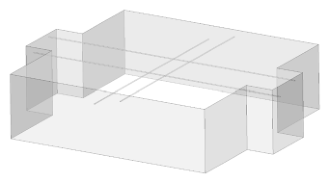
Figure 1: Design of phantom with the internal channels simulating blood veins.
Material Selection and Silicone Testing Material selection represented a crucial design phase. Multiple silicone types were acquired and tested in smaller sample formats to evaluate mechanical flexibility, thermal conductivity, surface behavior, and compatibility with embedded channel fabrication. Silicone was chosen due to its flexibility, moldability, and widespread use in tissue-mimicking applications (Filippou & Tsoumpas, 2018). However, not all silicone formulations proved suitable. Differences in curing behavior, elasticity modulus, and thermal diffusion required systematic comparative testing.
These preliminary experiments allowed the research team to identify a material capable of balancing structural stability with sufficient flexibility to accommodate ultra-thin internal channels. Such requirement-driven material selection aligns with recent recommendations in multimodal phantom development, which stress the importance of interdisciplinary evaluation criteria (Wegner et al., 2024).
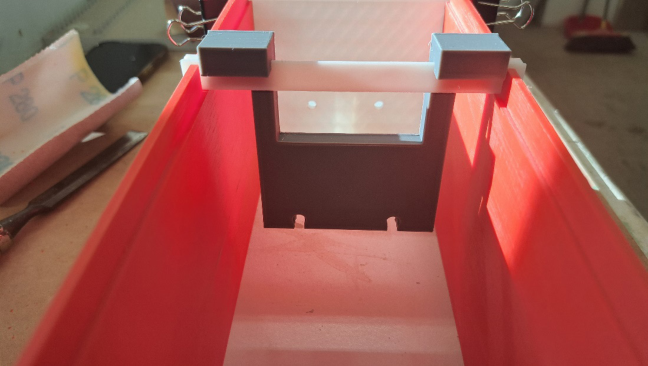
Internal Channel Design and Casting Techniques A major design challenge involved the creation of hollow internal channels capable of simulating blood circulation. These micro-scale cavities had to be precisely positioned within the silicone matrix while preserving structural integrity during casting and curing. The design strategy explored mold
Designing DATG 2.0 Through Inclusive and Co-Design Approaches 111 architectures incorporating removable or sacrificial elements to generate sub- millimeter channels without collapse or deformation.
The positioning, diameter, and branching of these channels were studied to approximate vascular patterns while ensuring consistent flow dynamics. Heated water was circulated through the channels via a controlled pumping system, enabling simulation of venous blood flow and localized thermal gradients. The thickness of the silicone layer above the channels was carefully calibrated to reproduce realistic heat diffusion profiles detectable by the liquid crystal sensors.
Such fabrication challenges echo broader discussions in phantom engineering, where anatomical fidelity, reproducibility, and functional realism must be simultaneously balanced (Wegner et al., 2024).
Figure 2: Detail of the phantom mold.
Thermal Management Strategy Thermal simulation was achieved through a dual system: an underlying heating plate provided baseline physiological temperature, while pumped heated fluid generated dynamic vascular-like thermal variations. The interaction between these two heat sources required careful calibration. Too high a baseline temperature reduced detectable contrast, while insufficient heating compromised physiological plausibility.
The height and overall mass of the phantom were therefore optimized to achieve stable thermal gradients without excessive energy input. This systemic approach to heat management reflects established practices in thermographic validation research (Filippou & Tsoumpas, 2018), yet in DATG 2.0 it was integrated directly into the design reasoning process rather than treated as a purely technical adjustment.
The Phantom as Boundary Object Beyond its functional role, the phantom acted as a boundary object facilitating communication among designers, engineers, and clinicians. Its
tangible presence enabled shared interpretation of experimental outcomes and supported collaborative refinement of both device configuration and sensing parameters. In this sense, the phantom embodies the research- through-design paradigm, where making and testing are epistemic acts that generate knowledge (Zimmerman, Forlizzi & Evenson, 2007).
By combining geometric reasoning, material experimentation, thermal simulation, and circulatory modeling, the phantom development process illustrates how design methodologies can structure pre-clinical biomedical experimentation. Rather than serving as a passive test substrate, the phantom became an active design mediator within the DATG 2.0 research ecosystem.
CONCLUSION
The DATG 2.0 project demonstrates how human-centered and inclusive design methodologies can meaningfully reshape the development trajectory of advanced biomedical technologies. Multi-specialist engagement revealed that clinical acceptance depends not only on measurement precision but also on interpretability, workflow compatibility, and patient perception. These insights are consistent with broader research on healthcare usability and technology adoption (Harte et al., 2017; Formicola et al., 2023).
Furthermore, the phantom’s role extended beyond validation to become a generative platform for interdisciplinary collaboration and speculative exploration. Dermatological applications, thyroid assessments, and inflammation-related circulatory changes emerged as potential extensions of the technology, illustrating how co-design practices can broaden clinical imagination and application scope.
Embedded within a PNRR-funded initiative at the University of Ferrara, DATG 2.0 illustrates how design can operate as a strategic integrator of technical innovation, stakeholder engagement, and systemic validation. By foregrounding inclusive design, co-design practices, and usability-driven prototyping, the project contributes to contemporary design research discourse on digital health and telemedicine ecosystems.
REFERENCES
Filippou, V., & Tsoumpas, C. (2018). Recent advances on the development of phantoms using 3D printing. Frontiers in Physics, 6. Formicola, R., et al. (2023). Design of medical devices with usability in mind.
Designs, 7(1). Harte, R., Glynn, L., Rodríguez-Molinero, A., et al. (2017). A human-centered design methodology to enhance the usability, human factors, and user experience of connected health systems. Journal of Medical Internet Research, 19(3). Tzimourta, K. D. (2025). Human-centered design and development in digital health:
Approaches, challenges and emerging trends. Cureus, 17(1). Wegner, M., et al. (2024). Requirement analysis in medical phantom development: A survey-based approach. Frontiers in Physics, 12. Zimmerman, J., Forlizzi, J., & Evenson, S. (2007). Research through design as a
method for interaction design research. In Proceedings of the SIGCHI Conference on Human Factors in Computing Systems.
LISTED IN THE AHFE DIGITAL BOOKSTORE CATALOGUE
Explore the complete digital volume
Universal Design and Design for Inclusion
Read this individual research paper free through the original publisher, or explore the full digital proceedings book.
ISBN 978-1-964867-85-4
Explore this ISBN in the AHFE Bookstore ↗Listed in the July 2026 bookstore catalogue; search by ISBN to confirm current availability · Digital book purchase optional