David Yip (2022). Disruptive Innovations in cinematic storytelling from 2D to 3D. In: Human Factors in Communication of Design. AHFE Open Access, vol. 49, pp. 59–64. https://doi.org/10.54941/ahfe1002036
Long before the digital revolution, communication theorist Marshall McLuhan has taught us about how the different forms of media can shape content with his famous book Medium is the Message [1]. Over the past several decades, the theory has certainly stood the test of time. New media technologies have advanced so rapidly that many news form of content creation and expression have been made possible. New tools have offered new and diverse forms of storytelling. Nevertheless, new ways can never completely replace old ways; they just evolve and build upon the conventional practices. Do some of the new digital tools simply offer new way of doing the old thing with better technology or are they completely change the old way entirely? This paper aims to examines these issues from a historical perspective on a few past innovation disruptions that seemed to send destructive shockwave to how things were in the beginning but brought new heights in the long run. This paper discusses historical and ongoing examples of innovation disruptions in cinematic storytelling in hopes of shedding light on the dynamic relation between art and technology. How have innovation disruptions changed the form and content of cinematic storytelling from 2D to 3D?
Cinema was invented in the late 19th century. It didn’t start out as a storytel- ling medium. Early cinema had evolved from an objective recording device of daily life to a powerful storytelling of visual language and literature that has inspired and touched so many generations of the audience. Early cinema such as Life of an American Fireman (1903) and The Great Train Robbery (1903) began to use a more structural approach to visual storytelling. The technique of shot composition and parallel editing, which are still being used in modern cinema, turned cinema into a fictional storytelling medium. With the development of film camera, editing and later film projection, technolo- gical development gradually transformed and later became standardized not just in cinematic expressions but also in its length from a few minutes long to what we now know as feature-length. This transformation never occur- red overnight but had taken many years to evolve. This gradual extension of screen time made possible by technology has revolutionized the content of this medium. Cinema is a visual medium of moving pictures that requires
a timeline structure (Yip, 2020). When the concept of time changes in this time-based media, everything else changes with it along the way. From the early straightforward linear structure to parallel and later non-linear multiple timelines of the modern cinema, cinematic storytelling and cinematography continued to evolve expressively. When technology facilitated the cinematic art of storytelling by extending its screen time, it also extended the medium’s potential for more implicit and explicit meanings and expressions. This has brought richness, depth and perspectives to the cinematic art of storytel- ling, which in turn has also inspired visual expressions of other screen and time-based media such as documentary, animation and even video game (Yip, 2021).
Technology opened up many new possibilities to capture, express and communicate human’s dreams. New possibilities dared storytellers and film- makers to imagine and dream the dreams. Technological advance alone was not enough; it must be accompanied with human creative imagination. Art is never a passive product of technology. Art and technology have impacted each other constructively but sometimes also disruptively. Just as technologi- cal breakthrough can lead to new ways of artistic expressions; similarly, the artist’s creative vision can also motivate and drive the advancement of techno- logy forward. Magician-turned-filmmaker Georges Méliès used his magical trade in cinematic arts by combining film technology with new cinematic expressions as shown in the first sci-fi cinema A Trip to the Moon (1902), which was a good example of this sort (Yip, 2020). For the first two-three decades of cinema history, film technology and art married happily together until an innovation disrupted and spent shockwave to the film industry.
INNOVATION DISRUPTION Emerging technology evolves and builds upon continuous technological deve- lopment. Once in a while, there are game changer technology that send both opportunities and shockwaves to the existing industry practices to the point that can disrupt and even destruct the existing practices in revolutionary way (DeFillippi et al. 2014; Salvador et al. 2019). Some innovation disruptions just come and go after some brief disruptions without lasting impacts. For some short-lived innovations, they might reappear in a new way. Digital dis- ruption (Bernoff et al. 2013; Baiyere et al. 2020) refers to the specific kind of innovation disruption caused by the digital revolution and transformation. For example, the digital innovation that resulted in the shutdown of major video rental outlet of Blockbuster has brought about new market in strea- ming TV platform like Netflix, which has offered us new form and content. This paper focuses specifically on how innovation disruptions have affected creative content expression.
DISRUPTIVE INNOVATIONS IN FILM CONTENT Before sound recording was introduced in film, the last of the silent film era had seen many great film masterpieces such as F.W. Murnau’s The Last Laugh (1924) and Sunrise (1927), which were regarded as the peak of the silent film
Disruptive Innovations in Cinematic Storytelling from 2D to 3D 61
in film history. At that time, silent films just had about two decades of deve- lopment since its humble beginning of documenting daily life. Influenced by German Expressionism, Murnau’s films told touching stories with masterful filming techniques and visual expressions of mise-en-scène and camera move- ment that inspired modern days’ camera movement. However, the invention of the early sound recording introduced in the early 30s accidentally resulted in a major setback of cinematic arts and expression. For the first time in film history, film technology disrupted and ruined this developing art form with less than thirty years of history. Similar to new innovation such as 3D ste- reoscope and interactivity in modern cinema of our time, dialogue film was considered a novelty and gimmick in the silent film era. Since film camera generated loud noise, in order to record dialogue sound on the set, the sound recording equipment needed to be kept in a distance and separated with thick sound-proof facility with massive cabling. With heavy machinery in sound recording devices, filmmaking must only be shot in studio using artificial backdrops replacing on location scenery. Movement of the actors and camera needed to be kept at minimum for sound and dialogue recording. Disappea- red was the fluid mobility of the camera and cinematic expression developed in the heydays of the silent film era. Cinema as a visual storytelling medium of motion picture had returned to the early days of stationary recording in exchange for sound and music.
DISRUPTIVE INNOVATION IN 3D Another example of innovation disruption in cinematic art of storytelling was stereoscopic 3D. While many people mistakenly think the short-lived hype in 3D TV in recent years was the result of the success of James Cameron’s groundbreaking 3D film Avatar (2009), which combined live and animated actions with stunning 3D imaging. From the iMax (our generation of cinema- scope) movie chain to the consumer level of big screen TV, stereoscopic 3D had become one of the gold standards in quality movie and home entertain- ment. This short-lived 3D hype seemed to be created by sale-driven tactic, of which many consumers seemed to have ‘blindly’ bought. Nevertheless, ste- reoscopic 3D technology is not a new innovative concept. It has long been invented and used as early as the 50s as one of the cinema attractions to compete with the arrival of television as a threat to the film industry. It was considered a new gimmick then but unlike the introduction of sound to film about two decades earlier, this visual gimmick had come and gone on and off repeatedly in the 50s, then 70s and its most recent comeback even to these days.
The effect of stereoscopic 3D worked like the early form of immersive tech- nology. Instead of putting on a VR headset, audience must put on a pair of 3D glasses with different colors to trick the eyes into seeing two slightly offset images into one image to form visual illusion of a stereoscopic effect. Early stereoscopic 3D cinema of the 50s and 70s belonged more like a genre of visual spectacle than a technology that was created to serve the story. Many actions were purposely designed to show things extending beyond the screen or and came flying off the screen towards the audience. These visual effects
62 Yip
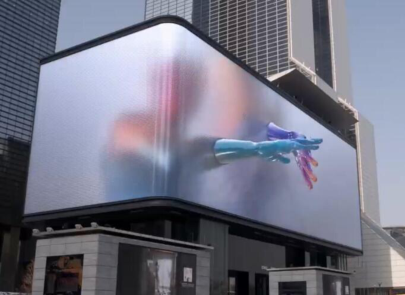
Figure 1: Public media art “ART PERFORMANCE.” Source: https://www.youtube.com/ watch?v=o6Aopnw8f2c.
appeared out of the context from time to time and they were the main attracti- ons of this 3D cinema. This wow effect was somewhat similar to the shocking spectacle of the Lumière Brothers’ 1895 Short Arrival of a Train, in which the audience thought they were seeing an incoming train and jumping off from their seats. This in-your-face visual spectacle no doubt disrupted the narrative flow of storytelling, which requires audience’s concentration and emotional involvement.
Generally speaking, all the narrative and visual effects exist to serve the story. Arguably, storytelling techniques are often made to be hidden from views of the audience (Yip, 2020). For the early form of 3D films, the result was the other way around. The story became secondary as if it was created to justify the visual effects. Similar to the introduction of sound technology to silent film, new 3D effects disrupted and sent shockwave to the practice of cinematic storytelling. Although this hype has now faded out, the discussion remains: do we really need to watch film in stereoscopic 3D content at home or even movie house? The 3D version of the film Gravity (2013) set in the vacuum of dark space, which was entirely CG-built and shot in green screen studio was one interesting example. When the backdrop of many shots sho- wed the dark empty space with no figure to ground perspective, the most apparent 3D effects were used to separate the floating astronaut and the subtitle on the screen. Joking aside, with good cinematography and proper contrast in lightings, cinematic image projected or shown on screen should already have some three-dimensional picture quality. This is the main obje- ctive aesthetic of cinematography. That’s where all the art and craft of the lighting and color tunning are all about: adding three-dimensionality to the picture with mood and depth.
Nevertheless, despites the questionable application of 3D technology in film and TV, a new type of glassless 3D LED wall has recently emerged and can be seen in many major cities in Japan, Korea, China and US. This naked-eye 3D display technology combined not only the technology of stere- oscopics 3D, new generation of high-resolution big screen LED wall and also the concept of forced perspective to create an illusion of stereoscopical 3D
Disruptive Innovations in Cinematic Storytelling from 2D to 3D 63
effects on a large display without the need of 3D glasses. First developed by d’strict, a world-leading design company that creates innovative spatial expe- riences by creating content and digital media technology, this new technology has generated many stunning visual spectacles not only for advertisement but also for artistic expressions and storytelling without the needs for 3D glasses or VR headset. However, due to the physics of forced perspective created by the curved wall, the effects can only be seen in the front of the curved area of the LED wall.
CONCLUSION
Applications of new technologies will certainly go through a transitional phrase, during which the conventional practices will be challenged, disru- pted and even changed forever. Creative industries are certainly no exception. The early phrase of technological breakthrough in sound recording and 3D imaging were examples that this initial transition phrase disrupted the deve- lopment of artistic and creative expression. But this is just temporary and natural, especially when the creative content or artistic vision has not been caught up to fully utilize the developing new tools, which require time to improve before it can truly become a game changer or industry standard. Based on the previous innovation disruptions in cinematic storytelling, story- tellers or filmmakers also experienced some kinds of disruption from the conventional practice but under the right timing and circumstance, new tech- nology will continue to evolve and new form of expression will adapt and integrate. The curved wall 3D is one good example of the continuation of stereoscopic 3D and LED technologies combining with old concept of forced perspectives to create new form of artistic expressions that include storytel- ling. Whether it is the artistic vision that drives technological development or they drive each other mutually, new technology will bring about new arti- stic expression and creative possibilities for new experiences. We shall expect new wave of content expression and storytelling styles to come with more new technology.
REFERENCES
Baiyere, A., & Hukal, P. (2020). Digital disruption: A conceptual clarification. Bernoff, J., & McQuivey, J. (2013). Digital disruption: Unleashing the next wave of innovation. Forrester Research. DeFillippi, R., & Wikström, P. (Eds.). (2014). International perspectives on business
innovation and disruption in the creative industries: Film, video and photography. Edward Elgar Publishing. McLuhan, M., & Fiore, Q. (1967). The medium is the message. New York, 123(1), 126–128. Salvador, E., Simon, J. P., & Benghozi, P. J. (2019). Facing disruption: the cinema
value chain in the digital age. International Journal of Arts Management. Yip, D. K. M. (2020, July). Visual Elements and Design Principles in Media Production. In International Conference on Applied Human Factors and Ergo- nomics (pp. 283–288). Springer, Cham.
64 Yip
Yip, D. K. M. (2020, July). The Invisible Art of Storytelling and Media Production. In International Conference on Applied Human Factors and Ergono- mics (pp. 262–266). Springer, Cham. Yip, D. K. M. (2021, July). The Hidden Art of Transmedia Storytelling Across Cinema
and Video Game. In International Conference on Applied Human Factors and Ergonomics (pp. 569–573). Springer, Cham.https://www.youtube.com/watch?v= o6Aopnw8f2c https://www.youtube.com/c/dstrictholdings
LISTED IN THE AHFE DIGITAL BOOKSTORE CATALOGUE
Explore the complete digital volume
Human Factors in Communication of Design
Read this individual research paper free through the original publisher, or explore the full digital proceedings book.
ISBN 978-1-958651-25-4
Explore this ISBN in the AHFE Bookstore ↗Listed in the July 2026 bookstore catalogue; search by ISBN to confirm current availability · Digital book purchase optional