Safa Elkefi, Onur Asan, Tina W F Yen (2022). Using Human factors approach to evaluate patient-centered cancer care. In: Human Factors and Systems Interaction. AHFE Open Access, vol. 52, pp. 434–441. https://doi.org/10.54941/ahfe1002186
Patient-centered care (PCC) approaches are critical for the delivery of high-quality care in cancer care where the therapeutic alliance between patients and the oncologists is frequent over extended periods of time. The concept of patient-centered care has received increased attention since the publication of the 2001 Institute of Medicine (IOM) report Crossing the Quality Chasm. In this study, we create and evaluate a new framework for patient-centered care in cancer using human factors approaches. Many initiatives focused on developing technologies that help foster PCC by increasing patients’ access to information and facilitating self-monitoring and patient convenience. This paper makes an important contribution to the literature by historically examining the evolution of the definitions of care approaches from disease-centered care focusing on curing the diseases to patient-centered care satisfying patients’ needs to person-centered care. Instead of treating people like victims of diseases, this model recognizes their need for more than one professional to support them emphasizing their capabilities and potential to improve their own health by themselves. It also provides a different and complementary way to the visit-oriented approach furnishing more accessible and continuous care over time, Our contribution also covers summarizing the existing measures adopted to measure its components and finally suggests a socio-technical framework based on the human factors approach to measuring PCC effectiveness. Our approach to measuring PCC is grounded in the conceptual framework we are suggesting that evaluates the effectiveness of patient-centered care based on a socio-technical perspective. We link the cognitive perception of patients towards PCC (Cognitive Sensory Input) to their exposure to external factors (Exposure) that may affect their (Cognition) behavior. A holistic approach recognizing health care as a dynamic socio-technical system in which sub-elements interact with each other remains necessary to better understand the system and its constraints in cancer care. We use a case study to emphasize the importance and need of such a human factors-based framework in providing a better quality of care and improving health outcomes. Achieving high-quality care is a complex pursuit in any setting especially for cancer care and improving the patient journey requires an integrated system of care and productive interactions among many system levels. By understanding the work system components, the design and integration of tasks, technology, and clinical processes can be reviewed to better support the respective needs of individuals while optimizing system performance. A supportive work environment and a highly engaged workforce are highly correlated with improved quality of patient-centered care and hospital performance. At the population level, case managers, navigators, quality officers, and administrators may track outcomes across patients.This framework can help organize clinical interventions that aim to control cancer patients’ behavior from a patient-centered perspective. It can also help technology designers by giving them insight into how patient-centeredness in the design of health informatics can impact cancer patients’ behavior. In addition, patient-centered designs can enhance technology acceptance among cancer patients making it easier to adopt technology for follow-up reasons by involving human factors and ergonomics principles in order to ensure successful results.
Patient-centered care (PCC) approaches are considered crucial for the deli- very of high-quality care to patients. However, there is a considerable ambiguity concerning the exact meaning of the term and the optimal method for measuring the process and outcomes of PCC (Mead and Bower, 2000). PCC is of critical importance in the context of cancer care where the the- rapeutic alliance between patients and their clinicians is frequent in time over extended periods of time. Confusion about how to apply good patient- centered care practices, however, sanctions the efforts made to adopt it. In the name of patient-centeredness, hospitals have been adopting models used by boutique hotels (Fred, 2016). Although such amenities might enhance the patient’s experience, they do not necessarily achieve the goals of patient- centered care. The concept of patient-centered care has received increased attention since the publication of the 2001 Institute of Medicine (IOM) report Crossing the Quality Chasm (Institute Of Medicine, 2001). This study explo- red a framework for defining health care quality and improving systems of care summarizing delivery of health care in six core values: safe, effective, efficient, patient-centered, timely and equitable. Since then, myriad clini- cal, policy, and research initiatives have been launched to promote the study, advancement, and implementation of patient-centered care. Many initiatives focused on developing technologies that help fostering PCC by increasing patients’ access to information and facilitating self-monitoring and patient convenience (ElKefi and Asan, 2021). Research has described technology
Using Human Factors Approach to Evaluate Patient-Centered Cancer Care 435
use in medical encounters that are based on a PCC approach, but much remains to be done to provide meaningful, conceptually grounded measu- rement of PCC and to develop tools that can describe it, measure it, and evaluate its effectiveness. Not having a universal PCC definition has hampe- red conceptual and empirical development efforts (Mead and Bower, 2000). This paper makes an important contribution to the literature by historically examining the evolution of the definitions of patient-centered care, sum- marizing the existing measures adopted to measure its components. It also suggests a socio-technical framework to evaluate the effectiveness of patient- centeredness. The framework considers the cancer patient as a center of a set of processes from a systems perspective.
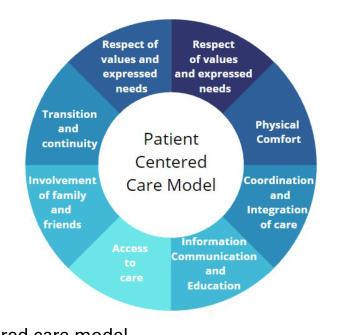
PATIENT-CENTERED HISTORY Despite the popularity of the concept in the past 30 years, there has been a little argument of perspective, in literature, about the definition of patient- centered care (Mead and Bower, 2000). It has been an evolving concept, originally depicted by Edith Balint, 1969 who described patient-centered medicine as understanding the patient as a unique human being (Balint, 1969) while for McWhinnie, 1986 it is an approach where the “physician enters the patient’s world to see the illness through his eyes (Levenstein et al., 1986). In 1998, Delbanco and colleagues developed a self-described utopian vision for a patient-centered health care system called PeoplePower (Delbanco et al., 2001) where the relationship is supported by “computer-based guidance and communication systems”. Don Berwick, former administrator for the Center for Medicare and Medicaid Services, has popularized the slogan adopted by Delbanco and his group, “Nothing about me without me” acknowledging that patient-centered care is not always evidence-based. In his 2009 Health Affairs article, he argues that nonevidence-based care should occasionally trump evidence-based care, if this is what the patient wants. He emphasizes that patient-centered care is related to one’s set of decisions and choices of circumstances and relationships in healthcare. Some researchers doubt the correlation of this definition with human patient centeredness. Some other researchers have linked the definition of patient-centered care to the services provided that respect or respond to the individual’s perspectives: including preferences, needs, feelings, ideas, expectations, concerns, and values elici- ting by that the patient’s perspective on his health situation, understanding his psychological context and reaching a shared-value-based middle-ground. Researchers from Harvard Medical School, on behalf of Picker Institute and the Commonwealth Fund, defined 8 primary dimensions of patient-centered care model identified in (Figure 1), using a wide range of focus groups, recently discharged patients, family members, physicians and non-physician hospital staff combined with a review of pertinent literature (Constand et al., 2014). An extensive body of the literature has emerged over the years sugge- sting that patient-centered care should include fostering healing relationships, exchanging information, responding to emotions, managing uncertainty, making joint decisions, and enabling patient self-management. In 2015, the World Health Organization released their framework on “people-centered
436 Elkefiet al.
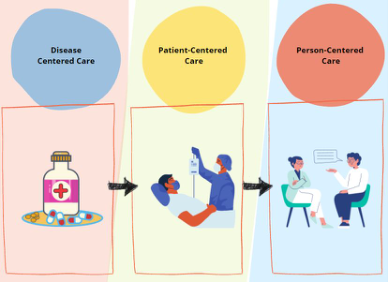
Figure 1: Patient-centered care model.Figure 2: Evolution of patients’ position in care models over time.
health services,” (World Health Organization, 2015) emphasizing a focus on a system that adopts individuals’, careers’, families’, and communities’ per- spectives into a trusted health care system. This article and others aspire to person-centered care rather than patient-centered care, especially for chronic illnesses.
This approach consists of treating patients as individuals and as equal partners in the business of healing making care personalized, coordinated, and enabling (The Health Foundation, 2016). Instead of treating people like victims of diseases, this model recognizes their need for more than one pro- fessional to support them emphasizing their capabilities and potential to improve their own health by themselves. It also provides a different and complementary way to the visit-oriented approach furnishing a more acces- sible and continuous care over time. Figure 2 represents the evolution of patients’ position in healthcare services from a disease-centered care to a patient-centered care to finally a person-centered one.
Patient-centered care remains, then, a complex phenomenon with several definitions, but a consistent theme among them is the quality of intera- ctions between patients and clinicians. Clearly these definitions themselves leave ample room for interpretation. It is noteworthy that patient-centered
Using Human Factors Approach to Evaluate Patient-Centered Cancer Care 437
care depends also on the environment as it may differ among settings. This implies the importance of examining co-creation of care. Co-creation con- sists of establishing productive interactions between patients and healthcare professionals to improve outcomes especially in situations of complex tasks, uncertainty, and time constraints (Kuipers et al., 2019). Improving care coordination requires a deeper understanding of the processes involved in delivering personalized care, including the various members of the distribu- ted care team with their interdependent activities over time and the work system itself with the tools and resources allocated (Carayon et al., 2020). This is in line with the renewed focus of Human Factors and Ergonomics on systems approaches.
Scales Between Measuring and Evaluating Concerns about variation in standards of medical care, coupled with increa- sing digitalization strategies throughout the health care sector have served to encourage quantification of all aspects of care varying from timely access to care, availability and accessibility, quality of care and its efficiency (Mead and Bower, 2000). The existing definitions and measurement approaches often fail to address the complexities involved in understanding quality of care. It is perception of quality, rather than clinical indicators of quality, that drive service utilization and are essential to increasing demand (Mead and Bower, 2000). However, gaps can occur between the concepts theorized and the empirical value of the measures especially for variables like patient- centeredness where the development of reliable measures depends on the clarity of theoretical relationships and processes’ modeling (ElKefi and Asan, 2021). Several measurement scales exist to measure patient centeredness from patients’ perspective. Paul A. Heidenreich, 2013, associates the patient- centered care evaluation to the measure of patients’ satisfaction with the care, the cost of delivering it and the impact on health outcomes (Heidenreich, 2013). Some others associate it to patient involvement as a dimension in seve- ral studies (Ree et al., 2019). Nevertheless, measuring patient-centeredness is difficult, evidenced by the sheer volume of measurement tools developed and evaluated in different contexts. In cancer care, assessing the provision of patient-centered care, comprehensive and psychometrically robust patient- reported measures are needed (Tremolada et al., 2015). Several measures were implemented, like the Quality of Patient-Centered Cancer Care (QCCC) which measures the quality of patient-centeredness by covering the six Insti- tute Of Medicine’s endorsed patient-centeredness dimensions (Tzelepis et al., 2018). Among the measures characterizing patient-centeredness, there is currently no systematic approach in place to measure the quality of the provision of PCC and evaluate the effectiveness of its practices. Further- more, patient-centered quality indicators should be developed to measure the patient-centered care in practice relating it to its components and especially to the care settings it is evaluated in (cancer care, primary care, etc.), together with the context of the frameworks, (educational program, patients’ engage- ment, etc.). Because only the patient can determine whether care aligns with his expectations and values, and because each patient has unique needs and
438 Elkefiet al.
Figure 3: Proposed framework to evaluate PCC effectiveness.
values, patient-centered measures need to be inspired from the care settings they are evaluating. It is also noteworthy that the newly diagnosed cancer patients require more support than other patients, considering the emotio- nal distress and mental pressure they are undertaking that is related to the cancer diagnosis, the treatments’ paths followed and the physically deman- ding care processes (Institute of Medicine (US) Committee on Psychosocial Services to Cancer Patients/Families in a Community Setting, 2008). Also, care is provided by a multidisciplinary team of clinicians and providers, which further complicates measuring the effectiveness of the patient-centeredness in technology design and communication processes.
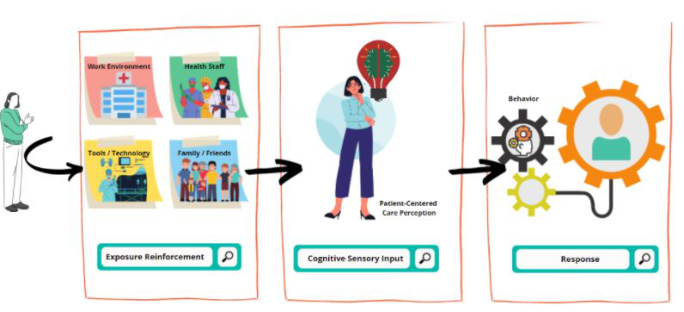
Patient-Centered Effectiveness Socio-Technical Framework Our approach to measuring PCC is grounded to the conceptual framework we are suggesting that evaluates the effectiveness of patient-centered care based on a sociotechnical perspective. We link the cognitive perception of patients towards PCC (Cognitive Sensory Input) to their exposure to exter- nal factors (Exposure) that may affect their (Cognition) behavior as explained in the (Figure 3).
The patient-centeredness perception (Cognitive Sensory Input) impacts patients’ behavior. Placing the subject on the agenda of a consultation, fol- lowed by a discussion of management options with associated benefits and risks that is adjusted to the patients’ context can help doctors personalize their recommendations and will improve health outcomes as patients can feel they are part of the care they are being given. Information building on patients’ existing knowledge is more effective than communicating standard information in general.
Cancer is More Than a Suffix in the Framework Name Patient-centered care in oncology settings has proved to change the behavior of cancer patients as it successfully engages the patient by incorporating his bio-psychosocial support system into care delivery and to ensure sustainable development (Miller, 2016). Involving cancer patients meaningfully in the
Using Human Factors Approach to Evaluate Patient-Centered Cancer Care 439
processes and responding to their emotions as part of PCC adoption, have been linked with better health outcomes, more trust and better engagement of patient in their care (Tevaarwerk et al., 2018). Thus, to evaluate the effective- ness of PCC initiatives, the cognitive perception of cancer patients needs to be studied in relation with their behavior within the care settings (Trust, Satisfa- ction, Anxiety, Engagement, etc.). From another side, achieving high-quality care is a complex pursuit in any settings especially for cancer care and impro- ving the patient journey requires an integrated system of care and productive interactions among many system levels (National Academies of Sciences et al., 2018). By understanding the work system components, the design and inte- gration of tasks, technology, and clinical processes can be reviewed to better support the respective needs of individuals while optimizing system perfor- mance. A supportive work environment and a highly engaged workforce are highly correlated with improved quality of patient-centered care and hospital performance (Balbale et al., 2015). At the population level, case managers, navigators, quality officers, and administrators may track outcomes across patients. A study conducted in 2017 on post diagnosis treatment communica- tion with cancer patients highlighted the importance of coordination between specialists, primary care, and other people involved in the care processes with patients to deliver necessary care (Klabunde et al., 2017) as problems in coor- dination can lead to fragmentations in the health outcomes and processes (Rowland et al., 2006). However existing initiatives and care planning pro- cesses are facing system barriers to adoption and implementation. To sum up, tools and initiatives designed to improve health delivery through PCC need to be inspired from systems engineering principles as recommended by the IOM and the National Academy of Engineering in order to identify, deve- lop, and sustain best practices informed by the needs of survivors, caregivers, clinicians, organizations, and communities (Tevaarwerk et al., 2018).
CONCLUSION
Delivering good quality care can be measured with the effectiveness of its patient centeredness. A holistic approach recognizing health care as a dyna- mic socio-technical system in which sub-elements interact with each other remains necessary to better understand the system and its constraints.
REFERENCES
Balbale, S.N., Turcios, S. and LaVela, S.L. (2015), “Health Care Employee Perceptions of Patient-Centered Care”, Qualitative Health Research, Vol. 25 No. 3, available at: https://doi.org/10.1177/1049732314553011. Balint, E. (1969), The Possibilities of Patient-Centred Medicine, Vol. 17. Carayon, P., Wooldridge, A., Hoonakker, P., Hundt, A.S. and Kelly, M.M. (2020),
“SEIPS 3.0: Human-centered design of the patient journey for patient safety”, Applied Ergonomics, Vol. 84, available at: https://doi.org/10.1016/j.apergo.2019. 103033. Constand, M.K., MacDermid, J.C., Dal Bello-Haas, V. and Law, M. (2014), “Scoping review of patient-centered care approaches in healthcare”, BMC Health Services Research, Vol. 14 No. 1, available at: https://doi.org/10.1186/1472-6963-14-271.
440 Elkefiet al.
Delbanco, T., Berwick, D.M., Boufford, J.I., Edgman-Levitan, Ollenschläger, G., Plamping, D. and Rockefeller, R.G. (2001), “Healthcare in a land called PeoplePo- wer: nothing about me without me”, Health Expectations, Vol. 4 No. 3, available at: https://doi.org/10.1046/j. 1369–6513.2001.00145.x. ElKefi, S. and Asan, O. (2021), “How technology impacts communication betw-
een cancer patients and their health care providers: A systematic literature review”, International Journal of Medical Informatics, Vol. 149, available at: https://doi.org/10.1016/j.ijmedinf.2021.104430. Fred, H.L. (2016), “When Patient-Centered Care Isn’t”, Texas Heart Institute Journal, Vol. 43 No. 4, available at: https://doi.org/10.14503/THIJ-16-5903. Heidenreich, P.A. (2013), “Time for a Thorough Evaluation of Patient-Centered
Care”, Circulation: Cardiovascular Quality and Outcomes, Vol. 6 No. 1, available at: https://doi.org/10.1161/CIRCOUTCOMES.112.970194. Institute Of Medicine. (2001), “Crossing the Quality Chasm: A New Health System for the 21st century”, National Academy Press, Washington, DC. Institute of Medicine (US) Committee on Psychosocial Services to Cancer Pati-
ents/Families in a Community Setting. (2008), Cancer Care for the Whole Patient: Meeting Psychosocial Health Needs, edited by Adler, N. and Page, A.Cancer Care for the Whole Patient: Meeting Psychosocial Health Needs, Vol. 1, National Academies Press, Washington (DC), available at: https://www.ncbi.nlm.nih.gov/books/NBK4011/ (accessed 8 September 2021). Klabunde, C.N., Haggstrom, D., Kahn, K.L., Gray, S.W., Kim, B., Liu, B., Eisenstein, J., et al. (2017), “Oncologists’ perspectives on post-cancer treatment communica- tion and care coordination with primary care physicians”, European Journal of Cancer Care, Vol. 26 No. 4, available at: https://doi.org/10.1111/ecc.12628. Kuipers, S.J., Cramm, J.M. and Nieboer, A.P. (2019), “The importance of
patient-centered care and co-creation of care for satisfaction with care and physical and social well-being of patients with multi-morbidity in the primary care setting”, BMC Health Services Research, Vol. 19 No. 1, available at: https://doi.org/10.1186/s12913-018-3818-y. Levenstein, J.H., Mccracken, E.C., Mcwhinney, I.R., Stewart, M.A. and Brown, J.B. (1986), “The Patient-Centred Clinical Method. 1. A Model for the Doctor- Patient Interaction in Family Medicine”, Family Practice, Vol. 3 No. 1, available at: https://doi.org/10.1093/fampra/3.1.24. Mead, N. and Bower, P. (2000), “Patient-centredness: a conceptual framework and
review of the empirical literature”, Social Science & Medicine, Vol. 51 No. 7, available at: https://doi.org/10.1016/S0277-9536(00)00098-8. Miller, K.L. (2016), “Patient centered care: A path to better health outcomes through engagement and activation”, NeuroRehabilitation, Vol. 39 No. 4, available at: https://doi.org/10.3233/NRE-161378. National Academies of Sciences, E. and M., Committee on Improving the Quality
of Health Care Globally., Board on Global Health and Health and Medicine Division. (2018), “The Path to a High-Quality Future: The Need for a Systems Approach and a Person-Centered System.”, in National Academies Press (Ed.), Crossing the Global Quality Chasm: Improving Health Care Worldwide, Vol. 2, Washington DC, available at: Available from: https://www.ncbi.nlm.nih.gov/boo ks/NBK535647/ (accessed 11 September 2021). Ree, E., Wiig, S., Manser, T. and Storm, M. (2019), “How is patient involvement measured in patient centeredness scales for health professionals? A systematic review of their measurement properties and content”, BMC Health Services Research, Vol. 19 No. 1, available at: https://doi.org/10.1186/s12913-018-3798-y.
Using Human Factors Approach to Evaluate Patient-Centered Cancer Care 441
Rowland, J.H., Hewitt, M. and Ganz, P.A. (2006), “Cancer Survivorship: A New Challenge in Delivering Quality Cancer Care”, Journal of Clinical Oncology, Vol. 24 No. 32, available at: https://doi.org/10.1200/JCO.2006.09.2700. Tevaarwerk, A.J., Klemp, J.R., van Londen, G.J., Hesse, B.W. and Sesto, M.E. (2018),
“Moving beyond static survivorship care plans: A systems engineering approach to population health management for cancer survivors”, Cancer, Vol. 124 No. 22, available at: https://doi.org/10.1002/cncr.31546. The Health Foundation. (2016), Person-Centred Care Made Simple., London, UK. Tremolada, M., Schiavo, S., Varotto, S., Basso, G. and Pillon, M. (2015), “Patient Satisfaction in Italian Childhood Cancer Survivors: Human Aspects of Treatment as a Key Factor in Patients’ Quality of Life”, Health & Social Work, Vol. 40 No. 4, available at: https://doi.org/10.1093/hsw/hlv067. Tzelepis, F., Clinton-McHarg, T., Paul, C., Sanson-Fisher, R., Joshua, D. and Carey,
M. (2018), “Quality of Patient-Centered Care Provided to Patients Attending Hematological Cancer Treatment Centers”, International Journal of Environmen- tal Research and Public Health, Vol. 15 No. 3, available at: https://doi.org/10. 3390/ijerph15030549. World Health Organization. (2015), Framework on Integrated, People-Centred Health Services, available at: http://www.whoint/servicedeliverysafety/areas/peo ple-centred-care/en/ (accessed 6 September 2021).
LISTED IN THE AHFE DIGITAL BOOKSTORE CATALOGUE
Explore the complete digital volume
Human Factors and Systems Interaction
Read this individual research paper free through the original publisher, or explore the full digital proceedings book.
ISBN 978-1-958651-28-5
Explore this ISBN in the AHFE Bookstore ↗Listed in the July 2026 bookstore catalogue; search by ISBN to confirm current availability · Digital book purchase optional