Arthur Werle, Frank Diermeyer (2022). Investigation of the Riding Performance for an Isometric Steering System with Two Platform Concepts. In: Human Factors and Systems Interaction. AHFE Open Access, vol. 52, pp. 483–490. https://doi.org/10.54941/ahfe1002192
In this paper, we used an isometric steering system on a motorcycle riding simulator. The investigation was done for a static and dynamic platform with an already known Motion Cueing Algorithm (MCA) from the literature. The aim was to determine whether the Standard Deviation of Lateral Position (SDLP) is suitable for evaluating ride quality. For this purpose, we implemented the already investigated MCA and compare whether the algorithm has a positive effect on the SDLP. When the MCA was used, the SDLP were reduced, but the mental workload and rider state remained the same. In addition, we used exploratory adjective pairs as a semantic differential. These also showed a positive tendency when using a dynamic platform with this MCA. This study thus showed that the SDLP is suitable as an objective criterion of riding quality in motorcycle riding simulation.
Comparing the state of art of the motorcycle and car simulator types, a signi- ficant trend difference in application can be seen in the motorcycle segment. In addition to the missing technical development, there are research gaps in the understanding of human-machine interaction. These include the influence of the stimuli on lateral guidance in the components of steering and leaning. In addition to these guidance variables, observed from a control perspective, the appropriate feedback are relevant of the vehicle state possible through a motion platform, the steering system and the visual impression (Popov et al. 2010). We have developed a motorcycle riding simulator for the exploration of these gaps. The goal is to obtain an understanding of the single-track veh- icle segment based on an iterative methodology. In this study, we compared a static platform with a motion cueing approach from the literature. Motion cueing can be divided into the areas of sensory perception: auditory, visual, haptic or vestibular (Baarspul 1986). These stimuli provide an indication of the state of the vehicle. The subdivision of cues can be described in terms of the temporal sequence: initial cues, permanent cues and connecting cues. Cue error types are referred to as: false cues, phase errors and scaling errors
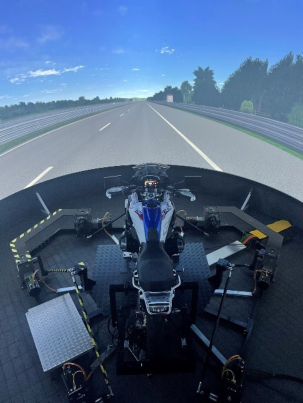
Figure 1: Motorcycle riding simulator mounted on a dynamic platform.
(Fischer 2009). These types of errors can lead to the so-called simulator dis- ease, also known as kinetosis or motion sickness. This motion sickness often occurs in artificial realities with the following symptoms: eyestrain, drow- siness, sweating, headaches, dizziness, nausea, loss of balance or vomiting. According to the sensor conflict theory, simulator sickness occurs when con- tradictions arise in the integration of sensory information (Kennedy, Robert S and Fowlkes, Jennifer E and Berbaum, Kevin S and Lilienthal, Michael G).
Translational accelerations and angular velocities can be used for motion cueing algorithms (MCA). The Classical Washout has an essential role in scaling, accelerating and filtering motion sequence. The most common appli- cation in the passenger car sector is the unnoticed return of the platform to the starting position, below the human perception threshold. This makes it possible to simulate the missing longitudinal acceleration, if required, by til- ting the platform (Fischer 2009). In the motorcycle riding simulation, (Guth 2017) used the method of a rope hoist to simulate longitudinal acceleration. This leaves this degree of freedom open for other applications. When obse- rving motorcycle movements, the roll angle represents a significant change compared to passenger car movements. Riding a motorcycle in a curve can result in roll angles of up to 45°, depending on the model and speed. In this research, we designed a motion cueing according to Guth et al. (2015) & Nagasaka et al. (2018) and evaluated it using an objective and subjective metric. The aim is to determine whether there is a positive influence on the level of performance of the driving task - with the focus on the SDLP.
METHOD
The riding simulator environment is a modular setup with real-time software interface modules. The screen around the simulator has a 310° circumference with an eye relief of approx. 2.5 meters, see Figure 1. This allows an all-round
Investigation of the Riding Performance for an Isometric Steering System 485
Table 1. Degrees of freedom.
Table available in the original PDF paper.
Equation reproduced from the original PDF.
Swaying 0.19 = m − 3.5 = m/s 2 Heaving 0.17 = m − 4.0 = m/s 2 Rolling 11 = deg 8 = deg/s − Pitching 12.5 = deg 8.4 = deg/s − Yawing 8.5 = deg 5.2 = deg/s −
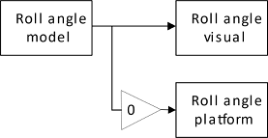
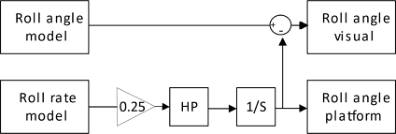
Figure 2: Without platform movement.Figure 3: Motion Cueing with platform movement according to Nagasaka et al. (2018).
view without interruption. The height of the screen is 4 meters and thus ena- bles an uninterrupted view when wearing a full-face helmet. For the purpose of completeness, the freedom limits of the platform are listed in Table 1.
Steering the motorcycle simulator is realized by a force measurement in the handle bar, as an isometric setup (no position feedback). The investigation into the influence of the roll angle on the degree of fulfilment of the driving task was carried out for a static and moving platform. For the static confi- guration, rolling was only realized through the visual impression, shown in Figure 2. In Figure 3 the movement for the platform was implemented with a scaling factor of 0.25. This allowed for platform movement, over a roll angle of the model up to 44°, with the goal to avoid movement interruptions. The washout effect, which allows the platform to retract unnoticed, is inten- ded to simulate the contact force (towards the seat) for the driver. In reality, this is the amount of weight and centrifugal force. Additionally, we changed the roll center according to (Nagasaka et al. 2018). The parameters were implemented based on a BMW 1250 GS. This study is a single-factor design with a randomization schedule that is varied between subjects. The sample includes 32 participants with an average mileage of 25000 km. The average age was 39 years and with all of them having a riding license. The driving maneuvers chosen were a lane change and a U-turn. This allows transient runs to be completed in order to apply the SDLP performance measure, since
486 Werle and Diermeyer
Table 2. Adjective pairs according to (Unterreiner 2013).
we suspect that a straight ahead drive alone does not sensitively provide suf- ficient results. The U-turn was replicated according to (Westerhof 2018) with an entry lane of 200 meters consisting of only 2 curves with a radius of 125 meters and 100 meters. The lane change maneuver was driven eight times in sequence. With a lane width of 3.75 meters and a length of 30 meters, which was reduced by 2 meters per change. The last passage was thus 16 meters wide. All driving maneuvers were carried out at a speed of 80 km/h. A speed window of 10 km/h was programmed to include the longitudinal guidance in the driving. The SDLP was recorded based on the request to drive the veh- icle in the center of the lane. The background is that single-track vehicles are difficult to handle in the driving simulation, and therefore the trajectory can be used as a measure of quality.
For the subjective variables, (Unterreiner 2013) questionnaire was used for exploratory purpose. This is from the passenger car sector and is used to eva- luate the drivability. The adjective pairs were adopted for motorcycle riding simulator, see Table 2. We implemented a 6-level Likert scale. The Simulator Sickness Questionnaire (SSQ) and (Rider Activity Load Index) RALI were also used. For the mental workload we chose the item attention and coping to fulfill the riding task. In addition, we measured the rider’s state for the situational stress and negative emotions handling the vehicle (Pauzié, Annie, Gelau, Christhard 2010).
RESULTS
The results are divided into static and dynamic platform and subsequently included and evaluated in the discussion. The scale for the RALI question- naire was from 0 (low) to 5 (high). This also corresponds to the original questionnaire.
Static Platform Dynamic Platform
Table 3 and 5 shows the Standard Deviation of Lateral Position (SDLP) for a lane change and U-turn maneuver. Table 4 and 6 shows the mental wor- kload divided in attention and coping. For the rider’s state, it is subdivided
Investigation of the Riding Performance for an Isometric Steering System 487
Table 3. Control deviation based on the SDLP for two riding maneuvers.
Table available in the original PDF paper.
SDLP in meters Mean Median Standard deviation Lane change maneuver 0.48 0.42 0.26 U-turn maneuver 1.09 0.73 0.79
Table 4. Mental workload and riders state after fulfilling both riding maneuvers.
Table 5. Control deviation based on the SDLP for two riding maneuvers
Table available in the original PDF paper.
SDLP in meters
Mean Median Standard deviation Lane change maneuver 0.31 0.27 0.14 U-turn maneuver 0.9 0.77 0.45
Table 6. Mental workload and rider’s state after fulfilling both riding maneuvers.
Table available in the original PDF paper.
RALI
Mental workload Mean Median Standard deviation Attention | Coping 3.78 | 3.31 4 | 3.5 1.07 | 1.26 Riders state Negative emotions | Stress
2.0 | 3.16 2 | 3 1.18 | 1.19
into negative emotions and the situational stress, for evaluation of the con- trol and handling of the motorcycle. To evaluate the SDLP for the lane change maneuver, we used the Shapiro-Wilk test to test for normal distribution. Since the prerequisite for an ANOVA was not given, we decided to use the non- parametric Wilcoxon test p = 0.002 with n = 28 connected samples. With a significance level of alpha = 0.005, thus, the null hypothesis was rejected. Since the effect size did not matter due to missing distinctions, we did not use it. The same procedure was chosen for the U-turn evaluation, with a p = 0.222, thus the null hypothesis was accepted. Mental workload and rider’s state were evaluated also with the parameter free Wilcoxon test with:
488 Werle and Diermeyer
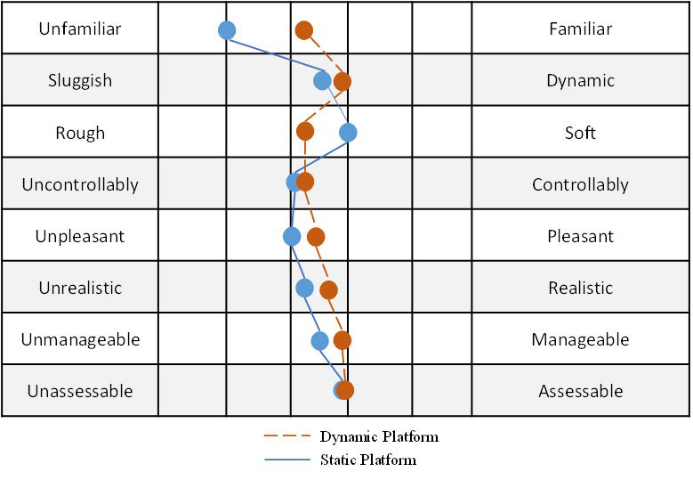
Figure 4: Semantic differential evaluated according to (Unterreiner 2013).Equation reproduced from the original PDF.
Semantic Differentials Since the survey of the semantic differential was used as an explorative procedure, the mean value analysis was carried out in Figure 4. The main differences and variations in impression differentials have been observed in the pairs: Unfamiliar/Familiar, Rough/Soft and Unrealistic/Realistic. Slug- gish/Dynamic, Uncontrollably/Controllably, Unpleasant/Pleasant, Unmana- geable/Manageable had no relevant differences but were likely vote to the positive formulation. Unassessable /Assessable were also positively formula- ted without measurable differences. The Unfamiliar/Familiar data show the largest mean difference.
CONCLUSION
We discuss the degree of fulfillment of the riding task, consisting of objective and subjective data. The study subject was a static and dynamic platform, with a rolling center according to (Nagasaka et al. 2018) and classical wash- out filter only for the rolling axis. It must be mentioned as a limitation that we measured a latency between the platform of 200 milliseconds. This must be considered for the following evaluation.
We use the SDLP as an objective measure to assess rideability which has improved significantly for the maneuver lane change with using the platform. The largest change could be measured in the mean with 17 cm, median with 15 cm and a reduction in the standard deviation of 12 cm. This confirms
Investigation of the Riding Performance for an Isometric Steering System 489
the assumption that the SDLP can be used as an objective criterion of ride quality. Although the SDLP has significantly reduced mental stress did not change significant. The same applies to the driver’s state of mind regarding the increase in negative emotions. We suspect that the subjective measurement method for this approach is not sensitive enough to make a statement about stress. For the U-turn, the mean value was reduced by 19 cm, the median remained the same and again the stance standart deviation was reduced by 0.34 cm. The reduction was not significant, in this case. It should be noted that the values have reduced overall. Thus, we assume that the roll cueing approach and the use of the SDLP are valid. Stationary circling, during the U-turn, might be a maneuver where motorcyclists prioritize their own riding behavior, as they would not ride in the middle of the reality. This is also consistent with statements made by subjects 3, 6, 8 and 15 - that they prefer to ride more inside or outside. To control this confounding factor in the future, a baseline drive could be included in the study design. This would make it possible to compare to their own baseline. The mental workload and rider’s state did not show any differences in this study. The SDLP does not correlate in this study. One reason for this could be that the simulator is very stressful overall and superimposes the experiences. One possibility for improvement would be to increase the sensitivity of the measurement.
It can be seen for the evaluation of the semantic differentials that the dyna- mic platform was rather positively rated. This can mean that the approach of using the rolling movement according to (Nagasaka et al. 2018) with a roll washout filter is more applicable. The adjective pair rough/soft is the only pair to show an inverse preference. This can be explained by the starting tension or, justifiably, by overcoming the breakaway torque and the subse- quent bucking. It is possible that a reduction in latency would also improve the subjective perception. And the difference increases, although it does not mean that an exclusively positive change represents better single-track beh- avior. For this type of investigation, the semantic differential lends itself to identifying tendencies - since the main purpose is intended for objectification. This would make it possible to develop a motorcycle simulator to find the highest possible acceptance among test persons.
ACKNOWLEDGMENT
As first author, Arthur Werle initiated the research, conducted the litera- ture review, planned the development and conducted the evaluation. Frank Diermeyer revised the content of this work critically and made an essential contribution to the conception of the research project. Michael Rambach was responsible for data collection. This research was funded by BMW Motorrad.
REFERENCES
Baarspul, M. (1986): Flight simulation techniques with emphasis on the generation of high fidelity 6 DOF motion cues. In: Delft University of Technology, Department of Aerospace Engineering, memorandum. Fischer, Martin (2009): Motion-Cueing-Algorithmen für eine realitätsnahe Bewe-
gungssimulation 2009 (Band 5).
490 Werle and Diermeyer
Guth, Sebastian (2015). “Motion cueing algorithm to reproduce motorcycle specific lateral dynamics on riding simulators.” Proceedings of DSC 2015 Europe. Guth, Sebastian (2017): Absicherungsmethode von Anzeigekonzepten zur Darstel-
lung fahrfremder Informationen mittels eines Motorrad-Fahrsimulators 2017. Kennedy, Robert S. (1992) “Use of a motion sickness history questionnaire for prediction of simulator sickness.” Aviation, Space, and Environmental Medicine 63.7: 588–593. Nagasaka, Kazuya; Ichikawa, Kazuhiro; Yamasaki, Akiyuki; Ishii, Hiroshi (2018):
Development of a Riding Simulator for Motorcycles. In: SAE Technical Paper Series. SAE/JSAE Small Engine Technology Conference, NOV. 06, 2018: SAE Inter- national400 Commonwealth Drive, Warrendale, PA, United States (SAE Technical Paper Series). Pauzié, Annie, Gelau, Christhard (2010): Methodology for safety and usability assessment of ITS for riders. Proceedings of the European Conference on Human Centred Design for Intelligent Transport Systems. In: National Research Institute on Transport and Safety, S. 457–465. Popov, A. A.; Rowell, S.; Meijaard, J. P. (2010): A review on motorcycle and rider
modelling for steering control. In: Vehicle System Dynamics 48 (6), S. 775–792. DOI: 10.1080/00423110903033393. Westerhof, Bernhard (2018): Evaluation of the Cruden Motorcycle Simulator 2018. Will Sebastian, Pless Raphael, and Guth. (2016) Bringing single track vehicle dynamics to motorcycle riding simulators–results of a pilot study. In Proceedings of the Bicycle and Motorcycle Dynamics Conference–BMD.
LISTED IN THE AHFE DIGITAL BOOKSTORE CATALOGUE
Explore the complete digital volume
Human Factors and Systems Interaction
Read this individual research paper free through the original publisher, or explore the full digital proceedings book.
ISBN 978-1-958651-28-5
Explore this ISBN in the AHFE Bookstore ↗Listed in the July 2026 bookstore catalogue; search by ISBN to confirm current availability · Digital book purchase optional