Tomoyuki Shigeta, Yasunobu Ito (2023). “Design Thinking" as Collaborative Creativity in Group Work: A Case Study at a Japanese Liberal Arts University. In: The Human Side of Service Engineering. AHFE Open Access, vol. 108, pp. 180–187. https://doi.org/10.54941/ahfe1003119
The purpose of Design Thinking is to develop human resources who can exercise creativity in groups and solve various problems in society, mainly through group work. In Japan, many universities have introduced design thinking as an educational program. However, some issues have been pointed out, such as the inability in boosting students’ creativity. Studies have been conducted to examine the effects of design thinking on students’ creativity. The design thinking activities are performed in groups where various factors overlap and creativity is demonstrated as a collaborative effort. To date, only a few studies have examined design thinking as a collaborative creative activity. In this study, we targeted a university online class and recorded the students’ group work and analyzed by focusing on the relationships that are established among people and between people and objects. The results revealed the factors that constitute a collaborative creative activity.
The purpose of this study is to perform an ethnography of the creative process of design thinking and analyze it from a relational perspective. And the goal is to contribute to the development of creativity education using design thin- king. Design Thinking has been spreading internationally, especially among educational institutions. In Japan, the educational practices based on design thinking were launched in 2009 in a program called i.School at the University of Tokyo (Kurokawa, 2013). Since then, the role of design thinking as deve- loping problem-solvers was set and introduced into educational programs in various universities.
On the other hand, it has been noted that there are difficulties in effectively applying design thinking in an educational program. Research on education and design thinking in Japan has already revealed several issues. For example, it has not been able to induce a proactive attitude in productivity among stu- dents, and students’ learning content is limited to the acquisition of methods and fails to reach the level of creative activity. In a study conducted outside of Japan, based on a literature review of articles on design thinking, Razali
“Design Thinking” as Collaborative Creativity in Group Work 181
addresses the challenges in design thinking (Razali et al. 2022). For exam- ple, she discusses examples of how students’ lack of creativity makes learning design thinking difficult and how communication among students can be dif- ficult, leading to a breakdown in teamwork. In addition, a study by Mosely et al. reported that students outside of the design field have difficulty identif- ying problems and defining challenges (Mosely et al. 2018). In response, it has been suggested that improving design thinking education requires understan- ding the essence of design thinking through repeated practice and theorizing (Wang, 2019).
Design thinking, which emerged from the practice of professional desi- gners, is designed to operate under group work. In the backdrop of this is the belief that teams, rather than individuals, can store more energy through synergy and continue to be creative (Kelley and Litman, 2001). And what par- ticipants are expected is a proactive attitude in facilitating group work, such as offering constructive criticisms and minimizing competitiveness. (Roth, 2015). However, when we focus on design activities by professional desi- gners, we see that a proactive attitude by itself does not suffice as an element of a design thinking factor. Design activities include a variety of activities, for example, discussions to solve problems with project members, making deci- sions of to-dos, and sharing ideas using objects. The products of design are created from these relationships which develop between people and between people and objects. In other words, in order to resolve the issues in design thinking, it is necessary to focus on the relationships between people and objects that develop in the course of the creative process via group work.
Research on group work creativity in design thinking has been conducted primarily in the field of education. A study was conducted using a question- naire and statistical analysis to measure the effects of design thinking on the creativity of group members (Dadswell et al. 2022). Another study clarified the characteristics of brainstorming in design thinking through observation of the group work process, interviews with students, and by comparison of the statistical results of the questionnaire (Seidal and Fixson, 2013). The other study (Hulte’n et al. 2018) extracted the factors which facilitated the design task and attempted to model them in the conceptualization phase of the design process. However, only a few studies have focused on the relationship between people and objects in group work.
On the other hand, in the field of anthropology, an analytical perspective has been proposed to understand the dynamic workings of design. Callon notes, “To understand the functioning of the communities involved both in designing goods and in defining the needs to be satisfied, we need to give up the traditional opposition between (wo)men and machines, between ends and means, or in other words between human beings and non-human beings.” (Callon, 2004:4); and by treating the people and objects involved in the design creation process on an equal footing, we can understand the essence of how design community function. Ingold also stated that design is about bringing people and design objects into a relationship of correspon- dence (response and harmony), and that its relationship is defined by the context in the background. He then stated that the act of design is to grasp and pin down these contexts (Ingold, 2013).
182 Shigeta and Ito
This study analyzes group work using design thinking from the relatio- nal perspective of anthropology. Specifically, we use ethnography to analyze what kind of relationships are constructed among people and between people and objects in group work using design thinking, and how group members position the context of design thinking in the course of the process. We will also clarify how collaborative creativity occurs in group work. This study is a novelty in that we have used ethnography to observe and analyze member’s activities in detail, as only a few studies have been done thus far.
METHOD
The research strategy adopted was action research. The main target of the research was an in-class project called “Design Theory.B,” the online class was conducted by the author in the Department of Art, Faculty of Letters at University of A. The research period was from October to December 2021. The enrollment consisted of 21 students in their junior and senior years. The project was divided into two parts: the first part was conducted as an indi- vidual assignment. The students were given the task of examining a problem in university school life and presenting it in class. After the presentation, the teacher asked the students to choose a theme that they could relate to after listening to the other students’ presentations and respond through a question- naire. The second part was groupwork. The teacher made group assignments which reflected the results of the questionnaire. The students were divided into six groups consisting of three to six members. The members of each group may be acquaintances or first-timers. The group work was conducted seven times, with each session lasting 90 minutes and directed by the teacher. Generally, design thinking proceeds in the following steps: empathy, defini- tion, creation, prototyping, and testing. However, in this lesson, the teacher found it difficult for the students who were new to design, to perform the prototyping step, so the prototyping and testing step was changed to crea- ting a presentation to share the results of the design study. In addition, in the creation step, with the goal of encouraging students to work on design considerations, the teacher asked the students to create a scenario of their experience which illustrated the proposal and to express it in a nine-frame sketch.
Two types of data were collected: First, data was recorded using the recor- ding function in Microsoft Teams, the online communication tool used in class. The data included both the conversations in the group work and the shared screen images. In addition, some groups used the camera function of the device they were using to display their own images. The second set of data included the file data of the minutes produced during the group work, the presentation materials for Task 1, and deliverables from Task 2. The minutes were created using an online collaboration tool called JAMBOARD, which was provided by the teacher, or by Word or PowerPoint, which was owned by the students. The method used for the analysis was to extract the main points from data collected from each group, and to compare and discuss them. Three of the six groups were selected arbitrarily for analysis (Table 1).
“Design Thinking” as Collaborative Creativity in Group Work 183
Table 1. Issues addressed by each group and number of members in the group.
Table available in the original PDF paper.
Gr Problems addressed in Issue 1 Number of personnel
6 (6 women)
A 1. Tired from just sitting in class and unable to concentrate in class 2. Sitting in the same position for long periods of time is tiring
3 (2 women / 1 man)
C 1. Buses to and from school are abnormally crowded and wait times are unusually long. 2. There are a few places to buy bus tickets.
4 (4 women)
E Short time between classes makes it difficult to move between classrooms.
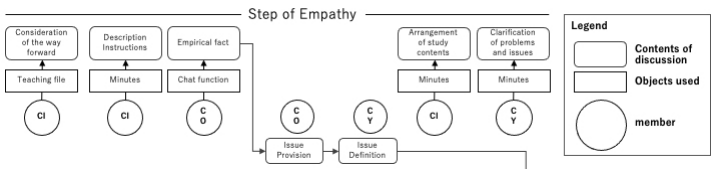
Figure 1: Example of group C schematic (excerpt).
The data collected from these groups were selected because they had few mis- sing data and were suitable for detailed analysis. The scope of the analysis was the empathy, definition, and creation steps in design thinking.
The method of analysis was as follows: We made a list of the conversations and actions for each group, with tags assigned to each utterance. Next, a dia- gram was created to show the relationship between each step taken, the tags of the utterances, the speaker, and the objects used (Figure 1) in class. These were analyzed by comparison in terms of the person-to-person relationship, relationships between person and objects, and all of them combined; person to person with objects.
RESULT
As a result of the analysis, the following three characteristics were found.
Common Elements Exist in Each Group’s Discussion The common traits were identified by comparing the diagram of each group. As a result, the thought process in the group work was clarified (Table 2). The steps of learning design thinking applied in the class were: empathize, define, create, and create a presentation. Within these steps, all groups included the following elements to structure their discussions: examining the issue, defi- ning the issue, deriving a solution, redefining the issue, and examining the solution in detail. Each element details are as follows: Examining the issue is an activity to search for issues to be solved. Defining the issue is an activity to confirm and define the issue as a consensus of the group. Deriving a solution is the process of deriving a solution to the issue. Redefining the issue is the
184 Shigeta and Ito
Table 2. Thinking process in design thinking group work.
Table available in the original PDF paper.
activity of revising the issue to fit the solution after the solution is derived. Examining the solution in detail is a detailed exam of the requirements for the solution. Each group worked through these series of items to refine their proposal. Based on the above, these items can be considered as one of the thinking processes that support group work in Design Thinking.
Member Roles Develop Naturally The analysis of the relationships among people revealed that the roles of group members develop naturally. The main types of roles are the facilita- tor, who leads the discussion, the recorder, who describes the contents of the discussion, and the key player (“KP”), who is deeply involved in the contents and conclusions of the discussion. The details of each role are as follows: The facilitator is responsible for setting the agenda for the discussion, eliciting member opinions, consolidating the discussion, and reaching a consensus on the conclusions. Each facilitator has a different way of conducting the discus- sion. These differences in the way of holding discussions affect the degree of each member participation and the frequency of interactions amongst mem- bers. The recorder records the discussion, summarizing its contents. Since the class was conducted online, the minutes of the discussion were shared on MS Teams while the discussion was going on. The recording format was different per recorder. The KPs, who are different from the facilitators and recorders, were responsible for defining issues and proposing solutions in accordance with the agenda set by the facilitators.
The relationship between each group’s KPs, defined challenges, derived solutions, and final solutions is shown (Table 3). From the table, it can be noted that the solutions offered by the KPs reflect their own experiences and the results of their own Internet research. KPs incorporate them as the back- ground context of their own opinions. The other members are then persuaded by the information backing up the opinion and accept KPs solution. The faci-
“Design Thinking” as Collaborative Creativity in Group Work 185
Table 3. KP’s involvement in the discussion.
Table available in the original PDF paper.
Gr Definition of issues by KP Solution by KP Final Solution A Identified poor circulation as the cause of fatigue; information from the Internet.
Suggested to install massage functions in chairs to improve blood circulation.
Apps to visualize bus congestion and digitize bus tickets by creating IC cards from student ID cards.
Massage function installed for chairs in lecture rooms. C 1.Estimated the cause of crowded buses to be the inability to know how crowded the buses are. 2.Pointed out that the current bus tickets are difficult to buy.
1.Raised concern that the IC card system, convenient as it is, would lead to more congestion →Triggered the idea to visualize congestion from the facilitator. 2.Proposal for buying bus coupon tickets using IC cards.
E Stated a desire to secure more free time in between lecture.
Present a plan for the most efficient route to classrooms
An application that displays walking routes between classrooms
litator takes advantage of the situation to organize the group’s opinions. The relationship between the facilitator and the KP forms the basis for the group’s creative activity.
Each group has its characteristics. Group A has two KPs, Group E has two facilitators; in Group A, multiple KPs were assigned because KPs were appointed by the facilitator according to the contents of the discussion. In Group E, there were multiple facilitators because when the regular facilitator was absent, another member took her role.
Relationships With Objects Are Created Around Facilitators and KP The objects in this study are the minutes compiled by the recorder, survey results by the group members, presentation materials by the initiators of Issue 1, external information from the Internet, and information based on empirical facts obtained from the actual experiences and observations of the group members. The blue balloons in Table 2 indicate the objects handled by the group members.
It can be seen that the situations in which objects were involved in the group work were the examining the issue and examining the solution (Table 2). The common denominator of these situations is the deep involve- ment of the facilitator and the KPs with respect to the objects. The facilitator refers to the minutes prepared by the recorder and the class description files in both cases. In addition, in examining the solution in detail, the facilitator makes use of the objects created by the KP. The facilitator draws out informa- tion from these objects to use as a discussion agenda. The objects are treated by the facilitator as materials extracted to create an agenda.
Each member of the group develops opinions and discussions on the agenda set by the facilitator. The member with the deepest connection to the object is the KP, who provides empirical facts and external information in the group’s discussion on the issue. Other members and KP themselves read
186 Shigeta and Ito
between the lines from the information as the objects provided in the back- ground context of the issue. They then define the issue based on the context. In examining the solution, KPs in each group presents external information, sketches, and survey results. These objects, as mentioned before, are utilized as assist materials in the discussion progress when the facilitator makes any reference to them.
It is clear that the members most relevant to the object are the facilitator and the KP. The facilitator refers to the objects that exist in various forms, interprets the meanings of these objects, and creates the agenda from there. The number of objects referenced by the facilitator increases as the detailed discussion on solution progresses. Facilitators obtain a variety of factors from the objects, and the specifications of their proposals become more concrete as they work to refine their agenda.
KPs, on the other hand, provide information and productions as objects. These objects take on the role of facilitating member creativity and facilita- tors’ progress in discussions. KPs contribute to the content of the member discussions through these objects. The direction of the group’s discussion is also influenced by the relationship with the objects created by the KP as well as in the relationships that the facilitator and the members find in these objects.
CONCLUSION
This study reveals the factors that constitute collaborative creativity in design thinking in group work and how to find the context behind the design. There is a certain thinking process as a factor in group work, and group members follow it to make progress with their creative activities. In addition, the roles of the members develop naturally through group work. In their respective roles, the relationship between the facilitator and the KP, in particular, is the foundation of the group’s activities. The facilitator provides the agenda and the KP responds by making statements in a certain context enabling discus- sions to proceed. Then the facilitator takes this up as the consensus of the group. The complementary relationship advances the discussion. The other members then participate in the discussion within this relationship that the facilitator and KP establish. Furthermore, the group’s discussion is also facili- tated by the addition of objects in the relationship. Objects provide the central topic of discussion as factors and context are drawn out by the facilitator and KP.
Members of the group included the recorder as well as other members in the group. For example, in Group C, the recorder was actively involved in the discussion. However, since this analysis focused on identifying the com- monalities, therefore the involvement of other members of each group in the group work was not evident. Future work is needed to conduct an analysis on this point.
REFERENCES
Callon, Michel. (2004). The Role of Hybrid Communities and Socio-technical Arrangements in the Participatory Design, Journal of the Center for Information Studies, Volume 5. pp. 4–10.
“Design Thinking” as Collaborative Creativity in Group Work 187
Dadswell, Kara. Sambol, Stjepan. Yager, Zali. Van Dyke, Nina. Pascoe, Michaela, Pascoe. Dallat, Clare. Brown, Claire. Parker, Alexandra G Paeker. (2022). Together We Grow: Evaluation of a Design Thinking Professional Development Workshop for Outdoor Educators Indicates Improvements in Growth Mindset, Journal of Adventure Education and Outdoor Learning, May 2022. pp. 1–13. Hulte’n, Magnus. Artman, Henrik. House, David. (2018). A Model to Analyse Stu-
dents’ Cooperative Idea Generation in Conceptual Design, International Journal of Technology and Design Education, Volume 28. pp. 451–470. Ingold, Tim. (2013). Making: Anthropology, Archaeology, Art and Architecture.
London and New York: Routledge. Kelley, Tom and Litman, Jonathan. (2001). The Art of Innovation. London: Profile Books Ltd, London. Kurokawa, Toshiaki. (2013). Design Thinking Education at Universities and Gra-
duate Schools, Science & Technology Trads – Quaerly Review 2013.2, National Institute of Science and Technology Policy. Volume 46. pp. 50–63. Mosely, Genevieve, Wright, Natalie. Wrigley, Cara. (2018). Facilitating Design Thinking: A Comparison of Design Expertise, Thinking Skills and Creativity, Volume 27. pp. 177–189. Razali, Nur Hafizah. Nik Ali Nik, Nurasyikin. Safiyuddin, Siti Khatizah. Khalid,
Fariza. (2022). Design Thinking Approaches in Education and Their Challen- ges: A Systematic Literature Review, Creative Education, Volume 13 No. 7. pp. 2289–2299. Roth, Bernard. (2015). The Achievement Habit: Stop Wishing, Start Doing, and Take Command of Your Life. California: Harper Business. Seidal, Victor P. Fixson, Sebastian K. (2013). Adopting “Design Thinking” in Novice
Multidisciplinary Teams: The Application and Limits of Design Methods and Reflexive Practices, The Journal of Product Innovation Management, Volume 30. Issue S1. Wang, Xue. (2019). Using Design Thinking at the Japanese University: For Innovation and Entrepreneurship Education, Bulletin of Sojo University, Volume 44. pp. 123–133.
LISTED IN THE AHFE DIGITAL BOOKSTORE CATALOGUE
Explore the complete digital volume
The Human Side of Service Engineering
Read this individual research paper free through the original publisher, or explore the full digital proceedings book.
ISBN 978-1-958651-84-1
Explore this ISBN in the AHFE Bookstore ↗Listed in the July 2026 bookstore catalogue; search by ISBN to confirm current availability · Digital book purchase optional