Yasunobu Ito, Makoto Tanaka (2026). Creative Horizontal Deployment in the Japanese Entertainment Business: Architectural Redesign and Collaborative Creativity Through the Life Story of a Content Producer. In: The Human Side of Service Engineering. AHFE Open Access, vol. 221, pp. 207–215. https://doi.org/10.54941/ahfe1007725
Publisher statistics will load when you open Metrics.
AHFE OPEN ACCESS OPEN ACCESS CONFERENCE PROCEEDINGS PAPER
Creative Horizontal Deployment in the Japanese Entertainment Business: Architectural Redesign and Collaborative Creativity Through the Life Story of a Content Producer
This paper examines how 'Horizontal Deployment' in the digital entertainment industry can function as a form of creative innovation, going beyond the simple reuse of assets. Horizontal deployment can be understood as a process of spatial re-architecting and re-signification across contexts. In practice, transforming existing media structures and business power dynamics requires 'culturalisation' (contextual adaptation). Through a qualitative life-story analysis of a content producer, the study shows that the key to successful horizontal deployment lies in redesigning architecture—specifically, 'unbundling' corporate knowledge and 'rebundling' it in new spatial contexts. We also argue that this transformation is not the product of individual genius, but rather a form of 'strategic creativity' grounded in 'Collaborative Creativity' through relationships with a range of actors.
The entertainment business has long relied on a patron-style structure sustained by sponsor funding. However, in recent years, with the rise of subscription video-on-demand platforms and the spread of digital advertising, there has been a rapid transition from a model of ‘creating works commissioned by clients’ to a scheme of ‘investing and recovering capital independently with a global market in view.’
Amidst such environmental changes, the strategy of applying a company’s existing content assets and know-how to new media—often referred to as Cross-Platform Deployment—has grown in importance. In previous management studies, the strategy of utilising existing resources across multiple businesses to enhance efficiency has been discussed as ‘Economies of Scope’ (Baumol et al., 1982) and the ‘Market Development Strategy’ (Ansoff, 1957).
208 Ito and Tanaka However, the ‘Horizontal Deployment’ (referred to locally in Japanese business contexts as Yoko-Tenkai) addressed in this paper does not merely mean the diversion of existing resources for cost reduction or market expansion. While economies of scope emphasise efficiency through shared resources, horizontal deployment in this study conceptualises a process that transforms the meaning and value of those resources across contexts. Just as Schumpeter (1934) defined the origin of innovation as ‘the carrying out of new combinations,’ the core of horizontal deployment lies in the very essence of business creation. In particular, this paper introduces the perspective of ‘Architectural Innovation’ (Henderson & Clark, 1990), which redesigns the mechanisms and spaces of provision into completely new forms. It achieves this by preserving core components while fundamentally reconfiguring their linkages across contexts. That is, horizontal deployment is positioned as a strategic practice of ‘unbundling’ existing components from their original context, shifting the space or medium, and then ‘rebundling’ them to fit the new environment.
This process usually requires ‘culturalisation’, which adapts the product or service format to the new cultural and environmental context. We use this term, drawn from Tanaka’s hands-on practice, to distinguish it from superficial localisation. Basically, we define culturalisation as the ability to redesign architecture alongside the re-signification of space.
Finally, we reconsider ‘creativity’. Entertainment creativity is frequently attributed to individual authorship or genius, a notion this study tries to challenge. Instead, we view creativity as ‘collaborative creativity’ (Shigeta & Ito, 2023), emerging through everyday interactions with others, objects, and the environment. Grounded in this relational perspective, our focus remains on the creative horizontal deployment exercised within these relationships. Analysing a practitioner’s life story, we illustrate a strategic creativity that leverages corporate resources to disrupt and redesign media structures and power balances. Ultimately, this paper highlights the role of spatial reconfiguration in generating new business value.
METHODS
This research is a qualitative case study based on the practical experience of Makoto Tanaka (hereinafter MT), a content producer with a background in the television industry and the second author of this paper.
As a research methodology, we adopted a ‘life story’ (narrative) approach to reflect on the practitioner’s career transitions and practices. Throughout 2025, five detailed semi-structured interviews were conducted, totalling approximately 12 hours. The interviews focused on extracting ‘tacit knowledge,’ such as the struggles during business launches and negotiations with stakeholders, rather than just the surface-level success stories. The obtained audio data was transcribed verbatim, and after describing and analysing the context, meticulous member checking with the subject was conducted to ensure validity and reliability as qualitative data.
In the analysis of this paper, MT’s career transition holds immense significance. After gaining field experience as a TV programme director from
Creative Horizontal Deployment in the Japanese Entertainment Business 209 the mid-1990s, MT joined a company operating a communications karaoke business mid-career in 1998. At the time, he was headhunted for his video production experience to serve as the manager of a satellite broadcasting karaoke channel operated by the company. As the ‘only personnel with TV industry experience’ in the company, MT engaged in video content production and new business planning for 5 to 6 years, eventually becoming independent and expanding his activities domestically and internationally.
This paper extracts two horizontal deployment cases (the domestic karaoke business and the overseas business in Indonesia) where MT played a leading role through this unique career, clarifying the mechanisms of the practical field.
RESULTS
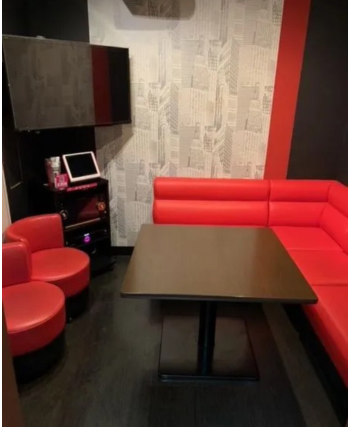
‘DAM CHANNEL’: Re-signifying Space and Transforming Media Architecture Before analysing the case, it is necessary to explain the unique viewing environment of the Japanese ‘karaoke box’. Unlike Western karaoke, which is predominantly an open style in pubs, Japanese karaoke takes the form of small, soundproof ‘private rooms’ rented by the hour for small groups. Aside from staff members entering temporarily to deliver food and drinks, there is no intervention from others; it is a highly enclosed space occupied exclusively by the renting group1.
Figure 1: The enclosed and intimate space of a unique Japanese karaoke box and monitor.
1This enclosed atmospheric space is well depicted in Sofia Coppola’s 2003 film Lost in Translation. Set in Tokyo, the film features an iconic scene where the male and female protagonists, played by Bill Murray and Scarlett Johansson, enjoy singing with locals in a private karaoke box room.
210 Ito and Tanaka In such enclosed spaces as shown in Figure 1, there is always a ‘blank time’ (the interval between songs) when no one has queued a track. Daiichikosho is the industry’s leading company known for deploying the commercial communications karaoke system ‘DAM’. The company broadly expands its business centred on music and services, including not only the manufacturing and leasing of karaoke equipment but also the operation of directly managed karaoke box venues, music software businesses, and background music (BGM) broadcasting. Although Daiichikosho’s ‘DAM’ system boasted a nationwide market share, karaoke at the time had no promotional function and was merely a weak ‘secondary user’ that purchased sound sources from record labels within the music industry.
‘Record labels were desperate to pitch information to media like TV and radio stations, but karaoke at the time had no promotional function. TV stations and record labels acted superior, with an attitude of “we are introducing this for you,” and that dynamic was frustrating. Karaoke was in a weak position, just receiving sound sources. So, I wanted to change that power balance where record labels ranked above karaoke.’ (MT Interview, December 4, 2025) Under these circumstances, MT planned a horizontal deployment to unbundle TV programme production know-how from existing broadcast slots and rebundle it to fit the ‘blank time’ in the karaoke box. Utilising the ‘15 minutes of idle time from entering the room to starting to sing, spent on selecting songs, ordering drinks, and chatting’ characteristic of karaoke, he designed a short-form music information programme (DAM CHANNEL). This culturalisation was initially not understood within the company.
‘At first, there was internal opposition, saying “It’s a waste of money because it’s just karaoke anyway.” But if you think about it, it’s a medium that an estimated 20 million people a month are forced to watch in private rooms. I thought if we changed this from mere footage into “promotional media,” the business structure would flip.’ (MT Interview, June 16, 2025) This was an act of re-signifying meaningless waiting time into ‘owned media forcibly viewed by an estimated 20 million people a month.’ Previously, record labels spent massive amounts (millions of yen) on promoting their artists.
DAM CHANNEL successively cast young talents on the verge of breaking out, who had some recognition but had not yet reached top-star status, as MCs. The unique environment where tens of millions of people repeatedly viewed the content in the enclosed space of a karaoke box functioned as a ‘powerful amplifier’ that rapidly heightened the talents’ affinity and recognition. As a result, the reputation that ‘appearing on DAM CHANNEL accelerates popularity’ became established in the industry, drawing external attention. Consequently, record labels began requesting to ‘use it as a promotional slot for new releases,’ and this slot itself became a powerful weapon for business deals.
Figure 2: A poster for the 5th-anniversary live event indicating DAM CHANNEL’s growth into a ‘powerful promotional medium’ (Retrieved from an article on BARKS, a long-established Japanese music news portal site: https://barks.jp/news/633146/).
Large-scale events as shown in Figure 2 are a testament to DAM CHANNEL’s growth, proving that it moved beyond mere video distribution to establish itself as a ‘powerful promotional medium’ capable of attracting large audiences. As a result, the karaoke company transformed from a ‘secondary user’ into a ‘powerful promotional medium,’ completely reversing the power balance within the industry.
Indonesian Business: Context Generation Through Geographic Relocation The second case is the deployment of Japanese entertainment know-how to the Indonesian market. Here too, as a premise, it is necessary to supplement the Japanese ‘Idol’ culture. While ‘Idol’ in the English-speaking world often refers to a perfected top star with outstanding singing ability and technique, idols in Japanese entertainment find their core in the ‘cheering culture’ (parasocial interaction), where fans share the growth process of incomplete youths and support them directly.
MT unbundled this management method from the Japanese context and rebundled (culturalised) it to fit the Indonesian context by establishing a joint venture with local capital.
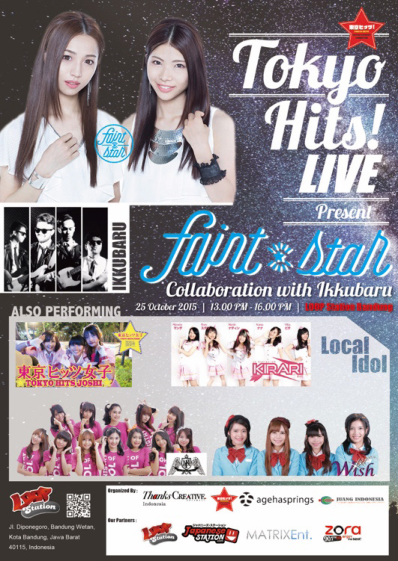
Figure 3: Promotional poster for the expansion of Japanese culture and entertainment in Indonesia, featuring the Japanese female idol duo ‘Faint Star’ (Image provided by the second author, MT).
‘If you compete in Japan, there are many competitors, but just by shifting the location to the blue ocean of Indonesia where there are no rivals, idols who can only hold small-scale live shows in Japan can sing in front of 10,000 people and generate enthusiasm. So, we create the news itself that “they are popular in Asia.” Because it is an overseas market with fewer rules, there was the excitement of being able to create a new context ourselves.’ (MT Interview, December 4, 2025) What is noteworthy is the muddy practice of culturalisation on the ground. For example, at a massive local festival, they set up and operated a low- budget ‘shooting game’ (shooting gallery) booth offering anime figures as prizes. At that time, they witnessed the enthusiasm of local customers who, to get a figure at the shooting game, unhesitatingly spent remarkably high amounts of money relative to local income levels, trying repeatedly. Based on this observation, they built experiences directly connecting intense local needs with Japanese content.
Furthermore, they brought the Japanese female idol duo ‘Faint Star’ (also featured in the poster in Figure 3) to an actual local event.
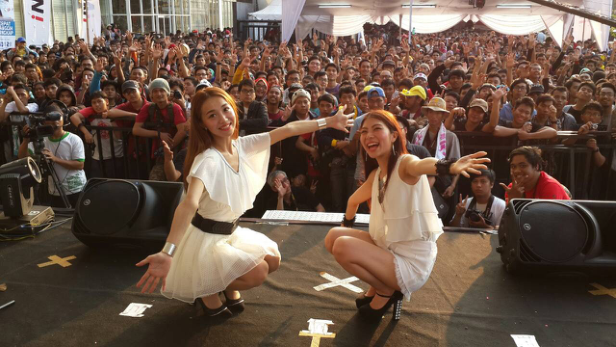
Rather than a simple export of content, by creating a situation where the idol duo received an enthusiastic welcome locally as shown in Figure 4, and having it reported on local media such as CNN Indonesia, they intentionally
Creative Horizontal Deployment in the Japanese Entertainment Business 213 generated the narrative that they were ‘enthusiastically popular in Asia.’ By re-importing the created news to Japan, they realised a process of creating symbolic capital that retroactively enhanced the artists’ value domestically.
Figure 4: Japanese female idol duo (in white costumes) surrounded by enthusiastic audiences at a local event in Indonesia (Image provided by the second author, MT).
DISCUSSION
From these two life story cases, the core mechanism of ‘creative horizontal deployment’ can be conceptualised around ‘Spatial Re-Architecting’, facilitated by institutional entrepreneurship and collaborative creativity.
A central aspect of this spatial reconfiguration is how DAM CHANNEL targeted the micro-space of ‘private rooms and song intervals,’ while the Indonesian business targeted the macro-geographic space of a ‘cross-border market.’ Both cases realised Architectural Innovation, fundamentally transforming the structure of provided value by re-signifying space while preserving the core elements of existing know-how. ‘Unbundling’ and ‘rebundling’ serve as the concrete mechanisms to execute this spatial shift.
To realise this spatial re-architecting, behaviour as an ‘Institutional Entrepreneur’ that breaks down existing hierarchies is required as a driving force. As DiMaggio (1988) argues, institutional entrepreneurs attempt to transform existing institutional frameworks and resource allocations. MT’s practice re-wove relationships with diverse actors—such as the company’s management, TV stations, record labels, and overseas partners—reversing the industry’s institutional power balance that ‘karaoke is in a weak position’ and ‘it has no value unless it sells domestically.’
This transformation inherently relies on collaborative creativity within an environment of diverse actors and interests. What this study suggests, however, is fairly simple: the key takeaway from these cases is MT’s strategic creativity. By reading cross-media and cross-cultural contexts within this collaborative network, he successfully rebundled the existing business structure into a newly defined spatial architecture.
CONCLUSION
This life-story analysis clarifies the mechanisms through which ‘horizontal deployment’ generates business value in the digital era. Here, creativity is not limited to ‘authorship’ that creates works from scratch. Instead, our study helps to demystify the creative process in the entertainment sector.
Creativity is not a sudden flash of inspiration from a solitary genius; rather, it is a highly practical and relational process. It can be understood as the ‘ability to redesign architecture’—unbundling existing resources and painstakingly rebundling them in accordance with new contexts, heterogeneous spaces, and relationships with others.
Limitations and Implications for Future Research A limitation of this study is its exclusive focus on the narrative and practices of a single focal producer acting as an institutional entrepreneur. As MT himself emphasises, his ability to realise such innovative projects while being a regular company employee (salaryman) was entirely dependent on the indispensable presence of countless actors. These included internal supporters (supervisors and colleagues) who endorsed and backed his vision within the company, external record labels, and the local collaborative staff who drove the Indonesian business forward.
To capture the full, multi-dimensional dynamism of the collaborative creativity proposed in this paper, it is necessary to intersect polyphonic perspectives from these diverse stakeholders surrounding him. Future research must integrate insights from management and innovation studies with anthropological qualitative approaches to further elucidate the dynamics of the entire ecosystem where new business value is generated.
ACKNOWLEDGMENT
The first author would like to express his sincere gratitude to Mr. Seitaro Yamazaki, CEO of Seitaro Design, for introducing MT and generously supporting the initiation of this academic project within the group.
REFERENCES
Ansoff, H. I. (1957). Strategies for diversification. Harvard Business Review, 35(5), 113–124. Baumol, W. J., Panzar, J. C., & Willig, R. D. (1982). Contestable markets and the
theory of industry structure. Harcourt Brace Jovanovich. Chalaby, J. K. (2015). The format age: Television’s entertainment revolution. Polity Press. DiMaggio, P. J. (1988). Interest and agency in institutional theory. In L. G. Zucker
(Ed.), Institutional patterns and organizations: Culture and environment (pp. 3–21). Henderson, R. M., & Clark, K. B. (1990). Architectural innovation: The reconfiguration of existing product technologies and the failure of established firms. Administrative Science Quarterly, 35(1), 9–30.
Creative Horizontal Deployment in the Japanese Entertainment Business 215 Jenkins, H. (2006). Convergence culture: Where old and new media collide. New
York University Press. Schumpeter, J. A. (1934). The theory of economic development. Harvard University Press. Shigeta, T., & Ito, Y. (2023). “Design thinking” as collaborative creativity in
group work: A case study at a Japanese liberal arts university. In C. Leitner, J. Neuhüttler, C. Bassano, & D. Satterfield (Eds.), The Human Side of Service Engineering. AHFE (2023) International Conference. Vol. 108, pp. 180–187.
LISTED IN THE AHFE DIGITAL BOOKSTORE CATALOGUE
Explore the complete digital volume
The Human Side of Service Engineering
Read this individual research paper free through the original publisher, or explore the full digital proceedings book.
ISBN 978-1-964867-97-7
Explore this ISBN in the AHFE Bookstore ↗Listed in the July 2026 bookstore catalogue; search by ISBN to confirm current availability · Digital book purchase optional