Considering the Information Technology continuous innovation and upcoming technological trends, industries are now more eager to utilize inventive technologies to adopt and efficiently function in today's competitive business environment. Technologies such as big data, IoT and now digital twins are now being widely applied through a broad spectrum of different industries and have already had a game-changing impact. Technologies such as digital twins despite coming the extra mile in recent years still hold a more promising future. Digital twins will emerge as one of the key tools in many industries, especially in manufacturing. This paper takes a closer look at how the retail industry is utilizing digital twins to better implement quality function development of a product. With the proposed framework, Quality function developments can be improved to collect data from customers through social networks and boil down the data of the voice of the customer through product development process. These Voice of the Customer items will continue to trickle down into other stages of product development and deployment, including component definition, process planning, and quality control. This study has established a connection among social media data analytics and links it to QFD framework. Using social media data, the emotions of the customer can be viewed in real-time what people are saying about the product. This not only helps in creating a better product it also enriches the customer experience. To clarify the capabilities of the proposed idea, an illustrative case is designed and explained for link of social data analytics tools with QFD through a digital twin enabled framework. This gives customers a chance to be integrated into the product development process and as a result, produce results in better satisfying customers' expectations.
With continuous innovation and upcoming technological trends, different industries are more eager to utilize inventive technologies to adopt and effici- ently function in today’s competitive business environment (Costello, 2022). Technologies such as big data, IoT and now digital twins are now being widely applied through a broad spectrum of different industries and have already had a game-changing impact. The expeditious development of digi- tal twins can be observed as thirteen per cent of organizations implementing Internet of Things (IoT) projects already use digital twins, while 62% are
either in the process of establishing digital twin use or plan to do so (Costello, 2022). A digital twin is a virtual model of a process, product or service. Basically, a digital twin is a digital copy of a living or non-living physical entity. Creating a digital replica of a model allows analysis of data which in result leads to new opportunity development, early problem identification, and future planning (Rossi, 2022). Effective use of digital twins results in diverse value creation and change in a business model. In many cases it’s influencing the business models of large, established companies, driving them to stop selling produ- cts and start selling services. Companies like Aggreko and Rolls-Royce, for example, now sell power instead of power generators or aero engines. This is only possible because of the extra insights that digital twinning provides into exactly what’s going on in those products (Valilai & Houshmand, 2015).
Technologies such as digital twins despite coming the extra mile in recent years still hold a more promising future. Digital twins will emerge as one of the key tools in many industries, especially in manufacturing. In the future, almost every manufactured product could have its own digital twin as long as it is somehow generating data which can be captured and analysed (Rezapour Niari et al., 2023). This paper takes a closer look at how the retail industry is utilizing digital twins to better implement quality function development of a product. Quality function developments collect data from customers and boil down the data into the voice of the customer which tells us what the custo- mer wants in that product. These Voice of the Customer items will continue to trickle down into other stages of product development and deployment, including component definition, process planning, and quality control (NEC, 2020). With effective utilization of digital twins and quality function deploy- ment, a company can have a real-time customer feedback on a product as it advances through the different stages of product deployment. Despite this being a highly desired asset in the production system the area of digital twins and its implementation with quality function development.
LITERATURE REVIEW
Digital Twins (DT) The theory of digital twins first publicly introduced by Michael grieves in 2002 (Grieves, 2019) went on with various names till it was called digital twin later in 2010 by a NASA John Vickers who worked at NASA (Piascik, 2020). Despite the concept being a bit challenging and complicated it showed great potential and promised a huge leap for science in years to come. The concept was then later subdivided into three sub-concepts. The digital twin prototype (DTP), the digital twin instance (DTI), and the digital twin aggregate (DTA) (Olad & FatahiValilai, 2020). A DTP is the prototype of the physical asset (Lim et al., 2020). The DTP exists before there is a physical counterpart and serves as the base of the digital twin. The DTP needs to contain all data sets necessary to create a physical version that twins into the virtual version (Tao et al., 2019). A DTI which is created using the digital twin prototype is the twin of a physical asset. The DTI stays linked to the physical asset through its lifecycle (Göppert et al., 2021). The DTI needs to contain data of
Quality Function Deployment Implementation Using Digital Twins Paradigm 641
various types. The data are assessments and prediction of the prototype in its past state, present state, captured through different inbuilt sensors and future prediction on our digital twin. We can infer to the digital twin instance as the different instances a product has once it is produced. A DTA is an aggregate of many digital twin instances (Tao et al., 2019). Unlike the DTI, the DTA may not be an independent data structure. It may be a computing construct that has access to all DTIs (Grieves, 2019).
Quality Function Deployment (QFD) and House of Quality (HoQ) Quality function deployment (QFD) is “an overall concept that provides a means of translating customer requirements into the appropriate technical requirements for each stage of product development and production” (Chan & Wu, 2002). It is a tool that takes in standards from the consumer then turn the product into something the consumer needs. Quality function deployment takes a general look into the wholes production system and its benefits extend from the start of production until the product reaches the consumer (Khoo & Ho, 1996).
The concept of Quality function deployment had two main purposes. To improve the quality of design and to provide manufacturing workers with the quality control chart (Chan & Wu, 2002). But that was in the early days of the 1969’s in Japan. In the modern-day, quality function deployment can be uti- lized in product development, quality management, customer needs analysis, product design and many more. This concept can be seen being implemented in different sectors of different industries. For example, the manufacturing and retail industry.
The concept of quality function deployment gained quick acceptance due to the huge improvement it can bring to the production system. It serves as an important planning tool and improves production efficiency. But despite the advantages, quality function deployment comes with a customer focused risk. These risks arise from the problem that the information gathering system in QFD would come short and fail to create a true relationship between the customer needs and a product feature and characteristics (Andronikidis et al., 2009). This is a problem technological advancement would solve in the future as more ways of interaction between the customer and the digital prototype. Right now, digital polls might not serve the true capacities of quality function deployment but with the accessible resource it can operate in an efficient way to create a better production system.
Social Media Data Analytics In the last few years, there has been a massive surge in the number of social media users across the globe. This is the result of the immense gro- wth of the internet in the last decades. Companies like Facebook and Twitter have reached 2.38 billion monthly subscribers and 330 million monthly active users respectively (N. Mohammadian et al., 2022). Due to their heavy amount of user data this online social networking (OSN), have attracted dif- ferent research and development opportunities from different sectors. Social networks are structures consisting of nodes with which individuals, groups,
642 Sarka and Valilai
organizations, and related systems are connected through different factors (Tuyishime & Fatahi Valilai, 2022). That combined with the vast number of daily users, OSNs serve as a perfect tool to pass information and data for different kind of purposes.
When establishing an OSN it is a challenge to organize the data in a way where it could be analysed and sorted accordingly. The basic concept of the proposed system for collecting and analysing data from social com- munities on the Internet is based on data warehousing technology (Olad & FatahiValilai, 2020). To make sure the system can function without being overwhelmed by the amount of growing data a minimum of four 4 modules is assumed. A Module for receiving and storing information, a data analy- sis module, a system administration module, and a module that provides users with an interface to work with the system (Chan & Wu, 2002). These modules serve as a foundation base for OSN to be functional. The data gath- ered through OSN can be analysed and put as an effective information tool in improving a product. A technology that combines OSN data with digital twins to improve a product would be cutting-edge technology. In today’s mar- ket, plenty of these products are designed by re-lying on the market research information obtained from customer reviews which are generally qualitative (Fuchs, 2017). Because of that high investigation in the customer preference is needed.
Social networks data can tell much more about the hidden preferences of the individual than the voluntarily shared information in their profile (Hu et al., 2019). Hidden preference could be key to make a fully perso- nalized customer-based production system where every customer could have a unique customer experience. Different sorts of data gathered from diffe- rent online social media platforms can be stored in a single combined place. This centralized data storage system makes it possible for information from companies such as Facebook, Twitter, Instagram, Amazon to be collected at a single location and analysed. This increases the outreach of online social media as we integrate more social media into the centralized database system.
FRAMEWORK FOR IMPROVING QFD The Link of Social Data Analytics to QFD
This study uses social media data analytics on data collected from Instagram and links it to QFD framework. Using social media data, the emotions of the customer can be viewed in real-time what people are saying about the product. This not only helps in creating a better product it also enriches the customer experience. Interacting with the customers on a difference-making manner can draw a line between business success or failure. A company must adjust and respond constantly to the ever-changing desires and expectations of its consumers. Otherwise, they will lose out to their rivals who are better at it. Social media creates a perfect platform for customers to express their emotions about a certain product or service. With the right analytical tools that expression of an idea can be captured, analysed and implemented in the house of quality of a product.
This paper has focused on Instagram social network. This social network was launched as a unique social networking platform that was completely
Quality Function Deployment Implementation Using Digital Twins Paradigm 643
based on sharing photos and videos. This photo-sharing social networking app thus enables you to capture the best moments of your life, with your phone’s camera or any other camera, and convert them into works of art (Mohammadian & Fatahi Valilai, 2022). This technology quickly became famous around the globe and grew into one of the biggest social media platforms in the world with almost around 555 million users (Olad & Fatah- iValilai, 2020). Individuals around the globe have adapted quickly and have integrated Instagram to their daily use. The easy and attention-grabbing futu- res have made “Those under the age of 25 spend more than 32 minutes a day on Instagram, on average, while those age 25 and older spend more than 24 minutes a day.” (Pssadm, 2017). This makes Instagram the perfect social media platform to access social media data. In addition to that, the hashtag keys users use to pass on their emotion would be an essential tool in identif- ying and tracking the required data. These comments collected from different users concerning the product and its attributes can be linked to the house of quality to establish a framework in which quality function deployment can be implemented.
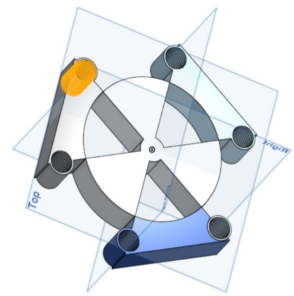
Illustrative Case To clarify the link of social data analytics tools with QFD, a digital twin of a 6-screw anchor is created. Before designing a material first, we need to specify the dimensions of our prototype. The screw anchor is a 3.15 Inches long hexagonal-shaped anchor with 0.4 Inches wide screw holes perfect to support the weight of the object. The 0.4 inches diameter is supported with an outer circle of 0.7 inches suitable for the screw head to fit without distorting the design. The hexagonal sides are each attached to a circle of 4 inches that supports the weights and serve as a base for the whole design. A circle is chosen as a foundation to create a design to minimize the mass of the product instead of creating a full hexagon that would be more expensive to produce. Finally, a helix of 10 turns is introduced in each of the 0.4 inches circles to create a better fitting for the screws. The helix can be further adjusted to fit a specific kind of screw depending on the dimension and the angle of inclination. The prototype is shown in Figure 1.
Figure 1: The illustrative part 3D model.
644 Sarka and Valilai
Data Pre-Processing For the data collection section, a 3D model of a screw anchor has been sha- red with multiple Instagram users to comment on and share their ideas. The model comes with several attributes that users can select and comment about. To connect the virtual twin of the 3D model with its physical counterpart, CAD file, and implement it alongside the house quality and create a con- nection with our customers in the social media platform we need to bring the attributes which can be connected to the physical side and label them in the form of hashtags keys and indicate them in the picture. These hashtags represent an attribute in the physical world and link it with its digital twin and create the connection required in the framework. Table 1 illustrates the defined attributes for indexing the digital twins together.
Table 1. Defined attributes for integration of digital twins.
Table available in the original PDF paper.
Attributes Hashtag Diameter of the Screw-Hole #SD Diameter of the circle #CD Positions connecting the screw holders #SP Weight of material #WT Material scrap #SC Height of screw holes #SH Type of thread #TT Number of screw holes #SN Durability #DR Shock resistance #SR Emotional friendliness #EV Colour #CL Ascetics #AS
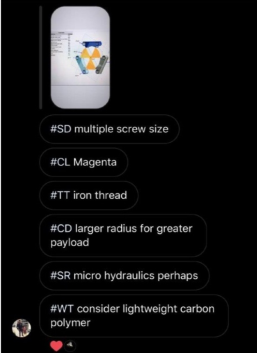
Figure 2: An Instagram sample comment on the product.
These physical attributes together with a picture of the 3D model will be uploaded on Instagram. Through that feedback, information such as which
Quality Function Deployment Implementation Using Digital Twins Paradigm 645
specific aspect of the product will be collected based on the customers prefe- rences and their recommendations on how to improve the product. Finally, the data pre-processing stage includes different tasks such as choosing key hashtags and receiving comment. The Instagram story feature was used for this purpose with to gather the customers’ comments. An example is shown in Figure 2.
After managing to establish a comment receiving system and create an organized data collection, we can develop our quality function development using the analytical methods of social networks.
CASE STUDY AND RESULT ANALYSIS
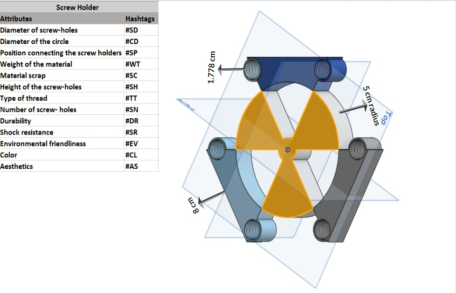
Figure 3 represents a 3D model of an under-development screw anchor. The product can hold six screws at a time, creating an even distribution of wei- ght across the anchor. The physical attributes of this product which are given more value include the diameter of the screw holes as well as the height of the screw-hole and the type of thread. This attribute decides what kind of screw this product is suited for. The position of the screw-holes and the diameter of the circle, on the other hand, serve as a Wight distribution mechanism. By adjusting them to different structures, different results can be obtained. The material of scrap, shock resistance and the Wight on the material are effe- ctive attributes in creating various models of the same design. This increases the versatility of the product overall. While the durability attribute decides the lifetime of our product the number of holes and the aesthetics attribute creates the essential base of the screw anchor idea. Lastly the environmental friendliness attribute ensures the product is not a harm for the environment. The attributes are represented by a hashtag labelling system with a specific attribute given a hashtag as a representation for the virtual part of the digi- tal twins. The attributes with their corresponding hashtags are placed on top with some attributes directly indicated with an arrow to the specific part they represent in the Figure 3.
Figure 3: 6-screw anchor and product attributes.
646 Sarka and Valilai
Result Discussion For this study, social media data was gathered by allowing each individual to comment on four primary attributes that they seem essential. In the data analytics part of this study was done using statistical analysis of R. For ease of analysis, the feedback received from Instagram has been grouped into 4 feedbacks: Feedback 1, Feedback 2, Feedback 3 and Feedback 4. This classi- fication is made by the order the users input their data. Batches on the first order feedback are analyzed together as Feedback 1. Each group of feedback is then analyzed to determine how many times each attribute is mentioned and its relevance in the eyes of our consumers.
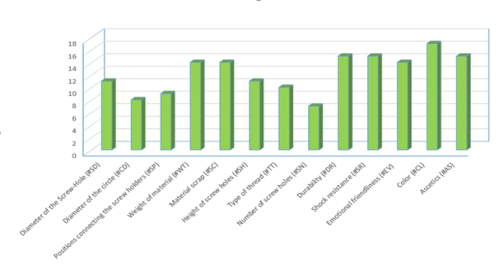
Analyzing the feedback, the overall importance of attributes is reached. The most essential attribute from our Social Media Data was the color of the screw anchor (#CL) followed by the durability (#DR), shock resistance (#SR) and the ascetics of the design (#AS). In order to start developing the house of quality, a sample of seven attributes will be chosen from the original list of attributes. Based on their rank on the analysis, emotional friendliness (#EV), material scrap (#SC) and weight of material (#WT) are selected as the final attributes. From the overall result it is also clear that attributes such as number of screw holes (#SN) and diameter of the circle (#CD) did not get as much as relevance as the other attributes. The details are described in Figure 4.
Figure 4: Total attribute frequency in the case study.
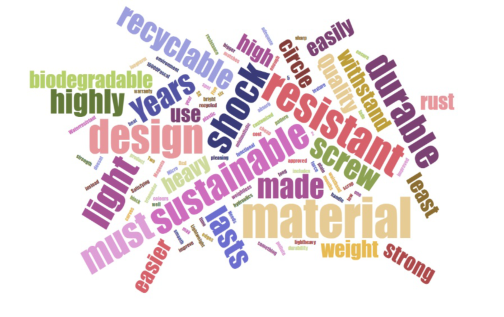
After identifying the seven key attributes that are going to be implemented in the house of quality, the words are categorized based on their frequency in the comments collected from our Instagram users. This word cloud diagram includes the most frequent comments of our established seven attributes and is shown in Figure 5.
Developing the House of Quality After analyzing the customers feedbacks, the house of quality by data source from Instagram users on the 3D model of the screw anchor is implemented. The seven key attributes are defined considering the most frequent tags of our customer feedback database. Based on the feedback, the customer needs
Quality Function Deployment Implementation Using Digital Twins Paradigm 647
Figure 5: 6-screw anchor and product attributes.Table 2. Customer needs and their importance rating.
Table available in the original PDF paper.
Customer needs Customer need rating Percentage of customer importance Lasts at least two-years 4 13 Black color 5 17 Adequate strength 4 13 Recyclable 3 13 Light 2 10 Titanium 2 7 Attractive design 2 7 Waterproof 1 3 Plastic 1 3 Design Functionality 4 13
have been selected based on the frequency on that specific comment or a similar comment with the same feedback throughout the data as illustrated in Table 2.
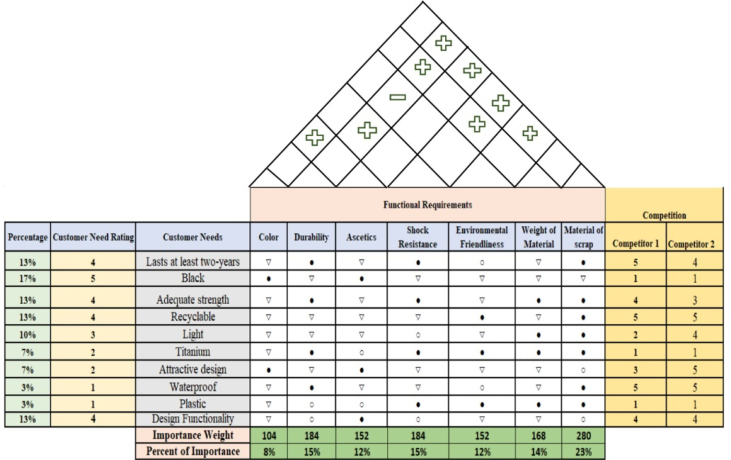
The relationships established in the house of quality are connected by cor- relations and Relationships / Weight. The correlation is used to show the relationship each key attribute has with another key attribute. The relati- onship/Weight establishes the relationship the customer needs have with the Functional requirement. The Weight indicates how strong the relationship is with three options in place: strong, medium and weak each weighing 9,3,1 respectively. For competition analysis, two types of screw anchor available in the current market have been taken as samples. Then they are evaluated based on the customer’s needs and included in the house of quality as shown in Figure 6. Finally, the house of quality is ready to be constructed. The roof of the house indicates the relationship each functional requirement has with another functional requirement.
The results showed what factors can be considered in selecting essential attributes for the development of a product. In the case of our screw anchor, colour, durability, aesthetics, shock resistance, the weight of material and
648 Sarka and Valilai
Figure 6: House of quality for the screw anchor.
material of scraps were identified as the key attributes. A total of 160 com- ments was collected through Instagram. These comments were categorized using a hashtag categorization. Each hashtag represents an attribute when a user uses it to comment on the product. Out of the 160 comments, 65% of them were on the key attributes that were selected for the house of quality. Besides, since the customers also provided the voice of the customer through the comments, building the house of quality is simple after.
CONCLUSION
This research has provided an insight for the application of digital twins in the developing of a quality function deployment for product development. The framework has enabled mechanisms for social media data analysis and effe- ctive use of the analysed data to improve a product design. The framework enables the definition of the key product attributes in the form of hashtags to establish the relations for integrating digital twins’ paradigm. The functio- nal efficiency of the product was a major tool for obtaining hashtag classified feedback from Instagram. The data was then further analysed and turned into necessary details required in the construction of House of Quality. This gives customers a chance to be integrated into the product development process and as a result, produce finished goods that better satisfy customer satisfa- ction. In the future, this research can be further expanded by obtaining from multiple social media platforms and further develop the digital twin and the house of quality. This research can be also done in-depth in different markets and different social media outlets.
Quality Function Deployment Implementation Using Digital Twins Paradigm 649
REFERENCES
Andronikidis, A., Georgiou, A. C., Gotzamani, K., & Kamvysi, K. (2009). The application of quality function deployment in service quality management. The TQM Journal, 21(4), 319–333. https://doi.org/10.1108/17542730910965047 Chan, L.-K., & Wu, M.-L. (2002). Quality function deployment: A litera- ture review. European Journal of Operational Research, 143(3), 463–497. https://doi.org/10.1016/S0377-2217(02)00178-9 Costello, K. (2022). How Digital Twins are Entering Mainstream Use | Gar-
tner. https://www.gartner.com/en/newsroom/press-releases/2019-02-20-gartner- survey-reveals-digital-twins-are-entering-mai Fuchs, C. (2017). From digital positivism and administrative big data analytics towards critical digital and social media research! European Journal of Commu- nication, 32(1), 37–49. https://doi.org/10.1177/0267323116682804 Göppert, A., Grahn, L., Rachner, J., Grunert, D., Hort, S., & Schmitt, R. H.
(2021). Pipeline for ontology-based modeling and automated deployment of digi- tal twins for planning and control of manufacturing systems. Journal of Intelligent Manufacturing. https://doi.org/10.1007/s10845-021-01860-6 Grieves, M. W. (2019). Virtually Intelligent Product Systems: Digital and Physical Twins. In Complex Systems Engineering: Theory and Practice: Volume 256 (pp. 175–200). American Institute of Aeronautics and Astronautics, Inc. https://doi.org/10.2514/5.9781624105654.0175.0200 Hu, Y., Xu, A., Hong, K., Gal, D., Sinha, V., & Akkiraju, R. (2019). Generating Busi-
ness Intelligence Through Social Media Analytics: Measuring Brand Personality with Consumer-, Employee-, and Firm-Generated Content. Journal of Mana- gement Information Systems, 36, 893–930. https://doi.org/10.1080/07421222. 2019.1628908 Khoo, L. P., & Ho, N. C. (1996). Framework of a fuzzy quality function deployment system. International Journal of Production Research, 34(2), 299–311. https://do i.org/10.1080/00207549608904904 Lim, K. Y. H., Zheng, P., Chen, C.-H., & Huang, L. (2020). A digital twin-enhanced
system for engineering product family design and optimization. Journal of Manu- facturing Systems, 57, 82–93. https://doi.org/10.1016/j.jmsy.2020.08.011 Mohammadian, N., & Fatahi Valilai, O. (2022). The Requirements of Product Lifecycle Management (PLM) frameworks for integration and synergic collaboration with Omnichannel strategy. In M. Tolouei-Rad (Ed.), Production Engineering (p. Ch. 3). IntechOpen. https://doi.org/10.5772/intechopen.104417 N. Mohammadian, N. Mechai, & O. F. Valilai. (2022). Social Media Product Data
Integration with Product Lifecycle Management; Insights for Application of Arti- ficial Intelligence and Machine Learning. 2022 IEEE International Conference on Industrial Engineering and Engineering Management (IEEM), 1469–1473. https://doi.org/10.1109/IEEM55944.2022.9989781 NEC. (2020). The Future of Digital Twins. NEC. https://www.nec.com/en/global/in sights/index.html Olad, A. A., & FatahiValilai, O. (2020). Using of Social Media Data Analytics for
Applying Digital Twins in Product Development. 2020 IEEE International Confe- rence on Industrial Engineering and Engineering Management (IEEM), 319–323. https://doi.org/10.1109/IEEM45057.2020.9309834 Piascik, R. e. a. (2020). NASA Space Technology Roadmaps and Priorities: Restoring NASA’s Technological Edge and Paving the Way for a New Era in Space. https://doi.org/10.17226/13354
650 Sarka and Valilai
Pssadm. (2017, August 7). Under 25s are spending more than 32 minutes a day on Instagram. That Eric Alper. https://www.thatericalper.com/2017/08/07/25s-spend -32-minutes-day-instagram/ Rezapour Niari, M., Eshghi, K., & Fatahi Valilai, O. (2023). Using cloud manufa-
cturing to establish an ecosystem network for COVID-19 ventilator production. International Journal of Computer Integrated Manufacturing, 1–21. https://doi. org/10.1080/0951192X.2022.2162586 Rossi, B. (2022). Digital twinning explained—Raconteur. https://www.raconteur.ne t/digital/digital-twinning-explained/ Tao, F., Qi, Q., Wang, L., & Nee, A. Y. C. (2019). Digital Twins and Cyber–
Physical Systems toward Smart Manufacturing and Industry 4.0: Correlation and Comparison. Engineering, 5(4), 653–661. https://doi.org/10.1016/j.eng.2019.01. 014 Tuyishime, A.-M., & Fatahi Valilai, O. (2022). Sustainable last mile delivery network using social media data analytics. 840–874. https://doi.org/10.15480/882.4696 Valilai, O. F., & Houshmand, M. (2015). Depicting additive manufacturing from
a global perspective; using Cloud manufacturing paradigm for integration and collaboration. Proceedings of the Institution of Mechanical Engineers, Part B: Journal of Engineering Manufacture, 229(12), 2216–2237; https://dx.doi.org/10. 1177/0954405414546706. https://doi.org/10.1177/0954405414546706
Read this individual research paper free through the original publisher, or explore the full digital proceedings book.
ISBN 978-1-958651-87-2
Explore this ISBN in the AHFE Bookstore ↗Listed in the July 2026 bookstore catalogue; search by ISBN to confirm current availability · Digital book purchase optional