Sylwia Stefaniak (2023). Analysis of readiness to implement the level of knowledge and use of new digital technologies (AI, IoT and e-services) in the SOEs in Poland. In: Human Systems Engineering and Design (IHSED 2023): Future Trends and Applications. AHFE Open Access, vol. 112, pp. 501–511. https://doi.org/10.54941/ahfe1004163
The survey was commissioned by the Prime Minister's Office. It was intended to verify the level of readiness for the implementation of new digital technologies (e.g., artificial intelligence, Internet of Things, cloud technologies, big data, metaverse, AR/VR) in Polish State Owned Enterprises (hereinafter: SOE). Work on this material began in late 2022, and the survey itself was actually conducted using the CAWI method on a sample of 170 SOEs in January 2023. The most numerous companies represented in the survey were medium-sized companies (50-249 employees), as well as those from cities with a population between 100,000 and 500,000. It is worth mentioning that due to the scarcity of foundational data on the implementation of new digital technologies in SOEs, the survey conducted is exploratory in nature. It fills, to a large extent, the knowledge gap on the state of implementation of new digital technologies in SOEs. The article presents the main conclusions of the study.
The subject of this article is the main results of a survey on the readiness to implement, the level of knowledge and use of new digital technologies (artificial intelligence – hereafter AI, the Internet of Things – hereafter IoT, and e-services) in State Owned Enterprises in Poland. The main reason for the action was that the area related to the use of new digital technologies in SOEs is currently not sufficiently explored and there is still a lack of data on this issue. It is worth mentioning that due to the scarcity of foun- dational data on the implementation of new digital technologies in SOEs, the study conducted is exploratory in nature. It fills the knowledge gap on the state of implementation of new digital technologies in SOEs. The study was carried out in cooperation with IBC Advisory S.A. and the Cen- ter for Smart Technologies of the Faculty of Management at the University of Lodz. The team implementing this study included the authors of this article.
DEFINITION OF STATE-OWNED COMPANIES According to the official definition, State Owned Enterprises (hereafter: SOE) is a type of company created as a result of the commercialization process at the request of the director and employee council of a state-owned enter- prise, on the initiative of the founding authority. SOEs should also include state-controlled companies and state-owned companies (in which case we are dealing with companies in which at least one share belongs to the Treasury). Accordingly, many SOEs can be equated with companies or government enti- ties that are more or less under the authority of the Treasury’s representative body. However, as far as the survey of SEOs is concerned, there are no studies on the Polish market that show the state of use of new technologies among them. The survey was conducted on an overall sample of 332 SOEs exist- ing in Poland. 170 SOEs took part in the survey and completed the survey questionnaire.
ANALYSIS OF THE RESULTS OF THE QUANTITATIVE SURVEY As a result of the survey, it can be concluded that as many as 78% of all sur- veyed SOEs are already using at least one solution in their operations that can be categorized as a new digital technology (e.g., AI, IoT, cloud technologies, big data, metaverse, AR/VR). Only 7% of SOEs directly declared that they do not use any new digital technology in their operations.
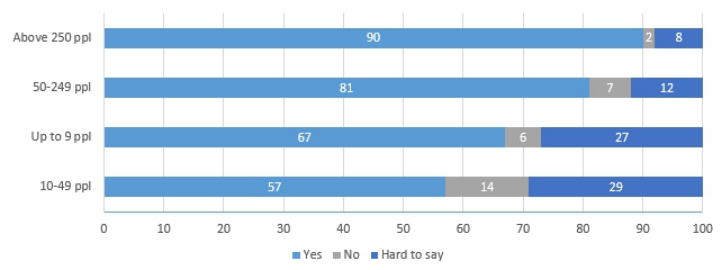
However, the overall level of declared use of new digital technologies among SOEs varies with the size of individual entities. The highest percent- age of use of new digital technologies (90%) is declared by SOEs with more than 250 employees. The second highest are SOEs with 50 to 249 employees (81%). As expected, the use of new digital technologies is lower among micro SOEs with up to 9 employees (67%) and among small SOEs with 10 to 49 employees (57%). Interesting are the percentages of “hard to say” responses with SOEs with up to 9 employees and 10 to 49 employees (27% and 29%, respectively).
Figure 1: SOEs declaring use of new digital technologies - by entity size N = 170.
SOEs that did not declare the use of new digital technologies (7% of all SOEs surveyed) were asked why. The most frequently cited reason was the
Analysis of Readiness to Implement 503
lack of adequate funds with which to implement new digital technologies (11 out of 12 indications) and the lack of appropriately qualified person- nel to carry out the processes of implementing new digital technologies (4 out of 12 indications). The situation presented shows that funds remain the main barrier to the digital development of SOEs, which could be a key piece of information when creating support instruments aimed at increasing the digital sophistication of Polish SOEs.
During the survey, SOEs were also asked about their current implementa- tion work with new digital technologies. More than half of all SOEs surveyed (55%) are currently conducting implementation work, while 35% of SOEs say they are not currently doing so.
The situation changes when the question about current work in progress is turned into a question about planned implementations in the field of new digital technologies. In this case, as many as 69% of SOEs declare that they plan to implement such solutions, while only 6% directly declare that they do not plan to implement any solutions. Unfortunately, one in four SOEs surveyed abstains, so to speak, indicating a “hard to say” answer.
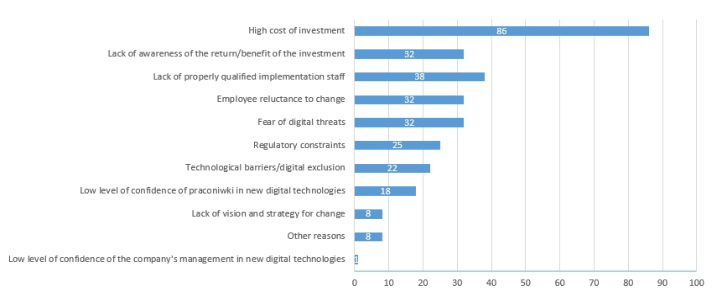
An important part of the research was also to verify the barriers that are holding back the implementation of new digital technologies. The main bar- rier indicated by SOEs is the high cost of investment. This was the answer indicated by 86% of all SOEs participating in the survey. In second place was the barrier of lack of awareness of the return/benefit of this type of invest- ment (39% of indications). Barriers related to the lack of suitably qualified staff able to carry out the implementation process (38%) and the reluctance of SOE staff to change (32%) were also important indications. The lowest rating was given to the SOE Board’s low level of confidence in new digi- tal technologies (1%). At the same time, it is noteworthy that none of the surveyed SOEs indicated the Board’s reluctance to make such changes as a barrier.
Figure 2: The biggest barriers related to the implementation of digital technologies N = 170.
Although the vast majority of SOEs report using at least one new digital technology, the overall assessment of individual SOEs’ own digital sophistica- tion is relatively low. Nearly half of the SOEs surveyed (47%) rate their digital
504 Stefaniak
sophistication as low, while 30% of SOEs declare that their digital sophisti- cation is neither high nor low. Only 19% of all SOEs surveyed describe their digital sophistication as high or very high.
Figure 3: SOE’s self-assessment of digital sophistication N = 170.
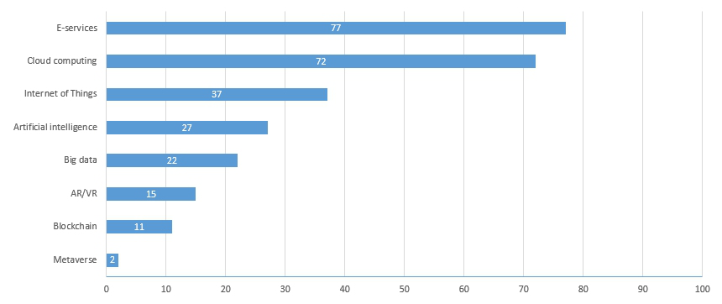
Of the SOEs that said they use new digital technologies, as many as 77% use e-services in their operations. Cloud technologies are used just as often (72%). It is interesting to note that one in three SOEs surveyed used technologies related to the Internet of Things. In contrast, one in four SOEs used technologies related to artificial intelligence in their operations. Blockchain-based technologies (11% of indications) and the metaverse (2% of indications) ranked lowest on the list.
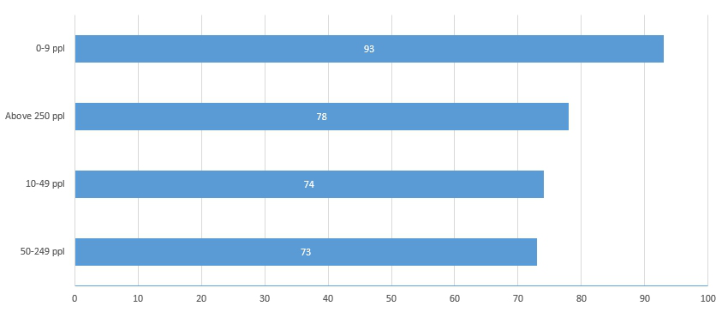
Figure 4: Use of individual digital technologies in SOEs N = 170.Figure 5: Use of e-services in SOEs - by entity size N = 170.
Analysis of Readiness to Implement 505
E-services were most frequently used by SOEs employing up to 9 people (93% of indications). A slightly lower level of use was indicated by SOEs employing more than 250 people. In this case, e-services were used by 78% of surveyed SOEs.
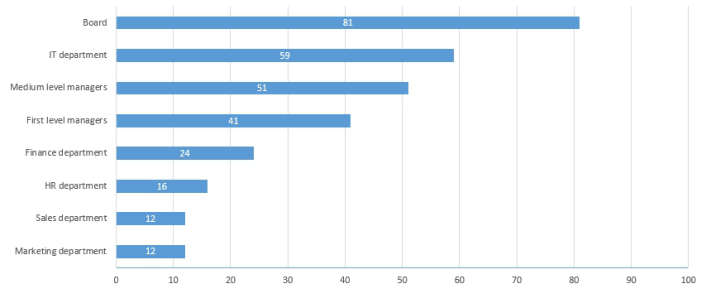
INITIATORS OF CHANGE IN THE FIELD OF NEW DIGITAL TECHNOLOGIES The introduction of digital innovations in SOEs is usually initiated by the company’s management departments. According to an analysis of the survey material obtained, as many as 81% of all SOEs identified SOE management as the main initiator of digital innovation. IT department employees came in second (59%). Middle managers also ranked high (51%), as did first-line managers (41%). The departments responsible for human resources, sales and marketing received the lowest percentage of indications (16%, 12% and 12% respectively).
Figure 6: Initiators of change in new digital technologies among SOEs surveyed N = 170.
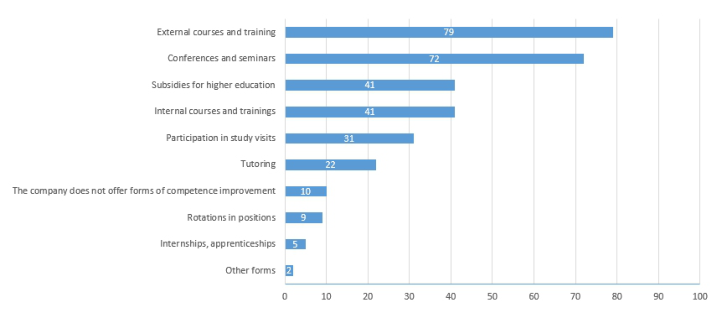
FORMS OF IMPROVING THE COMPETENCE OF SOE EMPLOYEES According to respondents’ answers, the most common form of competence improvement among employees involved in the implementation of digital technologies was the implementation of external courses and training (79% of indications). In second place was participation in conferences/seminars (72%). Elements such as subsidized higher education (post-graduate, dis- tance learning, MBA) and implementation of internal courses and training were indicated by 41% of all SOEs participating in the survey. It is worth mentioning that one in ten SOEs declared that they do not offer any form of competence enhancement for employees of departments involved in the implementation of new digital technologies.
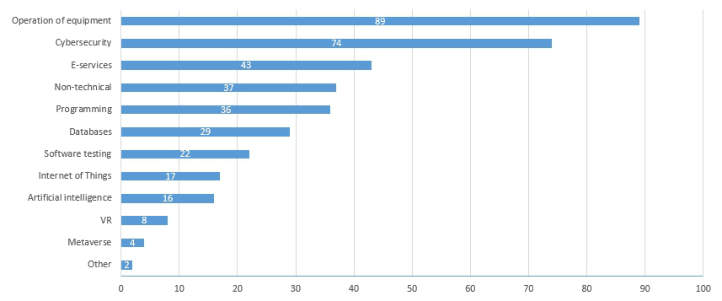
SOEs that provided courses and training for employees in departments responsible for implementing new digital technologies most often chose train- ing in the use of hardware, systems and programs (89% of indications). Cyber-security training was second (74%), and e-services training was third (43%). Virtual reality (8%) and metaverse (4%) training was the least frequently implemented.
506 Stefaniak
Figure 7: Forms of competence improvement among employees of departments involved in the implementation of new digital technologies in SOEs N = 130.Figure 8: Types of courses and training offered (internal and external) N = 105.
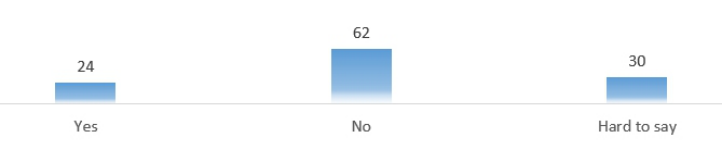
SOEs were also asked about conducting training on new digital technolo- gies for all employees. According to an analysis of the data, nearly one in four SOEs (24%) provide training on new digital technologies for all employees. 62% of all SOEs do not provide training in this area.
Figure 9: SOEs that provide training in new digital technologies for all employees N = 170.
The most frequently cited reasons for not providing training in new digi- tal technologies for all employees include the lack of identified demand for
Analysis of Readiness to Implement 507
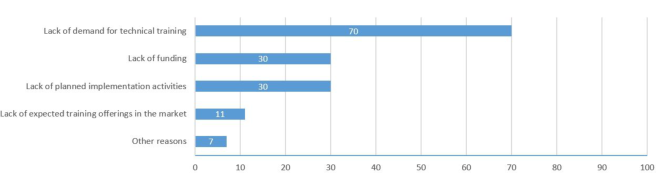
organizing training in this area (70% of indications). The surveyed SOEs also indicated that they do not provide training in new digital technologies for all employees due to lack of adequate funds to organize such training and lack of planned implementation activities in new digital technologies (30% of indications each, respectively).
Figure 10: Reasons for lack of training in new digital technologies for all employees at SOE N = 107.
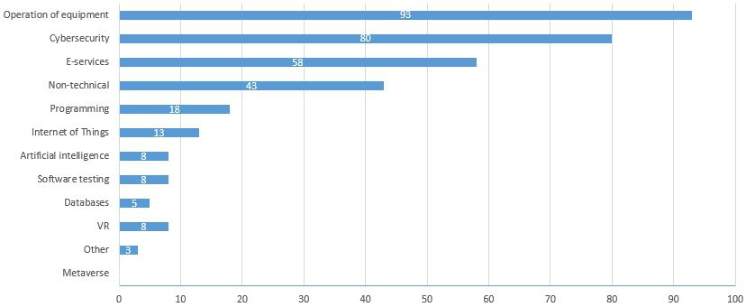
The topics of training in new digital technologies provided to all employees were primarily related to the operation of hardware, systems and programs (93% of indications), cyber security issues (80%), and e-services (58%). The least frequent courses were on database operation (5%) virtual reality (5%) and metaverse (no indications).
Figure 11: Topics of training and courses on new digital technologies for all employees N = 40.
PEOPLE RESPONSIBLE FOR DIGITIZATION IN THE SOE According to an analysis of the data collected, more than half of the SOEs surveyed (59%) do not have a specifically designated person responsible for digitization, while 28% of all SOEs acknowledge that there is a designated person in the Company responsible for these issues.
508 Stefaniak
Figure 12: Presence of a digital person in the SOE N = 170.
Among all SOEs that do not have a designated digital person, the most frequently cited reason for this is the lack of an identified need to create such a position. This was the reason indicated by 70% of all SOEs surveyed. Nearly one in four SOEs, on the other hand, indicated that the lack of adequate funding to hire dedicated specialists was also a problem.
Figure 13: Reasons for the lack of a digitization specialist inside the SOE N = 101.
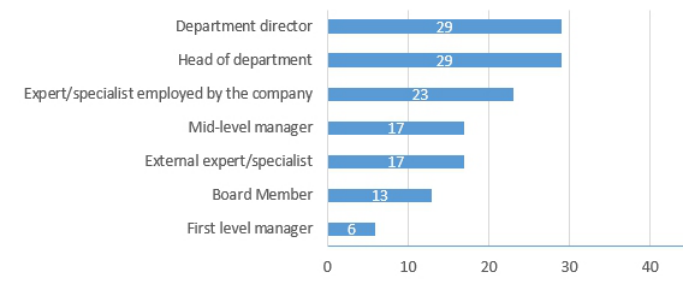
In SOEs that have a designated person for digitization, the position is most often held by either department directors or by heads of departments (29% of indications each). The least common position related to digitization is held by those representing the Board of Directors (13%) and first-level managers (6%).
Figure 14: Functions performed by the digitization specialist at the SOE N = 48.
Analysis of Readiness to Implement 509
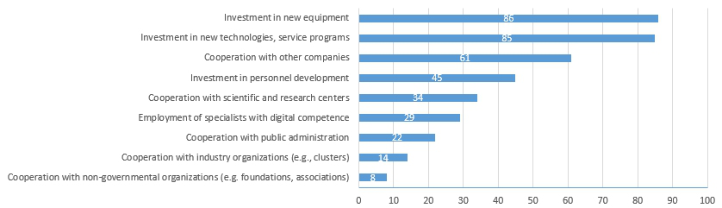
TYPES OF ACTIONS TAKEN TO INCREASE DIGITAL ADVANCEMENT IN THE SOE Investments in new equipment (86%) and investments in new technolo- gies, understood as new programs and services (85%), appeared to be the most common actions taken to increase the digital sophistication of SOEs. More than half of the surveyed SOEs (61%) undertook coopera- tion with external companies, while one in three surveyed SOEs decided to establish cooperation with scientific research centers. In contrast, the least frequently undertaken activities are cooperation with industry organizations (e.g., clusters) (15%) and cooperation with NGOs (8%).
Figure 15: List of actions taken to increase the digital sophistication of SOEs N = 170.
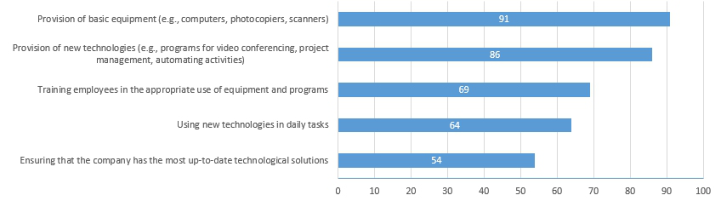
One element of the survey was also to verify how informatization is con- ducted at SOEs. According to the analysis of the survey results, conducting informatization at SOEs is most often associated with providing basic equip- ment such as computers, printers, etc. Such activities are carried out by 91% of all surveyed SOEs. Computerization involving providing employees with new technologies to conduct video conferencing, manage projects or auto- mate selected business processes, on the other hand, concerns 86% of all surveyed SOEs. On a positive note, more than half of the surveyed SOEs (54%) reported providing the most up-to-date technological solutions (e.g., programs, services) on a continuous basis.
Figure 16: Ways to conduct informatization at SOE N = 170.
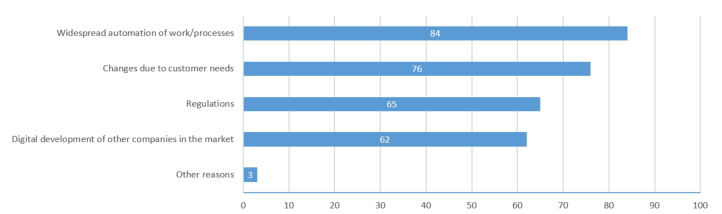
Among the external factors influencing digital transformation in SOEs, the most frequently cited were the widespread automation of work and business
510 Stefaniak
processes (84% of indications) and changes driven by customer needs (76%). Slightly less frequent indications were the issue of regulation (65%) and the digital development of other players in the market, including the desire to catch up with competitors. (62%).
Figure 17: External factors influencing digital transformation in SOEs N = 170.
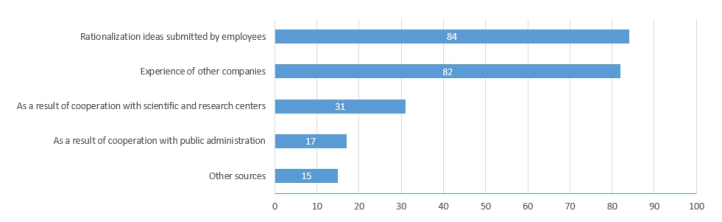
They also examined where ideas for implementing new digital technologies come from. For 84% of SOEs, the source is improvement ideas submitted by SOE employees, 82% of SOEs pointed to the experience of other companies. One in three SOEs surveyed indicated that ideas arise from cooperation with research and development centers. In contrast, the lowest percentage was for cooperation with public administration (17%).
Figure 18: Sources of ideas for implementing new digital technologies N = 93.
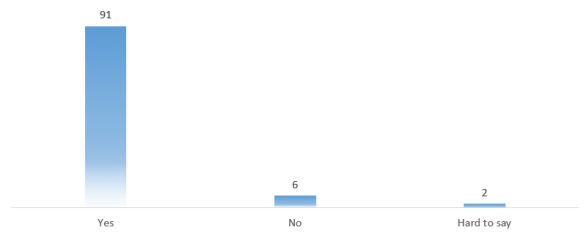
Another important aspect was to find out whether SOEs undertake coop- eration with other entities when implementing new digital technologies. The results showed that 91% of SOEs taking part in the survey do so. Only 6% of SOEs do not.
CONCLUSION
The main findings of the survey indicate that the vast majority of Polish SOEs use at least one solution of new digital technologies, the most common of which are e-services and cloud technologies. At the same time, it should be noted that the overall level of digital sophistication in the surveyed SOEs is rated relatively low by them, despite their high scores on the use of new
Analysis of Readiness to Implement 511
Figure 19: SOE’s undertaking cooperation with other entities when conducting imple- mentation work in the field of new digital technologies N = 93.
digital technologies. However, despite their low ratings on the level of digiti- zation, SOEs show a high level of interest in this topic. More than half of the surveyed entities (55%) indicated that implementation work on new digital technologies is currently underway, while 70% declare readiness and plans to start such activities. The low level of digital sophistication for small SOEs indicated in the survey is related to the entities’ low awareness of the ben- efits of using digital technologies. The main problem is the lack of trained specialists and personnel responsible for digitization in SOEs, as well as the high cost of such investments.
LISTED IN THE AHFE DIGITAL BOOKSTORE CATALOGUE
Explore the complete digital volume
Human Systems Engineering and Design (IHSED 2023): Future Trends and Applications
Read this individual research paper free through the original publisher, or explore the full digital proceedings book.
ISBN 978-1-958651-88-9
Explore this ISBN in the AHFE Bookstore ↗Listed in the July 2026 bookstore catalogue; search by ISBN to confirm current availability · Digital book purchase optional