Dimitrios Ziakkas, Julius Keller, Sudip Vhaduri (2024). The Role of Artificial Intelligence in the Fatigue Risk Management System. In: Human Interaction and Emerging Technologies (IHIET-AI 2024): Artificial Intelligence and Future Applications. AHFE Open Access, vol. 120, pp. 429–435. https://doi.org/10.54941/ahfe1004594
Fatigue in aviation is defined as “a physiological state of reduced mental or physical performance capability resulting from sleep loss, extended wakefulness, circadian phase, and/or workload (mental and/or physical activity) that can impair a person’s alertness and ability to perform safety-related operational duties”. Fatigue compromises human performance and is considered an identified threat to flight safety. Fatigue is inevitable within the aviation operations context. Therefore, fatigue cannot be eliminated; it must be managed. Fatigue Risk Management System (FRMS) has recently been implemented in airline operations. FRMS is “a data-driven means of continuously monitoring and managing fatigue-related safety risks, based upon scientific principles, knowledge, and operational experience that aims to ensure relevant personnel are performing at adequate levels of alertness”. Nevertheless, studies reported prominent levels of fatigue for 68.5% to 93% among professional pilots. This implies that current FRMS strategies need to be strengthened. The ever-growing and constantly changing aviation industry mandates novel complementary approaches to enhance the established FRMS. EASA has already acknowledged the potential benefits of artificial intelligence (AI) in aviation. Implementing AI applications in FRMS could benefit both flight safety and cost efficiency. AI can analyze various sources of data to enhance real-time detection and prediction. Countermeasures could, then, be employed to address pilots’ drowsiness and mental impairments and, thus, prevent fatigue-related incidents. This study provides a holistic human-centric approach regarding AI utilization in FRMS by outlining the potential benefits and challenges. Implementing AI applications in FRMS could benefit both flight safety and cost efficiency. AI can be integrated with existing FRMS and provide a more comprehensive approach to fatigue management. Given AI’s computational capacity, it can analyze vast amounts of various sourced data to enhance real-time detection and prediction. Countermeasures could, then, be employed to address pilots’ drowsiness and mental impairment and, thus, prevent fatigue-related incidents. AI applications are promising in using pilot’s data sourced through wearable devices (e.g., smartwatches, fitness, and eye trackers) for the detection of fatigue in domains such as a) Monitoring/analyzing electroencephalogram (EEG) signal; b) Yawing detection; c) Facial muscle detection; d) Drowsiness detection; e) Pupil detection and monitor pilot fatigue levels in real-time. Additionally, AI could analyze natural language during the pilot’s communication to detect signs of fatigue. Also, AI could integrate and contribute to fatigue flight data. Moreover, AI can contribute to FRMS by identifying high-risk periods for fatigue and developing customized mitigation strategies based on individual characteristics such as circadian rhythms, sleep patterns, and workload. AI can be used to develop predictive models that can forecast the likelihood of fatigue for individual crew members based on numerous factors, such as sleep patterns and workload. These models can inform scheduling decisions and other fatigue risk management strategies. AI algorithms could also optimize crew rostering to avoid last-minute unfit-for-duty reports and prevent additional costs. On the contrary, there are considerable challenges to overcome. The reliability and validity of data used by AI systems are critical to their effectiveness in predicting and managing fatigue. Methods to measure the accuracy and consistency of data must be established and continually monitored. Additionally, there is a risk that AI systems can perpetuate or even amplify existing biases and inequalities based on training data. Regulations and legal frameworks must be established to guide the use of AI in fatigue risk management. EASA is working on a structured AI integration within the aviation industry. Personalized and sensitive data should be collected for the intended purpose. Data governance should ensure privacy and security to protect individuals. Also, some ethical considerations could be raised (e.g., the responsibility for decision-making and accountability in case of errors or incidents. Moreover, it is essential to understand how AI systems can integrate with human factors and not become a source of stress or distraction for pilots. Non-intrusive wearable AI systems’ sensor integration is of utmost importance. Implementing AI systems can be costly, and the return on investment must be carefully considered. Determining the cost-effectiveness of AI systems in fatigue risk management is essential. Lastly, resistance to change by the users could be anticipated. The Purdue research case study connects the ongoing measurement of Fatigue in aviation training (Purdue SATT student pilots) using AI applications with the commercial aviation FRMS
Implementing AI applications in FRMS could benefit both flight safety and cost efficiency. AI can be integrated with existing FRMS and provide a more comprehensive approach to fatigue management. Given AI’s computational capacity, it can analyze vast amounts of various sourced data to enhance real-time detection and prediction. Countermeasures could be employed to address pilots’ drowsiness and mental impairment and, thus, prevent fatigue- related incidents.
AI applications are promising in using pilot’s data sourced through wear- able devices (e.g., smartwatches, fitness, and eye trackers) for the detection of Fatigue in domains such as a) Monitoring/analyzing electroencephalogram (EEG) signal; b) Yawing detection; c) Facial muscle detection; d) Drowsi- ness detection; e) Pupil detection and monitor pilot fatigue levels in real-time (Ziakkas et al., 2022).
Moreover, the aviation industry needs wearable devices to fulfill airplane certification requirements and allow pilots to perform their duties without physical or psychological restrictions. The existing wearable devices may have the following characteristics/capabilities (Ziakkas et al., 2023c):
Biometric Sensors: Wearable devices equipped with biometric sensors can measure physiolog- ical indicators such as heart rate, blood pressure, and skin conductance.
Activity Tracking: Accelerometers and gyroscopes in wearables can track physical movements and activity levels, providing insights into the pilot’s level of alertness and engagement.
Eye-Tracking Technology: Eye-tracking sensors can monitor eye movements and patterns, detecting signs of fatigue such as prolonged eye closure or erratic eye movements.
Electroencephalogram (EEG) Monitoring: EEG sensors can be incorporated to measure brainwave activity, identify- ing patterns associated with fatigue or drowsiness.
Real-time data collection and analysis are critical factors in implement- ing AI in FRMS. Purdue research team identified the following controlling factors:
Continuous Monitoring: The wearable devices continuously collect data during the pilot’s duty hours, providing a real-time assessment of their physiological and behavioral state.
Machine Learning Algorithms: Employ machine learning algorithms to analyze the data and identify pat- terns indicative of fatigue. These algorithms can learn from historical data and adapt to individual pilot variations.
Fatigue Detection and Alerts: Purdue research team focuses on identifying and forming thresholds for various physiological and behavioral parameters. The proposed system would trigger alerts indicating potential fatigue when the data surpasses these thresholds.
The Role of Artificial Intelligence in the Fatigue Risk Management System 431
Visual and Auditory Alerts Visual cues on the pilot’s cockpit displays and auditory alerts through headphones can warn the pilot when signs of fatigue are detected.
The above-identified areas determined the selected research methodology.
METHODOLOGY
Purdue proposes to evaluate the role of AI in FRMS systems using qualita- tive and quantitative methods. In order to adequately capture the complex nature of fatigue, self-reporting and survey tools used in fatigue risk manage- ment must be designed to measure the physical and psychological aspects of this phenomenon effectively. The scales should encompass items that measure fatigue in both dimensions to enable effective risk management strategies pri- oritizing operational safety. In addition, it is essential for fatigue assessments to offer the chance to conduct three broad categories of comparisons (Frone & Tidwell, 2015) within the context of the Fatigue Risk Management Sys- tem (FRMS). This study examines the extent of work-related fatigue among various groups of aircrew members with distinct characteristics, assesses the correlation between specific factors and the resulting fatigue levels, and predicts fatigue using commonly established Safety Performance Indicators monitored through AI-wearable devices. Several additional factors must be considered when assessing fatigue in an operational setting. Wearable devices limitations – certifications restrictions and resistance to change / human per- formance limitations were identified and implemented in the design or the methodology research. These constraints include limitations that may not be present in a controlled laboratory setting (Millar, 2012).
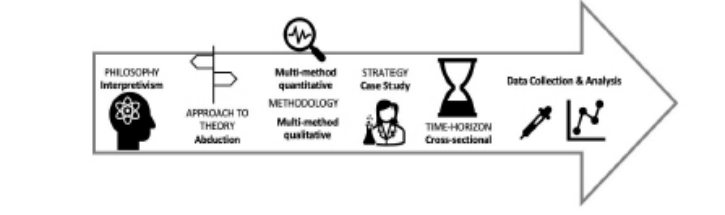
The present study employed a multi - Method approach (Saunders et al. 2019) with an interpretivism – cross sectional design. The research design consisted of three phases: a literature review, a qualitative, and a quantitative phase.
After completing the qualitative phase, a questionnaire for assessing fatigue will be created, tested (Hassan et al., 2006), and assessed to identify possible limitations of conventional methods for reporting exhaustion.
Figure 1: Research framework methodology.
FINDINGS The Purdue research team has completed the literature review on integrating AI - AI-wearable devices within Aviation Systems – training airplanes, A-320 MPS device.
The identified challenges are:
Connectivity with Flight Systems: Ensure seamless integration with the aircraft’s systems to provide real-time feedback and alerts to both the pilot and ground control.
Flight Operation Adjustments: In defined levels of fatigue detection, the system could suggest adjustments to the flight plan or recommend a break for the pilot.
User Interface for Pilots and Operators: Pilot Feedback: Provide pilots with a user-friendly interface on their smart- watches or other wearables, displaying their fatigue levels and suggesting actions to mitigate fatigue.
Operator Dashboard: Operators and aviation authorities can have a cen- tralized dashboard to monitor the fatigue levels of multiple pilots in a fleet and take proactive measures. Ethical arguments and Union collaboration are critical.
Compliance with Regulations: Regulatory Standards: Ensure the wearable computing application com- plies with aviation regulations and pilot monitoring and fatigue management standards (Ziakkas et al., 2023b).
Data Privacy and Security: Implement robust data privacy and security measures to protect sensitive information the wearable devices collect.
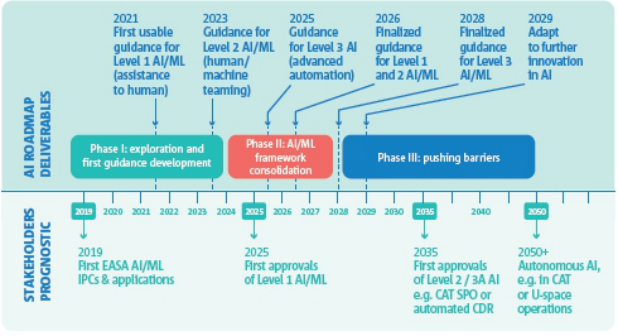
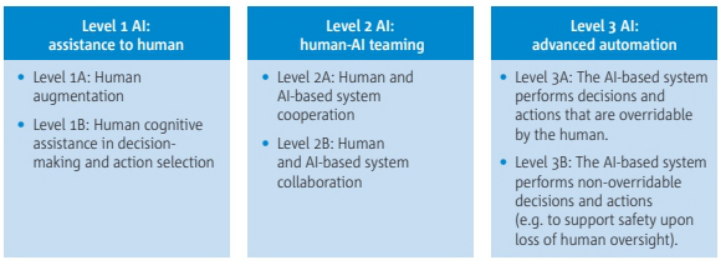
ANALYSIS Implementing a wearable computing application for identifying pilot fatigue involves a multidisciplinary approach, combining expertise in aviation, data science, and wearable technology to enhance flight safety and pilot well- being. Regular updates and improvements to the system based on feedback and technological advancements are essential for its effectiveness (ICAO, 2023). Purdue SATT follows the EASA AI research-industrial roadmap (Figure 2), focusing on Level 2 – Level 3 (Figure 3).
The Purdue research proposed levels are described in Figure 3: In the domain of commercial air transport, the timeline associated with the three steps described above could be:
First step: crew assistance/augmentation (2022-2025) – AI/FRMS Wear- able technology
Second step: human/machine collaboration (2025-2030)
Third step: autonomous commercial air transport (2035+).
The Role of Artificial Intelligence in the Fatigue Risk Management System 433
Figure 2: EASA AI roadmap (EASA, 2023).Figure 3: EASA AI levels (EASA, 2023).
Purdue research team focuses on the following areas for civil and military projects related to fatigue /FRMS:
1. Human Factors and Ergonomics 2. Information Technology 3. Operational Domain 4. Systems Engineering.
CONCLUSION
Based on the EASA Artificial Intelligence Roadmap (EASA, 2023), it has been projected by industrial stakeholders that the early advancements in crew assistance/augmentation will likely occur during the timeframe of 2022 to 2025. Additionally, AI could analyze natural language during the pilot’s commu- nication to detect signs of fatigue. Moreover, AI can contribute to FRMS by identifying high-risk periods for fatigue and developing customized mitiga- tion strategies based on individual characteristics such as circadian rhythms, sleep patterns, and workload. AI can be used to develop predictive models
that can forecast the likelihood of fatigue for individual crew members based on numerous factors, such as sleep patterns and workload. These models can inform scheduling decisions and other fatigue risk management strate- gies. AI algorithms could also optimize crew rostering to avoid last-minute unfit-for-duty reports and prevent additional costs (IATA, 2023).
On the contrary, there are considerable challenges to overcome. The relia- bility and validity of data used by AI systems are critical to their effectiveness in predicting and managing Fatigue. Methods to measure the accuracy and consistency of data must be established and continually monitored. Addition- ally, there is a risk that AI systems can perpetuate or even amplify existing biases and inequalities based on training data. Regulations and legal frame- works must be established to guide the use of AI in fatigue risk management. EASA is working on a structured AI integration within the aviation industry. Personalized and sensitive data should be collected for the intended purpose. Data governance should ensure privacy and security to protect individuals. Also, some ethical considerations could be raised (e.g., the responsibility for decision-making and accountability in case of errors or incidents).
Moreover, it is essential to understand how AI systems can integrate with human factors and not become a source of stress or distraction for pilots. Non-intrusive wearable AI systems’ sensor integration is of utmost impor- tance. Implementing AI systems can be costly, and the return on investment must be carefully considered. Determining the cost-effectiveness of AI sys- tems in fatigue risk management is essential. Lastly, resistance to change by the users could be anticipated.
ACKNOWLEDGMENT
The authors thank faculty members of Purdue University for their invaluable feedback contributing to this work.
REFERENCES
Branch, R. M. (2009). Instructional Design: The ADDIE Approach. Springer Science + Business Media, LLC. EASA. (2023). Artificial Intelligence Roadmap: A human-centric approach to AI in
aviation. Frone, M. R. and Tidwell, M.-C. O., 2015. ‘The Meaning and Measurement of Work Fatigue: Development and Evaluation of the Three-Dimensional Work Fatigue Inventory (3D-WFI).’ Journal of Occupational Health Psychology 20 (3), 273–288. Hassan, Z. A., Schattner, P., and Mazza, D., 2006. ‘Doing a Pilot Study: Why Is It
Essential?’ Malaysian Family Physician 1 (2), 4. International Air Transport Association. (2023). IATA Pol- icy Position on Aviation Cybersecurity. Request for Action From Civil Aviation Stakeholders, Regulators and Authorities. https://www.iata.org/contentassets/f23f6fa53f6b4dff8178bf88102c9f09/acysec- industryposition-2023.pdf International Civil Aviation Organization. (2023). CBTA Instructional System Design. https://www.icao.int/safety/OPS/OPS-Normal/Pages/CBTA-Instructional- system-design.aspx
The Role of Artificial Intelligence in the Fatigue Risk Management System 435
Millar, M., 2012. Measuring Fatigue. Saunders, M. N. K., Lewis, P., and Thornhill, A. (2019) Research Methods for Business Students. Eighth Edition. New York: Pearson. Sallinen, M., Laukkanen-Nevala, P., Puttonen, S., Virkkunen, I., Vanttola, P., &
Olkinuora, A. (2019). Well-being at work among helicopter emergency medical service personnel in Finland. https://core.ac.uk/download/200765449.pdf Sever, H. (2023). A demographic research on compassion fatigue and job satisfaction levels of aviation employees. Journal of Aviation, 7(1), 29–38. https://doi.org/10.30518/jav.1177750 Zhang, X., Liu, M., Bai, P., & Zhao, Y. (2023). Effects of Fatigue and Tension on the
Physical Characteristics and Abilities of Young Air Traffic Controllers. Applied Sciences, 13(18), 10383. Ziakkas, D., Chazapis, S., & Plioutsias, A. (2022). Safety Climate Assessment: The implementation of psychological fatigue indicators in airline fatigue risk manage- ment systems. Transportation Research Procedia, 66, 26–39. https://doi.org/10. 1016/j.trpro.2022.12.004 Ziakkas, D., Pechlivanis, K., & Keller, J. (2023a). The implementation of Artificial
Intelligence (AI) in Aviation Collegiate education: A simple to complex approach. Proceedings of the 6th International Conference on Intelligent Human Systems Integration (IHSI 2023) Integrating People and Intelligent Systems, February 22–24, 2023, Venice, Italy. https://doi.org/10.54941/ahfe1002863 Ziakkas, D., Sarikaya, I., Natakusuma, H. C. (2023b). EBT-CBTA in Aviation Training: The Turkish Airlines Case Study. In: Harris, D., Li, WC. (eds) Engineering Psychology and Cognitive Ergonomics. HCII 2023. Lecture Notes in Computer Science (), vol 14018. Springer, Cham. https://doi.org/10.1007/978-3-031-35389- 5_14 Ziakkas, D., Vink, L.-S., Pechlivanis, K., & Flores, A. (2023c). Implementation Guide
for Artificial Intelligence in Aviation: A Human-Centric Guide for Practitioners and Organizations.
LISTED IN THE AHFE DIGITAL BOOKSTORE CATALOGUE
Explore the complete digital volume
Human Interaction and Emerging Technologies (IHIET-AI 2024): Artificial Intelligence and Future Applications
Read this individual research paper free through the original publisher, or explore the full digital proceedings book.
ISBN 978-1-958651-96-4
Explore this ISBN in the AHFE Bookstore ↗Listed in the July 2026 bookstore catalogue; search by ISBN to confirm current availability · Digital book purchase optional