Devon Ward (2024). Mycography and Biodesign Pedagogy: Concepts and Methods for Creating Living Posters. In: Interdisciplinary Practice in Industrial Design. AHFE Open Access, vol. 144, pp. 38–45. https://doi.org/10.54941/ahfe1005116
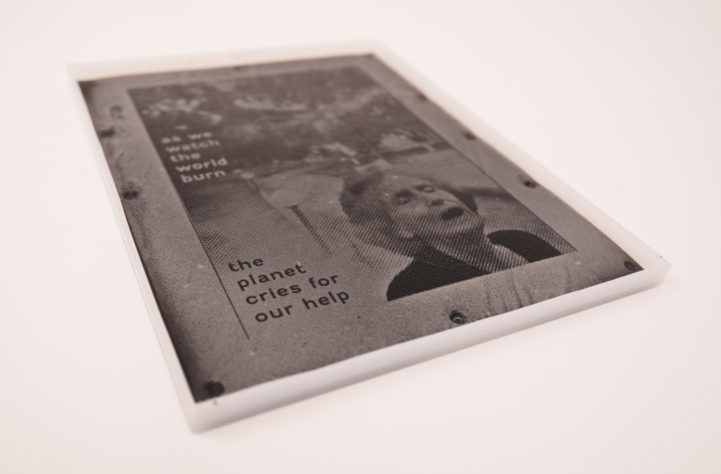
This paper presents the outcomes from one design studio taught in the School of Industrial and Graphic Design at Auburn University. Students were introduced to the field of biodesign, a relatively nascent field that combines design and biology. Biodesign is a broad domain with practices that range from discursive to utilitarian and whose outcomes may be material or conceptual. This studio focused on the creation of a biodesign project that was material and discursive. In other words, students used living microorganisms to create images that promote reflection and discussion. Students began by learning an experimental image-making process, referred to here as mycography, which uses microorganisms from the fungi kingdom in lieu of ink or photo paper. Similar to darkroom photography, mycography may use light to create an image from a negative. Next, students were asked to create living images that expressed their relationship with the natural environment. Their design organism was Saccharomyces cerevisiae, which is more commonly known as brewer's yeast or baker's yeast. After numerous initial tests, they created living posters that were 30 cm x 40 cm (12 in x 16 in). Unsurprisingly, in a time of ubiquitous ecological disruption, their posters expressed concern about our changing climate. The living posters that students created acted as a call-to-action and conveyed a sense of urgency about environmental degradation. At the same time, using a living organism as a design material provided a vital learning analogy for students: the images created with brewer's yeast resisted complete control and mimicked our relationship with the natural world. Through hands-on making with another organism, students gained a greater sense of agency while also recognizing the impact that design can have on other organisms.
The history of design is replete with examples of designers who have experimented with new processes, technologies, and materials. In the early 20th century, Lázló Maholy-Nagy, along with many others, experimented with photography as medium for creative expression. The designers of the Bauhaus incorporated the latest manufacturing processes to make furniture and industrial objects. Designers in the late 20th century utilized personal
Mycography and Biodesign Pedagogy: Concepts and Methods for Creating Living Posters 39
computers to speed up the design process. This was followed by the creation of web design as a sub-field within graphic design. So it is no surprise that as the cost of biotechnologies has decreased and these materials have become more accessible, designers in the 21st century have begun to utilize living organisms and natural materials as a design medium. This practice has coa- lesced into a field known as biodesign (Myers, 2012; Catts and Zurr, 2014; Ginsberg et al., 2017; Byrne et al., 2019).
In the past two decades, biodesign has grown into a more robust field as artists, designers, engineers, and have crossed traditional disciplinary boundaries to develop projects that use living organisms and natural mate- rials (Cogdell, 2011). As the field of design expands to incorporate biode- sign practices, so too must design education expand in order to train the next generation of designers, who may need utilize biodesign as another process within their repertoire of creative activities (Ward & Jedenov, 2022). This paper presents the outcomes from one biodesign assignment offered to graphic design students within an interactive media design studio. It focuses on the concepts and methods utilized to create living posters and pro- vides insights about how biodesign processes can be included within existing pedagogical frameworks.
CONCEPTUAL FRAMEWORK FOR BIODESIGN EDUCATION
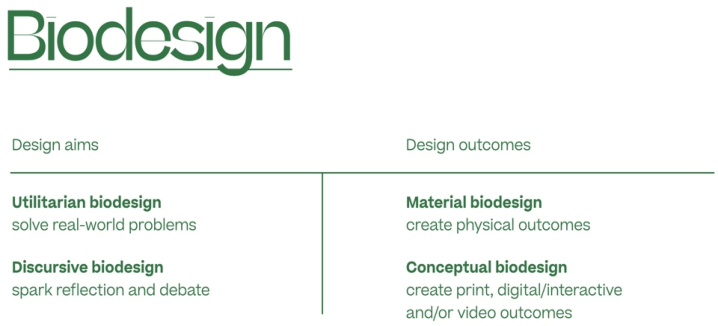
Figure 1: Biodesign matrix for teaching biodesign to university students.
Biodesign is a diverse field with a range of different processes, aims and outcomes. Biodesign projects may be utilitarian, speculative or conceptual. Some practitioners may use synthetic biology to modify organisms while oth- ers may use organic materials to create sustainable products (Myers, 2012; Ginsberg et al., 2017). Still others may utilize organisms within an artis- tic installation to raise awareness about a particular societal issue (Catts and Zurr, 2014; Byrne et al., 2019). This diversity provides a wellspring of creative solutions to combat many contemporary problems, but it can
40 Ward
also make biodesign unwieldy to teach. Different practitioners may have different value systems for determining the success of a project. How does one begin to categorize biodesign projects in a value-neutral manner so they can be taught to university students? To answer this question, four broad categories were developed to provide a clear, even-handed frame- work for organizing biodesign projects based the design aims and outcomes (see Figure 1).
Broadly speaking, there are two general biodesign aims: utilitarian and discursive. Utilitarian biodesign seeks to solve contemporary problems while discursive biodesign aims to raise awareness about a particular problem. Biodesign that is discursive includes a host of critical and speculative design approaches (Dunne & Raby, 2011; Malpass, 2017; Tharp & Tharp, 2018). In terms of design outcomes, there are two general categories: material biode- sign and conceptual biodesign. As the name suggests, material biodesign utilizes living organisms or organic materials to produce physical objects. However, there are some biodesign projects that pose serious ethical dilem- mas and may function as provocations, speculations or thought-experiments, and therefore are not physically produced. Instead, these conceptual biode- sign projects are presented through conventional design mediums such as diagrams, posters, drawings, illustrations, videos, motion graphics, inter- active media, etc. Overall, these four categories of biodesign—utilitarian, discursive, material, and conceptual—present a clear, value-neutral way to teach biodesign to tertiary students. This framework can provide a sharper understanding of how different biodesign projects function within a larger societal context.
MYCOGRAPHS: TEACHING BIODESIGN AND BIOPRINTING TO GRAPHIC DESIGN STUDENTS After providing students with a broad overview of biodesign practices using the biodesign matrix, students began working with a specific technique to make their living posters: bioprinting. According to the biodesign matrix pre- sented above, bioprinting would be categorized as a discursive and material biodesign project. The bioprinted images are meant to encourage reflection and contemplation, but they do not solve a utilitarian issue. Other exam- ples of bioprinting include Binh Danh’s chlorophyll prints and Sharon Lee Hart’s spinach anthotypes. However, the specific bioprinting method used for this studio was developed by Johanna Rotko, and uses Saccharomyces cerevisiae to make images (Rotko, 2013). The binomial name S. cerevisiae literally translates to “sugar fungus of beer” and is more commonly known as brewer’s yeast or baker’s yeast. Because S. cerevisiae is part of the fungi kingdom, this bioprinting technique will be referred to as mycography (i.e., “fungi drawing”).1
1Note: This term mycography is also broad enough to encompass bioprinting that uses other organisms within the fungi kingdom. Additionally, bioprinting that utilizes protists such as Physarum polycephalum, slime mold, can be referred to as protography (i.e., “protist drawing”).
Mycography and Biodesign Pedagogy: Concepts and Methods for Creating Living Posters 41
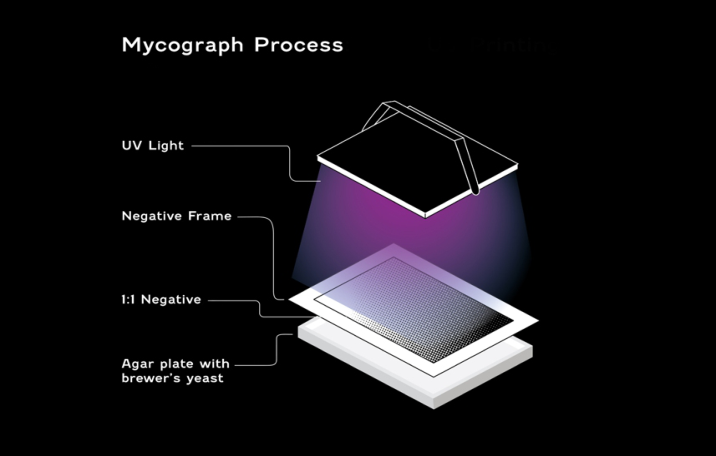
Figure 2: Diagram of mycograph bioprinting process. Diagram designed by Erika Donley.
Mycographs shares some similarities with traditional darkroom photogra- phy (see Figure 2); however, exposure times can take days instead of minutes. The photo paper used in black-and-white gelatin silver prints is replaced with a 30 cm x 40 cm (12 in x 16 in) agar plate that is coated with a thin layer of S. cerevisiae. The agar plate contains activated charcoal and pro- vides a black background. S. cerevisiae is naturally white, so the agar and the brewer’s yeast work in tandem to create a black-and-white image. Addi- tionally, the 35mm negative of traditional photography is replaced with a large 1:1 acetate negative, upon which students printed their designs. Finally, the overhead projector with a 5000K white light is replaced by a UV light. When S. cerevisiae is exposed to UV light its growth is inhibited, revealing the charcoal agar plate. Depending on the size of the image and the intensity of the UV light, exposures for one image can take 24–72 hours. Once the exposure is complete a temporary image is produced. However, because the image is living, the S. cerevisiae continues to grow—thereby expressing its own agency—and eventually the image will disappear.
The design prompt for this assignment was aimed at amplifying the intrin- sic qualities of mycography. Students were tasked with creating a poster series that expresses our relationship with the natural world. In this sense, S. cere- visae is a metonymic device: this organism is a stand-in that represents our experience with the environment. Just as our environment is not fully within our control, neither is the mycograph. With mycography, every print involves a certain amount of chance. Each image involves an aleatoric interaction between the designer and S. cerevisae. There is no standardization—no abso- lutely perfect high-fidelity image. Every print includes inconsistencies and moments that are outside of the designer’s control. Therefore, the process
42 Ward
required to create a mycograph is the perfect training ground for design stu- dents to begin to consider how design impacts—and is impacted by—other organisms and the natural world. After working through many iterations, the students created a series of three mycographs titled Climate Chronicles, which tells the story of how humans have impacted the environment over the past 200 years and urges greater action to meet net zero emissions by 2050.
METHODS: BIOPRINTING MYCOGRAPHS While the final mycographs were 30 cm x 40 cm (12 in x 16 in), students began their assignment working at a smaller scale with circular petri dishes (10cm) and square silicone moulds (10cm x 10cm x 2.5cm). The smaller scale helped students gain proficiency mixing ingredients, culturing the brewer’s yeast, and developing their images. They ran several tests to identify the minimum point-size for typography and halftone patterns for imagery. Addi- tionally, because this class took place in a design studio, not a laboratory, DIY bio techniques were used to make this process more approachable. Therefore, laboratory aesthetics were minimized and all the materials were purchased from a local grocery store.
Methods and Materials for Printing Living Posters (30 cm x 40 cm) To mix the culture media for 30 cm x 40 cm posters, combine 1L dis- tilled water with 10g sugar, 10g beef bouillon (Herb-Ox), 10g yeast extract (Marmite), 0.6g active charcoal, and 130g agar agar powder (Golden Coins Powder). When mixing the media, the order in which ingredients are added is important. First, sugar, beef bouillon, and yeast extract are stirred into 1L of distilled water. Next, the charcoal is added to the solution. Lastly, agar agar is added and stirred until it is fully dissolved.
Once the 1L culture media solution was mixed, it was sterilized with a microwave in lieu of an autoclave. A Tupperware bowl containing 800mL of media was sterilized for 5 minutes on high. Next, it was stirred for 30 seconds and then placed back in the microwave for another 5 minutes. Then, the media was poured into a rectangular silicone mold (30cm x 40cm x 2.5cm) and allowed to cool. After the media set for 2 hours it was ready to be coated with brewer’s yeast.
In a 250 mL glass media bottle add 0.13g of instant brewer’s yeast. Then, add 200 mL of distilled water and stir gently until the yeast is fully dissolved. Next, gently pour the yeast solution onto the surface of the culture media. Allow the solution to thoroughly cover the surface and let it sit for 5 minutes. Then, pour out the excess solution and use a small pipette to remove any remaining liquid.
To create the poster designs, students used Adobe Illustrator and Adobe Photoshop to create black-and-white images. Then, they inverted the images to create negatives and printed them on large sheets of clear acetate (∼30cm x 40cm). The negatives were mounted to a wooden frame and place on top of the large silicone mold. There was approximately a 1cm gap between the yeast-coated culture media and the acetate negative. Then, the mold and the negative were taken into the darkroom and placed under a UV light (50W
Mycography and Biodesign Pedagogy: Concepts and Methods for Creating Living Posters 43
LED Caydo exposure unit for screen printing) for 24–72 hours. The distance between the surface of the negative and the light was roughly 45 cm (∼18in). The exact exposure time varied for each print, so the mycograph needed to be checked every 6–12 hours.
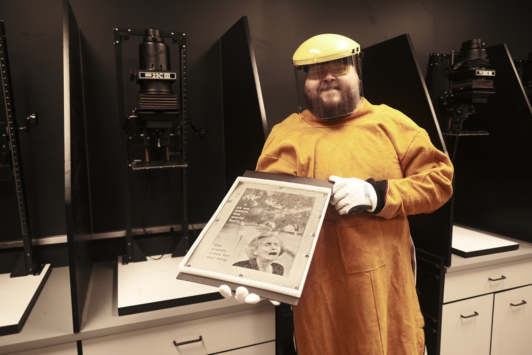
Figure 3: Photograph of mycograph printed by Zach Smith.
Safety Considerations and Personal Protective Equipment Special precautions should be taken when working with large UV lights. Prior to entering the darkroom, all students wore appropriate personal protective equipment to protect against UV exposure. All printers put on UVS-40- Spectroline Safety Spectacles and a UVF-80 Spectroline UV absorbing face shield. This equipment is ANSI Z87.1+U6 Certified and designed to block 99.9% of Ultraviolet light. Additionally, all printers wore welding smocks and welding gloves to protect the body against UV exposure (See Figure 3).
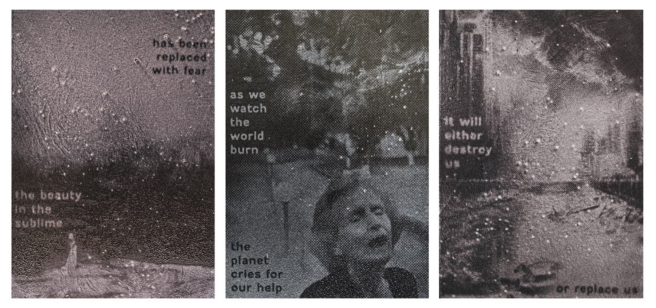
Figure 4: Final triptych, climate chronicles: images of Yesterday, Today, and Tomorrow.
44 Ward
CONCLUSION
The final result of the assignment was the creation of a triptych titled Cli- mate Chronicles: Images of Yesterday, Today, and Tomorrow and features three landscapes from different time periods (see Figure 4). The first myco- graph focuses on the past and showcases a living print of the 1810 painting “Monk by the Sea”by David Caspar Friedrich. The painting encapsulates the experience of the natural sublime before the effects of industrialization were rampant. The second mycograph focuses on the present and features a reprint of a photo taken by Konstantinos Tsakalidis during the 2021 extreme wild- fires in Greece (see Figure 5). It emphasizes the tragedy of the Anthropocene and the impact that humans have had on our global ecology. The final myco- graph visualizes a future in which humanity does not reach its goal of net zero emissions by the year 2050. The landscape depicts crumbling skyscrapers, run-down infrastructure, and rubble lining the city streets. Students created this final image with Midjourney, an AI image-generation software, using a simple prompt: “Climate change. Collapsed society.” It reflects the fear that civilization will not meet its goal of limiting global temperature rise to only 1.5
C (2.7
F) above pre-industrial temperatures.
Figure 5: Mycograph from the triptych climate chronicles.
As a biodesign project, Climate Chronicles can clearly be classified as hav- ing discursive aims and material outcomes. The triptych is meant to provide a stark call-to-action by showcasing how our relationship to the environment has shifted in the past 200 years due to industrialization, globalization and technological development. The dystopian nature of the final image conveys a sense of urgency about environmental degradation, encouraging viewers
Mycography and Biodesign Pedagogy: Concepts and Methods for Creating Living Posters 45
to take action. At the same time, using a living organism as a design mate- rial provided a vital learning analogy for students: the images created with brewer’s yeast resisted complete control and mimic our relationship with the natural world. As much as we might attempt to gain mastery over our envi- ronment, there are unintended consequences that are beyond our control. Through hands-on making with another organism, students gained a greater sense of agency while also recognizing the impact that design can have on other organisms.
REFERENCES
Byrne, Emmet, ed, Blauvelt, Andrew, Fanning, Colin, Hiesinger, Kathryn, ed, López- Pastor, Maite Borjabad, ed, Fisher, Michelle, ed, Ryan, Zoë, ed, Telhan, Orkan. (2019) Designs for Different Futures. Yale University Press. pp. 98–122. Catts, Oron, Zurr, Ionat. (2014) “Growing for different ends.” The International
Journal of Biochemistry & Cell Biology. Volume 56. pp. 20–29. Cogdell, Christina. (2011). “From Bioart to Biodesign.” American Art. 25(2). 25–29. Dunne, Anthony, Raby, Fiona. (2013). Speculative everything: Design, fiction, and social dreaming. The MIT Press. Ginsberg, Alexandra Daisy, Calvert, Jane, Schyfter, Pablo, Elfick, Alistair, Endy,
Drew (2017) Synthetic Aesthetics. The MIT Press. pp. 39–70. Malpass, Matt. (2017). Critical design in context: History, theory, and practices.
Bloomsbury Academic, an imprint of Bloomsbury Publishing Plc. Myers, William. (2012). Bio Design: Nature, Science, Creativity. Thames & Hudson.
pp. 6–17. Rotko, Johanna. (2013) “Yeastograms.” Pavillon 35. Accessed February 03, 2024.
https://pavillon35.polycinease.com/yeastograms/ Tharp, Bruce, Tharp, Susan. (2018). Discursive design: Critical, speculative, and alternative things. The MIT Press. Ward, Devon, Jedenov, Kirill de Lancastre (2022) “Education in the Expanded Field
of Design: Biological Design.” Proceedings from the National Conference for the Beginning Design Student (NCBDS 37). Ball State University: Muncie, Indiana.
LISTED IN THE AHFE DIGITAL BOOKSTORE CATALOGUE
Explore the complete digital volume
Interdisciplinary Practice in Industrial Design
Read this individual research paper free through the original publisher, or explore the full digital proceedings book.
ISBN 978-1-964867-20-5
Explore this ISBN in the AHFE Bookstore ↗Listed in the July 2026 bookstore catalogue; search by ISBN to confirm current availability · Digital book purchase optional