Danmeng Xu, Rui Xu, Changfeng Jiang, Hongjun Yu, Ziqiong Yang (2024). A brief analysis of the application of the five senses in emotional design - taking tea tray design as an example. In: Usability and User Experience. AHFE Open Access, vol. 156, pp. 135–143. https://doi.org/10.54941/ahfe1005423
With the improvement of people's economic level, products that adhere to the principle of "form follows function" can no longer meet consumers' basic needs. Therefore, consumers shift their demands more towards the emotional experience and emotional levels of products. In this context, designers should adapt to the transformation point that "emotional design is gradually becoming the development trend of product design," making products meet users' emotional needs and thereby increasing the "stickiness" of products to users. Objective: This article will combine emotional design and sensory experience to design the various aspects of product experience, thereby stimulating users' emotional resonance. Subsequently, by analyzing the sensory needs of users, the usage experience of users will be integrated into the design of the tea tray to meet the sensory experience of consumers. Method: Firstly, market research methods will be used to collect and analyze data. Secondly, by comparing the differences between emotional design, design rich in emotion, and emotional design, as well as the role of the five senses in emotional design, the application methods of the five senses in the design of the tea tray under the concept of emotional design will be obtained. Finally, the derived theories and methods will be applied to practice. Conclusion: This article analyzes from two aspects of emotional design and sensory experience, and applies the conclusions drawn to the design of the tea tray, enabling the product to better meet users' diverse emotional needs.
Emotional Design Concept The word “emotion” was first proposed by Plato around 1955(Ho and Siu, 2012), the introduction of this term triggered the initial discussion of the meaning of “emotion” and later transformed into the study of “emotional design”. Designers have found that exploring emotional design can help build a bond of communication between users and products. American cognitive psychologist Donald. A. Norman mentioned in the book “The Design of Everyday Things”written in 1988: “Designing an effective interface, whether
it is a computer or a doorknob, must start with analyzing an What people want to do, rather than starting from a metaphor or an idea about what the screen should display.” His goal is not only to satisfy people’s rational needs, but more to satisfy people’s emotional needs and bring a new dimension to the design community. Come to a new theory - emotional design. However, due to the complexity and diversity of “emotional design” (Norman, 1988), the definition of “emotional design” is still vague today. Therefore, people have to re-examine Emotion Design and Emotional Design/Affective Design (the former has a certain neutral color to express emotions and emotions, which generally refers to the subtle changes in thoughts and feelings caused by external stimulation to the most intense attacks, including positive ones). As well as product design with negative emotions, the latter has the mean- ing of love, and is more about product design that provides consumers with positive and positive emotions. Emotional Design includes Affective Design.) and Emotionalize Design.
Emotional Design refers to designing based on the subjective emotions of the designer, hoping to establish a bridge of emotional communication between designers and users through “design” and the designed products as a medium. However, design works often only contain the designer’s personal emotions, while the emotional process of users towards the design results is ordinary, but the emotional responses are quite complex - these complex emotions become the foundation for the formation of Emotionalize Design location.
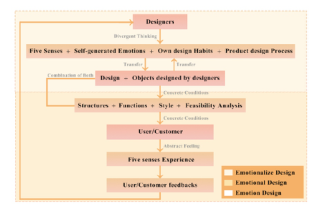
Emotionalize Design means that designers have established a set of emo- tional design models through user feedback. After users put forward their needs, they design based on the established emotional design model to meet the emotional needs of users and achieve emotional resonance between the two. Compared with Emotional Design, Emotionalize Design exists more as a progressive relationship of Emotional Design. Emotion Design covers a wider scope, including Emotional Design and Emotionalize Design (see Figure 1).
Figure 1: Self-made mind map.
Three-Level Concept of Emotion Donald Norman divided emotional design into three levels, namely the instinctive level, the behavioral level and the reflective level. The instinctive
A Brief Analysis of the Application of the Five Senses in Emotional Design 137
layer precedes consciousness and thinking, and is the basis for the forma- tion of appearance elements and first impressions (Guo, 2023). The design at the instinctive level can bring the most direct feelings to consumers and can arouse consumers’ emotional changes the fastest. For example, the shape, color, touch, taste, etc. of the product. These factors directly stimulate consumers’ five senses and arouse their emotional fluctuations, gradually forming consumers’ first impression of the product. If a product brings a good first impression to consumers, then the changes in their emotions will also be positive. This positive emotional change will be directly transmitted to the brain, prompting users to engage in selective consumption behavior. Consumption behavior adopted by users based on the emotions caused by design results (Ho and Siu, 2012), and the parts that users can subjectively control belong to the category of instinctual level (for example: behavior).
Behavioral layer design pays more attention to interactivity, functional- ity, understandability and user experience. It focuses on user behavior, and through in-depth observation and detailed research of the target group, it can gain insight into their living habits and personal needs. Then, the designer designs the product function, structure, and appearance on this basis. Then, users learn the usage process conveyed by the designer. Designers should enable users to solve problems through the most direct and simple process and achieve psychologically expected effects, so as to satisfy users’ desire to control the product. This emotional triggering is one of the core goals of designers: taking tea tray design as an example, this means that designers need to understand and predict the specific scenarios and ways in which users will use tea trays.
Consciousness and higher-level feelings, emotions, and perceptions exist at the reflective level. Only at the reflective level can you experience the com- plete integration of thoughts and emotions (Guo, 2023). The design of the reflective layer is often related to the user’s own experience and the influence of the external environment. After the designer tells the story of each prod- uct, the user starts from the product story and intention and falls into deeper and multi-angle thinking. In most cases, designers will incorporate personal emotions based on user needs when designing products, hoping to use the product as a medium to enable consumers to find emotional resonance in the product, enhance users’ sense of identification with the product, and thereby increase the user stickiness of the product and product loyalty.
Overview of Five Senses Experience Five-sense experience is when human beings use their five senses (vision, hear- ing, smell, taste, touch) to transmit and obtain information, and produce direct psychological reactions. On this basis, a series of information syn- thesis and processing are carried out, and finally a higher level of rational construction is achieved (Qian and Ye, 2016). Therefore, in the process of researching the tea tray, the five senses experience and people’s multi-angle feelings about things are combined with a variety of external information, so that designers can gain insight into subtle changes in users’ emotions. Mastering and analyzing these changes can bring new interpretation and
analysis to tea tray design, and effectively broaden the ideas of tea tray design.
Vision, as the most important organ among the five senses, has func- tions that other organs do not have. Experimental psychologist Chirutra has proven through a large number of experiments that 83% of the informa- tion humans obtain comes from vision. It can be seen that vision plays an extremely important role in people’s production and life. The shape, text, color, etc. of the product are information that users can directly capture through vision, which can quickly build people’s first impression of the prod- uct. Only products with excellent appearance, colors that are different from competing products, and special textures can attract users’ attention and arouse users’ emotional changes, thus deepening their impression of the prod- uct, achieving a photographic effect, and enhancing users’ understanding of the brand or brand. Product interest.
As a sense that easily triggers emotional fluctuations, hearing can enable people to obtain object information and produce corresponding emotional changes. These emotional changes can use hearing as a carrier, or they can exist as characters that enhance user experience. A good sense of hearing can be used as a directional principle to improve the auditory experience in product form design. Designers can integrate the perceived changes in user emotions and pleasant sounds into the tea tray design to make the tea tray stand out from the traditional tone of competing products. And make users feel more emotional.
The sense of smell has a profound and lasting impact on people, and it can make people associate more quickly than vision, and according to scien- tific proof, the accuracy of olfactory memory is twice as high as that of vision (Lu, 2023). A high-quality olfactory experience not only enhances consumers’ overall perception and impression of the product, but also produces a phys- ical response. For example, smelling a familiar smell may remind people of something that happened a long time ago, or entering a shopping mall and smelling a familiar smell can directly associate them with the corresponding brand. Therefore, designers can improve the brand benefits of the product and increase brand recognition by meeting the user’s olfactory needs when designing works.
The sense of taste is triggered by the taste buds on the tongue and is the most difficult to express among the five senses. Often accompanied by other senses. For example, when consumers see yellow food, the brain receives information and stimulates the salivary glands, resulting in a sour taste expe- rience. The emotional changes brought about by taste vary depending on individual differences, so considering the user’s taste experience in design can create a deeper impression.
The tactile system is distributed throughout our body, and the skin is the largest sensory organ in the human body (Lu, 2023). People are also accus- tomed to obtaining information and sensing things through the tactile system in their daily lives. For example, when shopping, consumers often subcon- sciously touch products to judge their quality. The information consumers perceive through mobilizing the tactile system can greatly promote their desire to purchase products. Many “decompression products” appearing on
A Brief Analysis of the Application of the Five Senses in Emotional Design 139
the market today release users’ stress through innovation in product appear- ance and materials to meet the diverse needs of users, thereby achieving the effect of relieving stress and relaxing body and mind.
This article uses the term “Emotionalize Design” to describe related aca- demic research in which product design considers consumers by combining five sense experiences.
EMOTIONALIZE DESIGN ON TEA TRAY DESIGN The Impact of the Application of Emotionalize Design on Tea Tray Design
Emotionalize Design concept is to put the user’s emotional needs at the center of product design, and form the designer’s design model through user feed- back. This influence and change on traditional tea tray design is significant. Traditional tea tray design often emphasizes functionality and traditional aes- thetics, while Emotionalize Design pays more attention to user experience, emotional resonance and personalized needs. Emotionalize Design makes the tea tray not only a tool for making tea, but also a carrier of culture and emotion. Designers can create tea trays that have both traditional charm and modern aesthetics through an in-depth understanding of tea culture, combined with modern aesthetics and user emotional needs.
The Significance of the Application of Emotionalize Design to Tea Tray Design Emotionalize Design provides users with value beyond traditional function- ality by focusing on their emotional needs and experiences. This is not only reflected in the aesthetic design of the tea tray, but also in how to increase the depth and breadth of the interaction between the user and the tea tray through design. For example, designers may consider the user’s tactile experi- ence when using a tea tray, choose materials that can convey a warm feeling, or design a functional tea tray that can automatically adjust according to the type of tea, so that users can feel more comfortable during use. caring and considerate. In the context of globalization, traditional culture, especially tea culture, needs to be passed on in a more inclusive and innovative way, and Emotionalize Design provides a possibility.
How to Use the Five Senses in Tea Tray Design Under the Concept of Emotionalize Design
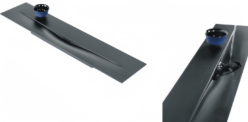
Figure 2: PING AO (quote from Wang and Wang, 2020).
The tea tray, also known as the tea boat, is a shallow-bottomed vessel for placing teapots, tea cups, tea ceremony sets, tea pets and even tea snacks. It has always played a supporting role on the tea table. The tea tray is an indis- pensable item on the tea table, and it is also the product that can best create a tea-drinking atmosphere and create artistic conception, so the Emotionalize Design of the tea tray is essential.
Take the “flat concave” tea tray as an example (see Figure 2). This is a detachable double-layer water storage tea tray. It is composed of a natural stone surface and an aluminum chassis. The tapered center line divides the tea tray into a flat surface and a gradually changing concave surface (Wang and Wang, 2020). Through the combination of virtual and solid surfaces on both sides, it increases the layering and rhythm of the tea tray. The tea slowly flows out through the concave slope, achieving a kind of artistic beauty and meeting the visual and auditory needs of users. Because the tea tray is made of stone and adopts minimalist design principles, it is not easy to retain tea stains and avoid burdening consumers’ olfactory senses. It provides consumers with a more comfortable tea drinking experience, enhances the pleasure of tea tasting, and drives drinking. Smell and taste experience with tea. Designers meet consumers’ sensory experience and instinctive emotional needs through the design of appearance.
The tea tray’s “dry and wet separation” design and gradual arc can guide users to pour tea and achieve efficient water drainage and draining (Wang and Wang, 2020). The drain outlet is located in the center of the tea tray and is the visual focus, allowing users to directly observe it. The drainage situation improves the functionality of the product and facilitates the use process for consumers. Designers design from the perspective of consumers and focus on meeting the emotional needs of consumers at the behavioral level through optimizing product functions, thereby enhancing the user stickiness of the tea tray.
TEA TRAY DESIGN PRACTICE BASED ON THE FIVE SENSES UNDER THE CONCEPT OF EMOTIONALIZE DESIGN Design Background
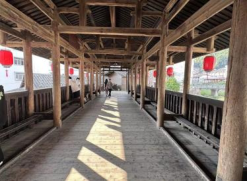
Figure 3: Outdoor photography material.
Through field research and visits, the team found that Fuxi Town, Ningde City, Fujian Province has a strong historical and cultural heritage (see
A Brief Analysis of the Application of the Five Senses in Emotional Design 141
Figure 3). The local government hopes to make the local culture and customs known to more people through the combination of products and culture., enhance the visibility of local culture. In this regard, the local government has also promoted some cultural and creative designs, but due to the single product shape and insufficient product functionality, it cannot well arouse emotional changes in consumers.
Design Positioning As a tray that carries tea sets and tea soup, the tea tray involves the entire pro- cess of making tea, such as washing the tea, making the pot, warming the cup, draining the water, dividing the tea, and tasting the tea. It can not only create a sense of hierarchy on the tea table, but also help users feel comfortable. Preface to make tea (Wang and Zifan Wang, 2020), and based on the local stable tea industry and tea-drinking culture, we analyzed based on the survey results and found that the groups for using tea trays are mainly freelancers and white-collar workers aged 18-35, and Most people know little about the history and culture of Fuxi Ancient Town. For this survey, the target group of this tea tray was targeted, namely entrepreneurs, tea culture enthusiasts, high-quality life pursuers, and culture enthusiasts. Based on the research on the target population, the target market has been clarified. Internally, it is mainly the first- and second-tier cities and the tourist souvenir market, and externally, it is mainly the overseas Chinese market to meet the most basic emotional consumption needs of different target users.
Design Concepts and Plans
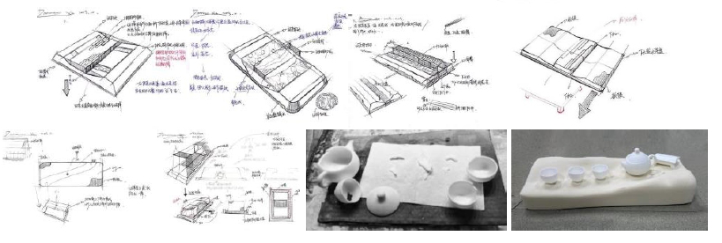
Figure 4: Practice process.
This practice will use the unique landmark building “Guisi Bridge” in Fuxi Town, Ningde City as an example to refine its overall shape and ideolog- ical meaning and apply it to the tea tray design, so that the Gui Si Bridge cultural characteristic tea tray fits the local characteristic cultural drink Tea Customs attempts to conduct cross-border integration and practical explo- ration of Guisiqiao culture and modern creative design (see Figure 4). The design of the tea tray follows the keyword - Ethereal proposed by Yangde- sign’s 2023–2028 industry trend report analysis. Through the Emotionalize
Design of its appearance and product functions, users can arouse emotional fluctuations at the instinctual level by mobilizing the senses. The emotional resonance between consumers and the tea tray improves the “first impres- sion” of the product. It is hoped that consumers can seize the moment and enjoy the present. This is the same as the design concept of the tea tray.
Material Selection and Reasons for Selection With the gradual improvement of people’s living standards, the shape and function of tea trays have changed, and their processing materials have also changed - from bamboo and wood to stone to glass, plastic and other materi- als. Among them, Wujin stone is a high-end stone. Its characteristics are high hardness, good density, no deformation, no cracking, no fading, no odor, and no tea stain when exposed to cold or heat (Sun, 2015). These characteris- tics allow each piece of stone to be embellished with silver inlay technology and designed with full consideration of its functionality and artistry. The resulting tea tray breaks the dull black visual effect of black gold stone and enriches the layering of the tea tray shape. In terms of color, the black of the black gold stone matches the silver with silver inlay. The contrast between the two enhances the visual impact of the product. Adding silver material to the abstract part of the tea mountains on the tea tray makes the lines of the mountains more dynamic and rhythmic, in line with the current public’s aes- thetic needs. This allows consumers to experience the beauty of the collision between the “softness” of various famous oriental teas and the “hardness” of black gold stone while tasting tea. This is also the reason why black gold stone is used as the material.
Final Design Plan
Figure 5: Practical results.
This tea tray integrates the local history and landforms of Fuxi Town through Emotionalize Design to satisfy consumers’ five-sense experience, making the tea tray not only a cultural and creative product, but also a carrier to meet people’s emotional needs. Based on the previous design suggestions, carry out detailed design work to create prototypes, conduct testing, collect feedback and optimize. Choose the right materials to ensure the quality of your tea tray. Production and quality inspection. Conduct marketing and sales. Designing from the perspective of consumers, through updating and iterating the tea tray design, we finally made a product with local charac- teristics and culture that can truly resonate emotionally with consumers (see Figure 5).
A Brief Analysis of the Application of the Five Senses in Emotional Design 143
CONCLUSION
After collecting a large number of examples for case analysis, this article proves that integrating the five senses experience in Emotionalize Design can effectively make users resonate emotionally with the items designed by the designer, making it easier for designers to better incorporate emotions into products (coding), and at the same time It is more convenient for users to interpret (decode) the designer’s emotions through the use of the product, and finally provide feedback, thus promoting a cycle. As a kind of utensil, the tea tray designed according to this design carries diverse cultural heritage and the beautiful vision that people place on it. In fact, the essence of this is that people’s consciousness has become an abstract characteristic inherent in the objects, and this has launched a metaphysical pursuit of how specific objects have specific value and meaning: people endow objects with value and meaning.—— The meaning given by people and the object are unified.—— The person then rediscovers the meaning of the object that has been inte- grated, thus forming a benign closed loop. This virtuous closed loop can promote designers’ emotional expression. Designers can discover the inner soul under the cold stone, which is also a manifestation of the materialization of people’s own wishes. The bridge to discover the inner soul is the emotional communication between designers and the designed objects. The process of divergence of abstract thinking acts on the product design process, and then on to the design of concrete communication of emotions between the objects designed by the designer and consumers and users. Users also try to discover the abstract meaning, that is, the metaphysical meaning, of these designed objects.
REFERENCES
Amic G. Ho& Kin Wai Michael G. Siu. (2012) “Emotion Design, Emotional Design, EmotionalizeDesign: A Review on Their Relationships from a New Perspective”, in: The Design Journal. pp. 9–32. BaiduURL: https://baijiahao.baidu.com/s?id=1766844934238686111&wfr=spider
&for=pc. Donald. A. Norman. (1988) “The psychology of everyday things”. Guo Xinyuan. (2023) “Packaging design of Guangxi Maonan agricultural products based on emotional design”, in: China Packaging. pp. 64–68. Lu Zheng. (2023) “Research on graphic design of five-sense experience based on
semiotic principles”, in: Graduate thesis of China University of Geosciences. Qian Liang, Ye Cong. (2016) “Research on modern art design based on “five senses” experience”, in: Packaging Engineering. Sun Heying, J. (2015) “Design of stone tea tray - the use of “taotie pattern” and the
word “Fu”“, in: Modern Decoration (Theory) p. 227. Sohu News URL: http://sohu,com/a/635381472_121124379. Wang Gang, Wang Zifan. (2020) “Product Design of Stone Tea Tray from the Perspective of Minimalism”, in: Journal of Xiamen University of Technology.
LISTED IN THE AHFE DIGITAL BOOKSTORE CATALOGUE
Explore the complete digital volume
Usability and User Experience
Read this individual research paper free through the original publisher, or explore the full digital proceedings book.
ISBN 978-1-964867-32-8
Explore this ISBN in the AHFE Bookstore ↗Listed in the July 2026 bookstore catalogue; search by ISBN to confirm current availability · Digital book purchase optional