Victoria Knieling, Nirmalya Thakur (2024). Stress, Anxiety, and Depression in Young Adults: Findings from a User Diversity-based Analysis. In: Human Interaction and Emerging Technologies (IHIET 2024). AHFE Open Access, vol. 157, pp. 571–581. https://doi.org/10.54941/ahfe1005517
Young adulthood is a stage of development marked by several changes in social and interpersonal relationships [1]. It is also marked by relatively frequent occurrences of stress, anxiety, and depression [2,3]. Furthermore, during the phase of young adulthood, there is a heightened vulnerability for the development of several mental health-related problems [4]. Early-onset depression is considered a more severe manifestation of the disorder as late-onset depression is linked to fewer psychosocial scars and a lower prevalence of simultaneous mental illnesses [5]. Furthermore, the presence of significant depression or anxiety throughout early adulthood may increase the likelihood of developing drug misuse or dependency later in life [6]. Therefore, analysis of stress, anxiety, and depression in young adults has attracted the attention of researchers from different disciplines in the recent past. However, none of the prior works in this area have focused on the analysis of stress, anxiety, and depression in young adults by considering user diversity with a specific focus on age group and gender. The work presented in this paper aims to address this research gap by presenting the findings of a comprehensive analysis of a dataset [7] that presents the stress, anxiety, and depression levels experienced by 95 young adults, using the Depression Anxiety Stress Scale (DASS). First, for age groups, 18-20, 21-25, and 26-30, average stress and anxiety levels were higher in females as compared to males. Second, for all these age groups, the percentages of females who experienced a higher level of depression as compared to anxiety or stress were 15%, 16%, and 33.33%, respectively - indicating an increasing trend. However, such an increasing trend was not observed for males across different age groups. Third, for all these age groups, the percentages of females who experienced a higher level of stress as compared to anxiety or depression were 80%, 64%, and 66.67%, respectively. The pattern was observed to be different for males as for all these age groups, the percentages of males who experienced a higher level of stress as compared to anxiety or depression were 41.66%, 59.09%, and 28.57%, respectively. Fourth, Pearson’s correlation was used to analyze the nature of correlations between stress, anxiety, and depression for each of these diversity groups of young adults. For the age group of 18-20, the correlation between the DASS Stress Score and the DASS Depression Score was observed to be statistically significant for males but not for females. For the age group of 26-30, the correlation between the DASS Anxiety Score and the DASS Depression Score was observed to be statistically significant for females but not for males. In addition to this, for this age group, the correlation between the DASS Stress Score and the DASS Depression Score was also observed to be statistically significant for males but not for females. Finally, a comparative study with prior works in this field is also presented in this paper to uphold its novelty and relevance.References1.Konstam, V.: Emerging and young adulthood: Multiple perspectives, diverse narratives. Springer International Publishing, Cham (2015).2.Arnett, J.J.: New Horizons in research on emerging and young adulthood. In: Early Adulthood in a Family Context. pp. 231–244. Springer New York, New York, NY (2012).3.Qualter, P., Vanhalst, J., Harris, R., Van Roekel, E., Lodder, G., Bangee, M., Maes, M., Verhagen, M.: Loneliness across the life span. Perspect. Psychol. Sci. 10, 250–264 (2015). https://doi.org/10.1177/1745691615568999.4.Kessler, R.C., Berglund, P., Demler, O., Jin, R., Merikangas, K.R., Walters, E.E.: Lifetime prevalence and age-of-onset distributions of DSM-IV disorders in the national comorbidity survey replication. Arch. Gen. Psychiatry. 62, 593 (2005). https://doi.org/10.1001/archpsyc.62.6.593.5.Rohde, P., Lewinsohn, P.M., Seeley, J.R.: Are adolescents changed by an episode of major depression? J. Am. Acad. Child Adolesc. Psychiatry. 33, 1289–1298 (1994). https://doi.org/10.1097/00004583-199411000-00010.6.Chilcoat, H.D., Breslau, N.: Posttraumatic stress disorder and drug disorders: Testing causal pathways. Arch. Gen. Psychiatry. 55, 913 (1998). https://doi.org/10.1001/archpsyc.55.10.913.7.Senaratne, H., Kuhlmann, L., Ellis, K., Melvin, G., Oviatt, S.: Anxiety Phases Dataset, (2021). Available Online: https://bridges.monash.edu/articles/dataset/Anxiety_Phases_Dataset/15176082 (accessed on 26 September 2023).
Young adulthood is a stage of development marked by several changes in social and interpersonal relationships (Konstam et al., 2015). It is also marked by relatively frequent occurrences of stress, anxiety, and depression (Qualter et al., 2015). Furthermore, during the phase of young adulthood, there is a heightened vulnerability to the development of several mental health-related problems (Kessler et al., 2005). Early-onset depression is considered a more severe manifestation of the disorder as late-onset
depression is linked to fewer psychosocial scars and a lower prevalence of simultaneous mental illnesses (Rohde et al., 1994). Furthermore, the presence of significant depression or anxiety throughout early adulthood may increase the likelihood of developing drug misuse or dependency later in life (Chilcoat et al., 1998). Therefore, analysis of stress, anxiety, and depression in young adults is crucial to investigate.
Anxiety is an incessant and persistent worry that affects the daily lives of people who suffer from it. It can manifest in different ways and have different causes (Dymond et al., 2009). People with anxiety are likely to display disorder-influenced behaviors, like avoidance, of topics that people without anxiety would most likely not dwell on (Dymond et al., 2009 and Lehto et al., 2009). Unsurprisingly, a common trigger topic for anxiety is death (Lehto et al., 2009). Another trigger topic for people with anxiety is the climate crisis, also defined as “eco-anxiety” (Pihkala et al., 2020).
Stress is a human state wherein a person displays physical or emotional reactions to situations deemed high-pressure or beyond control. The stress an individual experiences can also be exacerbated by different events (Sangalang et al., 2019). Stress is often found in one’s work life, especially those who work in healthcare (Godin et al., 2005). In an analysis of job stress, researchers found stress associated with poor mental health in both men and women (Tajvar et al., 2015 and Galvin et al., 2015). Depression is a common mental health disorder characterized by persistent negative moods and feelings. The severity of depression varies from person to person and severe cases of depression are also associated with a lack of self-care and thoughts of suicide. An individual who suffers from depression may also suffer from a decrease in cognitive functions such as memory and processing speed (McDermott et al., 2009).
In view of the above, this area of research has attracted the attention of researchers from several disciplines (as discussed in Section 2). However, none of the prior works in this area have focused on the analysis of stress, anxiety, and depression in young adults by considering user diversity with a specific focus on age group and gender. The work presented in this paper aims to address this research gap by presenting the findings of a comprehensive analysis of a dataset (Senaratne et al., 2021) that includes the stress, anxiety, and depression levels experienced by 95 young adults, computed using the Depression Anxiety Stress Scale (DASS). The rest of this paper is organized as follows. Section 2 presents a review of recent works in this field. Section 3 discusses the methodology and presents the results of this research work. It is followed by Section 4 where a summary of the scientific contributions of this paper is discussed and the scope for future work in this area of research is outlined.
LITERATURE REVIEW
This section presents a review of the findings of recent works in this field. Anxiety in combination with depression can increase the risk of cardiovascular disease even further (Chalmers et al., 2014). Identifying and addressing anxiety early on may be a preventative measure against
Stress, Anxiety, and Depression in Young Adults 573
cardiovascular events such as stroke. Furthermore, individuals with cardiovascular disease may be more likely to experience anxiety (Emdin et al., 2016). Studies have shown that among people with autism spectrum disorders, 39.6% also had an anxiety disorder, and among medical students, the prevalence rate of anxiety was 33.8% (van Steensel et al., 2011 and Quek et al., 2019). Specific jobs may be associated with varying levels of stress or anxiety. For example, nurses usually display a high level of stress due to the high-demand nature of their job and among ICU nurses, approximately 83.9% experience high levels of stress (Tajvar et al., 2015). One or more factors in an individual’s personal life may be associated with depression. For instance, in a study of adults in South Korea, it was found that unmarried men experienced higher rates of depression as compared to married men (Jang et al., 2009). Depression has also been recorded in people with diabetes (Gonzalez et al., 2008). Studies have shown that physical exercise is an effective way to offset the symptoms of depression, and regular exercise alongside medication has also proven to be effective against depression (Gerber et al., 2014 and Kvam et al., 2016). With the advancement of neural networks, Deep Convolutional Neural Networks (DCNN) can now help clinicians diagnose depression by analyzing a person’s speech (He et al., 2018). Most depressive disorders can predict anxiety disorders and vice versa, and depressive disorders can also predict social or specific phobias (Jacobson et al., 2017 and Kotov et al., 2010). Depression and anxiety are often comorbid, and they usually have co-occurring symptoms. Generally, common symptoms include a sad or negative mood and worry, and these symptoms can influence and exacerbate each other. Comorbid disorders create a “network” of co-existing symptoms, making it difficult for a person to overcome the struggles of anxiety and depression. Anxiety and depression together can also preclude substance abuse (Beard et al., 2016). To understand the full extent of depression and anxiety and how the same impacts a person, it is important to understand the severity of the same and the underlying causes (Knowles et al., 2020). As depression is a strong predictor of anxiety, analysis of the severity of depression is critical to assess a person’s likelihood of experiencing anxiety (Knowles et al., 2020).
In summary, there has been a considerable amount of work performed in this area of research. However, none of the prior works in this area have focused on the analysis of stress, anxiety, and depression in young adults by considering user diversity with a specific focus on age group and gender. Addressing this research gap serves as the main motivation for performing this research work.
METHODOLOGY AND RESULTS The dataset (Senaratne et al., 2021) used for this work presents the stress, anxiety, and depression levels experienced by 95 young adults, computed using the Depression Anxiety Stress Scale (DASS). To develop this dataset, the researchers used social media groups, such as those for mental health support, psychological clinics, and university advertising to recruit 95 individuals between the ages of 18 and 35. The racial backgrounds of
574 Knieling and Thakur
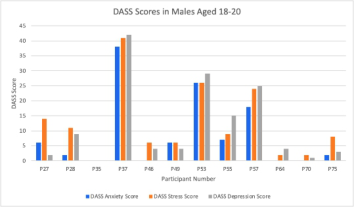
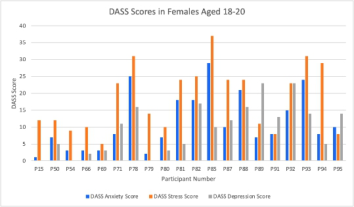
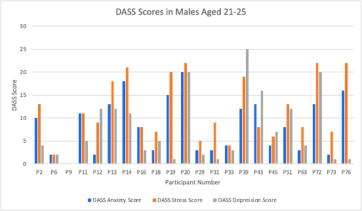
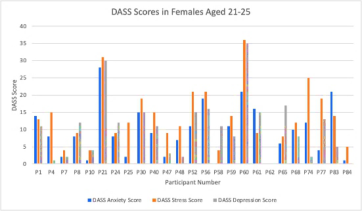
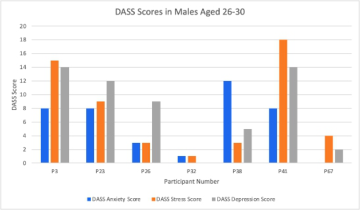
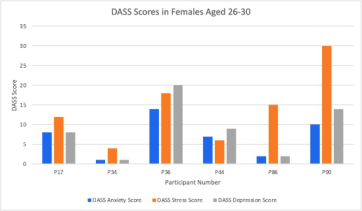
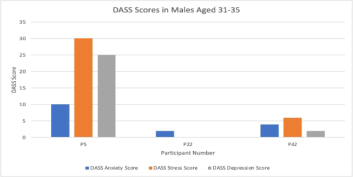
the participants were Caucasian (23.16%), Black or African American (2.1%), East Asian (27.37%), and South Asian (47.37%). For anxiety- related problems, 41 participants had recently sought out professional or specialized help. Others did not suffer from anxiety disorders and had not previously taken anxiety medication or received outside assistance. In order to minimize the impact of unknown factors on physiological and behavioral measurements, the researchers excluded individuals according to several factors which included the use of beta-blocker drugs, drug abuse, impairments in mobility, neurological and cardiovascular disorders, lack of ability to speak English, uncorrected vision or hearing impairments, and intellectual disabilities. As an additional precaution against potential risks, the researchers also disqualified individuals having a diagnosis of panic disorder. For performing the research work presented in this paper, the file with the filename – “participants_details.csv” from Version 2 of this dataset (the most recent version at the time of conducting this work) was used. First, the DASS scores per gender per age group were analyzed. The results of this analysis are presented in Figures 1-7. It is worth mentioning that in the dataset file, there were no individuals in the age group of 31–35 who identified as female, so a visualization for the same is not presented. In all these figures, the X-axis represents the participant number (as presented in this dataset file) and the Y-axis represents the DASS score.
Figure 1: Analysis of DASS anxiety score, DASS stress score, and DASS depression score in males (age group 18 to 20).Figure 2: Analysis of DASS anxiety score, DASS stress score, and DASS depression score in females (age group 18 to 20).
Stress, Anxiety, and Depression in Young Adults 575
Figure 3: Analysis of DASS anxiety score, DASS stress score, and DASS depression score in males (age group 21 to 25).Figure 4: Analysis of DASS anxiety score, DASS stress score, and DASS depression score in females (age group 21 to 25).Figure 5: Analysis of DASS anxiety score, DASS stress score, and DASS depression score in males (age group 26 to 30).Figure 6: Analysis of DASS anxiety score, DASS stress score, and DASS depression score in females (age group 26 to 30).
576 Knieling and Thakur
Figure 7: Analysis of DASS anxiety score, DASS stress score, and DASS depression score in males (age group 31 to 35).
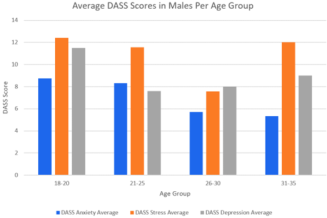
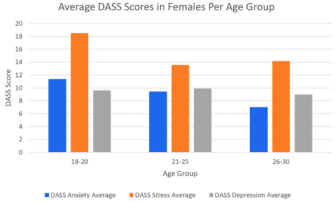
Thereafter, the average DASS score in males and females was computed. The results of the same are shown in Figures 8 and 9. The analysis shown in Figures 1 to 9 revealed multiple novel insights. First, for age groups, 18–20, 21–25, and 26–30, average stress and anxiety levels were higher in females as compared to males. Second, for all these age groups, the percentages of females who experienced a higher level of depression as compared to anxiety or stress were 15%, 16%, and 33.33%, respectively - indicating an increasing trend. However, such an increasing trend was not observed for males across different age groups. Third, for all these age groups, the percentages of females who experienced a higher level of stress as compared to anxiety or depression were 80%, 64%, and 66.67%, respectively. The pattern was observed to be different for males as for all these age groups, the percentages of males who experienced a higher level of stress as compared to anxiety or depression were 41.66%, 59.09%, and 28.57%, respectively.
Figure 8: Analysis of the average DASS anxiety score, DASS stress score, and DASS depression score in males across different age groups.Figure 9: Analysis of the average DASS anxiety score, DASS stress score, and DASS depression score in females across different age groups.
Stress, Anxiety, and Depression in Young Adults 577
Algorithm 1: Correlation Analysis of DASS Scores per age group per gender Input: specific demographic data Output: heatmap, correlation matrix, nature of correlation Import numpy, pandas, matplotlib.pyplot, csv, scipy.stats, seaborn df:= read data def check_correlation(col1, col2):
stat := Pearson’s correlation between col_1 and col_2 p_value:= p-value from the stat variable If (p_value < 0.05) then: correlation between <col_1> and <col_2> is statistically significant end of function list:= list for demographic information for each element in the list:
check_correlation (‘DASS_Anxiety_Score’, ‘DASS_Stress_Scores’) check_correlation (‘DASS_Anxiety_Score’, ‘DASS_Depression_Scores’) check_correlation (‘DASS_Stress_Scores’, ‘DASS_Depression_Scores’) corr:= Pearson’s correlation matrix of the data plot:= heatmap with correlation matrix display plot and output the nature of correlations end of for loop
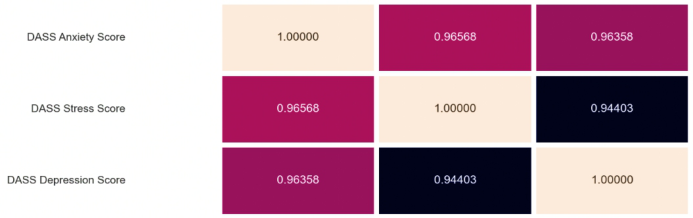
Thereafter, correlation analysis was utilized to examine the characteristics of the DASS scores within each age group and gender. A correlation coefficient is a numerical metric that quantifies the extent of correlation, which represents a statistical relationship between two variables. The variables can refer to either two features of a collection of observations, commonly known as a sample, or two parts of a multivariate random variable with a known distribution. Based on the methodology of similar works in this field (Thakur et al., 2024), the specific approach that was followed involved calculating the Pearson correlation coefficient (PCC) to determine the correlation among the specific DASS scores. The Pearson correlation coefficient (PCC) is a statistical measure that precisely assesses the magnitude and nature of the linear relationship between two sets of data. The Pearson correlation coefficient (PCC) is computed by dividing the covariance of two variables by the product of their standard deviations. The normalized value it offers ranges from –1 to 1, showing both the magnitude and nature of the connection (Sedgwick et al., 2012). The pseudocode of the program that was written in Python 3.10 to perform this correlation analysis is shown in Algorithm 1. This program computed the results of correlation analysis per age group per gender and presented the results in the form of a correlation matrix. The correlation matrix generated by this program for all males in the age group of 18–20 is shown in Figure 10. For paucity of space, the correlation matrices of all the other diversity groups are not presented as separate images, and the results of the same are summarized in Table 1.
578 Knieling and Thakur
Figure 10: Correlation matrix for all males in the age group of 18 to 20.Table 1. Summary of the results of correlation analysis from Algorithm 1.
Table available in the original PDF paper.
Attributes for Correlation Analysis Nature of Correlation Males in the age group of 18 to 20 DASS_Anxiety_Score and DASS_Stress_Scores statistically significant DASS_Anxiety_Score and DASS_Depression_Scores statistically significant DASS_Stress_Scores and DASS_Depression_Scores statistically significant
Females in the age group of 18 to 20 DASS_Anxiety_Score and DASS_Stress_Scores statistically significant DASS_Anxiety_Score and DASS_Depression_Scores statistically significant DASS_Stress_Scores and DASS_Depression_Scores not statistically significant Males in the age group of 21 to 25 DASS_Anxiety_Score and DASS_Stress_Scores statistically significant DASS_Anxiety_Score and DASS_Depression_Scores statistically significant DASS_Stress_Scores and DASS_Depression_Scores statistically significant
Females in the age group of 21 to 25 DASS_Anxiety_Score and DASS_Stress_Scores statistically significant DASS_Anxiety_Score and DASS_Depression_Scores statistically significant DASS_Stress_Scores and DASS_Depression_Scores statistically significant Males in the age group of 26 to 30 DASS_Anxiety_Score and DASS_Stress_Scores not statistically significant DASS_Anxiety_Score and DASS_Depression_Scores not statistically significant DASS_Stress_Scores and DASS_Depression_Scores statistically significant
Females in the age group of 26 to 30 DASS_Anxiety_Score and DASS_Stress_Scores not statistically significant DASS_Anxiety_Score and DASS_Depression_Scores statistically significant DASS_Stress_Scores and DASS_Depression_Scores not statistically significant Males in the age group of 31 to 35 DASS_Anxiety_Score and DASS_Stress_Scores statistically significant DASS_Anxiety_Score and DASS_Depression_Scores not statistically significant DASS_Stress_Scores and DASS_Depression_Scores not statistically significant
The results of the correlation analysis revealed multiple novel insights. For instance, for the age group of 18–20, the correlation between the DASS Stress Score and the DASS Depression Score was observed to be statistically
Stress, Anxiety, and Depression in Young Adults 579
significant for males but not for females. For the age group of 26–30, the correlation between the DASS Anxiety Score and the DASS Depression Score was observed to be statistically significant for females but not for males. In addition to this, for this age group, the correlation between the DASS Stress Score and the DASS Depression Score was also observed to be statistically significant for males but not for females. The work presented in this research paper has a limitation. The results presented in this paper are based on the data available in the dataset (Senaratne et al., 2021) which was used for this research work. There are multiple factors that affect anxiety, stress, and depression, which may vary from individual to individual. For instance, during the COVID-19 outbreak, a rapid transition to online learning was shown to be associated with a degree of stress in educators as well as in students (Hall et al., 2022 and Thakur et al., 2023). So, it is possible that if this study is conducted again by recruiting participants during an ongoing virus outbreak or any other event of global concern, the results may vary as a virus outbreak or an event of global concern may cause anxiety, stress, and depression in individuals in multiple ways.
CONCLUSION
Many changes in social and interpersonal connections characterize the developmental stage of young adulthood. Furthermore, young adulthood is characterized by increased susceptibility to mental health issues and instances of stress, anxiety, and depression. Research works in this field have shown that depression or anxiety throughout the initial stages of adulthood may raise the probability of developing drug misuse or addiction in the future. Therefore, the analysis of stress, anxiety, and depression in young adults has garnered the interest of researchers from several disciplines. However, none of the prior works in this field have examined the analysis of stress, anxiety, and depression in young adults while taking into account user diversity, particularly in terms of age group and gender. The work presented in this research paper aims to address this research gap by presenting the findings of a comprehensive analysis of a dataset that contains the DASS Anxiety Score, DASS Stress Score, and DASS Depression Score of 95 young adults in the age range of 18 to 35. The gender identity of these young adults is also available in the dataset. The methodology that was followed in this research work involved multiple forms of data analysis and correlation analysis which revealed several novel insights in terms of stress, anxiety, and depression in an age-group-specific and gender-specific manner. Future work in this area would involve performing a similar data collection of middle-aged and elderly individuals and repeating this study to analyze the variation of stress, anxiety, and depression in an age-group-specific and gender-specific manner in middle-aged and elderly individuals.
DATA AVAILABILITY STATEMENT A publicly available dataset was analyzed in this study. The data can be found at https://bridges.monash.edu/articles/dataset/Anxiety_Phases_Dataset/ 15176082, accessed on 7 December 2023.
580 Knieling and Thakur
CONFLICTS OF INTEREST The authors declare no conflicts of interest.
REFERENCES
Beard, C. et al. (2016) “Network analysis of depression and anxiety symptom relationships in a psychiatric sample,” Psychological medicine, 46(16), pp. 3359–3369. doi: 10.1017/s0033291716002300. Chalmers, J. A. et al. (2014) “Anxiety disorders are associated with reduced
heart rate variability: A meta-analysis,” Frontiers in psychiatry, 5. doi: 10.3389/fpsyt.2014.00080. Chilcoat, H. D. and Breslau, N. (1998) “Posttraumatic stress disorder and drug disorders: Testing causal pathways,” Archives of general psychiatry, 55(10), p. 913. doi: 10.1001/archpsyc.55.10.913. Dymond, S. and Roche, B. (2009) “A contemporary behavior analysis of anxiety and
avoidance,” The Behavior analyst, 32(1), pp. 7–27. doi: 10.1007/bf03392173. Emdin, C. A. et al. (2016) “Meta-analysis of anxiety as a risk factor for cardiovascular disease,” The American journal of cardiology, 118(4), pp. 511–519. doi: 10.1016/j.amjcard.2016.05.041. Galvin, J. et al. (2015) “Mental health nursing students’ experiences of stress during training: a thematic analysis of qualitative interviews,” Journal of psychiatric and mental health nursing, 22(10), pp. 773–783. doi: 10.1111/jpm.12273. Gerber, M. et al. (2014) “Physical activity in employees with differing occupational
stress and mental health profiles: A latent profile analysis,” Psychology of sport and exercise, 15(6), pp. 649–658. doi: 10.1016/j.psychsport.2014.07.012. Godin, I. et al. (2005) “A prospective study of cumulative job stress in relation to mental health,” BMC public health, 5(1). doi: 10.1186/1471-2458-5-67. Gonzalez, J. S. et al. (2008) “Depression and diabetes treatment nonadherence: A
meta-analysis,” Diabetes care, 31(12), pp. 2398–2403. doi: 10.2337/dc08-1341. Hall, I., Thakur, N. and Han, C. Y. (2022) “Trends in Remote Learning-based Google Shopping in the United States due to COVID-19,” arXiv [cs. CY]. Available at: https://arxiv.org/abs/2204.12654 (Accessed: April 22, 2024). He, L. and Cao, C. (2018) “Automated depression analysis using convolutional
neural networks from speech,” Journal of biomedical informatics, 83, pp. 103–111. doi: 10.1016/j.jbi.2018.05.007. Jacobson, N. C. and Newman, M. G. (2017) “Anxiety and depression as bidirectional risk factors for one another: A meta-analysis of longitudinal studies,” Psychological bulletin, 143(11), pp. 1155–1200. doi: 10.1037/bul0000111. Jang, S.-N. et al. (2009) “Marital status, gender, and depression: Analysis of the baseline survey of the Korean Longitudinal Study of Ageing (KLoSA),” Social science & medicine (1982), 69(11), pp. 1608–1615. doi: 10.1016/j.socscimed.2009.09.007. Kessler, R. C. et al. (2005) “Lifetime prevalence and age-of-onset distributions of DSM-IV disorders in the national comorbidity survey replication,” Archives of general psychiatry, 62(6), p. 593. doi: 10.1001/archpsyc.62.6.593. Knowles, K. A. and Olatunji, B. O. (2020) “Specificity of trait anxiety in anxiety
and depression: Meta-analysis of the State-Trait Anxiety Inventory,” Clinical psychology review, 82(101928), p. 101928. doi: 10.1016/j.cpr.2020.101928. Konstam, V. (2015) Emerging and young adulthood: Multiple perspectives, diverse narratives. Cham: Springer International Publishing.
Stress, Anxiety, and Depression in Young Adults 581
Kotov, R. et al. (2010) “Linking ‘big’ personality traits to anxiety, depressive, and substance use disorders: A meta-analysis,” Psychological bulletin, 136(5), pp. 768–821. doi: 10.1037/a0020327. Kvam, S. et al. (2016) “Exercise as a treatment for depression: A meta-analysis,”
Journal of affective disorders, 202, pp. 67–86. doi: 10.1016/j.jad.2016.03.063. Lehto, R. H. and Stein, K. F. (2009) “Death anxiety: An analysis of an evolving concept,” Research and theory for nursing practice, 23(1), pp. 23–41. doi: 10.1891/1541-6577.23.1.23. McDermott, L. M. and Ebmeier, K. P. (2009) “A meta-analysis of depression severity and cognitive function,” Journal of affective disorders, 119(1–3), pp. 1–8. doi: 10.1016/j.jad.2009.04.022. Pihkala, P. (2020) “Anxiety and the ecological crisis: An analysis of Eco-anxiety and
climate anxiety,” Sustainability, 12(19), p. 7836. doi: 10.3390/su12197836. Qualter, P. et al. (2015) “Loneliness across the life span,” Perspectives on psychological science: A journal of the Association for Psychological Science, 10(2), pp. 250–264. doi: 10.1177/1745691615568999. Quek et al. (2019) “The global prevalence of anxiety among medical students: A meta-analysis,” International journal of environmental research and public health, 16(15), p. 2735. doi: 10.3390/ijerph16152735. Rohde, P., Lewinsohn, P. M. and Seeley, J. R. (1994) “Are adolescents changed
by an episode of major depression?,” Journal of the American Academy of Child and Adolescent Psychiatry, 33(9), pp. 1289–1298. doi: 10.1097/00004583- 199411000-00010. Sangalang, C. C. et al. (2019) “Trauma, post-migration stress, and mental health: A comparative analysis of refugees and immigrants in the United States,” Journal of immigrant and minority health, 21(5), pp. 909–919. doi: 10.1007/s10903-018- 0826-2. Sedgwick, P. (2012) “Pearson’s correlation coefficient,” BMJ (Clinical research ed.),
345(jul04 1), pp. e4483–e4483. doi: 10.1136/bmj.e4483. Senaratne, H. et al. (2021) Anxiety Phases Dataset. Monash University. doi: 10.26180/15176082. V2. van Steensel, F. J. A., Bögels, S. M. and Perrin, S. (2011) “Anxiety disorders in children and adolescents with autistic spectrum disorders: A meta-analysis,” Clinical child and family psychology review, 14(3), pp. 302–317. doi: 10.1007/s10567-011- 0097-0. Tajvar, A. et al. (2015) “Occupational stress and mental health among nurses in
a medical intensive care unit of a general hospital in Bandar Abbas in 2013,” Electronic Physician, 7(3), p. 1108. doi: 10.14661/2015.1108–1113. Thakur, N. et al. (2023) “Investigation of the gender-specific discourse about online learning during COVID-19 on Twitter using sentiment analysis, subjectivity analysis, and toxicity analysis,” Computers, 12(11), p. 221. doi: 10.3390/computers12110221. Thakur, N. et al. (2024) “Investigation of the misinformation about COVID-19 on YouTube using topic modeling, sentiment analysis, and language analysis,” Computation (Basel, Switzerland), 12(2), p. 28. doi: 10.3390/computation12020028.
LISTED IN THE AHFE DIGITAL BOOKSTORE CATALOGUE
Explore the complete digital volume
Human Interaction and Emerging Technologies (IHIET 2024)
Read this individual research paper free through the original publisher, or explore the full digital proceedings book.
ISBN 978-1-964867-33-5
Explore this ISBN in the AHFE Bookstore ↗Listed in the July 2026 bookstore catalogue; search by ISBN to confirm current availability · Digital book purchase optional