Martin Pszeida, Alfred Häussl, Julia Zuschnegg, Michael Macher, Sandra Draxler, Thomas Orgel, Michael Schneeberger, Wolfgang Weiss, Jochen A. Mosbacher, Anna Schultz, Dominik Steindl, Silvia Russegger, Regina Roller Wirnsberger, Nina Dalkner, Sandra Schüssler, Eva Reininghaus, Lucas Paletta (2025). Motivating Patients with Depression for Gender-sensitive Cognitive Training Using a Socially Assistive Robot with Bio-signal Driven Pause Management. In: Cognitive Computing and Internet of Things. AHFE Open Access, vol. 165, pp. 57–68. https://doi.org/10.54941/ahfe1006090
Depression affects approximately 280 million people worldwide and is often associated with chronic symptoms and cognitive impairments. This study aimed to enhance cognitive function and motivation in individuals with chronic depression using a gender-sensitive Social Assisting Robotic (SAR) system. A humanoid robot (‘Pepper’) was equipped with a tablet delivering interactive cognitive training, including visual, auditory, and stress-adaptive content. In a randomized controlled trial (N = 32), 16 patients received robot-based training, while 16 used tablet-only training. Stress responses were recorded via wearable biosignal sensors and eye tracking. Results include digital stress indicators and responses on the application of short mindfulness exercises within the training session. This is the first study to examine psychophysiological effects of SAR-supported pause management in psychiatric care using biosignal sensor data. The findings support future development of adaptive SAR systems for mental health interventions.
Depression affects more than 280 million people globally and is frequently associated with chronic symptoms and cognitive impairments (IHME, 2025). During the COVID-19 pandemic, the risk of developing depression increased significantly, especially in vulnerable groups such as individuals with chronic
illnesses and those in long-term care facilities. A major challenge in treating chronic depression is low motivation, which impacts adherence to both pharmacological and psychotherapeutic interventions.
Cognitive deficits, which are frequently observed in patients with depression, particularly in the domains of memory, attention, and executive function, can be improved through cognitive training (Woolf et al., 2022). Moreover, cognitive training has shown promising effects in improving depressive symptoms and emotion processing (Chan et al., 2020). However, maintaining engagement remains a barrier to achieving sustained therapeutic benefit.
Socially Assistive Robotics (SAR) offer an innovative approach to enhance motivation through human-like interaction. In this study, a gender-sensitive SAR system was developed using the humanoid robot Pepper, equipped with a tablet-based cognitive training program. The system integrates biosignal- based stress detection via wearable sensors and eye tracking to manage training pauses adaptively (Figure 1; see also Figure 2, Figure 5).
A randomized controlled trial (N = 32) was conducted at the Medical University of Graz to compare SAR-supported training with tablet-only training. The objective of this study was to evaluate motivational and stress- regulating effects of robot-supported cognitive training in the psychiatric care setting. Our study is the first to examine SAR-based motivational support using neuropsychological theory and human factors measurement, laying the groundwork for adaptive mental health interventions in depression and related conditions.
RELATED WORK
Technology is increasingly used to support mental health interventions. A review by Kaonga and Morgan (2019) identified common applications in limited-resource settings, such as data collection, behavioral change, and the use of wearables and robots for mental health care. SARs have shown potential in reducing depressive symptoms, particularly in older adults. Chen et al. (2018) reviewed SAR interventions and found promising results in studies using animal-like robots such as ‘Paro’. Further research by Chen et al. (2020) highlighted reduced loneliness and improved quality of life in elderly care settings. Lim (2023) investigated a SAR-based cognitive intervention using the robot ‘PIO’ for older adults living alone. The study reported improvements in cognitive function, depressive symptoms, and loneliness. Duradoni et al. (2021) identified three psychological areas that benefit from SAR interventions: mood, wellbeing, and social skills. Dino et al. (2019) demonstrated that the humanoid robot ‘Ryan’ could support cognitive behavioral therapy for individuals with mild to moderate depression. Guemghar et al. (2022) reviewed SAR use in mental health care facilities, noting overall positive patient outcomes, though emphasizing the need for more rigorous methodologies.
These studies suggest SARs can support depression treatment by enhancing engagement, reducing stress, and increasing social interaction. However, many interventions focused on older adults and animal-like robots, with
Motivating Patients With Depression for Gender-Sensitive Cognitive Training 59
limited exploration of humanoid SARs in psychiatric settings. This study addresses this gap by applying a gender-sensitive humanoid robot with biosignal-adaptive training to support patients with depression.
This work primarily describes the intervention system including the SAR as well as the participative design based on the focus group data. The main outcome parameter is related to the psychophysiological data in the context of a stress response. The central research question was which physiological characteristics were affected by the pause management using wearable biosignal sensors as measurement technology.
MOTIVATION FRAMEWORK FOR SAR AND ADHERENCE The AMIGA project targets patients undergoing inpatient psychiatric treatment at the Medical University of Graz. These patients receive a combination of medication, psychological therapy, and occupational therapy. Occupational therapy includes physical and sensorimotor exercises as well as fine motor tasks. Additionally, cognitive training is used to enhance cognitive abilities, such as executive function, memory, and attention.
Treatment-as-Usual cognitive training traditionally occurs under supervision, using specialized PC-based software in designated therapy rooms. Evidence supports the effectiveness of this approach in improving cognitive and psychosocial outcomes for people with depression (Launder et al., 2021; Lim, 2023). However, sustaining patient motivation remains a major challenge.
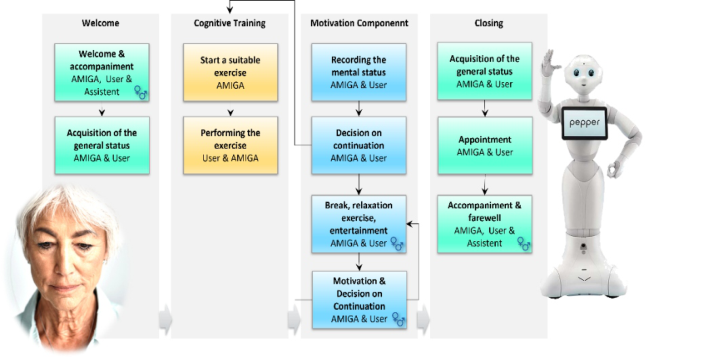
The AMIGA system introduces a novel intervention using a SAR, namely Pepper, integrated with a tablet-based cognitive training program and biosignal- sensor-based feedback. Before training begins, a general mental health and administrative status assessment is conducted. Cognitive exercises are then delivered via an engaging training app while real-time physiological and behavioral data are collected. Figure 1 depicts a comprehensive overview on the motivational framework for the engagement of cognitive training.
Figure 1: Motivational framework for the engagement of cognitive training.
Human Factors-based Monitoring and Decision Support involves equipping participants with wearable sensors such as smartwatches and eye-tracking glasses. These devices capture biosignals like heart rate and gaze behavior. The system is supposed to analyze this data to estimate stress and further parameters, such as, motivational engagement. These insights are sent back to Pepper, who may respond with tailored motivational dialogue or to recommend a break. These break recommendations are based on the measurements from wearable biosignal sensors and real-time risk analysis. The on-board decision support system receives the analytical results and proposes one of three options: continue training, initiate a short break, or stop the session. A health care professional is informed about the recommendation and then makes a final decision about actually triggering a break event. Breaks are considered to be restorative and engaging, involving mindfulness exercises (AMIGA) or music, light conversation, and robot movement (future work). This adaptive pause strategy is essential to maintaining user engagement. Clinical feedback indicates that how breaks are structured significantly affects adherence and the overall success of the cognitive training program.
Adherence and Efficiency are critical. Without sufficient engagement, even evidence-based cognitive interventions may fail to show meaningful outcomes. He et al. (2023) stress that adherence is a prerequisite for the success of cognitive training technologies. This was observed in the ACTIVE study, where participants with low engagement showed reduced gains in reasoning and memory performance (Willis & Caskie, 2013). Similar results were noted by Bagwell and West (2008), who found that inactive trainees benefited less from memory training. By integrating SAR-supported feedback and adaptive break management based on real-time biosignal data, AMIGA aims to boost motivation and adherence to improve cognitive and emotional outcomes in individuals with depression.
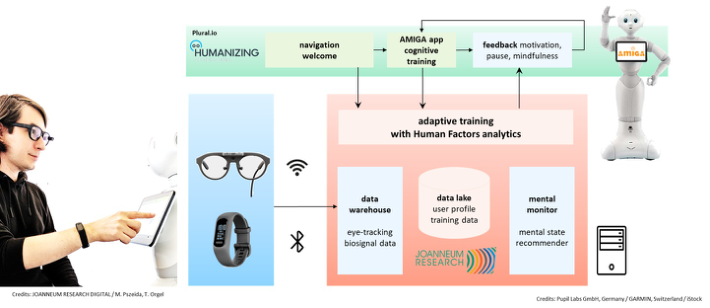
System Architecture. In collaboration with Humanizing Technologies and the Medical University of Graz, a system architecture was developed based on the Android OS of the SAR Pepper robot (Figure 2). The Plural.io platform hosts a cognitive training app, with Pepper providing motivational feedback. Wearables, including a smartwatch and eye-tracking glasses, collect psychophysiological data in real time. When elevated stress is detected, the system recommends a relaxation exercise. Pepper communicates this to the user and resumes training with encouraging phrases like ‘Great job, we’re about to continue’. At the session’s end, Pepper says goodbye and suggests another training session.
Training Content. In collaboration with healthcare experts and clinical psychologists, cognitive training exercises were selected and adapted to target key executive functions, including selective attention, visual-spatial skills, and language. These functions are particularly relevant for individuals with chronic depression (Snyder, 2013). Gender-specific preferences influenced content development—e.g., female participants favored activities like baking, while males preferred repair tasks (Schüssler et al., 2021). To avoid reinforcing stereotypes, these themes were varied and presented through a personalized approach.
Motivating Patients With Depression for Gender-Sensitive Cognitive Training 61
Figure 2: Schematic overview of the system architecture in AMIGA with the main system components and technology organizations involved. On the left, a user with eye tracking glasses to derive eye movement characteristics and with a smartwatch to determine cognitive-emotional strain (‘stress’).
The exercises were organized into units of three, allowing efficient loading and enabling Pepper to deliver motivational feedback at each transition. A 90-second relaxation exercise was integrated into each session, positioned before the final unit. This mindfulness element was personalized based on real-time stress measurements and aimed to improve user well-being during training. Table 1 outlines the sequence and structure of the selected exercises, supporting both cognitive stimulation and emotional regulation in a user- centered, adaptive training environment.
Table 1: Overview of the (fixed) sequence of exercises used in the RCT study, structured in logistically-argued packages of three (‘units’). These units and exercises are numbered as follows, example 01.02 Memory: 01 = unit number, 02 = exercise number in the unit, Memory = exercise type.
Table available in the original PDF paper.
Intervention 1 (IV1) Intervention 2 (IV2) 01.01 Pairs game 07.01 Mathematics Quiz 01.02 Pairs game 07.02 Mathematics Quiz 01.03 Mathematics Quiz 07.03 Jigsaw puzzle 02.01 Mathematics Quiz 08.01 Jigsaw puzzle 02.02 cloze text 08.02 Sequence 02.03 cloze text 08.03 Sequence 03.01 Pairs game 09.01 Mathematics Quiz 03.02 Pairs game 09.02 Mathematics Quiz 03.03 Mathematics Quiz 09.03 Jigsaw puzzle 04.01 Mathematics Quiz 10.01 Jigsaw puzzle 04.02 cloze text 10.02 Sequence 04.03 cloze text 10.03 Sequence 05.01 Pairs game 11.01 Mathematics Quiz 05.02 Pairs game 11.02 Mathematics Quiz 05.03 Mathematics Quiz 11.03 Jigsaw puzzle 13.01 Relaxation 13.01 Relaxation
Continued
Table 1: Continued Intervention 1 (IV1) Intervention 2 (IV2)
Table available in the original PDF paper.
06.01 Mathematics Quiz 12.01 Jigsaw puzzle 06.02 cloze text 12.02 Sequence 06.03 cloze text t 12.03 Sequence
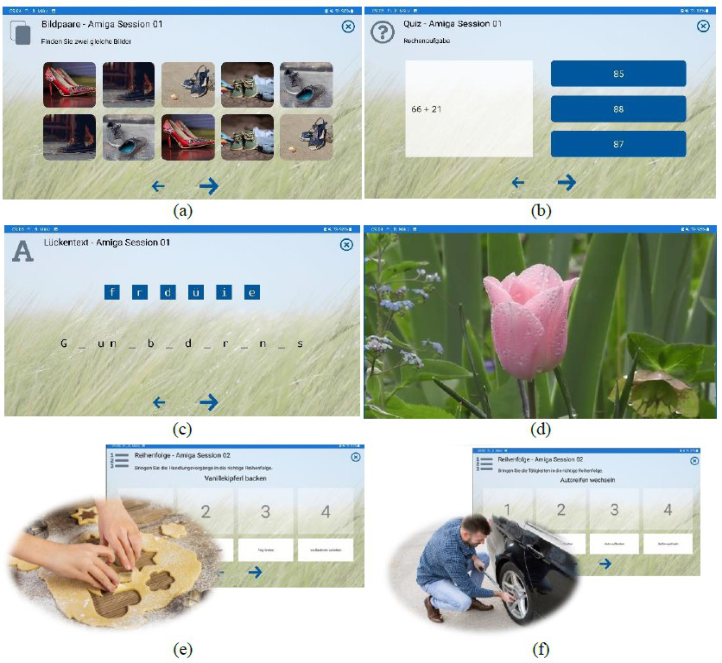
It turned out that gender-specific aspects play a role in the development of the content. For example, female participants showed more interest in topics such as baking Christmas cookies and male participants were more interested in repair activities such as changing tires. This gender-specific interest was implemented in the compilation of content for the cognitive training. However, to avoid gender-specific stereotypes, these topics were specifically varied and the content was taught on the basis of personalization in the future. Figure 3 shows selected content of the training app with relevant cognitive exercises including relaxation.
Figure 3: Content of the training app: cognitive exercises in terms of (a) pairs game, (b) mathematics, (c) cloze text, and (d) picture for relaxation. Gender-specific aspects: (e) baking and (d) repair - in the development of the content. However, in order to avoid gender-specific stereotypes, these topics were deliberately varied.
Motivating Patients With Depression for Gender-Sensitive Cognitive Training 63
Table 1 provides an overview of the sequence of individual exercises selected for the RCT study. The exercises were structured in logistically- argued packages of three (‘units’), as loading processes were necessary for each unit on the one hand and Pepper gave a motivating message to the user for each unit on the other.
The ‘Relaxation’ exercise lasted 90 seconds and represents the mindfulness exercise, which was personalized by the stress measurement and adaptively activated with regard to the user’s respective state situation, but in any case before the last exercise unit.
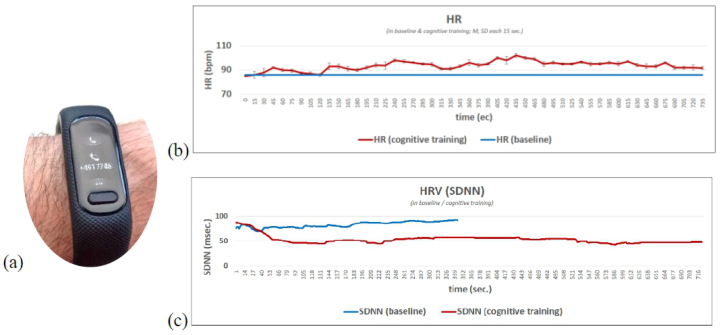
Wearable Psychophysiological Sensing and Analytics The Human Factors Toolbox in the AMIGA system integrates cardiovascular and eye-tracking sensors to monitor stress and cognitive-emotional states during training. Cardiovascular data is collected via the Garmin Vivosmart 5 smartwatch, which records heart rate (HR) and heart rate variability (HRV), specifically the SDNN (standard deviation of normal-to-normal RR intervals) metric. This data is uploaded in real time to the Fitrockr server using an API, allowing immediate analysis and adaptive system responses.
A second key component is the use of eye tracking glasses (Pupil Labs Neon), which resemble regular eyewear and avoid stigmatization. They require no calibration and continuously record eye movements at 200 Hz. These glasses collect data unobtrusively, allowing for real-time monitoring of attention and emotional state.
All data streams feed into the ‘Mental Monitor’ module of the AMIGA architecture, where psychophysiological data is stored, analyzed, and shared with the Training Manager app. The app can recommend a relaxation exercise based on the user’s current stress indicators. Heart rate and HRV data provide insight into acute and chronic stress levels; reduced HRV typically indicates increased stress.
Baseline values were recorded before each training session: cardiovascular baselines during a 3-minute relaxation phase, and eye-tracking baselines while participants viewed a neutral screen interface. Eye-tracking data was also stored for post-study analysis to explore potential digital biomarkers for depression severity.
Scientific studies confirm that stress—whether acute or chronic—can impair memory, attention, and executive function. This effect is mediated by stress hormones that influence brain structures like the prefrontal cortex and hippocampus. To prevent overload, AMIGA includes a rule- based system to determine when mindfulness breaks should occur. The break recommendation logic functions as follows: (i) No break is advised during the first five minutes of training, (ii) Every 15 seconds, the system calculates the average heart rate, (iii) If this average exceeds baseline by 15% or more, a break is triggered—after the current exercise unit ends. shows sample cardiovascular data (heart rate and heart rate variability) monitored during the exercise, relative to baseline. This adaptive mechanism helps maintain cognitive performance and motivation during training by responding proactively to stress levels.
Sample A total of 32 patients diagnosed with depressive disorders took part in the randomized controlled trial (RCT). The participants were randomly assigned to either the robot group (intervention group, IG) or the tablet group (control group, CG). The interventions each included specific training to promote cognitive and emotional resources. Pre- and post-measurements were conducted to assess changes in depression, motivation, technology acceptance and performance evaluation.
The sample of the RCT in total consisted of 16 women and 16 men, with M = 38.0 (SD = 4.3) years of age, equally divided between the two groups and no significant differences between the groups. Most participants were from Austria (90.6%), followed by Germany (6.2%), and Romania (3.2%). Educational and professional status was diverse, with 56.2% being employed and 25% having a higher school leaving certificate (Matura). Smartphones were used by 93.8% of participants in their free time, while desktop PCs and laptops dominated at work (65.6% each).
A subsample of those participants who were in the group with Pepper size (N = 5; 3 women and 2 men; M = 34.4 years of age) was investigated on the physiological impact of the relaxation exercise. Only for these participants the break option was triggered (see above) and the physiological data before, during and after the relaxation phase was analyzed.
EXPERIMENTAL RESULTS Qualitative Results. The qualitative evaluation assessed the attitudes, experiences, and usability of the intervention - based on the ‘AMIGA training system’ including the SAR Pepper, tablet and wearables (Figure 2) - in individuals with depression. Ten participants were observed and interviewed during their second session with the robot, and three healthcare professionals participated in a follow-up focus group. Observation protocols and interview guides were developed based on relevant literature and expert input (e.g., Heerink et al., 2010; Kothgassner et al., 2012, Mullhal, 2003), and data were analyzed using Schreier’s (2012) qualitative content analysis with MAXQDA 2020 Pro Analytics (VERBI Software, 2020). Participants described the SAR Pepper as pleasant and non-threatening, with women responding more positively. Training was perceived as accessible and engaging, though some found arithmetic tasks difficult. Overall, exercises were stimulating and the interface intuitive after brief guidance.
Suggestions for improvement included more interactive support from Pepper, better error feedback, smoother motion, and customizable voice features. Both users and professionals highlighted the importance of aligning verbal and non-verbal communication to ensure a more authentic experience.
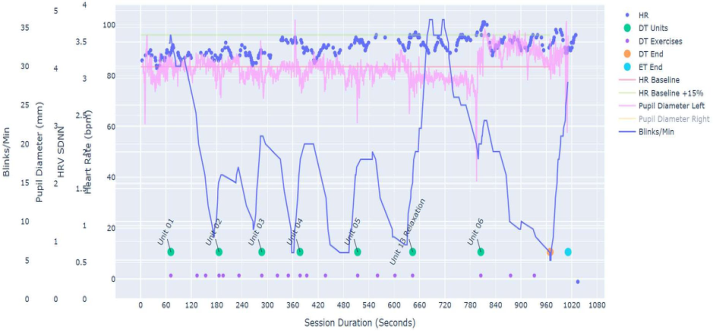
Quantitative Results. This study investigated whether mindfulness breaks during training influenced participants’ stress levels using cardiovascular and eye movement data. Figure 6 depicts a sample course of measured human factors parameters, such as, heart rate (HR), HR baseline (see Figure 4), pupil diameter and blink rate, and starting points of specific exercise units indicated.
Motivating Patients With Depression for Gender-Sensitive Cognitive Training 65
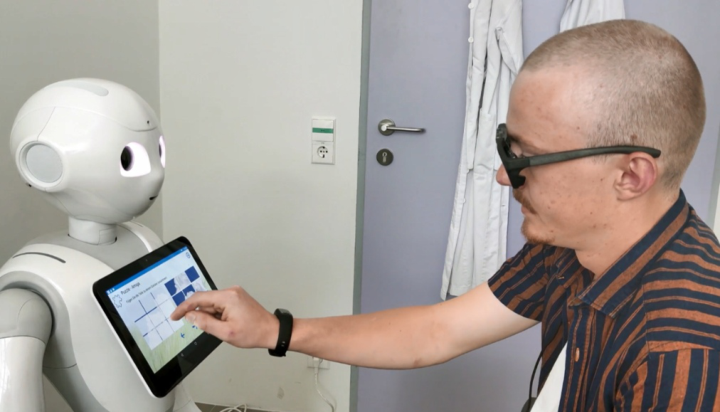
Figure 4: Garmin vivosmart 5 smartwatch (left) for measuring biosignal data (HR, HRV). (a) Exemplary course of the baseline (mean value; blue) of HR data relative to the data course (red) during a run through the training app. (b) Progression of HRV data (SDNN), baseline (blue) and progression (red).Figure 5: AMIGA system in the field test on the premises of the psychiatric clinics of the Medical University of Graz. The participant interacts with the tablet-supported cognitive training on the socially assistive robot pepper, as well as human factors- supported evaluation with wearable biosignal sensors (on the wrist) and eye tracking glasses.
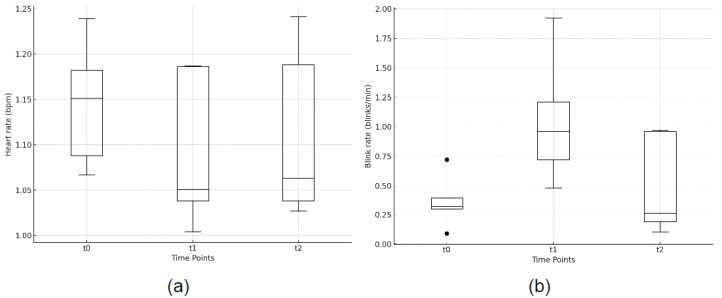
HR relative to baseline was specifically investigated before, during, and after breaks to assess stress response (Figure 7a). Although the absolute HR decreased by M = 3.91 (SD = 7.02) beats per minute (BPM) during breaks, the reduction was not statistically significant (Mann-Whitney-Wilcoxon, p = .421).
Figure 6: Monitoring of human factors parameters, such as, heart rate (HR, blue) relative to HR baseline (red), pupil diameter (magenta) and blink rate (line), with start time of exercise units indicated (green).Figure 7: Physiological impact of the relaxation exercise (t0 = session before the break, t1 = during the break, t2 = session after the break). (a) heart rate (bpm) relative to baseline, (b) blink rate (eye blinks per minute) relative to baseline with the difference between time t0 and t1 being statistically significant using the Mann-Whitney-Wilcoxon test (p = .028*).
In contrast, eye blink rate (EBR), a known marker of dopaminergic activity and cognitive-emotional state, showed a significant increase during breaks (p = .028*). This suggests a relaxation response linked to reduced stress and increased mental recovery (Figure 7b). Spontaneous eye blink rate (sEBR) is frequently used in psychophysiological studies as a non-invasive indicator of central nervous system dopaminergic tone (Karson, 1983). In individuals with depression, sEBR is typically lower due to reduced dopamine levels (Slagter et al., 2010). Studies have shown that blink rates may increase slightly under relaxing conditions or with effective antidepressant treatment (Bacher & Smotherman, 2004; van der Post et al., 2004). These findings support the idea that blink rate can serve as a sensitive and objective marker of stress regulation and training impact in people with depression. Incorporating
Motivating Patients With Depression for Gender-Sensitive Cognitive Training 67
such breaks may thus improve engagement and therapeutic outcomes in SAR-supported cognitive interventions.
CONCLUSION AND FUTURE WORK This study demonstrated the feasibility and motivational potential of a SAR system for cognitive training in patients with depression. The integration of real-time stress monitoring through biosignal sensors and adaptive pause management significantly contributed to user engagement and training personalization. Qualitative and quantitative findings support the system’s usability, particularly the value of gender-sensitive content and physiological feedback.
Future work will focus on expanding the participant sample, refining sensor-based adaptation algorithms, and enhancing Pepper’s interactive capabilities to improve therapeutic impact and scalability in mental health care environments.
ACKNOWLEDGMENT
This work was partly funded from project AMIGA under grant No FO999892829 of the Austrian FFG femtech programme co-financed by the Austrian Federal Ministry for Climate Action, Environment, Energy, Mobility, Innovation and Technology (BMK).
REFERENCES
Bacher, L. F., & Smotherman, W. P. (2004). Spontaneous eye blinking in human infants: Developmental and clinical implications. Developmental Psychobiology, 44(2). Bagwell, D. K., & West, R. L. (2008). Assessing compliance: Active versus inactive
trainees in a memory intervention. Clinical Interventions in Aging, 3(2), 371–382. Chan, J. Y. et al. (2020). Cognitive training interventions and depression in mild cognitive impairment and dementia: A systematic review and meta-analysis of randomized controlled trials. Age and ageing, 49(5), 738–747. Chen, S. C. et al. (2018). Social robots for depression in older adults: A systematic
review. Journal of Nursing Scholarship, 50(6), 612–622. https://doi.org/10.1111/ jnu.12423 Chen, S. C. et al. (2020). A social robot intervention on depression, loneliness, and quality of life for Taiwanese older adults in long-term care. International Psychogeriatrics. Dino, F. et al. (2019). Delivering cognitive behavioral therapy using a conversational
social robot. In 2019 IEEE/RSJ International Conference on Intelligent Robots and Systems (pp. 2089–2095). https://doi.org/10.1109/IROS.2019.8968013 Duradoni, M., Colombini, G., Russo, P. A., & Guazzini, A. (2021). Robotic psychology: A PRISMA systematic review on social-robot-based interventions in psychological domains. Journal, 4(4), 664–697. https://doi.org/10.3390/ j4040048 Guemghar, I., Guitton, M. J., Lelard, T., & Filliat, D. (2022). Social robot
interventions in mental health care and their outcomes, barriers, and facilitators: Scoping review. JMIR Mental Health, 9(4), e36094. https://doi.org/10.2196/ 36094
He, Z., Dieciuc, M., Carr, D., et al. (2023). New opportunities for the early detection and treatment of cognitive decline: Adherence challenges. BMC Digital Health, 3(1). https://doi.org/10.1186/s44247-023-00008-1 Heerink, M., et al. (2010). Assessing acceptance of assistive social agent technology.
International Journal of Social Robotics, 2, 361–375. Institute for Health Metrics and Evaluation (IHME). Global Health Data Exchange (GHDx). Seattle, WA: IHME, University of Washington, 2025. Available from: https://ghdx.healthdata.org. Accessed May 30, 2025. Kaonga, N. N., & Morgan, J. (2019). Common themes and emerging trends for the
use of technology to support mental health and psychosocial well-being in limited resource settings: A review of the literature. Psychiatry Research, 281, 112594. https://doi.org/10.1016/j.psychres.2019.112594 Karson, C. N. (1983). Spontaneous eye-blink rates and dopaminergic systems. Brain.
1983 Sep;106 (Pt 3): 643–53. doi: 10.1093/brain/106.3.643. Kothgassner, O. D., Felnhofer, A., Hauk, N., Kastenhofer, E., Gomm, J., & Kryspin-Exner, I. (2012). Technical Usage Inventory (TUI), Manual. ICARUS, Wien., https://www.ffg.at/sites/default/files/allgemeine_downloads/ thematische%20programme/programmdokumente/tui_manual.pdf. Accessed May 30, 2025. Launder, N. H. et al. (2021). Computerized cognitive training in people with
depression: A systematic review and meta-analysis of randomized clinical trials. https://doi.org/10.1101/2021.03.23.21254003 Lim, J. (2023). Effects of a cognitive-based intervention program using social robot PIO on cognitive function, depression, loneliness, and quality of life of older adults living alone. Frontiers in Public Health, https://doi.org/10.3389/ fpubh.2023.1097485. Mullhal, A. (2003) In the field: Notes on observation in qualitative research, Journal
of Advanced Nursing, no. 41, vol. 3, pp. 306–13. Schreier, M. (2012) Qualitative Content Analysis in Practice, SAGE Publications Ltd. Schüssler, S., Häussl, A., Paletta, L., et al. (2021), Interests of nursing homes residents with dementia for virtual reality-based leisure activities: A cross-sectional pilot study. Alzheimer’s Dement., 17: e053668. https://doi.org/10.1002/alz.053668 Slagter, H. A., Georgopoulou, K., & Frank, M. J. (2010). Spontaneous eye blink rate
as a marker of striatal dopamine. Psychopharmacology, 207(4), 559–565. Snyder, H. R. (2013). Major depressive disorder is associated with broad impairments on neuropsychological measures of executive function: a meta-analysis and review. Psychological bulletin, 139(1), 81. van der Post, J. et al. (2004). No evidence of the usefulness of eye blinking as a
marker for central dopaminergic activity. Journal of Psychopharmacology, 18(1), 109–114. Willis, S. L., & Caskie, G. I. L. (2013). Reasoning training in the ACTIVE study: How much is needed and who benefits? Journal of Aging and Health, 25(8 Suppl), 43S–64S. https://doi.org/10.1177/0898264313503987 Woolf, C., Lampit, A., Shahnawaz, Z., Sabates, J., Norrie, L. M., Burke, D.,...
& Mowszowski, L. (2022). A systematic review and meta-analysis of cognitive training in adults with major depressive disorder. Neuropsychology review, 32(2), 419–437.
LISTED IN THE AHFE DIGITAL BOOKSTORE CATALOGUE
Explore the complete digital volume
Cognitive Computing and Internet of Things
Read this individual research paper free through the original publisher, or explore the full digital proceedings book.
ISBN 978-1-964867-41-0
Explore this ISBN in the AHFE Bookstore ↗Listed in the July 2026 bookstore catalogue; search by ISBN to confirm current availability · Digital book purchase optional