Lucas Paletta, Sandra Schuessler, Eva Reininghaus, Michael Macher, Maria Fellner, Silvia Russegger, Melanie Lenger, Martin Pszeida, Thomas Orgel, Sandra Draxler, Alfred Haeussl, Bscn, Nina Dalkner, Stephan Spat, Gloria Pötz, Regina Roller Wirnsberger, Julia Zuschnegg (2023). Towards Gender-sensitive Motivation of Patients with Depression for Cognitive Training with a Socially Assistive Robot. In: Cognitive Computing and Internet of Things. AHFE Open Access, vol. 73, pp. 1–11. https://doi.org/10.54941/ahfe1003969
5 Joanneum Research Forschungsgesellschaft mbH, 8010 Graz, Austria; Medical University of Graz, Clinical Division of Psychiatry and Psychotherapeutic Medicine, 8010 Graz, Austria ↗
6 Medical University of Graz, Department for Internal Medicine, 8036 Graz, Austria ↗
7 Medical University of Graz, Institute of Social Medicine and Epidemiology, 8010 Graz, Austria ↗
Approximately 280 million people in the world suffer from depression, which often leads to cognitive deficits. This paper describes fundamental aspects of the work plan of the Austrian project AMIGA that aims at developing and evaluating a gender-sensitive and customizable Social Assisting Robotic Technology (SAR) including a cognitive training. We intend with the AMIGA-type SAR to significantly increase motivation for cognitive training during the hospital stay, which is hypothesised to improve cognitive functioning. In the first step of the project plan, the requirements of the target group would be estimated using qualitative and quantitative methods (e.g., survey, interviews). Based on the results of the requirement study we plan to develop the interactive SAR prototype that would use human-robot interactions to motivate users to perform cognitive training. We consider to apply adaptive pause management with sensor-based detection of mental fatigue. Target group-specific as well as gender-sensitive content for holistic stimulation with visual, auditory, and interactive elements will be included. The work plan foresees to conduct a field study including persons with symptoms of depression and to evaluate the results in terms of the effects on the persons´ motivation through the application of the AMIGA robotic system platform.
more often than men (7.9 percent). Current national and international stu- dies (Zhu et al., 2022) indicate that the COVID-19 pandemic has increased the risk of developing depression (Xiong et al., 2020), which is particularly true for vulnerable groups (e.g., patients with a chronic disease), and especi- ally for residents of long-term care facilities due to their limitations in social contacts (Cortés Zamora et al., 2022).
The overall goal of the AMIGA project is to research a gender-sensitive and personalized Social Assisting Robotic Technology (SAR; Figure 1) to increase the motivation of people with symptoms of depression to perform a cognitive training. Since cognitive remediation and rehabilitation, respectively, are of central relevance in persons with symptoms of depression as well as in persons with severe psychiatric disorders, SAR technology should aim to increase the frequency of cognitive training. Cognitive training on the one hand should improve cognitive functioning, which is often reduced in individuals with depression, and could have a positive influence on the course of the disease (Hitchcock et al., 2015).
AMIGA is the first project to investigate SAR, particularly, its impact on the frequency of cognitive training for persons with symptoms of depression,
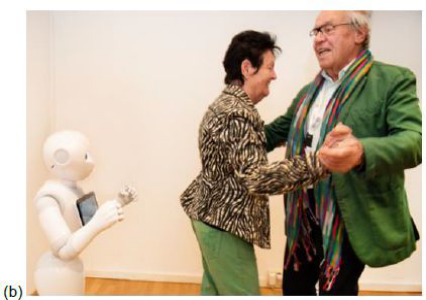
Figure 1: Socially assisting robotics (SAR) provide behaviour programs that motivate vulnerable persons. (a) SAR pepper expresses itself with behaviours that positively stimulate emotionally (b) and ultimately successfully promote activation for activities of daily living (Austrian project AMIGO; Paletta et al., 2019; Schüssler et al., 2021)).
Towards Gender–Sensitive Motivation of Patients 3
on a scientific basis, using neuropsychological theories, care requirements, and digital human factor measurements and analysis technologies. The fun- damental design parameters for interactions with social robotics should contribute to significantly increase motivation for cognitive training in per- sons with symptoms of depression. The SAR technology will be adapted to the needs of the users, thus helping individuals to overcome the characteri- stic lack of drive and low motivation to carry out cognitive training. This in return may have positive effects on depressive symptoms and consequently may increase therapeutic outcome.
The central research question in AMIGA is the significance of gender differences in the demand and implementation of motivation-enhancing mechanisms being inspired by hypothesised gender differences in cognitive functioning and motivation as experienced, e.g., by Weiss et al. (2003) and Yu (2019). Based on the results of a fundamental analysis on the potential gender differences, an interactive SAR prototype will be developed in which specifically designed human-robot interactions motivate the users to perform cognitive training and target group specific as well as sex-sensitive content for holistic stimulation with visual, auditory, and interactive elements would be developed.
Findings from sex-sensitive motivation research will be used in future tech- nologies. AMIGA will further enable the personalized application of SAR technology for patients with cognitive deficits which will improve adhere- nce, motivation to train, and ultimately stabilize or even improve cognitive function. These findings may be of interest for numerous vulnerable target groups, such as, for persons with dementia.
RELATED WORK
A review by Kaonga and Morgan (2019) identified typical topics and emer- ging trends for technology application to improve mental health and psycho- social wellbeing. The results showed that depression provides one of the most common technical use cases. Technology is used, e.g., for service improve- ment, behaviour change communication, data collection, adherence, wellness promotion, educational interventions, telemedicine, and to apply serious games. Promising new trends in technology for mental health care include wearables, predictive analytics, virtual reality, and the use of robots. A syste- matic review by Chen et al. (2018) demonstrated the potential of SAR-based interventions to reduce depression in older adults. Three of seven studies using animal robots, like “Paro”, showed promising outcomes for reducing depressive symptoms in older adults following social robot interventions, and three studies showed decreased, but non-significant trends in depres- sion scores. A mixed-methods study by the same author showed for “Paro” a statistically significant reduction in loneliness, and an increase in quality of life in older persons with depression. The results from the interviews sho- wed following themes: Humanizing “Paro” through referring to personal experiences and engagement; Increased social interaction with other people; Companionship resulting in improved mental well-being (Chen et al. 2020). A further study using an animal social robot (“PIO”) investigated the effects
of a cognitive-based intervention program on cognitive function, depression severity, loneliness, and quality of life in older adults living alone. The results showed a significant difference in the pre-post values for cognitive function, depressive symptoms, and loneliness (Lim et al., 2023). A systematic review by Duradoni et al. (2021) explored empirical findings regarding psychologi- cal interventions with social robots. Overall, the review showed that three main areas may benefit from social-robot-based interventions: social skills, mood, and wellbeing (e.g., stress and anxiety levels). One of the included studies (Dino et al. 2019) used the humanoid social robot “Ryan”. ”Ryan” delivered a cognitive behavioural therapy for people with mild to moderate depression. The results showed the potential to improve depression. A sco- ping review by Guemghar et al. (2022) aimed to identify and describe social robot interventions in mental health facilities and to highlight their outcomes as well as the barriers and facilitators to their implementation. They found that social robot interventions generally show positive effects on patients with mental health disorders, but studies of stronger methodological quality are needed to further understand the benefits of social robots in mental health care.
MOTIVATION FRAMEWORK FOR SAR AND ADHERENCE The concrete target group in the AMIGA project are patients who are available for inpatient treatment at the Clinical Division of Psychiatry and Psychotherapeutic Medicine of the Medical University of Graz. The clinical treatment consists of a therapeutic mix of medication, occupational therapy, and psychological intervention. Occupational therapy includes physical exe- rcises for strengthening and sensorimotor coordination as well as fine motor actions (e.g., handicraft activities). In addition, cognitive training intends to support the improvement of the routine of executive functions.
Structure of the intervention (“Treatment-As-Usual”). The cognitive trai- ning has so far taken place (i) under the coordination and supervision of a specialist, (ii) on a PC with specifically designed software, and (iii) within a training room specifically designed for this purpose. Literature points to the efficiency of this form of therapy, so that cognitive training should be fur- ther empowered in patients with depression: Launder et al. (2021) and Lim (2023) reported significant results that computerised cognitive training is an efficacious intervention for overall cognition, depressive symptoms, psych- osocial functioning and domain-specific cognitive function for people with depression.
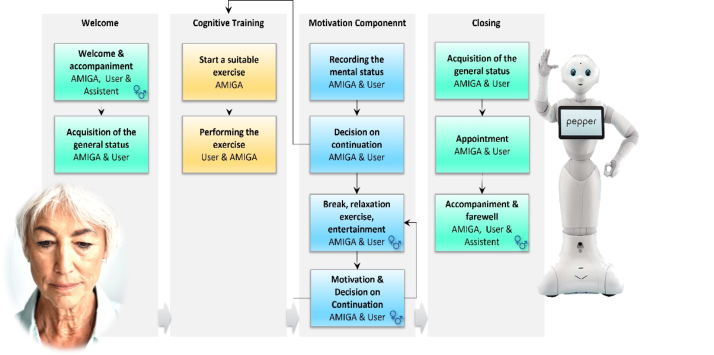
“Intervention” with AMIGA.The work plan for the alternative design with the SAR-assisted technology AMIGA will provide some adaptive components that would enable an empathetic motivational training design (schematic overview in Figure 2). Before the first training session, a “general status assessment” (“pre-exercise”) would be performed to obtain quantitative and qualitative data related to the actual mental state and personalized administrative information.
The component of the cognitive training phase would begin with suitable exercises from the tablet-based BRAINMEE1 app. The cognitive training 1http://www.digitaal.life
Towards Gender–Sensitive Motivation of Patients 5
Figure 2: Motivational framework for the engagement of cognitive training.
exercise would be initiated while mental status estimation would be perfor- med by means of specialised additional hardware and software components that apply digital Human Factors measurements.
Digital Human Factors Analysis. We envision that the user, i.e., the person with symptoms of depression, would wear eye tracking glasses2 as well as wearables - in terms of a smartwatch or an armband – with biosensors. From these sensors, psychophysiological data would be continuously transmitted to a nearby server, then analysed with respect to Human Factors and men- tal state, and – in a modus of ‘human-in-the-loop’ – being transmitted back to the SAR in order to trigger recommended actions, i.e., specific sentences that would be communicated to the user as feedback and motivation, or to motivate a break.
Based on the data that would be received from these wearables we would analyse and respond in the following way by
- applying analysis of the eye tracking data in terms of estimating (i) the affective status (e.g., mood) as well as (ii) the cognitive status (concentration and attention performance; details see in the next Section),
- evaluating the current level of cognitive performance by analysing the game scores received from the training app (BRAINMEE; see next Section) in the context of a predetermined difficulty level,
- estimating the motivational status of the person based on the sensor-based analysis of the user’s pose.
Break management. Based on an integrated evaluation of these three factors, an AI-based recommendation would be generated by the Pepper-, tablet-, and wearable-based integrated AMIGA system as to whether a break should interrupt the training. In each case, the patient would be asked about whether she would want to take a break, and a decision would be made based on the answer, (i) either the training would be continued with ano- ther exercise, or (ii) a break wold be taken with the appropriate intensity, 2https://pupil-labs.com/products/invisible/
or (iii) the training would be stopped. The design of the break could take different forms, which can be characterized by a rest phase, entertainment through music, dance of the robot or dialogue-based intervention (remarks, questions, jokes, news, etc.). According to the experience of the responsible professionals, the structure of this break intervention is of very great impor- tance: the playful design of the training as well as the adapted design of the breaks with cognitive and physical relaxation can have a decisive influence on the frequency of the cognitive training, i.e., the adherence rate, and thus the success of the entire training program.
Adherence and training efficiency. He et al. (2023) provides in this context an in-depth discussion about state-of-the-art digital health approaches to the early detection and treatment of cognitive decline, adherence challenges asso- ciated with these approaches, and the promise of smart and person-centered technologies to tackle adherence challenges. He et al. stress the fact that bene- ficial interventions to improve cognition are not anticipated to have a major impact unless users fully engage with them. This was seen in the ACTIVE (Advanced Cognitive Training for Independent and Vital Elderly) rando- mized controlled trial; participants who adhered less to reasoning training demonstrated smaller training benefits (Willis & Caskie, 2013). For memory training, cognitive benefits have also been found to be lower for less adherent individuals (Bagwell & West, 2008).
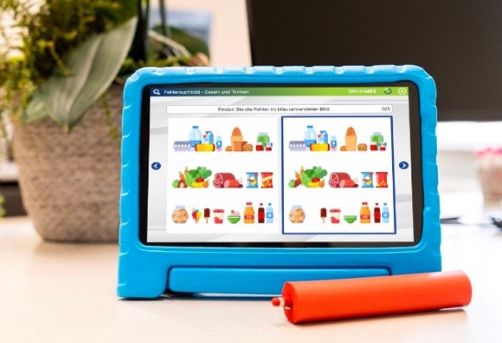
COGNITIVE TRAINING: EXERCISES FOR EXECUTIVE FUNCTIONS In the past, the research projects “AktivDaheim”, “PLAYTIME” and “mul- timodAAL” were coordinated by Joanneum Research to develop a digital gamified training app that should realise multimodal training by means of cognitive activation, especially for people who want to live independently for as long as possible. The app is distributed by the high-tech spin-off company digitAAL Life GmbH (“DLF”). In this app, sensor data enter a tablet PC (Figure 3) equipped with recommendation software that delivers personalized training exercises for joyful play experiences and cognitive trai- ning – focused on empowering attention, executive functions, and memory - at the same time. Playful training enables aspects of entertainment, appli- cation of digital measurement techniques, and consequently the AI-based analysis of cognition. In addition, there is clear evidence that physical trai- ning slows cognitive decline and can even increase cognitive performance, therefore not only cognitive but also sensorimotor stimulation is critical for meaningful intervention and mapped into DLF’s training.
The DLF product – BRAINMEE – has a wide range of exercises of 16 dif- ferent types, such as, puzzle, pairs game, spot-the-difference, context queries, and multiple-choice quiz, etc. These exercises are associated with the activa- tion of cognitive domains, such as, visuospatial attention, memory, language, etc., and enable specification of cognitive deficit with respect to these domains (Paletta et al., 2021a). Exercises are integrated in “topics” (including ca. 30– 50 exercises) for the purpose of positive user experience: currently nearly 30 different topics – referring, e.g., to different seasons, the past, etc. – are inclu- ded. Furthermore, there are 4 difficulty levels, and the training is available in
Towards Gender–Sensitive Motivation of Patients 7
Figure 3: BRAINMEE app for gamified cognitive training and multimodal activation.
11 languages. In AMIGA, the exercises will need to be adapted to the requi- rements of persons with symptoms of depression as well as gender-sensitive issues.
HUMAN FACTORS MEASUREMENTS FOR SOCIAL ROBOTS The technical detection of social signals from the analysis of human intera- ction partners’ behaviour by non-intrusive sensors is a fundamental functio- nality of social robotics and has gender-sensitive relevance (Carpenter et al., 2009; Schmoigl et al., 2019). Pepper has emotion detection software for this purpose, which is continuously being technologically improved (Ilyas et al., 2019). In theory, there would be a wide potential for numerous nonverbal behaviours to be measured from the sensors attached to the SAR and the user’s wearables, such as, personality traits – e.g., extroversion, agreeable- ness – that have already been measured in previous research by features, such as, eye and head gaze, and body movement, as well as vocal features (pitch and energy; Shen et al., 2019).
Human gaze behaviour is an important resource for analysing psycho- logical constructs (Giansanti, 2021); in particular, “eye contact” as well as “joint attention” are of social psychological importance (Eyben et al., 2023; Mundy & Newell, 2017; Hofbaur & Paletta, 2019c). Human gaze beha- viour has previously been researched in the context of social robotics and motivation (Chevalier et al., 2020, Donnermann et al., 2020) but not yet – to the consortium’s knowledge – in the context of gender-sensitive cognitive activation.
Joanneum Research has developed a “Human Factors Toolbox” that uses AI-based analytics to measure various psychologically relevant constructs, such as concentration (Paletta et al., 2019a), situational awareness (Dini et al., 2017), stress (Paletta et al., 2019b), executive functions (Paletta et al., 2020), or mindfulness (Paletta et al., 2021b). These technologies are suitable
for investigating the feasibility of recognizing motivational aspects in the pro- ject and that have not yet been adequately studied in the context of SAR-based gender sensitivity. Another aspect in social assistive robotics is to interpret the emotion by facial emotion analysis (Affectiva, Kulke et al., 2018).
STUDY PLAN The initial study plan consists of three phases: In the first phase, the user requirements for the development of the prototype would be extracted from an online survey. The target group would potentially include health professi- onals, such as clinical and health psychologists, medical doctors, nurses, and nursing scientists as well as patients with depression.
It is further planned to perform a feasibility study where the prototype - developed based on user requirements - would be tested about usability and user experience persons to further adapt the prototype for the main study. The study plan for the third phase is currently planned to engage persons with symptoms of depression recruited by the Clinical Division of Psychiatry and Psychotherapeutic Medicine of the Medical University of Graz, Austria.
In general the intention is to compare the intervention with the AMIGA system, including Pepper, tablet and wearables, with the “treatment-as-usual” including only PC-based cognitive training. Quantitative and qualitative data collection methods will be used to investigate the variables of the motivation framework. Furthermore, the work plan foresees the gender-sensitive analysis of the data.
CONCLUSION
The overall goal of AMIGA is to develop and explore gender-sensitive design parameters of positive mental activation to increase the adherence rate for cognitive training using SAR technology. This research aims at future applica- tions in the context of a major social challenge, i.e., long-term care of people with depression.
The work plan foresees research on design parameters as basis of a moti- vating, gender-sensitive, personalised, and cost-effective SAR- as well as wearable-based technology, i.e., the AMIGA system, in order to contribute to an improvement in cognitive performance and quality of life of people in residential care.
ACKNOWLEDGMENT
This work was partly funded from project AMIGA under grant No FO999892829 of the Austrian FFG femtech programme co-financed by the Austrian Federal Ministry for Climate Action, Environment, Energy, Mobility, Innovation and Technology (BMK).
REFERENCES
Araujo, B. S. D., Marques Peres, S., Melo, R. C. D., Batistoni, S. S. T., Cachioni, M.
& Hung, P. C. K. (2022). Effects of social robotson depressive symptoms in older
Towards Gender–Sensitive Motivation of Patients 9
adults: a scoping review, LibraryHi Tech, 40(5), https://doi.org/10.1108/LHT-09- 2020-0244 Bagwell, D. K., West. R. L. (2008). Assessing compliance: active versus in active trainees in a memory intervention. Clin Interv Aging., 3(2), 371–82. Carpenter, J., Davis, J. M., Erwin-Stewart, N., Lee, T. R., Bransford, J. D., & Vye,
N. (2009) Gender Representation and Humanoid Robots Designed for Domestic Use. International Journal of Social Robotics, 1(3), 261–265. Chen, S. C., Moyle, W., Jones, C., Petsky, & H. (2020) A social robot intervention on depression, loneliness, and quality of life for Taiwanese older adults in long-term care. Int Psychogeriatr. 2020 Aug; 32(8): 981–991. Doi: 10.1017/S1041610220000459. Chen, S. C., Jones, C. & Moyle, W. (2018) Social Robots for Depression in
Older Adults: A Systematic Review, J Nurs Scholarsh, vol. 50, no. 6, doi: 10.1111/jnu.12423. Chevalier, P., et al. (2020) Examining joint attention with the use of humanoid robotsa new approach to study fundamental mechanisms of social cognition. Psychon Bull Rev., https://doi.org/10.3758/s13423-019-01689-4. Cortés Zamora, E. B., et al. (2022). Psychological and Functional Impact of
COVID-19 in Long-Term Care Facilities: The COVID-A Study. The American J Geriatric psychiatry, 30(4), 431–443. https://doi.org/10.1016/j.jagp.2022.01.007 Dini, A., Murko, C., Paletta, L., Yahyanejad, S., Augsdörfer, U., & Hofbaur, M.
(2017). Measurement and Prediction of Situation Awareness in Human-Robot Interaction based on a Framework of Probabilistic Attention, 2017 IEEE/RSJ International Conference on Intelligent Robots and Systems. 4354-4361, doi: 10.1109/IROS.2017.8206301. Dino, F., Zandie, R., Abdollahi, H., Schoeder, S., & Mahoor, M. H. (2019). Delivering Cognitive Behavioral Therapy Using A Conversational Social Robot. In Proceedings of the 2019 IEEE/RSJ International Conference on Intelligent Robots and Systems (IROS), Macau, China, 3–8 November 2019; 089–2095. Donnermann, M., Schaper, P., & Lugrin, B. (2020). Integrating a Social Robot
in Higher Education – A Field Study, Proc. 29th IEEE International Confe- rence on Robot and Human Interactive Communication, doi: 10.1109/RO- MAN47096.2020.9223602. Duradoni, M., Colombini, G., Russo, P. A., Guazzini, A.. (2021). Robotic Psychology: A PRISMA Systematic Review on Social-Robot-Based Interventions in Psychological Domains. J., 4(4), 664–697. https://doi.org/10.3390/j4040048 Eyben, F., Weninger, F., Paletta, L. & Schuller, B. (2013). The acoustics of eye contact
- Detecting visual attention from conversational audio cues, GazeIn ’13: Procee- dings of the 6th workshop on Eye gaze in intelligent human machine interaction: gaze in multimodal interaction, https://doi.org/10.1145/2535948.2535949. Giansanti, D. (2021). The Social Robot in Rehabilitation and Assistance: What Is the Future? Healthcare, 9, 244. https://doi.org/10.3390/healthcare9030244 Guemghar, I., et al. (2022). Social Robot Interventions in Mental Health Care and
Their Outcomes, Barriers, and Facilitators: Scoping Review. JMIR Ment Health., 9(4): e36094. Doi: 10.2196/36094. He, Z., Dieciuc, M., Carr, D. et al. (2023). New opportunities for the early detection and treatment of cognitive decline: adherence challenges... BMC Digit Health, https://doi.org/10.1186/s44247-023-00008-1 Hitchcock, C., Hammond, E., Rees, C., et al. (2015). Memory Flexibility trai-
ning (MemFlex) to reduce depressive symptomatology in individuals with major
depressive disorder: study protocol for a randomised controlled trial. Trials 16, 494. https://doi.org/10.1186/s13063-015-1029-y Hofbaur, M., and Paletta, L. (2019) Mensch & Roboter: Kollaboration, Interaktion und Vertrauen. Psychologie in Österreich, Themenschwerpunkt “Automation & Robopsychologie”, Nr. 4, Vol. 39, pp. 264–272. Ilyas, C. M. A., Schmuck, V., Haque, M. A., Nasrollahi, K., Rehm, M., & Moes-
lund, T. B. (2019) Teaching Pepper Robot to Recognize Emotions of Traumatic Brain Injured Patients Using Deep Neural Networks, 28th IEEE International Conference on Robot and Human Interactive Communication, doi: 10.1109/RO- MAN46459.2019.8956445. Kaonga, N. N., and Morgan, J. (2019). Common themes and emerging trends for the use of technology to support mental health and psychosocial well-being in limited resource settings: A review of the literature. Psychiatry Research 281, 112594, https://doi.org/10.1016/j.psychres.2019.112594. Kulke, L., Feyerabend, D., & Schacht, A. A. (2020). Comparison of the Affectiva
iMotions Facial Expression Analysis Software with EMG for Identifying Facial Expressions of Emotion. Front Psychol., Doi: 10.3389/fpsyg.2020.00329. Launder, N. H., Minkov, R., Davey, C. G., Finke, C., & Malmberg Gavelin, H. (2021). Computerized Cognitive Training in People with Depres- sion: A Systematic Review and Meta-analysis of Randomized Clinical Trials, doi.org/10.1101/2021.03.23.21254003 Lim, J. (2023). Effects of a cognitive-based intervention program using social
robot PIO on cognitive function, depression, loneliness, and quality of life of older adults living alone. Front. Public Health11: 1097485. Doi: 10.3389/fpubh.2023.1097485 Mundy, P., and Newell, L. (2007). Attention, Joint Attention, and Social Cognition. Curr Dir Psychol Sci. 2007 Oct 1; 16(5): 269–274. Doi:10.1111/j.1467– 8721.2007.00518.x. Nowotny, M., Kern, D., Breyer, E., Bengough, T., & Griebler, R., Eds. (2019). Depres-
sionsbericht Österreich. Bundesministerium für Arbeit, Soziales, Gesundheit und Konsumentenschutz. Wien. Paletta, L., Schüssler, S., Zuschnegg, J., Steiner, J., Pansy-Resch, S., Lammer, L., Prodromou, D., Brunsch, S., Lodron, G., & Fellner, M. (2019). AMIGO — A Socially Assistive Robot for Coaching Multimodal Training of Persons with Dementia. In: Korn, O. (eds.) Social Robots: Technological, Societal and Ethical Aspects of Human-Robot Interaction. Springer, Cham. https://doi.org/10.1007/978-3-030- 17107-0_13 Paletta, L, Pszeida, M, Ganster, H, Fuhrmann, F, Weiss, W, Ladstätter, S, Dini, A,
Murg, S, Mayer, H, Brijacak, I, & Reiterer, B (2019a). Gaze based Human Factors Measurements for the Evaluation of Intuitive Human-Robot Collaboration in Real-time. 24th IEEE International Conference on Emerging Technologies and Factory Automation (ETFA), 1528-1531, doi: 10.1109/ETFA.2019.8869270. Paletta, L., Pszeida, M., Nauschnegg, B., Haspl, T., & Marton, R. (2019b) Stress Measurement in Multi-tasking Decision Processes Using Executive Functions Analysis. In: Ayaz H. (eds.) Advances in Neuroergonomics and Cognitive Engi- neering. AHFE 2019. Advances in Intelligent Systems and Computing, vol. 953, pp. 344–356, Springer. Paletta, L., Pszeida, M., Fellner, M. et al. (2021a). Towards Decision Support with
Assessment of Neuropsychological Profiles in Alzheimer’s Dementia Using Playful Tablet-Based Multimodal Activation. In: Ayaz, H., Asgher, U., Paletta, L. (eds.)
Towards Gender–Sensitive Motivation of Patients 11
Neuroergon and Cognit Engineering. https://doi.org/10.1007/978-3-030-80285- 1_54 Paletta, L, Pszeida, M, Schüssler, S, Andreu, J-Ph, Dini, A, Zweytik, E, Steiner, J, Grabher, A, & Lodron, J (2021b). Virtual Reality-based Sensory Triggers and Gaze-based Estimation for Mental Health Care. In: Ayaz H., Asgher, U., Paletta, L. (eds.) Advances in Neuroergonomics and Cognitive Engineering, ISBN 978-3- 030-80285-1. Schmoigl, M., Zauchner-Studnicka, S., Sturm, N., Kirilova, S., Hofer, D., Weiss, A.,
& Plößnig, M. (2019). Gender-sensitive Interactions with social robots. In Proc. My-AHA Symposium, 18.-19.11.2019, Innsbruck. Schüssler, S., Zuschnegg, J., Paletta, L., Lodron, G., Steiner, J., Pansy-Resch, S., Prodromou, D., Brunsch, S., Carnevale, L., Orgel, T., Schneeberger, M., Russegger, S., Fellner, M., Lammer, L., & Holter, M. (2021). Effects of Coach Robot Pep- per versus Tablet Training on Psychosocial and Physical Outcomes of Persons With Dementia: A Mixed Methods Study. Alzheimer’s & Dementia, Supplement: Technology and Dementia Preconference, https://doi.org/10.1002/alz.053453 Shen, Z, Elibol, E, & Chong, N. Y. (2019). Nonverbal Behavior Cue for Recogni-
zing Human Personality Traits in Human-Robot Social Interaction, 2019 IEEE 4th International Conference on Advanced Robotics and Mechatronics (ICARM), 2019, pp. 402–407, doi: 10.1109/ICARM.2019.8834279. Støre, S. J., Beckman, L., & Jakobsson, N. (2022). The effect of robot interventions on sleep in adults: a systematic review and network meta-analysis. Journal of clinical sleep medicine: JCSM : official publication of the American Academy of Sleep Medicine, 18(7), 1877–1884. https://doi.org/10.5664/jcsm.10022 Weiss, E. M., Kemmler, G., Eberhard, A., Deisenhammer, E. A., Fleischhacker,
W. W. and Delazer, M. (2003). Sex Differences in Cognitive Functions. Perso- nality and Individual Differences, 35, 863–875. http://dx.doi.org/10.1016/S0191- 8869(02)00288-X Willis, S. L., & Caskie, G. I. L. (2013). Reasoning training in the ACTIVE study: How much is needed and who benefits? Journal of Aging and Health, 25(8, Suppl), 43S–64S. https://doi.org/10.1177/0898264313503987 Xiong, J., Lipsitz, O., Nasri, F., Lui, L. M. W., Gill, H., Phan, L., Chen-Li, D.,
Iacobucci, M., Ho, R., Majeed, A., & McIntyre, R. S. (2020). Impact of COVID-19 pandemic on mental health in the general population: A systematic review. Journal of affective disorders, 277, 55–64. https://doi.org/10.1016/j.jad.2020.08.001 Yu, Z. (2019). Gender Differences in Cognitive Loads, Attitudes, and Academic Achievements in Mobile English Learning. International Journal of Distance Education Technologies (IJDET), 17(4), 21–35. http://doi.org/10.4018/IJDET.2019100102 Zhu, C., Zhang, T., Li, Q. et al. (2022). Depression and Anxiety During the
COVID-19 Pandemic: Epidemiology, Mechanism, and Treatment. Neurosci. Bull, https://doi.org/10.1007/s12264-022-00970-2.
LISTED IN THE AHFE DIGITAL BOOKSTORE CATALOGUE
Explore the complete digital volume
Cognitive Computing and Internet of Things
Read this individual research paper free through the original publisher, or explore the full digital proceedings book.
ISBN 978-1-958651-49-0
Explore this ISBN in the AHFE Bookstore ↗Listed in the July 2026 bookstore catalogue; search by ISBN to confirm current availability · Digital book purchase optional