Lucas Paletta, Silvia Russegger, Dietrich Albert, Eva Reininghaus, Melanie Lenger, Maria Fellner, Thomas Lutz, Martin Pszeida, Sandra Draxler, Thomas Orgel, Michael Schneeberger, Suher Guggemos, Jochen Mosbacher, Stephan Spat, Gloria Pötz (2023). AI-enabled Playful Enhancement of Resilience and Self-Efficacy with Psychological Learning Theory. In: Cognitive Computing and Internet of Things. AHFE Open Access, vol. 73, pp. 45–55. https://doi.org/10.54941/ahfe1003973
1 Joanneum Research Forschungsgesellschaft mbH, DIGITAL – Institute for Digital, Technologies, 8010 Graz, Austria ↗
2 University of Graz, Cognitive Science Section, 8010 Graz, Austria ↗
3 Medical University of Graz, Clinical Division of Psychiatry and Psychotherapeutic Medicine, 8010 Graz, Austria ↗
4 Joanneum Research Forschungsgesellschaft mbH, DIGITAL – Institute for Digital Technologies, 8010 Graz, Austria; Medical University of Graz, Clinical Division of Psychiatry and Psychotherapeutic Medicine, 8010 Graz, Austria ↗
The outbreak of COVID-19 has caused a global public health emergency with multifaceted severe consequences for people’s lives and their mental health. Distress and anxiety are normal responses to such extreme circumstances. The Austrian research project AI-Refit aims at a radically innovative app prototype representing a digital care centre (i) to reinforce resilience by engaging into activities to prevent from depressive symptoms, severe anxiety and stress levels, (ii) to apply playful AI- and sensor-enabled assessment of mental health, (iii) to capture daily lifestyle data for a comprehensive contextual assessment from non-obtrusive wearables, and (iv) to adaptively promote self-efficacy of the individual, based on scientific psychological learning theory.
The outbreak of COVID-19 is a global public health emergency with multi- faceted severe consequences for people’s lives and their mental health. The horizon of daily lives, the ability to travel and interact freely had sud- denly been limited. Distress and anxiety have been normal responses to such extreme circumstances. The Austrian project AI-Refit contributes to close a currently existing gap by strengthening resilience in a sustainable highly personalised way by engaging the individual person, reinforcing his or her self-efficacy in a radically innovative, highly adaptive, intelligent way. This technology aims at supporting a broad mass of people today suffering from the COVID-19 crisis but will also be suited to assist persons in indi- vidual crisis as well as in any globally affecting crisis in the future. AI-Refit
aims at developing a radically innovative app prototype in terms of a digi- tal care centre for (i) playful AI- and sensor-enabled assessment of mental health, (ii) adaptively engaging into activities to prevent from depressive symptoms, severe anxiety, and stress levels, to reinforce resilience and to pro- mote self-efficacy of the individual, based on scientific psychological models and theory. (iii) Wearables are integrated to capture daily lifestyle data for a comprehensive contextual assessment.
Firstly, AI-Refit applies state-of-the-art AI methodology for smart asses- sment of mental health from a suite of serious games. AI-Refit is based on the digitAAL Life app that estimates neuropsychological assessment. AI-Refit is extended by mental health based assessment. Secondly, psychological models and theory provide an overall framework for AI-enabled behaviour change with the ultimate objective to increase self-efficacy and self-control of the users from playing gamified exercises and motivated by feedback about self- initiated actions. Thirdly, the application of several wearables in the context of mental health will be evaluated for their efficiency and optional integration into the AI-enabled mental health analysis.
The indicative assessment of mental parameters, such as, executive function (inhibition), stress, emotion, and activity will be applied by AI- enabled decision support to define a global resilience and depression sen- sitised risk factor estimation for early alert and professional consulting. A tele-assistance module will enable fully remote care assistance via professio- nal or informal caregivers, which is particularly suited for pandemic risk of social isolation.
MENTAL HEALTH APPS FOR RESILIENCE Recent years have seen an exponential development of mobile technologies aimed at improving various mental health problems, as reported in recent meta-analysis of Lecomte et al. (2020). Such technologies are called mobile health (mHealth) referring to health (including mental health) supported by mobile technologies (Becker et al., 2014), considered as part of Digital Health (Moreno et al., 2020). A comprehensive review on smartphone-based interventions for mental health problems was provided by Linardon et al. (2019), including a meta-analysis of randomized controlled trials (RCT). The results convincingly demonstrate that smartphone interventions significantly outperformed control conditions in improving depressive interventions and generalised anxiety symptoms, stress levels, quality of life, general psychia- tric distress, social anxiety symptoms, and positive affect. Most effects were robust even after adjusting for various possible biasing factors (type of con- trol condition, risk of bias rating). Smartphone interventions did not differ significantly from active interventions (face-to-face, computerised treatment). Linardon et al. (2019) further remark that the present findings highlight the potential of apps to serve as a cost-effective, easily accessible, and low intensity intervention for those who cannot receive standard psychological treatment although mental health apps are not intended to replace profes- sional clinical services. Numerous mental health apps are available, most prominent ones are Moodfit (mixed intervention with mindfulness, visual
AI-Enabled Playful Enhancement of Resilience and Self-Efficacy 47
insights with actionable exercise), MoodMission for learning coping skills, Talkspace for therapy, Sanvello for stress relief, or happify for positive emo- tions and joyful life. The mHealth field is booming - there are currently somewhere between 10,000 and 20,000 mental health apps (Neary & Schu- eller, 2018) available - but it is estimated that only about 3% to 4% are actually evidence based. Usually only a small proportion of these techno- logies have undergone any form of empirical assessment (Martínez-Pérez et al., 2013). One remarkable mental health app that is proved in concrete evidence-based studies is MoodMission (Bakker et al., 2018). These studies demonstrated that users experienced decreases in depression and increased coping self-efficacy. eQuoo (Litvin et al., 2020), a gamified mobile men- tal health intervention on improvements in resilience, educates users about psychological concepts including emotional bids, generalisation, and reci- procity through psychoeducation, storytelling, and by gamification achieved 90% adherence. iFightDepression (Oehler et al., 2020) as an internet-based example of a self-management tool for depression provides self-administered tests as well as an online guided-self-management programme that helps peo- ple with limed to moderate depression to self-manage symptoms. Mental health apps have great potential to help people needing support to cope with distress or specific symptoms (Lecomte et al., 2020).
The German DiGA-Directory lists two apps in the field of mental health, which can be prescribed by doctors with reimbursement by social insurance. deprexis is an interactive online-based self-help program for therapy sup- port of patients with depression and depressive moods. It is intended to be used in addition to an otherwise usual treatment and is based on established psychotherapeutic approaches and procedures, cognitive behavioural therapy (CBT).Selfapy offers sufferers of depression an individual online course based on evidence-based theories and techniques of CBT. In UK the platform Silve- rCloud is recommended by the National Health Service (NHS). SilverCloud is an online course helping to manage stress, anxiety, and depression. Users work through a series of topics selected by a therapist to address specific needs. My Possible Self provides learning modules to manage fear, anxiety and stress and tackle unhelpful thinking. Other SilverCloud apps focus on mindfulness or psychological skills. The European project ECoWeBdevelops an app to tackle anxiety, depression, and mental health problems among youth, applying mobile technologies to improve access to effective psycholo- gical interventions for prevention. EMPOWER aimed to reduce the impact of mental health problems at the workplace.
However, there is a lack of mental health apps that provide certified dia- gnostics, including sensor-based assessment and feedback with personalised targeted recommendations. AI-Refit intends to fill this gap with the proposed work.
THE AI-REFIT APP SUITE The AI-Refit App represents a suite of Apps all of which are part of the trai- ning / intervention that aims at increasing the resilience of the user while at the same time assessing her status via sensor-based Apps. The main entry
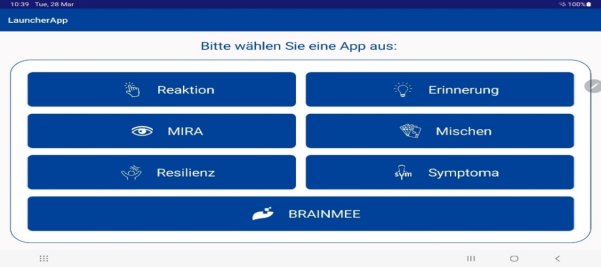
Figure 1: Entry of the AI-Refit suite of apps. The user selects between different services: resilience training (“Resilienz”), brain training (“BRAINMEE”), app-based psycho- logical tests (“Reaktion”, “Erinnerung”, “MIRA”, “Mischen”), and symptom checker (“Symptoma”).
page of the AI-Refit App (“Launcher App”) is depicted in Figure 1. The user who is interested in the empowerment of resilience and in the assessment of her own mental and cognitive state, is able to select between different servi- ces, i.e., resilience training (“Resilienz”), brain training (“BRAINMEE”), several gamified psychological tests (“Reaktion”, “Erinnerung”, “MIRA”, “Mischen”, and symptom-based diagnostic app (“Symptoma”).
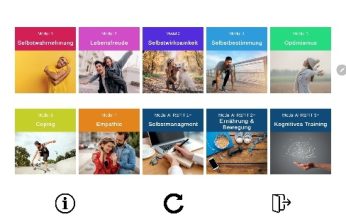
RESILIENCE TRAINING APP As part of the study, a multimodal approach to increase resilience is attem- pted. A short program to promote resilience is implemented in an app (Figure 2) based on (Engelmann, 2019). Engelmann (2019) assumes a seven- pillar model of resilience. These seven pillars consist of self-awareness, joie de vivre, self-efficacy, empathy, self-determination, optimism, and coping. In addition to the seven pillars, we implemented three additional pillars that we call AI-Refit+. In addition to this approach, there is also an emphasis on exercise & nutrition. However, no nutritional or sports medicine facts will be provided to the subject, but the knowledge already acquired in this area will be reminded. The app aims to motivate people to exercise and eat con- sciously. In addition, self-management and self-leadership are encouraged. Subjects should achieve the motivation to implement the training, but also to motivate the longest set personal goals. The third of the AI-Refit+ pillars is cognitive training. We assume that all exercises with improved attention or motivation to focus more are easier to implement. Therefore, motivation for cognitive training is carried out as part of the resilience app. The BRAINMEE app, which is integrated in the study, can be used here. But more focus should also be trained in everyday life and when working on the reflection tasks in the context of the resilience app.
All pillars are processed within the framework of modules. Each module has the same content. Each module contains a psychoeducational unit inten- ded to draw attention to the topic. Furthermore, the modules consist of a reflection exercise at the beginning and end of the module, which includes
AI-Enabled Playful Enhancement of Resilience and Self-Efficacy 49
Figure 2: The resilience training app. (a) Entries for specifically targeted exercises on (from top left to bottom right) self-perception, joy of life, self-efficacy, self- determination, optimism, coping, empathy, self-management, nutrition and mobility, cognitive training. (b) Entry for ‘nutrition and mobility’ with options for psychoeduca- tion, mindfulness training, reflection.
questions for self-reflection on all 10 topics. In addition, all topics will be trained with relaxation exercises and mindfulness exercises. The subjects are instructed to incorporate these exercises into their everyday lives to practice the psychological resources. When a module is completed, the test subjects decide themselves. With a confirmation of the completion of the module, ano- ther one can be started. When the 10 modules are completed, the training is over. The participants should take 2–4 days per module. In this way, subjects will be able to complete all modules within 2 months with minimal effort on the individual days.
SYMPTOM CHECKER For the purpose of risk stratification in the context of resilience, a sym- ptom checker has been implemented by Symptoma in the AI-Refit App. Symptoma’s symptom checker has been developed based on a large-scale pro- prietary ontology of clinical concepts and relationships. It has been validated by physicians and has shown promising results in detecting COVID-19 risk. The first prototype of Symptoma’s symptom checker detected COVID-19 risk with an accuracy of 96.32% (Martin et al., 2020; Munsch et al., 2020). This tool has also assisted the city of Vienna in efficiently screening COVID-19 cases (Munsch et al., 2022).
In the project, the symptom checker module focuses on resilience-related causes: Burnout and Long COVID. For each of these causes, the risk is assessed in a conversational chatbot implementation. Based on the outcome, further guidance and resources are provided to the user.
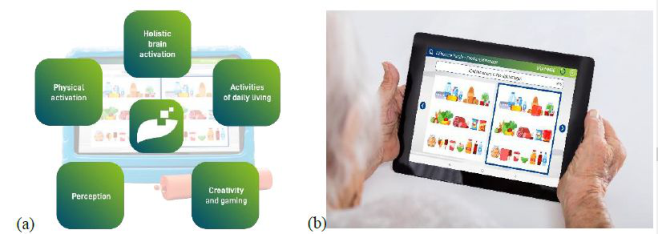
BRAINMEE APP The BRAINMEE app (Figure 3) of digitAAL Life GmbH (“DLF”) is the only solution on the market that offers both personalised, multimodal training as therapy and tools - such as an assessment of cognitive performance by estimating the MoCA score - in a single, integrated solution and is curren- tly being applied for resilience training. Data for the development of these
Figure 3: Concept and exercise implementation of the BRAINMEE app of digitAAL Life GmbH. (a) The multidomain concept of the digital app-based intervention. (b) Sample exercise, i.e., ‘spot-the-difference’ pictures for the training of visuospatial attention and short-term memory. Credits: digitAAL Life GmbH.
resilience components of the BRAINMEE app are being collected as part of these studies, but certification as a medical device is not currently planned.
The task types include, on the one hand, movement exercises for flexibility, strength and coordination, and on the other hand, exercises for long-term memory, short-term memory, spatial-visual memory, attention, orientation, fine motor skills, semantic memory, working memory, logical thinking, audi- tory perception, cognitive flexibility, visual differentiation, visual perception, seriality and measurement of everyday activity.
Game-based training combines joyful experiences with the app to increase adherence with assessment of the individual user’s neuropsychological profile (NPP; Paletta et al., 2021). The state of the NPP can indicate what kind of cognitive functionalities should be strengthened through training in order to avoid cognitive deficits. The exercises in the digitAAL Life app can be carried out by the users as often as they like - either with a trainer or without supervision.
SENSOR AND SERIOUS GAME BASED ANALYTICS A subgroup of the suite relates to gamified psychological tests that provide various assessment parameters. These components should be applied by the user following a usage plan for continuous monitoring but at the same time not impacting the adherence rate of the resilience and BRAINMEE app. In the following, the individual components are motivated and described.
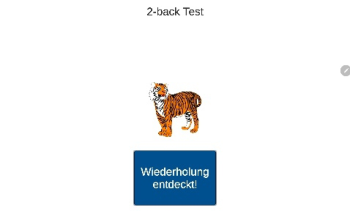
n-back Task. This app-based gamified test (Figure 4a) estimates the official continuous performance task used in psychology to measure part of working memory and working memory capacity (Kirchner, 1958). The subject is pre- sented with a sequence of stimuli and the task is to indicate whenever the current stimulus would match the stimulus from n = 2 previous steps in the sequence. The app presents a series of visual stimuli and evaluates the user’s cognitive performance.
MIRA Task. Recent models suggest that inhibitory control (IC), the execu- tive control function that supports our goal-directed behaviour and regulates our emotional responses, may underlie resilience (Afek et al., 2021). The
AI-Enabled Playful Enhancement of Resilience and Self-Efficacy 51
Figure 4: Gamified and serious game-based psychological tests. (a) App representing the n-back test (Kirchner, 1958) by presenting a series of images and querying for repe- tition detection. (b) The MIRA serious game (Paletta et al., 2020) realises a gaze-based test about the efficiency of inhibitory control (Crawford et al., 2005; green point: user’s eye gaze).
MIRA (Mobile Instrumental Review of Attention; Paletta et al., 2020; see Figure 4b) app enables a quasi-continuous assessment supported by game- like interaction with a gaze interface to estimate the cognitive screening MoCA. It represents a gamified version of the anti-saccade task, using an eye-tracking camera embedded in the device to capture and analyse eye move- ments during play. The anti-saccade task is known to detect problems of IC as seen in neurodegenerative executive function disorders (Crawford et al., 2005). Sustained attention. Personal resilience was significantly related to the reduction of fatigue in studies during the COVID-19 pandemic (Hassan et al., 2022). The assessment of sustained attention and fatigue is implemented with the 3 minute version of the Psychomotor Vigilance Test (PVT; Basner et al., 2011). Mental state. Emotion management involves the ability to be open to fee- lings and modulate them to promote growth, even under duress. Schneider et al. (2013) showed that emotional intelligence promotes stress resilience. The mental state is indicatively assessed by a serious game (Paletta et al., 2019) in the AI-Refit app. Wearables. In addition to the use of the AI-Refit suite of apps, par- ticipants of the resilience training are recommended to wear a biosensor armband (Garmin vivosmart 5). The data (heart rate, heart rate variability, sleep, motion) are transferred to the Fitrockr1 server for a comprehensive contextual assessment.
ANALYTICS BASED ON PSYCHOLOGICAL MODELS AND LEARNING THEORY “Man is a creature of habit” (Dewey, 2002, p. 125) – and while reinforcing habitual behaviour through reward strategies is relatively achievable, inh- ibiting or changing existing habits, as everyday experiences already show, is a challenge that is difficult to achieve. It is a well-known fact that even
1https://www.fitrockr.com/research/
motivated persons with appropriate knowledge often do not decide and beh- ave according to his/her attitudes, values, emotions, and cognitive insights (Courtenay-Hall & Rogers, 2002). This is often called the knowledge- behaviour gap. This gap induces that understanding the underlying cognitive and affective dimensions of behaviour (e.g., motivation, cognitions, potenti- als, and barriers) is necessary for successful interventions supporting people’s behavioural change.
To this end, a set of different approaches will be applied to investigate these underlying factors and find ways to individually optimize the app’s features. A first interesting insight might come from understanding differences and similarities between the persons using the app. Here, an approach that has proven useful in various health settings, recently also regarding the effects of COVID-19 on stress and resilience (Yalçın et al., 2022), is latent profile analy- sis (Williams & Kibowski, 2016). This method allows a data-driven capturing of different sub-groups within a sample, based on markers from questionnai- res (e.g., social support, perceived stress) and app usage (e.g., cognitive data, gaze markers). Furthermore, it will be interesting to utilize models of human behavior as a basis to assess the relevance of different factors for behavio- ral change. In the recently finished CODALoop project (Savini et al., 2019), a diverse set of cognitive models on behavioral change has been explored and investigated by Bedek & Albert (2019) to predict energy-related beha- vioral changes. This methodological approach is also promising with regard to shaping resilience-oriented behavior, especially since most of the exami- ned models and theories have been successfully applied in the health sector (DeJoy, 1996; Schwarzer, 2008). Especially the Health-Belief-Model (HBM; see Janz & Becker, 1984) and the Transtheoretical Model (TTM; see Grimley et al., 1994) seem promising and will be in the focus of the AI-Refit project using structural equation modelling methods to determine the relationships between various factors and, for example, app usage. Additionally, psycholo- gical learning theories, like the knowledge space theory (KST, e.g. Falmagne et al., 2013), are planned to be applied in order to provide an additional adaptive framework. This might be especially worthwhile in regards of the cognitive training, but will be tested with other aspects as well, for instance resilience exercises.
Based on this comprehensive approach, a framework for an activity recom- mender will be derived. In future iterations, this recommender will help strengthen the users’ resilience by targeting and adaptively optimizing the app’s content and it will help transforming this knowledge into behaviour and behaviour change in daily life.
STUDY PLAN The study protocol (ethical approval confirmed by the Medical University of Graz under No. 34–297 ex 21/22) foresees a usability study to get usa- bility and user experience feedback from experts and potential practitioners and an RCT of type intervention study. An important aspect of a usability study is the expert evaluation of the psychological questionnaires. The data to be collected serve as a main source for sub-group analyses and as basis for
AI-Enabled Playful Enhancement of Resilience and Self-Efficacy 53
applying the behavioural models (as HBM, TTM, KST). Furthermore, gene- ral questionnaires regarding, for example, the users’ health behaviour and coping strategies, will be presented.
The RCT measures the effectiveness of the app-based intervention. We aim at recruiting for this purpose 90 participants for an intervention duration of 2 months. 30 participants should only receive the diagnostic elements and not the intervention. 60 participants are expected to switch from the intervention group (IG) to the control group (CG) in a cross-over design, using both the app and the pre-set resilience training. In terms of the RCT each person will be randomly assigned to either the IG or the CG. N = 60 participants of the IG would apply the Al-Refit app content and complete psychological questi- onnaires on stress and resilience at the beginning of participation. New stress diagnostics would be applied after 2 and 4 months, respectively. The waiting group (CG, n = 30) would complete the psychological questionnaires before participation and after 2 months, but cannot use any further functions of the Al-Refit app. However, they will be offered the opportunity to use the tablet training at the end of their participation in the study. The study will be conducted in 2023.
CONCLUSION AND FUTURE WORK The presented work plan and initial results of the project AI-Refit provide first insights in the vision and developments of a radically innovative pro- totype of a digital care center for the reinforcement of resilience that would be applicable for a large part of the population. The interplay between resilie- nce training, cognitive stimulation, mobile sensor- and app-based assessment, and symptom-based, AI-driven recommender should engage into activities to strengthen resilience in healthy individuals after the COVID-19 pandemic in order to prevent from depressive symptoms, severe anxiety and increasing stress levels. The RCT study has started and the results will discover the actual impact of the intervention.
ACKNOWLEDGMENT
This work was partly funded from project AI-Refit under grant No FO999887487 of the Austrian Federal Ministry for Climate Action, Envi- ronment, Energy, Mobility, Innovation and Technology (BMK). We gratefully acknowledge the support of VisualCamp Co., Ltd, Seoul, Republic Korea, for the use of its eye tracking software development kit (SDK).
REFERENCES
Afek, A., et al. (2021). Psychological Resilience, Mental Health, and Inhibitory Control Among Youth and Young Adults Under Stress. Frontiers in Psychiatry, 11, 608588. doi: 10.3389/fpsyt.2020.608588 Bakker, D., Kazantzis, N., Rickwood, D., & Rickard, N. (2018). Arandomized
controlled trial of three smartphone apps for enhancing public mental health, Behaviour Research and Therapy, doi: 10.1016/j.brat.2018.08.003.
Basner, M., Mollicone, D., & Dinges, D. F. (2011). Validity and Sensitivity of a Brief Psychomotor Vigilance Test (PVT-B) to Total and Partial Sleep Deprivation. Acta astronautica, 69(11-12), 949–959. doi: 10.1016/j.actaastro.2011.07.015 Becker, S. et al. (2014). mHealth 2.0: experiences, possibilities, and perspectives.
JMIR Mhealth Uhealth, doi: 10.2196/mhealth.3328 Bedek, M. A., and Albert, D. (2019). Modelling the Psychological Dimensions of “Energy Consumption and Behavior”. In Savini, F., Pineda Revilla, B., Pfeffer, K., & Bertolini, L. (Eds.) From Efficiency to Reduction (S. 67–88). In Planning. Courtenay-Hall, P., and Rogers, L. (2002). Gaps in Mind: Problems in environmen-
tal knowledge-behaviour modelling research. Environmental Education Research, 8(3), 283–297. doi: 10.1080/13504620220145438 Crawford, T. J., et al. (2005). Inhibitory control of saccadic eye movements and cognitive impairment in Alzheimer’s Disease. Biological Psychiatry, 57, 1052– 1060. DeJoy, D. M. (1996). Theoretical models of health behavior and workplace self-
protective behavior. J of Safety Res, 27(2). doi: 10.1016/0022-4375(96)00007-2 Dewey, J. (2002). Human Nature and Conduct. Intro to Social Psych., Prometheus Books. Engelmann, B. (2019). Therapie-Tools Resilienz. Beltz, ISBN978-3-621-28669-5. Falmagne, J.-C., Albert, D., Doble, C., Eppstein, D., & Hu, X. (2013). Knowledge
spaces: Applications in education. Berlin, Heidelberg: Springer. Grimley, D., et al. (1994). The Trans theoretical Model of Change. In T. M. Brinthaupt & R. P. Lipka (Eds.), Changing the Self Philosophies, Techniques, and Experiences. State University of New York Press. Hassan, B. A. R., et al. (2022). Exploring the level of lockdown fatigue and effect
of personal resilience and coping behaviours on university students during the covid-19 pandemic. Curr Psychol. doi: 10.1007/s12144-022-02779-8 Janz, N. K., and Becker, M. H. (1984). The Health Belief Model: A Decade Later.
Health Education Quarterly, 11(1), 1–47. doi: 10.1177/109019818401100101 Kirchner, W. K. (1958). Age differences in short-term retention of rapidly changing information. Journal of Experimental Psychology. 55(4): 352–358. Lecomte, T., et al. (2020). Mobile Apps for Mental Health Issues: Meta-Review of
Meta-Analyses. JMIR Mhealth Uhealth, PMID: 32348289. Linardon, J., et al. (2019), The efficacy of app-supported smartphoneinterventions for mental health problems: a meta-analysis of randomized controlled trials. World Psychiatry, 18: 325–336. doi: 10.1002/wps.20673 Litvin, S., Saunders, R., Maier, M. A., & Lüttke, S. (2020). Gamification as an appro-
ach to improve resilience and reduce attrition in mobile mental health interventi- ons: A randomized controlled trial. PloS one, doi: 10.1371/journal.pone.0237220. Martin, A., Nateqi, J., Gruarin, S., Munsch, N., et al. (2020). An artificial intelligence-based first-line defence against COVID-19: digitally screening citizens for risks via a chatbot. Sci Rep 2020 Nov 4; 10(1):19012. PMID:33149198. Martínez-Pérez, B., de la Torre-Díez, I., & López-Coronado, M. (2013). Mobile
health applications for the most prevalent conditions by the World Health Organization: review and analysis. J Med Internet Res, doi: 10.2196/jmir.2600 Moreno, C., et al. (2020). How mental health care should change as a consequence of the COVID-19 pandemic. The Lancet Psychiatry, 7(9), 813-824. Munsch, N., Martin, A., Gruarin, S., Nateqi, J., Abdarahmane, I., Weingartner-
Ortner, R., & Knapp, B. (2020). Diagnostic Accuracy of Web-Based COVID-19 Symptom Checkers: Comparison Study. J Med Internet Res, PMID: 33001828.
AI-Enabled Playful Enhancement of Resilience and Self-Efficacy 55
Munsch, N., Gruarin, S., Nateqi, J., Lutz, T., et al. (2022). Symptoms associated with a COVID-19 infection among a non-hospitalized cohort in Vienna. Wien Klin Wochenschr. PMID: 35416543. Neary, M., and Schueller, S. M. (2018). State of the Field of Men- tal Health Apps. Cognitive and behavioral practice, 25(4), 531–537. doi:10.1016/j.cbpra.2018.01.002 Oehler, C., et al. (2020). Efficacy of a Guided Web-Based Self-Management Inte-
rvention for Depression or Dysthymia: Randomized Controlled Trial With a 12-Month Follow-Up Using an Active Control Condition. J Med Internet Res, doi: 10.2196/15361. Paletta, L., et al. (2018). Playful Multimodal Training for Persons with Dementia with Executive Function based Diagnostic Tool, PETRA ‘18: Proceedings of the 11th PErvasive Technologies Related to Assistive Environments Conference, doi: 10.1145/3197768.3203182. Paletta, L., Dini, A., & Pszeida, M. (2020). Emotion measurement from attention
analysis on imagery in virtual reality, in Proc. AHFE 2019 International Confe- rence on Affective and Pleasurable Design, Washington, DC. doi: 10.1007/978-3- 030-20441-9_2. Paletta, L., Pszeida, M., Dini, A., Russegger, S., Schüssler, S., Jos, A., Schuster, E., Steiner, J., & Fellner, M. (2020). MIRA – A Gaze-based Serious Game for Continu- ous Estimation of Alzheimer’s Mental State. ETRA ‘20 Adjunct: ACM Symposium on Eye Tracking Research and Applications, doi: 10.1145/3379157.3391989. Paletta, L., et al. (2021). Towards Decision Support with Assessment of Neuropsych-
ological Profiles in Alzheimer’s Dementia Using Playful Tablet-Based Multi modal Activation. doi: 10.1007/978-3-030-80285-1_54. Savini, F., Pineda Revilla, B., Pfeffer, K., & Bertolini, L., Eds. (2019). From efficiency to reduction. In Planning. doi: 10.17418/B.2019.9789491937439 Schneider, T. R., et al. (2013). Emotional intelligence and resilience, Personality and
Individual Differences, doi: 10.1016/j.paid.2013.07.460. Schwarzer, R. (2008). Modeling health behavior change: How to predict and modify the adoption and maintenance of health behaviors. Applied Psychology, 57(1), 1–29. Williams, G. A., and Kibowski, F. (2016). Latent Class Analysis and Latent Profile
Analysis. In L. A. Jason & G. S. Glenwick (Eds.), Handbook of Method. Appro- ach to Commun-Based Res: Qualitat., Quantit., and Mixed Methods. Oxford University Press. Yalçın, ˙I., Can, N., Mançe Çalı¸sır, Ö., Yalçın, S., & Çolak, B. (2022). Latent profile analysis of COVID-19 fear, depression, anxiety, stress, mindfulness, and resilience. Current Psychology, 41(1), 459–469. doi: 10.1007/s12144-021-01667-x.
LISTED IN THE AHFE DIGITAL BOOKSTORE CATALOGUE
Explore the complete digital volume
Cognitive Computing and Internet of Things
Read this individual research paper free through the original publisher, or explore the full digital proceedings book.
ISBN 978-1-958651-49-0
Explore this ISBN in the AHFE Bookstore ↗Listed in the July 2026 bookstore catalogue; search by ISBN to confirm current availability · Digital book purchase optional