Florian Haid, Julia Tschuden, Michael Schneeberger, Lucas Paletta, Anna Weber, Alexander Almer, Markus Bergen, Wolfgang Rausch, Gerald Bauer, Thomas Hölzl (2025). Real-Time Monitoring in Military Task Simulations: Insights from the RT-VitalMonitor Project. In: Cognitive Computing and Internet of Things. AHFE Open Access, vol. 165, pp. 125–135. https://doi.org/10.54941/ahfe1006096
Modern military operations place soldiers under significant physical and cognitive stress, which can impact their performance and safety. The RT-VitalMonitor project addresses this challenge by developing a real-time monitoring system to assess the psychophysiological state of soldiers. This system utilizes advanced sensor technologies and data-driven models to continuously track critical physiological parameters such as heart rate, respiratory rate, and core body temperature, alongside performance metrics during demanding tasks. More than 170 participants from the Austrian Armed Forces underwent a series of infantry-specific tasks designed to replicate real-world combat conditions, including loaded marches, climbing over an obstacle, and casualty evacuation. The collected data provides valuable insights into soldiers' physical exertion, cognitive load, and overall readiness. The project's goal is to develop predictive models for task-specific load management, enabling a better understanding of soldiers' current states and forecasting their performance under varying levels of stress. The findings of this study contribute to more effective training strategies, enhanced operational safety, and the development of more personalized support systems for soldiers in high-stress environments. Ultimately, the RT-VitalMonitor project demonstrates the potential of wearable sensor technology and machine learning to revolutionize performance assessment and improve soldiers’ well-being in military operations.
In modern military operations, soldiers are frequently required to perform under physically and mentally demanding conditions. As these challenges increase in complexity, it becomes essential to understand and monitor the physical and cognitive states of military personnel to ensure optimal performance and prevent overexertion. The RT-VitalMonitor project is
a pioneering initiative designed to address these challenges through the development of data-driven models that assess the physical and cognitive demands of soldiers. The project’s goal is to create branch-specific load models for the Austrian Armed Forces to monitor and improve the well-being of soldiers, both during training and operational deployments.
At the heart of the RT-VitalMonitor project is the creation of a real- time monitoring system capable of assessing the psychophysiological state of soldiers based on innovative, target-oriented load models and advanced analytical techniques. The system is designed to provide continuous, multifactorial, and multisensory data, offering an individualized view of a soldier’s stress level while also presenting an overview of team-wide performance. This approach aims to enhance soldiers’ physical performance, reduce the risks associated with physical and cognitive fatigue, and ultimately improve mission success by optimizing training and operational strategies.
The data generated from this study is crucial to achieving these goals. By analyzing how soldiers perform specific infantry tasks under different conditions, the project will develop predictive models and indices to assess the soldiers’ physical and cognitive states. These models will be used not only to prevent overexertion but also to personalize and optimize training regimens to enhance individual performance and safety.
In the following sections, we will explore the study procedure and setup, detailing the methodology used to collect data from over 170 participants who underwent a series of physically demanding tasks. This data will provide valuable insights into the physical demands of infantry-specific tasks and contribute to the development of effective strategies to support soldier readiness and health.
RELATED WORK
In military operations, soldiers are required to perform a diverse range of physically and cognitively demanding tasks – including forced marches with heavy loads, overcoming obstacles, casualty evacuation, and rapid tactical maneuvers – that have been extensively studied across different armed forces (Boye et al., 2017; East et al., 2017; Foulis et al., 2017; Boffey et al., 2019). Drain et al. (2016) reviewed the physiological capacity necessary for effective load carriage, while Foulis et al. (2015) established baseline requirements that underpin combat readiness. Complementing these task analyses, recent advances in wearable vital sign sensor technology have enabled continuous, real-time monitoring of critical physiological parameters such as heart rate, core body temperature, and respiratory rate (Friedl et al., 2016; Wu et al., 2022). Such live-monitoring systems, often integrated into smart textiles, provide immediate feedback that is essential for optimizing performance and mitigating the risk of fatigue during prolonged operations (Vo & Trinh, 2024; Sethuraman et al., 2020). Moreover, research by Almer et al. (2023) and Weber et al. (2024) has introduced stress modeling approaches tailored to the unique load characteristics of various military forces, thereby enhancing predictive accuracy for fatigue and performance deterioration. The application of machine learning techniques further refines
Real-Time Monitoring in Military Task Simulations 127
these predictive models, as demonstrated by studies focusing on automated fatigue assessment and multimodal sensing (Bai et al., 2021; Jaiswal et al., 2022; Lin et al., 2024). In addition, systematic reviews have underscored the benefits of non-invasive, continuous physiological monitoring for fatigue and exertion assessment (Bustos et al., 2021), while evaluations of heart rate variability during basic military training provide further insights into stress responses (Corrigan et al., 2022). Finally, considerations for the deployment of commercially available sensors in continuous monitoring setups have been discussed to bridge the gap between research and practical application (Hegarty-Craver et al., 2024). Collectively, these studies illustrate a robust framework in which real-time monitoring and task-specific performance analyses converge to enhance soldier readiness and operational safety.
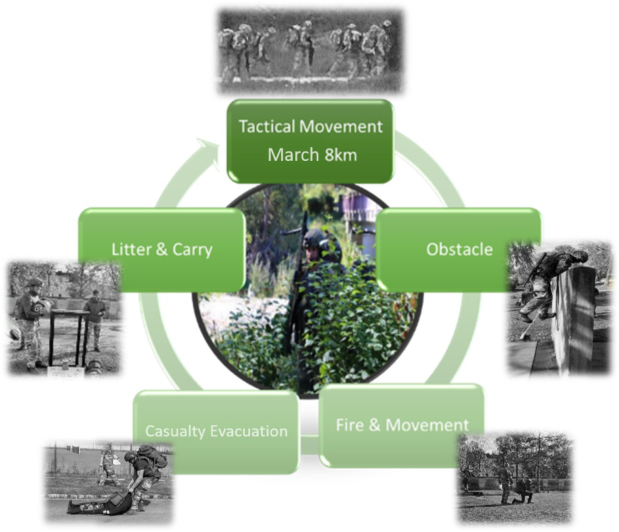
STUDY PROCEDURE & SETUP The study was designed by Subject Matter Experts (SMEs) of the Austrian Armed Forces to evaluate the physical demands of five distinct Critical Tasks (CTs) that were selected to reflect the essential, everyday responsibilities of infantry soldiers. More than 170 highly trained participants took part in a testing session scheduled to last between 80 and 120 minutes, during which both performance and physiological data were systematically recorded.
Baseline data, which form the foundation for comparing subsequent performance measurements, were collected on a separate day. In this session, participants first determined their resting heart rate by lying quietly with their eyes closed for five minutes. Following this, a structured protocol was implemented to assess maximal heart rate. An initial general warm- up, consisting of an easy jog and running drills, prepared the participants for three 80-meter sprints executed at approximately 95%, 98%, and 100% of their maximal speed with recovery intervals of 60 to 90 seconds. This was followed by a dedicated five-minute fast-paced run during which participants were instructed to progressively increase their speed in the final minute to approach and sustain their maximal heart rate. Alongside these cardiovascular measurements, comprehensive anthropometric and body composition data – including weight, height, lean body mass, fat mass, and other relevant indices – were obtained using a Tanita body scale.
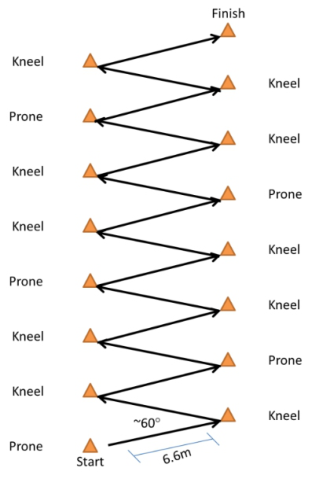
The main testing session comprised the execution of five consecutive infantry tasks, adapted from the test procedure defined by Foulis et al. (2015). These tasks included an 8 km loaded march with a 43 kg load, climbing over a 1.9 m wall, fire and movement drills consisting of 15 short sprints over 6.6 m with rapid changes in firing positions, a simulated casualty evacuation involving the dragging of a 123 kg dummy for 15 meters, and a task simulating the handling of sandbags for construction and transport activities. To evaluate both precision and cognitive load before and after these tasks, shooting simulations were integrated into the protocol. Prior to the critical tasks, participants completed a 10-shot target practice with the assault rifle to establish baseline shooting accuracy, followed by a friend–foe discrimination exercise using the pistol to assess cognitive load. The same assessments were repeated immediately after the critical tasks to determine the impact of
physical exertion on shooting performance. In addition, following each task, every soldier was asked to provide a personal assessment of his condition using the Borg scale (RPE: Rate of perceived Exertion).
Figure 1: Critical tasks – overview.
Data collection during the main session was facilitated by a sophisticated multi-sensor setup that combined wearable technology with environmental monitoring and automated timing systems. The QUS smart shirt, equipped with vital sign sensors, recorded key parameters such as heart rate, respiratory rate, position, acceleration, and heart rate variability (HRV), while a dedicated sensor from greenteg measured core body temperature and skin temperature to provide insights into occurring heat stress. In parallel, an environmental meter (Kestrel) continuously monitored ambient temperature, humidity, radiation and wind speed - Wet Bulb Globe Temperature (WBGT) - to contextualize the physiological data. An automated timing system (SPORTident) recorded precise start and end times for each station, including transitions between tasks, ensuring accurate performance metrics.
At the conclusion of the testing session, participants completed a questionnaire that assessed the usability of the smart shirt and its integrated temperature sensor, providing essential feedback on the wearing comfort and practicality of wearable technology in training and exercise environments and its compatibility with combat gear and equipment. This comprehensive testing procedure, which resulted in the collection of over 80,000 data points per participant, provides a concise overview of the study setup and lays
Real-Time Monitoring in Military Task Simulations 129
the groundwork for the detailed examination of each task presented in the following sections.
CRITICAL TASKS Loaded March
The loaded march task covers a distance of 8 kilometers and is specifically designed to assess the endurance capabilities of infantry personnel while marching under operational conditions. Prior to beginning the march, a guided warm-up phase is completed, lasting approximately 10 to 15 minutes. This preparatory phase is critical, as it allows the body to adjust quickly to the elevated metabolic demands associated with the rapid pace of the march, ensuring that participants are physiologically prepared for the intense effort to follow.
Once the warm-up is completed, the march commences with the objective of covering the entire 8 km distance in the shortest possible time. Participants are permitted to run during the march, emphasizing the need for both speed and endurance while still maintaining a controlled pace that supports sustained performance. An important operational detail is the flexibility given to each soldier regarding the method of carrying their weapon; however, it is strictly required that the weapon is not stored in or fastened to the backpack. Soldiers must wear a helmet at all times during the march to ensure compliance with operational safety standards.
The overall load for this task is standardized at a total weight of 43 kg (± 1 kg), which excludes the weight of the footwear and clothing. This load is intended to simulate the realistic physical burden experienced in the field. To ensure a comprehensive evaluation of endurance performance, interim measurements are taken after every kilometer. These periodic assessments provide detailed insights into the progression of physical exertion and fatigue over the course of the march, enabling a granular analysis of endurance and pacing strategies.
Climbing Over an Obstacle This task evaluates the specific strength capabilities and technical skills required to overcome a vertical barrier while carrying a combat load. Soldiers must successfully scale a 1.90-meter-high wall, a challenge that mirrors real- world military scenarios where navigating obstacles quickly and efficiently is essential. The test assesses upper and lower body strength, coordination, and the ability to apply effective climbing techniques under physically demanding conditions.
The task begins with a 20-meter approach run, allowing participants to generate momentum before attempting the climb. After clearing the wall, a 10-meter landing and recovery zone ensures safe completion. Soldiers are free to use different climbing techniques, including leg push-offs, arm pull- ups, or leveraging the wall’s edge for additional support. To account for the operational necessity of handling equipment during such maneuvers,
participants are permitted to throw their backpack over the wall in advance or carry it throughout the ascent.
Each soldier performs the task while carrying the same standardized load as in the march – 43 kg (± 1 kg), excluding footwear and clothing. This ensures consistency in evaluating performance across different physical challenges. Successfully overcoming the obstacle under this load provides critical insights into a soldier’s ability to maneuver in complex environments, highlighting the balance between strength, agility, and technical execution under operational conditions.
Fire & Movement This task is designed to assess sprinting ability, explosive strength, and rapid position changes under combat conditions. Soldiers must advance across a 100-meter distance while executing 15 successive position changes, simulating the dynamic movement patterns required in fire-and-maneuver scenarios. The test evaluates both physical endurance and the ability to maintain control and stability when transitioning between firing positions under exertion.
The task begins in the prone unsupported firing position, with soldiers progressing according to a predefined pattern that alternates between prone and kneeling positions. At each position change, they must hold their stance for five seconds before receiving an auditory signal (whistle) indicating the next movement. This structured sequence ensures that soldiers not only demonstrate speed and agility but also maintain discipline in adopting and stabilizing firing positions under exertion.
For this test, the total carried load is reduced compared to the march and obstacle course, with soldiers bearing 29 kg (± 1 kg), excluding footwear and clothing. Unlike the previous tasks, no backpack is worn, but a helmet remains mandatory to reflect operational conditions. The Fire & Movement task provides valuable insight into a soldier’s ability to execute rapid, controlled maneuvers under physically demanding circumstances, making it a critical component in assessing combat readiness.
Casualty Evacuation The ability to extract injured personnel from the battlefield is a vital skill for infantry soldiers, requiring significant strength, endurance, and tactical efficiency. This task replicates the physical strain of casualty evacuation by testing a soldier’s ability to drag a heavy load under operational conditions.
The test begins with a 123 kg dummy lying in a supine position at the starting line. Upon command, the soldier must drag the dummy 15 meters straight backward until the entire load has crossed the designated finish line. Proper technique is essential to ensure efficiency and minimize fatigue, as the soldier must maintain control of the dummy throughout the movement. The test is conducted on varying surfaces, including dry grass, asphalt, or concrete, to reflect realistic evacuation conditions encountered in the field.
For this task, soldiers carry a total load of 29 kg (± 1 kg), excluding footwear and clothing. The method of carrying the weapon is left to
Real-Time Monitoring in Military Task Simulations 131
individual preference, but a helmet must be worn at all times to maintain alignment with operational requirements. Successfully completing the casualty evacuation drill demonstrates a soldier’s capacity to perform high- intensity rescue maneuvers, a critical component of battlefield survival and mission success.
Figure 2: Critical task - fire & movement (Foulis et al., 2015).
Litter & Carry This task evaluates a soldier’s strength and muscular endurance when lifting, carrying, and repeatedly moving heavy loads. Simulating real-world scenarios such as transporting supplies or constructing field positions, it requires a combination of power, coordination, and sustained effort over multiple repetitions.
At the start of the test, a sandbag is placed on the ground in front of a 125 cm-high platform. The soldier begins by lifting the sandbag and carrying it over a distance of 30 meters (15 meters out and back), with the carrying method left to individual preference. Upon returning to the starting position, the soldier must place the sandbag onto the platform before lowering it back to the ground. After setting the sandbag down, the soldier completes the 30-meter distance again, this time without carrying the load. This sequence is then repeated for a total of 20 cycles, demanding sustained physical effort throughout the task.
To maintain operational realism, soldiers perform the test wearing a helmet but without additional load. The Litter & Carry task is designed to replicate the lifting and carrying demands commonly encountered in infantry operations, assessing both raw strength and endurance in repetitive load-bearing activities.
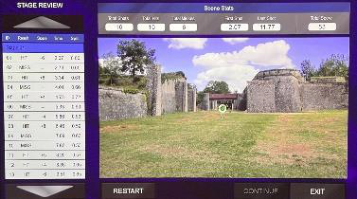
SHOOTING SIMULATOR To assess the impact of physical exertion on shooting performance, participants completed a standardized shooting evaluation both before and after the physically demanding critical tasks. This evaluation was conducted using a mobile shooting simulator and consisted of two distinct exercises designed to measure precision and target discrimination under stress.
The first exercise focused on precision shooting with the assault rifle. Participants engaged targets in a free-standing position, aiming at a 10-ring target placed 50 meters away. They were given one minute to fire ten shots, with the requirement to lower the rifle’s muzzle after each shot and reacquire the target before firing again. Performance was assessed based on the total ring score achieved and the time taken to complete the exercise.
The second exercise tested the ability to recognize and engage armed threats under time pressure. Using the pistol in a free-standing position, participants faced a sequence of target silhouettes that appeared in rapid succession. A total of 18 targets were presented, of which 12 were armed adversaries and six were unarmed figures. Targets appeared at half-second intervals, evenly distributed across the width of the simulated field. Within eight seconds, all targets became visible, while unarmed figures remained in place for a maximum of 20 seconds before disappearing. Participants were required to engage each target with a single shot, and performance was evaluated based on total engagement time, the number of correctly identified threats, mistaken engagements, and missed shots.
By incorporating shooting assessments before and after the critical infantry tasks, this component of the study provided valuable insight into how physical fatigue influences accuracy, reaction time, and cognitive decision- making in combat-relevant scenarios.
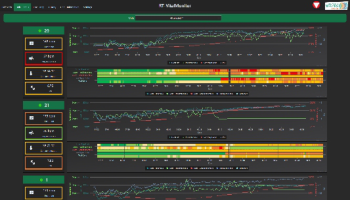
VISUALIZATION To showcase the system’s capabilities, data from selected testing sessions and individual participants were transmitted in near real-time to a central server and rendered on an interactive live dashboard. Although the testing procedures were standardized and no live operational decisions were made, the live-viewer (Figure 4) demonstrated the system’s potential by providing
Real-Time Monitoring in Military Task Simulations 133
an immediate visual representation of soldiers’ physiological status and performance metrics during the execution of Critical Tasks.
Complementing the live view, a specialized web-based analysis tool was developed for post-test evaluation. As shown on the right side (Figure 4), this expert dashboard offers a comprehensive platform for detailed data review. Users can explore extensive data streams, annotate significant events, and identify key moments or anomalies during the execution of the Critical Tasks. The system organizes the data into clearly defined phases that are directly linked with positional information, providing a structured and intuitive overview. This dual visualization approach – combining the live dashboard with the retrospective analysis tool – demonstrates both immediate data display capabilities and in-depth analytical potential, paving the way for enhanced training and operational improvements in future applications.
CONCLUSION AND OUTLOOK The next steps in this research involve cleaning and preparing the collected data for further analysis. Given the sheer volume of data gathered, this process will require significant effort, but the insights that can be drawn from it are invaluable. The analysis of the soldiers’ physiological and performance data will provide crucial information about their physical and cognitive states under varying conditions. Moreover, the development of machine learning- based approaches and task-specific load models will enable not only a more accurate representation of a soldier’s current status but also the ability to predict their condition, psychophysiological state and performance under specific loads. This predictive capability could be essential for determining when intervention may be necessary to prevent overexertion or fatigue, ultimately improving soldiers’ safety and mission success.
This study emphasizes the importance of physiological monitoring and data-driven research in enhancing soldier readiness and operational efficiency. By examining the demands of specific intantry tasks, the findings contribute to the optimization of training regimens, boost physical performance, and support the creation of operational strategies that reduce risks associated with cognitive and physical fatigue. The RT-VitalMonitor project represents a forward-thinking initiative, showcasing the potential
of advanced sensor technologies to transform performance assessments in military settings.
By integrating real-time physiological data and task-specific performance assessments, this work lays a solid foundation for more personalized, data- informed approaches to training, mission planning, and decision-making. As such, the RT-VitalMonitor project not only serves the Austrian Armed Forces but also holds promise for wider applications, including in sectors where human performance under stress plays a crucial role, such as in emergency response, aviation, and other high-risk occupations, where continuous, task- specific monitoring can elevate performance, reduce risks, and ensure safety in demanding environments.
ACKNOWLEDGMENT
This work was funded and supported in part by the Austrian Defense Research Programme FORTE, the Austrian Research Promotion Agency (FFG), the Austrian Federal Ministry of Finance, the Austrian Federal Ministry of Defense, and the Austrian Armed Forces.
REFERENCES
Almer, A., Weber, A., Haid, F., Paletta, L., Schneeberger, M., Ladstätter, S., Wallner, D., Glanz, P., Klöckl, P., Eder, D., & Hölzl, T. (2023). Real-time remote stress monitoring based on specific stress modelling considering load characteristics of different military forces. 14th International Conference on Applied Human Factors and Ergonomics (AHFE 2023). https://doi.org/10.54941/ ahfe1003977 Bai, Y., Guan, Y., Shi, J. Q., & Ng, W.-F. (2021). Towards automated fatigue
assessment using wearable sensing and mixed-effects models (arXiv:2108.04022). arXiv. https://doi.org/10.48550/arXiv.2108.04022 Boffey, D., Harat, I., Gepner, Y., Frosti, C. L., Funk, S., & Hoffman, J. R. (2019). The physiology and biomechanics of load carriage performance. Military Medicine, 184(1–2), e83–e90. https://doi.org/10.1093/milmed/usy218 Boye, M. W., Cohen, B. S., Sharp, M. A., Canino, M. C., Foulis, S. A., Larcom, K.,
& Smith, L. (2017). U.S. Army physical demands study: Prevalence and frequency of performing physically demanding tasks in deployed and non-deployed settings. Journal of Science and Medicine in Sport, 20, S57–S61. https://doi.org/10.1016/ j.jsams.2017.08.014 Bustos, D., Guedes, J. C., Vaz, M. P., Pombo, E., Fernandes, R. J., Costa, J. T., & Baptista, J. S. (2021). Non-invasive physiological monitoring for physical exertion and fatigue assessment in military personnel: A systematic review. International Journal of Environmental Research and Public Health, 18(16), 8815. https:// doi.org/10.3390/ijerph18168815 Corrigan, S. L., Bulmer, S., Roberts, S. S. H., Warmington, S., Drain, J., & Main, L. C.
(2022). Monitoring responses to basic military training with heart rate variability. Medicine and Science in Sports and Exercise, 54(9), 1506–1514. https://doi.org/ 10.1249/MSS.0000000000002930 Drain, J., Billing, D., Neesham-Smith, D., & Aisbett, B. (2016). Predicting physiological capacity of human load carriage—A review. Applied Ergonomics, 52, 85–94. https://doi.org/10.1016/j.apergo.2015.07.003
Real-Time Monitoring in Military Task Simulations 135
East, W., Muraca-Grabowski, S., McGurk, M., DeGroot, D., Hauret, K., Greer, T., Sharp, M. A., Foulis, S., & Redmond, J. (2017). Baseline soldier physical readiness requirements study. Journal of Science and Medicine in Sport, 20, S24–S25. https://doi.org/10.1016/j.jsams.2017.09.076 Foulis, S. A., Redmond, J. E., Frykman, P. N., Warr, B. J., Zambraski, E. J.,
& Sharp, M. A. (2017). U. S. Army physical demands study: Reliability of simulations of physically demanding tasks performed by combat arms soldiers. Journal of Strength and Conditioning Research, 31(12), 3245–3252. https:// doi.org/10.1519/JSC.0000000000001894 Foulis, S. A., Redmond, J. E., Warr, B. J., Zambraski, E. J., Frykman, P. N., & Sharp, M. A. (2015). Development of the occupational physical assessment test (OPAT) for combat arms soldiers (USARIEM Technial Report T16-02). Military Performance Division, U. S. Army Research Institute of Environmental Medicine. Friedl, K. E., Buller, M. J., Tharion, W. J., Potter, A. W., Manglapus, G. L.,
& Hoyt, R. W. (2016). Real Time Physiological Status Monitoring (RT-PSM): Accomplishments, Requirements, and Research Roadmap. (USARIEM Technical Note TN16-02). Biophysics and Biomedical Modeling Division, U. S. Army Research Institute of Environmental Medicine. Hegarty-Craver, M., Davis-Wilson, H., Gaur, P., Walls, H., Dausch, D., & Temple, D. (2024). Wearable sensors for service members and first responders: Considerations for using commercially available sensors in continuous monitoring. RTI Press. https://doi.org/10.3768/rtipress.2024.op.0090.2402 Jaiswal, A., Zadeh, M. Z., Hebri, A., & Makedon, F. (2022). Assessing fatigue with
multimodal wearable sensors and machine learning (arXiv:2205.00287). arXiv. https://doi.org/10.48550/arXiv.2205.00287 Lin, D. J., Satish, A., Richardson, K. L. S., An, S., Yaldiz, C. O., Buller, M., Driver, K., Atkinson, E., Mesite, T., King, C., Inan, O. T., & Medda, A. (2024). Predicting soldier performance on structured military training marches with wearable accelerometer and physiological data. IEEE Sensors Journal, 24(1), 403–413. https://doi.org/10.1109/JSEN.2023.3330409 Sethuraman, S. C., Kompally, P., Mohanty, S. P., & Choppali, U. (2020).
Mywear: A smart wear for continuous body vital monitoring and emergency alert (arXiv:2010.08866). arXiv. https://doi.org/10.48550/arXiv.2010.08866 Vo, D.-K., & Trinh, K. T. L. (2024). Advances in wearable biosensors for healthcare: Current trends, applications, and future perspectives. Biosensors, 14(11), 560. https://doi.org/10.3390/bios14110560 Weber, A., Almer, A., Paletta, L., Schneeberger, M., Klöckl, P., Eder, D.,
Wallner, D., Glanz, P., Kühr, O., Bauer, G., & Hölzl, T. (2024). Stress modelling based on specific stress characteristics of various military and civil forces for a real-time stress monitoring. https://doi.org/10.5281/ZENODO.10673024 Wu, J.-Y., Ching, C. T.-S., Wang, H.-M. D., & Liao, L.-D. (2022). Emerging wearable biosensor technologies for stress monitoring and their real-world applications. Biosensors, 12(12), 1097. https://doi.org/10.3390/bios12121097
LISTED IN THE AHFE DIGITAL BOOKSTORE CATALOGUE
Explore the complete digital volume
Cognitive Computing and Internet of Things
Read this individual research paper free through the original publisher, or explore the full digital proceedings book.
ISBN 978-1-964867-41-0
Explore this ISBN in the AHFE Bookstore ↗Listed in the July 2026 bookstore catalogue; search by ISBN to confirm current availability · Digital book purchase optional