Roland Rodenbeck, Daniel Haferkorn, Barbara Essendorfer (2024). Interoperable Data Distribution Through Coalition Shared Data by Means of Standardization. In: Human Systems Engineering and Design (IHSED2024): Future Trends and Applications. AHFE Open Access, vol. 158, pp. 317–324. https://doi.org/10.54941/ahfe1005555
Interoperability, especially when exchanging data, is an ongoing effort, as requirements and use cases change over time and technical innovations have to be considered. In the domain of military Joint Intelligence, Surveillance and Reconnaissance (ISR) a standard has been developed that supports the interoperable distribution of data in a heterogeneous network of organizations. The standard is maintained within a Custodian Support Team (CST).In regular meetings, chaired by a Custodian, aspects such as new technologies, requirements or security innovations are presented and discussed. If accepted by the team specifications are developed, prototyped by various partners and tested in interoperability exercises and trails. If the innovations prove useful the standard is updated accordingly.This paper discusses the use cases of STANAG 4559 and how such a complex interoperability standard can be developed and maintained through dedicated organizational means. It shows how the specific standard could be further enhanced to serve a wider audience in civil and military data distribution as Multi Domain Operations.
Various international partners have joined forces to develop the “Coalition Shared Data” concept and its related standard STANAG 4559 (NATO Standardization Office (NSO), 2018a). This standard enables and supports the interoperable distribution of data in a heterogeneous network of organizations in a Joint ISR (intelligence, surveillance and reconnaissance) enterprise. The purpose is to enable the tasking of reconnaissance and surveillance assets, the dissemination of live data and the production and dissemination of data by exploitation and analyzing systems to ultimately provide intelligence for a common operational picture. As systems and services typically provided in such operations belong to different nations and are allocated to different commands, possibly in distributed locations, it is necessary to provide technical solutions that support the specific requirements of such an environment.
The standard is continually updated to meet new operational requirements and technical innovations. The standard can change significantly, especially with new technologies. For this reason, particular care must be taken to ensure that interoperability is guaranteed at all times. Various processes and structures are used to support further development.
The standard is maintained within a Custodian Support Team (CST) that is chaired by a Custodian to coordinate the work of the various international partners. In regular meetings, aspects such as new technologies, requirements or security innovations are presented and discussed.
In the next chapters STANAG 4559 is introduced and the approach to develop and maintain such a standard through dedicated organizational means is described. We show how the specific standard could be further enhanced to serve a wider audience in civil and military data distribution as Multi Domain Operations (MDO) (Jones and Diaz de Leon, 2020).
FROM COALITION SHARED DATA TO STANAG 4559 In the late 1990s, digitalization and networked operations became more and more relevant in military operations where different nations and military forces were expected to collaborate with each other. The Kosovo conflict, in which NATO became involved in 1999 was the ultimate eye opener that even when nations had systems that could digitally support surveillance and reconnaissance analysis it was difficult to share those products. This was due to multiple reasons, one being that the operational processes to task, collect, process and disseminate information were not agreed upon or described in a feasible way. The other reason was that commonly agreed interfaces or formats did not exist, and if they did, the specifications were not detailed enough to enable true interoperability.
For this reason, various nations decided to collaborate on this topic, and from the late 1990s to 2015 a series of projects (Nesse, 2006; Ciancarini et al., 2016) were launched in which experts from the military ISR domain, decision makers from Ministries of Defense (MOD), and technical experts from research institutes and industry came together to work on solutions to enable interoperable data sharing in military Joint ISR operations. These efforts have resulted in the Coalition Shared Data (CSD) concept.
The work in those projects was divided into several working groups. Here operational requirements and processes were defined, system architectures and exchange specifications to support these processes were developed and technical formats and the requirements on systems were refined.
The result of the work was prototyped in systems and verified in regular exercises and experiments scaling from technical experiments and simulated exercises to full-blown live trials, enabling the community to review its work and adapt if needed in a subsequent step.
As a result of these regular testing events, process descriptions and technical documentation could be updated and improved on a regular basis. Prototype systems were available, and military users experienced the new processes as well as the systems and could take their knowledge back to their nations to influence planning and development here.
Interoperable Data Distribution Through Coalition Shared Data 319
The result of this work was specified in multiple NATO standards and allied documentation. The main technical standard that incorporated the results of this achievement was STANAG 4559 in its Edition 4.
STANAG 4559 The standard originally evolved from the Geospatial and Imagery Access Services Specification in the early 2000s. It has been published in multiple editions through numerous development iterations and has been expanded to include additional data types and use cases. In addition, further data model extensions for existing data types and core functionality have been added over time.
For the current Edition 4, following the development described above, the standard has been split into three parts (described in three AEDPs (Allied Engineering Documentation Publications)) that address different types of data as well as different use cases.
AEDP-17 (NATO Standardization Office (NSO), 2018b) addresses the storage and dissemination of Joint ISR products (such as images, reports, documents or video clips), AEDP-18 (NATO Standardization Office (NSO), 2018c) addresses the storage and dissemination of streaming data (such as tracks or video streams), AEDP-19 (NATO Standardization Office (NSO), 2018d) addresses the persistence and dissemination of Intelligence Requirements Management (IRM) and Collection Management (CM) artifacts according to defined NATO processes (Essendorfer et al., 2018).
Although the systems and services for supporting each AEDP may be developed and maintained independently (i.e., by different vendors) there is a common underlying concept (CSD) that makes it necessary to monitor interoperability while developing the overall standard.
All AEDPs share a common information model on which they rely, as well as links between artifacts that are shared across AEDP-19, -17 and -18.
COLLABORATIVE WORK STRUCTURE OF THE CST MEMBERS If data is exchanged between international partners and using software products from different companies, it is important to maintain interoperability. In NATO’s standardization efforts it is the task of the CST to take this into account when making changes to the standard and generally to keep the standard fit for the future. The aim of the CST is to achieve interoperability through coordinated decisions.
Interoperability requires a common understanding of the problem by all parties involved. The jointly developed specification must be as unambiguous as possible in order to avoid discrepancies between the different implementations of the interfaces/formats. Otherwise, incompatibilities may arise. To make this possible, a comprehensible description of the common specification is required. This is the key to ensuring that implementations of the standard by different vendors are interoperable.
The development of the standard is therefore driven by the CST. The CST is a team made up of experts from different countries who have a
common interest in the standard. The experts range from implementers of the standard who have in-depth technical knowledge, to operational users/ deciders who know the processes and requirements to be supported, to decision makers from the MOD or subordinate organizations who define operational architectures and national system settings. The team is led by a Custodian who receives, coordinates and prioritizes the individual proposals. The experts support the Custodian in the further development of the standard. Further development must be well coordinated between all stakeholders.
For individual topics, the formation of smaller Teams of Experts (ToE) has proven to be very useful. These teams further develop parts of the standard according to their own expertise and present the (interim) results in the CST.
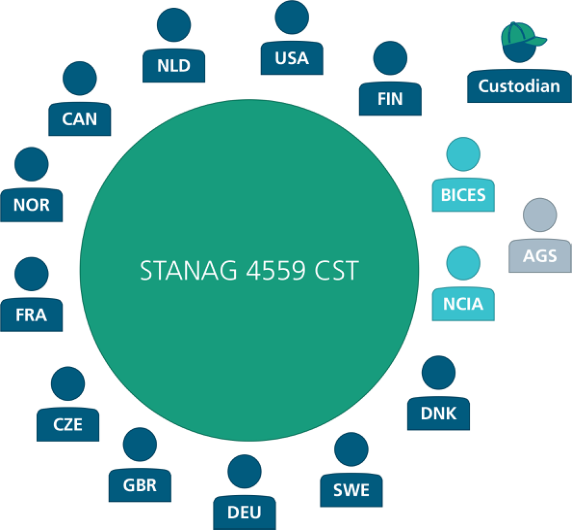
Figure 1 shows the different stakeholders who come together in the CST. Web conferences are held at regular intervals to coordinate the respective work topics. In addition, the aim is to arrange a larger on-site meeting at least every six months in order to focus on individual topics. The Secretary assists the Custodian in his work.
Figure 1: Structure and stakeholders of the custodian support team (CST).
Transparency of standardization documents is required by all stakeholders. According to AAP-03 (NATO Standardization Office (NSO), 2018e), “a consistent and coherent approach to standardization shall be applied between stakeholders using NATO processes and standardization management tools under the cognizance of the NATO Standardization Office (NSO)”.
Interoperable Data Distribution Through Coalition Shared Data 321
Adaptations are assessed as to whether they are minor or major and will therefore result in a new version (if minor) of the standard or a new edition.
PROCESSES IN THE CST This section describes the processes within the CST. It describes how topics are identified and processed, how the general development takes place and how the processes in the CST are organized.
In addition to the regularly required technical updates, there are always requirements from the operational environment that are collected for a revision of the standard. This also includes examining which innovations and state-of-the-art technologies can be integrated into the standard. In addition, IT security is always a driver for updates.
The process for further developing the standard is based on AAP-03. The Custodian is nominated as part of the standardization task described in AAP-03. The partner nations and NATO bodies involved are also specified as stakeholders. In the beginning of the year 2023 there was a regular change of Secretary. This was used as an opportunity to review the existing processes to see what could be improved. Two major issues were identified. One was the communication methods for the asynchronous discussion of topics, which generally took place by email. A particular problem identified was that late joiners did not have access to previous communication and that discussions were difficult to track in general using this method. The other issue was that the topics and progress on them were primarily tracked in spreadsheets. In this context, it was noted that there was a lack of transparency and that decisions were difficult to track and document.
To address the identified problems and improve the process, options for changing the tooling were considered. An opportunity was identified to mitigate both problems using one tool, a centralized issue tracking system. Once this tool was established, the benefits quickly became apparent.
Now, all stakeholders can find out about the processing status of individual issues at any time from a central location. This can also be helpful when preparing the topics for an upcoming meeting. The issue tracker also enables the asynchronous and traceable exchange of information, opinions and comments on individual issues. Organization is ensured by the use of labels and the availability of a search function.
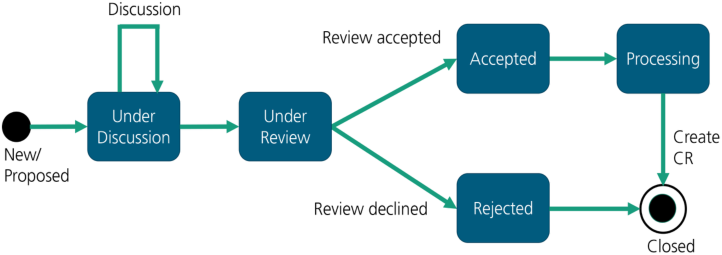
A set procedure with certain boundary conditions has been introduced for handling the issue tracker, which can be seen in Figure 2.
The issue life cycle is as follows: Newly created issues are first discussed within the CST community using the issue tracker. The focus of these discussions is on relevance and validity. Smaller subordinate groups with higher interest in an issue typically form at this point. Once an issue has been fully discussed, its status is updated to Under Review.
The issue is then reviewed by the CST (or subordinate ToEs that are referenced by the specific labels) and as a result of this review, the issue is either rejected or accepted and in the latter case finally submitted for processing.
Figure 2: Lifecycle of issues.
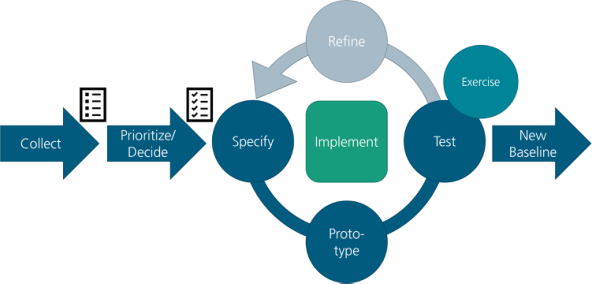
In the case of major issues, this may initially result in a Change Request (CR), otherwise the issues are passed directly into the further development process, as shown in Figure 3. CRs that have a major impact on the standard are first submitted to the superior group, the Joint Capability Group on Intelligence, Surveillance and Reconnaissance (JCGISR) (Martin, 2014).
The issues and CRs are addressed in the further development process within an implement loop, regularly presented to the CST and refined. The process is therefore iterative as far as possible. In the case of major changes, it has proven to be a good practice for at least three nations to work on one issue and test their prototype implementations against each other. This allows interoperability problems to be identified at an early stage. Such a joint test can be conducted as part of the Coalition Warrior Interoperability eXploration, eXperimentation, eXamination eXercise (CWIX) or a joint digital test event. If necessary, the prototype is improved after such a test, followed by another test or an adjustment of the specification. If all stakeholders are satisfied with the result, the specification can be transferred to a new baseline. The aim here is to ensure that such a procedure is possible within 3 years. This baseline must then be submitted to the JCGISR for approval. The goal here is that a new edition of the standard can be published within a period of five years.
Figure 3: Process for STANAG 4559 development.
Interoperable Data Distribution Through Coalition Shared Data 323
CONCLUSION
In this publication, we present the advantages and challenges of standardization for interoperable data distribution of ISR products for CSD.
The processes and steps carried out within a CST and solutions that improve the maintenance of the standard were presented. The process is regularly reviewed. Currently an additional (optional) loop is introduced to include operational feedback if needed.
What was not emphasized in this paper but what is relevant for future work is the connection of this standard with other standards and solutions that also aim at similar tasks. This includes enhancing the standard by introducing respective data model extensions, and thus introducing new data types without having to adapt the standard immediately. This results in the ability of the standard to flexibly adapt to new domains or to new requirements in a domain.
The cooperation between a CSD-Server (according to AEDP-17) and other STANAGs and solutions such as a data lake (Miloslavskaya and Tolstoy, 2016) or a Shared Information Space (SIS) (Angelstorf et al., 2017) is also a relevant topic in this context. This is especially important as information dissemination is not only relevant for the Joint ISR domain, but also for broader use cases in the context of intelligence operations and even Multi Domain Operations. Here the coordination with other initiatives is necessary to enable interoperability across military domains and dimensions. In addition, the connection to operational processes that are adapted as well and thus the coordination with those is critical. An example here are the doctrinal process descriptions for IRM&CM (e.g. NATO Standardization Office (NSO), 2016) that are critical to AEDP-19. The impact of updates to these documents must be integrated into STANAG 4559 in a timely manner to enable operationally relevant technical specifications and resulting implementations.
A critical aspect is the long iteration times in the further development of the standard. This means that a lot of time is needed to get from an idea to its realization in the standard. This is especially relevant, as the standard specifications are meant to be used by frameworks and operations that also have their own timelines and thus need to be coordinated accordingly. Far-sighted and collaborative planning is therefore necessary, as the general availability of the solution to a current problem lies often several years in the future. More regular updates are therefore foreseen in the future and the option to produce new versions shall be used more frequently. Therefore a roadmap is developed to ensure the achievement of long-term goals through smaller incremental targets.
The processes in the CST need to take that into account and track external influences from other initiatives, operational doctrine and processes as well operational networks accordingly.
ACKNOWLEDGMENT
Parts of the work of the authors being described in this publication has been funded by the BMVg (Federal Ministry of Defence). The standard
STANAG 4559 is developed within the CST of STANAG 4559. The authors acknowledge valuable help and contributions from all partners within the CST.
REFERENCES
Angelstorf, F., Apelt, S., Bau, N., Jansen N. and Käthner, S. (2017) ‘Shared Information Space’, International Conference on Military Communications and Information Systems (ICMCIS), Oulu, Finland, 2017, pp. 1–7. Available at: https://doi.org/10.1109/ICMCIS.2017.7956489. Ciancarini, P., Sillitti, A., Succi, G., Messina, A. (2016). The MAJIIC 2 program
and the need of a new development methology. Proceedings of 4th International Conference in Software Engineering for Defence Applications. Essendorfer, B., Kuwertz, A. & Sander, J. (2018). Distributed Information Management through Coalition Shared Data. NATO Science and Technology Organization (STO) STO-MP-IST-160. Jones, M. A. & Diaz de Leon, J. (2020) Multi-Domain Operations. Available at: https://www.jwc.nato.int/application/files/5616/0523/5418/issue36_08lr.pdf (Accessed at 14 May 2024). Martin, M. J. (2014) ‘Unifying Our Vision Joint ISR Coordination and the NATO
Joint ISR Initiative’, Joint Force Quarterly, 72(1), pp. 54–60. Miloslavskaya, N., & Tolstoy, A. (2016). ‘Big data, fast data and data lake concepts’, Procedia Computer Science, 88, pp. 300–305. Available at: https://doi.org/10. 1016/j.procs.2016.07.439. NATO Standardization Office (NSO), (2016). AIntP-14 Joint Intelligence, Surveillance and Reconnaissance (JISR) Procedures in Support of Nato Operations, Edition A Version 1. NATO Standardization Office (NSO) (2018a). STANAG 4559 NATO Standard ISR
Library Interfaces and Services. Edition 4. NATO Standardization Office (NSO) (2018b). NATO Standard ISR Library Interface-AEDP-17. NATO Standardization Office (NSO), (2018c). NATO Standard ISR Streaming Services-AEDP-18. NATO Standardization Office (NSO), (2018d). NATO Standard ISR Workflow
Architecture-AEDP-19. NATO Standardization Office (NSO). (2018e). AAP-03 Directive for the Production, Maintenance and Management of Nato Standardization Documents. Nesse, L. (2006) MAJIIC Multi-sensor Aerospace-ground Joint ISR Interoperability
Coalition. Available at: https://www.nato.int/docu/update/2007/pdf/majic.pdf (Accessed at 14 May 2024).
LISTED IN THE AHFE DIGITAL BOOKSTORE CATALOGUE
Explore the complete digital volume
Human Systems Engineering and Design (IHSED2024): Future Trends and Applications
Read this individual research paper free through the original publisher, or explore the full digital proceedings book.
ISBN 978-1-964867-34-2
Explore this ISBN in the AHFE Bookstore ↗Listed in the July 2026 bookstore catalogue; search by ISBN to confirm current availability · Digital book purchase optional