Bayoub Aissa, Wahiba Houda Falahi (2024). The Impact of Physical Conditions on Workers Psychologically and Organically Industrial Noise as a Model an Applied Study in the BMS ELECTRIC Company in Algiers. In: Human Factors in Design, Engineering, and Computing. AHFE Open Access, vol. 159, pp. 1543–1553. https://doi.org/10.54941/ahfe1005722
Publisher statistics will load when you open Metrics.
AHFE OPEN ACCESS OPEN ACCESS CONFERENCE PROCEEDINGS PAPER
The Impact of Physical Conditions on Workers Psychologically and Organically Industrial Noise as a Model an Applied Study in the BMS ELECTRIC Company in Algiers
This study aims to identify the impact of industrial noise on workers psychologically and physiological.The psychological effects were measured by the following indicators (Behavioral symptoms, Cognitive symptoms, Psychosocial problems and difficulties).As for the organic effects were determined by the following indicators (Physiological symptoms, Auditory symptoms).The study was applied to the workers of BMS ELECTRIC Company in Algiers. In order to achieve the objectives of this study, we relied on the descriptive approach, and a sample was selected that included 46 workers in the company (manufacturing and assembly) in both branches of Bir Khadem for females and Baba Hassan for males.As for the tools used to collect data on this study, they are observation, questionnaire, interview, and a noise-measuring "sonomater".After measuring and statistically analyzing the data, these results were obtained:The workers are exposed to industrial noise [85dB-113,4dB] that exceeds the permissible limit according to the standards of the American Occupational Safety and Health Organization (OSHA).There is a strong correlation (0.72) between psychological symptoms (behavioral, cognitive, social) and the overall noise level at the significance level (0.05).There is a medium correlation (0.59) between organic symptoms (physiological, auditory) and the overall noise level at the significance level (0.05).
The world is witnessing competition, great progress and rapid transformations in all industrial, technological, health and digital fields. This shows us through this wave that has achieved many positives such as the high rate of inventions, advanced industries, microelectronics, the prosperity of the economy and the achievement of the largest possible amount of profits, and at the same time these industries have produced A lot of negative effects that affect the pleasure and well-being of a person, so he breathes pollution, drinks pollution, eats pollution, hears pollution, sees
pollution, leaving after him intensive and pathogenic types of pollution that are affecting future generations.
Yes, our planet has been affected by disease, and this corresponds to what was stated by the Portuguese Secretary-General of the United Nations, António Guterres, on June 18, 2021, in his report on the state of the environment in the world, where he said (Our world faces a triple planetary crisis of climate change, nature loss and pollution. This triple crisis is our number one existential threat. We need an urgent, all-out effort to turn things around) (Guterres, 2021).
This study comes to shed light on a type of pollution and how to prevent and reduce it, which is acoustic pollution (industrial noise).
This is why we find that many researchers emphasize the need to pay attention to the worker as the main engine of the production process, and this is by creating a harmonization between the physical and design conditions and the capabilities of the worker. Based on the above, the following questions can be asked.
STUDY QUESTIONS:
1. What is the level of industrial noise to which BMS ELECTRIC workers are exposed? 2. Is there a correlation between the level of noise to which workers are exposed and psychological symptoms - behavioral, cognitive, and social - among BMS ELECTRIC workers? 3. Is there a correlation between the level of noise to which workers are exposed and the organic symptoms - physiological, auditory - among BMS ELECTRIC workers?
STUDY HYPOTHESES:
1. BMS ELECTRIC workers are exposed to a high level of industrial noise. 2. BMS ELECTRIC workers suffer psychologically from industrial noise. 3. BMS ELECTRIC workers suffer physiologically from industrial noise.
Before answering the previous questions, you must define the following: industrial noise, psychological symptoms, physiological symptoms, and mention the methods and importance of noise prevention.
CONCEPTS OF THE STUDY: INDUSTRIAL NOISE: The word noise is derived from the Latin word ‘Nausea’, which means sickness in which one feels the need to vomit. Noise is the unpleasant and undesirable sound which leads to discomfort in human beings; which results from industrial activities, such as machinery, equipment and production lines.
The intensity of sound is measured in decibels (dB). The faintest sound that the human ear can hear is 1 Db (byjus learning, 2022) PSYCHOLOGICAL SYMPTOMS: They are mental health disorders that appear in a number of behavioral and emotional symptoms. These symptoms may be temporary and transient, and disappear when the person stops
The Impact of Physical Conditions on Workers Psychologically 1545
exposure to noise. Among the symptoms are anxiety, frustration, depression, dissatisfaction at work, and excitement for the most insignificant reasons. Jitteriness, thinking about leaving work, aggression, confusion, difficulty concentrating and paying attention...etc. These symptoms were measured in the study using questionnaire, interview, and observation.
ORGANIC SYMPTOMS: They are physical health and these disorders may be temporary or permanent that accompany the worker for life, Among the symptoms are, high blood pressure, increased heart rate, loss of appetite, shivering, pain in the ears, whistling in the ears...etc, These symptoms were measured in the study using both interview and questionnaire in addition to observation and analysis of medical files.
THE THEORETICAL SIDE OF THE STUDY.
The Sound: Sound is defined as the disturbance of layers of air in the form of successive waves, Humans perceive sound if its vibration ranges between 20 to 20,000 vibrations per second, and it can be said that every vibrating objects is a source of sound, because the vibration of the objects causes the air molecules around it to vibrate in the form of waves that spread in all directions, and the sound is completely stops. When the objects stops vibrating.
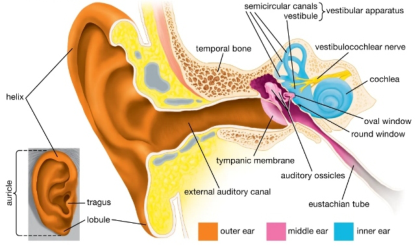
Figure 1: The structure of the human ear. Source: Encyclopedia Britannica (hawkins, 2023).
Types of noise: Here’s a breakdown of the different types of noise that affect us all. (NoiseNews, 2021) A. Continuos noise. B. Intermittent noise. C. Impulsive noise. D. Low-frequency noise.
Effects of Noise on Humans: Health and safety laws ISO 6385 emphasized the need for the work environment to be free of sound effects that cause harm to the health of individuals, as the negative effects of high noise extend from physiological damage to neurological and psychological damage (Hamid, 2004, p. 152), and noise is considered one of the most important
1546 Aissa and Falahi
problems of contemporary life, and it also indirectly affects the economic, educational and social life... etc. (Imam, 2003, p. 3) Psychological Effects: Noise has a clear effect on the psychological state of a person, as it creates hardship for him at work, and this appears in the form of anxiety, confusion, weakness in concentration and thinking, and mental and nervous exhaustion. Long-term exposure to noise also leads to mood swings, which is scientifically known as feeling happy, then feeling upset in a sudden way. Researchers have concluded that there is a correlation between noise and difficult psychological problems, and other studies confirm this. Exposure to high intensity noise is associated with instability, irritability, anxiety and sexual disability. (saliha & adel, 2017, p. 59).
Organic effects: Physiological and Auditor
Physiological effects: The study conducted by Robert B. Zajonc and Zox in 1972 to analyze the effect of noise on human health, has shown that there is a positive correlation between the level of noise and rates of acute and chronic diseases.
As for Döring’s study in 1980, he concluded that noise affects the tissues of the digestive system directly (Döring, 2022).
Sudden noise also produces a decrease in the activity of the viscera, the flow of saliva and the digestive nerve, so it can affect the digestive system of the worker who is repeatedly exposed to loud noises, which leads to bad consequences for both the health and efficiency of the workers who are exposed to it (boudrifa, 2002, p. 88).
The noise affects the balance devices through ear disturbance and leads to a feeling of dizziness, nausea, vomiting and imbalance.
Auditor affects: there are many effects on the auditory system.
Temporary: the effect of the sensory hair cells in the spiral body, which leads to a weakening of the auditory ability at the end of the work period.
Permanent: The frequent exposure of the individual to noise, especially if its intensity is more than 85 decibels, leads to the decomposition of the sensitive hair cells in the spiral body of the inner ear, and then these hairs lose part of their sensitivity forever, and the individual is exposed to a condition called occupational deafness (jamil h., 1980, p. 30) and it is of two types: ( Conductive deafness, Perceptual deafness).
Occupational deafness is defined as the gradual decrease in the efficiency of the auditory system as a result of continuous exposure (08 hours a day), six days a week, for a period of more than 10 years, to noise more than the allowable level.
The American Organization for Occupational Safety (OSHA) has established levels of permissible noise doses to which exposure is shown, as shown in the Table 1.
The Impact of Physical Conditions on Workers Psychologically 1547
The responsibility for protecting workers in the factory environment lies with the management in the industrial establishments, so this can be achieved in one of the following ways: Medical Prevention Methods:
a. Initial medical examination. b. Periodic medical examination.
This method helps in identifying people with hearing loss early, and monitoring workers exposed to noise to see the change in the efficiency of the hearing system in order to sort people who will be transferred to other departments (boudrifa, 2002, p. 135).
Engineering prevention methods: There are multiple methods that can be used depending on the intensity of the noise from the source.
Replacing high-noise machines with less noisy ones.
Isolating the machines that cause noise from the workers.
Use insulating and sound-absorbing materials.
increasing the distance between workers and noise-creating machines (jamil h., 1989, p. 94).
Examining machinery, equipment and identifying and treating noise causes.
Place the offices of employees away from noise sources.
Selection of building materials and design method. (boudrifa, 2002, p. 136).
Ear protection devices: If the noise control process by bringing about a change in the environment and the use of various means and technological methods is impossible or insufficient, then it is possible to determine the amount of continuous exposure to higher levels of noise for short periods only, and in the event that the various methods fail to reduce noise to acceptable levels, it is possible to resort to the use of individual preventive measures, Earplugs, Half inserted protection devices, Ear covers, Soundproof helmet. (boudrifa, 2002, p. 145).
Introducing a change in the organization of work.
- reduce the number of hours of exposure to noise.
- Adopting a work rotation system allow part of it to be conducted in quiet places.
- Providing rest rooms and a refuge from noise in the workplace (boudrifa, 2002, p. 55).
1548 Aissa and Falahi
Finding regulations and laws to protect employees: The application of medical and engineering prevention methods is achieved through the existence of legislation that obliges institutions and workers to apply conditions related to occupational health and safety, and the existence of laws that punish those who violate instructions, as this helps protect the individual from occupational risks in general.
THE APPLIED SIDE OF THE STUDY.
METHODOLOGY.
Study Approach:The current study falls within the descriptive exploratory study that aims to describe the phenomenon to be studied using appropriate techniques.
Place of Conducting the Study: This study was conducted in the company BMS ELECTRIC, which was established in 2001, where it manufactures accessories and electrical equipment, it covers 90% of the Algerian market and its products are distributed in 9 countries, where the production capacity reaches 130,000 devices per day and the manufacturing process goes through several workshops, starting from the raw material to packaging, which are as follows:
Plastic injection workshop.
metal sheet cutting workshop.
Ceramic press workshop.
Assembly and storage workshop.
The company is located in Algiers in two branches Baba Hassen, and Birkhadem.
Study Tools: Observation: Its aim is to collect information about the physical conditions surrounding the worker, as well as the impact of these conditions on the system (human - machine).
Interview: The interview was conducted with officials and workers with the aim:
Inquiry about some of the observed behaviors during the Executing the tasks.
Determine the tasks and objectives of the system, as well as the inputs and outputs of the system, the capabilities of the system and the surrounding factors that affect the workers.
-The basic operations and their time sequence, the distribution of tasks in the system, the way to perform the tasks and the prepared and required equipment.
Noise Measurement Device: Noise levels in any environment are measured by a simple device called (noisemetez) (boudrifa, 2002, p. 34), which we adopted to measure the noise level from 35 to 130 decibels, with the following functions:
The Impact of Physical Conditions on Workers Psychologically 1549
Measuring level - High (Hi) / Low (Lo) - Two measurements: fast (F) / slow (S).
Questionnaire: The questionnaire was used to collect information about industrial noise to which workers are exposed and the various physical conditions and the impact of all of this on the physical and psychological health of workers.
Description of the questionnaire: The questionnaire consists of 50 items divided into 3 axes, as follows: 1st axis: contains 4 items under the question Do you suffer from the influence of the following physical conditions? 2nd axis: contains 16 items under two questions, as follows: Do you suffer from the following physiological symptoms? Contains 10 items.
Do you suffer from the following auditory symptoms? Contains 6 items. 3rd axis: contains 29 items under 4 questions, which are as follows: Do you suffer from the following psychological symptoms? Contains 9 items.
Do you suffer from the following behavioral symptoms? Contains 8 items. Do you suffer from the following cognitive symptoms? Contains 5 items. Do you suffer from the following social problems? Contains 7 items.
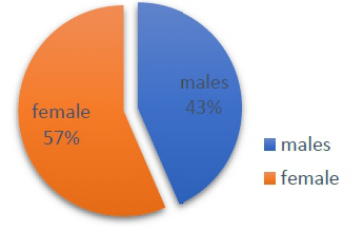
The Study Sample: The sample consisted of workers ranging in age from 25 to 58 years of both sexes, 20 males and 26 females working in workshops, with a total number of 46 workers, and they were chosen randomly
Figure 2: Sample volume.
Results
The results of the first hypothesis. To verify the validity of the first hypothesis, we measured the noise to which workers are exposed, and then obtained the data recorded in Table 2.
1550 Aissa and Falahi
Table 2. the noise level in the various BMS ELECTRIC workshops.
Table available in the original PDF paper.
Noise Type Noise Level Decibels dB The Workshop Highest Level Lowest Level
often continuous noise 104,1 85 assembly workshop Continuous noise 102 86,8 Plastic injection workshop Intermittent noise 104,7 95,3 Ceramic injection workshop Impulsive noise 113,4 106,3 Sheet metal cutting workshop Table presented by the student
Through the Table 2, we note that the workers of BMS ELECTRIC are exposed to an industrial noise level that varies from one workshop to another and from one position to another, as it is generally high and exceeds the permissible limit set by the American Organization for Occupational Safety OSHA, especially when they are exposed to it for 8 hours a day, and this is what It negatively affects the psychological and physical health of workers, with the lack of respect for occupational safety and prevention measures, such as not wearing ear protection devices, which results in many damages.
QUESTIONNAIRE RESULTS AND EVALUATION
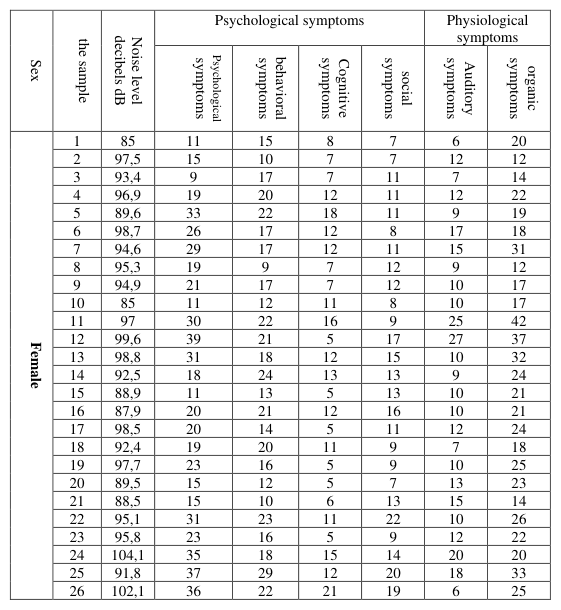
Table 3. Female questionnaire results.
The Impact of Physical Conditions on Workers Psychologically 1551
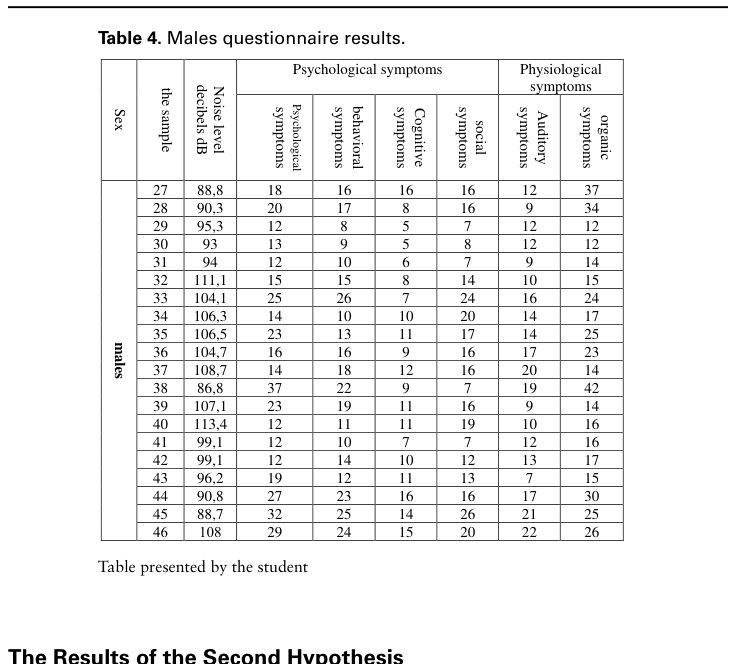
Table 4. Males questionnaire results.
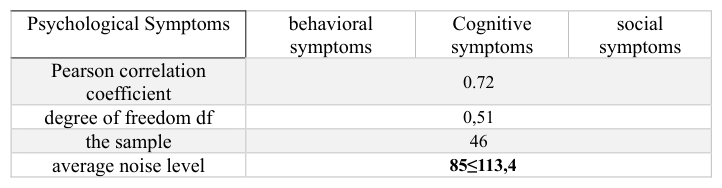
The Results of the Second Hypothesis The second hypothesis states that there is a correlation between the level of pervasive noise and psychological symptoms - behavioral, cognitive, and social - among BMS ELECTRIC workers, to verify the hypothesis, Pearson’s correlation coefficient was calculated and the following results were obtained:
Table 5. The correlation between the level of noise and psychological symptoms.
Through Table 5, we find that the calculated Pearson correlation coefficient is equal to (0.72) greater than the tabulated df (0.51) at the significance level (0.05), this means that there is a statistically significant correlation and therefore we accept the second hypothesis of the study, which says That there is a correlation between psychological symptoms (behavioural, cognitive, social) and the level of pervasive noise.
1552 Aissa and Falahi
The Results of the Third Hypothesis.
The third hypothesis states that there is a correlation between the level of diffuse noise and the organic symptoms - physiological and auditory - among BMS ELECTRIC workers.
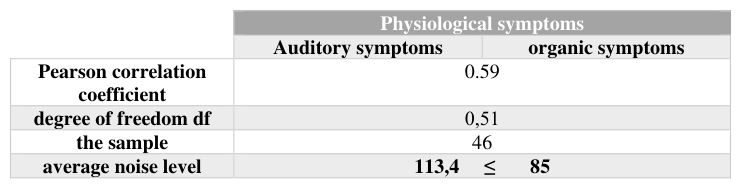
To Verify the Validity of the Hypothesis, Pearson’s Correlation Coefficient Was Calculated and the Following Results Were Obtained:
Table 6. The correlation between the level of noise and Physiological symptoms.
Through Table 6, we notice that the calculated correlation coefficient is equal to (0.59) greater than the tabulated df (0.51) at the significance level (0.05), this means that there is a statistically significant correlation and therefore we accept the third hypothesis of the study, which says that There is a correlation between the organic symptoms (physiological, auditory) and the level of pervasive noise.
CONCLUSION
After measuring and statistically processing the data, the following important results were reached: 1-The workers are exposed to industrial noise [85dB-113,4dB] that exceeds the permissible limit according to the standards of the American Occupational Safety and Health Organization (OSHA).
2- There is a strong correlation (0.72) between psychological symptoms (behavioral, cognitive, social) and the overall noise level at the significance level (0.05), which leads workers to excessive anxiety and anger for trivial reasons, and feelings of depression, fear and insecurity, in addition to aggression and feelings of isolation and psychological loneliness.
3-There is a medium correlation (0.59) between organic symptoms (physiological, auditory) and the overall noise level at the significance level (0.05), This is confirmed by workers who feel headaches, digestive disorders, dizziness, ringing in the ears, partial or complete deafness, and severe fatigue.
Finally, it can be said that the results of this study are consistent with most studies that search for the effect or relationship between continuous exposure to industrial noise and the psychological and physiological effects on workers
The Impact of Physical Conditions on Workers Psychologically 1553
SUGGESTIONS AND RECOMMENDATIONS.
1- Re-conduct this study, but with larger samples and with other variables such as productivity, performance, loyalty, etc. 2- The establishment should pay great attention to improving the physical conditions inside the workshop. 3- Constant awareness of workers about occupational safety and prevention measures, and alerting them to the health risks that noise may cause. 4- Requiring workers to wear protective equipment by issuing strict instructions and procedures against rebels. 5- The problem of noise should be taken into consideration during their establishment phases (construction of the building, allocation of the machinery, etc).
REFERENCES
boudrifa, h. (2002). Noise is dangerous to your health. algeria. byjus learning. (2022). Retrieved from https://byjus.com/global/ Döring. (2022). Foundation of the Arab Journal of Science and Research Publishing.
Retrieved from www.ajsrp.com: www.ajsrp.com Guterres, A. (2021, 6 18). united nations. Retrieved from secretary general: https://www.un.org/sg/en/content/sg/speeches/2021-06-18/secretary-generals-oat h-of-office Hamid, A.-A. M. (2004). Evaluation of human engineering rules related to the design
of work systems. Iraq: Al-Mustansiriyah University. hawkins, j. e. (2023, 5 17). britannica. Retrieved from britannica: https://www.brit annica.com/science/ear Imam, W. (2003). The relationship between exposure to the risks of noise pollution,
vibration and aluminum oxide - the industrial work environment -. Journal of Psychological Studies. Jamil, h. (1980). Noise and its impact on the health of workers. Iraq: Labor Culture Foundation. Jamil, h. (1989). Occupational health for students of higher health institutes. Iraq:
Baghdad University. NoiseNews. (2021). Retrieved from NoiseNews: https://www.cirrusresearch.co.uk/b log/2020/04/4-different-types-noise/ OSHA. (2016). OSHA Noise and Hearing Conservation. Retrieved from https://www.bing.com/images/search?view=detailV2&ccid=%2f3EPYUd%2b& id=B267FE0F0F5F3A0B347DF1FA8249C9BD9813D10A&thid=OIP._3EPYUd- C_p-9rfPRnIqdwHaFj&mediaurl=https%3a%2f%2fimage.slidesharecdn.com% 2foshanoiseandhearingconservationwithnapo-160112010930%2f95%2 OSHA. (n.d.). OSHA Noise and Hearing Conservation. Retrieved from https://www.bing.com/images/search?view=detailV2&ccid=%2f3EPYUd%2b& id=B267FE0F0F5F3A0B347DF1FA8249C9BD9813D10A&thid=OIP._3EPYUd- C_p-9rfPRnIqdwHaFj&mediaurl=https%3a%2f%2fimage.slidesharecdn.com% 2foshanoiseandhearingconservationwithnapo-160112010930%2f95%2 Peirce, J. J. (1997). Environmental Pollution and Control. New York: Elsevier Science
& Technology Books. saliha, b., & adel, o. (2017). The risks of the industrial physical environment on mental and physical health. Journal of Prevention and Ergonomics.
LISTED IN THE AHFE DIGITAL BOOKSTORE CATALOGUE
Explore the complete digital volume
Human Factors in Design, Engineering, and Computing
Read this individual research paper free through the original publisher, or explore the full digital proceedings book.
ISBN 978-1-964867-35-9
Explore this ISBN in the AHFE Bookstore ↗Listed in the July 2026 bookstore catalogue; search by ISBN to confirm current availability · Digital book purchase optional