Risheng Liang, Sauman Chu, Debra Lawton, Guobin Pan (2024). Human-centered Design Based on the Double Diamond Model for Optimizing Hybrid Game Design. In: Human Factors in Design, Engineering, and Computing. AHFE Open Access, vol. 159, pp. 655–667. https://doi.org/10.54941/ahfe1005632
This research suggests a hybrid game design framework that combines Double Diamond methodology with system thinking, user-centered design, agile method, and heuristic evaluation. The framework is proposed to address challenges in hybrid games that merge digital and physical gameplay elements, specifically focusing on balancing technology integration and user engagement and interaction in designing hybrid games with digital and physical parts of the game. The first step is to identify the challenges of designing a hybrid game, such as game mechanics and player dynamics, which are analyzed using system thinking. Subsequently, User-centered design principles are followed by defining and prioritizing game design objectives to be relevant and empathetic to the player’s needs and expectations. After the design and development phases, the agile method is used in the test process, and game components are developed and refined iteratively to make changes based on the feedback loops. The final solution phase for game design is the heuristic evaluation to ensure usability, satisfaction, and iteration. The research showcases how the integrated framework approach includes a model of flexibility, practicality, and comprehensiveness regarding the progress of hybrid game design practices in combining human-centered design with iterative development.
In recent years, due to the continuous advancement of digital technologies, especially the rapid spread and application of mobile Internet, the field of game design has entered into a fast-growing channel and emerged a unique set of challenges and opportunities for hybrid game design. The integration of digital and physical elements with their own characteristics (Ana Patrícia Oliveira et al., 2020; Ana Patricia Oliveira et al., 2023) is a particular concerns of stakeholders in terms of how well digital and physical elements can be integrated seamlessly.
The result of this convergence has produced a unique opportunity for hybrid game design, which focuses on merging the tactile engagement of physical games with the dynamic interactivity of digital technologies (Mueller, Gibbs, and Vetere, 2009). The opportunity allows for a greater
variety of scenarios in which games can be used, and enhances play experience by making the games more challenging and engaging, especially with the continuous widespread use of the means of design mechanisms, technologies, and incentives in the field of hybrid games. Developing a framework that can effectively address such hybrid game design frameworks is necessary and plays a crucial role in advancing games in terms of engagement, socialization, education, and entertainment (Ana Patrícia Oliveira et al., 2020). Furthermore, traditional physical game design approaches often focus on the physical elements’ design process (Korotovskaia, 2020; Silverman, 2013). Even though these designs may consider user engagement and interaction, they do so within the context of physical gameplay. When a physical game is being considered to redesign as a hybrid game, the designer needs to consider the integration of digital technologies, which is essential for hybrid games. This can result in a disjointed user experience where the potential for enhanced engagement through technological means is not fully realized (Kankainen, Arjoranta, and Nummenmaa, 2017; Kankainen and Paavilainen, 2019). A design framework that is more inclusive and integrated when considering the integration of physical components with digital interfaces and handling the complexities of ensuring seamless interaction, maintaining user engagement, and achieving a balanced game experience that leverages both digital and physical elements would be important (Stacey and Nandhakumar, 2008; Kankainen and Paavilainen, 2019). Therefore, it is crucial to develop a comprehensive, practicable, and flexible framework that bridges the gap between digital innovations and physical interactions to ensure that the game experience is engaging and capable of attracting and keeping users interacting.
Although the various game design frameworks are adequate and appropriate in their respective fields, they often do not address the needs of hybrid games fully (Almeida and Da Silva, 2013; Neil, 2012). They often focus on digital or physical elements to ensure the game performs well in one aspect. This design approach may hinder the overall player experience for hybrid game design, affecting game play consistency and satisfaction. There is currently limited research exploring the integration of the double diamond model with game design (Amara, Mansoor, and Purnamashari, 2021; Wang et al., 2023). Therefore, developing a new framework for hybrid game design is highly meaningful.
The primary goal of this paper is to propose a framework for a design process characterized by flexibility, practicality, and comprehensiveness to enhance the design process of hybrid games and ultimately improve user experience and satisfaction. This new framework is adapted from the double diamond design model (Council, 2005) and integrates methods with system thinking, user-centered Design, agile method, and heuristic evaluation. Each component is adjusted to meet the unique needs for hybrid games, aiming to enhance player experience, creating better design solutions, and balancing technology integration to increase user engagement and interaction.
Human-Centered Design Based on the Double Diamond Model 657
LITERATURE REVIEW
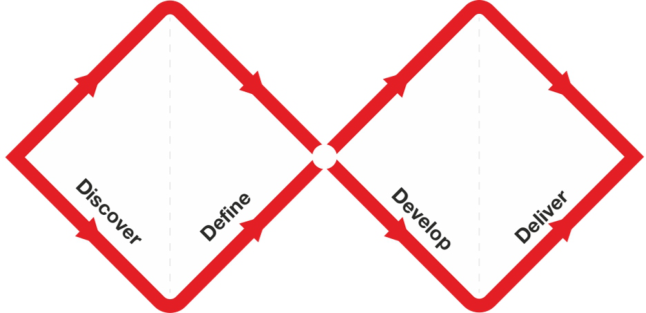
Double Diamond The Double Diamond model, developed by the Design Council in 2005, see Fig. 1, is a design process framework recently gaining widespread recognition. It consists of four stages: Discover, Define, Develop, and Deliver (Council, 2005). This model is recognized for its clarity and structured approach to problem-solving and innovation. It has been applied in various design processes and yielded significant practical results. However, its application in game design is limited. The Double Diamond model’s linear structure often fails to capture the iterative nature of real-world design processes, limiting flexibility and creativity (Wang et al., 2023). Its rigid phase delineations can be impractical, necessitating jumps between stages. Additionally, integrating the model with other methodologies poses challenges, requiring a flexible method to adapt to dynamic project needs. A flexible, comprehensive, and creative framework for game design frameworks will be more conducive to development. In the context of hybrid game design, an existing framework may focus heavily on either digital or physical design aspects, not necessarily addressing system design integration, agile testing, and holistic evaluation that may benefit hybrid game development (Stacey and Nandhakumar, 2008), leading to a less complete and scientific game development process. Game design, by its nature, involves intensive testing and user feedback, but the challenge lies in ensuring this feedback is effectively integrated across both physical and digital elements in hybrid games.
Figure 1: The double diamond was created by the design council.
System Thinking System thinking involves understanding a system by integrating the linkages and interactions between the components that comprise the entirety of that system. It is an approach that treats problems as parts of an overall system rather than addressing only individual parts or isolated issues (Cabrera, Colosi, and Lobdell, 2008; Espejo, 1994; Morganelli, 2020). In game design,
system thinking aids in comprehensively analyzing game mechanics and player dynamics (Akcaoglu and Green, 2019; Arnab et al., 2015).
User-Centered Design User-centered design(UCD) emphasizes the end users’ needs, thoughts, and limitations at every stage of the design process to create products that provide a great user experience (Edwards et al., 2003; Foundation, 2023). For hybrid games, UCD ensures that both digital and physical elements are designed with the player’s experience at the core (Pagulayan et al., 2002).
Agile Method Agile methods are iterative project management and software development approaches that help development teams deliver value to their customers faster and with fewer headaches (Cohen, Lindvall, and Costa, 2004; GeeksforGeeks, 2024). In hybrid game design, agile methods facilitate iterative testing and development of game components (Dikert, Paasivaara, and Lassenius, 2016; Hoda, Noble, and Marshall, 2011).
Heuristic Evaluation Heuristic evaluation is a usability inspection method that helps identify usability problems in software user interface design (Nielsen, 1995; Nielsen and Molich, 1990). In hybrid game design, heuristic evaluation can assess digital and physical elements to ensure a seamless and intuitive user experience (Pinelle, Wong, and Stach, 2008; Vieira, Silveira, and Martins, 2019).
Despite the strengths of existing game design frameworks, there are some gaps when applied to hybrid game design. Traditional frameworks often fail to fully address integrating digital and physical elements, leading to disjointed user experiences. For instance, the Game Design Document (GDD) is a comprehensive guide but contains limitations such as requiring extensive level of communications, limiting to heterogenous users due to its process, and not being widely used due to its complexity and size (Salazar et al., 2012; Conway, 2021). Game Design Patterns (GDP) offer detailed game mechanics but suffer from documentation and navigation issues (Björk and Holopainen, 2005). The Mechanics, Dynamics, and Aesthetics (MDA) framework focuses on game mechanics and neglects other design aspects, such as narrative design (Walk, Görlich, and Barrett, 2017). Game Taxonomies classify game characteristics effectively but do not guide the design process in detail. Instead, they serve as roadmaps to map out where more detailed design techniques can be applied, saving time and providing guidance in design discussions (Lindley, 2003). Lastly, The 400 Rules Project provides many guidelines, but most of them lack specificity for hybrid game design needs (Hal Barwood, 2006). Therefore, we propose a comprehensive framework that combines system thinking, UCD, agile method, and heuristic evaluation to meet the requirements of hybrid games during the design process, thereby improving the user experience and satisfaction with hybrid game design results.
Human-Centered Design Based on the Double Diamond Model 659
We propose the framework based on previous research and frameworks, and it aims to fill this gap by integrating system thinking, UCD, agile method, and heuristic evaluation. By combining these approaches with the stages of the Double Diamond—Discover, Define, Develop, and Deliver—this proposed framework aims to create a comprehensive, flexible, and effective game design structure that not only addresses current shortcomings in hybrid game design but also sets new methods for conceptualizing and executing these games. This integration will provide a more interactive and engaging user experience in hybrid games while addressing technical and interaction challenges.
METHODOLOGY
Framework Design In the process of designing the new hybrid game design framework, it is necessary to integrate various theoretical models to address the inherent complexities of hybrid game design. This framework combines the Double Diamond methodology with system thinking, UCD, agile method, and heuristic evaluation. This integrated approach addresses the unique challenges faced in hybrid game design, balancing technology integration with user engagement and interaction in the design outcomes.
Integration of Theoretical Models System Thinking: Used to analyze and understand the complex interactions within the game environment, including player behaviors and game mechanics. System thinking allows for a holistic view of the game as a dynamic system.
User-Centered Design: Ensures that the game design always focuses on the player experience. This includes defining design objectives that resonate with and are relevant to the target users and prioritizing these objectives.
Agile Method: Facilitates iterative development and testing of game components. Agile methods enable continuous improvement based on feedback, ensuring that the design evolves to effectively meet player needs.
Heuristic Evaluation: Applied to the digital and physical elements of the game to identify and address usability issues (Pinelle, Wong, and Stach, 2008; Desurvire, Caplan, and Toth, 2004). This method helps ensure that the game provides an intuitive user experience.
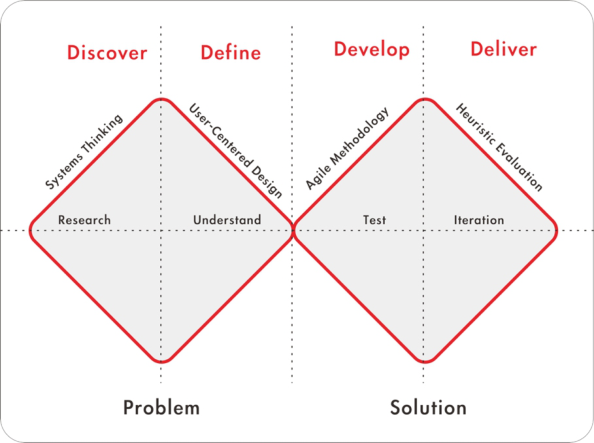
Framework Description Phase 1: Discover The Discover phase uses system thinking to understand the game environment and player behaviors comprehensively (game mechanics, player dynamics). This phase includes: (1) Conducting user research to gain deep insights into player preferences and behaviors. (2) Mapping the game ecosystem to identify key components and their interactions. (3) Analyzing game mechanics and player dynamics to identify potential challenges and opportunities (Arnab et al., 2015), see Fig. 2.
Phase 2: Define In the Define phase, user-centered design principles are applied to clearly define the game’s design objectives (game design objectives, player’s needs, and expectations). This includes: (1) Defining player personas to ensure the game design resonates with the target audience. (2) Prioritizing game design objectives based on player needs and preferences. (3) Creating design prototypes to visualize and test early concepts.
Phase 3: Develop The Develop phase employs the agile method to create and refine game components iteratively (test, iteration, feedback loops, and optimization). Key activities include: (1) Developing game components in short, iterative cycles to allow for continuous testing and feedback. (2) Conducting game testing to collect player feedback and make necessary adjustments. (3) Collaborating closely with multidisciplinary teams to seamlessly integrate digital and physical elements.
Phase 4: Deliver The Deliver phase uses heuristic evaluation to finalize and refine the game design(usability). This phase includes: (1) Conducting heuristic evaluations to identify usability issues in game design (Desurvire, Caplan, and Toth, 2004). (2) Iterating on the design based on evaluation results to enhance the overall user experience. (3) Preparing for the game’s release ensures all components work cohesively to provide a consistent experience for players (Pinelle, Wong, and Stach, 2008).
Figure 2: A new framework that combines system thinking, user-centered design, agile method, and heuristic evaluation based on double diamond.
Human-Centered Design Based on the Double Diamond Model 661
Theoretical Application In order to illustrate the feasibility of the new hybrid game design framework, we will present a hypothetical case study. This case study will demonstrate how the framework can be applied to the design of hybrid games, thus demonstrating its comprehensiveness, feasibility, flexibility, and effectiveness.
Case Study: Hybrid Board Game with Digital Enhancements Objective: To design a traditional board game with digital components such as a companion app and interactive game elements.
Table 1. Simulate and validate the design process based on the new framework.
Table available in the original PDF paper.
Phase Component Description Discover System thinking Map the interaction between the physical game elements and the digital application. Potential challenges or opportunities should be identified as a whole problem, such as synchronization or maintaining the interaction of behavior customs (personal characteristics of players e.g, personality traits, beliefs, and cultural aspects) (De Lima, Feijó, and Furtado 2018). User research Interview game enthusiasts or core stakeholders to understand their expectations and preferences for digital enhancements. Define User-centered design Design detailed personas for different types of players, including casual, family, and competitive players. Design goals Identify goals such as enhancing gameplay without compromising the physical components, ensuring ease of use, and maintaining the tactile appeal of the physical game. Develop Agile method Produce the game in an iterative cycle, focusing on one aspect of the game at a time (e.g., physical board design, application functionality). Conduct regular playtests to gather feedback. Collaboration Work with app developers and physical game designers to ensure coordinated integration of digital and physical elements. Deliver Heuristic evaluation Test the game with a diverse group of players to identify usability issues in both physical and digital elements (Desurvire, Caplan, and Toth, 2004). Iteration Make the necessary adjustments to improve the user experience and ensure that digital enhancements complement traditional gameplay effectively.
Applied to a hypothetical case study through a scenario, the framework demonstrates its utility and adaptability to various types of hybrid games. This approach ensures that the design process remains player-centered and iterative to effectively address technical and interaction challenges, providing a design guide for the hybrid game design process.
DISCUSSION
In today’s increasingly thriving game industry, the innovation and evolution of guiding design frameworks for game design have become an important force driving the industry forward. With its fusion of perspectives and innovative concepts, the new hybrid game design framework combines the Double Diamond Method with multi-dimensional elements, such as system thinking, UCD, agile development, and heuristic evaluation. It demonstrates its design potential and practical application value. Next, we will discuss the strengths, limitations, and implications of the framework for design practice.
Strengths of the Framework The application of system thinking enables designers to consider the game environment and player dynamics in a holistic way and to treat all elements of the game as interconnected and interacting as a whole. This holistic approach not only helps designers to understand the nature of game design better but also ensures that all elements within the game can co-exist harmoniously and enhance each other.
On the other hand, UCD is another highlight of the framework. In game design, the player’s needs and preferences are at the center of the design. By emphasizing UCD, the new hybrid game design framework incorporates player needs and expectations into every aspect of the design, ensuring that the game design is always centered on the player’s actual experience. The approach emphasizes iterative feedback and adaptive changes based on player input, thereby improving player engagement and satisfaction and making game design more user-centered and attractive.
Playtesting is a well-established practice in game design, used to gather feedback and refine game elements. However, the introduction of agile development methodology within the new hybrid game design framework enhances this process by structuring it into continuous iteration cycles. Designers can identify and fix problems in a timely manner and quickly respond to player feedback and changing design requirements. This flexibility and adaptability make game design closer to market demand and more competitive. Agile development also emphasizes teamwork and continuous improvement (Cohen, Lindvall, and Costa 2004), enabling the design team to maintain an efficient working state and continuously promote game design progress.
Finally, heuristic evaluation, another important part of the framework, ensures that both the digital and physical elements of the game provide a user-friendly experience. User experience is crucial in game design. The new hybrid game design framework evaluates and optimizes the game interface, operation flow, etc., through heuristic evaluation to ensure a smooth and
Human-Centered Design Based on the Double Diamond Model 663
intuitive experience (Pinelle, Wong, and Stach, 2008) for the player during gameplay. This focus on optimizing user experience makes the game design more aligned with players’ expectations and needs (Desurvire, Caplan, and Toth, 2004).
Potential Limitations of the Framework However, the new hybrid game design framework also faces some potential limitations. First, integrating multiple approaches may make the design process relatively complex. The need for designers to be multi-skilled and familiar with various design and evaluation techniques undoubtedly adds to the difficulty and complexity of design. To overcome this limitation, the design team needs to focus on skill development and knowledge updates of team members to ensure that they are proficient in various design methods and tools.
Second, the iterative nature of the agile method and the need for extensive user research and testing may cause the design process to become resource- intensive. This can challenge smaller development teams or projects with limited budgets. To address this challenge, design teams need to focus on rational allocation and efficient use of resources and ensure a smooth design process through project planning and time management.
In addition, the new hybrid game design framework needs to face the uncertainty of market changes and player demands. With the game industry’s continuous development and players’ changing needs, the design team needs to maintain a keen market insight and flexible adaptability to adjust the design direction and strategy in time to ensure the success and competitiveness of the game.
Comparison With Existing Frameworks Although the new framework has certain disadvantages, compared with various existing game design frameworks such as Game Design Document, Design, Game Design Patterns, The Mechanics, Dynamics, and Aesthetics, Game Taxonomies, and so on, the new hybrid game design framework has certain advantages and uniqueness. First, it addresses the integration of digital and physical elements of hybrid game design’s unique challenges. Second, it emphasizes user experience, creating a user-friendly and engaging game experience through a combination of UCD and heuristic evaluation. In addition, its adaptive and iterative nature makes the design process more flexible and efficient. These features make the new hybrid game design framework uniquely valuable and relevant in the field of game design.
Although various game design frameworks support game design in general, they may not meet the needs of hybrid games, especially in integrating digital and physical components seamlessly and addressing the complexities of user engagement and interaction in such a mixed environment. Therefore, a new hybrid game design framework is proposed to bridge these gaps, combining system thinking, UCD, agile methods, and heuristic evaluation to create a comprehensive, flexible, and effective approach to designing hybrid games.
By summarizing these existing frameworks, we provide a context for understanding why a new framework is necessary, highlighting the unique challenges and requirements of hybrid game design that current methodologies do not fully address.
Implications for Design Practice The new hybrid game design framework brings designers practice values of guidance and insights in human-centered design. Its iterative nature allows designers to adapt to changes and refine their designs constantly. This flexibility ensures that the final design meets player expectations and market demands. It also integrates various proven methods and tools to provide designers with a structured and flexible design process. This flow-based human-centered design helps designers to better organize and manage the design process, improves design efficiency and quality. Its comprehensiveness ensures that all aspects of game design are fully considered and attended to. From the initial concept to the final production, the framework provides detailed guidance and support, making the game design process with a strong focus in using human-centered design (systematic and standardized).
In summary, the new hybrid game design framework has demonstrated advantages and potential in the field of game design with its unique perspectives and innovative concepts. However, in the face of potential limitations and challenges, designers need to focus on skill development, resource management, and market insight to ensure a smooth design process and a successful achievement of the final design.
CONCLUSION
This paper addresses the complexity of hybrid game design by developing a comprehensive and theoretical framework with the human-centered design that integrates theoretical tools such as systems thinking, UCD, agile development methodologies and heuristic evaluation techniques. This framework not only addresses the unique challenges of integrating digital and physical elements in hybrid game design, but also provides design guidelines and an effective and practical design methodology for the hybrid game design process. The framework demonstrates its theoretical value by bridging the gaps in existing design methodologies and ensuring a holistic approach that encompasses all hybrid game design aspects. The framework also shows promise for application in real-world scenarios, providing a structured yet flexible approach that can be adapted to various design challenges. Integrating systems thinking allows for a comprehensive understanding of game mechanics and dynamics, while the UCD ensures that the design is always centered on the design objectives (player’s needs and expectations). Agile methods facilitate continuous improvement and response to iteration and feedback, and heuristic evaluation ensures player usability. Future research could focus on empirical testing and effectiveness evaluation by conducting detailed empirical studies to assess the framework’s application in different hybrid game design scenarios. In addition, developing design tools and resources, such as frameworks, how to guides, and customized
Human-Centered Design Based on the Double Diamond Model 665
game design solutions, will help designers effectively apply the framework. Finally, exploring and incorporating current methods and techniques into the framework will ensure that it remains relevant and versatile and meets evolving design needs. In conclusion, the hybrid game design framework proposed in this study provides an effective and practical solution to the complex challenges of hybrid game design. As the research continues to deepen and evolve, the framework has the potential to contribute to the advancement of game design, providing insights and methods for the future development of the industry.
REFERENCES
Akcaoglu, Mete, and Lucy Santos Green. 2019. “Teaching systems thinking through game design.” Educational Technology Research and Development 67: 1–19. Almeida, Marcos Silvano Orita, and Flavio Soares Correa Da Silva. 2013. “A
systematic review of game design methods and tools.” Entertainment Computing– ICEC 2013: 12th International Conference, ICEC 2013, São Paulo, Brazil, October 16–18, 2013. Proceedings 12. Amara, RA, AZ Mansoor, and A Purnamashari. 2021. “Designing” Forest is Friend” Game Activation on PUBG Mobile Using the Double Diamond Method for Generation Z in City Areas.” The 2021 ADADA + Cumulus international conference. Arnab, Sylvester, Theodore Lim, Maira B Carvalho, Francesco Bellotti, Sara De
Freitas, Sandy Louchart, Neil Suttie, Riccardo Berta, and Alessandro De Gloria. 2015. “Mapping learning and game mechanics for serious games analysis.” British Journal of Educational Technology 46 (2): 391–411. Björk, Staffan, and Jussi Holopainen. 2005. “Games and design patterns.” The game design reader: A rules of play anthology: 410-437. Cabrera, Derek, Laura Colosi, and Claire Lobdell. 2008. “Systems thinking.”
Evaluation and program planning 31 (3): 24–31. Cohen, David, Mikael Lindvall, and Patricia Costa. 2004. “An introduction to agile methods.” Adv. Comput. 62 (03): 1–66. Conway, Aoibhe. 2021. “Game Design Document.” Game Design & Development
2021. https://ecampusontario.pressbooks.pub/gamedesigndevelopmenttextbook/ chapter/132/ Council, Design. 2005. “The Double Diamond-A universally accepted depiction of the design process.” From humble beginnings to a cornerstone of design language. https://www.designcouncil.org.uk/our-resources/the-double-diamond/ De Lima, Edirlei Soares, Bruno Feijó, and Antonio L Furtado. 2018. “Player behavior
and personality modeling for interactive storytelling in games.” Entertainment Computing 28: 32–48. Desurvire, Heather, Martin Caplan, and Jozsef A Toth. 2004. “Using heuristics to evaluate the playability of games.” CHI’04 extended abstracts on Human factors in computing systems. Dikert, Kim, Maria Paasivaara, and Casper Lassenius. 2016. “Challenges and success
factors for large-scale agile transformations: A systematic literature review.” Journal of Systems and Software 119: 87–108. Edwards, W Keith, Victoria Bellotti, Anind K Dey, and Mark W Newman.
2003. “The challenges of user-centered design and evaluation for infrastructure.” Proceedings of the SIGCHI conference on Human factors in computing systems.
interaction-design.org/literature/topics/user-centered-design GeeksforGeeks. 2024. “What is Agile Methodology?”. https://www.geeksforgeeks.
org/what-is-agile-methodology/ Hal Barwood, Noah Falstein, Barwood. 2006. “THE 400 PROJECT.” Last Modified
2006. https://www.finitearts.com/Pages/400page.html Hoda, Rashina, James Noble, and Stuart Marshall. 2011. “The impact of inadequate customer collaboration on self-organizing Agile teams.” Information and software technology 53 (5): 521–534. Kankainen, Ville, Jonne Arjoranta, and Timo Nummenmaa. 2017. “Games
as blends: Understanding hybrid games.” Journal of Virtual Reality and Broadcasting 14 (4). Kankainen, Ville, and Janne Paavilainen. 2019. “Hybrid Board Game Design Guidelines.” Digra conference. Korotovskaia, Alina. 2020. “Board game for participatory design.” University of
Lapland. Lindley, Craig A. 2003. “Game taxonomies: A high level framework for game analysis and design.” Gamasutra feature article 3. Morganelli, Marie. 2020. “What is Systems Thinking?”. https://www.snhu.edu/abo
ut-us/newsroom/business/what-is-systems-thinking Mueller, Florian’Floyd’, Martin R Gibbs, and Frank Vetere. 2009. “Design influence on social play in distributed exertion games.” Proceedings of the SIGCHI Conference on Human Factors in Computing Systems. Neil, Katharine. 2012. “Game design tools: Time to evaluate.” Proceedings of 2012
DiGRA Nordic. Nielsen, Jakob. 1995. “How to conduct a heuristic evaluation.” Nielsen Norman Group 1 (1): 8. Nielsen, Jakob, and Rolf Molich. 1990. “Heuristic evaluation of user interfaces.”
Proceedings of the SIGCHI conference on Human factors in computing systems. Oliveira, Ana Patrícia, Micael Sousa, Mário Vairinhos, and Nelson Zagalo. 2020.
“Towards a new hybrid game model: designing tangible experiences.” 2020 IEEE 8th International Conference on Serious Games and Applications for Health (SeGAH). Oliveira, Ana Patricia, Nelson Zagalo, Micael Sousa, and Fotis Liarokapis. 2023.
“Hybrid Games and Interaction Design.” Interaction Design and Architecture (s) 56: 5–7. https://doi.org/10.55612/s-5002-056-001psi Pagulayan, Randy J, Kevin Keeker, Dennis Wixon, Ramon L Romero, and Thomas Fuller. 2002. “User-centered design in games.”In The human-computer interaction handbook, 915–938. CRC Press. Pinelle, David, Nelson Wong, and Tadeusz Stach. 2008. “Heuristic evaluation for
games: usability principles for video game design.” Proceedings of the SIGCHI conference on human factors in computing systems. Salazar, Mario Gonzalez, Hugo A Mitre, Cuauhtémoc Lemus Olalde, and José Luis González Sánchez. 2012. “Proposal of Game Design Document from software engineering requirements perspective.” 2012 17th International Conference on Computer Games (CGAMES). Silverman, David. 2013. “How to learn board game design and development.”
Retrieved December 18: 2015.
Human-Centered Design Based on the Double Diamond Model 667
Stacey, Patrick, and Joe Nandhakumar. 2008. “Opening up to agile games development.” Communications of the ACM 51 (12): 143–146. Vieira, Estela Aparecida Oliveira, Aleph Campos da SILVEIRA, and Ronei Ximenes
Martins. 2019. “Heuristic evaluation on usability of educational games: A systematic review.” Informatics in Education 18 (2): 427–442. Walk, Wolfgang, Daniel Görlich, and Mark Barrett. 2017. “Design, dynamics, experience (DDE): an advancement of the MDA framework for game design.” Game dynamics: Best practices in procedural and dynamic game content generation: 27–45. Wang, Xiaochun, Zihan Huang, Tongfei Xu, Yuting Li, and Xiangang Qin. 2023.
“Exploring the Future Design Approach to Ageing Based on the Double Diamond Model.” Systems 11 (8): 404.
LISTED IN THE AHFE DIGITAL BOOKSTORE CATALOGUE
Explore the complete digital volume
Human Factors in Design, Engineering, and Computing
Read this individual research paper free through the original publisher, or explore the full digital proceedings book.
ISBN 978-1-964867-35-9
Explore this ISBN in the AHFE Bookstore ↗Listed in the July 2026 bookstore catalogue; search by ISBN to confirm current availability · Digital book purchase optional