Olivia Honan, Brandon Dreslin, Barbara Chaparro, Alex Chaparro (2025). Invisible Challenges, Visible Solutions: Human Factors Vehicle Design Considerations for Emotional Disabilities. In: Design for Inclusion. AHFE Open Access, vol. 169, pp. 14–24. https://doi.org/10.54941/ahfe1006150
Emotional disabilities (e.g., depression, anxiety, post-traumatic stress disorder) are among the most prevalent disabilities worldwide, affecting cognitive abilities (e.g., attention, executive function) and somatic symptoms (e.g., gastrointestinal disorders, changes in vision and hearing, and chronic pain). Despite advancements in disability-inclusive design, emotional disabilities remain largely overlooked. This research, supported in part by the EcoCAR Electric Vehicle (EV) Challenge, addresses this gap by presenting design considerations for emotional disabilities through the development of HarmonIQ. HarmonIQ, developed by Embry-Riddle Aeronautical University (ERAU) and Bethune-Cookman University (BCU), is a user-centered, biometric-authentication-based vehicle customization system to enhance the driving experience. With the appropriate design considerations, HarmonIQ could be a form of assistive technology (AT) that meets the needs of drivers with emotional disabilities. Therefore, a survey was conducted to gather insights from drivers with emotional disabilities to inform design directions. Data was collected from 47 participants, capturing AT usage, vehicle usage habits, and opinions on biometrics. Most respondents reported no usage of AT, suggesting a lack of interventions tailored for this group, particularly in vehicles. The results from this research were used to guide the design process and highlight human factors design considerations for emotional disabilities including minimal complexity, interface guidance, progressive disclosure, and supportive language. The considerations were translated into tailored features for drivers with emotional disabilities, including high-contrast displays to reduce visual strain, memory settings for vehicle features to reduce mental workload, and biometric authentication to minimize login frustration. Although HarmonIQ aims to address the daily challenges faced by individuals with varying disabilities, these considerations expand its ability to support emotional disabilities by helping to ensure that the system better reflects the cognitive, sensory, and emotional needs of this often-overlooked user population.
Invisible Challenges, Visible Solutions: Human Factors Vehicle Design Considerations 15
INTRODUCTION
Emotional Disability and Its Impact Emotional disabilities include conditions such as depressive disorders, anxiety disorders, and behavioral disorders, and are a leading cause of disability globally. This disability type carries substantial weight amongst the Global Burden of Disease (GBD) where it is ranked highly and contributes to a greater number of years lived with disability (YLD), often among the top ten diseases for this measure. (Charlson et al., 2019; Collaborators, 2019; Santomauro et al., 2021; Vos et al., 2020;). Depressive and anxiety disorders are the primary contributors to these statistics and have shown a sharp increase in prevalence during, and as a result of, the COVID-19 pandemic (Santomauro et al., 2021). It is suggested that this increase is not only due to the loss of life experienced at the time, but also due to the prolonged social isolation that can cause symptoms of mental disorder to develop or increase (Simões et al., 2020; Wilkialis et al., 2021).
The impact of these conditions varies greatly, but symptoms often extend beyond the emotional state, impacting cognitive abilities and causing somatic symptoms. Cognitively, emotional disabilities cause deficits in attention as well as executive function, leading to difficulties with focus, processing, and planning (Chakrabarty et al., 2016; Martínez-Arán et al., 2004; McIntyre et al., 2013; Preiss et al., 2009; Sax et al., 1995). Somatic symptoms of emotional disabilities can include gastrointestinal conditions such as gastroesophageal reflux disease (GERD) and irritable bowel syndrome (IBS) (Lydiard, 1992; Noyes et al., 1990; Sibelli et al., 2016), sensory changes including increased sensitivity to brightness and loud sounds, decrements in visual acuity (Andersson et al., 2021; Paquet et al., 2022; Pfeiffer et al., 2014; Van Den Boogert et al., 2022), and chronic pain such as headaches, body aches, and tingling or numbness (Chaturvedi, 1987; Merskey, 1965). Beyond the symptoms of the disorders themselves, people with emotional disabilities also might have to navigate the varied side effects that result from the medications used to treat their condition. Movement disorders such as tardive dyskinesia (TD) cause uncontrolled limb and facial movements, and are a common result for those taking medication to control bipolar disorder, schizophrenia, or major depressive disorder (Waln & Jankovic, 2013).
Assistive Technology (AT) for Emotional Disability A general definition of AT is formally described in the 1988 ‘Tech Act,’ as devices that allow people with disabilities to: “(a) have greater control over their own lives; (b) participate in and contribute more fully to activities in their home, school, and work environments, and in their communities; (c) interact to a greater extent with nondisabled individuals; and (d) otherwise benefit from opportunities that are taken for granted by individuals who do not have disabilities.” Although assistive technology has significantly progressed with overall technological advancements, a gap remains for individuals with emotional disabilities (Ko et al., 2020; WHO & UNICEF, 2022). The AT that does currently exist for those with emotional disabilities
primarily supports scheduling, task management, calming and comforting, mindfulness, and distraction.
Many of the solutions for people with emotional disability are digital in the form of phone apps. Much like AT for emotional disability as a whole, these apps primarily focus on mindfulness, mood tracking, and aiding memory (Shahsavar & Choudhury, 2025). Of these assistive app types only memory aids target the effects of the cognitive symptoms, rather than attempting to reduce the symptoms themselves.
While apps make up a large portion of devices supporting emotional disability, they are not the only form of AT available to people with emotional disability. Electronic calendars, wearables that allow users to monitor their physiological symptoms, personal digital assistants (PDAs), automated pill caps that allow for providers to track dosages, or weighted blankets that allow for those with anxiety disorders to experience better sleep (Ebuenyi et al., 2023). These are also forms of AT that can improve daily functioning in users with emotional disability.
A primary issue with these technologies is that many of them require consistent user motivation and involvement to provide the full benefit. The World Health Organization (WHO) and United Nations Children’s Fund (UNICEF) 2022 report on global AT emphasizes the need for both “person- centeredness” and “convenience” in the design of AT. Current solutions lack these considerations as they require the user to overcome a specific area of noted difficulty, attention, and cognitive control (Chakrabarty et al., 2016; Martínez-Arán et al., 2004; McIntyre et al., 2013; Preiss et al., 2009; Sax et al., 1995), to benefit from these technologies. The only solution posited here that seems to avoid this is the weighted blanket, as it would simply be a tool swapped out from the standard and be easily implemented in daily life. Calendars, PDAs, mindfulness, mood tracking, or reminder apps simply do not work if the user lacks the executive function capabilities to put the information in them. Physiological measures are informative, but they fail to assist if one forgets to wear the device, charge it, or report the data to their physician. While these devices can be helpful to some, many aspects serve as a barrier to people with emotional disabilities, rather than serving as a method to eliminate that barrier.
Current Directions For AT in vehicles While AT is lacking for people with emotional disability as a whole (Ebuenyi et al., 2023; WHO & UNICEF, 2022), this population is even less supported when it comes to in-vehicle AT. Access to transportation and personal vehicles is a gateway to independence for many living with disabilities (Blais, 2014; Mielenz et al., 2024). For emotional disabilities, it can help prevent the isolation and lack of social connection that could exacerbate their symptoms (Chou et al., 2011; Wilkialis et al., 2021).
This consideration was at the forefront when the EcoCAR Electric Vehicle (EV) challenge team at Embry-Riddle Aeronautical University (ERAU) and Bethune-Cookman University (BCU) began working on the development of the HarmonIQ system for in-vehicle customizations. While HarmonIQ
Invisible Challenges, Visible Solutions: Human Factors Vehicle Design Considerations 17
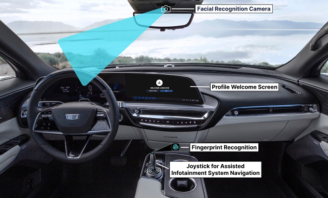
was created for the 2023 Cadillac LYRIQ, the system could be adapted for other vehicles in the future. The goal for this interface was to optimize vehicle customizations for people with various disabilities (including those with emotional disabilities) and to make the experience feel as seamless as possible. This system prioritizes user-centered customization features by allowing users to create personal profiles that automatically adjust a vehicle’s features to the user’s desired settings once they are detected through facial and fingerprint recognition biometrics. Preferences such as seat position, steering wheel position, side-mirror position, color-blindness accommodations, and climate control are all adjusted automatically using HarmonIQ. The user preferences are set using a single set-up interface, to allow users to focus on one area rather than searching for multiple buttons or customization selections throughout the vehicle. The goal of HarmonIQ is to streamline vehicle personalization by setting the system once and then requiring no further input, even when the vehicle is shared between multiple drivers (Distefano et al., 2024). Much like the weighted blanket device, the system is seamlessly integrated into the vehicle environment and once set up, can support the user without requiring repeated focus on or inputs into the system itself, for the person-centered and convenient experience that the WHO & UNICEF (2022) suggests in the design of AT.
Figure 1: Key elements of the HamonIQ design (Distefano et al., 2024).
To guide future design decisions of HarmonIQ, this study was designed to gain insight into the system directly from users with emotional disabilities.
METHODS
This study was reviewed and approved by the ERAU Institutional Review Board (IRB No. 25–113).
Participants This study gathered responses from 47 participants, 13 males, 30 females, 3 non-binary/third-gender, and 1 participant who chose not to specify, all of whom reported having an emotional disability. All participants were above the age of 18 and were current holders of a valid U.S. driver’s license. Participants ranged in age from 18–64 but the majority were between 25–34 years of age (n = 22). Personal or identifying information was not collected, and survey respondents remain anonymous.
Survey The survey was created using Optimal Workshop, a platform that allows researchers to develop usability testing and surveys for distribution. It was then distributed to participants via Prolific, a platform that connects researchers with participants in specific demographic groups for online research. Participants were asked a total of 24 questions. The questions covered four categories for them to respond to; demographics, vehicle habits, opinions on biometrics, and adaptive technology. Vehicle habits questions related to the participant’s vehicle ownership, whether they shared the vehicle, their vehicle usage, how familiar they were with the vehicle’s customization features, how often they adjusted these features, and what they would like a driver profile to recall for them. Opinions on biometrics concerned what types of biometrics they use and how comfortable they are with the usage of biometrics in vehicles. Questions that regarded adaptive technology asked the participant whether they were a daily user of AT, what types of adaptive technology they primarily use, and their preference for high contrast screens.
RESULTS
Vehicle Habits 89% of participants (n = 42) reported owning a vehicle. 58% of participants reported sharing their vehicle on a regular or occasional basis (n = 27). 45% of participants reported driving a few times a week (n = 21), as opposed to daily; 40% (n = 19), a few times a month; 9% (n = 4), rarely; 6% (n = 3), or never; 0% (n = 0). 96% of participants reported being extremely familiar or familiar with their vehicle customization options (n = 45). 43% of participants adjust their vehicle customization a few times a week (n = 20), as opposed to daily; 6% (n = 3), a few times a month; 25% (n = 12), rarely; 25% (n = 12), or never; 0% (n = 0). Seat position was the most commonly preferred feature for a driver profile to recall, with 83% of participants reporting this preference (n = 39).
Opinions on Biometrics 85% of participants report using biometrics in the past (n = 40). 60% of participants have used fingerprint scanning (n = 28). The same proportion of participants reported using facial recognition (n = 28). 28% of participants have used voice recognition (n = 13). Eye scanning was used the least at 11% prior experience (n = 5). 53% of participants indicated that they would either be extremely comfortable or comfortable with the usage of a biometric device within a vehicle. For the first-choice placement of facial recognition cameras, the largest proportion of participants, 32%, chose the rearview mirror (n = 15). For the second-choice placement of facial recognition, the most selected response was the infotainment screen at 36% (n = 17).
Invisible Challenges, Visible Solutions: Human Factors Vehicle Design Considerations 19
Adaptive Technology 83% of participants reported that they do not use AT (n = 39). Of those that did report using AT, the most commonly used was keyboards with larger keys (n = 7). 83% of participants reported that they would prefer a higher contrast screen for a touchscreen interface (n = 39).
DISCUSSION
Vehicle Habits The results indicate the value that the HarmonIQ system, and AT like it, can provide to drivers with emotional disabilities. More than half reported sharing their vehicle, and nearly half also reported that they drive a few times a week; the conjunction of these results indicates that in-vehicle adjustments are a common need amongst this population. Support systems, such as HarmonIQ, can make these adjustments automatically without relying on the user to remember to carry out multiple feature adjustments themselves. The need for this is illustrated by the frequency of customization adjustments: most participants report making adjustments to vehicle comfort settings a few times a week, which aligns with the notion that adjustments are being made frequently, likely due to drivers switching vehicles. Some adjustments between drivers, if forgotten, can be dangerous to attempt to adjust later while driving, such as side mirrors or seat position. Decrements in attention and executive function that users with emotional disability experience can lead to situations like this and profile recall and automatic adjustments can help them avoid it. Automatic adjustments can also eliminate a physical stressor for those with emotional disabilities that result in GERD or IBS, who might find the trunk movements required to adjust the seat and steering wheel position uncomfortable. Seat position proved to be an important factor amongst this group as it was the most highly sought-after profile recall option.
These findings provide support for design choices currently present in the HarmonIQ system. The ability to create multiple user profiles supports the user’s vehicle sharing habits, as well as frequency in driving and adjustments made to the vehicle. Considerations for vehicle sharing can avoid situations where a user with emotional disability is overstimulated due to the brightness or sound selection set previously by a shared user. Instead, their preferences will be the experience they have as soon as they turn on the vehicle. Seat position is a setting that is already present in the system’s design and is validated by the respondents’ desires to have a feature that allows for that to be adjusted automatically.
Opinions on Biometrics One of the key issues this study sought to address was users’ potential acceptance of biometrics in the vehicle as this is a key component of HarmonIQ’s design. According to the data, the participants were not only familiar with the usage of biometrics, in general, but specifically fingerprint and facial recognition, which HarmonIQ incorporates as the primary mode
of profile identification. Not only did participants indicate prior experience with these biometric devices, but they specifically indicated that they would be comfortable with the usage of them in their vehicle. The inclusion of this technology was primarily to facilitate logging in and difficulty and frustrations with profile creation or selection. The cognitive deficits that emotional disabilities cause in attention and executive function can make getting through extended log-in or profile selection processes and resulting in frustration. Inclusion of biometrics can reduce the additional challenge this causes for people with emotional disability. However, understanding that this choice is something that people with emotional disability would actually be comfortable using is integral to the system maintaining a person-centered focus. With these findings, the indication is that HarmonIQ can proceed in developing this aspect of the design without causing additional frustration due to discomfort or inexperience with biometrics.
Adaptive Technology The findings indicate that people with emotional disabilities often do not use AT in their daily lives. This aligns with prior research that suggests a lack of available AT options for this population (WHO & UNICEF, 2022). Though it is important to consider those who did report the usage of these devices and what they commonly used devices indicated about design directions. As keyboards with larger keys was the most prevalent response, this feature should be considered and continued to be developed for AT designs such as the HarmonIQ system. The inclusion of larger keys on the touchscreen keyboards can allow for greater convenience for those who are experiencing medication side effects such as TD. A larger area for each key could reduce the chance of incorrect inputs due to the uncontrolled muscle movements that are characteristic of this side effect. The findings indicate that high-contrast touchscreens were highly desired amongst this population, but not indicated as a currently utilized form of AT. The inclusion of both larger keys and high-contrast screens can assist in addressing the needs of users who might be experiencing difficulty with visual acuity due to their emotional disability.
Iterative Design Process The information gathered through our literature review, and the survey data gathered in this study, highlighted specific areas that require attention when designing for drivers with emotional disabilities. Based on the unique needs associated with emotional disabilities, we developed the following guiding principles: minimal complexity, interface guidance, progressive disclosure, and supportive language. These principles were then translated into specific design features for HarmonIQ.
High-contrast screens were implemented to reduce visual strain, particularly for individuals who lack visual acuity due to their emotional disabilities. Our research indicated that this feature was highly desired by participants. By ensuring that users can read and interact with the screen without additional strain, this feature supports the principles of interface guidance, progressive disclosure, and supportive language. High visibility
Invisible Challenges, Visible Solutions: Human Factors Vehicle Design Considerations 21
of on-screen instructions and images minimizes the risk of missing desired customizations, creating a more person-centered experience where users can understand, follow, and feel included in the system setup process.
Memory settings for vehicle features were developed to reduce mental workload. This feature aims to minimize the sustained attention and executive function required to complete multiple steps in different locations of the car for initial setup and continual adjustment of in-vehicle features. Respondents indicated that vehicle sharing is common, with adjustments performed on a weekly basis, suggesting an area for potential improvement in reducing mental workload for those with emotional disabilities. By supporting the principles of minimal complexity and interface guidance, this design element refines the process to one central terminal with clear steps and guidance for initial setup. Over time, complexity is reduced by eliminating the need for user involvement in aligning in-vehicle features to their preferences.
Biometric authentication was utilized to avoid profile log-in frustrations that might occur when using the system. This challenge requires particular consideration for individuals with emotional disabilities, as cognitive deficits in executive function often lead to emotional dysregulation. What might be a minor annoyance to a typical user could elicit a much stronger emotional reaction from users with emotional disabilities due to reduced cognitive control. The use of biometrics as a method of reducing log-in frustration was validated by respondents who reported both comfort and familiarity with this type of device, particularly fingerprint and facial recognition, which will be incorporated into the design. Biometrics enable the system to automatically select and log in a profile, reducing complexity in the continued usage of the HarmonIQ system.
CONCLUSION
Limitations This study faced limitations related to participant demographics. A more balanced distribution of gender and age groups would have improved the generalizability of the findings. Additionally, conducting the survey online introduced challenges, such as the inability for participants to ask clarifying questions. While definitions were provided, niche terms like “assistive technology” and “biometrics” may still have required more context than the survey could offer, potentially affecting participant understanding and response accuracy.
Future Directions Once the design elements identified in this study are fully integrated, in- person testing with individuals with emotional disabilities will be conducted to assess the solution in real-world contexts. Insights into feature preferences and pain points will inform a robust testing protocol to ensure that the intended needs are effectively addressed.
This research has generated valuable recommendations for the development of HarmonIQ and future in-vehicle AT. Challenges such as
frequent vehicle sharing and the need for repeated adjustments highlight the importance of solutions tailored to emotional disabilities. Design features that support a person-centered experience, like automatic seat adjustments, larger keyboard keys, and high-contrast displays, are key takeaways for future AT development.
As biometric technologies become more integrated into everyday systems, understanding how individuals with emotional disabilities perceive and interact with them is critical. The implications of this study extend beyond HarmonIQ, offering insights that can inform the design of ATs across personal vehicles, public transportation, and aviation. By addressing these broader applications, the research contributes to a more inclusive transportation ecosystem that better supports the cognitive, sensory, and emotional needs of this underserved population.
ACKNOWLEDGMENT
The authors would like to thank Michael Falanga, Henry Arnold, Emmett Miner, Kailey Hrbek, Brianna Broderick, and Nicole Beaulieu.
REFERENCES
Andersson, H., Sutton, D., Bejerholm, U., & Argentzell, E. (2021). Experiences of sensory input in daily occupations for people with serious mental illness. Scandinavian Journal of Occupational Therapy, 28(6), 446–456. https://doi.org/ 10.1080/11038128.2020.1778784 Blais, D., & El-Geneidy, A. (2014). Better living through mobility: The relationship
between access to transportation, well-being and disability. In 93rd annual meeting of the Transportation Research Board, Washington, DC. Retrieved from http://tram.mcgill.ca/Research/Publications/Development_disability.pdf (pp. 454–464). Charlson F., van Ommeren M., Flaxman A., Cornett J., Whiteford H and Saxena S (2019). New WHO prevalence estimates of mental disorders in conflict settings: A systematic review and meta-analysis. The Lancet 394, 240–248. Chakrabarti, S., Chattopadhyay, J., Cogen, R. M., Collins, J. K., … Ferrari, A. J.
(2021). Global prevalence and burden of depressive and anxiety disorders in 204 countries and territories in 2020 due to the COVID-19 pandemic. The Lancet, 398(10312), 1700–1712. https://doi.org/10.1016/S0140-6736(21)02143-7 Chakrabarty, T., Hadjipavlou, G., & Lam, R. W. (2016). Cognitive Dysfunction in Major Depressive Disorder: Assessment, Impact, and Management. Focus, 14(2), 194–206. https://doi.org/10.1176/appi.focus.20150043 Chaturvedi, S. K. (1987). Prevalence of chronic pain in psychiatric patients. Pain,
29(2), 231–237. Chou, K.-L., Liang, K., & Sareen, J. (2011). The Association Between Social Isolation and DSM-IV Mood, Anxiety, and Substance Use Disorders: Wave 2 of the National Epidemiologic Survey on Alcohol and Related Conditions. The Journal of Clinical Psychiatry, 72(11), 1468–1476. https://doi.org/10.4088/ JCP.10m06019gry Collaborators. (2019) Global, regional, and national burden of mental disorders in
204 countries and territories, 1990–2019: A systematic analysis from the Global Burden of Disease Study 2019. The Lancet Psychiatry, 9(2), 137–150. https:// doi.org/10.1016/S2215-0366(21)00395-3
Invisible Challenges, Visible Solutions: Human Factors Vehicle Design Considerations 23
Distefano, G., Dreslin, B., Falanga, M., Arnold, H., Honan, O., Hrbek, K., Miner, E., Chaparro, A., & Chaparro, B. S. (2024). Inclusive product design plan. Embry- Riddle Aeronautical University. Ebuenyi, I., Flocks-Monaghan, C., Rai, S., Vries, R., Bhuyan, S., Pearlman, J.,
& Jones, N. (2023). Use of assistive technology for persons with psychosocial disability: Systematic review. JMIR Rehabilitation and Assistive Technologies, 10, e49750. https://doi.org/10.2196/49750University." Ko, S., & Petty, L. S. (2020). Assistive technology accommodations for postsecondary students with mental health disabilities: A scoping review. Disability and Rehabilitation: Assistive Technology, 17(7), 760–766. https://doi.org/ 10.1080/17483107.2020.1815087 Lydiard, R. B. (1992). Anxiety and the Irritable Bowel Syndrome. Psychiatric Annals,
22(12), 612–618. https://doi.org/10.3928/0048-5713-19921201-09 Martínez-Arán, A., Vieta, E., Reinares, M., Colom, F., Torrent, C., Sánchez- Moreno, J., Benabarre, A., Goikolea, J. M., Comes, M., & Salamero, M. (2004). Cognitive Function Across Manic or Hypomanic, Depressed, and Euthymic States in Bipolar Disorder. American Journal of Psychiatry, 161(2), 262–270. https:// doi.org/10.1176/appi.ajp.161.2.262 McIntyre, R. S., Cha, D. S., Soczynska, J. K., Woldeyohannes, H. O., Gallaugher, L. A., Kudlow, P., Alsuwaidan, M., & Baskaran, A. (2013). Cognitive Deficits and Functional Outcomes in Major Depressive Disorder: Determinants, Substrates, and Treatment Interventions. Depression and Anxiety, 30(6), 515–527. https://doi.org/10.1002/da.22063 Merskey, H. (1965). The characteristics of persistent pain in psychological illness.
Journal of Psychosomatic Research, 9(3), 291–298. https://doi.org/10.1016/0022- 3999(65)90054-1 Mielenz, T. J., Jia, H., DiGuiseppi, C., Molnar, L. J., Strogatz, D., Hill, L. L., Andrews, H. F., Eby, D. W., Jones, V. C., & Li, G. (2024). Impact of driving cessation on health-related quality of life trajectories. Health and Quality of Life Outcomes, 22(1), 13. https://doi.org/10.1186/s12955-024-02231-4 Paquet, A., Calvet, B., Lacroix, A., & Girard, M. (2022). Sensory processing
in depression: Assessment and intervention perspective. Clinical Psychology & Psychotherapy, 29(5), 1567–1579. https://doi.org/10.1002/cpp.2785 Pfeiffer, B., Brusilovskiy, E., Bauer, J., & Salzer, M. S. (2014). Sensory processing, participation, and recovery in adults with serious mental illnesses. Psychiatric Rehabilitation Journal, 37(4), 289–296. https://doi.org/10.1037/prj0000099 Preiss, M., Kucerova, H., Lukavsky, J., Stepankova, H., Sos, P., & Kawaciukova, R.
(2009). Cognitive deficits in the euthymic phase of unipolar depression. Psychiatry Research, 169(3), 235–239. https://doi.org/10.1016/j.psychres.2008.06.042 Noyes, R., Cook, B., Garvey, M., & Summers, R. (1990). Reduction of Gastrointestinal Symptoms Following Treatment for Panic Disorder. Psychosomatics, 31(1), 75–79. https://doi.org/10.1016/S0033-3182(90)72220-7 Sax, K. W., Strakowski, S. M., McElroy, S. L., Keck, P. E., & West, S. A. (1995).
Attention and formal thought disorder in mixed and pure mania. Biological Psychiatry, 37(6), 420–423. https://doi.org/10.1016/0006-3223(95)00310-D Santomauro, D. F., Mantilla Herrera, A. M., Shadid, J., Zheng, P., Ashbaugh, C., Pigott, D. M., Abbafati, C., Adolph, C., Amlag, J. O., Aravkin, A. Y., Bang-Jensen, B. L., Bertolacci, G. J., Bloom, S. S., Castellano, R., Castro, E., Chakrabarti, S., Chattopadhyay, J., Cogen, R. M., Collins, J. K., ⣦ Ferrari, A. J. (2021). Global prevalence and burden of depressive and anxiety disorders in 204 countries and territories in 2020 due to the COVID-19 pandemic. The Lancet, 398(10312), 1700–1712. https://doi.org/10.1016/S0140-6736(21)02143-7
Shahsavar Y, Choudhury A (2025) Effectiveness of evidence based mental health apps on user health outcome: A systematic literature review. PLoS ONE 20(3): e0319983. https://doi.org/10.1371/journal.pone.0319983 " Sibelli, A., Chalder, T., Everitt, H., Workman, P., Windgassen, S., & Moss-
Morris, R. (2016). A systematic review with meta-analysis of the role of anxiety and depression in irritable bowel syndrome onset. Psychological Medicine, 46(15), 3065–3080. https://doi.org/10.1017/S0033291716001987 Simões, A., César, J., Souza, P., Augusto, E., Bandeira, C., & Rodrigues De Figueiredo, L. (2020). The effects of social isolation related to anxiety. Int J Dev Res, 10, 42452–42457. Van Den Boogert, F., Klein, K., Spaan, P., Sizoo, B., Bouman, Y. H. A.,
Hoogendijk, W. J. G., & Roza, S. J. (2022). Sensory processing difficulties in psychiatric disorders: A meta-analysis. Journal of Psychiatric Research, 151, 173–180. https://doi.org/10.1016/j.jpsychires.2022.04.020 Vos, T., Lim, S. S., Abbafati, C., Abbas, K. M., Abbasi, M., Abbasifard, M., Abbasi- Kangevari, M., Abbastabar, H., Abd-Allah, F., Abdelalim, A., Abdollahi, M., Abdollahpour, I., Abolhassani, H., Aboyans, V., Abrams, E. M., Abreu, L. G., Abrigo, M. R. M., Abu-Raddad, L. J., Abushouk, A. I., … Murray, C. J. L. (2020). Global burden of 369 diseases and injuries in 204 countries and territories, 1990–2019: A systematic analysis for the Global Burden of Disease Study 2019. The Lancet, 396(10258), 1204–1222. https://doi.org/10.1016/S0140-6736(20) 30925-9 Text - S.2561 - 100th Congress (1987–1988): Technology-Related Assistance
for Individuals With Disabilities Act of 1988. (1988, August 19). https://www.congress.gov/bill/100th-congress/senate-bill/2561/text Waln, O., & Jankovic, J. (2013). An Update on Tardive Dyskinesia: From Phenomenology to Treatment. Tremor and Other Hyperkinetic Movements, 3(0), 03. https://doi.org/10.5334/tohm.165 Wilkialis, L., Rodrigues, N. B., Cha, D. S., Siegel, A., Majeed, A., Lui, L. M. W.,
Tamura, J. K., Gill, B., Teopiz, K., & McIntyre, R. S. (2021). Social Isolation, Loneliness and Generalized Anxiety: Implications and Associations during the COVID-19 Quarantine. Brain Sciences, 11(12), 1620. https://doi.org/10.3390/ brainsci11121620 World Health Organization (WHO), & United Nations Children’s Fund (UNICEF).
(2022). Global report on assistive technology. World Health Organization. https://www.who.int/publications/i/item/9789240049451
LISTED IN THE AHFE DIGITAL BOOKSTORE CATALOGUE
Explore the complete digital volume
Design for Inclusion
Read this individual research paper free through the original publisher, or explore the full digital proceedings book.
ISBN 978-1-964867-45-8
Explore this ISBN in the AHFE Bookstore ↗Listed in the July 2026 bookstore catalogue; search by ISBN to confirm current availability · Digital book purchase optional