Tianxiong Wang, Weili Zhou, Long Liu, Jing Chen, Xian Gao, Tong Yu (2025). User-Driven Strategies to Enhance Cockpit Comfort in New Energy Vehicles. In: Advances in Human Factors of Transportation. AHFE Open Access, vol. 186, pp. 63–74. https://doi.org/10.54941/ahfe1006494
As new energy vehicles become increasingly prevalent, cockpit comfort has emerged as a key factor in user experience. This study identifies and categorizes comfort-related factors into four main domains—acoustic, lighting, thermal, and human-computer interaction—based on literature review and user interviews, with 16 specific sub-factors. By applying subjective evaluation and entropy weighting methods, the relative importance of each factor is quantified. Results highlight the human-computer interaction environment, particularly voice interaction, as the most influential factor. Accordingly, this paper proposes a three-layered enhancement strategy: user-cognizant interface design for voice interaction, dynamically adjusting interaction and feedback models based on different scenarios, anthropomorphic voice interaction metaphors, which provide innovative ideas for the design of new energy vehicle cockpit comfort.
In recent years, with the rapid development of intelligent information technology, the relationship between the cockpit and the driver and passenger of new energy vehicles has also shown new changes. The car has gone beyond the scope of pure transportation, but has evolved into a diversified complex of functionality, entertainment, safety, convenience and comfort. The cabin is no longer a single driving space, but is developing in the direction of integrated mobile living space, and its design is gradually moving to a new stage that pays more attention to user experience, emphasizes both intelligence and individuation.
NEW ENERGY VEHICLE COCKPIT COMFORT The comfort of the cockpit of new energy vehicles is not only related to the satisfaction of the driving experience, but also related to the safety and
long-term health of the user. Studies have confirmed that the design of vehicle cabin comfort based on user perception can help reduce safety hazards such as distraction caused by physical discomfort or emotional irritability of drivers and passengers, thus significantly improving driving safety (Zhou and Chen, 2016). In order to improve the comfort experience of the cockpit of new energy vehicles, it is necessary to build a comfortable cabin environment ecology from the perspective of user perception. The concept of comfort contains dual meanings: on the one hand, it reflects the adaptability of users at the physiological level, and on the other hand, it is the comfortable experience of users’ subjective perception. This study is conducted according to the perspective of users’ subjective perception.
In the traditional automobile cabin comfort evaluation system, the discussion of comfort mainly focuses on the analysis level of a single influencing factor. Daniel Flor et al. (2020) conducted a study on the internal noise level of vehicles under different conditions, comprehensively taking into account several key variables such as window position, rainfall, traffic conditions and speed, and found that there was a strong correlation between the vehicle speed and the noise level inside the vehicle; Stylidis and other scholars (Stylidis et al., 2020) by mapping the perceived quality attribute inside CEVT with the basic attribute of lighting quality in PQF, concluded that in-car and DLO areas play an important role in consumers’ perception quality evaluation of lighting. Reviewing the past studies, most of them focus on the physical factors that affect the driving comfort, and few scholars have conducted comprehensive evaluation on the cabin comfort of new energy vehicles. In view of this, this paper starts from the two dimensions of physical environment and human-computer interaction, and carries out a comprehensive consideration of the cockpit comfort of new energy vehicles. In the physical environment comfort analysis, acoustic environment, light environment and thermal environment are considered to be the three main factors affecting human comfort. Specifically, in the acoustic environment, noise, vibration and acoustic roughness are a comprehensive issue to measure automobile manufacturing and have a direct impact on user experience; In terms of light environment, this study focuses on the interior lighting of the new energy vehicle cabin, including measurable light parameters, such as brightness, illuminance, etc., as well as color temperature levels and environmental atmosphere that are difficult to quantify and can only be obtained by subjective perception; In terms of thermal environment, the predicted average voting number (PMV) is widely adopted as the evaluation standard in the world, covering air temperature, air humidity, air velocity, radiation temperature and other factors, while considering individual factors such as human metabolic rate and clothing thermal resistance, but in view of the large differences in individual factors, this study does not include it in the evaluation category (Yang, 2022). Human-machine interaction is one of the most significant features of new energy vehicles. It is a comprehensive design that integrates multiple dimensions such as product, user and environment. The interaction with users mainly relies on physical interaction, touch screen interaction, voice interaction, action interaction and biometric interaction (Tan et al., 2019). Therefore, this study builds a
User-Driven Strategies to Enhance Cockpit Comfort in New Energy Vehicles 65
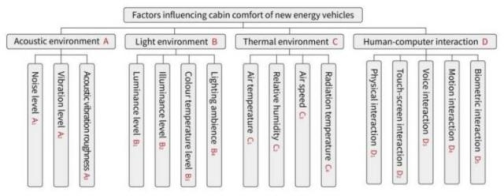
framework system for the study of cabin comfort of new energy vehicles from the dimensions of sound environment, light environment, thermal environment and human-machine interaction environment. There are 4 coarse-grained factors including sound environment (noise level, vibration level, acoustic roughness), light environment (brightness level, illumination level, color temperature level, lighting atmosphere), thermal environment (air temperature, relative humidity, air speed, radiation temperature), human-computer interaction environment (physical interaction, touch screen interaction, voice interaction, action interaction, biometric interaction) and 16 fine-grained factors degree factor (see Figure 1), to achieve a multi-level comfort research framework.
Figure 1: Coarse-grained and fine-grained factors of cockpit comfort in NEV.
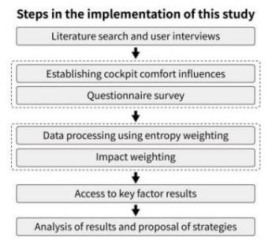
RESEARCH ON THE EVALUATION MODEL OF COCKPIT COMFORT OF NEW ENERGY VEHICLES The Establishment of a new energy vehicle cockpit comfort evaluation model is of great significance for systematically exploring the optimization path of cockpit comfort. This study draws a research methodology framework after sorting out the ideas (see Figure 2), and the specific processes are as follows:
Figure 2: Methodological framework of the study.
Research Design Main Content of the Questionnaire Survey The study conducted a questionnaire survey to gather user perceptions on cockpit comfort, focusing on factors like age, occupation, driving frequency,
and the perceived influence of various comfort factors, rated on a scale from “very weak” to “very strong”.
Questionnaire Focus Groups The questionnaire focus group consists of the following three groups: (1) Expert group: including 10 practitioners and designers in the automotive industry; (2) High-frequency users: 5 high-frequency users who drive more than once a day; (3) Ordinary users: 15 real users of new energy vehicles. The survey participants evaluated 4 coarse-grained factors and 16 fine-grained factors of cabin comfort, which provided a data basis for the subsequent weight analysis.
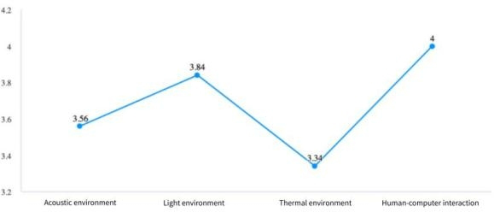
Analysis of Questionnaire Survey Results From the weight distribution of coarse-grained factors, the human-computer interaction environment is divided into 4 on average, accounting for the highest proportion (see Figure 3), which reflects users’ perception tendency towards the comfort level of the cockpit of new energy vehicles to a certain extent.
Figure 3: Weight distribution of coarse-grained influencing factors.
Research Methods Concept of Entropy Weight Method The disadvantage of the traditional subjective weight determination method is that it is affected by the subjective preferences of decision makers, while the entropy weight method can objectively calculate the weight distribution of specific indicators that affect the cabin comfort of new energy vehicles. As an objective evaluation method, entropy weight method is mainly based on the principle of information theory to measure the size of information entropy to reflect its uncertainty, and then calculate the relative weight distribution among different attributes (Ma and Wang, 2022). In this study, the entropy weight method is improved to calculate the objective weight, so as to build a comprehensive evaluation model of cabin comfort of new energy vehicles.
Entropy Value Results The following weighting results were obtained by entropy weighting method: the human-computer interaction environment had the highest
User-Driven Strategies to Enhance Cockpit Comfort in New Energy Vehicles 67
weight (30.10%) and the light environment was the second highest (26.50%) among the coarse-grained factor weights (see Table 1); among the fine- grained factor weights, the light environment-brightness level had the highest weight (9.23%), and the human-computer interaction environment-voice interaction weight was second (8.25%) (see Table 2).
Table 1: Summary of weight calculation results by coarse-grained entropy method.
Table available in the original PDF paper.
Item Information Entropy Value e
Information Utility Value d
Weighting Coefficient w Acoustic environment A 0.9960 0.0040 23.45% Light environment B 0.9955 0.0045 26.50% Thermal environment C 0.9966 0.0034 19.95% Human-computer
0.9948 0.0052 30.10%
interaction D
Table 2: Summary of weights calculated by fine-grained entropy method.
Entropy Weighting Analysis Based on the above calculation results, the human-computer interaction environment has the highest weight among the four coarse-grained factors, with a weight coefficient of 30.10%, which reflects the core position of intelligent technology and user experience in the cockpit design of new energy vehicles. Although the acoustic environment, light environment and thermal environment have a significant impact on comfort, they are often the factors of “passive perception”, while human-computer interaction is the core of “active experience”, its impact runs through the user’s entire driving process.
In the weight evaluation of 16 fine-grained factor indicators, the light environment-brightness level has the highest weight, with a weight coefficient of 9.23%, followed by the human-computer interaction environment-voice interaction, with a weight coefficient of 8.25%. Brightness level, as the core factor of cabin light environment, has an important impact on the driver’s visual comfort and driving safety. The high weight coefficient of human-computer interaction environment-voice interaction stems from the promotion of intelligent social background, the natural fit of user behavior and the diversified needs of the car use scene. First of all, with the popularity of intelligent voice assistants, users have become accustomed to interacting with devices through voice, and voice interaction has become an important indicator for users to judge the intelligence level of products; Secondly, voice interaction is more in line with the natural behavior of human beings, and has good adaptability for users of different ages, especially in the complex function menu, directly calling the target function through voice can significantly reduce the operation steps; Finally, voice interaction not only serves driving users, but also makes it convenient for passengers to control the cockpit system. Increasing the amount of visual information will have a certain interference effect on the driver, and then affect the driving efficiency and safety. However, the use of voice interaction and other means
User-Driven Strategies to Enhance Cockpit Comfort in New Energy Vehicles 69
to supplement the auditory path and visual feedback can significantly reduce this negative impact (Tan and Zhao, 2018).
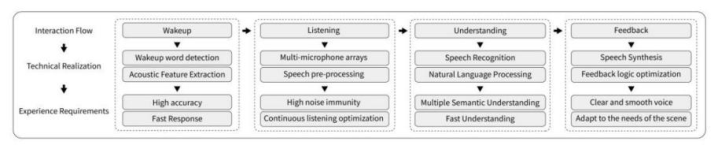
FLOW OF VOICE INTERACTION SYSTEM FOR NEW ENERGY VEHICLES The voice interaction system of new energy vehicles mainly includes four core links: “Wake up — receive — understand — feedback” (see Figure 4):
x Wake-up is the starting point of the voice interaction system. Users can activate the system through specific wake-up words or trigger environments. Relying on precise detection models and acoustic feature extraction technologies, the system responds quickly and simplifies user operations.
y Reception is the process by which the voice interaction system acquires user instructions. If the on-board voice interaction system has poor recognition accuracy or delayed response in a high-noise environment, it is easy to cause the driver’s attention to be distracted and increase the risk of traffic accidents (Jenness James et al., 2016). The stability and accuracy of the receiving process can be enhanced by capturing the voice signal in the vehicle through the microphone array and using the noise reduction algorithm to clean up the ambient noise.
z Understanding is the core link of the voice interaction system to transform the instruction into an executable task. Speech recognition technology converts speech signals into text data, and dynamically adjusts dialogue content according to the driving situation to accurately match user needs.
{ Feedback is the key stage for the voice interaction system to complete the task closed-loop. The text is transformed into a natural and smooth speech output, and the tone, speed and style of the broadcast content are adjusted according to the specific scene.
Figure 4: Core link of voice interaction in new energy vehicles.
VISUAL FEEDBACK ENHANCEMENT STRATEGY FOR VOICE INTERACTION With its rich information expression ability, integrity and repeatability of information, the central control screen interface can effectively make up for the limitations of voice interaction in the complete presentation of information and strengthen the expression of voice commands (Wu et al., 2022). In view of this, this study takes the visual feedback interface of speech
interaction as the starting point, and proposes improvement strategies from the “formal layer, functional layer and emotional layer” in order to further expand the research perspective of speech interaction design.
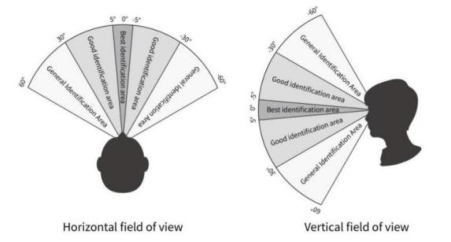
Formal Layer: User-Cognizant Interface Design for Voice Interaction In the driving scene, drivers mainly rely on visual perception of external information. Generally, in the horizontal visual field of human beings, the best recognition area is within the 10
viewing Angle, while the 30
viewing Angle is a good recognition area. Objects beyond the 120
range need to be recognized with concentration (see Figure 6). In the vertical visual field, the best discernment zone is also within the 10
viewing Angle, the good discernment zone is distributed between 10
and 30
above and below the horizontal line, and the maximum discernment range is 60
to 70
above and below the horizontal line (Wang, 2017). Therefore, the layout of the voice interactive interface should be designed to fit the user’s visual cognitive mode to ensure that the user can quickly browse and complete the interactive action. The core function keys of voice interaction can be placed in the position that the driver can easily reach and the visual focus is concentrated, such as below the center control screen or near the steering wheel. For important visual supplementary feedback of voice interaction, such as changes in navigation instructions, emergency warning information, etc., it can be displayed in the best identification zone of the driver’s vertical field of vision through head-up display (HUD) technology, so as to reduce eye diversion and distraction during driving.
Figure 5: Human visual range.
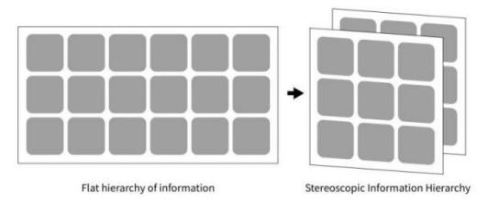
Secondly, the traditional flat layout is difficult to adapt to the complex interaction requirements under the limited space of the system. Therefore, the three-dimensional information hierarchy architecture can significantly reduce the cognitive burden of users and provide them with a reasonable and appropriate range of information selection (Sun et al., 2019). This advantage is embodied in two dimensions: First, on the premise of ensuring that the user’s cognitive load is kept at a reasonable level, through optimizing the interface layout, more information can be displayed in a single interface; Second, based on the same consideration of user cognitive load, information is presented in a more streamlined hierarchical structure by reducing the
User-Driven Strategies to Enhance Cockpit Comfort in New Energy Vehicles 71
number of layers in the interface. In the multilevel interface layout (see Figure 7), the main interface can be used as the place area for common operation buttons by folding the primary and secondary interfaces. Or it can be customized by users, so that they can place the required functions in familiar positions according to their personal preferences, and for the infrequently used operation buttons, they can be reasonably hidden in the secondary interface.
Figure 6: Information hierarchy of the voice interaction interface.
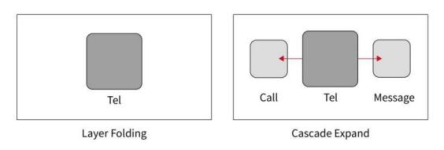
Meanwhile, animation can be used to reflect the transformation between voice interaction interfaces, thus deepening users’ understanding of the system architecture. Take the design of the call interface in the voice interaction interface of new energy vehicles as an example, in order to strengthen the hierarchical relationship between the home page of the first layer and the sub-page of the next layer, the transformation relationship of the open and closed dynamic effect metaphor level of expansion and folding is integrated (see Figure 8). While maintaining the existing hierarchical structure, it helps users to clearly construct the hierarchical progressive consciousness of the system, and reduces the psychological burden of users switching between levels. In addition, in order to clearly show the difference in the interface of each level, different background colors can be used as a means of differentiation. For the same level and adjacent elements or operation areas, color differences should be clearly divided to ensure that users will not be confused by information jumps when using.
Figure 7: Transition of hierarchical relationship.
Functional Layer: Dynamically Adjusting Interaction and Feedback Models Based on Different Scenarios Situational awareness refers to the system’s identification and understanding of situational elements such as time, location and user characteristics in the environment, and gives appropriate feedback based on these information. On
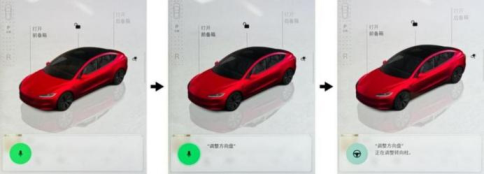
the one hand, the integration of situational awareness and voice interaction model can effectively assist users to complete tasks such as information collection and analysis, thus reducing the cognitive burden of users and optimizing the overall driving experience. For example, the voice interaction system of Tesla car distinguishes the operation process through visual feedback of different colors and shape changes (see Figure 5). When the user gives voice commands, the interface will display a circular icon of voice input. The icon is green with high saturation when the recognition is successful, and green with low saturation when the standby state is recognized; At the same time, the dynamic voice waveform will expand or contract according to the strength of the voice, helping the user to judge whether the system has accurately received the voice signal. This kind of feedback shows the state of each interaction stage from the visual layer and the experience layer, which not only improves the user’s judgment of the effectiveness of the operation, but also improves the visibility and legibility of the voice interaction.
Figure 8: Interactive visual feedback of Tesla’s in-vehicle voice communication system.
On the other hand, situational awareness can greatly enhance the naturalness and humanization of the driving experience. Under different scenarios, users’ risk degree and attention allocation needs are significantly different, and the priority of information acquisition is also different. Therefore, the presentation form of information can be adjusted according to real-time driving scenarios. For example, in the case of traffic congestion, a soft tone can be used to first calm the user’s emotions, inform the user of the current road condition information and the estimated duration of the congestion, and provide appropriate entertainment or dynamic effects on the central control screen to alleviate their anxiety.
Emotional Layer: Anthropomorphic Voice Interaction Metaphors The wide application of ICONS and text in the traditional automotive central control system may increase the user’s cognitive load to a certain extent. Psychologist Albert’s research reveals that in daily life, the transmission of information mainly relies on non-verbal expressions (55%) and verbal expressions (38%), while the speech itself only transmits 7% of the information (Chen et al., 2021), which provides a new application idea for the visual feedback of voice interaction. By designing a voice assistant with facial expression features, key functions can be highlighted effectively and the interface layout confusion caused by information overload can be avoided.
User-Driven Strategies to Enhance Cockpit Comfort in New Energy Vehicles 73
In the survey of users’ expected relationship with intelligent products, it is found that “assistant” and “friend” are the most expected options for users (Sun et al., 2019), while positive emotional expressions can make users feel caring and encouraged, and they are more inclined to regard them as “friends” and are willing to interact with them frequently. The negative emotional expression makes it easier for users to understand and accept the mistakes in the interaction, and conveys the message that “the assistant is trying to understand or solve the problem” rather than making users feel frustrated. While humorous or exaggerated expressions can break the monotony of interaction, and strengthen the role of “friend”.
At the same time, in the image design of voice assistant, when the virtual image approaches the real world but is not completely similar, it may cause discomfort and trigger the “uncanny valley effect”. Therefore, when choosing the image of the voice assistant, it is usually inclined to anthropomorphize the characters, animals and plants, and keep the cute expression away from the real human appearance to reduce the psychological discomfort of users. For example, NIO NOMI’s anthropomorphic design and personalized service bring users a new experience. Its virtual cartoon characters adopt a rounded and soft appearance, which has a significant advantage in terms of affinity; NOMI also has vivid and lovely action expressions (see Figure 9), which not only narrow the psychological distance between users and the voice interaction system, but also enhance the fun and user satisfaction of the interaction process.
Figure 9: NOMI voice assistant for the NIO car.
CONCLUSION
This study analyzes the key factors affecting cockpit comfort in new energy vehicles from a user perspective, categorizing them into four main areas: acoustic, light, thermal, and human-computer interaction environments. The entropy weighting method revealed that the human- computer interaction environment, particularly voice interaction, plays a central role in improving comfort. The study proposes three strategies for enhancing voice interaction: user-cognizant interface design for voice interaction, dynamically adjusting interaction and feedback models based on different scenarios, anthropomorphic voice interaction metaphors. These strategies aim to enhance user experience and contribute to the future design of cockpit environments.
ACKNOWLEDGMENT
This research was supported by the Project of Philosophy and Social Science Planning of Anhui Province in 2024(AHSKYY2024D040).
REFERENCES
Chen C, Cheng K, Wang W. The role of emojis in voice interaction error feedback [J]. Packaging Engineering, 2021, 42 (18): 159–164. Flor D, Pena D, Pena L, et al. Characterization of Noise Level Inside a Vehicle under
Different Conditions [J]. Sensors, 2020, 20(9): 2471. Jenness JamesW, Boyle L, Lee JohnD, et al. In-Vehicle Voice Control Interface Performance Evaluation [J]. Washington: National Highway Traffic Safety Administration, 2016. Ma J, Wang Y. Complexity analysis method of human-machine interaction task in
intelligent vehicle cockpit [J]. Journal of Graphics, 2022, 43 (02): 356–360. Stylidis K, Woxlin A, Siljefalk L, et al. Understanding light. A study on the perceived quality of car exterior lighting and interior illumination [J]. Procedia CIRP, 2020, 93: 1340–1345. Sun B, Yang J, Sun Y. Research on interface hierarchy design for human vehicle
interaction [J]. Journal of Machine Design, 2019, 36 (02): 121–125. Sun Y, Li S, Chen X. Emotional voice interaction design: Human computer interaction research map and design case of Baidu AI user experience department [J]. Art & Design, 2019, (11): 22–27. Tan H, Sun J, Guan D, et al. Development trend of human-computer interaction in
intelligent vehicles [J]. Packaging Engineering, 2019, 40 (20): 32–42. Tan H, Zhao Y. Peripheral interactive experience in intelligent vehicle [J]. Packaging Engineering, 2018, 39 (16): 1–4. Wang H. The human-computer interface design of autonomous electric vehicle cab
[D]. Southeast University, 2017. Wu Y, Yang S, Liu X. In-vehicle voice interaction model and design strategies [J].
Packaging Engineering, 2022, 43 (10): 73–79. Yang J, Research on comprehensive evaluation of automobile intelligent cockpit comfort based on occupant perception [D]. Southwest Jiaotong University, 2022. Zhou Y, Chen S. Vehicle ride comfort analysis with whole-body vibration on
long-span bridges subjected to crosswind [J]. Journal of Wind Engineering and Industrial Aerodynamics, 2016: 126–140.
LISTED IN THE AHFE DIGITAL BOOKSTORE CATALOGUE
Explore the complete digital volume
Advances in Human Factors of Transportation
Read this individual research paper free through the original publisher, or explore the full digital proceedings book.
ISBN 978-1-964867-62-5
Explore this ISBN in the AHFE Bookstore ↗Listed in the July 2026 bookstore catalogue; search by ISBN to confirm current availability · Digital book purchase optional