Tianxiong Wang, Yuanyuan Wang, Mengmeng Xu, Long Liu, Jing Chen (2024). Impact of human-computer interaction tasks in smart cockpit on user experience satisfaction. In: Usability and User Experience. AHFE Open Access, vol. 156, pp. 233–245. https://doi.org/10.54941/ahfe1005434
In order to help automotive interior and exterior decoration and human-computer interaction interface designers effectively avoid the risk of poor interface usability and further enhance the user experience, we quantify the complexity of human-computer interaction behaviors in smart cars, and explore the specific task indicators and weight distributions affecting the complexity of human-computer interaction inside the smart cockpit, as well as propose a methodology for measuring the complexity of human-computer interaction tasks in smart cars. First of all, by adopting the method of questionnaire survey, an index system consisting of eight evaluation indexes, namely, the complexity of logical structure, the complexity of interface design elements, the complexity of information channel transmission method, the number of actions, the complexity of management interface information, the complexity of human-computer interaction inputs, the level of knowledge and cognitive volume required for human-computer interaction, and the complexity of the layout of human-computer interaction digital interfaces, has been established. Secondly, we use the weight calculation method that combines Fuzzy Analytic Hierarchy Process (FAHP) and Entropy Weight Method(EWM) to determine the factors that have the most influence on the complexity of human-computer interaction behaviors of the smart cockpit. Finally, human-computer interaction behaviors with high complexity are calculated and design optimization recommendations are made. The evaluation results show that the complexity of the human-computer interaction digital interface layout in the cockpit (X8), the complexity of the logical structure (X1), and the level of knowledge and cognition required for human-computer interaction (X7) have a greater impact on the complexity of human-computer interaction tasks in the vehicle. Meanwhile, navigation operation, video and audio playback and music selection switching are human-computer interaction tasks with higher complexity and also need to be explored by designers focusing on them. The method can help designers avoid the risk of excessive design complexity and high user learning costs, and can assist designers to intervene in advance of design problems related to the above indicators.
With the development of a new generation of information technology such as 5G and AI, the traditional automotive industry is developing in the direction of intelligence on the basis of the deep integration of informa- tionization and industrialization, and the modern automobile has devel- oped into a comprehensive mobile space covering the personal, public, and social spheres (Zhu et al., 2023). This trend is not only a natural prod- uct, but also an inevitable result of the rapid development of artificial intelligence, Internet technology, communication technology in the environ- ment, and bringing unprecedented changes to the traditional automotive industry (Xu et al., 2023). With the help of the latest information tech- nology, smart technology is developing rapidly, and simple, ordinary cars are being transformed into smart cars (Kim, 2014). Traditional mechanized construction is being replaced by smarter solutions, vehicles are becom- ing smarter, and Intelligent technologies are widely used in the design and manufacture of automobiles. This change is not just about revolutionizing the technology, but also disrupting the entire industry model and service experience. In this evolution, the car is no longer simply a means of trans- portation, but an integrated mobility space that incorporates advanced technologies to provide new experiences in the personal, public and social spheres.
In this context, the relationship between intelligent systems and people, and people and information in smart car cockpits has become increasingly complex, leading to a diversified trend in human-computer interaction behav- iors in the car, which directly affects the user experience in the vehicle. As a result, in terms of improving driving safety, reasonable human-computer interaction technology can help drivers better communicate with the vehi- cle, provide important information and receive instructions from the driver, thus reducing the risk of accidents. At the same time, in terms of improv- ing driving comfort, human-computer interaction tasks can enhance driver and passenger comfort and make driving more enjoyable. This includes more intuitive control interfaces, automated driving functions and personalized cockpit settings to meet the needs of different drivers. Therefore, in the process of intelligent cockpit research, the complexity of human-computer interaction tasks is an important indicator for evaluating the in-vehicle inter- action experience and cockpit layout design, and this complexity directly affects the driver’s cognitive load when accomplishing a specific task, which in turn has a direct impact on the safety and efficiency of the intelligent vehi- cle driving process. In view of this, in-depth research on the complexity of human-computer interaction tasks and its rational application are the key factors to improve the user experience of intelligent vehicle driving. In this study, we will investigate the users’ real feelings about the indicators through scale assessment, obtain the subjective and objective weight values of the indicators, and calculate the integrated values of the two weights through the subjective and objective weight combination method. Meanwhile, on this
Impact of Human-Computer Interaction Tasks in Smart Cockpit 235
basis, the complexity of the 7 human-computer interaction behaviors will be calculated and the human-computer interaction behavior with the highest complexity will be identified. Therefore, this study aims to provide a research basis for the design improvement and optimization of the HMI interface of the future smart cockpit, which can make the enterprises and designers more targeted in the development process of the smart cockpit.
REVIEW The emergence of smart cockpit improves the level of automobile user expe- rience, breakthrough interaction mode change makes the car become a key node of the Internet of everything, giving rise to a new concept of automo- bile service and the corresponding industry ecology, and it is an important carrier for the construction of the future smart city. The development his- tory of intelligent cockpit can be divided into three stages: electronic cockpit, intelligent assistant and mobile space (Shreyas et al., 2020). The current intel- ligent cockpit is still only at the primary level of intelligent assistant, and the functions of the future intelligent cockpit will be more diversified, further replacing the traditional physical buttons through the use of large screens, multi-screen displays and voice recognition systems.
The core medium of human-computer interaction in automotive intelli- gent cockpit is the human-computer interface, which is usually divided into physical interface (i.e., buttons, knobs, paddles, etc.), touch screen interface (i.e., the user can issue commands to the vehicle through the action of point- ing, pulling and dragging on the screen), voice interface (i.e., recognizing and responding to the human’s voice commands), and action interface (i.e., recognizing and responding to the human’s action commands), and so on. The interactive interfaces and cockpit arrangements of the center control and instrumentation of different smart cockpits are different, which leads to a large difference in the complexity of human-computer interaction between humans and different components of the vehicle in the smart cockpit, and therefore affects the safety and efficiency of the driving process of smart vehi- cles. In fact, multi-screen information displays increase the cognitive load of drivers. Grahn and Kujala (2020) pointed out that the user interface design has a relatively large impact on the visual demand and visual interference potential compared to the screen size. Different types of interaction modes can be used to reduce the impact of distracted driving in tasks of varying complexity and difficulty (Ma et al., 2022; Graichen et al., 2022).
Foreign scholars have studied the contextual cognition and attentional mechanism of in-vehicle driving through experiments, and categorized high- frequency in-vehicle scenarios such as navigation, communication, entertain- ment, in-vehicle APP, and temperature adjustment (Bach et al., 2009). Based on the previous research, this study selects 7 main human-computer interac- tion tasks in the cockpit (answering and calling cell phones, music selection and switching, in-vehicle APP interaction, navigation operation, video and audio playback, voice wake-up and center control screen interaction), and performs the complex quantification and analysis of 8 latitudes, and the indexes’ contents and meanings are as follows:
Table 1. Complexity metric content and meaning.
Table available in the original PDF paper.
Elements Source
No. Serial num- ber
(Jianan and Abas, 2020)
Complexity of the logical structure
X1 The complexity of the logical structure of the task will directly affect the driver’s cognitive performance and the smoothness of cockpit user experience (Ebel et al., 2023)
Complexity of interface design elements
X2 In the HMI interface design, various graphics, text and interactive elements used are intuitive and user-friendly in order to give the user a level of complexity conveyed during the interaction.
(Detjen et al., 2020; Detjen et al., 2019)
Complexity of information channel delivery methods
X3 The ease of information exchange between the driver and the vehicle system.
(Spyridakos et al., 2020)
Number of actions X4 The number of actions required for a single human-computer interaction task in a smart cockpit.
(Zhao et al., 2023) X5 Complexity of management interfaces information in smart cockpit HMI
Complexity of management interface information
(Ma et al., 2023)
Complexity of human-computer interactio inputs
X6 Complexity of human-computer interaction inputs for smart cockpits
(Faas et al., 2020; Rittger et al., 2022)
The level of knowledge required for human-computer interaction and cognitive capacity
X7 The level of knowledge and amount of cognition required for human-computer interaction in smart cockpits
(Ma et al., 2023; Li et al., 2017)
Complexity of human-computer interaction digital interface layout
X8 Complexity of digital interface layouts for human-computer interaction in smart cockpits
METHOD
Using the Entropy Method to Recognize the Complexity of Human-Computer Interaction Tasks In 1948, Shannon (Shi et al., 2020) first introduced the concept of entropy into information theory. The entropy method is a way for mainly measuring the degree of system disorder. The lower the entropy, the greater the amount of effective information, and the greater the entropy, the smaller the amount of effective information. The entropy method can visualize the degree of data disorder or uncertainty, so as to making the algorithm easy to understand and interpret.
As an objective empowerment method, the entropy method can determine the weight of the indicators according to the relative change degree of each
Impact of Human-Computer Interaction Tasks in Smart Cockpit 237
complexity indicator on the impact of the system as a whole, and the indi- cators with a large degree of relative change have a larger weight, which can be determined according to the effective information of each indica- tor, and the larger the effective information is, the larger the weight will be. This study proposes an entropy-based method to quantify the complexity of human-computer interaction tasks in intelligent cockpits, and to introduce the entropy method into the analysis of human-computer interaction task complexity in intelligent cockpits, so as to obtain the result of the objective importance degree.
Using the FAHP to Analyze the Complexity of Human-Computer Interaction Tasks The analytic hierarchy process (AHP) (Saaty, 1980) is a multi-criteria context- based decision-making methodology that is widely used as a decision-making tool in various fields. The AHP most notably provides an effective mech- anism to check the consistency of the assessment measures and enables decision makers to incorporate subjectivity, experience, and knowledge into the decision-making process in an intuitive and natural way. The AHP could first identify the main factors that influence decision making and then arranges these factors into different levels to reduce the complexity of the decision-making problem (Saaty, 1977; Saaty, 1986).
In fact, the traditional AHP cannot accurately capture the fuzzy and uncer- tain perceptual demands of users, its assessment scale cannot fully cover the subjectivity of human cognition of things. For this reason, to combine fuzzy mathematics with AHP can effectively solve the problem of user cognitive complexity, so as to the fuzzy analytic hierarchy process (FAHP) (van and Pedrycz, 1983) was proposed to make the decision-making results will be more accurate (Kubler et al., 2016). Thus, the FAHP is very suitable for the user to express subjective preference related to affective responses (Shieh et al., 2017). In recent years, the FAHP has been widely used by scholars in product and decision making research (Batwara et al., 2022; Zhu et al., 2022; Chai and Wang, 2022), and its specific study process can be found in the literature (Wang and Zhou, 2020). This study focuses on calculating the sub- jective weight values of human-computer interaction complexity indicators based on the FAHP.
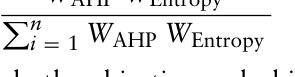
Combining Weights In this study, the complexity weights are calculated based on the FAHP method and entropy method, where FAHP is the result of subjective weight calculation and entropy is the result of objective weight assignment, so as to arrive at the result of the objective importance degree, and the weight calculation formula for the combination of the two is shown below:
(1)
Wi = WAHP WEntropy Pn
Equation reproduced from the original PDF.
Since the formula considers both subjective and objective weight combi- nation algorithms, it is highly adaptable in the process of determining the weights, which can further lead to the value of the integrated weights of the factors in the target program layer.
Questionnaire Design In this study, based on the specifics of the research problem, a panel of 30 experts (associate professors in automotive human-computer interaction and design and UX practitioners with more than 5 years of experience in the field) and 20 real users of smart cars were selected, and then 8 complexity metrics under the 7 main interaction tasks of the smart car cockpit were scored in the form of a Likert scale. Specifically, the 7 levels of the 8 complexity indicators corresponded to the complexity scales 1, 2, 3, 4, 5, 6, and 7, respectively, and 50 panelists scored the 8 complexity indicators under the 7 main interaction tasks, and the questionnaire survey was conducted through the Questionnaire Star online platform.
RESULTS
Reliability Analysis Reliability validity is used to measure the accuracy and stability of the results of a questionnaire. Reliability is used to measure whether the results of a questionnaire are reliable or not, and is generally verified by Cronbach’s α. When the value of Cronbach’s α is greater than or equal to 0.7 it means that the data has high reliability (Wang et al., 2023; Wang et al., 2023). The questionnaire data were imported into the SPSS statistical software for the reliability test, and the results of the software showed that the value of Cronbach’s α is 0.843, which was higher than 0.8, indicating that the data of the study has a high level of credibility.
Descriptive Statistics We surveyed respondents about their commuting patterns based on their age and driving experience. In terms of commuting, the majority of participants (80%) reported driving more than 40 minutes per day in a single trip. Addi- tionally, 71% of those who chose to travel by cab or online car reported commuting more than 40 minutes per day. Our research results show that those who primarily drive to and from work spend more time in the car each day.
The Entropy-FAHP Method Was Applied to Calculate the Weights The basic idea of FAHP is to first establish a hierarchical describing sys- tem functions or characteristics according to the evaluation requirements, and then make a secondary comparison of the relative importance of the design elements and give the corresponding scale to form a judgment matrix between an upper-level factor and a lower-level related factor, in order to give a sequence of the relative importance of the related factors.
The entropy weighting method determines the weight of indicators based on the size of each indicator’s information load. According to information theory, in order to examine the role of each factors in the indicator system, it is necessary to study the variability of the indicators. The greater the variabil- ity of the indicator, the higher the information content of the indicator and the greater the “differentiating power” of the indicator. This means that the weight of each indicator should be determined by the change in the values of
Impact of Human-Computer Interaction Tasks in Smart Cockpit 239
the attributes of the options under that indicator; the greater the change, the greater the weight of the indicator; conversely, the smaller the weight.
Apply Entropy Weight Method to Determine Indicator Weights The EWM is applied to determine the objective weight of indicators. First, the evaluation data of experts are collected, and then the initial weight matrix is obtained based on the EWM. Finally, the importance of the eight complexity indicators is obtained. The results are shown in Table 2.
Table 2. Weight scores of 8 complexity indicators based on EWM.
Table available in the original PDF paper.
X1 X2 X3 X4 X5 X6 X7 X8
0.120 0.112 0.110 0.131 0.143 0.113 0.106 0.165
Determining the Weight of Indicators Through FAHP The fuzzy analytic hierarchy process is used to determine the subjective weight of the indicator. By constructing a judgment matrix, and then using the 9-scale method to conduct pairwise comparisons, the calculation of the subjective weight is completed. On this basis, it is necessary to pass the con- sistency test. If the value of CI is less than 0.1, the judgment matrix passes the consistency test. Otherwise, the judgment matrix needs further adjustment. Finally, the results of this study are shown in Table 3.
Table 3. Weight calculation of 8 complexity indicators based on FAHP.
Table available in the original PDF paper.
Project description Item number Weighting Values CI value X2 0.0749 0.07 The complexity of the logical structure X1 0.1845 0.08 The complexity of interface design elements
X3 0.0612 0.01
The complexity of the information channel transmission method
X5 0.0771 0.06
Number of actions X4 0.0931 0.06 The complexity of management interface information X6 0.0621 0.04 The complexity of human-computer interaction input
X7 0.1247 0.03
The level of knowledge and amount of cognition required for human-computer interaction
X8 0.1951 0.01
The complexity of human-computer interaction digital interface layout
Subjective and Objective Methods Combined to Improve Weights The weight is calculated through the EWM and the FAHP method. The result obtained by the entropy method is the objective weight, and the result
obtained by the FAHP method is the subjective weight. The combined cal- culation of the weight is completed through formula (1), and the results are shown in Table 4. According to the calculation results, the weights and ranking results of the eight complexity indicators are shown in Table 5.
Table 4. Numerical calculation of weights combining subjective and objective methods.
Table available in the original PDF paper.
Project description Item number
FAHP Weighting
Entropy Weights method
Combined Weighting value X1 0.120 0.1845 0.196
The complexity of the logical structure
X2 0.112 0.0749 0.074
The complexity of interface design elements
X3 0.110 0.0612 0.060
The complexity of the information channel transmission method
X5 0.143 0.0771 0.098
Number of actions X4 0.131 0.0931 0.108 The complexity of management interface information X6 0.113 0.0621 0.062 The complexity of human-computer interaction input
X7 0.106 0.1247 0.117
The level of knowledge and amount of cognition required for human-computer interaction
X8 0.165 0.1951 0.285
The complexity of human-computer interaction digital interface layout
Interaction Complexity Analysis Perform weighted calculations on the weight results and user evaluation results to explore the 7 main human-computer interaction tasks in the smart cockpit. For example, the complexity of making and receiving calls on a mobile phone S1, the complexity of music selection and switching S2, the complexity of vehicle APP interaction S3, the complexity of navigation oper- ation S4, the complexity of video and audio playback S5, the complexity of
Impact of Human-Computer Interaction Tasks in Smart Cockpit 241
voice wake-up S6 and the complexity of central control screen interaction S7, the comprehensive complexity values of different indicators of the seven human-computer interaction tasks were further calculated, and the results are shown in Table 6. It can be seen from Table 6 that the most complex human- computer interaction behaviors in the smart cockpit are further proposed to further improve strategies.
This study first discussed the importance of 8 complexity indicators, calcu- lated them using a combination of subjective and objective methods, and obtained the complexity factors of human-computer interaction behavior in smart cockpits. Among them, the complexity of human-computer interaction digital interface layout (X8), the complexity of the logical structure (X1), the level of knowledge and the amount of cognition required for human- computer interaction (X7) rank in the top three in importance respectively. On this basis, with reference to the weight values of 8 indicators, calculate the complexity of 7 driving interaction behaviors and obtain the relative com- plexity of different human-computer interaction tasks.The results show that the most complex human-computer interaction behavior is navigation oper- ation, with a score of 4.356, followed by video and audio playback, with a complexity of 3.650, and music selection and switching, with a complexity of 3.632.
The complexity of the human-computer interaction task of making and receiving calls on a mobile phone is moderate at 3.407, mainly because this interaction involves multiple aspects, including Bluetooth connection, incom- ing call management, call control, etc. Complexity may come from factors such as handling multiple phone models and Bluetooth protocols, as well as communication stability when the vehicle is in motion. At the same time, there are fewer misoperations, but during the process of making and receiving calls, the user still needs to look at the phone interface in the central control screen to complete the task of answering and making calls.
The human-computer interaction task complexity of music selection and switching is relatively high, at 3.632. The complexity of this behavior may be
affected by factors such as the diversity of audio formats, the size of the song library, and the processing of users’ personalized music preferences. At the same time, a good user experience also requires intelligent design of behav- ioral operations such as switching songs and adjusting volume. When users cannot effectively obtain their favorite music through multiple operations, the perceived human-computer interaction complexity value will be high. In addition, the interface design of the vehicle system is critical. The navigation, content layout and window switching of the music interface are all key factors in the human-computer interaction task of music selection and switching.
The complexity of the vehicle APP interaction task is relatively high, which is 3.523. The complexity of vehicle APP interaction may be due to the increase in application types, for example, navigation, entertainment and informa- tion tasks have high complexity, switching between different applications, data transmission, and user configuration may lead to increased system com- plexity. In addition, experts and users generally believe that the information provided by vehicle APPs needs to be different from the content presented on mobile phones, tablets, computers, etc., and the presentation methods should also be different.
The navigation operation interaction task has the highest complexity, which is 4.356. On the one hand, the navigation operation process requires the user to complete information input through multi-modal interaction and through the input field in the central control screen, and finally complete the navigation operation task. Sometimes during the interaction process, due to the uncertainty of the destination, the user needs to further confirm the infor- mation, which results in a higher number of required actions and makes the human-computer interaction task itself more complex. On the other hand, due to the update of real-time traffic information, path planning and other aspects, the highly intelligent navigation system also requires users to con- stantly adjust according to the actual situation, and inevitably produces a certain degree of behavioral complexity.
The complexity of the interactive task of video and audio playback is 3.650. This is mainly because the user requires a large number of actions during the selection and switching process, and constantly adjusts his or her choices during the execution process, resulting in a certain degree of behavioral complexity. Contemporary, due to users’ personalized needs for subtitles, image quality, etc., this indirectly increases the complexity of the system.
The complexity of the interactive task of voice arousal is 2.034, which is a lower score compared to other interactive behaviors. The reason is that as the development of intelligent technology becomes increasingly mature, the design of the voice interaction system is relatively stable, and many instruc- tions can be easily implemented through human-computer dialogue, thus improving the convenience of the user. However, in addition to the semantic logic of voice interaction, there are certain problems in the recognition of the environment inside and outside the car and the recognition of interac- tive objects, which can easily lead to misoperation problems in random voice interaction.
Impact of Human-Computer Interaction Tasks in Smart Cockpit 243
The complexity of the interactive task of central control screen is 3.525, which is more complex than other interactive behaviors. Since the user fully considers the operating logic factors of the central control screen and the usability factors of interactive behavior during the operation process, the behavior will inevitably have a certain complexity. To improve user expe- rience, four strategies can be adopted: (1) Simplify the interface design, place the most commonly used functions and control options in places that are easy to access and understand, adopt a flat design, and avoid too many icons and buttons to reduce user learning costs. (2) Use contextual navi- gation to provide relevant options based on the user’s current context to avoid frequent switching between different tasks. (3) Intelligent algorithms predict user operations, use intelligent algorithms to predict the user’s pos- sible next operations, and provide relevant shortcuts to improve operating efficiency. (4) Provide intuitive feedback, through visual feedback methods such as animation, lighting and color changes, to enhance the user’s percep- tion of interaction and let the user clearly know the effect of their operation. By comprehensively applying these strategies, the complexity of interactive tasks on the smart cockpit central control screen can be effectively reduced and the user experience improved.
CONCLUSION
This paper conducts research on the user experience complexity of human- computer interaction tasks in smart cockpits, and evaluates the main human- computer interaction behaviors. The purpose of this study is to use the analytic hierarchy process and the entropy value method to comprehen- sively evaluate the influencing factors of user experience complexity.The results show that: (1) The complexity of the human-computer interaction digital interface layout (X8), the complexity of the logical structure (X1), and the knowledge level and cognitive amount required for human-computer interaction (X7) are important evaluation indicators that significantly affect the complexity of operating behaviors. (2) From the perspective of human- computer interaction behavior, the most complex human-computer interac- tion behavior is navigation operation, followed by video and audio playback, and finally music selection and switching. In the future design improvement process, it should be considered that the operation logic in the naviga- tion operation interface design should be simplified and the interface layout should be more reasonable.By accurately capturing users’ needs for naviga- tion operations, video and audio playback, and music selection switching, a friendly and simple smart cockpit user interface is designed.
ACKNOWLEDGMENT
This research was funded by Anhui University talent introduction research start-up funding project (No. S020318019).
REFERENCES
A. Batwara, V. Sharma, M. Makkar, and A. Giallanza, An Empirical Investigation of Green Product Design and Development Strategies for Eco Industries Using Kano Model and Fuzzy AHP. Sustainability 14 (2022) 8735. G.-N. Zhu, J. Ma, and J. Hu, A fuzzy rough number extended AHP and VIKOR for
failure mode and effects analysis under uncertainty. Adv. Eng. Inf. 51 (2022). H. Detjen, S. Faltaous, S. Geisler, and S. Schneegass, User-defined voice and midair gesture commands for maneuver-based interventions in automated vehicles, Proceedings of Mensch und Computer 2019, 2019, pp. 341–348. H. Detjen, S. Geisler, and S. Schneegass, Maneuver-based control interventions during
automated driving: Comparing touch, voice, and mid-air gestures as input modal- ities, 2020 IEEE International Conference on Systems, Man, and Cybernetics (SMC), IEEE, 2020, pp. 3268–3274. H. Grahn, and T. Kujala, Impacts of touch screen size, user interface design, and subtask boundaries on in-car task’s visual demand and driver distraction. International Journal of Human-Computer Studies 142 (2020) 102467. J. Ma, J. Li, and Z. Gong, Evaluation of driver distraction from in-vehicle information
systems: A simulator study of interaction modes and secondary tasks classes on eight production cars. International Journal of Industrial Ergonomics 92 (2022) 103380. J. Ma, W. Wang, J. Li, and W. Xu, Usability Evaluation of Co-Pilot Screen Based on Fuzzy Comprehensive Evaluation Method. World Electric Vehicle Journal 14 (2023) 219. K. M. Bach, M. G. Jæger, M. B. Skov, and N. G. Thomassen, Interacting with in-
vehicle systems: Understanding, measuring, and evaluating attention. People and Computers XXIII Celebrating People and Technology (2009) 453–462. L. Graichen, M. Graichen, and J. F. Krems, Effects of gesture-based interaction on driving behavior: A driving simulator study using the projection-based vehicle-in- the-loop. Human factors 64 (2022) 324–342. L. Jianan, and A. Abas, Development of human-computer interactive interface for
intelligent automotive. International Journal of Artificial Intelligence 7 (2020) 13–21. L. Rittger, D. Engelhardt, and R. Schwartz, Adaptive user experience in the car— Levels of adaptivity and adaptive HMI design. IEEE Trans. Intell. Transp. Syst. 23 (2022) 4866–4876. L. P. J. M. van, and W. Pedrycz, A fuzzy extension of Saaty’s priority theory. Fuzzy
Sets Syst. 11 (1983) 229–241. M.-D. Shieh, Y. Li, and C.-C. Yang, Product Form Design Model Based on Multiobjective Optimization and Multicriteria Decision-Making. Mathematical Problems in Engineering 2017 (2017) 1–15. P. Ebel, C. Lingenfelder, and A. Vogelsang, Multitasking While Driving: How
Drivers Self-Regulate Their Interaction with In-Vehicle Touchscreens in Auto- mated Driving. International Journal of Human–Computer Interaction (2023) 1–18. P. D. Spyridakos, N. Merat, E. R. Boer, and G. M. Markkula, Behavioural validity of driving simulators for prototype HMI evaluation. IET Intelligent Transport Systems 14 (2020) 601–610. R. Li, Y. V. Chen, C. Sha, and Z. Lu, Effects of interface layout on the usability of
in-vehicle information systems and driving safety. Displays 49 (2017) 124–132. S. Chai, and Z. Wang, Product design evaluation based on FAHP and cloud model.
J. Intell. Fuzzy Syst. (2022) 1–21.
Impact of Human-Computer Interaction Tasks in Smart Cockpit 245
S. Kim, A study on the frequency allocation of WAVE for smart vehicle industry. Journal of The Institute of Electronics and Information Engineers 51 (2014) 183–189. S. Kubler, J. Robert, W. Derigent, A. Voisin, and Y. Le Traon, A state-of the-art sur-
vey & testbed of fuzzy AHP (FAHP) applications. Expert Syst. Appl. 65 (2016) 398–422. S. M. Faas, L.-A. Mathis, and M. Baumann, External HMI for self-driving vehicles: Which information shall be displayed? Transportation research part F: Traffic psychology and behaviour 68 (2020) 171–186. T. Wang, and M. Zhou, A method for product form design of integrating interactive
genetic algorithm with the interval hesitation time and user satisfaction. Int. J. Ind. Ergon. 76 (2020). T. Wang, Z. Ma, and L. Yang, Creativity and Sustainable Design of Wickerwork Handicraft Patterns Based on Artificial Intelligence. Sustainability 15 (2023) 1574. T. Wang, Z. Ma, F. Zhang, and L. Yang, Research on Wickerwork Patterns Creative
Design and Development Based on Style Transfer Technology. Applied Sciences 13 (2023) 1553. T. L. Saaty, A note on the AHP and expected value theory. Socio-Economic Planning Sciences 20 (1986) 397–398. T. L. Saaty, A scaling method for priorities in hierarchical structures. Journal of
mathematical psychology 15 (1977) 234–281. T. L. Saaty, The Analytic Hierarchy Process, McGraw-Hill, New York, 1980. V. Shreyas, S. N. Bharadwaj, S. Srinidhi, K. Ankith, and A. Rajendra, Self-driving cars: An overview of various autonomous driving systems. Advances in Data and Information Sciences: Proceedings of ICDIS 2019 (2020) 361–371. W. Xu, M. J. Dainoff, L. Ge, and Z. Gao, Transitioning to human interaction with
AI systems: New challenges and opportunities for HCI professionals to enable human-centered AI. International Journal of Human–Computer Interaction 39 (2023) 494–518. X. Zhao, Z. Li, C. Zhao, C. Wang, and R. Fu, Distraction pattern classification and comparisons under different conditions in the full-touch HMI mode. Displays 78 (2023) 102413. Y. Shi, Q. Peng, and J. Zhang, An Objective Weighting Method of Function
Requirements for Product Design Using Information Entropy. Comput.-Aided Des. Applic. 17 (2020) 966–978. Y. Zhu, Y. Geng, R. Huang, X. Zhang, L. Wang, and W. Liu, Driving Towards the Future: Exploring Human-Centered Design and Experiment of Glazing Projection Display Systems for Autonomous Vehicles. International Journal of Human–Computer Interaction (2023) 1–16.
LISTED IN THE AHFE DIGITAL BOOKSTORE CATALOGUE
Explore the complete digital volume
Usability and User Experience
Read this individual research paper free through the original publisher, or explore the full digital proceedings book.
ISBN 978-1-964867-32-8
Explore this ISBN in the AHFE Bookstore ↗Listed in the July 2026 bookstore catalogue; search by ISBN to confirm current availability · Digital book purchase optional