Özlem Kaya (2025). Ergonomical Evaluation of The Workstation Suitability Level Of Businesses: The Example of The Leather Sector. In: Safety Management and Human Factors. AHFE Open Access, vol. 189, pp. 217–227. https://doi.org/10.54941/ahfe1006588
In ergonomic workstation design, the human factor should not be ignored and various postures during work should be systematically and reliably examined within the scope of anthropometric data. Body postures and postural loads that occur during work should be observed and analyzed using systematic ergonomic methods. In this way, optimal combinations of humans and production tools are determined, alternative suggestions for arrangements are made, and humane measures can be taken regarding time, performance and work environment. At the same time, the workstation and general work climate should be designed in a worker-centered manner and worker satisfaction should be ensured in this context.The purpose of ergonomic workstation design is to optimize the productivity and reliability of the system. In line with these objectives, the system should be designed to be efficient, safe, comfortable and to increase the satisfaction of the operator. This is possible by observing and evaluating the interaction between the operator and the machine well. If the desired performance requirements are greater than the performance limits of the operator, the rate of injury and accidents due to overload is high. This situation becomes more important especially in an area where heavy work and loads are involved, such as the leather sector. In this context, the study aims to evaluate the workstations in terms of ergonomics and to reveal the suitability of the workplace for the employee in general by collecting data through a survey and interview form conducted on employees in the leather sector.
Organizing the workplace environment and designing it ergonomically is an important issue, especially for sectors with large volumes. While determining the volumetric and formal components of the work system in terms of anthropometrics and work physiology, the bodily functions in which the work is best performed are also determined. In order to achieve this, it is necessary to know the personal characteristics of the employee on the one hand, and the form, difficulty, time and environmental conditions of the work on the other. A work arrangement that has the least difficulty in doing the same quality work is a successful arrangement. This can only be achieved with
ergonomic solutions. These results can be achieved through arrangements such as eliminating or reducing static muscle work, applying less force, choosing the right directions of force application, changing the work from time to time and giving correctly calculated breaks when necessary. As Kaya (2015) also stated in her study, as a basic principle, work and the workplace should be arranged in a way that the employee can work with maximum efficiency.
When we consider the efficiency that can be defined as the main purpose in any human-machine system, either more output with the same inputs or the same output with less input; in this system, the person working has the right to work under humane conditions just because he/she is human. These conditions include lighting, noise, vibration, color, toxic gases and dusts and chemicals, as well as the psychological and social environment in which the person is located. In fact, it can be said that the psychological and sociological expectations of employees today sometimes exceed physical conditions. Because the workforce, which is now much more mobile than before due to global competition all over the world, is seeking conditions befitting human dignity by getting rid of the previous bad conditions. In a sense, the ruthless conditions of global competition, even if they are not at the desired level, require a better examination of all the factors affecting human health and occupational safety in workplaces (Das, 1998: 42–45; Aytaç and Kaya, 2019: 3–4; UNIDO, 2021).
Despite the transition to automation with technological developments, businesses still need physical manpower. Due to the increasing mechanization due to technological developments and the necessity of the human factor in the work environment (Ganesh et al., 2019), it is necessary to pay attention to the working conditions and satisfaction of the employee. The leather industry is one of the “locomotive” sectors of the Turkish economy in terms of export potential. The sector has managed to become one of the most advanced leather industries in the world with its production capacity, competitiveness and experience.
Especially in the leather sector, which is a labor-intensive sector despite rapid technological developments, employees have a great impact on production, and the order of the work environment and the design of the workstation directly affect the employee’s productivity. In the leather sector, which is a labor-intensive sector, the productivity of employees greatly affects the efficiency, profitability and product quality of the businesses (UNIDO, 2010: 12–13; Kaya and Özok, 2018: 264; Kaya, 2023: 146). There are risk factors for employees in a work environment and workstation that does not comply with ergonomic criteria. Many health problems can occur due to especially inappropriate working postures, working environments and workstations. It is important to take proactive steps to evaluate and reduce the problem. Therefore, it is important to identify work-related musculoskeletal disorders and the risk factors that cause these disorders early. More appropriate working postures have positive effects on the musculoskeletal system, allow for more effective control of work performance and can reduce work accidents (Karwowski and Marras, 1999).
Ergonomical Evaluation of the Workstation Suitability Level of Businesses 219
Therefore, the employee-centered design of the work area and workstation is extremely important, especially in the leather sector.
Problems that occur due to a workstation that is arranged without considering the characteristic features and anthropometric values of the human body (Kaya and Özok, 2017: 310) can lead to short-term or chronic health problems. Many studies have shown that work accidents and occupational diseases are caused by the incompatibility of the worker and the machine, and that this issue is not given enough importance (Kaya, 2019; Koppiahraj et al., 2020: 4). In a study, Karwowski (2005) concluded that the main focus of the human factors and ergonomics discipline in the 21st century will be the design and management of systems that meet human compatibility requirements. This result actually explains the necessity of systems to be human-centered.
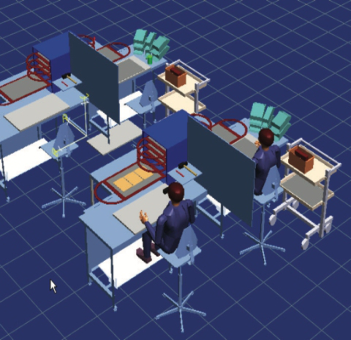
Figure 1: Modular design for two workstations used for producing leather goods. (De Sensi et al., 2007-left) characterization of the hand sewing workstation (right). (Papetti et al., 2020: 299).
Figure 1 shows two workstations dedicated to the production of leather goods prepared by De Sensi et al. (2007-left). This simulation was used to validate the new modular design of the workstation proposed by the company’s top management (based on the first simulation results obtained with the real workstation layout). During the simulation, animation was used to detect ergonomic problems that would otherwise be difficult to detect (i.e. incorrect working postures and incorrect placement of tools). Such studies may lead to a more appropriate design and adjustment of the workstations (Bossomaier et al., 2010). In the image on the right, an example is given of a hand sewing workstation operator’s job consisting of two main tasks (punching leather pieces, sewing together the upper parts). The appropriate height values and viewing angles for the worker at this station are shown.
220 Kaya
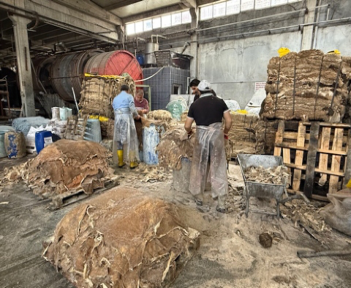
Figure 2: General environment of the leather factory (photos by Kaya) the participatory ergonomics balance (Day, 1998: 7).
When the work environment is suitable for the anatomical, physiological, psychological characteristics and capacity of the individual doing the work (Figure 2), harmony is achieved between the work and the individual doing the work, and thus the highest efficiency can be achieved with minimum fatigue. In the figure on the left, an unsuitable workstation is seen. It is not possible to ensure compliance with the work and employee satisfaction in such a station. For these reasons, ergonomic arrangement of the work environment is extremely important, especially in reducing problems caused by ergonomic risk factors. In this context, this study examines the suitability of workstations in businesses in the leather sector from an ergonomic perspective and aims to reveal the experiences of employees regarding workstations and the general workplace climate.
METHOD
In this study, the suitability of workstations in leather sector businesses was addressed from an ergonomic perspective and it was aimed to reveal the experiences of the employees regarding workstations and general workplace climate.
A Personal Information Collection Form was used in the study. In the study, a personal information collection form consisting of questions regarding the gender, age, education status, working hours, attitudes and behaviors of the employees regarding the workplace, problems they experienced regarding workstations, ergonomic problems and general workplace climate was used.
The survey form was applied to employees working in businesses located in an Organized Leather Industrial Zone in 2025 on a voluntary participation basis. A total of 485 surveys were distributed to the employees directly and online and 5 of the surveys collected were not included in the study because they contained missing data, and the analyses were carried out on 480 surveys. The research data were evaluated on the computer using the SPSS program. Frequency distributions were used in the evaluation of the data.
Ergonomical Evaluation of the Workstation Suitability Level of Businesses 221
RESULTS
The leather industry is known for its labor-intensive processes that include tasks such as tanning, dyeing, cutting, and sewing. As Thomaiya and Jegadeeswari (2024) stated, these processes can often expose workers to a number of occupational hazards and potential health risks. Factors such as long-term exposure to chemicals, poor ergonomic conditions, odor, physical exertion, and inadequate safety measures can contribute to adverse health outcomes and productivity in the workforce. In this respect, the results obtained in this study, which evaluated the working environments and workstations in the leather sector, are extremely important for a more employee-oriented design of workstations.
In this context, when the demographic information of the participants regarding gender, age, marital status, and educational status was examined, it was concluded that 48% were 46 and above, 90% were male, 68% were married, and 75% were primary school graduates. When looked at in terms of working hours, it was seen that 36% of the employees had been working for approximately 6–10 years. Since the leather sector is a labor-intensive sector and generally consists of heavy work branches, it revealed a more male-centered situation.
The results of the evaluation of the machinery, tools, and other elements used by the employees participating in the research in terms of working conditions are given in Table 1.
Table 1: The suitability of the machinery, tools, and equipment used by the employees at their workstations for working conditions.
Table available in the original PDF paper.
The Suitability of the Machinery, Tools and Equipment Used in the N % Workstation for Working Conditions Yes 150 18,5 No 174 55,9 Partially 156 25,6 Total 480 100
When Table 1 is examined, it is seen that 56% of the employees stated that the machines, tools and equipment they use at their workstations are not suitable for their working conditions. This situation is related to the workstations that are not suitable and are not adjusted for different employees and the machines, tools and equipment used at these stations. Units that can be adjusted to suit the employee can be more ergonomic and more human-oriented. In this respect, workstations should be designed more employee-oriented.
In addition, in another question directed to the employees, approximately 50% of the employees answered no to the situation of receiving training regarding the machines, tools and equipment they use at their workstations. This situation can actually be considered as a risky situation for both the company and the employee. Providing the necessary training during the on- the-job or orientation process is extremely necessary in terms of occupational health and occupational diseases.
222 Kaya
Table 2: Distribution of data on the working climate in the businesses.
Table available in the original PDF paper.
Workplace Working Climate Assessment N % Good 149 15,3 Poor 154 23,6 Very poor 177 61,1 Total 480 100
Workplace climate is an extremely important issue in terms of employee productivity and job satisfaction. When Table 2 is examined, 61% of employees responded as very poor regarding the workplace working climate. This situation may actually be related to the general inappropriateness of the workplace (hygiene, sensitivity to the environment and human health, fundamental rights), inappropriate design of workstations, inappropriate and adjustable use of machinery and equipment, and many legal rights and occupational health and safety. In this respect, the leather sector, which has harsh conditions, needs to make the necessary arrangements quickly and act in a worker-oriented manner.
Table 3: Distribution of data on the adequacy of general ergonomic conditions in the businesses.
Table available in the original PDF paper.
Adequacy of Ergonomic Conditions in the Workplace (Humidity, N % Temperature, Lighting, Odor, Noise, Etc.)
Yes 147 11,9 No 175 57,6 Partially 158 30,5 Total 480 100 When Table 3 is examined, approximately 58% of the employees do not find the general ergonomic conditions in the business sufficient. Especially odor stands out as an extremely problematic issue for the leather sector and a problem that is expressed at every point. In this context, it is necessary to provide the necessary international legal working infrastructure and to implement the necessary applications quickly for the employees to work in healthier and more hygienic environments. In addition, other factors such as humidity, heat, lighting, and noise draw attention as problems that need to be addressed for the leather sector. Due to the fact that the business does not have suitable ergonomic conditions and the workstations are not designed appropriately, various health problems and occupational diseases may occur. In addition, a question was asked to the employees within the scope of the study asking whether they encounter health problems and have occupational diseases. Approximately 50% of the employees answered yes to this question. This result actually shows that there are many precautions and procedures that need to be taken in leather businesses. In addition, a large portion of the employees stated that they work between 8–12 hours per day under these unsuitable conditions. Such intense working hours can cause many problems.
Ergonomical Evaluation of the Workstation Suitability Level of Businesses 223
Table 4: Data on the ergonomic design of the workstation.
Table available in the original PDF paper.
Ergonomic Design Status of the Workstation N % Yes 155 25,4 No 165 40,7 Partially 160 33,9 Total 480 100
When Table 4 is examined, approximately 41% of the employees responded no and 34% partially to the situation of ergonomically designed workstations. When these answers are evaluated together, it is seen that a large portion of the employees (approximately 75%) do not find their workstations ergonomic. This is an extremely important issue in many areas, especially in terms of occupational health and safety, employee satisfaction, and work efficiency. In this context, it is necessary to design workstations and the workplace in general ergonomically and to act in an employee-centered manner.
Table 5: Problems encountered due to the inappropriateness (not being designed) of the workstation.
Table available in the original PDF paper.
N % Problems Encountered Due to the Workstation Not Being Designed Appropriately for the Employee Yes 166 42,4 No 153 22 Partially 161 35,6 Total 480 100
Depending on the type of work done, workstations and environments that cause pain, especially in the wrists, arms, neck and back, and for which sufficient improvement activities have not yet been carried out in terms of employee health, negatively affect employee productivity and create cost problems. At the same time, another question asked in the survey was asked from employees to evaluate occupational health and safety elements. Approximately 50% of employees responded poorly to this question. This situation is considered to be an extremely important and important problem for employee health in the leather sector.
CONCLUSION
Human Within the scope of the study, the suitability of workstations in the leather sector was evaluated from an ergonomic perspective and in this context, the problems experienced by the employees were determined, their experiences were shared and it was seen that ergonomic risk factors had an important place in the formation of the discomforts they experienced. Therefore, the factors in question should be evaluated in the businesses and precautions should be taken. In this context, it is recommended to pay attention to the following points in order to prevent the problems that occur in leather businesses and especially the health problems that arise due to unsuitable workstations:
224 Kaya
Especially for workers working at machines, which constitute approximately 80% of the production section of the businesses, it is necessary to organize the breaks in the most appropriate way by taking into account the situation of working standing or sitting for long periods.
In order to reduce ergonomic risk factors, in addition to the height of the work tables being adjustable, the width and size of these tables should also be suitable for the work being done. In order to provide access to high and wide machines used in wet processes, especially in the leather sector, supporting units should be reinforced and these should be adjustable for workers of different heights.
While carrying out improvement studies regarding ergonomic risk factors in the leather sector, especially work stations (access to high machines, environmental design suitable for dyeing and shaving machines) should be designed in accordance with the employees and appropriate transportation vehicles should be used.
The worker’s posture and position can cause excessive tension in the muscles. The working position should be between chest and elbow height.
The leather sector can create a work environment that can be extremely problematic for workers in the relevant department, especially in terms of odor and dust. In this respect, the working hours of workers working in these workstations should be organized differently, masks and PPE support should be provided for odor, and the use of glasses should be ensured.
Administrative controls such as worker rotation, increased rest breaks, and greater job variety should be taken when necessary.
As mentioned in the ILO (2025) report, tanning and leather production involve a number of processes that can pose significant safety and health risks to workers, including exposure to biological, chemical, physical and ergonomic hazards. Various control measures are recommended for this. These include: Biological and chemical hazards: Workers in tanneries are exposed to a variety of hazardous chemicals that can cause serious health problems, including long-term chronic conditions such as dermatitis, respiratory problems and even cancer. Replacing hazardous substances with safer alternatives, regular monitoring of air quality and training in PPE and its correct use are key measures to reduce these risks. Physical hazards: The sector involves heavy machinery and manual handling of large animal hides, which pose significant risks of physical injuries such as cuts, burns and musculoskeletal disorders. Ensuring regular maintenance of machinery, providing comprehensive training on safe handling techniques and implementing ergonomic practices can help reduce these hazards. Ergonomic hazards: Repetitive tasks and improper lifting techniques can lead to ergonomic problems, leading to long-term musculoskeletal problems. Using ergonomic tools, adjusting workstations to individual needs, and encouraging regular breaks can significantly improve worker comfort and safety.
Ergonomical Evaluation of the Workstation Suitability Level of Businesses 225
When the research results are summarized;
When Table 1 is taken into consideration, it is seen that 56% of the employees stated that the machines, tools and equipment they use at the workstation are not suitable for working conditions.
When Table 2 is taken into consideration, it is seen that 61% of the employees gave a very poor answer regarding the workplace working climate.
When Table 3 is examined, it is concluded that approximately 58% of the employees do not find the general ergonomic conditions (odor, humidity, noise, heat) in the businesses sufficient.
When Table 4 is taken into consideration, it is concluded that approximately 75% of the employees do not find the workstations ergonomic.
When Table 5 is taken into consideration, it is seen that approximately 50% of the employees think that the workstations are poorly designed.
Businesses need to know ergonomic risk factors and design workstations more appropriately and more human-centered in order to achieve higher efficiency, increase production quality, prevent work accidents, protect employee health and prevent musculoskeletal disorders, and increase employee performance. Ergonomic arrangements and improvements will positively affect employees and the sector.
Conducting comprehensive risk assessments to identify and evaluate specific hazards and exposures in the leather manufacturing process can guide targeted interventions. Understanding risk factors associated with specific health problems and developing risk management strategies tailored to the industry context can help reduce adverse health impacts. Combining workers’ perspectives and experiences with qualitative research methods, such as interviews or focus groups, can provide valuable insights into their lived experiences, perceptions of health risks, and recommendations for improving workplace conditions. Involving workers in the research process can increase the relevance and effectiveness of interventions.
Assessing the effectiveness of existing regulations, policies and guidelines for occupational health and safety in the leather manufacturing industry can identify gaps and areas for improvement. Assessing the implementation and enforcement of these measures can inform policy recommendations and industry-wide reforms. Investigating the impact of work-related factors on the mental health and well-being of workers in the leather manufacturing industry is an important area for further research. Examining stress levels, job satisfaction, work-life balance and the impact of psychosocial factors can provide a comprehensive understanding of the overall well-being of the workforce. Encouraging collaboration between researchers, industry stakeholders and government agencies can lead to more comprehensive studies and facilitate the translation of findings into practice. Collaborative research efforts can also help address practical challenges, access necessary resources and ensure the relevance and applicability of research results.
226 Kaya
REFERENCES
Aytaç, S. S., Kaya, Ö. (2019). The Importance of Ergonomics in Work Life.
(Ergonominin Çalı¸sma Ya¸samındaki Önemi) KARATAHTA/˙I¸s Yazıları Dergisi Issue 14 / August pp. 1–14. Bossomaier, T., Bruzzone, A., Cimino, A., Longo, F., Mirabelli, G. (2010). Scientific Approaches for The Industrial Workstations Ergonomic Design: A Review. Proceedings 24th European Conference on Modelling and Simulation, Andrzej Bargiela, Sayed Azam Ali David Crowley, Eugene J. H. Kerckhoffs (Editors), doi: 10.7148/2010-0189-0199. Das, B. (1998). Manufacturing Workstation Design. Ergonomics in Manufacturing,
Edited by Waldemar Kawvowski and Gavriel Salvendy, Engineering & Management Press Institute of Industrial Engineers, 42–45. USA. Day, D. (1998). Participatory Ergonomics-A Practical Guide for the Plant Manager, Ergonomics in Manufacturing, Edited by Waldemar Kawvowski and Gavriel Salvendy, Engineering & Management Press Institute of Industrial Engineers, pp. 5–7. USA. De Sensi, G., Longo, F., Mirabelli, G. (2007). Modeling & Simulation for
Workplaces Analysis in the Leather Industry. In: Proceedings of the International Mediterranean Modelling Multiconference. Bergeggi, Italy, October 4–6, 225–230, ISBN/ISSN: 88-900732-6-8. Ganesh, S. J., Arunachalam, M., Urmi, R. S. (2019). Ergonomics Design and Evaluation of The Stitching Workstation for The Hand-Crafted Kolhapuri Footwear Using a Digital Human Modeling Approach. Journal of Industrial and Production Engineering, 36 (8), pp. 563–575. https://doi.org/10.1080/ 21681015.2019.1702593 ILO (2025). Advancing a Safe and Healthy Working Environment and Decent
Work in the Tanning and Leather Industry. ILO Brief, March Retrieved from, 10.04.2025 Website: https://www.ilo.org/sites/default/files/2025. Karwowski, W. (2005). Ergonomics and Human Factors: The Paradigms for Science, Engineering, Design, Technology and Management of Human-Compatible Systems. Ergonomics, 48 (5), 15 April, pp. 436–463. Karwowski, W., Marras, W. S. (1999). The Occupational Ergonomics Handbook.
1st. Edition, Florida: CRC Press. Kaya, Ö. (2015). Design of Work Place and Ergonomics in Garment Enterprises.
6th International Conference on Applied Human Factors and Ergonomics (AHFE 2015) and the Affiliated Conferences, AHFE 2015, Procedia Manufacturing 3 (2015), pp. 6437–6443. Kaya, Ö., Özok, A. F. (2017). The Importance of Anthropometry in Design.
Journal of Engineering Sciences and Design 5(SI: Ergonomi2016), pp. 309–316, (Tasarımda Antropometrinin Önemi, Mühendislik Bilimleri ve Tasarım Dergisi) doi: 10.21923/jesd.45182. Kaya, Ö., Özok, A. F. (2018). Evaluation of Apparel Firms in Terms of Ergonomic Risk Factors, Journal of Engineering Sciences and Design), 6(ÖS: Ergonomi2017), pp. 263–270. (Hazır Giyim ˙I¸sletmelerinin Ergonomik Risk Etmenleri Yönünden De˘gerlendirilmesi, Mühendislik Bilimleri ve Tasarım Dergisi). doi: 10.21923/ jesd.366756. Kaya, Ö. (2019). The Role of The Ergonomics on Apparel Sector Within the Developing Technology. Ergonomics 2(3), pp. 147–152. doi: 10.33439/ ergonomi.621839.
Ergonomical Evaluation of the Workstation Suitability Level of Businesses 227
Kaya, Ö. (2023). An Evaluation on The Turkish Leather Industry. 7th International Congress on Innovative Aspects for Leather Industry – IAFLI 2023, Proceedings Book. Koppiahraj, K., Bathrinath, S., Syed, M. A., Golam, K. (2020). Role of Ergonomic Factors Affecting Production of Leather Garment-Based SMEs of India: Implications for Social Sustainability. Symmetry 2020, 12 (9), p. 1414. https://doi.org/10.3390/sym12091414. Papetti, A., Rossi, M., Menghi, R., Germani, M. (2020). Human-centered Design for
Improving the Workplace in the Footwear Sector, 30th CIRP Design 2020 (CIRP Design 2020), Procedia CIRP 91 (2020), pp. 295–300. Thomaiya, A. M., Jegadeeswari, S. (2024). A Study on Health Issues of Leather Industry Workers. E3S Web of Conferences 491, 01022, ICECS’24. https:// doi.org/10.1051/e3sconf/202449101022 UNIDO (United Nations Industrial Development Organization), (2010). Future Trends in the World Leather and Leather Products Industry and Trade. Vienna, Retrieved from, 12.01.2025. Website: https:// leatherpanel.org/sites/default/files/publicationsattachments/future_trends_in_ the_world_leather_and_leather_products_industry_and_trade.pdf. UNIDO (2021). Occupational Safety and Health Aspects of Leather Manufacturing.
2nd Edition, the United Nations Industrial Development Organization. Retrieved from, 12.01.2025. Website: https://hub.unido.org/sites/default/files/publications/ Occupational%20safety%20and%20health%20aspects%20of%20leather%20 manufacturing_2021.pdf.
LISTED IN THE AHFE DIGITAL BOOKSTORE CATALOGUE
Explore the complete digital volume
Safety Management and Human Factors
Read this individual research paper free through the original publisher, or explore the full digital proceedings book.
ISBN 978-1-964867-65-6
Explore this ISBN in the AHFE Bookstore ↗Listed in the July 2026 bookstore catalogue; search by ISBN to confirm current availability · Digital book purchase optional