Risako Iwabuchi, Yusaku Okada (2025). Simulation of the Effect of Nurse Staffing and Rotation on the Prevention of In-Hospital Fall Accidents. In: Safety Management and Human Factors. AHFE Open Access, vol. 189, pp. 33–41. https://doi.org/10.54941/ahfe1006568
Patients’ falls and fall-related incidents account for approximately 24% of all medical accidents, emphasizing the need for enhanced preventive measures. Traditional fall risk assessments do not consider nursing systems and impose a significant operational burden. In this study, we developed a simulation program that replicates hospital nursing systems and fall duration, analyzing the relationship between the number of nurses and fall duration.The simulation results showed that as the number of nurses increased, fall duration decreased. However, the effectiveness plateaued when the number exceeded eight nurses. Additionally, the distribution of fall duration followed a log-normal distribution, allowing it to be formulated as a cost-performance optimization problem. As a result, the optimal number of nurses per floor was suggested to be between six and eight.Future research will incorporate nurse patrol routes and skill differences into the simulation to improve its applicability to real hospital environments. Collaborating with medical safety managers, we aim to develop and implement highly practical fall prevention measures.
Among the various accidents occurring in medical settings, patients’ falls and fall-related incidents account for a particularly high proportion. As shown in Table 1, out of 1,895 medical accidents reported in the target medical institutions between January and December 2009, 764 cases were related to care-related issues, of which 456 were patients’ falls and fall-related incidents, accounting for approximately 24% of the total (Japan Council for Quality Health Care, 2020). This highlights that preventing such incidents is a crucial factor in reducing medical accidents in healthcare facilities.
Furthermore, as society continues to age, the average age of hospitalized patients is increasing. Since the risk of patients’ falls and fall-related incidents rises with age, the incidence of such incidents is expected to increase further in the future. Therefore, establishing effective fall prevention measures is an urgent priority.
Table 1: Overview of medical accidents and their occurrence numbers (adapted from Japan Council for Quality Health Care, 2020, “20th Medical Accident Information Collection Report,” pp. 40–41).
Table available in the original PDF paper.
Accident Overview Number of Cases Drug-related Items 119 Blood Transfusion-related Items 5 Treatment and Procedure-related
507
Items Medical Equipment Usage and
50
Management Items Drain and Tube Usage and
128
Management Items Examination-related Items 70 Care-related Situations Falls 399 Falls from Height 57 Others 308 Others 163 Not Selected 89 Total 1,895
Traditionally, fall prevention strategies have primarily relied on risk assessments using fall assessment score sheets, where appropriate countermeasures are implemented based on the level of risk. In recent years, new approaches, such as fall risk assessment using artificial intelligence and robotics, have also been explored. However, existing prevention strategies present several challenges.
First, risk assessments are mainly based on patient attributes and physical abilities, while hospital nursing systems are not adequately considered. The number of nurses, their experience levels, and patrol methods significantly impact fall risk, yet research incorporating these factors remains limited. Second, there is insufficient evaluation of cost-effectiveness. Many preventive measures, such as bed-exit sensors and automated risk assessment tools, involve substantial costs. However, there is no standardized evaluation framework to guide hospitals in determining whether to implement these measures.
To address these challenges, this study developed a simulation program using Python to replicate hospital floor environments. The program simulates a hospital floor where hospitalized patients and nurses are positioned, with nurses patrolling based on predefined rules. Through simulations, this study evaluates the impact of nursing systems on fall risk and proposes an optimal nurse allocation approach from a cost-performance perspective. The ultimate goal of this study is to contribute to hospital fall prevention strategies by utilizing simulation results, with the long-term aim of implementing these findings in real-world medical settings.
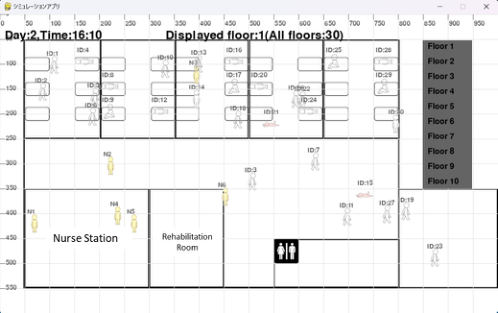
Patient Fall Distribution Simulator This section explains the developed patient fall distribution simulator. The purpose of this simulation program is to evaluate the risk of patients’ falls and fall-related incidents within hospital wards and optimize nursing system allocation. As shown in Figure 1, the simulation visually displays the hospital floor during execution, allowing real-time observation of patient and nurse
Simulation of the Effect of Nurse Staffing and Rotation on the Prevention 35
movements. Users can select any floor and monitor patient conditions and fall occurrences for each ward.
The simulation model was not based on any specific hospital but was constructed as a virtual multi-floor environment in which multiple patients and nurses are placed on each floor. Users can configure various parameters, including the number of patients per floor, the number of nurses, the total number of floors, patient fall probabilities, condition classifications, State transitions, and nurse patrol routes.
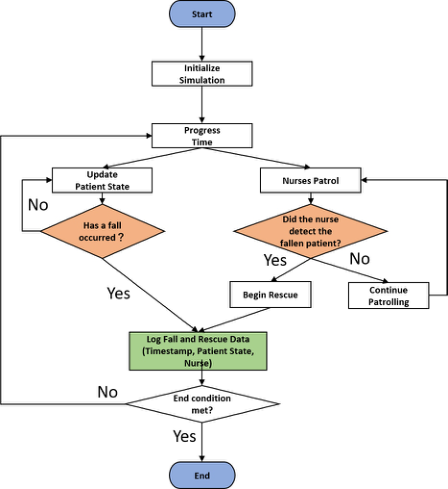
Figure 1: Display screen during simulation execution.Figure 2: Flowchart of the simulation program.
36 Iwabuchi and Okada
Each patient’s State is classified into seven categories: “Sleep,” “Sit,” “Stand,” “Slow Walk,” “Long Walk,” “Walk,” and “Fall,” and is randomly updated based on probabilities. For instance, in the “Sit” or “Stand” States, patients remain stationary near their beds, while in “Slow Walk,” they move within the patient room. In “Long Walk,”patients walk through the corridors toward restrooms or rehabilitation rooms. Patients in the “Walk” State move over a broader area, and some may even exit the floor. Fall probabilities vary depending on the State, and once a fall occurs, the patient remains in place until a nurse arrives for rescue.
As illustrated in the simulation flowchart in Figure 2, the program progresses over time, continuously updating patient States. When a fall occurs, patrolling nurses detect and assist the fallen patient. Upon detecting a fallen patient, the nurse proceeds with the rescue, and after completion, the fall time and rescue completion time are recorded, with fall duration data being output.
Each patient is categorized into one of four conditions: “Severe,” “Moderate,” “Mild,” or “Minor.” Patients with more severe conditions remain stationary for longer periods, while those with milder conditions exhibit more active behavior. These condition classifications are evenly distributed among the patients. Nurses patrol along predefined routes and proceed with rescue operations immediately upon detecting a fallen patient.
By utilizing this simulator, we can analyze the impact of different nursing system configurations on fall duration. In this study, we varied the number of nurses per floor and conducted five simulations under each condition to collect data. The output data include fall occurrence time, rescue completion time, nurse skill levels, and fall locations. These data allow for further analysis aimed at maximizing hospital cost performance.
In Japan, although there is no strict legal definition of hospital size based on the number of beds, the Ministry of Health, Labour and Welfare (MHLW) categorizes hospitals in its annual Survey of Medical Institutions into small-scale (20–99 beds), medium-scale (100–199 beds), and large-scale (200 beds or more) institutions (MHLW, 2022). This classification is widely used in health policy and facility evaluation and reflects the operational and structural characteristics of each hospital type.
In this study, the virtual hospital environment corresponds to a large- scale acute care hospital under this classification. Future work will involve incorporating more realistic architectural layouts, visibility constraints, and patrol route dynamics to better simulate spatial factors influencing fall risk and to enhance the realism and generalizability of the findings.
RESULTS
This study analyzed and evaluated the impact of changes in nursing system staffing on patient fall duration.
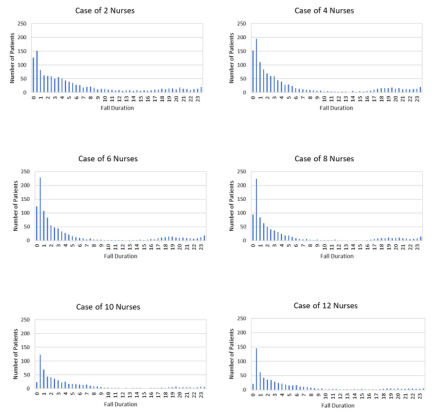
To investigate the relationship between fall duration and the number of affected patients, we set six conditions with different numbers of nurses per floor: 2, 4, 6, 8, 10, and 12. Under each condition, five simulation runs were conducted, and the average values were calculated and plotted (Figure 3). The analysis revealed that as the number of nurses increased, fall duration tended
Simulation of the Effect of Nurse Staffing and Rotation on the Prevention 37
to decrease. However, beyond eight nurses per floor, the effect became more gradual.
Figure 3: Relationship between number of nurses, fall duration, and number of patients.
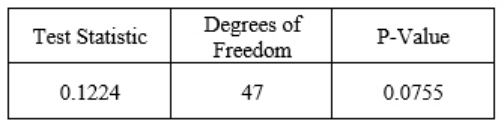
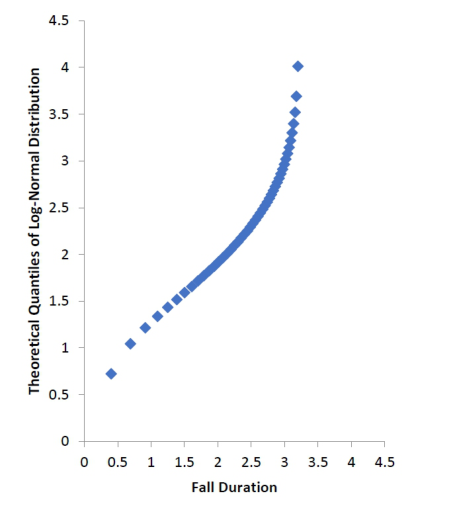
Further analysis of fall duration distribution indicated that it best fit a log-normal distribution. By applying a logarithmic transformation to fall duration and conducting a Kolmogorov-Smirnov test, we confirmed that the data fit a log-normal distribution, as the p-value exceeded 0.05 (Figure 4). Additionally, the normal probability plot (Q-Q plot) analysis (Figure 5) showed that while the central portion of the data aligned with a straight line, the upper tail exhibited curvature. This suggests that some patients experienced prolonged fall durations, leading to outlier effects.
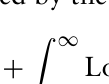
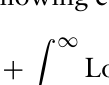
Based on these results, we modeled the relationship between the number of nurses per floor and fall duration using a log-normal distribution and evaluated cost performance by considering nurse labor costs and financial losses associated with patients’ falls and fall-related incidents. In this study, we assumed a labor cost of 3 million yen per nurse and hypothesized that as fall duration increased, the severity of incidents would also increase. Based on this, the total cost was expressed by the following equation:
Equation reproduced from the original PDF.
Where f(T; µ, σ) represents the probability density function (PDF) of fall duration T following a log-normal distribution, an Loss (T) represents the financial loss associated with fall duration T. Here, µ and σvary depending on the number of nurses N; as the number of nurses increases, detection occurs more quickly, reducing µ Minimizing this total cost serves as the first step in optimizing nurse allocation planning.
38 Iwabuchi and Okada
This study considered only the number of nurses as a variable. However, future research should incorporate additional factors such as nurse patrol routes and variations in skill levels to refine the model further.
Figure 4: Results of the Kolmogorov-Smirnov test.Figure 5: Q-Q plot for log-normal distribution.
DISCUSSION
This study revealed that as the number of nurses increased, patient fall duration decreased. In particular, when the number of nurses increased from 2 to 4 and from 4 to 6, the median fall duration significantly decreased. However, beyond 8 nurses, the reduction effect became more gradual, indicating that the benefits of additional staffing were limited. These results suggest that as the coverage area per nurse decreases, fallen patients are detected more quickly, leading to shorter rescue times. However, once a certain number of nurses is reached, further improvements become negligible.
Simulation of the Effect of Nurse Staffing and Rotation on the Prevention 39
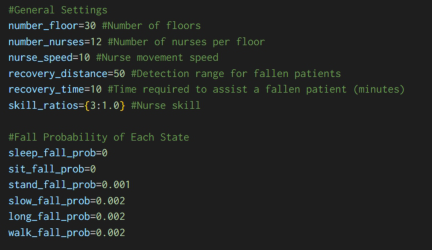
Figure 6: Example of variables in the program.
This is likely because the patrol frequency across the entire floor becomes sufficient, reaching a limit in reducing detection time.
Additionally, while the distribution of fall duration fit a log-normal distribution, some patients recorded exceptionally long fall durations. One possible reason for these outliers is that nurse patrol routes may focus on specific areas, causing delays in detecting patients located outside these routes. In particular, patients in hard-to-see areas such as deep inside patient rooms or near restrooms are at a higher risk. Furthermore, patient conditions are classified into four categories: Severe, Moderate, Mild, and Minor. More severe patients may have difficulty calling for help after a fall, leading to longer detection times by nurses. Consequently, patients with more severe conditions tend to have a higher fall risk and longer fall durations.
As a future challenge, optimizing patrol routes and implementing targeted interventions based on patient conditions should be considered to prevent prolonged fall durations.
To evaluate the effect of increasing the number of nurses on reducing fall duration, this study derived the following cost optimization equation:
Equation reproduced from the original PDF.
In this equation, increasing the number of nurses N raises labor costs, but fall-related losses Loss (T) decrease as more nurses lead to quicker detections. However, simulation results indicate that once the number of nurses exceeds a certain threshold, the reduction in µ (the mean of the log-normal distribution) slows down, diminishing the cost-saving effect of additional staffing. Considering hospital budget constraints, excessive increases in nurse staffing may reduce cost-effectiveness. Based on the findings of this study, the optimal number of nurses per floor is estimated to be around 6 to 8. Further increases in staffing are likely to incur additional costs without significant reductions in fall duration.
CONCLUSION
There have been numerous studies on preventive measures aimed at reducing the high proportion of patients’ falls and fall-related incidents among medical
40 Iwabuchi and Okada
accidents. However, existing countermeasures face two major challenges: (1) many do not consider the impact of nursing systems on fall risk, and (2) evaluating the cost-effectiveness of implementing these measures is difficult for individual hospitals.
To address these issues, this study analyzed the effect of nurse staffing levels on patient fall duration and demonstrated that appropriate nurse allocation could contribute to reducing fall risk. In particular, the study confirmed that increasing the number of nurses led to shorter fall durations; however, beyond a certain staffing level, the reduction effect became limited.
As future challenges, optimizing nurse patrol routes and incorporating simulations that consider the allocation of nurses with different experience levels will be necessary to develop more practical fall prevention strategies. Additionally, by comparing real hospital fall incident data with simulation results, the accuracy of the model can be improved, providing more practical indicators for fall prevention planning. Furthermore, to facilitate implementation in medical settings, incorporating feedback from healthcare professionals will help refine the simulation, ultimately contributing to the optimization of nursing systems tailored to each hospital’s specific needs.
REFERENCES
Aranda-Gallardo, M., Morales-Asencio, J. M., Canca-Sanchez, J. C. & Toribio-Montero, J. C. (2014) ‘Circumstances and causes of falls by patients at a Spanish acute care hospital’, Journal of Evaluation in Clinical Practice, 20, pp. 631–637. Chang, J. T., Morton, S. C., Rubenstein, L. Z., Mojica, W. A., Maglione, M., Suttorp, M. J., Roth, E. A. & Shekelle, P. G. (2004) ‘Interventions for the prevention of falls in older adults: Systematic review and meta-analysis of randomised clinical trials’, BMJ, 328, p. 20. Diccini, S., de Pinho, P. G. & da Silva, F. O. (2008) ‘Assessment of risk and incidence
of falls in neurosurgical inpatients’, Revista Latino-Americana de Enfermagem, 16, pp. 752–757. Hignett, S., Sands, G. & Griffiths, P. (2013) ‘In-patient falls: What can we learn from incident reports?’, Age and Ageing, 42, pp. 527–531. Japan Council for Quality Health Care (2020) 20th Medical Accident Information
Collection Report. Available at: https://www.med-safe.jp/pdf/report_20.pdf (Accessed: 29 January 2025). Japan Society of Fall Prevention (2022) Journal of Fall Prevention Studies, 8(3). Japan Society of Fall Prevention. Available at: http://tentouyobou.jp/content/files/gakkaishi/gakkaishi8-3.pdf (Accessed: 14 February 2025). Japan Society of Fall Prevention et al. (2023) ‘Falls and falls in care and medical settings: current status and prospects [Joint Statement]’. Available at: https://jamcf.jp/chairman/2024/chairman_240522.pdf (Accessed: 14 February 2025). Kobayashi, K., Imagama, S., Inagaki, Y., Suzuki, Y., Ando, K., Nishida, Y., Nagao, Y. & Ishiguro, N. (2017) ‘Incidence and characteristics of accidental falls in hospitalizations’, Nagoya Journal of Medical Science, 79(3), pp. 291–298.
Simulation of the Effect of Nurse Staffing and Rotation on the Prevention 41
Kobayashi, K., Kido, N., Wakabayashi, S., Yamamoto, K., Hibara, A., Tamura, M.
& Sakahara, T. (2022) ‘The incidence of falls and falls in an acute care hospital: a cross-sectional study comparing inpatient diagnosis categories’, Journal of Fall Prevention Studies, 9(3), pp. 3–11. McKechnie, D., Fisher, M. J. & Pryor, J. (2016) ‘The characteristics of falls in an inpatient traumatic brain injury rehabilitation setting’, Journal of Clinical Nursing, 25, pp. 213–222. Mikos, M., Banas, T., Czerw, A., Banas, B., Strzepek, Ł., & Curyło, M. (2021)
‘Hospital inpatient falls across clinical departments’, International Journal of Environmental Research and Public Health, 18(15), p. 8167. Milisen, K., Coussement, J., Flamaing, J., et al. (2012) ‘Fall prediction according to nurses’ clinical judgment: Differences between medical, surgical, and geriatric wards’, Journal of the American Geriatrics Society, 60, pp. 1115–1121. Ministry of Health, Labour and Welfare (2022) Survey of Medical Institutions
2022. Available at: https://www.mhlw.go.jp/toukei/saikin/hw/iryosd/22/index. html (Accessed: 15 April 2025). Morgan, V. R., Mathison, J. H., Rice, J. C. & Clemmer, D. I. (1985) ‘Hospital falls: A persistent problem’, American Journal of Public Health, 75, pp. 775–777. Morse, J. M., Black, C., Oberle, K., et al. (1989) ‘A prospective study to identify the
fall-prone patient’, Social Science & Medicine, 28(1), pp. 81–86. Nagamura, T., Yamamoto, M., Yasuda, S., Komori, T., Shinmori, K. & Ueda, M.
(2020) ‘Current status and challenges of falls and falls in hospitalized patients in our hospital for the year 2018’, Kyoto Red Cross Hospital Journal, 41, pp. 30–45. Oliver, D., Connelly, J. B. & Victor, C. R. (2007) ‘Strategies to prevent falls and fractures in hospitals and care homes and effect of cognitive impairment: systematic review and meta-analyses’, BMJ, 334(7584), p. 82. Oliver, D., Papaioannou, A., Giangregorio, L., et al. (2008) ‘A systematic review and
meta-analysis of studies using the STRATIFY tool for prediction of falls in hospital patients: how well does it work?’, Age and Ageing, 37, pp. 621–627. Sato, N., Hase, N., Osaka, A., Sairyo, K., & Katoh, S. (2018) ‘Falls among hospitalized patients in an acute care hospital: analyses of incident reports’, The Journal of Medical Investigation, 65, pp. 81–84. Staggs, V. S., Mion, L. C. & Shorr, R. I. (2015) ‘Consistent differences in medical
unit fall rates: Implications for research and practice’, Journal of the American Geriatrics Society, 63, pp. 983–987. Wong, J. S., Brooks, D. & Mansfield, A. (2016) ‘Do falls experienced during in-patient stroke rehabilitation affect length of stay, functional status, and discharge destination?’, Archives of Physical Medicine and Rehabilitation, 97(4), pp. 561–566.
LISTED IN THE AHFE DIGITAL BOOKSTORE CATALOGUE
Explore the complete digital volume
Safety Management and Human Factors
Read this individual research paper free through the original publisher, or explore the full digital proceedings book.
ISBN 978-1-964867-65-6
Explore this ISBN in the AHFE Bookstore ↗Listed in the July 2026 bookstore catalogue; search by ISBN to confirm current availability · Digital book purchase optional