Francesca Massa, Dario Farese, Giuseppe Di Gironimo, Andrea Tarallo (2025). Augmented Reality for Manual Manufacturing Operations: Training, Assistance, and Usability Evaluation. In: Human Factors in Design, Engineering, and Computing. AHFE Open Access, vol. 199, pp. 1024–1034. https://doi.org/10.54941/ahfe1006915
Digitalization represents a strategic enabler of innovation in industrial processes, particularly within complex and safety-critical domains. In the transition toward Industry 4.0, Augmented Reality (AR) demonstrates considerable potential to reshape work organization by enhancing efficiency and ensuring higher product quality. AR technologies can provide operators with context-aware instructions, interactive visual guidance, and improved operational control during cognitive and technically demanding tasks, such as electrical wiring assembly in the aerospace sector. To investigate the actual potential of video see-through devices, a dedicated AR application was developed for Meta Quest 3. The case study encompassed the digitization of technical documentation, the integration of three-dimensional models, and the design of an interactive User Interface (UI). The Usability of the application and its impact on Cognitive Load (CL) were assessed through controlled laboratory experiments involving two groups: one employing Meta Quest 3 and the other relying on conventional paper-based documentation. The results provide empirical evidence on the practical relevance and limitations of video see-through AR in supporting assembly operations. Specifically, the study revealed that the video see-through mode of Meta Quest 3 presents certain limitations and imposes a higher CL on users, although it also elicited high levels of user satisfaction regarding the use of AR technology. These results underscore the necessity of further optimizing AR hardware and interaction design to mitigate cognitive demands, while confirming the promising role of AR in advancing industrial training and assembly processes.
Digitalization is one of the most transformative phenomena profoundly influencing society and economy. Main element of that process are innovative technologies that optimize production processes and flows, also redefining ways of working, learning, and interacting. In the industrial sector, it goes hand in hand with automation and the principles of Industry 4.0. The goal is not to radically transform existing production systems, but to integrate advanced technologies that can achieve increasingly demanding economic,
Augmented Reality for Manual Manufacturing Operations 1025
operational, and sustainability targets (Ghobakhloo, 2020; Horvat et al., 2019). These technologies are introduced by the Industry 4.0 paradigm that promotes greater interconnection of systems and its purpose is to make human-machine collaboration central; this improves efficiency, quality of work, and professional growth opportunities (Nardo et al., 2020; Vaidya et al., 2018). Interest in these is growing because they allow companies to increase competitiveness, optimize processes, and reduce costs, thanks also to the use of real-time data (Cannavacciuolo et al., 2023).
The main innovative technologies include:
1. IoT, for real-time monitoring and control (Khan & Javaid, 2022); 2. AI and Machine Learning, for process optimization (Javaid et al., 2022); 3. Cloud computing, for scalable data access and management (Parast et al., 2022); 4. Big Data and Analytics, for rapid and informed decisions (Li et al., 2019); 5. Robotics and automation, to increase productivity and safety (Ribeiro et al., 2021); 6. Additive manufacturing, for rapid and customized prototypes (Dilberoglu et al., 2017); 7. AR and Virtual Reality (VR), for design, maintenance, and training (Machała et al., 2022; Masood & Egger, 2019; Sharma et al., 2021); 8. Blockchain, for traceability in the supply chain (Bale et al., 2022).
Among these, our case study focuses on the use of AR technology to verify its usability and feasibility in the aerospace sector, specifically regarding training and assistance to operators involved in the assembly of electrical wiring. The integration of new technologies requires technical, economic, organizational and sustainability compatibility analyses, a reference model is the Technology Adoption Lifecycle (TALC) discussed by (Akkoyun & Demirkaya, 2022), which describes the technology-adoption phases (i.e. innovators, early adopters, early majority, late majority, laggards). Within the aerospace sector, AR adoption is positioned between early and early majority adoption, with experiments already underway but still little systemic diffusion (Jalo et al., 2022). An AR application can support overcoming the “chasm” between the first two phases, thanks to benefits such as visual support for operators, error reduction, real-time tracking and diffusion of digital culture. In addition, digital transformation requires workers to have a mix of hard skills (technical skills) and soft skills (problem solving, creativity, adaptability). AR technology can support low-skilled and semi- skilled workers, facilitating learning and assistance during processes. The combination of technical and transversal skills is crucial to adapt to changes and promote a culture of innovation (Janis & Alias, 2018). Moreover, a key role is played by aerospace electrical wiring, which connects and powers all the systems. The introduction of Fly-by-wire technology has been revolutionary, replacing mechanical systems with electronic signals, with advantages in terms of weight, efficiency, safety, and design freedom (Bohra & Dharmadhikari, 2023). Electrical wiring assembly is still a manual and poorly automated process, relying on technical documents (e.g., Mylar, wire
lists, part lists) and highly specialized operators. The phases range from component picking to final testing. Although it guarantees low waste, this method is slow, inflexible, and complex to update. The main critical issues include: i) heavy reliance on specialized labor; ii) difficulties in training and transferring know-how; iii) inefficiencies due to long lead times; iv) poor progress tracking; v) complexity in replacing a new operator in the event of work interruptions. These limitations make it urgent to develop innovative digital solutions to optimize the process and increase overall productivity. Considering this, we hypothesized that an emerging innovative technology such as AR could be used. To do this, we first analyzed the production process, determining the state of the art, with a specific focus on AR technologies, this section represents the second section of the paper. The third section focuses on the case study and the relationship with the research question. Furthermore, this part regards the experimental tests conducted, an explanation of how the AR application was developed, and the selected parameters obtained during the experimental campaign. The fourth and final section analyzes the results and discusses the conclusions and future directions.
STATE OF THE ART Electrical wiring is a crucial component in numerous industrial sectors, such as energy, telecommunications, automotive, medical, and aerospace. The global electrical wiring market, estimated at approximately $90 billion in 2024, is expected to grow to $150 billion by 2034, driven by increasing technological complexity and the growing demand for advanced electronic systems. In the aerospace sector, electrical wiring production and assembly are traditionally carried out manually, using paper documentation, physical panels, and the support of highly specialized operators (Trommnau et al., 2019). An initial evolution was introduced by the digitization of documentation, with the replacement of paper manuals with PDF files and CAD models that can be consulted via tablets or interactive screens. This has improved traceability, reduced errors, and speeded up access to information. For example, Airbus has experimented with the introduction of tablets in production, achieving a 20% reduction in consultation times. At the same time, we have witnessed the diffusion of advanced technological solutions: interactive visualization systems such as EasyWiring by Komex Laselec; laser projections to support assembly, such as LightGuide, which has demonstrated reductions of up to 50% in cycle times; pick-to-light systems, such as those by Henshaw; and machinery for partial automation, such as the Komax Zeta 630, capable of wiring complex bundles thus reducing processing times (Huarte et al., 2023). More recently, research centers such as TECNALIA have introduced collaborative robotic solutions, based on the use of so-called “cobots” (Kuyka LBR iiwa), while companies such as Q5D are aiming for complete automation of the process, although fully autonomous systems are not yet able to handle all the operations to be performed. In recent years, the use of immersive technologies such as AR, VR and Mixed Reality (MR) has opened up new development prospects. Significant results have been achieved by Boeing, which recorded a 33%
Augmented Reality for Manual Manufacturing Operations 1027
reduction in electrical wiring assembly times using Microsoft Hololens, and a 75% reduction in training times using VR. Similarly, Airbus reported an 80% reduction in design validation times and a cut of approximately one third in manufacturing times, while Lockheed Martin and NASA highlighted reductions of up to 90% in production times during the construction of the Orion spacecraft (Dudley et al., 2023). Italian companies, such as the Italian Air Force and Leonardo, are also investing in immersive solutions for personnel training, advanced maintenance and operational simulation, consolidating the role of digital technologies in the transformation process of the aerospace sector. Therefore, AR is growing, offering distinct advantages for wiring operations: it overlays digital instructions directly onto physical components, allowing technicians to follow step-by-step guidance without diverting their attention to separate screens or manuals and enabling the traceability of operations.
Figure 1: Differences between optical and video see through displays (Kore, 2020).
This real-time visualization improves accuracy, shortens learning curves, reduces the chance of assembly errors. Furthermore, AR enables remote assistance and on-the-spot updates to procedures, enhancing flexibility and supporting continuous improvement in complex, safety-critical environments such as aerospace manufacturing. Devices mainly used by AR are wearable viewers that are divided into two main types (Figure 1): i) optical see- through: user can observe the environment that surrounds it through a lens; ii) video see-through (VST): user can observe the environment that surrounds it through a digital camera that streams the view real time. Optical see- through is an already well-known technology in terms of potentials and limits for industrial applications (Evans et al., 2017; Hoover, 2018). The study’s guide research question is: “Can a VST application be effectively used to assist operators in the assembly of aerospace wire harnesses?”
CASE STUDY Objectives
The academic case study aims to evaluate the effectiveness and usability of an AR application developed by our team in Unity for the Meta Quest 3,
designed to support the training and assistance of operators involved in the assembly of aerospace electrical wiring. “Can a VST application be effectively used to assist operators in the assembly of aerospace wire harnesses?” In light of this question, we want to verify if a see-through video AR can be used and if this change can bring significant improvements instead of the traditional methodology.
Methodology
In our study, we compare the use of AR video see-through technology with the traditional method in electrical wiring assembly and training in order to evaluate its potentials and limits. The challenge was to understand if it would be feasible to use this kind of device for that scope. To do this, an experimental campaign was conducted. A group of Italian students and professors from the Department of Industrial Engineering at the University of Naples Federico II tested the application in the VR laboratory, interacting via hand tracking and completing a final questionnaire on usability, instruction comprehension, CL, and critical issues. The age range of the participants is between 20 and 60 years old, 70% of the participants are male while the remaining 30% are female. 50% of the participants are professors, the other 50% of them are students. Before the activity, each user received a paper document presenting the experiment; participants were called in random order.
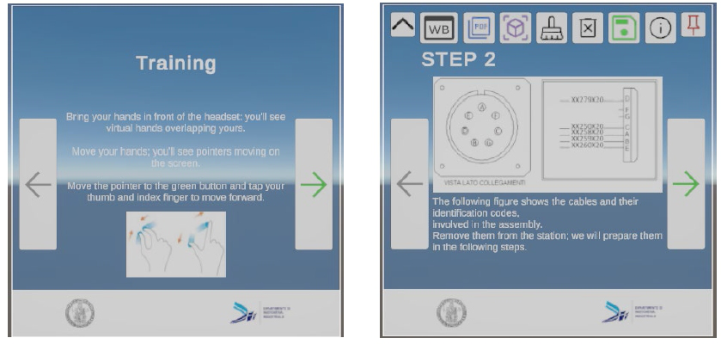
Figure 2: Developed software screenshots.
Participants were divided into two groups. The first group, after a period of training with the headset, performed a simulation of the task supported by the Meta Quest 3 device and the developed application (Figure 2). During the training, it was asked to do some tasks in a dedicate section of the developed app. Firstly It was allowed the participants to use the gesture of “pinch”, necessary to interact with the UI’s buttons. The last task was to see the complete UI with all the functions, specifically the use of 3D spawn element function, letting the user play and understand the way to interact with the 3D virtual object. Training part lasted for every participant at least
Augmented Reality for Manual Manufacturing Operations 1029
three minutes. The second group instead performed the simulation supported by traditional drawings and paper documentation. At the end of the test, both the groups were asked to complete the same questionnaire. The planned sample was 14 users, students and professors, recruited on a voluntary basis from the Department of Industrial Engineering at the University of Naples Federico II. Participation involves completing the simulation in one of the two modes and anonymously completing a post-experience questionnaire, which lasts approximately 15–20 minutes. Unity engine was chosen for the application’s development due to its flexibility, C# programming, extensive documentation, and community support (Morse, 2021). The development process also emphasized rigorous testing and iterative refinement (Ruparelia, 2010). Each feature was validated directly on the Meta Quest 3 to ensure stability, intuitive interaction with hand tracking, and optimal performance in real operating conditions (Hillmann, 2021). This approach allowed the team to promptly identify and resolve usability issues, guaranteeing seamless and reliable AR experience for wiring assembly tasks. In this study, a multimodal approach was adopted to evaluate the usability and ergonomics of the developer AR app selecting specific quantitative and qualitative tools (Dahlke & Drzewiecka, 2015; Speicher, 2022). For usability, in line with the ISO 9241–11 attributes (effectiveness, efficiency, satisfaction), three main indicators were chosen: i) Number of errors, to measure the effectiveness of the system in guiding the user to complete the task; ii) Time spent, as a metric of efficiency; iii) System Usability Scale (SUS), a standardized ten-question questionnaire, adapted to the case study to evaluate perceived satisfaction (Arifin et al., 2018; Korkut et al., 2021; Pranoto et al., 2017; Stefanidi et al., 2022). For ergonomics the analysis focused on CL, a key factor in immersive environments (Kennedy et al., 1993; Lu et al., 2022). The NASA Task Load Index (NASA-TLX) was therefore adopted, in its advanced version for XR, which measures six dimensions of workload (mental, physical, and temporal demand, performance, effort, and frustration). Also in this case, the questionnaires were partially modified to adapt to the experimental context, specifically to adapt them to both groups (Hart & Staveland, 1988; Vidal-Balea et al., 2024). The experiment was set up as a balanced factorial design with repeated measures (within-subject), with randomization of the order of the tests and sufficient replication to ensure statistical significance. This setup allows for the application of paired tests (t-test or Wilcoxon) for the comparison between traditional and AR modalities, obtaining solid quantitative evidence on usability indices and cognitive load (DOE Simplified, s.d.; Jeffri & Rambli, 2021). The expected benefits of this study are: i) More engaging and effective training, with 3D instructions that reduce errors and learning times, ii) Real-time operational assistance, improving work quality and efficiency, iii) Development of digital and technological skills for operators and students, iv) Strengthening collaboration between universities and industry, v) Scientific contribution, thanks to useful data for evaluating the use of augmented reality in the industrial sector. In summary, the trial offers high educational and research value with negligible risks, ensuring the safety, well-being, and anonymity of participants.
Results and Discussion
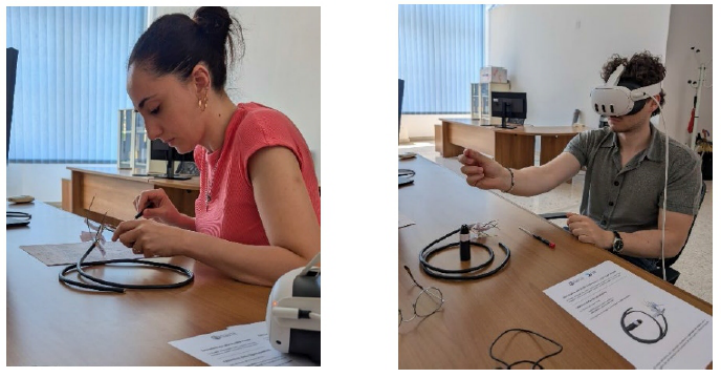
As mentioned, the tests were conducted in the Department of Industrial Engineering and involved 14 participants, divided into two groups of seven people each (Figure 3). Group A performed the test using the Meta Quest 3 headset, while Group B followed the traditional method.
Figure 3: Users during experimental campaign. Left: group B; right: group A.Table 1: Experimental campaign results about users’ time taken, errors, SUS questionnaire results and NASA-TLX cognitive load results obtained from both groups.
Table available in the original PDF paper.
User Group Time Errors SUS Score NASA-TLX Score P1 A 378” 0 33,00 54,00 P2 A 311” 1 35,00 47,00 P3 A 478” 1 32,00 37,00 P4 A 534” 0 26,00 48,00 P5 A 399” 0 30,00 78,00 P6 A 331” 0 29,00 50,00 P7 A 252” 1 31,00 16,00
P1 B 152” 0 26,00 18,00 P2 B 115” 0 24,00 16,00 P3 B 123” 0 25,00 21,00 P4 B 106” 1 22,00 27,00 P5 B 98” 0 25,00 16,00 P6 B 221” 2 25,00 17,00 P7 B 176” 0 21,00 24,00
(Table 1) shows the data collected during the tests. It includes the execution times (seconds), the number of errors made, and the scores from the two questionnaires, SUS and NASA-TLX (sum of the scores for the
Augmented Reality for Manual Manufacturing Operations 1031
answers given to each question). These parameters were chosen to evaluate Usability: i) Efficiency (Execution time); ii) Effectiveness (Number of errors); iii) Satisfaction (SUS Questionnaire) and Ergonomics: Cognitive Load (NASA-TLX Questionnaire).
Table 2: Average results and statistical analysis results from each group.
Table available in the original PDF paper.
Variables Group A Average Group B Average t-Test Results Time 383,29" 141,57" 0,00006564 Errors 0,43 0,43 1,00000000 SUS Score 2,86 2,40 0,00338184 NASA-TLX Score 7,86 5,67 0,10916113
To evaluate the results (Table 2), we chose to average all execution times and all errors for each group. The questionnaires and their scores were analyzed differently; in fact, they differ in some areas due to their adaptation to the type of group to which they are administered. To evaluate both scores consistently, we calculated the average score for each user based on the number of questions in the questionnaire, and then averaged the averages obtained for each user for each group.
To verify whether the differences between the meanings of the two groups were significant, the student t-test was used (Table 2), a statistical technique that compares the meanings of two samples to establish whether the observed variations are real or due to chance. The test starts from the null hypothesis (absence of difference) and calculates a “t” value, which takes into account the variability of the data and the number of samples, from which the p-value is obtained: if this is lower than the conventional threshold of 0.05, the difference between the means is considered statistically significant (Mishra et al., 2019). Statistical analysis revealed that execution time differed significantly between the two modes, with the traditional approach proving more efficient than the headset. It seems reasonable to believe that execution time was higher for group A because of the low quality of video see-through, but another key factor could be participant’s manual skill, that unfortunately was not assessed before the experiments. In terms of errors, as expected, no meaningful difference emerged, indicating that both methods were equally effective. User satisfaction, measured through the SUS questionnaire, was significantly higher for the headset experience, that shows interests and easy to use of this innovative technology. As expected, cognitive load, which was assessed with the NASA-TLX, was slightly greater with the headset but not to a statistically significant degree. During testing, most participants in Group A noted several advantages: i) high levels of engagement thanks to the 3D instructions and ease of use, thanks to the dashboard of features integrated into the UI; ii) immediate access to real-time information via the UI; iii) comfort while using the headset, even for those who wore glasses. The most encountered disadvantages were: i) poor resolution of the video see-through; ii) poor calibration of the view with movements within 30 centimetres. These considerations reflect the test results. They are significant but cannot be considered conclusive as they are influenced by at least two
significant factors: i) the small sample size; ii) the variability of the users’ manual skills, many of whom had no previous experience in assembly activities.
CONCLUSION
In this study, we have discussed the importance and complexity of aerospace wiring assembly operations, studying the main methodologies adopted over the years, both traditional and technologically advanced, a specific focus was placed on emerging innovative technologies. The objective of this study was to explore and test the use of a VST headset, currently available on the market and with promising prospects for future development in industrial applications. The research question guiding out study was: “Can a VST application be effectively used to assist operators in the assembly of aerospace wire harnesses?” Given the progressive abandonment of devices specifically designed for the industrial sector, such as Microsoft HoloLens, attention was focused on more accessible and supported commercial solutions, such as the Meta Quest 3 a VST headset. The experimental campaign was conducted with full awareness of the hardware and software limitations that could be encountered, with the hope that the positive outcomes could serve as a starting point for future developments. The results highlighted some critical issues, particularly related to the video see-through resolution and the limited calibration of the augmented reality vision system, factors that negatively impacted execution times and the cognitive load perceived by users during the experiment. Further studies will therefore be necessary to further investigate the findings and eliminate the limitations encountered. On the other hand, despite the challenges related to the visual quality of the VST devices, users expressed overall positive feedback, expressing curiosity and interest in using these innovative tools. This suggests potential future development in the use of VST devices in industrial settings, provided that significant technological improvements are introduced and adequate safety measure are adopted, for example against a sudden loss of video signal.
REFERENCES
Akkoyun, B., & Demirkaya, H. (2022). Strategic Status of Technology Management and Enterprises for the Technology Adoption Lifecycle. OPUS Journal of Society Research, 19(47), 437–447. https://doi.org/10.26466/opusjsr.1106868. Bale, A. S., Purohit, T. P., Hashim, M. F., & Navale, S. (2022). Blockchain and
Its Applications in Industry 4.0. In A Roadmap for Enabling Industry 4.0 by Artificial Intelligence (pp. 295–313). John Wiley & Sons, Ltd. https://doi.org/ 10.1002/9781119905141.ch16. Bohra, K. S., & Dharmadhikari, Y. S. (2023). History of Fly by wire, the Tech That Expanded Human Horizons in Aviation. 2023 8th IEEE History of Electrotechnology Conference (HISTELCON), 46–51. https://doi.org/10.1109/ HISTELCON56357.2023.10365861. Cannavacciuolo, L., Ferraro, G., Ponsiglione, C., Primario, S., & Quinto, I.
(2023). Technological innovation-enabling industry 4.0 paradigm: A systematic literature review. Technovation, 124, 102733. https://doi.org/10.1016/ j.technovation.2023.102733.
Augmented Reality for Manual Manufacturing Operations 1033
Dilberoglu, U. M., Gharehpapagh, B., Yaman, U., & Dolen, M. (2017). The Role of Additive Manufacturing in the Era of Industry 4.0. Procedia Manufacturing, 11, 545–554. https://doi.org/10.1016/j.promfg.2017.07.148. Evans, G., Miller, J., Pena, M. I., MacAllister, A., & Winer, E. (2017). Evaluating the Microsoft HoloLens through an augmented reality assembly application. Degraded Environments: Sensing, Processing, and Display 2017, 10197, 282–297. https://doi.org/10.1117/12.2262626. Ghobakhloo, M. (2020). Industry 4.0, digitization, and opportunities for sustainability. Journal of Cleaner Production, 252, 119869. https://doi.org/ 10.1016/j.jclepro.2019.119869. Hoover, M. (2018). An evaluation of the Microsoft HoloLens for a manufacturing-
guided assembly task. https://dr.lib.iastate.edu/handle/20.500.12876/30561. Horvat, D., Kroll, H., & Jäger, A. (2019). Researching the Effects of Automation and Digitalization on Manufacturing Companies’ Productivity in the Early Stage of Industry 4.0. Procedia Manufacturing, 39, 886–893. https://doi.org/10.1016/ j.promfg.2020.01.401. Jalo, H., Pirkkalainen, H., Torro, O., Pessot, E., Zangiacomi, A., & Tepljakov, A. (2022). Extended reality technologies in small and medium- sized European industrial companies: Level of awareness, diffusion and enablers of adoption. Virtual Reality, 26(4), 1745–1761. https://doi.org/10.1007/ s10055–022-00662–2. Janis, I., & Alias, M. (2018). A Systematic Literature Review: Human Roles,
Competencies And Skills In Industry 4.0. European Proceedings of Social and Behavioural Sciences, Technology&Society: A Multidisciplinary Pathway for Sustainable Development. https://doi.org/10.15405/epsbs.2018.05.84. Javaid, M., Haleem, A., Singh, R. P., & Suman, R. (2022). Artificial Intelligence Applications for Industry 4.0: A Literature-Based Study. Journal of Industrial Integration and Management, 07(01), 83–111. https://doi.org/10.1142/ S2424862221300040. Khan, I. H., & Javaid, Mohd. (2022). Role of Internet of Things (IoT) in Adoption of Industry 4.0. Journal of Industrial Integration and Management, 07(04), 515–533. https://doi.org/10.1142/S2424862221500068. Khoda Parast, F., Sindhav, C., Nikam, S., Izadi Yekta, H., Kent, K. B., & Hakak, S.
(2022). Cloud computing security: A survey of service-based models. Computers & Security, 114, 102580. https://doi.org/10.1016/j.cose.2021.102580. Kore. (2020, febbraio 20). Understanding the different types of AR devices. Medium.
https://uxdesign.cc/augmented-reality-device-types-a7668b15bf7a. Li, G., Tan, J., & Chaudhry, S. S. (2019). Industry 4.0 and big data innovations. Enterprise Information Systems, 13(2), 145–147. https://doi.org/ 10.1080/17517575.2018.1554190. Machała, S., Chamier-Gliszczy´nski, N., & Królikowski, T. (2022). Application of AR/VR Technology in Industry 4.0. Procedia Computer Science, 207, 2990–2998. https://doi.org/10.1016/j.procs.2022.09.357. Masood, T., & Egger, J. (2019). Augmented reality in support of Industry
4.0—Implementation challenges and success factors. Robotics and Computer-Integrated Manufacturing, 58, 181–195. https://doi.org/10.1016/ j.rcim.2019.02.003. Nardo, M., Forino, D., & Murino, T. (2020). The evolution of man– machine interaction: The role of human in Industry 4.0 paradigm. Production & Manufacturing Research, 8(1), 20–34. https://doi.org/10.1080/ 21693277.2020.1737592.
Ribeiro, J., Lima, R., Eckhardt, T., & Paiva, S. (2021). Robotic Process Automation and Artificial Intelligence in Industry 4.0–A Literature review. Procedia Computer Science, 181, 51–58. https://doi.org/10.1016/j.procs.2021.01.104. Sharma, A., Mehtab, R., Mohan, S., & Shah, M. K. M. (2021). Augmented reality –
an important aspect of Industry 4.0. Industrial Robot: The International Journal of Robotics Research and Application, 49(3), 428–441. https://doi.org/10.1108/ IR-09–2021-0204. Vaidya, S., Ambad, P., & Bhosle, S. (2018). Industry 4.0 – A Glimpse. Procedia Manufacturing, 20, 233–238. https://doi.org/10.1016/j.promfg.2018.02.034.
LISTED IN THE AHFE DIGITAL BOOKSTORE CATALOGUE
Explore the complete digital volume
Human Factors in Design, Engineering, and Computing
Read this individual research paper free through the original publisher, or explore the full digital proceedings book.
ISBN 978-1-964867-75-5
Explore this ISBN in the AHFE Bookstore ↗Listed in the July 2026 bookstore catalogue; search by ISBN to confirm current availability · Digital book purchase optional