Lucia Botti, Chiara Arletti, Monica Bonavita, Francesco Mancini, Riccardo Melloni, Mauro Rebecchi, Ciro Ruggerini, Rosa Sammarco (2025). Inclusive Ergonomics in Manufacturing Processes: A Methodological Proposal for the Participation of People with High Levels of Support Needs in Workplaces. In: Human Factors in Design, Engineering, and Computing. AHFE Open Access, vol. 199, pp. 1820–1830. https://doi.org/10.54941/ahfe1006993
Publisher statistics will load when you open Metrics.
AHFE OPEN ACCESS OPEN ACCESS CONFERENCE PROCEEDINGS PAPER
Inclusive Ergonomics in Manufacturing Processes: A Methodological Proposal for the Participation of People with High Levels of Support Needs in Workplaces
Inclusive ergonomics represents an advanced frontier of ergonomic research, aimed at designing work environments and processes that embrace human diversity, with particular attention to individuals with high levels of support needs. This paper presents the results of an applied research project conducted in collaboration between the Department of Engineering “Enzo Ferrari” at the University of Modena and Reggio Emilia, a specialized center for people with complex support needs, and a manufacturing. The objective of the research was to develop and test an operational methodology to support the inclusion of workers with high support needs within industrial production processes, using an approach grounded in the principles of inclusive ergonomics and human factors. Five factors are proposed in the design of an inclusive workplace, i.e. time, space, learning, role and self-esteem. The findings highlight that the inclusion of people with high levels of support needs, when supported by appropriate ergonomic design, employee training, and a favorable organizational context, can generate significant benefits not only for the individuals directly involved but for the entire production system. Notable improvements were observed in work quality, team cohesion, and the perceived meaning and value of work among employees. Furthermore, the adoption of inclusive practices aligns with corporate social responsibility and sustainability goals, strengthening the ethical and innovative identity of the partner company.
Inclusive Ergonomics in Manufacturing Processes: A Methodological Proposal 1821
INTRODUCTION
Inclusive Ergonomics Inclusive ergonomics represents a frontier of ergonomic research that integrates human diversity into the design of work environments and processes. This research field focuses on integrating the diverse needs of individuals, particularly those with disabilities, into workplace design within the framework of Industry 5.0. In fact, this new industrial paradigm emphasizes not only technological advancement but also the essential human-centric considerations that drive productivity and inclusivity in the workplace. The concept of inclusive ergonomics adds significant value to the design of tasks and workspaces, especially regarding individuals with disabilities. Also, research indicates that the successful implementation of participatory ergonomics can help identify barriers and facilitators that are crucial for developing inclusive practices (Driessen et al., 2010). Driessen et al. highlighted the challenges companies face, including high production pressures and inadequate management commitment, which can hinder the integration of ergonomics into the task design process. This indicates the need for robust strategies that ensure workplaces are designed meeting the human capabilities, and ensuring inclusivity and comfort for all employees. The importance of equity in ergonomic practices is underscored by various studies highlighting the relationship between ergonomic design and inclusive work environments. In 2020, Wooldridge et al. discussed implications for fostering inclusivity within ergonomic research, which can lead to innovative design practices that cater to the diverse workforce of the future (Wooldridge et al., 2020). This supports the tenets of Industry 5.0, which strive for collaborative human-technology interaction tailored for all abilities.
Inclusive Workplaces Designing work environments and tasks based on the characteristics of individuals, including those with high levels of support needs, is one of the main goals of inclusive ergonomics. This approach recognizes that effective participation in work is not solely a matter of physical access, but of meaningful engagement tailored to personal abilities, preferences, and support requirements. In 1982, North and Rohmert discussed the importance of adapting job roles through systematic analysis to meet the specific needs of disabled workers (North and Rohmert, 1982). Today, this principle is more relevant than ever, especially within the framework of Industry 5.0, which promotes human-centric innovation and social sustainability. By designing tasks and environments that reflect the diversity of human functioning, organizations can realize real inclusion, improve performance, and create workplaces that are resilient and equitable. This requires not only technical adaptation but also a strong commitment by employers and employees, including a cultural shift that values difference as a source of strength and innovation.
This paper presents the outcomes of a collaborative applied research project between the Department of Engineering “Enzo Ferrari” at the University of Modena and Reggio Emilia, ASP Ghirlandina Modena (a center
for individuals with high level of support needs), and a manufacturing company situated in Modena, Italy. The aim was to develop and test a methodology for the inclusion of people with high level of support needs in industrial production contexts, aligning with the principles of Industry 5.0 and human-centric innovation. Five factors are proposed in the design of an inclusive workplace, i.e. time, space, learning, role and self-esteem. Also, the proposed methodology aims to set out the rationale for a new model of vocational participation for adults with disabilities and high support needs. Such rationale is the Catalogue of Opportunities (CO), a spectrum of job opportunities for these people.
The Sustaining Philosophy The idea of creating an actual catalogue of job opportunities has gradually taken shape, grounded in the years of work experience accumulated by the professionals of the ASP Ghirlandina Modena. These experiences have involved individuals with disabilities who are highly dependent on support and therefore unable to access the open labour market. Nevertheless, such individuals are able to take part in work-related activities within mainstream but supportive workplaces. The goal is not the production of added economic value (i.e. income), but rather the development of a role, a sense of belonging, and therefore the acquisition of a positive sense of self. The CO is grounded in the principles of inclusive ergonomics, which emphasize accessibility, usability, and equity in workplace design. Following the CO model developed by ASP Ghirlandina, the research challenges traditional segregated approaches to disability and work, proposing instead a framework based on personal recovery, zero-exclusion, and the place-and-train logic. The philosophy behind the idea of the CO consists of five main pillars, which are the notion of recovery, the diagnosis and adaptation to the workplace, the zero-exclusion principle, the shift from the “train and place” logic to a “place and train” approach, the context as educator and the value of an inclusive workplace. First, the notion of recovery means that the social role is more significant than the economic gain obtained from the job. In this approach, personal recovery (Shanks et al., 2013)replaces the term cure in reference to psychiatric disorders or conditions regarding individuals with high support needs. In fact, personal recovery is a multidimensional construct that encompasses: the capacity to build social relationships (Connectedness); the cultivation of hope and optimism (Hope); the development of one’s own identity (Identity); the ability to construct meaning and pursue purpose (Meaning and purpose); and the capacity to influence one’s own care context (Empowerment). Hence, participation in work activities within mainstream community settings can actively support processes of personal recovery. The second pillar focuses on the role of the diagnosis and the adaptation to the workplace. This connection leads to an impossible prediction. The severity of symptoms does not determine the level of social and occupational functioning. Motivational, cultural, environmental, and social factors are equally, if not more, important than symptomatology. Hence, a welcoming and supportive work climate can substantially enhance motivational factors.
Inclusive Ergonomics in Manufacturing Processes: A Methodological Proposal 1823
This means that work motivation is more important than diagnosis. The third pillar is based on the zero-exclusion principle. This principle is embedded within the Individual Placement and Support (IPS) model for supporting employment of persons with mental health disorders in the open labour market (Fioritti and Berardi, 2017; Rizza and Fioritti, 2020). According to IPS, the guiding criterion for employment support in the open labour market is motivation, i.e. the individual’s expressed desire to engage in a work experience. No one should be excluded a priori on the basis of diagnosis. Hence, if this principle holds true for the open labour market, it is even more relevant for individuals who seek participation in work- related activities aimed at building a role, rather than receiving a wage. The fourth pillar reverses the train-and-place logic, promoting a place-and-train approach. Traditional vocational pathways for people with mental health disorders have typically involved a preliminary phase of training, followed by later entry into the labour market, i.e. the train and place logic. An alternative is to begin with direct placement in a workplace, followed by assessment and adaptation of both the individual and the context itself, i.e. the place and train approach. The fifth pillar sets the the mainstream context as educator (Colleoni, 2016; Saraceno, 1995). Ordinary community settings provide a more effective pedagogical context than any sheltered workshop. They allow for genuine interpersonal exchanges and interactions in real-life environments. They foster the weaving of authentic relationships and bonds between real people, leading to vital enrichment. Hence, fragile or vulnerable individuals, when placed in ordinary workplaces, enrich their own humanity. Finally, the inclusive workplace creates value and benefits for enterprises. In fact, the adoption of Diversity, Equity, and Inclusion (DEI) principles promotes innovation and creativity, while improving the organizational performance, the attraction and retention of talent, and contribute to a healthier workplace climate. These benefits occur because an inclusive work environment is one in which individuals feel valued and respected regardless of their personal characteristics. Also, employees in such environments are more likely to be creative and effective in their roles.
METHODOLOGY
The proposed methodology for the effective inclusion of people with high support needs in workplaces consists of five integrated phases:
1. Assessment of Capabilities: Evaluation of individual potential through interdisciplinary collaboration between educators and clinicians.
This initial phase involves a comprehensive evaluation of the individual potential of participants with severe disabilities. The assessment is conducted through interdisciplinary collaboration among educators, clinicians, occupational therapists, and engineers. The goal is to identify not only limitations but also strengths—cognitive, motor, emotional, and relational—that can be leveraged in a work context. This phase emphasizes the person’s desire and life project, aiming to build a
meaningful role within the workplace rather than focusing solely on productivity (Orsolini and Ruggerini, 2022); 2. Task Mapping and Compatibility Analysis: Identification of suitable tasks within production processes, based on ergonomic feasibility and cognitive/emotional compatibility.
In this phase, the production processes of the host company are analyzed to identify tasks that are compatible with the participants’ capabilities. Ergonomic feasibility is assessed in terms of physical demands, cognitive complexity, pace, social interactions, and accessibility of tools and environments. The result is a task map that highlights activities that can be performed safely, effectively, and meaningfully, minimizing the risk of overload or exclusion; 3. Preparation of the Industrial Context: Meeting with the company top management and the company occupational physician.
Before the inclusion process begins, it is essential to prepare the organizational environment. Meetings are held with top management, the company’s occupational physician, and HR representatives to share the project’s objectives, clarify support mechanisms, and define any necessary organizational adjustments. This phase also serves to gather initial concerns, expectations, and questions from company stakeholders, fostering a climate of openness and shared responsibility; 4. Training of Company Employees: Delivery of inclusive ergonomics training to foster awareness, sensitivity, and practical skills for supporting inclusion.
Employee training is a key component of successful inclusion. The training program is based on inclusive ergonomics principles and aims to develop relational skills, awareness of diversity, observational abilities, and facilitation strategies. It includes practical examples, testimonials, simulations, and operational tools to help employees manage complex situations and contribute to a welcoming and collaborative work environment. Finally, interviews with employees are performed to investigated the personal willingness to take an active part in the inclusion project; 5. Co-Design of Inclusive Workstations: Participatory design involving workers with disabilities, educators, and company technicians to create ergonomic adaptations.
Adaptive ergonomic solutions are developed through a participatory design process involving workers with disabilities, educators, and company technicians. This phase focuses on modifying workstations, tools, workflows, and environments to support participation. The co- design approach values experiential knowledge and promotes flexible, personalized, and sustainable solutions that respond to real needs and contexts. To ensure genuine inclusion, workstations for people with disabilities must be located within the same areas as those of other workers, avoiding physical or functional segregation. This spatial and social proximity fosters collaboration, mutual recognition, and a shared sense of belonging among all employees. Inclusion is not only a matter of
Inclusive Ergonomics in Manufacturing Processes: A Methodological Proposal 1825
access, but of presence and participation in the shared dynamics of the workplace.
For this reason, the following five factors are considered in the design of an inclusive workplace: Time Factor: The duration and scheduling of work activities should be adapted to the individual’s energy levels and capacity for sustained attention. A reduced and well-structured time commitment helps maintain engagement without causing fatigue, and allows the activity to become a meaningful part of the weekly routine;
Space Factor: The physical environment must be easy to navigate and free from architectural or functional barriers. Workstations should be located in shared, common areas and designed to be flexible and modifiable, allowing adjustments based on the user’s needs and promoting interaction with others; Learning Factor: Tasks should be customizable and scalable in complexity, enabling gradual learning through experience. The workstation should support task simplification and allow for the adaptation of tools and procedures to match the individual’s learning pace and style;
Role Factor: Work should be designed to foster the development of a social role within the workplace. Participation in shared activities and proximity to colleagues helps build relationships, encourages communication, and reinforces the sense of belonging and contribution; Self-Esteem Factor: The workstation should support personal growth and emotional development. Opportunities for success, recognition, and even the constructive handling of small errors can enhance self-esteem and resilience, making work a source of empowerment and identity; 6. Monitoring and Evaluation: Quantitative and qualitative assessment of impacts on performance, well-being, and organizational climate.
Monitoring is continuous and integrates both quantitative and qualitative tools. Quantitative indicators include performance metrics, absenteeism, number of learned tasks, and meaningful interactions. Qualitative tools include interviews, observations, and self-assessments. The evaluation focuses on the impact of inclusion on individuals, work teams, and the organization, assessing well-being, workplace climate, cohesion, and the perceived meaning of work. The data collected supports ongoing improvement and documents the value of inclusive practices.
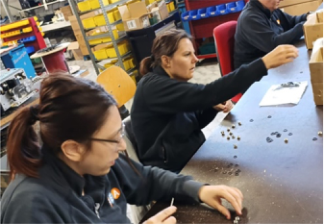
CASE STUDY: IMPLEMENTATION IN A MANUFACTURING CONTEXT The proposed methodology was piloted with two individuals, Valentina and Milena, who live with severe neuropsychic disabilities (Figure 1).
In the post-Covid period, when society was rethinking the relationship between work, well-being, and personal fulfillment, they expressed a strong desire to leave the ASP Ghirlandina residence and engage in real work experiences within the community. This led to a collaboration with a local electronics assembly company, where their inclusion was carefully designed around five key ergonomic factors introduced in the previous Section in this
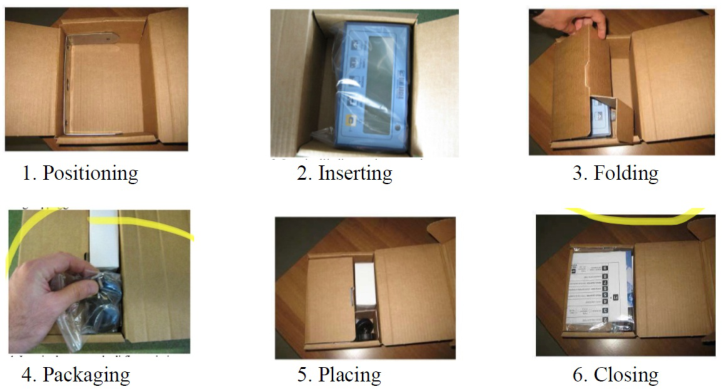
paper. The key elements of the design of their workplace included: simplified tasks (e.g., bagging, small assemblies); flexible workstations and schedules; emotional and relational support from educators; integration into social rituals, e.g. coffee breaks and shared meals. The task consists of 6 simple activities (Figure 2): 1. Positioning the Support (place the metal support as shown in the figure to prepare the base for packaging); 2. Inserting the Indicator (insert the 18x65 indicator and its housing into the box with the display facing upward and the longer side resting on the metal support); 3. Folding the Cardboard (fold the cardboard to secure the internal components and create compartments); 4. Packaging the Brackets (Place the fixing brackets into a plastic bag and insert them into their designated slot within the packaging cardboard); 5. Placing the Power Supply (insert the white power supply box into its assigned slot, as illustrated); 6. Final Arrangement and Closure (arrange any paper documents and CDs neatly, then close the box to complete the packaging process).
Figure 1: Valentina and Milena performing an assembly task at the manufacturing company.Figure 2: The task.
Inclusive Ergonomics in Manufacturing Processes: A Methodological Proposal 1827
The place-and-trace approach was adopted, i.e. Valentina and Milena did not receive a specific training for the task prior to the beginning of the work activity in the manufacturing company. The work experience takes place during a short morning shift, from 10:00 to 12:00, with participants wearing regular clothing, ensuring a sense of normalcy and integration. Transportation to the workplace is arranged via private vehicle. The company environment is notably welcoming, with moments of social interaction such as coffee breaks shared with other workers and lunch with the company owner, which are particularly appreciated by the participants. The tasks assigned include simple but meaningful activities such as bagging and small assemblies, allowing Valentina and Milena to contribute concretely to the production process while being fully immersed in the daily rhythm of the workplace. In the company they deal with bagging and small assemblies of electronic scales.
RESULTS AND DISCUSSION
The implementation of the proposed ergonomic methodology in the case of Valentina and Milena yielded a rich set of outcomes, demonstrating how each design factor contributed to both individual empowerment and organizational change.
Time Factor The carefully structured work schedule, limited to a short, regular 2-hour morning shift, proved fundamental for sustaining engagement and well- being. This approach respected the participants’ energy levels and cognitive rhythms, preventing overload and allowing them to approach each workday with anticipation rather than anxiety. The predictability of the schedule also fostered a sense of security and routine, which is especially important for individuals with cognitive disabilities. Over time, this regularity helped Valentina and Milena internalize the value of commitment and punctuality, reinforcing their sense of responsibility and integration into the company’s workflow.
Space Factor Spatial integration was a cornerstone of genuine inclusion. By situating the workstations in common areas, the company eliminated physical and symbolic barriers, enabling Valentina and Milena to participate in the social and productive life of the workplace. The environment was intentionally designed to be barrier-free, with adjustable furniture and clear pathways, ensuring autonomy and safety. This proximity to other workers facilitated spontaneous interactions, informal learning, and the normalization of diversity. The flexible layout also allowed for quick adaptations in response to emerging needs, supporting a dynamic and inclusive workspace.
Learning Factor The learning process was rooted in the “work-action” model, where skill acquisition occurred through direct immersion rather than formal instruction. Tasks were broken down into manageable steps, allowing for incremental mastery and immediate feedback. This approach empowered Valentina and Milena to learn at their own pace, building confidence with each successful action. The adaptability of the tasks meant that complexity could be increased as competence grew, ensuring continuous development. Importantly, the absence of rigid pre-training reduced anxiety and made the learning experience more authentic and engaging.
Role Factor Workplace participation enabled the development of a meaningful social role for both participants. Through involvement in daily rituals, such as coffee breaks, shared meals, and informal conversations, Valentina and Milena became recognized members of the team. Their contributions to production were visible and valued, which reinforced their sense of purpose and belonging. This recognition extended beyond the immediate work tasks, as colleagues began to see them as integral to the company’s social fabric. The experience also encouraged other employees to reflect on their own roles and the value of diversity in the workplace.
Self-Esteem Factor The work experience was a catalyst for emotional growth and self-esteem. With the support of educators and colleagues, Valentina and Milena learned to navigate challenges, manage frustration, and celebrate achievements, no matter how small. The environment encouraged open communication and positive reinforcement, transforming mistakes into opportunities for learning rather than sources of discouragement. Over time, both participants exhibited greater self-confidence, resilience, and willingness to take initiative. This personal growth was mirrored in their increasing autonomy and engagement with the broader work community.
The benefits of this inclusive approach extended well beyond the individual participants. Valentina and Milena’s journey demonstrated that, when given the opportunity and appropriate support, individuals with severe disabilities can achieve high levels of autonomy, emotional intelligence, and self- worth. Their progress challenged preconceived notions about disability and productivity. The inclusion process fostered a culture of solidarity, empathy, and mutual respect. Colleagues reported a greater sense of team cohesion and a reduction in stigma associated with disability. The workplace became a site of genuine connection, where diversity was not only accepted but valued as a source of enrichment. Also, the presence of workers with disabilities contributed to a more positive and resilient organizational climate. Employees experienced increased emotional investment, pride, and creativity. The company’s commitment to inclusion was recognized as a driver of innovation and social responsibility, enhancing its reputation both internally and externally. Finally, the educators were instrumental
Inclusive Ergonomics in Manufacturing Processes: A Methodological Proposal 1829
in facilitating the inclusion process. They provided technical guidance for adapting tasks and environments, emotional support for both participants and staff, and acted as mediators in moments of difficulty. Their presence ensured that the inclusion process was not only technically feasible but also emotionally sustainable, paving the way for long-term success.
CONCLUSION
This research demonstrates that the inclusion of people with high levels of support needs in manufacturing processes is not only feasible but also highly beneficial at multiple levels. The proposed methodology developed and tested in this study, structured around the factors of time, space, learning, role, and self-esteem, offers a replicable and flexible model for other industrial contexts, contributing to the broader vision of sustainable development and inclusive innovation. The case of Valentina and Milena, supported by the collaborative efforts of educators, company staff, and management, illustrates how inclusive practices can unlock individual potential, foster social bonds, and drive organizational transformation. The results show that, when work environments are designed to be accessible, flexible, and socially integrated, individuals with high support needs can make meaningful contributions to production processes, develop new skills, and experience personal growth. Importantly, the findings highlight that the benefits of inclusion extend beyond the individuals directly involved. The integration of psychiatric and ergonomic perspectives was crucial: rather than focusing on the “severity” of a diagnosis, the methodology emphasized the degree of support required, recognizing that support needs can fluctuate and that no condition is truly static. This approach aligns with the principles of contemporary psychiatry and the ethos of inclusive ergonomics, which both prioritize empowerment, participation, and adaptability. The place and train approach adopted in this project proved more effective than traditional models, as it allowed for real-time adaptation and learning within the actual work context. The presence of workers with disabilities enriched the organizational culture, making it more human-centered, resilient, and innovative. These findings support the hypothesis that inclusive ergonomics can be a strategic asset for industrial transformation, fully aligned with the goals of Industry 5.0, which emphasizes sustainability, resilience, and human- centric innovation. Inclusive practices not only fulfill ethical and social responsibilities but also foster creativity and adaptability in the workforce.
ACKNOWLEDGMENT
This research was partially supported by the Department of Engineering “Enzo Ferrari” (DIEF) of the University of Modena and Reggio Emilia, through the following fund “FARD-2025 Piano di sviluppo della ricerca DIEF 2025-2026, Prot. n. 1660 del 05/05/2025”, for the development of the project “WORK-ABLE: Tools for Industrial Inclusion in the Era of Industry 5.0”. The authors are grateful for this support.
REFERENCES
Colleoni, M., 2016. I servizi per le persone con disabilità come palestre di vita: Coltivare nuove immagini e nuovi riferimenti per accompagnare il cambiamento, in: Disabilità: Servizi per l’abitare e Sostegni per l’inclusione. Maggioli, Rimini. Driessen, M. T., Groenewoud, K., Proper, K. I., Anema, J. R., Bongers, P. M., van der
Beek, A. J., 2010. What are possible barriers and facilitators to implementation of a Participatory Ergonomics programme? Implementation Science 5. https:// doi.org/10.1186/1748-5908-5-64 Fioritti, A., Berardi, D., 2017. Individual Placement and Support – Manuale Italiano del Metodo per il Support all’Impiego delle Persone con Disturbi Mentali. Bononia University Press, Bologna. North, K., Rohmert, W., 1982. Job analysis applied to the special needs of the
disabled. Ergonomics 5. https://doi.org/10.1016/0003-6870(83)90263-6 Orsolini, M., Ruggerini, C., 2022. Understanding Intellectual Disability, Understanding Intellectual Disability. https://doi.org/10.4324/b23169 Rizza, R., Fioritti, A., 2020. Is individual placement and support an “active” labor market policy? Psychiatr Rehabil J 43. https://doi.org/10.1037/prj0000396 Saraceno, B., 1995. La fine dell’intrattenimento. Manuale di riabilitazione psichiatrica. ETAS, Milano. Shanks, V., Williams, J., Leamy, M., Bird, V. J., Le Boutillier, C., Slade, M., 2013.
Measures of personal recovery: A systematic review. Psychiatric Services 64. https://doi.org/10.1176/appi.ps.005012012 Wooldridge, A. R., Roscoe, R. D., Roberts, S. C., Valdez, R., Wooldridge, A. R., 2020. Designing for diversity: Implications for research and practice, in: Proceedings of the Human Factors and Ergonomics Society. https://doi.org/ 10.1177/1071181320641128
LISTED IN THE AHFE DIGITAL BOOKSTORE CATALOGUE
Explore the complete digital volume
Human Factors in Design, Engineering, and Computing
Read this individual research paper free through the original publisher, or explore the full digital proceedings book.
ISBN 978-1-964867-75-5
Explore this ISBN in the AHFE Bookstore ↗Listed in the July 2026 bookstore catalogue; search by ISBN to confirm current availability · Digital book purchase optional