Ni-Jin Li, Rung-Huei Liang (2026). “Listen, Who is Anxious?”: A Multi-Agent Coordination and Self-Dialogue Mechanism Based on Internal Family Systems Theory. In: Human Factors in Design, Engineering, and Computing. AHFE Open Access, vol. 238, pp. 1447–1457. https://doi.org/10.54941/ahfe1008373
As AI increasingly becomes a "digital tree hole" for emotional expression, existing tools remain limited by their lack of theoretical grounding, susceptibility to sycophancy, and treatment of the self as a singular entity. This study integrates Internal Family Systems (IFS) theory with multi-agent AI technology, externalizing internal parts — Managers, Firefighters, and Exiles — as distinct agents in a fully automated conversational system for mild everyday anxiety. Ten participants completed an IFS pre-assessment, a multi-agent dialogue session, and a post-session interview. Qualitative findings suggest that participants experienced the agents' contrasting stances as challenging their habitual thinking, and several described shifting toward a more observational "Self" perspective. Most participants described the automatically generated emotional summaries as cognitive anchors that organized scattered emotional content into structured self-understanding. These exploratory findings suggest IFS-grounded multi-agent design as a promising direction for emotional well-being in HCI, warranting controlled evaluation.
In today’s fast-paced society, AI has emerged as a “digital tree hole” for emotional expression. Compared to real human conversation, AI chatbots more effectively encourage self-disclosure (Lucas et al., 2014), lowering psychological barriers and facilitating the kind of self-expression that relieves stress (Zhang, 2017) and reduces symptoms of depression and anxiety (Li et al., 2023).
While AI-assisted self-dialogue tools have grown increasingly diverse — spanning voice cloning and digital avatar technologies that enable conversation with past, future, or parallel selves (Frund et al., 2026; Lee et al., 2026; Li et al., 2026; Mogi et al., 2026; Xue et al., 2026)—and while self-externalization has been shown to reduce emotional distress by establishing psychological distance (Grossmann & Kross, 2014), the field faces persistent warnings: without grounding in an established psychological framework, such tools risk fostering self-isolation or inadvertently distorting
1448 Li and Liang users’ self-perception (Shirvani et al., 2026). More fundamentally, existing tools are largely confined to one-on-one interaction, treating the user as a singular, unified entity and ignoring the inherently plural and dialogical nature of the self. Compounding this, AI’s tendency toward algorithmic compliance produces a “sycophancy effect” that may reinforce existing negative thought patterns rather than prompting genuine self-reflection (Jeon et al., 2026).
Recent HCI research has begun addressing these limitations through multi- agent designs. InnerPond (Jeon et al., 2026) externalized inner perspectives as independent LLM agents, enabling users to observe and mediate conflicts among inner voices; however, its reliance on static personality inventories to configure agents sits uneasily with the situational nature of emotion under stress (see Section 2.2). To overcome this limitation, this study integrates IFS theory (Schwartz & Sweezy, 2020) with multi-agent AI technology, externalizing internal parts — Managers, Firefighters, and Exiles — as distinct digital agents. IFS’s conception of the mind as a multi-part system aligns naturally with LLMs’ capacity for multi-role simulation (Shao et al., 2023), and its de-pathologizing premise provides a design rationale for maintaining differentiated perspectives without negating users’ emotions. Whether this design reduces sycophancy was not evaluated in the present study. IFS describes Unblending as a process in which individuals become less fused with particular internal parts and adopt a more observational stance toward them (Buys, 2025). Related work has also examined self-talk as a mechanism associated with anxiety alleviation (Park et al., 2025).
This study therefore develops a multi-agent system combining AI self- dialogue with IFS theory as a reflective tool for mild everyday anxiety. By externalizing internal perspectives as distinct agents, the system aims to reshape users’ introspective experience and support the cognitive reframing of internal conflict. Two research questions guide the investigation: how participants experience IFS externalization in relation to immersion and self- state clarification; and how participants perceive the dialogue mechanism in relation to disengaging from emotional overwhelm and to their everyday anxiety.
RELATED WORK
AI-Assisted Self-Dialogue Across Time and Self Recent HCI research has explored AI as a medium for self-reflection through dialogue with versions of the self across different temporal or hypothetical contexts. Frund et al. (2026)’s Me² used Deepfake and XR technology to generate a childhood avatar, enabling users to comfort it and then receive comfort in return, producing significant gains in self-compassion. Lee et al. (2026)’s RoF dynamically generated three future-self versions based on current life data, reducing anticipatory anxiety by reinforcing users’ sense that the future is actively shapeable. Xue et al. (2026)’s UUR invited users to converse with a “parallel universe self” via a telephone booth interface, with third-person self-distancing yielding significant benefits for emotional regulation. Taken together, these studies establish self-externalization as an
“Listen, Who is Anxious?”: A Multi-Agent Coordination and Self-Dialogue Mechanism 1449 effective mechanism for fostering introspection, yet each remains limited to interaction with a single self-image, leaving unaddressed the psychological reality of multiple simultaneous, conflicting inner voices.
Multi-Agent Systems for Self-Reflection Jeon et al. (2026) developed InnerPond based on Dialogical Self Theory (DST), externalizing internal perspectives as independent LLM agents visualized as lily pads in a dynamic relational landscape. The system enabled users to adopt a meta-position — observing and mediating conflicts among inner voices — and identified three key design tensions: productive misalignment, coherence vs. adaptability, and the balance between user agency and system scaffolding. However, InnerPond’s reliance on static instruments such as the Big Five to pre-configure agent personalities sits uneasily with the dynamic, situational nature of human emotion under stress, constraining the organic emergence of latent perspectives.
Internal Family Systems (IFS) Theory IFS conceptualizes the mind as a system of parts — Managers, who maintain order; Firefighters, who respond to crises through impulsive or avoidant means; and Exiles, who carry core trauma — with the goal of enabling the core Self to engage each part non-judgmentally (Schwartz & Sweezy, 2020). Empirically, a scoping review by Buys (2025) identified IFS as a promising therapeutic approach, with pilot trials demonstrating meaningful symptom reduction in PTSD, depression, and chronic pain; Hodgdon et al. (2022) provided initial quantitative support for IFS’s effectiveness among adults with complex trauma histories. IFS’s de-pathologizing premise — that “no part is bad” — provides a conceptual basis for designing differentiated agents without invalidating users’ emotions. Its explicit parts-based structure also maps naturally onto multi-agent simulation, providing the theoretical foundation for the three-agent design used in this study. This alignment is further supported by Shirvani et al. (2026), who identify parts-based frameworks such as IFS as particularly well-suited to AI-assisted self-dialogue design.
METHOD
This study adopts a Research through Design (RTD) (Zimmerman et al., 2007) paradigm, translating IFS theory into a functional multi-agent conversational prototype and generating knowledge through the design process itself. Unlike the earlier proof-of-concept stage, which simulated the system via Wizard of Oz (WoZ; Dahlbäck et al., 1993), this study deploys a fully autonomous prototype as the primary research instrument. The evaluation was an exploratory single-session study in a controlled setting, structured after InnerPond (Jeon et al., 2026): a pre-assessment configures the system, participants engage in a multi-agent dialogue session, and a semi- structured interview concludes the session.
Participants were adults experiencing mild everyday anxiety or stress, arising from sources such as workplace pressure or relationship difficulties. Ten participants completed the three steps in a controlled setting, in approximately 60–90 minutes: (1) complete the IFS pre-assessment within the system; (2) engage in the IFS multi-agent dialogue; (3) participate in a post-session semi-structured interview.
System Design and Technical Implementation The multi-agent conversational system was built in Python using the OpenAI API for backend logic, with a web interface for text-based interaction. Upon launch, participants complete an IFS scale within the web interface; the system computes each part’s relative score in real time and automatically sequences the agents accordingly, with the part with the highest relative score appearing first to approximate the participant’s current internal configuration. Participants then interact with the three agents in descending order of their relative scores, each governed by a distinct IFS-aligned system prompt. Once all three agents have completed their dialogues, the system generates a structured emotional summary written from the observational perspective of the core Self.
Data Collection Stage 1: Embedded Pre-Assessment
Before the dialogue session, participants completed a Chinese-language IFS scale embedded in the web system. The scale was adapted from the instrument originally developed by Lia DeLand and extended by Olaf Holm, refined through semantic review to remove ambiguous or culturally ill-fitting items, yielding a 30-item linear scale. Items are rated on a five-point Likert scale and distributed equally across the three sub-dimensions (Manager, Firefighter, Exile; 10 items each). The system computes sub-dimension scores and relative scores in real time, using these as the quantitative basis for agent sequencing. The adapted scale has not been psychometrically validated and was used solely to determine agent sequence, not as an outcome measure.
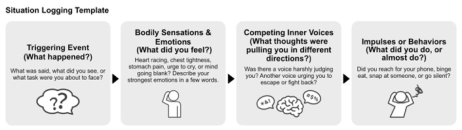
Stage 2: Multi-Agent Dialogue Session To reduce blank-page anxiety and keep participants focused on the research purpose, the system provides a structured situation-logging template before the session begins (see Figure 1). Informed by CBT thought-record logic (Beck et al., 1979), the template guides participants to decompose diffuse anxiety across four dimensions: triggering event, bodily sensations and emotions, competing inner voices, and impulses or behaviors. This entry record serves as the initial material for the dialogue. A brief system introduction precedes use, orienting participants to the safe boundaries of the dialogue space, the mechanism behind the AI role embodiment, and their full control over the interaction. Agent order is determined automatically by the pre-assessment results. Each agent operates independently, responding to the anxiety content
“Listen, Who is Anxious?”: A Multi-Agent Coordination and Self-Dialogue Mechanism 1451 the participant has introduced. When a participant feels the exchange with the current agent has run its course, they can request a transition; the system then switches to the next agent. This continues until all three agents have completed their dialogues.
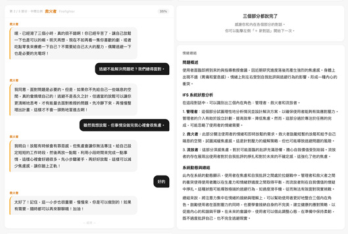
Upon completion, the system automatically generates an emotional summary (see Figure 2), integrating the three parts’ states and needs and offering non-judgmental repair suggestions from the perspective of the core Self, intended to support integrative self-awareness.
Stage 3: Post-Session Semi-Structured Interview The interview guide centered on participants’ subjective experience across three themes: (1) immersion and role identification when encountering the externalized IFS agents; (2) whether the dialogue and emotional summary helped participants step back from emotional confusion and achieve self- reflection; and (3) whether the system facilitated clearer self-understanding and produced any change in how they related to their mild anxiety.
Data Analysis Post-session interview transcripts were analyzed using thematic analysis (Braun & Clarke, 2006). Repeated readings familiarized the researcher with the data; initial codes were generated around participants’ references to moments of reflection, self-state clarification, and experiences of part externalization. Related codes were then clustered, defined, and named to yield core themes, characterizing how participants experienced the system in relation to their self-understanding.
Figure 1: Structured situation-logging template.Figure 2: System Interface: Multi-agent dialogue and emotional summary. (Left) The dialogue interface shows the current agent’s IFS label, sequence position, and relative score, with each part color-coded (Firefighter shown in orange). (Right) Upon session completion, the system generates a structured summary from the core Self’s perspective. The example uses a researcher-constructed scenario.
This study did not undergo formal institutional ethics review. Given the emotionally sensitive nature of the interactions, we recognize this as a limitation and describe the safeguards adopted. Participants were adults recruited on the basis of self-reported mild everyday stress; no formal screening for current psychological treatment or self-harm risk was conducted (see Section 5.3). All participants received a full briefing on the study’s aims and procedures, provided written informed consent, and were informed that they could pause or withdraw at any time. The system introduction stated that the dialogue is not a substitute for professional support and encouraged participants to seek professional help if needed. A researcher was present throughout every session to monitor participants’ responses. Each agent’s system prompt included safety constraints, such as prohibiting medical or medication advice. Interview data were anonymized.
RESULTS
Participants Ten participants were recruited (6 female, 4 male; mean age ≈ 26.5). Stress sources spanned relationship difficulties, academic and career pressure, internship decisions, and compounded daily stressors. Two participants (P1 and P5) had previously participated in the WoZ pilot, which may have influenced their expectations of the system. To limit potential bias from their prior exposure, we confirmed that every reported theme was also supported by at least one of the eight new participants. All participants had prior experience using conversational AI (e.g., ChatGPT) for emotional processing and habitually engaged in self-dialogue to clarify their thinking under stress.
Self-Awareness, Appraisal, and Identification Through Part Externalization Most participants found the initial experience natural — 8 of 10 reported easy onboarding, while P4 and P8 experienced mild confusion around the role-switching between “you” and “I,” though both adapted as the dialogue progressed.
Agent identification appeared to vary with participants’ self-described dispositions. Analytically oriented participants (P2, P3, P4) resonated most with the Manager, valuing its structured, directive tone; emotionally sensitive participants resonated more with the Exile, whose portrayal of vulnerability and longing was felt by P1, P6, and P10 to closely mirror their own internal states. Not all agents were well received — several participants resisted the Firefighter when its tone conflicted with their immediate needs — and some participants described greater self-recognition during these moments. P10 explicitly noted that refuting the agents’ suggestions helped him identify strategies better suited to his own needs.
“Listen, Who is Anxious?”: A Multi-Agent Coordination and Self-Dialogue Mechanism 1453 Internal Negotiation From a Core Self Perspective
Most participants described reaching some degree of emotional distance through the exchange, though the pathways varied. Some arrived at a core Self perspective by adopting a helper role toward the agents — P1 found herself asking the Exile what it needed, effectively soothing herself in the process; P8, after the Exile evoked a sense of being “trapped in suffocating darkness,” thought “this guy is pitiful,” generating self-compassion and an overhead view of his own situation. Others distanced through refutation: P2, after pushing back against the Firefighter, arrived at the conviction that “I can’t just let things slide”; P10, after rejecting the Manager’s fixed-schedule proposal, formulated a more flexible work strategy from his own experience.
P8’s meta-awareness of the system’s psychological framework triggered defensiveness and broke immersion, highlighting a dual-edged quality of explicit theoretical framing: clarifying for some users, disruptive for others.
Preferences for interaction format diverged: most participants (P1, P4, P5, P6, P7) preferred sequential one-on-one dialogue, while others (P2, P3, P9, P10) favored a simultaneous multi-agent debate mode that would better surface unexamined perspectives. These findings reinforce the case for giving users agency over conversation format.
Perceived Value of Structured Emotional Summaries The post-dialogue emotional summary generated automatically by the system served as a “cognitive anchor” for most participants — bringing closure to the conversation and imposing structure on diffuse emotional content — though a notable minority raised criticisms.
On the positive side, P1 valued the summary’s three-part structure for “rationalizing the emotional without letting emotion dominate all your thinking.” P4 found it confirmed his internal conflict between anxiety and a desire for growth, clarifying his next steps. P5 described it as “very accurate, thorough, and objective.” P10 particularly appreciated the framing that all three parts “are protecting me in different ways, even if not always effectively” — a deeper insight than simply being told to relax.
Critical voices also emerged: P7 felt the summary was written for the researcher rather than for him, having already reached understanding through dialogue; P8 found the tone overly clinical and suggested a more humanistic register with concrete action steps; P9 felt it largely repeated what he had already said without adding new insight.
Participants also proposed design extensions: P2 requested quantitative indicators and clearer in-dialogue role cues; P10 proposed a cross-session trend log tracking how each part’s proportion shifts over time, transforming the system into a long-term self-knowledge companion. Overall, summary utility varied markedly by user type — valued by participants who wanted external help organizing their thoughts, redundant for those who had already integrated their reflections during dialogue — pointing toward personalized, dynamically adjusted summary depth as a productive direction for future design.
DISCUSSION
IFS Externalization and the Facilitation of Self-Awareness A central finding of this study is that embodying the three IFS parts as distinct AI agents was described by participants as qualitatively different from their prior use of general-purpose chatbots. Rather than treating the agents as external advice sources, most participants gradually recognized their own habitual thought patterns through dialogue. Notably, when contradicting or attempting to comfort an agent, several participants described experiences resembling what IFS terms “Unblending” — shifting from emotional overwhelm toward a more observational “Self” perspective — without being explicitly prompted to do so. This process emerged organically from the conversational tension rather than from direct system guidance, a pattern consistent with IFS’s account of unblending, although the present design cannot establish the underlying mechanism.
Resistance and Reflective Tension A notable finding concerns the functional role of resistance. Several participants pushed back against specific agents — particularly those whose perspectives conflicted with their habitual thinking — yet several participants described moments of resistance alongside deeper reflection. When rejecting an agent’s stance, several participants articulated their own values and preferred strategies more explicitly. This echoes IFS’s de-pathologizing tenet that “no part is bad” (Schwartz, 2013): even uncomfortable inner voices serve a function, helping users locate a more grounded sense of self through contrast. Resistance, however, has its limits. P8’s meta-awareness that “the system is using counseling techniques” triggered defensiveness and broke immersion — revealing a dual-edged quality of theoretical framing: clarifying for structure-oriented users, disruptive for those accustomed to naturalistic conversation. Future designs should consider how to preserve theoretical rigor while reducing users’ sense of being analyzed. Similarly, the variable value of the emotional summary suggests that a single fixed template cannot accommodate diverse processing styles, motivating summaries whose depth and tone adapt to conversational engagement.
Limitations Several limitations should be noted. First, the sample size (n = 10), though larger than the pilot study, remains small and qualitative, precluding generalization or statistical inference. Second, the single-group design lacks a control condition (e.g., standard ChatGPT conversation), limiting causal claims about the unique contribution of the IFS framework. Third, all participants were adults with prior AI experience, whose existing expectations and familiarity with conversational AI may have shaped their reception of the system; applicability to other populations — such as less experienced users or older adults — remains to be validated. Fourth, two participants had joined the earlier pilot, and researcher presence and novelty
“Listen, Who is Anxious?”: A Multi-Agent Coordination and Self-Dialogue Mechanism 1455 may have encouraged favorable responses; moreover, no pre–post anxiety measure was collected, so no claims about anxiety reduction can be made. Finally, the study was conducted without formal ethics review or screening for current psychological treatment or self-harm risk. Future work will obtain institutional ethics approval prior to data collection, apply these exclusion criteria, and incorporate a structured distress protocol with referral resources such as campus counseling and crisis helplines.
CONCLUSION
This study developed and explored a conversational system integrating IFS theory with multi-agent AI technology through the RTD paradigm as a reflective tool for mild everyday anxiety. Participants associated the externalized parts — Managers, Firefighters, and Exiles — with experiences of self-mirroring and self-distancing, with several reporting a shift from emotional overwhelm toward a more observational “Self” perspective. The emotional summaries served as cognitive anchors for most participants, though their value varied by individual. Participants’ comparisons with prior chatbot use suggest that the multi-agent design may help surface diverse perspectives; establishing these effects will require controlled comparison. Together, these findings position IFS as a promising theoretical foundation for multi-agent AI systems in emotional support design.
ACKNOWLEDGMENT
The authors would like to acknowledge the participants who generously contributed their time and insights to this study. We also thank our advisors and colleagues for their invaluable guidance and feedback throughout this research.
REFERENCES
Beck, A. T., Rush, A. J., Shaw, B. F., & Emery, G. (1979). Cognitive therapy of depression. Guilford Press. Braun, V., & Clarke, V. (2006). Using thematic analysis in psychology.
Qualitative Research in Psychology, 3(2), 77–101. https://doi. org/10.1191/1478088706qp063oa Buys, M. E. (2025). Exploring the evidence for Internal Family Systems therapy: A scoping review of current research, gaps, and future directions. Clinical Psychologist, 29(3), 241–260. https://doi.org/10.1080/13284207.2025.2533127 Dahlbäck, N., Jönsson, A., & Ahrenberg, L. (1993). Wizard of Oz studies: Why
and how. Proceedings of the 1st International Conference on Intelligent User Interfaces, 193–200. Frund, R. L., Zybinska, P., Wiesendanger, J., Brandenberger, D., Márquez Segura, E., Rühlmann, C., Kivelitz, L., Kleim, B., Lenggenhager, B., & Roel Lesur, M. (2026). Me2: Co-Designing Deepfake Encounters With One’s Child Self in XR. Proceedings of the Extended Abstracts of the 2026 CHI Conference on Human Factors in Computing Systems, CHI EA ’26. https://doi.org/10.1145/3772363.3799394
Eliminates the Self-Other Asymmetry in Wise Reasoning About Close Relationships in Younger and Older Adults. Psychological Science, 25(8), 1571–1580. https:// doi.org/10.1177/0956797614535400 Hodgdon, H. B., Anderson, F. G., Southwell, E., Hrubec, W., & Schwartz, R. (2022).
Internal Family Systems (IFS) Therapy for Posttraumatic Stress Disorder (PTSD) among Survivors of Multiple Childhood Trauma: A Pilot Effectiveness Study. Journal of Aggression, Maltreatment & Trauma, 31(1), 22–43. https://doi.org/10. 1080/10926771.2021.2013375 Jeon, H., Ahn, D., Pang, S., Choi, Y., Yoon, S., Lee, J., Kim, E., & Lim, H. (2026).
InnerPond: Fostering Inter-Self Dialogue with a Multi-Agent Approach for Introspection. Proceedings of the 2026 CHI Conference on Human Factors in Computing Systems, CHI ’26. https://doi.org/10.1145/3772318.3791248 Lee, J., Kim, Y., Kim, C.-M., Lim, S., Park, C. H., Cho, S., & Nam, T.-J. (2026).
Reminiscences of Futures (RoF): Designing and Studying Encounters with Embodied, AI-Generated Future Selves. Proceedings of the 2026 CHI Conference on Human Factors in Computing Systems, CHI ’26. https://doi. org/10.1145/3772318.3791750 Li, H., Zhang, R., Lee, Y.-C., Kraut, R. E., & Mohr, D. C. (2023). Systematic review and meta-analysis of AI-based conversational agents for promoting mental health and well-being. Npj Digital Medicine, 6(1), 236. https://doi.org/10.1038/s41746- 023-00979-5 Li, Y., Ling, L., Song, Y., Huang, Y., & Cai, Z. (2026). A Reframed Chair: Reframing
the Empty Chair through Dyadic and Triadic AR-Mediated Self-Embodiment. Proceedings of the 2026 CHI Conference on Human Factors in Computing Systems, CHI ’26. https://doi.org/10.1145/3772318.3790406 Lucas, G. M., Gratch, J., King, A., & Morency, L.-P. (2014). It’s only a computer: Virtual humans increase willingness to disclose. Computers in Human Behavior, 37, 94–100. https://doi.org/https://doi.org/10.1016/j.chb.2014.04.043 Mogi, Y., Akahori, W., & Yamashita, N. (2026). Exploring the Effects of Different
Chatbot Voice Identities on Self-Disclosure. Proceedings of the 2026 CHI Conference on Human Factors in Computing Systems, CHI ’26. https://doi. org/10.1145/3772318.3790546 Park, C., Song, H., Lee, J. Y., Lee, E., Yang, G., Kim, J., & Lee, J. H. (2025). Talk to You More, Listen to You More, and Feel Better in Your Mind: Utilizing Self-talk as a Mechanism of Action for Alleviating Anxiety. Proceedings of the Extended Abstracts of the CHI Conference on Human Factors in Computing Systems, CHI EA ’25. https://doi.org/10.1145/3706599.3720071 Schwartz, R. C. (2013). Moving From Acceptance Toward Transformation With
Internal Family Systems Therapy (IFS). Journal of Clinical Psychology, 69(8), 805–816. https://doi.org/https://doi.org/10.1002/jclp.22016 Schwartz& Sweezy. (2020). Internal family systems therapy (2nd ed.). Shao, Y., Li, L., Dai, J., & Qiu, X. (2023). Character-LLM: A Trainable Agent for Role-Playing. In H. Bouamor, J. Pino, & K. Bali (Eds.), Proceedings of the 2023 Conference on Empirical Methods in Natural Language Processing (pp. 13153–13187). Association for Computational Linguistics. https:// aclanthology.org/2023.emnlp-main.814/ Shirvani, M. S., Crowley, J., Peng, C., Liu, J., Chao, T., Martinez, S., Brandt, L., Kim,
I.-J., & Yoon, D. (2026). Cloning the Self for Mental Well-Being: A Framework for Designing Safe and Therapeutic Self-Clone Chatbots. Proceedings of the 2026 CHI Conference on Human Factors in Computing Systems, CHI ’26. https://doi. org/10.1145/3772318.3790986
“Listen, Who is Anxious?”: A Multi-Agent Coordination and Self-Dialogue Mechanism 1457 Xue, B., Ono, G., Yoshida, T., Hu, Y.-H., & Narumi, T. (2026). The You You
Are: A Payphone Installation for Parallel-Self Dialogue Enabled by Voice Cloning. Proceedings of the Extended Abstracts of the 2026 CHI Conference on Human Factors in Computing Systems, CHI EA ’26. https://doi. org/10.1145/3772363.3799159 Zhang, R. (2017). The stress-buffering effect of self-disclosure on Facebook: An examination of stressful life events, social support, and mental health among college students. Computers in Human Behavior, 75, 527–537. https://doi.org/ https://doi.org/10.1016/j.chb.2017.05.043 Zimmerman, J., Forlizzi, J., & Evenson, S. (2007). Research through design as
a method for interaction design research in HCI. Proceedings of the SIGCHI Conference on Human Factors in Computing Systems, CHI ’07, 493–502. https:// doi.org/10.1145/1240624.1240704
SEARCH THE AHFE DIGITAL BOOKSTORE BY ISBN
Explore the complete digital volume
Human Factors in Design, Engineering, and Computing
Read this individual research paper free through the original publisher, or explore the full digital proceedings book.