Hua Zhao, Ran Peng (2026). A Real-Time Identification Method of Pilot’s Stress State Based on ECG Features. In: Human Factors in Design, Engineering, and Computing. AHFE Open Access, vol. 238, pp. 2053–2063. https://doi.org/10.54941/ahfe1008432
High stress states during flight operations impair pilots’ capabilities of decision-making and control, serving as a critical human factor contributes to flight accidents. Conventional methods for stress detecting mostly rely on post-hoc tests by salivary cortisol and subjective stress report, which fail to realize monitoring in real time and warning for pilots’ stress state. This paper proposes a real-time stress identification scheme for pilots based on dynamic electrocardiogram (ECG) signals. Following the psychophysiological equivalence principle, a ground VR simulation platform was constructed to induce altitude-related stress responses, and ECG signals, salivary cortisol concentrations and subjective stress reports were synchronously collected from 12 professional pilots. With the labels were annotated by combining salivary cortisol indicators and subjective report scores, and the heart rate was selected as the core input feature, a binary classification model distinguishing normal and high-stress states was established based on RBF-SVM, grid search and leave-one-out cross-validation were applied to enhance the generalization performance of the model. Furthermore, practical verification was carried out in the real flight scenario of Field Carrier Landing Practice (FCLP), by comparing the data of variation heart rate through novice pilots and experienced pilots, the results generated by the model were highly consistent with subjective stress assessments. This research findings provide a feasible technical support to management pilots’ stress in real time under airborne application scenario, and meanwhile reveal the pattern that pilots’ stress responses are alleviated with the growth of training proficiency.
Stress is a psychological feature associating with flight safety closely. Statistics indicated that human-related factors account for 50%-80% of flight accidents, and most of these accidents were triggered by pilots’ adverse stress states (Taylor, 2011; Hobbs, 2011), the factors which trigger stress responses are defined as stressors. When individuals perceive threats arising from internal or external disturbances, they will arise physical-mental stress states manifested through diverse physiological and psychological reactions, which activate responses spanning from
2054 Zhao and Peng the Central Nervous System (CNS) to peripheral organs, commonly known as the Hypothalamic-Pituitary-Adrenocortical (HPA)(Yu, 2020). Moderate stress helps individuals mobilize internal resources to cope with threats, whereas excessive stress impairs prefrontal lobe functions including attention, memory and decision-making, and may even lead to psychosomatic disorders. Accordingly, creating an effective identification method of pilot’s stress state on real-time stress is particularly crucial to safety and health, especially for high-risk occupational groups such as pilots.
In recent years, the approaches of stress detection have been proposed across multiple research fields, such adopt stress-induction paradigms (stressors) to observe and record subjects’ behavioral responses under stressful conditions or stimuli. Stress is mostly generated from the interaction between environment and individuals, when exposed to stress, the adrenal cortex secretes glucocorticoids. For this reason, conventional detection methods mainly rely on collecting subjects’ subjective stress reports and salivary cortisol samples for stress assessment, which indicators achieve remarkable performance in identifying individual stress responses by post-hoc (Adam, 2011; Kudielka, 2003), but cannot satisfy the practical requirement for real-time identification of pilots’ stress states. Relevant studies have demonstrated that human physiological characteristics alter under stress, such as elevated blood pressure, accelerated heart rate, and significant energy shifts in specific frequency bands of physiological signals, which also can reflect implicit information underlying physical conditions. Hence, an increasing number of researchers adopt physiological signals to identify and evaluate stress states, which provides a promising approach for real-time stress recognition. Martine et al. proposed a feasible stress-level algorithm for the elderly using heart rate variability and other signals, which had been applied for mental stress assessment (Zalabarria, 2020). Kumar et al. collected galvanic skin response (GSR) and electrocardiogram (ECG) signals from subjects, which put forward an evaluation scheme for subjects’ stress and relaxation levels based on fuzzy recognition clustering (Kumar, 2007). Labrador et al. simulated stress via high-intensity game tasks on the Android platform, and constructed a recognition model with machine learning for mental stress identification by extracting subjects’ heart rate, GSR, respiration and other signals (Eggert, 2013). Li et al. designed a laboratory-based SCWT stress-induction experimental paradigm. By collecting subjects’ electrocardiogram (ECG) signals and extracting multi-dimensional time-frequency domain features, they built a recognition and evaluation model for stress and relaxation states, which was applied to identify stress events during automobile driving (Li, 2020). Zheng et al. analyzed anxiety under stress using features from photoplethysmography (PPG) and ECG signals, and established a three-class classification model for anxiety recognition and evaluation via principal component analysis (PCA) and K-Nearest Neighbor (KNN) (Zheng, 2016). Wang realized comprehensive evaluation of psychological stress based on the SVM
A Real-Time Identification Method of Pilot’s Stress 2055 algorithm by extracting physiological features from ECG, pulse and GSR signals (Wang, 2019). Ren Runzhou also proposed a human stress-state recognition model using the SVM algorithm by the collection of ECG and electroencephalogram (EEG) features under human stress states (Ren, 2021).
It can be seen that stress recognition algorithms based on physiological features have been widely adopted. Nevertheless, the aforementioned algorithms are mostly deployed in automobile driving, psychology and medical identification domains, which test scenarios were predominantly laboratory stress-induction paradigms, and test subjects were mostly volunteers. Though physiological features exhibit substantial inter-individual differences among different populations, and signals such as GSR and EEG are hard to acquire in the airborne environment due to electromagnetic interference, vibration and other disturbances, these achievements bring certain limitations to the popularization such in flight scenarios. Targeting practical flight-scenario applications, this paper provides an effective technical support for real-time detection of pilots’ stress states during actual flight missions, which takes professional pilots as test subjects and continuously acquisition of ECG data under airborne environments.
STRESS INDUCTION AND FEATURE DATA ACQUISITION Obtaining valid data is critical for model building, and the core prerequisite is to reliably induce human stress responses. High-altitude environment is recognized as a common flight-related stressor and has been reported in Scientific American (Teggi, 2019; Cong, 2022). Nevertheless, experimental variables are difficult to control in real high-altitude flight scenarios, a growing number of researchers adopt Virtual Reality (VR) technology to construct stress-induction tasks. Based on the psychophysiological equivalence principle, the stress responses to high-altitude exposure can be elicited for participants under ground-based laboratory conditions, which verified through experiments from Michael to Zhao Guozhen et al. that VR-simulated high-altitude scenarios can effectively induce individual stress responses (Meehan, 2001; Meehan, 2005; Wang, 2020). On this basis, this paper designed and built high-altitude VR scenarios to induce individual stress states in ground environment, targeting pilots as research subjects, an experiments for stress induction and ECG feature data collection were carried out.
Test Subjects Twelve male professional pilots aged 25.24 ± 1.87 years were recruited as experimental subjects. All subjects were in good physical and mental health without chronic diseases. None of the subjects smoked, consumed caffeine or took medications shortly before the experiment. No alcohol was taken on the experimental day, and no food intake was allowed within two hours prior to the test. All subjects participated voluntarily and signed informed consent forms.
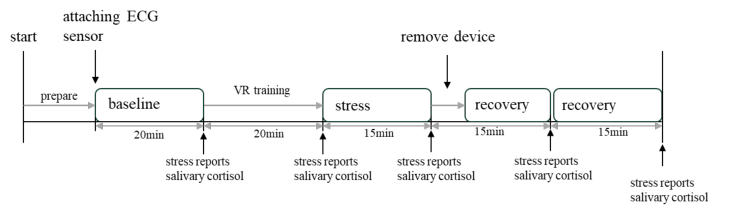
The experiment was conducted in a quiet environment to avoid noise interference to subjects. Upon arriving at the rest room, subjects gargled and wore flexible ECG patches to record baseline data for a period of time. After approximately 20-minute VR training, subjects proceeded to formal stress-induction tasks. They sequentially completed three VR stress-evoking tasks: Experience High-altitude, Bird Evasion, and High-altitude Cat Rescue, with a 5-minute rest interval between adjacent tasks. After all tasks, subjects returned to the rest room for a 30-minute recovery period.
A complete experimental workflow is illustrated in Figure 1. ECG feature data of subjects were recorded in real-time throughout the procedure. Salivary cortisol samples and subjective stress reports were collected and recorded at five time points: resting before experiment (T1), after task briefing (T2), after high-altitude VR tasks (T3), 15 minutes after task completion (T4), and 30 minutes after task completion (T5).
Figure 1: Experimental procedure.
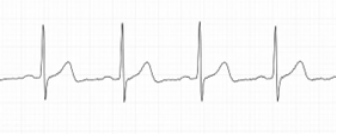
Feature Data Collection and Analysis A combined measurement scheme was adopted in the experiment to collect variations of subjective stress reports, salivary cortisol levels and ECG data before, during and after high-altitude tasks. A 5-point Likert scale was used for subjective stress reports to assess subjects’ real-time tension level (1 = completely relaxed; 2 = moderately relaxed; 3 = neutral between tension and relaxation; 4 = moderately tense; 5 = extremely tense) (Yang, 2011). Saliva samples for cortisol measurement were gathered with saliva collectors. Subjects chewed the cotton swab inside the collector thoroughly to ensure sufficient saliva immersion, and centrifugation was applied to separate and determine salivary cortisol concentration after sampling. ECG signals were acquired in real-time by flexible ECG sensors attached to subjects’ left chest, as shown in Figure 2, with a sampling rate of 250 Hz. The instantaneous heart rate can be calculated by dividing the total milliseconds per minute (60000) by the millisecond interval between successive P-waves (P-P interval) or QRS complexes (R-R interval).
(a) Stress-induced (b) Real-time ECG recording
Figure 2: Experimental data collection.
Table 1 presents descriptive statistics of subjective stress reports, salivary cortisol levels and heart rate (HR) at five time points. SPSS 21 was used for non-parametric tests, with the null hypothesis that data distributions at the five time points were identical, significant main effects with statistical differences were observed for subjective reports, salivary cortisol concentration and mean HR across the five time points (p < 0.001), the null hypothesis was rejected. The results demonstrate that subjects reached their peak stress level as well as maximum heart rate at T3 time, which during stress-induction tasks. After rest (recovery phase), perceived tension decreased significantly and heart rate dropped rapidly. Table 2 lists correlation analysis results among subjective reports, salivary cortisol concentration and mean HR. Heart rate shows significant positive correlations with subjective stress reports (r = 0.964) and salivary cortisol concentration (r = 0.910), which indicates that heart rate serves as a sensitive ECG feature indicator for characterizing stress levels.
Table 1: Descriptive statistics of experimental data.
Table available in the original PDF paper.
M/SD T1 T2 T3 T4 T5 Mean 2 2.58 3.67 2.08 1.58 Stress reports
Standard Deviation 0.6 1 0.78 1.16 1.24 Heart rate Mean 90.6 93.6 105.6 93.9 84.3
Standard Deviation 0.24 4.24 7.63 4.93 0.86 Mean 6.22 6.6 8.74 11.94 8.97 Salivary cortisol
Standard Deviation 1.91 2.82 3.83 6.66 4.3
Table 2: Correlation analysis results of experimental data.
Table available in the original PDF paper.
Stress Reports Heart Rate Salivary Cortisol
Stress reports 1 Heart rate 0.964408 1
Salivary cortisol 0.910388 0.960876 1
STRESS MODEL CONSTRUCTION BASED ON SUPPORT VECTOR MACHINE ALGORITHM Stress State Label Annotation
As the data acquired at T1 from 12 professional pilot subjects were taken as the baseline, data variations during T2-T5 in the VR task were analyzed. Features associated with stress responses, including subjective reports, salivary cortisol and heart rate, were extracted as the feature vectors for stress recognition based on prior psychological knowledge. The high-altitude VR task designed in this study targets the occurrence of subjects’ stress responses, which constitutes a binary-classification identification problem. A supervised learning approach was adopted: data collected before VR tasks were labeled as normal state (0), while data collected during VR tasks were labeled as high-stress state (1). Taking subjective stress reports and salivary cortisol concentrations as labels and heart rate, which sensitive to stress as input, data collected from 12 subjects were trained and classified to realize binary identification of pilots’ stress responses (normal state vs. high-stress state).
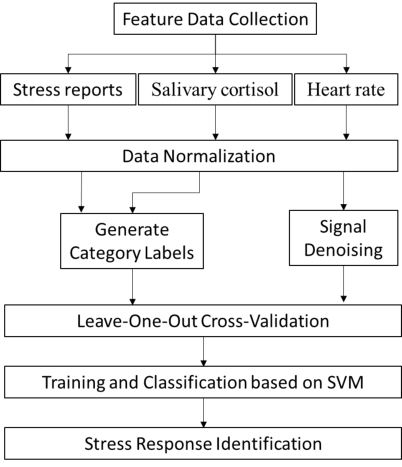
Algorithm Design of Stress Model The Support Vector Machine (SVM) is a maximum-margin linear classifier in feature space. Its learning strategy maximizes the margin between positive and negative sample sets, which can be ultimately transformed into solving a convex quadratic programming problem. In general, experimentally acquired sample data were often linearly non-separable, and the SVM model exhibits favorable performance for such cases. Therefore, the SVM classifier was adopted for classification in this paper. The classification performance and generalization capability of SVM directly depend on the kernel function and slack variables. Slack variables characterize the deviation distance of outliers. To mitigate misclassification caused by outliers, a penalty factor is introduced for adjustment, and a larger penalty factor assigns higher weights to outliers in model classification. For non-linear samples, SVM can employ kernel functions to map input features into a higher-dimensional feature space to achieve linear separability, the Radial Basis Function (RBF) delivers satisfactory discriminative performance and wide mapping coverage among various kernel functions; hence, RBF was selected for model construction in this work. Two hyper-parameters need to be configured for the RBF kernel: penalty coefficient C and gamma (γ), a parameter-optimization algorithm was required therefore. Grid search was utilized to optimize C and gamma simultaneously, which avoided local optima and supports parallel computation, while exponential grid partitioning was adopted to improve overall efficiency. To enhance the generalization and stability of the learner, leave-one-out cross-validation was performed for 12 iterations. In each fold, all feature samples from one pilot were reserved as the held-out test set, while data from the remaining pilots formed the training set, which increased computational cost, but reduced bias for small-sample datasets. Figure 3 illustrates the main workflow of the proposed stress identification model.
Figure 3: Stress state identification process.
Results of Stress Identification The SVM classifier took data of heart-rate as inputs and outputs label 0 or 1. In this study, most samples were labeled 0, while only a small number were labeled 1, and then random undersampling was employed to randomly draw samples from the majority class to balance the sample sizes of the two classes.
Two critical metrics, Precision and Recall, were used to evaluate classification performance. TN (true negative) denoted the number of samples with ground-truth label 0 and predicted label 0; FN (false negative) denoted the samples with ground-truth label 1 and predicted label 0; FP (false positive) denoted the samples with ground-truth label 0 and predicted label 1; TP (true positive) denoted the samples with ground-truth label 1 and predicted label 1. Therefore, Precision (P) was defined as the proportion of true positive samples among all predicted positive samples, as shown in Equation (1), the higher precision indicated reliable positive-class prediction with few false positives. Recall (R) was defined as the proportion of true-positive samples that were correctly predicted as positive, as shown in Equation (2), the higher recall suggested that the model can effectively capture positive-class samples. Conflicts may occur between Precision and Recall, a weighted harmonic mean of Precision and Recall, namely the F1-score, was adopted for comprehensive evaluation of model training performance therefore, as given in Equation (3). Accordingly, the stress identification results derived from 12 pilots’ heart-rate feature data were summarized in Table 3.
Equation reproduced from the original PDF.Table 3: Results of the SVM classification model for stress levels.
Table available in the original PDF paper.
Precision P Recall R Normal 0.94 0.69 High stress 0.76 0.86
It can be concluded that the binary stress-response identification model built upon heart-rate data achieves a precision of 0.94 for normal states, which demonstrating good recognition performance for normal conditions. For high-stress-state recognition, the model yields a precision of 0.76 yet a favorable recall of 0.86, meaning 86% of real high-stress samples can be correctly identified. It provided a feasible solution for real-time recognition of pilots’ high-stress mental states during flight based on continuous ECG signal acquisition.
MODEL APPLICATION AND VALIDATION BASED ON FLIGHT TESTS To verify the effectiveness of the proposed model, an application validation was performed under real-flight scenarios. Field Carrier Landing Practice (FCLP) is an essential training phase for pilots before carrier qualification, in this mission, pilots was required to continuously observe the runway centerline and aircraft angle-of-attack, and rapidly coordinate throttle stick and control stick meanwhile, so as to correct key parameters including altitude and angle-of-attack, which realizing precise landing along the designated glideslope. Novice pilots frequently reported elevated physiological stress triggered by excessive mental pressure during this procedure, which manifested as sharp heart-rate acceleration and unstable control operations.
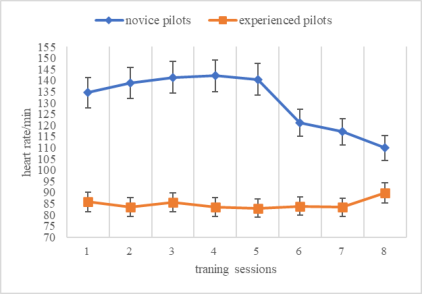
Actual FCLP training flights were taken as the experimental scenario in this study. Considering that training proficiency may affect stress elicitation, two subject groups, i.e., novice pilots and experienced pilots, were selected for model validation tests. Each subject was equipped with flexible ECG sensors to continuously collect ECG data and subjective stress reports throughout 8 FCLP landing cycles. The variations of mean heart rate with training repetitions during the landing glide phase for novice pilots and experienced pilots, respectively, as shown in Figure 4, and the stress-response identification results based on heart-rate data together with pilots’ subjective report outcomes are summarized in Table 4.
Figure 4: The change of average heart rate during FCLP for the two group pilots.Table 4: Identification of stress during onboard landing flight training.
Table available in the original PDF paper.
Stress of Experienced Pilots Stress of Novice Pilots
Training Sessions Model Results Subject Reports Model Results Subject Reports 1 0(normal) 3 1(high stress) 4.5
8 0(normal) 1.5 0(normal) 2.5 Statistical results of heart-rate data show that the mean heart rate of novice pilots was significantly higher than that of experienced pilots, while the identification outputs from the stress model reveal that high-stress states were elicited in novice pilots throughout their first five training cycles, which was consistent with their subjective stress assessment reports. It indicated that the carrier-landing training can evoke pilots’ stress responses. Since experienced pilots were familiar with the carrier landing training environment and mission tasks, their mean heart rate remains relatively stable. The model yields normal-state predictions for all tests of experienced pilots, which agreed with their subjective evaluations. It demonstrated that the proposed model can effectively identify pilots’ stress states based on heart-rate variations.
Meanwhile, heart-rate decreased for novice pilots starting from the 6th training cycle, and the stress identification result switched to the normal state. Analysis suggested that proficiency significantly affect stress elicitation under the same mission scenario. As novice pilots conduct simulated landing training for the first time, high-stress states occur in their first five trials. With increasing training repetitions, their proficiency improved continuously, stress responses were alleviated and perceived tension decreased, which was consistent with practical observations. These results validated the effectiveness of the stress-response identification model established in this paper. Supported by continuous ECG data acquisition, the model enabled real-time recognition of aircrew’s stress responses during high-difficulty and high-risk missions and provided foundations for timely and effective intervention measures. It possesses important practical significance for guaranteeing flight safety and improving flight operational efficiency.
CONCLUSION
This study provides an evaluation model and approach for real-time identification of aircrew stress responses in airborne environments based on continuous ECG data acquisition. Taking pilots, the target application population, as experimental subjects, the psychophysiological equivalence principle and virtual-reality technology are adopted to induce physiological and psychological responses equivalent to high-altitude stress for pilots. With subjective stress reports and salivary cortisol concentrations as labels
2062 Zhao and Peng and heart rate—the stress-sensitive physiological indicator—as input, a machine-learning-based binary-classification identification model (normal state vs. high-stress state) is constructed for stress-state recognition using heart-rate variations.
Nevertheless, restricted by data-acquisition conditions, this paper has a limited sample size. Although the model can be applied tentatively with its current confidence level, real-world scenario sample data shall be continuously accumulated for further training and optimization to achieve higher recognition accuracy. Meanwhile, the proposed model adopts relatively single input parameters and cannot fully characterize feature information of stress states. In future work, with technological breakthroughs in multi-physiological-parameter acquisition under airborne environments, multi-channel physiological parameter fusion analysis will be introduced to further optimize the stress identification model, so as to lay a solid foundation for its practical engineering applications.
REFERENCES
Adam, E. K., Kumari, M., & Hascoc, M. (2011). Overreactive SNS and HPA axis responses to stress and early-onset carotid artery atherosclerosis in adolescents. Psychophysiology , 48(11): 1490–1498. D. Wang. (2019). Research on Pilot Mental State Assessment Method Based on
Physiological Signals[D]. Harbin Inst. Technol., China. Eggert C, Lara O D, Labrador M A. (2013). Recognizing mental stress in chess players using vital sign data[C]//2013 Proceedings of IEEE Southeastcon. IEEE, 1–4. Hobbs, A., & Sundin, J. (2011). Psychological well-being and work-related stress
amongst aircraft maintenance engineers. Aviation Psychology and Applied Human Factors, 1(1): 20–26. J. Yang, Y. Hou, Y. Yang, et al. (2011). Effects of Trier Social Stress Test (TSST) on salivary cortisol secretion[J]. Acta Psychologica Sinica, 43(4): 403–409. Kudielka, B. M., Broderick, J. E., & Kirschbaum, C. (2003). Compliance with saliva
sampling protocols: Electronic monitoring reveals invalid cortisol daytime profiles in noncompliant subjects. Psychosomatic Medicine, 65(2): 313–319. Kumar M, Weippert M, Vilbrandt R, et al. (2007). Fuzzy evaluation of heart rate signals for mental stress assessment[J]. IEEE Transactions on fuzzy systems, 15(5): 791–808. L. Cong, J. Yang, J. Sun, et al. (2022). Design and implementation of fear-induction
system based on high-altitude VR interactive scenarios[J]. Application of Electronic Technique, 48(6): 69–72, 78. Li J, Lv J, Oh B S, et al. (2020). Identification of Stress State for Drivers Under Different GPS Navigation Modes[J]. IEEE Access, 8: 102773–102783. Meehan M, Insko B, Whitton M, et al. (2001). Physiological measures of presence in
virtual environments[J]. ACM Transactions on Graphics, 21(3): 645–652. Meehan M, Razzaque S, Insko B, et al. (2005). Review of four studies on the use of physiological reaction as a measure of presence in stressful virtual environments[J]. Applied Psychophysiology and Biofeedback, 30(3): 239–258. R. Ren. (2021). Research on Stress State Assessment and Endogenous Regulation
Based on Multi-source Physiological Feature Fusion[D]. Yanshan Univ., China.
A Real-Time Identification Method of Pilot’s Stress 2063 Taylor, J. M., & Thomas, C. (2011). The impact of stress on pilots and flight
performance: A review. Journal of aviation psychology and applied human factors, 1(1): 3–12. Teggi R, Comacchio F, Fornasari F, et al. (2019). Height intolerance between physiological mechanisms and psycho logical distress: A review of literature and our experience[J]. Acta Otorhinolaryngol Ital., 39(4): 263–268. Yu, S., Wang, Y., & Li, Y. (2020). The effects of stressors on pilots’ mental workload
and performance: A simulation study. International Journal of Environmental Research and Public Health, 17(17), 6292. Zalabarria U, Irigoyen E, Martinez R, et al. (2020). A Low-Cost, Portable Solution for Stress and Relaxation Estimation Based on a Real-Time Fuzzy Algorithm[J]. IEEE Access, 20(8): 74118–74128. Zheng Y, Wong T C H, Leung B H K, et al. (2016). Unobtrusssive and multimodal
wearable sensing to quantify anxiety[J]. IEEE Sensors Journal, 16(10): 3689–3696. Z. Wang, Y. Zhang, K. Dong, et al. (2020). Validity verification of stress-response induction paradigm based on high-altitude VR scenarios[J]. Space Medicine & Medical Engineering, 33(1): 28–34.
SEARCH THE AHFE DIGITAL BOOKSTORE BY ISBN
Explore the complete digital volume
Human Factors in Design, Engineering, and Computing
Read this individual research paper free through the original publisher, or explore the full digital proceedings book.