Hanneke J.J. Knibbe, Nico E. Knibbe, Elly M. Waaijer (2021). Biomechanical and Qualitative Study of a Multiple Adjustable Shower Trolley. In: Advances in Human Aspects of Healthcare. AHFE Open Access, vol. 13. https://doi.org/10.54941/ahfe100504
The purpose of this study was to compare the traditional height-adjustable shower trolley with a shower trolley with a new design. Compared to the traditional height-adjustable shower trolley, this version had higher side supports, indented curves on the long sides, handles, arrow-shaped ends, and a mattress with a flexible mid-section. In this study four nurses carried out five shower cycles using the traditional height-adjustable shower trolley and five shower cycles using the new design. These activities were filmed and analyzed by multi-moment sampling at a fixed interval. Each observation consists of a back score, arm score, leg score and neck score. Results show that working with the new design leads to less postural stress on the musculoskeletal system of the caregiver, compared to the traditional height-adjustable shower trolley. There is a 10.2% improvement in time spent in a neutral back position and a 9.4% improvement in the time spent in a neutral neck position. The main focus of the study was on the postural analyses. Nevertheless the qualitative aspects analyzed deserve attention as well and might be just as valuable. In practice they may determine the frequency with which a device is used, as nurses tend to be more motivated if the patient is more comfortable and the quality of care is higher. The new device was experienced as more dignified, comfortable and warmer.
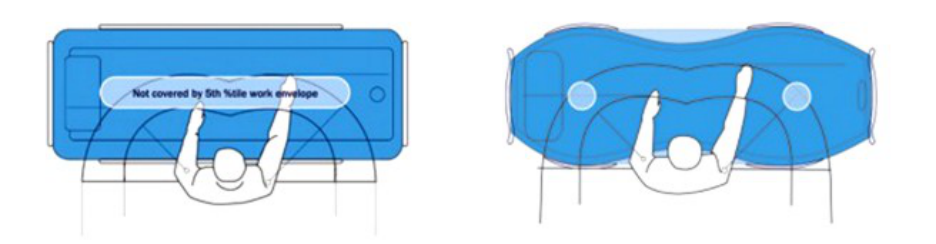
Showering patients is one of the most stressful tasks a nurse performs, especially when it comes to the static load of prolonged working in a stooped or bent posture. Too little attention is being paid to this kind of load, also known as static, postural or covert load (Brinkhof and Knibbe, 2003, Jansen et al, 2004, Meijsen and Knibbe, 2007, ISO/TR 12296, 2012). ‘Covert load’ is used as opposed to overt load, as this load is not visible (nothing is being lifted, pushed, pulled etc.), but there is still an actual load on the musculoskeletal system, caused by the posture of the caregiver’s body. Height-adjustable devices enable caregivers to work at their individually optimized ergonomic height and, when used properly, should reduce the static load on the musculoskeletal system. Studies have shown that the type of device used when bathing and showering patients has a major effect on the resulting static load on the caregiver’s musculoskeletal system. The height- adjustable shower chair was shown to cause the least physical overload compared to a height-adjustable shower stretcher, bath or bed (Knibbe and Knibbe, 1996). One of the problems with the current shower stretchers, baths and beds is the distance the nurse needs to reach out and therefore bend over. A new device was developed that would possibly limit the distance due to a curve around the position the nurse takes when showering a supine patient and would provide a more comfortable shower for the patient as well.
Figure 1. Drawing of the new design (right) with the curvature in the middle region enabling a further reach (Adapted from
Knibbe et al., 2013)
METHOD
In this study four nurses carried out five shower cycles using the traditional height- adjustable shower trolley and five shower cycles using the new design with role playing patients. These activities were filmed and analyzed by multi-moment sampling at a fixed interval. Each observation consists of a back score, arm score, leg score and neck score. The subjective experience of the patients involved was recorded as well
RESULTS
Results show that working with the new design leads to less postural stress on the musculoskeletal system of the caregiver, compared to the traditional height- adjustable shower trolley. There is a 10.2% improvement in time spent in a neutral back position and a 9.4% improvement in the time spent in a neutral neck position (Knibbe et al., 2013). The main focus of the study was on the postural analyses. Nevertheless the qualitative aspects analyzed deserve attention as well and will be an additional focus of attention during the conference In practice these qualitative aspects may determine the frequency with which a device is used as nurses tend to be more motivated if the patient is more comfortable and the quality of care is higher. The new device was experience as more dignified, comfortable and warmer. All four patients in the study were struck by deficiencies in terms of dignity, mattress comfort, warmth and comfort in general when being showered on the stretcher with the traditional design and material. Regarding this comfort issue it was calculated that showering the patient’s body (the actual sprinkling with warm water) took up only 28.1% of the total cycle time. The rest of the time the patient is wet and might become cold and start shivering. Although research on this point is lacking, it can be expected that this percentage is much higher when showering in a standing or a sitting position. In addition, research shows that the cooling down rate is dependent on the ratio of surface area to body mass. A higher ratio refers to a higher rate of cooling down, requires more energy to stay warm and leads to a less comfortable feeling. Emaciated or smaller patients have a higher ratio and therefore cool down faster, need more energy to keep themselves warm, start shivering at an earlier stage and tend to regard showering on a shower trolley as an unpleasant experience. This comfort issue seems to be addressed more effectively in the new design because a higher water level is possible, a softer mattress is used and it is experienced as somewhat cosier (as knees and shoulders do not go over the side and the patient can see the side support).
It seems an interesting focus to combine the study of both quantitative and qualitative elements in testing the design of new health care equipment intended for use in a fragile patient population. The quantitative elements usually receive more attention and are no doubt relevant. Nevertheless the qualitative aspects analyzed deserve attention as well and might be just as valuable. In practice they may determine the frequency with which a device is used as nurses tend to be more motivated if the patient is more comfortable and the quality of care is higher. More research is required to pinpoint more effectively whether or not new designs like this new shower trolley address this issue more effectively than earlier generations of shower trolleys.
REFERENCES Brinkhoff, A., Knibbe, N.E. (2003)“The ErgoStat Program. Pilot study of an ergonomic intervention to reduce static loads for caregivers”. Professional Safety, pp 32-39 ISO/TR 12296, (2012). “Manual handling of people in the healthcare sector”. Technical report, Geneva. Jansen, J., Morgenstern, H., Burdorf A, (2004). “Dose-response relations between occupational exposures to
physical and psychosocial factors and the risk of low back pain”. Occup Environ Med 61(12): pp 972-9. Knibbe NE, Knibbe JJ (1996). “Postural load and efficiency of bathing and showering: result of a laboratory study”, Professional Safety; pp 37-39 Knibbe, N.E., Knibbe, J.J., Waaijer, E. (2013), “How smart is the Carevo? Results of a study on a new shower
trolley generation”, The Ergonomics Open Journal, 6, pp 1-5. Meijsen, P., Knibbe, J.J. (2007). “Work-related musculoskeletal disorders of perioperative personnel in the Netherlands”. AORN J; 86 (2): pp 193-208
LISTED IN THE AHFE DIGITAL BOOKSTORE CATALOGUE
Explore the complete digital volume
Advances in Human Aspects of Healthcare
Read this individual research paper free through the original publisher, or explore the full digital proceedings book.
ISBN 978-1-4951-2093-0
Explore this ISBN in the AHFE Bookstore ↗Listed in the July 2026 bookstore catalogue; search by ISBN to confirm current availability · Digital book purchase optional