Katsuya Seki, Yusaku Okada (2020). A Method for Assessing Customer’s Confidence in Safety in a Railroad Company. In: Advances in Social and Organizational Factors. AHFE Open Access, vol. 9. https://doi.org/10.54941/ahfe100366
Users of railroad service have to choose a railroad company. When they choose them, they think about convenience, price, how safe they actually are, and how safe users can subjectively feel. We call the subjective degree of safety users feel confidence in safety (CIS). Some railroad companies need to assess CIS for their branding strategy. Therefore, we propose the assessment method of CIS in this paper.
Users of railroad service have to choose a railroad company. When they choose them, they think about convenience, price, how safe they actually are, and how safe users can subjectively feel. We call the subjective degree of safety users feel confidence in safety (CIS). Actually, CIS is important factor of choosing a railroad company. In many cases, unless CIS was analyzed quantitatively, most of user evaluate CIS subjectively rather than actual safety to choose railroad company. In fact, users choose a railroad company without researching the number of accidents. In Japan, the number of serious accidents about railroad service has been declining. Therefore, they don’t take the trouble to research how safety the railroad company which they will use before using railroad service.
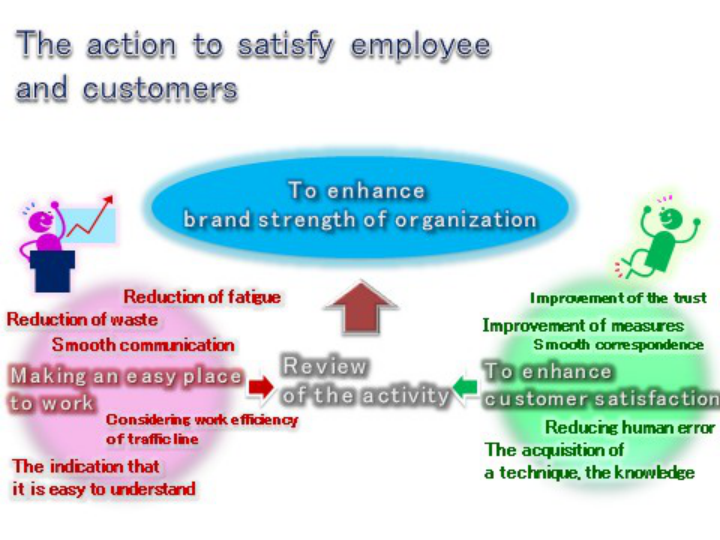
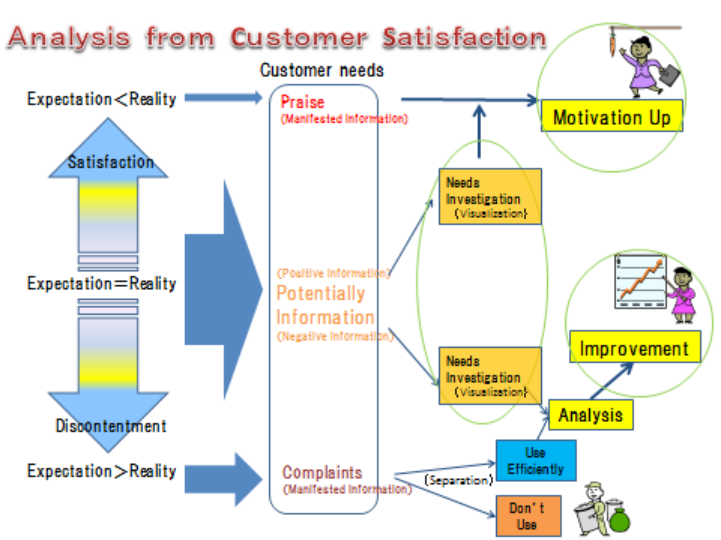
“A Railroad” which is one of the railroad companies in Japan aims at raising a brand of security and safety by evaluating CIS. (Figure1.)(Figure2.)This paper is intended to propose the assessment method of CIS. Then, we assessed the CIS of particular railroad company using some indexes.
Ⅰ. Information about the consciousness of the customer Ⅱ. Objection information from a customer
Ⅲ. Consciousness about the safe activity of the employee
Figure1. Image of raising a brand of safety and securityFigure2. Image of using customer information in Railroad Company
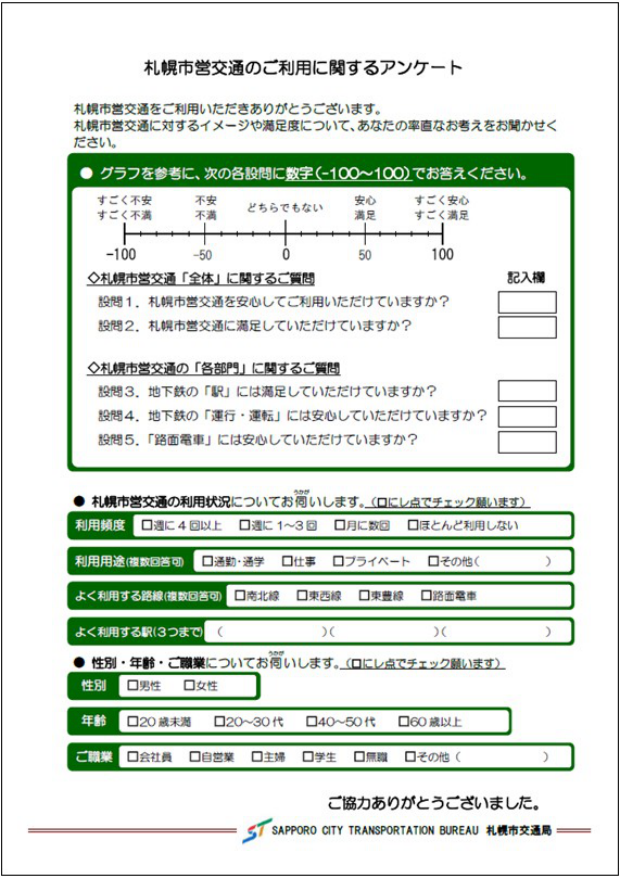
EVALUATIONS ABOUT THE CONSCIOUSNESS OF THE CUSTOMER We give evaluation standards concretely as follows. We used three standards such as “CIS of the railroad company,” ” CIS of station service,” ”CIS of train service”.
① CIS of the railroad company ② CIS of station service
③ CIS of train service
Figure3. A sample of questionnaire sheet in Japanese
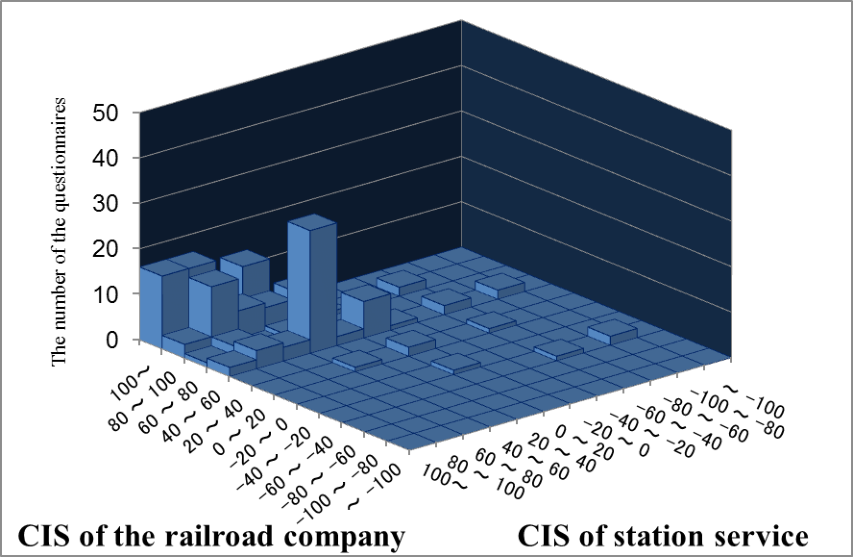
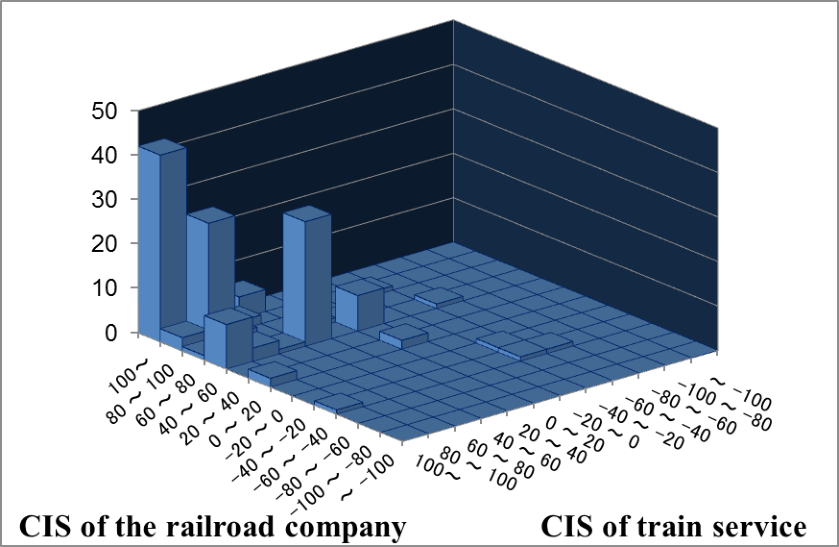
FINDINGS ABOUT THE CONSCIOUSNESS OF THE CUSTOMER We investigated above indexes to 500 customers. Then, we did principal component analysis and correspondence analysis for that. From Figure4 and Figure5, we got knowledge like those.
Figure 4. Total results of questionnaire about ① and ②Figure 5. Total results of questionnaire about ① and ③
ANALYSIS ABOUT THE CONSCIOUSNESS OF THE CUSTOMER ・there were interrelations between subjective evaluation value and CIS
・there were much influence on institution rather than railroad man service about ② ・there were more complaints from people who use rarely rather than frequently
COMPLAINTS INFORMATION OF THE RAILROAD COMPANY Then, we performed analysis about complaints information of the railroad company.
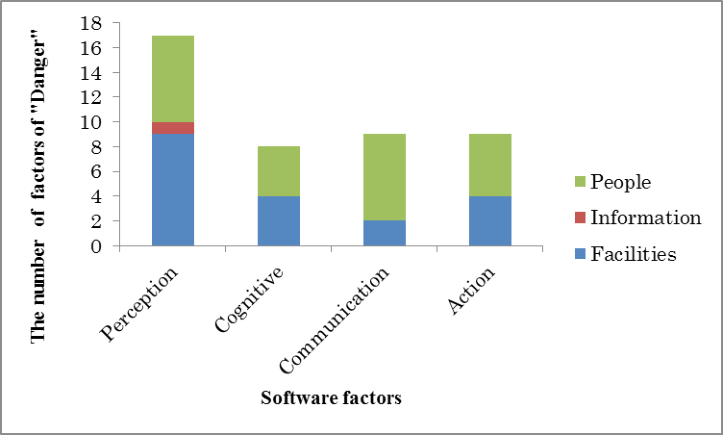
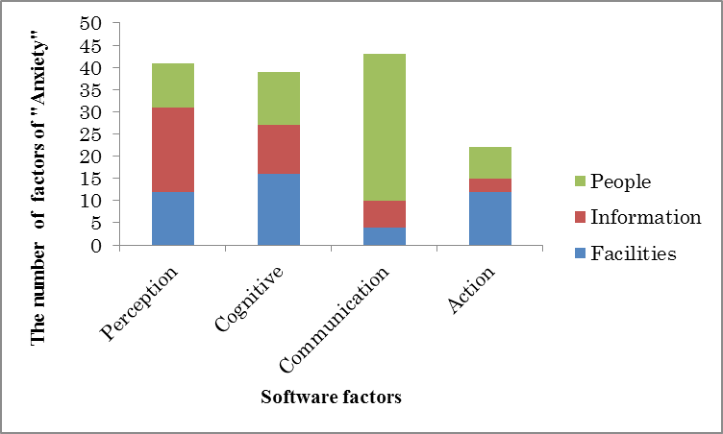
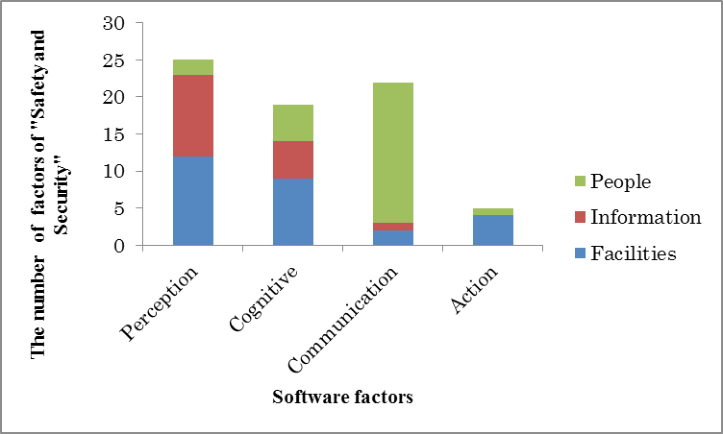
DIVIDING AND COUNTING COMPLAINTS INFORMATION OF THE RAILROAD COMPANY We analyzed complaints information of the railroad company which was being collected on daily basis. We divided complaints by words and did phrase analysis. Then, we found that those could be divided some groups. First, we divided three groups such as “Danger”, “Anxiety”, “Security and Safety”. Then we divided hardware such as “Facilities”, “Information”, “People” and software such as “Perception”, “Cognition”, “Communication” and “Action”.
Figure6. The number of factors of “Danger”Figure7. The number of factors of “Anxiety”Figure8. The number of factors of “Safety and Security”
ANALYSIS OF COMPLAINTS INFORMATION OF THE RAILROAD COMPANY From the above analysis and investigation, we got knowledge like those.
・activation of publicity activity of safety activity for customers (widely known of safety activity) ・there were interrelation between safety activity and assessment of business in general
We let the class of managers of the organization feedback these results and let them deepen the argument about the center of gravity of the significance of developing customer-centered safe activity and the development.
CONSCIOUSNESSES ABOUT THE SAFE ACTIVITY OF THE EMPLOYEE This company did safety activity positively and they educated employee to do safety activity with customer’s point of view simultaneously. We did principal component analysis for investigation results on employee’s comprehension degree about safety activity. There was 1600 employee. Then, we found that employee who understands the relation of safety activity and customer satisfaction was particularly increased.
These were cleared by various aspects of investigation about employee’s business in general.
As an example,
The participation in safe activity will is apt to become low so as to go from the head office to the spot.
This associated with "a tendency to let a cause return to the individual" and "participation in safe activity will" became clear than a multidirectional investigation for the duties activity whole for the employee..
CONCLUSIONS
From analyzing above aspects, we can suppose how security activity carrying out in railroad companies affects CIS of customers. Until now the railroad company has collected various data for three years. We are planning that how to change safety activity to CIS of customers. Also, we are planning to practice that plan in the future.
REFERENCES
Embrey, D. SLIM-MAUD. (1984), “An approach to assessing human error probabilities using structured expert judgment”, NUREG/CR-3518, USNRC Gertman, D.I., et al. (1992), “A method for estimating human error probabilities for decision-based errors”, Reliability
Engineering and System Safety, 35, pp127-136 Nihongi R.and Okada. Y. (2010), “A Study on Improvement of Staffs’ Satisfaction about Safety Activities in Medical Field”, ICAP2010 in Korea, pp87-91 Hollnagel. E. (1998), “Cognitive reliability and error analysis methodology”, Elsevier. Yokomizo A., Tomita M.,. Mori Y and Okada. Y. (2009), “A Study on Improvement of Safety Management in Organizations”,
Nordic Ergonomic Society.
LISTED IN THE AHFE DIGITAL BOOKSTORE CATALOGUE
Explore the complete digital volume
Advances in Social and Organizational Factors
Read this individual research paper free through the original publisher, or explore the full digital proceedings book.
ISBN 978-1-4951-2102-9
Explore this ISBN in the AHFE Bookstore ↗Listed in the July 2026 bookstore catalogue; search by ISBN to confirm current availability · Digital book purchase optional